REVIEW · BOLOGNA
All the wonders of the Bologna hills
Book on Viator →Operated by Riccardo Bacchi · Bookable on Viator
Three hill stops, one unforgettable Bologna. This private tour turns the Bologna hills into a living art museum, with stops that mix Renaissance masterpieces and everyday history. You’ll start at Hotel Porta San Mamolo and head uphill to places that feel quiet, significant, and very Bologna. Expect frescoes, brick-red monasteries, and working-city connections—all in about four hours.
I love the way this route stacks different styles back-to-back: Renaissance painting at San Michele in Bosco and medieval peace at Cenobio di San Vittore. I also love the Bagni di Mario cistern, called one of the best preserved hydraulic structures of the 16th century—water history you can actually picture. One possible drawback: the pace assumes moderate physical fitness, and some walking is uphill, so plan on comfy shoes and take it easy.
In This Review
- Key highlights before you go
- Bologna hills: why this 4-hour route feels special
- Getting started: Hotel Porta San Mamolo and your day flow
- Stop 1: Complesso Monumentale San Michele in Bosco
- What you’ll see and why it matters
- Admission note and timing
- Possible drawback to plan for
- Stop 2: Cenobio di San Vittore and that red-brick calm
- The art: old frescoes and local Gothic warmth
- A Renaissance wooden choir you can actually appreciate
- Timing and admission
- The emotional payoff
- Stop 3: Bagni di Mario (Conserva di Valverde) and Bologna’s water story
- What it is
- Why it feels so alive
- Timing and wrap-up
- The one consideration
- Riccardo Bacchi in English: turning art into a story you remember
- Price and value: $189.36 for a private hill circuit
- Who should book this Bologna hills tour
- Should you book All the wonders of the Bologna hills?
- FAQ
- How long is the Bologna hills tour?
- What time does the tour start, and where do we meet?
- Is this tour private, and is it offered in English?
- Are admission tickets included for the stops?
- Is pickup available?
- Can I cancel for free?
Key highlights before you go
- Private, English-guided hill circuit with only your group
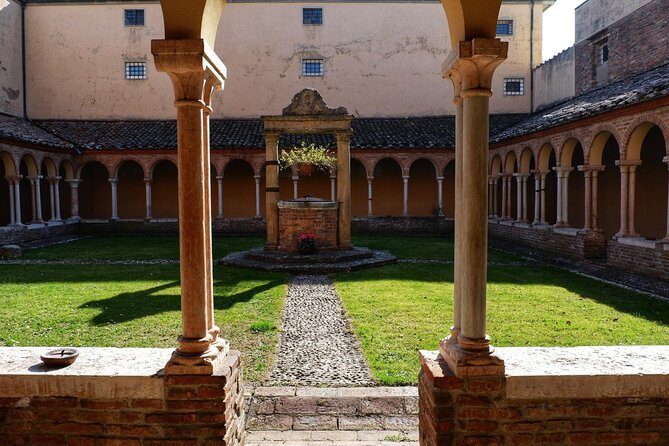
- San Michele in Bosco: Renaissance frescoes by major names and an octagonal cloister
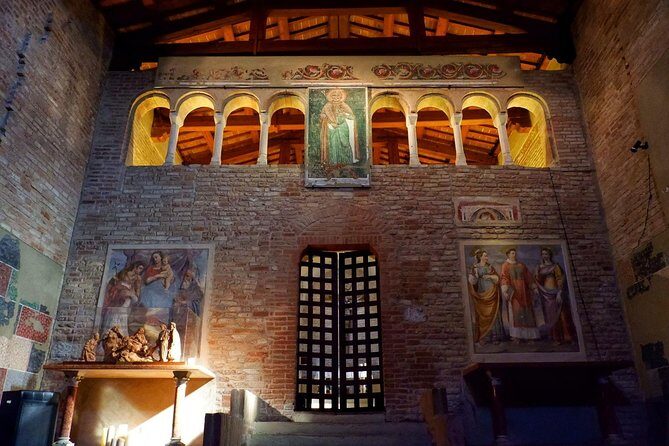
- Cenobio di San Vittore: red-brick calm with 13th-century frescoes and a Renaissance wooden choir
- Bagni di Mario cistern: impressive 16th-century water engineering tied to city life
- Good ticket value: one stop is free and two include admission
- Riccardo Bacchi’s style: clear English explanations with a fun, animated approach
Bologna hills: why this 4-hour route feels special
The Bologna hills have a talent for slowing you down without feeling boring. One minute you’re in the city’s energy, and the next you’re looking at convent walls, brick churches, and stone water systems that were built for very real needs. This tour keeps that mood consistent: art, devotion, and infrastructure, all in one tidy loop.
What I like most is that it doesn’t treat these places like distant monuments. You see buildings with actual roles over time. For example, San Michele in Bosco is now home to an orthopedic hospital, but the complex still carries a church with major artistic features and fresco cycles. That blend of old and present-day makes the stories feel grounded, not staged.
Also, you get a compact format. Four hours means you can do the experience even on a packed travel day. And because it’s private, you’re not trapped in a loud herd moving at the slowest person’s pace.
You can also read our reviews of more tours and experiences in Bologna.


Getting started: Hotel Porta San Mamolo and your day flow
You meet at Hotel Porta San Mamolo on Vicolo del Falcone, 6/8. The start time is 9:00 am, and the tour ends back at the meeting point. There’s pickup offered, which is a big help if you’d rather not figure out the exact timing of buses or trams while you’re starting uphill.
The experience is listed as private, so only your group participates. That matters more than you might think. At quieter religious sites, it’s easier to hear the guide and to look closely at details like fresco panels, brick texture, or the shape of a cloister without getting constantly shuffled along.
Plan for moderate physical fitness. The day is short, but the hills are hills. Bring comfortable walking shoes and dress in layers. If it’s a warm morning, you’ll likely move in and out of indoor spaces; if it’s cooler, you’ll appreciate having something to put on right away.
Stop 1: Complesso Monumentale San Michele in Bosco
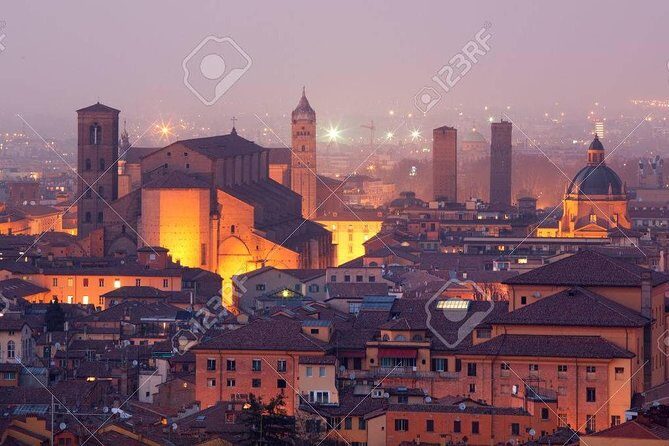
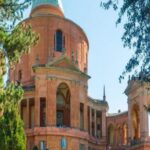
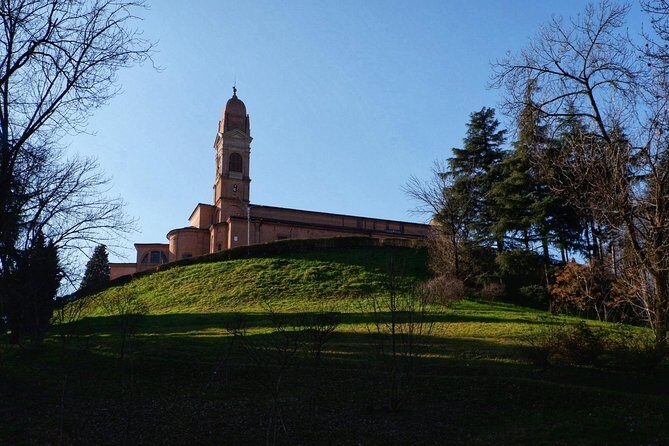
San Michele in Bosco is the kind of stop that rewards calm attention. The complex is large and historically significant, and it includes an important church as well as cycles of Renaissance frescoes. Even though the area now houses an orthopedic hospital, the artistic elements remain central to the experience.
What you’ll see and why it matters
The church features splendid architectural and artistic elements, plus frescoes credited to well-known Renaissance artists, including Bagnacavallo, Prospero Fontana, and Amico Aspertini. These aren’t random decorations. They’re part of a larger tradition of Bologna’s artistic output, and the guide time is meant to help you notice the differences between styles rather than just seeing scenes as background.
You’ll also see an octagonal cloister, though it’s described as in a partial state of neglect. This detail is important for expectations. Some parts may not look perfectly restored, and you may see surfaces that have aged in a very real way. For me, that makes it feel more honest. You’re not just touring a museum display; you’re walking through a living historical space.
Admission note and timing
This stop runs about 1 hour, and the admission ticket is free. In a tour like this, a free stop gives you flexibility. You can spend extra time lingering at the fresco areas without feeling like you’re burning paid minutes.



Possible drawback to plan for
Because the complex includes an active hospital, there may be more rules or flow than in a pure tourist site. If you’re the type who likes to wander with zero constraints, you might feel a bit guided and directed. Still, that’s a small trade for the chance to see art in a complex that didn’t freeze in time.
Stop 2: Cenobio di San Vittore and that red-brick calm
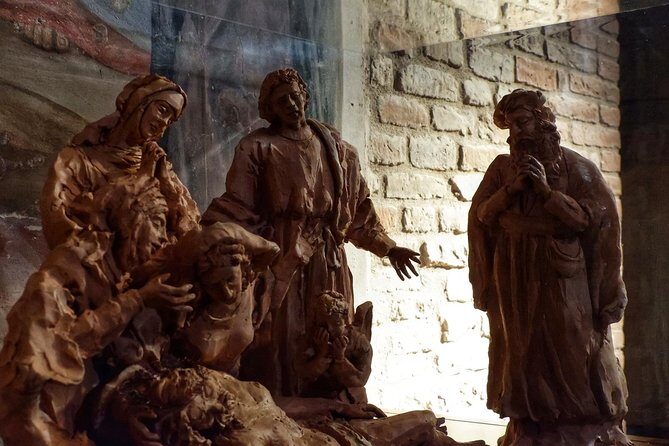
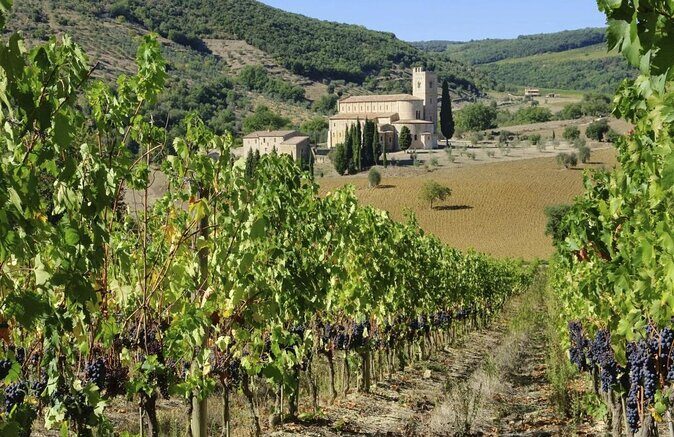
Cenobio di San Vittore is a peace-and-meditation kind of place—something friars wanted medieval times to have. The emotional tone comes through quickly: warmth in the bricks, quiet in the arrangement, and preserved details that make you slow your breathing without trying.
The art: old frescoes and local Gothic warmth
A major highlight here is the fresco cycle, including thirteenth-century frescoes. They’re noted as the oldest in Bologna after those at the Rotonda di Villa Aldini. That is a big deal for anyone who cares about when specific art styles first took hold locally.
The frescoes carry warm colors associated with local Gothic taste. You’ll likely notice the palette and the way figures and scenes feel grounded in the local visual language. The tour framing helps you connect color, era, and place instead of treating the painting as just “pretty.”
A Renaissance wooden choir you can actually appreciate
Another standout is the Renaissance wooden choir. It’s the kind of detail that’s easy to skip on your own, especially if you’re rushing to take photos. With a guide, you’ll understand what to look for and why it fits the building’s purpose.
Timing and admission
This stop is about 40 minutes, and admission is included. That makes the whole itinerary feel efficient: you’re paying for a plan that already covers key entry costs rather than adding surprises at each door.
The emotional payoff
I like that this isn’t just about impressive art; it’s about the atmosphere. Cenobio di San Vittore has the kind of stillness that makes you think, even if you’re not the reflective type. After San Michele in Bosco’s larger complex feeling, Cenobio helps reset your attention.
Stop 3: Bagni di Mario (Conserva di Valverde) and Bologna’s water story
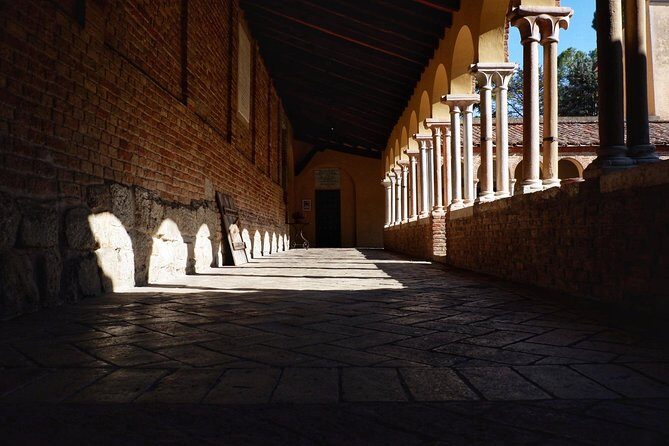
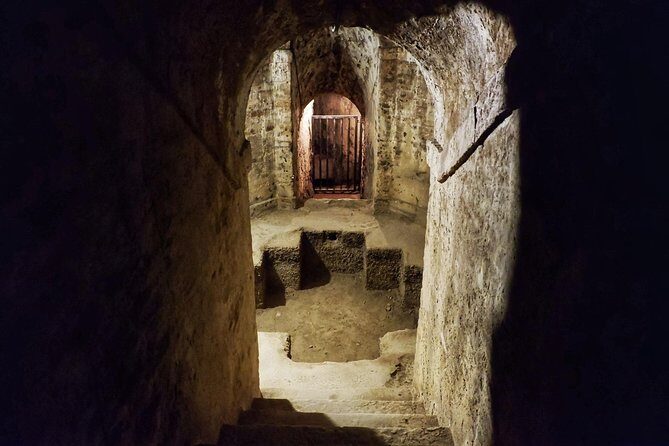
If you think Bologna’s hills are all churches and frescoes, Bagni di Mario changes your mind. This stop is about Renaissance engineering hiding in the hill’s sandstone heart.
What it is
Bagni di Mario is also called the Conserva di Valverde—a spectacular cistern excavated by Pope Pius IV. The purpose was practical: supplying the city with fresh drinking water.
Today it’s described as one of the best preserved hydraulic structures of the 16th century. That matters because it’s not just “ancient-looking.” It’s a working-story kind of site, where you can imagine the flow of water and the logic behind the construction.
Why it feels so alive
Water systems are easy to overlook in cities because you only notice them when they fail. Here, the guide helps you flip that mindset. You start to see the hill not as scenery but as infrastructure—literally shaped into a solution for daily life. That connection is one reason this stop hits harder than you might expect.
Timing and wrap-up
This stop runs about 40 minutes. The tour ends around 2:30 pm, returning to the starting point at the foot of the hill. That finish time is helpful. You can plan lunch or an early afternoon activity afterward without stress.
The one consideration
Cistern-type spaces can feel cooler or more enclosed depending on the site conditions. If you’re sensitive to tight interiors, plan to bring a light layer and move slowly. Otherwise, it’s a great contrast to the more open feel of fresco churches.
Riccardo Bacchi in English: turning art into a story you remember
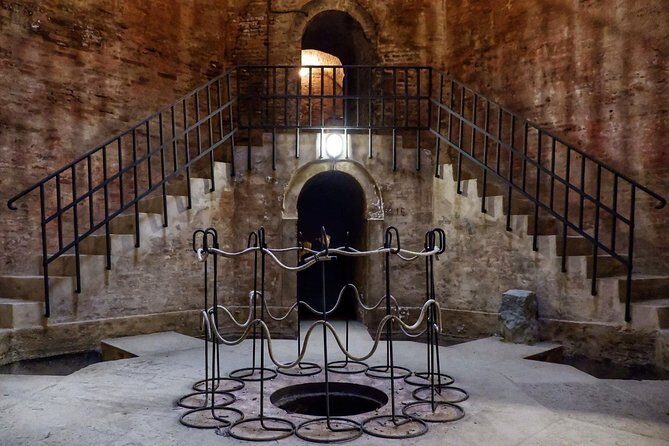
This experience stands or falls on guidance, and here you get a real professional: Riccardo Bacchi. Based on feedback, his tours are run in English with explanations that are clear and easy to follow. He also brings humor and keeps the pacing comfortable, so the day doesn’t feel like homework.
What I especially appreciate in a guide like this is how they help you see relationships. Frescoes aren’t just images. A cloister isn’t just a shape. Even a cistern isn’t just stone. When the guide connects these pieces, the day stops being a checklist and starts becoming a coherent understanding of how Bologna thinks and builds.
One review highlights that Riccardo can explain history in a way that makes you feel the city’s vibe—less about dates and more about how things worked together. If you like tours where the guide points out what you’d otherwise miss, this is a strong fit.
Price and value: $189.36 for a private hill circuit
Let’s talk value in plain terms. The price is $189.36 per person for a tour lasting about 4 hours, and it includes a private, English-led experience. You also get pickup offered and a mobile ticket, plus group discounts.
Here’s where the math starts looking better than it sounds at first glance:
- Admission is partially covered. Stop 1 has free admission. Stops 2 and 3 include admission. That’s a meaningful chunk of the total day.
- You’re buying time with the guide. You’re not just getting entry tickets; you’re getting interpretation of fresco cycles, architecture, and the water system story.
- Private format can be efficient. If you’re traveling with a small group, private tours often land closer to a shared cost-per-person than you’d expect, especially when key admissions are included.
The only real way this price feels less “fair” is if you’re traveling solo and would rather go at your own speed with a guidebook. But if you want structure, you want context, or you’re short on time in Bologna, this route feels like a solid use of a half-day.
Who should book this Bologna hills tour
You’ll probably love this if you’re:
- An art and architecture fan who likes to see specific artists and styles, not just general labels
- Curious about medieval and Renaissance Bologna beyond the city center
- Looking for a compact tour that still includes major stops
- Traveling with someone who appreciates quiet places as much as big sights
You might want to choose a different option if:
- You don’t handle walking on hills well, since the day assumes moderate physical fitness
- You prefer very restored, polished interiors all the time—because the octagonal cloister at San Michele in Bosco is described as partially neglected
- You want long free time to wander without guidance
Should you book All the wonders of the Bologna hills?
My take: yes, if you want Bologna in an honest, hilltop setting without spending all day traveling across town. The lineup hits three different “Bologna worlds”: Renaissance art in San Michele in Bosco, medieval tranquility at Cenobio di San Vittore, and practical Renaissance engineering at Bagni di Mario.
Book it if you care about details like fresco names, the age of frescoes, and why a cistern mattered to the city’s survival. And book it if English guidance helps you get more meaning out of each stop.
Skip it only if you know you’ll resent a moderate walking day or you’d rather do these sites on your own without a guide’s explanations.
FAQ
How long is the Bologna hills tour?
The tour lasts about 4 hours.
What time does the tour start, and where do we meet?
It starts at 9:00 am. You meet at Hotel Porta San Mamolo, Vicolo del Falcone, 6/8, 40124 Bologna BO, Italy, and the tour ends back at the meeting point.
Is this tour private, and is it offered in English?
Yes, it’s private—only your group participates—and it’s offered in English.
Are admission tickets included for the stops?
Stop 1 has free admission. Stop 2 and Stop 3 include admission.
Is pickup available?
Pickup is offered, and the meeting area is near public transportation.
Can I cancel for free?
Yes. You can cancel up to 24 hours in advance for a full refund.