REVIEW · BOLOGNA
Discover Bologna an amazing city
Book on Viator →Operated by Alliet’ARTI Tours - Manuela Roversi · Bookable on Viator
Bologna can feel overwhelming on your first day.
This private, English-language tour is a fast way to get your bearings and see the city’s big sights without getting swallowed by crowds. I love having Manuela Roversi lead the walk, and I also like how the route strings together the city’s architecture, street history, and food culture in just a few hours.
My one thing to watch: you’ll cover a lot of ground on foot, and church dress code rules can mean you should come prepared (you may be refused entry if you don’t follow them). Still, for first-time visitors who want a smart overview, this is excellent value and a very human way to meet Bologna.
In This Review
- Key takeaways before you go
- Why a private 3-hour Bologna walk beats doing it solo
- Piazza Maggiore and Neptune Fountain: a perfect 30-minute starting point
- Via Rizzoli and the Roman axis: seeing Bologna’s shape before the towers
- Basilica di San Petronio: coronations, the Counter-Reformation, and a world-record sundial
- Quadrilatero and Bologna’s La Grassa reputation: food culture you can walk through
- Archiginnasio di Bologna: university grandeur and the anatomy theatre add-on
- Seven Churches of Santo Stefano and the portico links of Strada Maggiore
- Two Towers finale: Asinelli and Garisenda, Bologna’s lean and its lore
- Price and value for a small private group (up to 10)
- What to wear (especially for churches) and how to pace your day
- Who should book this Bologna tour
- Should you book this tour?
- FAQ
- How long is the Bologna introduction tour?
- Is this a private tour, and what group size is allowed?
- What language is the tour offered in?
- Where does the tour start and where does it end?
- Are tickets included for the main sights?
- Is food included during the tour?
- Is there a dress code for churches?
- Can I visit the old anatomy theatre?
- Is the Santo Stefano complex open every day?
Key takeaways before you go
- Private group up to 10 means a calmer pace and more Q&A with Manuela Roversi
- First-day orientation: Piazza Maggiore to the Two Towers in about 3 hours
- Real local context from a long-time Bologna resident who tells stories tied to what you see
- Food culture stops around the Quadrilatero, with advice for where to eat nearby
- Church details you’d miss alone, including San Petronio’s famous meridian line
- Optional paid add-on: the old anatomy theatre can be visited for a €3 fee per person
Why a private 3-hour Bologna walk beats doing it solo
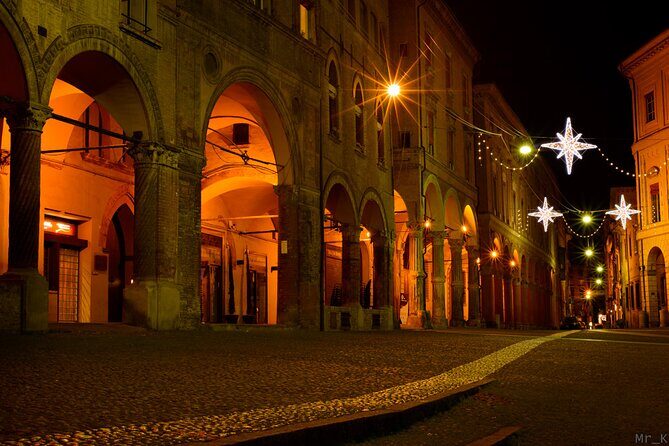
Bologna rewards slow wandering, but your first day can get messy fast. This tour gives you structure without killing the fun. You’ll start in the monumental core, then move outward in a logical line through major landmarks that connect to the city’s Roman roots and medieval life.
What makes it feel different is the guide. With Manuela Roversi, you’re not just reading plaques. You’re hearing how Bologna works—why certain buildings matter, why streets follow older lines, and how local traditions keep the city feeling lived-in.
You’ll also appreciate the private format. In a crowded city, being part of a small group is not just comfortable—it helps you actually see things. You can ask questions, pause for photos, and keep moving at a pace that fits first-time visitors.
You can also read our reviews of more city tours in Bologna

Piazza Maggiore and Neptune Fountain: a perfect 30-minute starting point
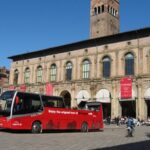
Piazza Maggiore is the center of Bologna’s public life, and it’s surrounded by power and purpose. Here you’ll see the Basilica of San Petronio, the old town halls, the Palazzo dei Banchi, and the Sala Borsa—so even before you walk far, you understand the city’s rhythm: civic, religious, and administrative all in one square.
Manuela Roversi’s approach makes the square click because she ties the sights to the idea of Bologna as a working city, not a museum set. It’s also an easy place to orient yourself since it’s historically marked back to Roman times.
Then you’ll head to the Fontana del Nettuno (Neptune Fountain). Neptune’s trident isn’t just decoration. It ties into modern branding too: the trident was used by the Maserati brothers as the emblem for their first car, and it remains part of the Maserati logo today. That kind of detail makes Bologna feel both old and current.
Practical note: the big squares are open and bright, so it’s a good moment for wide-angle photos before you shift into narrower streets.
Via Rizzoli and the Roman axis: seeing Bologna’s shape before the towers
After Piazza Maggiore, the walk transitions into street geometry. Via Rizzoli and Via Ugo Bassi follow the main Roman axis of the city, connected to the Via Emilia built in the 2nd century B.C. That’s the kind of context that turns a simple stroll into a real sense of where you are.
Along this route, you start lining up views toward the medieval leaning towers—the city’s signature move. Even if you’ve seen photos of the towers before, spotting them from the right street angles is a different experience. The city seems to funnel your attention toward them without you having to work for it.
You also pass through the shopping side of town, including via Indipendenza. So you’re getting two Bologna realities at once: the historic plan of the Romans and the daily energy of locals moving through modern streets.
Basilica di San Petronio: coronations, the Counter-Reformation, and a world-record sundial
San Petronio is one of those churches that feels enormous in scale and ideas. It matters historically in major ways: in 1530 it was the church where Charles V became the last Holy Roman Emperor to be crowned by a pope. The church also hosted a section of the Council of Trent, tied to the Counter-Reformation.
But what I love is how the site gives you something concrete to notice. A meridian line is inlaid in the left aisle paving, laid in 1655. It’s described as the longest covered sundial in the world. Even if you’re not into scientific instruments, standing near it makes you appreciate how churches served as public knowledge spaces, not only places of worship.
Here’s your key planning point: a dress code is required to enter places of worship. If you arrive underdressed, you could be refused entry. Keep it simple—bring something that covers shoulders and knees, just in case.
Quadrilatero and Bologna’s La Grassa reputation: food culture you can walk through
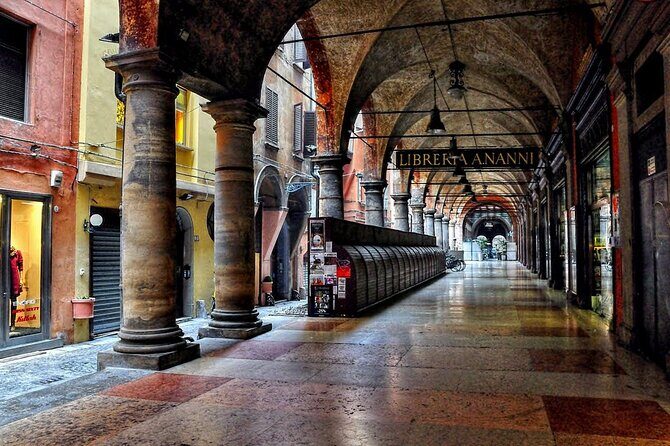
Bologna’s food reputation is not marketing. The city earns it. Locally, it’s nicknamed La Grassa (the fat one), and the Quadrilatero is where that identity shows up in the streets.
This area is a tight web of narrow lanes with packed vendors and old-school food stalls that feel medieval in spirit. You’re not just looking at storefronts—you’re watching a living market style that’s built for foot traffic and quick choices.
Even though tickets and food aren’t included, the stop is still valuable because it teaches you how to read Bologna’s eating culture. Manuela Roversi can also steer you toward good places to eat nearby, and one of the strongest bits from past participants is that she offers food recommendations that actually fit what you’ll pass on foot.
If your stomach runs your schedule, this is a great moment to start thinking about lunch or an early dinner—because after this, you’ll be moving through more monumental stops.





Archiginnasio di Bologna: university grandeur and the anatomy theatre add-on
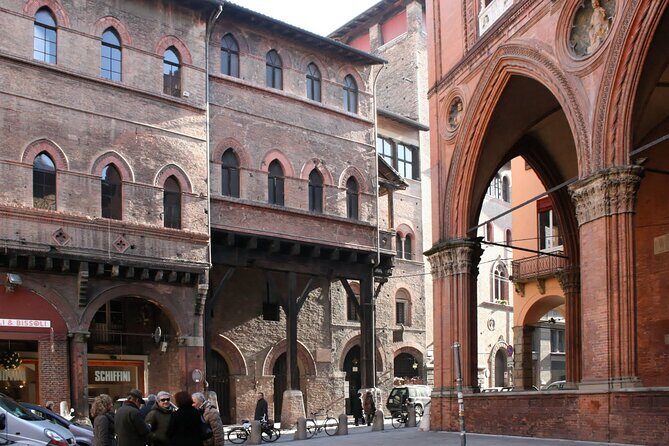
The Archiginnasio di Bologna is a university building with a very showy personality. Its purpose was to give university teaching a single seat instead of scattered locations. Once you’re inside, the decorations stand out as the biggest existing heraldic wall complex.
I like this stop because it broadens Bologna’s story beyond monuments and churches. You see the city as a center of learning and civic identity. Bologna isn’t just architecture; it’s ideas, institutions, and the people who move through them every day.
There’s also an optional add-on: the old anatomy theatre. It’s available on request, and if you want it, there’s an entrance fee of €3 per person paid directly on tour date.
That’s a helpful choice because it lets you control how heavy the walking and indoor time feels. If you’re curious about history and science, it’s a worthwhile extra. If you’d rather keep momentum, you can stick to the main Archiginnasio areas.
Seven Churches of Santo Stefano and the portico links of Strada Maggiore
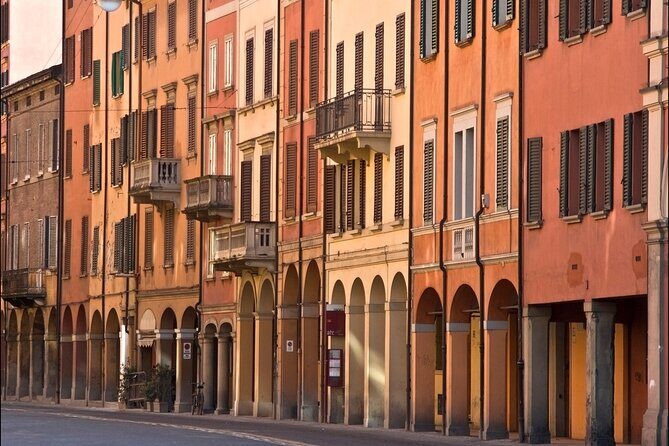
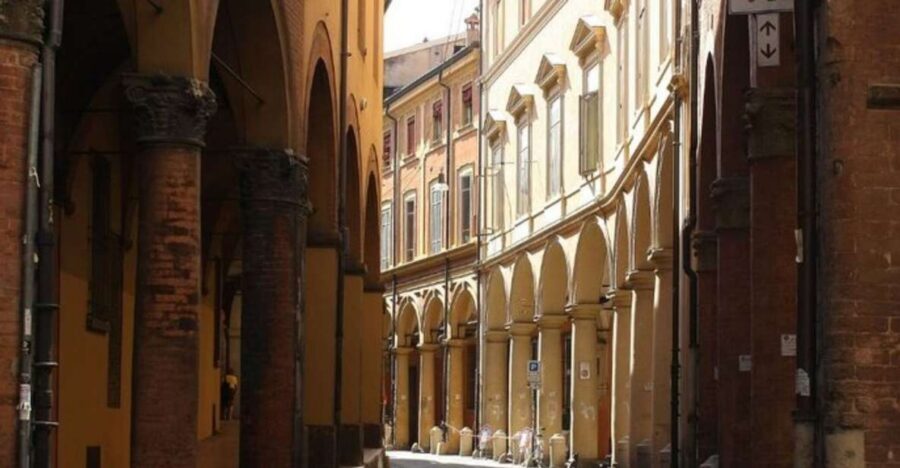
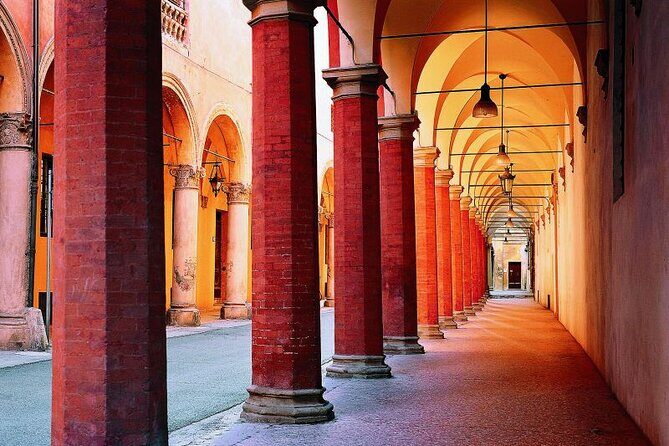
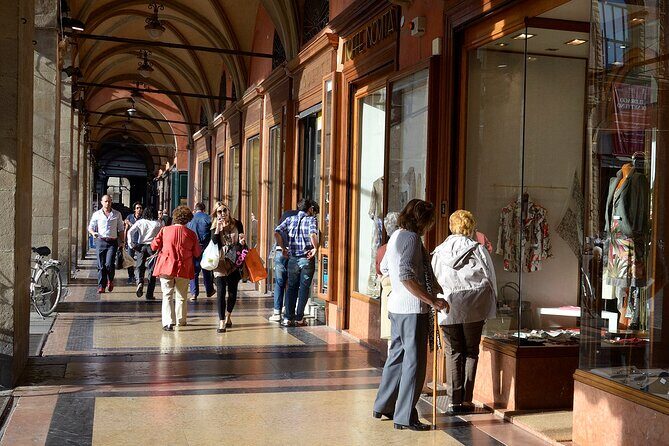
Piazza Santo Stefano is also known as Piazza delle Sette Chiese, the Seven Churches Square. It’s pedestrian, active, and built for lingering. You’ll notice porticos along the long sides, which is very Bologna: shaded walking, people-watching, and a smoother route through heat or rain.
From there, you’ll reach the complex of churches often called Santo Stefano, sometimes described as Holy Jerusalem. It’s not one building—it’s a group of linked religious spaces. The complex includes the Church of Saint Stephen (8th century), the Church of the Holy Sepulchre (5th century, rebuilt on a Roman temple), and the Church of Saints Vitale and Agricola (5th century, rebuilt first in the 12th century). The Courtyard of Pilate is part of the complex too, plus the Church of the Trinity or of the Martyrium (13th century).
One practical detail matters a lot: the complex is closed on Mondays. So if your trip lands on a Monday, adjust your expectations and lean on the other stops that day.
This is also where Bologna’s architectural “connective tissue” becomes clear. As you continue toward Strada Maggiore, you’ll see Casa Isolani—famous for its gallery that links Strada Maggiore and Piazza Santo Stefano. The design mixes medieval house elements with Renaissance-style views depending on which side you look from.
Casa Isolani’s wooden portico details are a great example of why this city feels different from other Italian stops. You’ll learn about the oak beams—about 9 meters—supporting the third floor, and how the building dates to the middle of the 13th century as one of the city’s highest wooden portico structures.
If you’re the type who likes photos but also likes to understand what you’re photographing, this section is gold.
Two Towers finale: Asinelli and Garisenda, Bologna’s lean and its lore
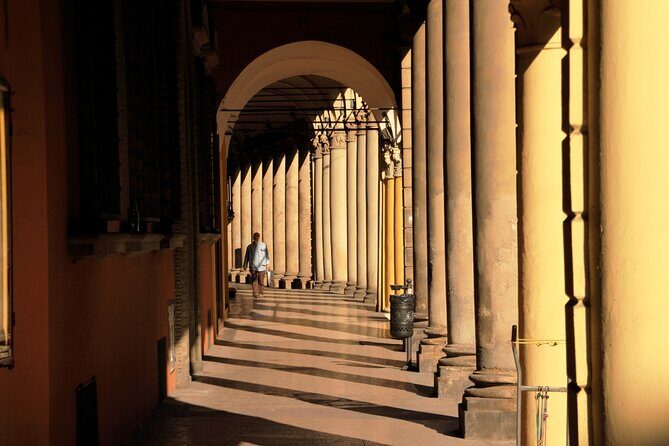
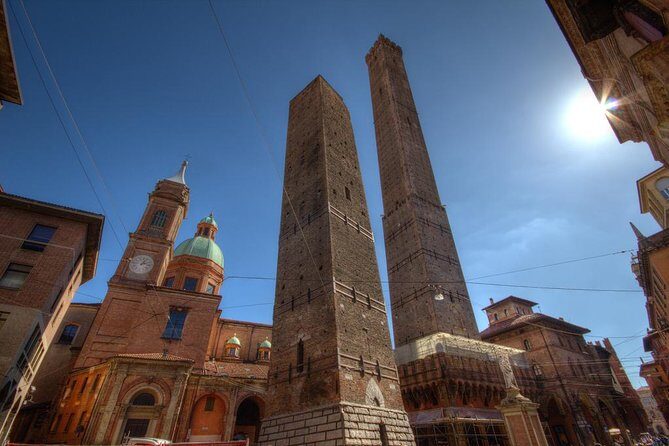
The walk finishes near Torre degli Asinelli and Torre della Garisenda—the Two Towers that symbolize Bologna. They’re leaning, and they’re instantly recognizable even if you’ve only seen pictures.
They’re connected to the old city plan too. The towers sit at an intersection of roads leading toward five gates of the old ring wall. Their names come from the families who built them between 1109 and 1119.
If you time it right, you’ll get a strong photo moment here without feeling like you’re fighting for space. This stop also lands perfectly after Santo Stefano and Casa Isolani, because by now you’ve seen how Bologna builds upward—then connects above streets with arcades and porticoes—while keeping the focus on how people actually lived and moved.
Price and value for a small private group (up to 10)
The tour price is $125.10 per group up to 10 and runs about 3 hours. That price can be a great deal if you’re traveling as a couple, a small group of friends, or a family who wants one guided walkthrough rather than separate tickets and schedules.
You’re getting a professional local guide in a private format, which matters in Bologna because the best parts are not just “look, see, leave.” It’s the why behind the sights—Roman street lines, church role in major events, and what to look for in the towers and porticoes.
Also important: transportation to and from attractions is not included. That doesn’t mean it’s not efficient. It means you’ll likely walk between the core sights, and you should plan to meet in the center and handle your own local transit for getting there.
Tickets and food are also not included. The good news is many key stops are listed as free entry. The clearest paid add-on mentioned is the €3 anatomy theatre fee if you request it.
So the value question becomes simple: if you want a guided, small-group overview that helps you understand Bologna quickly, this is priced like a practical way to do that.
What to wear (especially for churches) and how to pace your day
Bologna is great for walking, but your comfort depends on your clothes and shoes. Because this tour includes churches, remember the dress code rule for places of worship. You can risk refused entry if you don’t comply, so don’t assume a casual outfit will be fine everywhere.
Even with the right clothing, plan for slower moments inside churches and longer photo pauses outside. This is not a sprint tour—it’s a three-hour orientation. You’ll see a lot, but you’ll also have time to stand and take in details like the San Petronio meridian line or the portico scale at Casa Isolani.
For timing, this is a smart morning or early afternoon activity. It helps you map where you want to go next—especially if you want to return later for extra wandering around the areas you liked most.
Who should book this Bologna tour
This works best if:
- you’re seeing Bologna for the first time and want a high-quality overview
- you prefer a private, small-group pace rather than a crowded big-group walk
- you want a guide who connects sights to stories and practical context (Manuela Roversi is repeatedly praised for her patience and clear explanations)
- you care about food culture and want the Quadrilatero stop to make sense
It might be less ideal if you:
- don’t want to visit churches or don’t want to deal with dress-code requirements
- want a purely food-focused tour with meals included (this one is not set up that way)
Should you book this tour?
Yes, if you want a smart first day in Bologna. The combination of key monuments, Roman-to-medieval street context, and a food-market stop makes the route feel like it covers what matters without dragging on. For a private group up to 10, it’s a practical way to pay for guidance and save time figuring things out yourself.
If your itinerary includes a Monday, just be aware that the Santo Stefano complex is closed that day. Otherwise, this is the kind of guided walk that helps you understand Bologna quickly—then wander with confidence afterward.
FAQ
How long is the Bologna introduction tour?
The tour lasts about 3 hours.
Is this a private tour, and what group size is allowed?
Yes, it’s a private tour/activity, and it’s listed for groups up to 10 people.
What language is the tour offered in?
The tour is offered in English.
Where does the tour start and where does it end?
It starts at Piazza Maggiore, 1/e, 40124 Bologna, and it ends near the Torre della Garisenda at Piazza di Porta Ravegnana, 40126 Bologna.
Are tickets included for the main sights?
Tickets are not included. That said, the stops are listed as admission ticket free, and the one clearly mentioned paid add-on is the old anatomy theatre.
Is food included during the tour?
No. Food and drinks are not included.
Is there a dress code for churches?
Yes. A dress code is required to enter places of worship, and you may be refused entry if you don’t comply.
Can I visit the old anatomy theatre?
You can visit it on request. The entrance fee is €3 per person, paid directly on the tour date.
Is the Santo Stefano complex open every day?
No. The Basilica – Santuario di Santo Stefano is closed on Mondays.