REVIEW · FLORENCE
Florence Vintage Bike Tour–guided, small group or private option
Book on Viator →Bookable on Viator
A bike turns Florence into a movie. This guided vintage ride is built for moving fast through the highlights without the stress of navigation, and it packs major landmarks into a 2-hour loop. You’ll cover central Florence with stops that connect the city’s Roman roots to Medici power, then end up by the Arno for classic views.
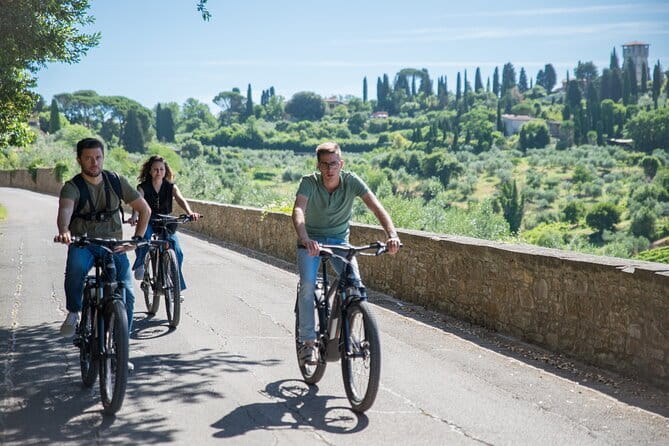
One of my favorite parts is that your guide leads the way, so you can focus on the scenery instead of map-checking between crowds. I also like the headphones/earphones setup for groups over six, which makes the guide’s commentary easy to follow at a cycling pace that actually feels relaxed.
The one thing to keep in mind is that Florence streets can get busy, and you do need basic comfort riding in traffic. On heavy rain days, the plan may shift toward walking if the bikes can’t safely be used, and the tour may be shorter than expected.
In This Review
- Key highlights that make this tour worth your time
- Why a 2-hour vintage bike loop fits Florence so well
- Meeting up and gearing up with helmets and clear audio
- A small group ride that helps you beat the stress (even on crowded streets)
- Piazza della Repubblica: starting with Rome before Florence
- Santa Maria del Fiore: reading the Duomo’s shape while you roll by
- Basilica di San Lorenzo: Medici burials and the market district feel
- Via de’ Tornabuoni and Ponte Santa Trinita: fashion street meets Renaissance bridge
- Santo Spirito in Oltrarno: a calmer Florence side of the Arno
- Palazzo Pitti and the Arno views: big Renaissance scale
- Ponte Vecchio: the old bridge that still pulls its weight
- Piazza della Signoria: Florence’s political heart and the statue-filled loggia
- The real value: guidance, pacing, and a souvenir guidebook
- When this tour might not be your best match
- Rain in Florence: what to expect so you can plan calmly
- Should you book the Florence Vintage Bike Tour?
- FAQ
- How long is the Florence Vintage Bike Tour?
- What time does the tour start?
- Where does the tour meet and end?
- Is the tour offered in English?
- How big is the group?
- What safety and comfort items are included?
- Is food included?
- What happens if it rains?
- Are children allowed on the tour?
Key highlights that make this tour worth your time
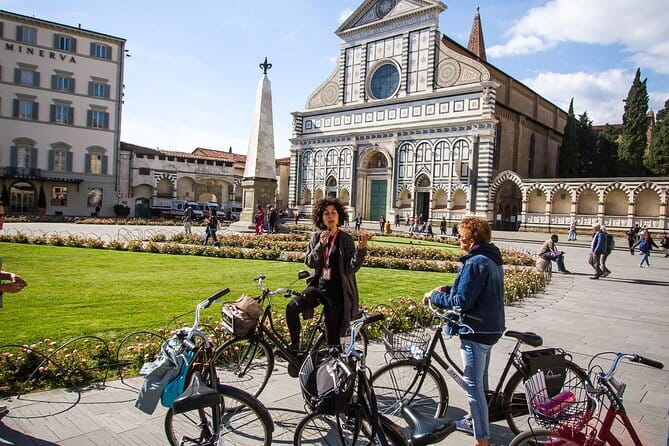
- Small group size (max 12): you get a more personal rhythm and easier crowd management.
- Guide handles navigation: you get the route and the timing without second-guessing turns.
- Headphones for groups over six: clearer history talk while you ride.
- Helmets + water bottle: simple, practical comfort for a city bike outing.
- Major sights in one loop: from Piazza della Repubblica to Piazza della Signoria.
- Rain plan that keeps you moving: heavy rain can mean a walking alternative.
Why a 2-hour vintage bike loop fits Florence so well
Florence is huge on the “I need to see everything” scale. The problem is that most of the best sights are spread out, and trying to do them all on foot can turn into a marathon with sore legs and sore patience.
This tour is a smart middle path: long enough to hit the big-name places, short enough that you don’t lose your whole day. You start at 10:00am and ride for about two hours, with frequent moments to stop and take photos—so you’re not just sprinting from landmark to landmark. And because the route is guided, it feels like sightseeing with a plan, not sightseeing as a scramble.
Also, Florence is famously rideable compared to many Italian cities. From the way the tour is paced and from the feedback on an easy cycling experience, you should expect a comfort-first ride—not a race, not a training session. For many people, that means it’s a great first bike outing in Italy.
Meeting up and gearing up with helmets and clear audio
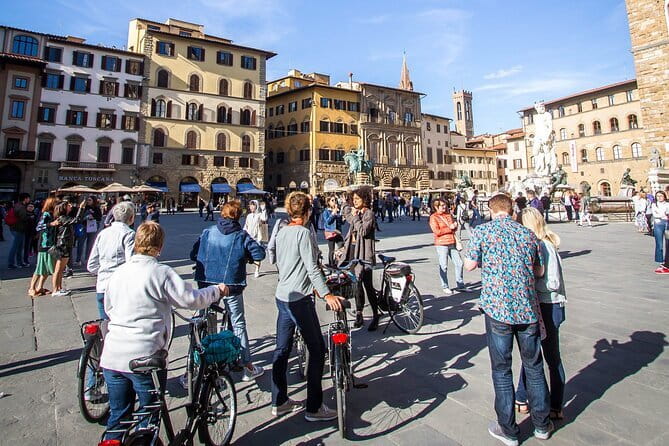
You’ll meet at Piazza Mentana in Florence (near public transportation). The meeting point may change starting March 2026 to Via della Mosca 10/r, so it’s worth checking your confirmation message right before you go.
Once you’re with the group, the tour includes the practical basics that make a bike day feel simple:
- Helmets for safety
- Water bottle
- Earphones for groups over six, so you can hear the guide clearly even while riding
- A licensed professional guide
- Mobile ticket
If you’re the type who hates fumbling with a camera while moving, don’t worry. The tour builds in plenty of photo pauses. That small detail matters in Florence, where the best shots often require stopping anyway—especially around bridges and big piazzas.
A small group ride that helps you beat the stress (even on crowded streets)
Florence can feel like one long cluster of people. This tour helps you handle that by keeping the group small (up to 12). In practice, that means fewer bottlenecks when the guide needs to reroute a little, and it’s easier to keep everyone together at an agreed pace.
You also get something that’s hard to replicate when you bike on your own: a guide who knows where to place you. The route passes major landmarks and keeps you moving through the city rather than spending the day stuck at the same viewpoint everyone else is staring at.
It’s also a good way to get context fast. You’ll get historical commentary and anecdotes tied directly to what you’re seeing—so the Duomo is not just a big building in the distance. The Palazzo Pitti is not just a palace shape. And Ponte Vecchio isn’t just a postcard bridge; it has a specific story behind the shops.
If your group is lucky, you might hear through the kind of guiding style people often mention by name—guides such as Catrine, Lorenzo, Chiara, Gloria, Greta, Martina, Fabio, Sarah, Maria, and Giacinta show up in the mix of departures. While the exact route and pacing stay consistent, the best part is that the guiding stays active and clear, not like a lecture you can’t hear.
Piazza della Repubblica: starting with Rome before Florence
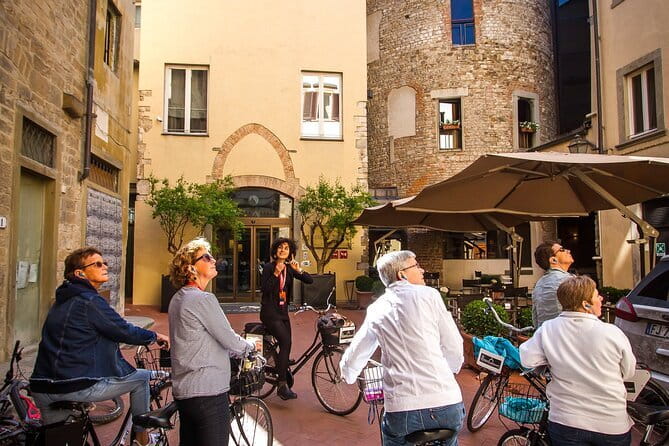
Your ride begins in the central area and soon hits Piazza della Repubblica, a spot that helps you see Florence as a layered city. This piazza marks the site of the forum, the center of the Roman city. You also hear how the old street axes line up with what became later streets (think cardo and decumanus turning into modern lanes).
There’s something satisfying about starting here because it changes how you read the city. Instead of treating Florence like one era—Renaissance, then done—you start noticing how each period uses the same ground.
Practical tip: this is a good early moment to settle your bike rhythm and get a feel for spacing and stops. You’ll be joining the ride through the busier center, so it helps to start calm and oriented.
Santa Maria del Fiore: reading the Duomo’s shape while you roll by
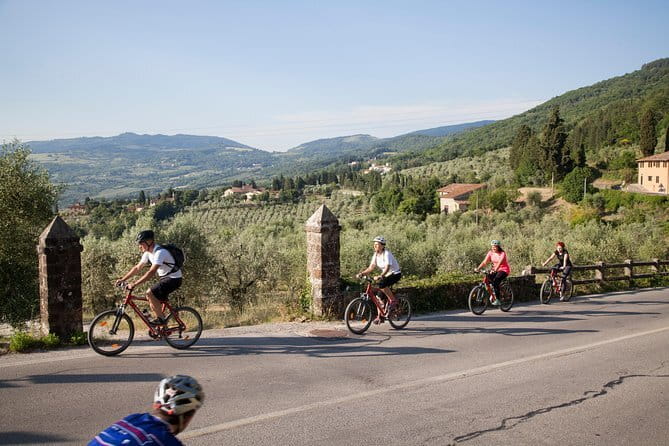
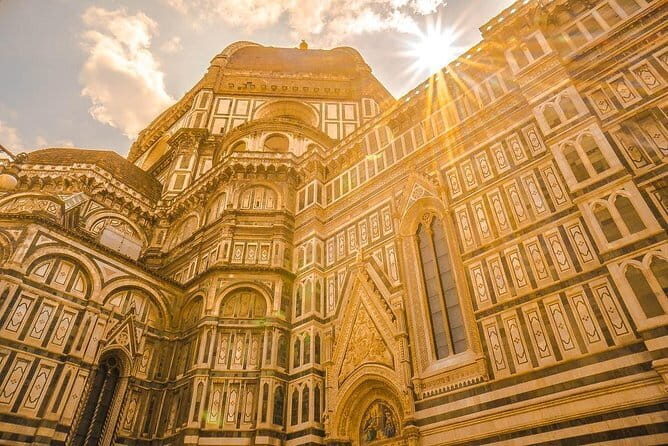
Next comes Santa Maria del Fiore, better known as the Duomo. Even if you’ve seen photos, it’s impressive in real life—mainly because the structure is all about proportions: a triple-nave basilica plan, a presbytery nested within, and the huge octagon dome that dominates the entire scene.
Your guide’s job here is to make the dome make sense. You get an explanation of how the three radial apses work and where the chapels sit, so the building feels like architecture you can understand—not just architecture you can admire.
This is also one of those places where it’s smart to be ready for photo stops. Florence loves a good angle, and biking gets you there without the hours of walking.
Basilica di San Lorenzo: Medici burials and the market district feel
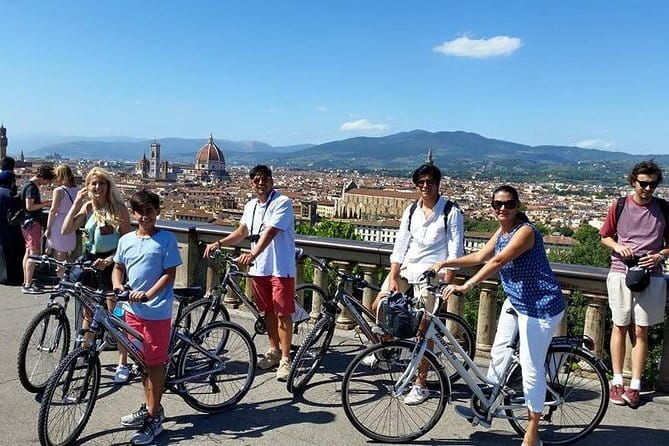
Then you move through the area around Basilica di San Lorenzo. This is one of the largest churches of Florence, and it sits right at the center of the city’s main market district. That matters because the setting feels lived-in rather than museum-quiet.
The big story tied to this basilica is that it’s the burial place of principal Medici family members. So as you pass or pause, you’re not just looking at a church—you’re watching the city’s power history play out in stone.
A subtle plus: this part of the route often breaks up the “tourist main road” feeling. Even with crowds, you get a Florence texture that’s more human and less postcard-only.
Via de’ Tornabuoni and Ponte Santa Trinita: fashion street meets Renaissance bridge
From San Lorenzo and the church area, the route shifts toward Via de’ Tornabuoni, a central street running from Antinori square to Ponte Santa Trinita, passing through Santa Trinita square. It’s known for fashion boutiques, so expect a different vibe than the monumental church zones.
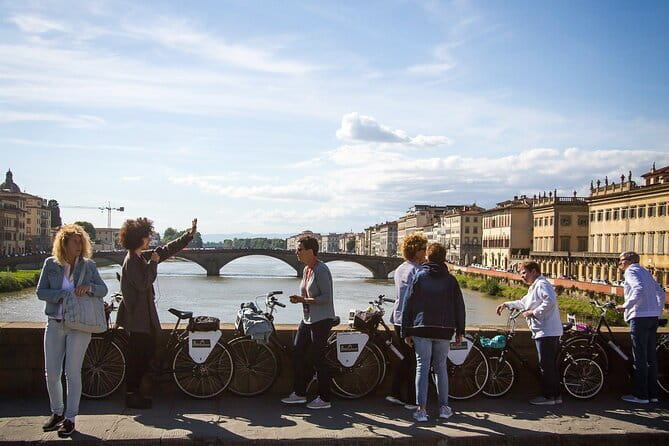
Then you cycle to Ponte Santa Trinita, which is a major Renaissance bridge. It’s often called the most beautiful bridge in the world, and the reason you’ll feel that is the geometry: it looks elegant even when it’s crowded around it. From the bike, you can take in the full relationship between the bridge, the river, and the buildings along it.
If you like photography, this is a solid moment. Bridges are where Florence rewards you most for small movement—shifting your angle just a bit changes the whole composition.
Santo Spirito in Oltrarno: a calmer Florence side of the Arno
Next up is Basilica di Santo Spirito, often just called Santo Spirito, located in the Oltrarno quarter. It faces the square that shares its name, so you get a sense of the church’s connection to neighborhood life.
This stop is a nice change of pace after the heavier central sightseeing. Oltrarno tends to feel more local, and Santo Spirito gives you a different Florence mood without leaving the tour’s comfortable loop.
If your day in Florence is mostly “top sights only,” this is a good balancing stop.
Palazzo Pitti and the Arno views: big Renaissance scale
As you move toward the river, you reach Palazzo Pitti. This palace is vast, mainly Renaissance in character, and sits on the south side of the Arno, not far from Ponte Vecchio.
What I like about seeing Palazzo Pitti as part of a bike tour is how the river gives it scale. You’re not stuck staring at a single façade from one sidewalk point. You get multiple angles as you cycle nearby, and your guide’s commentary helps you place the palace in Florence’s story beyond just being large.
If you’re the type who enjoys architecture, this is a strong stop. If you’re not, it still works because the views and the location do half the work for you.
Ponte Vecchio: the old bridge that still pulls its weight
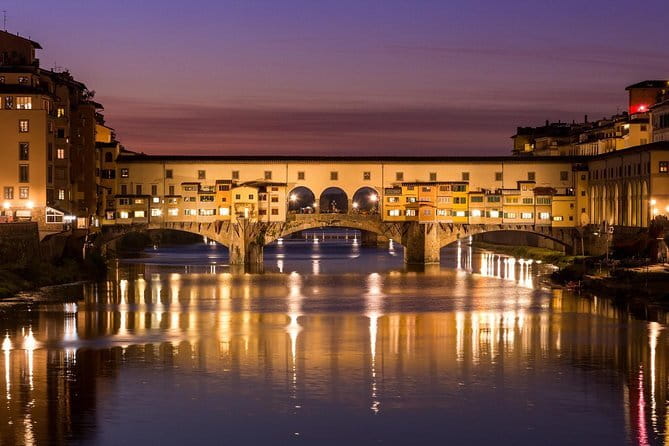
Now for the classic: Ponte Vecchio, the oldest bridge in Florence still in existence. The tour gives you the key details: the bridge was finished in 1345, designed by Taddeo Gaddi (a student of Giotto), and it’s famous for the shops along and around it.
Those shops used to be tied to trades like blacksmiths, tanners, and butchers. That’s the kind of background that makes Ponte Vecchio more than a pretty structure. It becomes a functioning part of the city’s economic history.
And yes, it’s busy. Florence loves its icons. But being on a guided bike route helps you stay oriented and not waste your time circling.
Piazza della Signoria: Florence’s political heart and the statue-filled loggia
The tour’s final major sightseeing focus is Piazza della Signoria—for good reason. This piazza has been the political and social heart of Florence for years, with public gatherings and major events. It’s one of those places where even if you only have a few minutes, you feel the gravity of the city.
You’ll also see the loggia with statues that recall important events and myths tied to Florence’s identity. This stop ties the narrative together: Rome’s street axes, the Duomo’s architectural power, Medici burial significance, then the city’s public power in one big public space.
The real value: guidance, pacing, and a souvenir guidebook
At $42.33 per person for about two hours, the value is in what you don’t have to plan. You’re not arranging transport between sights, you’re not worrying about the route, and you’re not spending time trying to decode what you’re looking at.
The tour also includes a Florence City GuideBook with fresh suggestions for your stay in Florence and Tuscany. Even if you already have a guidebook at home, this kind of add-on can point you toward practical next steps—where to go next, what to prioritize, and how to plan around timing.
This is also a tour that works well as a first-day activity. It helps you get your bearings fast, then you can decide what to revisit on foot later.
When this tour might not be your best match
Most people do well here, but I’d be honest about the fit.
Choose this tour if:
- You want an easy way to see lots of top spots without getting lost
- You like biking in a guided group
- You prefer hearing stories instead of reading every sign
Skip it or think twice if:
- You’re not comfortable biking in crowded streets and changing traffic patterns
- You have a very tight schedule and can’t handle a possible late start or extra breaks
- You’re expecting guaranteed long time at any single interior site (the tour is built around moving and brief stops, not extended museum time)
Also, plan your day with a bit of buffer. One unhappy story from a past experience points to how time can get squeezed if someone’s schedule is extremely fixed. If you’ve got a must-attend timed entry right after, give yourself margin.
Rain in Florence: what to expect so you can plan calmly
This tour has a rain policy that aims to keep the experience going. It will not cancel just because of rain. If conditions are heavy, the organizers may switch to a walking tour instead of biking, or start with walking if bikes can’t be used at the meeting point. If weather improves, the team will try to get you back on bikes when possible.
They also note that proper rain gear is mandatory if you choose to ride in possible rain. And they offer a rain check option for the same amount paid that you can use later, subject to availability, and it lasts up to one year.
Translation for your planning: don’t assume you’ll definitely get every minute of biking on wet days, but do assume you’ll still be out with your guide when rain shows up.
Should you book the Florence Vintage Bike Tour?
I think this tour is a strong pick if you want a high-efficiency Florence overview with low stress. The combo of small group size, guide-led navigation, helmets, water, and earphones for bigger groups makes it feel organized and comfortable. The route hits the places you’d likely want anyway: the Duomo area, Medici ties at San Lorenzo, signature bridges, then the big public piazza energy at Piazza della Signoria.
If you’re an experienced city cyclist who hates delays, bring extra schedule slack. If you’re a nervous rider or biking is new to you, this may still be doable, but your comfort level matters more than the name on the bike.
FAQ
How long is the Florence Vintage Bike Tour?
It’s about 2 hours.
What time does the tour start?
It starts at 10:00am.
Where does the tour meet and end?
It ends back at the meeting point. The start location is Piazza Mentana, 50122 Firenze FI, Italy, and starting March 2026 it will be Via della Mosca 10/r, Florence.
Is the tour offered in English?
Yes, it’s offered in English.
How big is the group?
The tour has a maximum of 12 travelers.
What safety and comfort items are included?
You get helmets and a water bottle. If your group is over six, you also get earphones so you can hear the guide clearly.
Is food included?
Food and drinks are not included unless specifically stated.
What happens if it rains?
The tour will not be cancelled due to rain. In heavy rain, it may switch to a walking tour instead of biking, or you may start with walking if bikes can’t be used.
Are children allowed on the tour?
Children and teens under 18 must be accompanied by at least one adult. If that requirement isn’t met, they may be excluded without a refund.
If you tell me your travel dates and whether you’re comfortable cycling in busy streets, I can help you decide if the timing and rain risk fit your plan.