REVIEW · FLORENCE
Guided Medici Tour Florence: Discover Mysteries & History
Book on Viator →Bookable on Viator
Medici power in Florence feels oddly personal. In about 90 minutes, you’ll trace the dynasty’s influence from burial chapel to Renaissance palaces and the city’s iconic public spaces. Small-group size (max 10) keeps it human, and the Medici story is explained stop-by-stop in plain, usable language.
What I like most is the on-foot flow through major sites without turning it into a history lecture that never ends. I also enjoy how guides often help you orient fast, and even suggest practical places to eat after the walk. One possible drawback: the tour covers multiple Florence landmarks, so if you’re hoping for a tight, purely chronological Medici deep-dive, you may find the emphasis varies by guide and day.
In This Review
- Key things to know before you go
- Cappelle Medicee: where Medici legacy starts (30 minutes)
- Palazzo Medici Riccardi: Renaissance power in a short stop (5 minutes)
- Duomo stop: Santa Maria del Fiore as your orientation anchor (10 minutes)
- Piazza della Signoria: art, politics, and everyday crowds (15 minutes)
- Ponte Vecchio: a quick crossing with big symbolic weight (5 minutes)
- Palazzo Pitti: the route split and your independent time (10 minutes)
- The walking pace, fitness level, and the 90-minute rhythm
- Price and value: $50.15 for a Medici-centered Florence orientation
- Guides, English, and how to make the most of the explanations
- Tickets, timing, and what to expect when you arrive
- Should you book the Guided Medici Tour in Florence?
- FAQ
- How long is the Guided Medici Tour Florence?
- How much does the tour cost?
- What language is the tour offered in?
- How many people are in the group?
- Where do I meet the guide?
- Where does the tour end?
- Are admission tickets included?
- Is there a cancellation window?
- What kind of walking should I expect?
Key things to know before you go
- Small group (up to 10) helps you actually hear the guide and ask questions.
- Medici-led route connects the family’s power to real buildings you can see.
- Radios may be used so explanations stay clear during busy street crossings.
- Admission tickets aren’t included at key stops, so budget time and money for entry.
- Route may split near the end, with some free independent time around Ponte Vecchio/Pitti.
Cappelle Medicee: where Medici legacy starts (30 minutes)
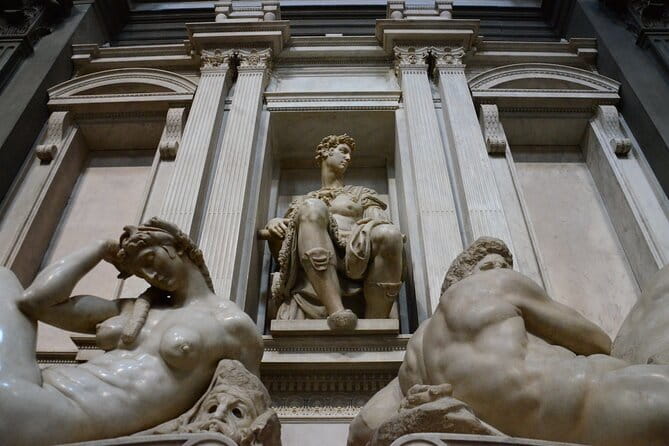
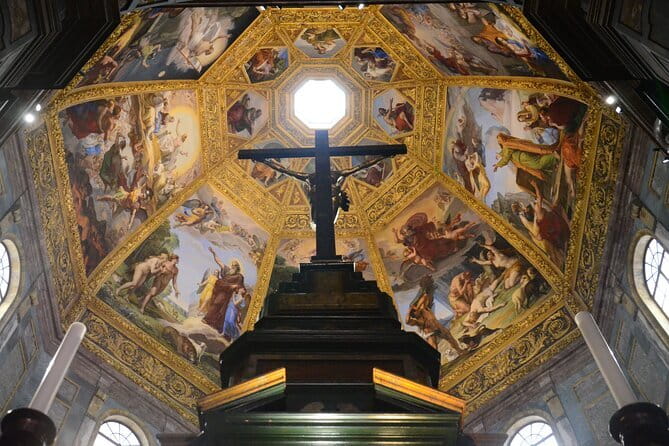
You begin with the Cappelle Medicee, the Medici family’s chapel complex. This is the kind of stop where Florence isn’t just “pretty”—it’s political, spiritual, and carefully staged. You’ll spend about 30 minutes here, long enough to notice details you’d normally rush past.
Because admission tickets are not included, plan to add time (and the ticket cost) for entry. If the chapel is crowded, having a guide’s pacing matters. If it’s quiet, you’ll get a better sense of why this space helped the Medici brand themselves as both religious patrons and rulers-in-waiting.
Practical tip: wear shoes you trust. Even with guidance, you’ll be walking through historic spaces and turning corners in a steady rhythm.
Palazzo Medici Riccardi: Renaissance power in a short stop (5 minutes)
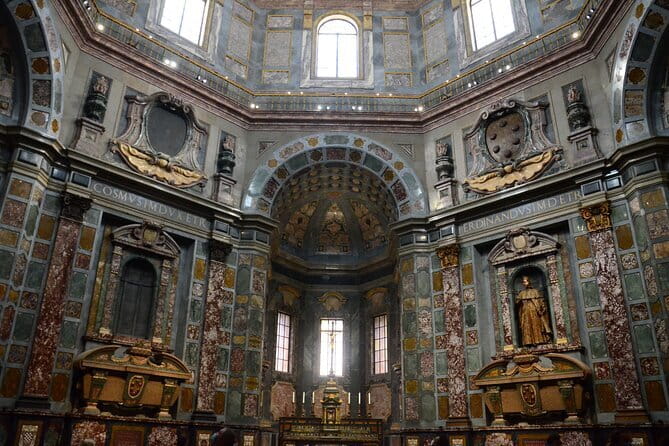
Next is Palazzo Medici Riccardi, often tied to the early Renaissance rise of the Medici. Even with only about 5 minutes, it’s a meaningful “power marker” stop. You’ll connect the family’s ambitions to the idea of living in—and projecting—authority from a palace that signaled a new era.
Here’s the key value for you: this brief moment helps you read Florence as a system. Streets and churches aren’t random. They reflect who had money, who had influence, and who wanted people to notice.
Admission isn’t included for this stop either, so don’t expect entry unless the guide’s plan includes it that day. Still, the explanation can help you make sense of what you’re looking at from outside and in the nearby area.
Duomo stop: Santa Maria del Fiore as your orientation anchor (10 minutes)
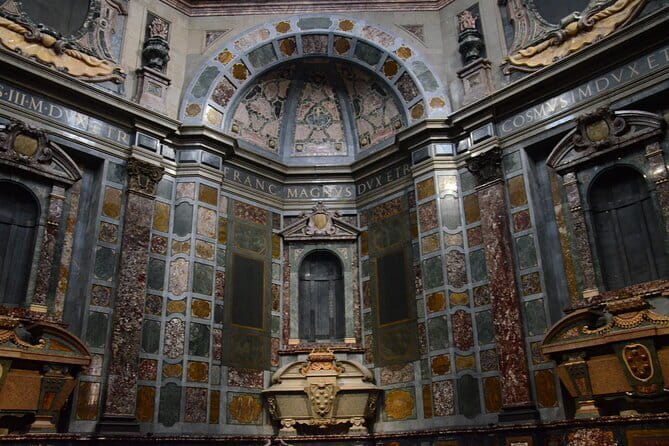
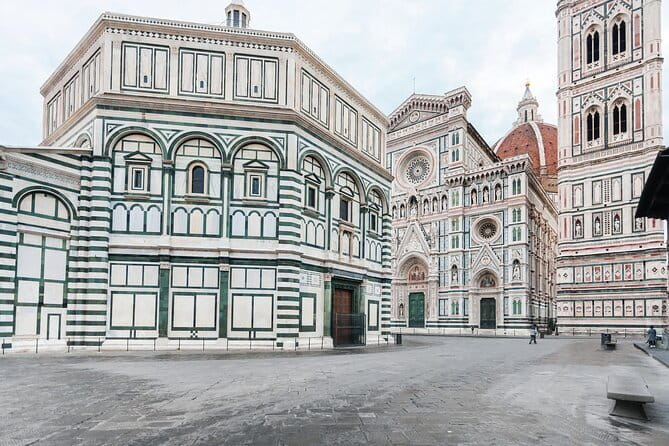
Then you head to the Duomo area—Cattedrale di Santa Maria del Fiore. This is one of those Florence stops where you don’t just see a church. You see the city’s obsession with scale, design, and prestige.
You’ll spend around 10 minutes here. The stop works best if you use it for orientation: notice how the cathedral sits as the backdrop for nearby squares and streets, and how the city’s energy funnels toward it.
One guest highlighted that the guide’s descriptions helped them understand what you see when looking up toward the cathedral’s heights. That kind of storytelling can make a quick stop feel bigger than the clock says. Still, with admission tickets not included, know you may be focusing on the cathedral area rather than paying for extra interior access.
Piazza della Signoria: art, politics, and everyday crowds (15 minutes)
Piazza della Signoria is Florence’s public room. It’s where you can feel the mix of civic pride and family-backed power. Expect about 15 minutes here, mostly for explanation and visual context.
This stop is valuable because it connects the Medici story to the way Florence public life actually works. You’ll see an incredible concentration of artwork and monuments around you, and the guide’s job is to explain why these displays matter—who benefited, what messages were sent, and how art became a political language.
Tip for you: don’t try to “complete” the square in 15 minutes. Let the guide point your attention. Then you can decide later what you want to read more closely on your own.
Ponte Vecchio: a quick crossing with big symbolic weight (5 minutes)
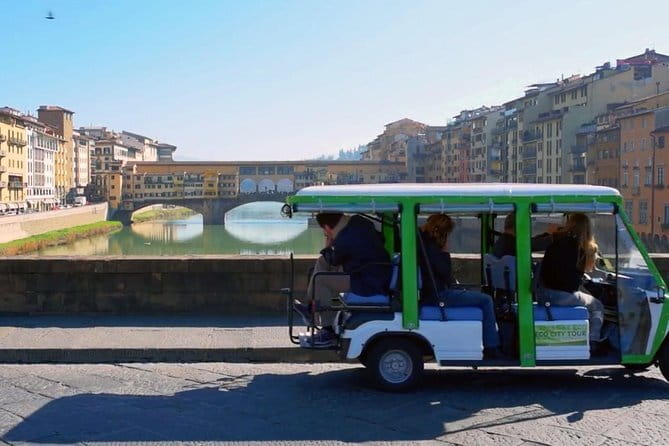
Then comes Ponte Vecchio, Florence’s older bridge. You get about 5 minutes here—short, but not meaningless. The guide’s context helps you treat it as more than a photo stop.
This bridge sits at a sweet spot for Medici understanding because it represents how wealth, commerce, and family influence lived side-by-side in Florence’s everyday spaces. Even if you’ve seen Ponte Vecchio in pictures before, hearing how it fits into the city’s power structure makes it feel more grounded.
Since admission tickets aren’t included, this is mostly about sights and explanation. If you want linger time, you’ll have it later depending on how your group route finishes.
Palazzo Pitti: the route split and your independent time (10 minutes)
Palazzo Pitti is the endgame for Medici connection. You’ll spend about 10 minutes here, and this part can vary. Sometimes the group continues together. Other times, the tour concludes at Ponte Vecchio, and you’re free to cross the bridge at your own pace and explore Piazza Pitti independently.
That split is actually useful. If you’re the type who likes to zoom out and wander, you’ll enjoy having some control at the end. If you prefer staying anchored with a group, look for the guide’s cue on whether you’re all staying together.
One practical note: this stop also lists admission tickets not included, so if you were hoping to go inside, plan to purchase entry separately or adjust expectations toward exterior viewing and the surrounding area.
The walking pace, fitness level, and the 90-minute rhythm
This is a walking tour with a moderate physical fitness requirement. “Moderate” here means you should feel comfortable moving through uneven historic areas, standing for short stretches, and keeping up with a group.
The duration is about 1 hour 30 minutes, which is a sweet spot for a first or second day in Florence. You get orientation without burning your whole morning. And because the group is capped at 10 travelers, you typically won’t feel like you’re being dragged by a crowd.
If you’re jet-lagged or moving slowly, it helps to tell your guide early. In a small group, small adjustments matter.
Price and value: $50.15 for a Medici-centered Florence orientation
At $50.15 per person for roughly 90 minutes, the value depends on what you want from the day.
You’re paying for:
- A guided route through major Florence landmarks tied to the Medici story
- A guide who can explain how Medici influence shows up in buildings and public spaces
- A small-group experience that stays manageable at busy sites
You’re not paying for:
- Admission tickets, which are listed as not included at multiple stops
So the smart way to think about the price is this: if you’re planning to see the Medici sites anyway, guidance can turn random-looking streets into a story you can follow. If you’re mainly after museum-style interior time at every location, you may feel limited because extra entrances need separate tickets.
From what I’ve seen in similar short Florence tours, this one is most cost-effective when you treat it as a map and a context-builder. Then you come back later, pick the places that caught your interest, and go deeper on your own schedule.
Guides, English, and how to make the most of the explanations
The tour is offered in English, and in practice the guide quality can make a huge difference—especially with a topic as wide as the Medici.
In the past, I’ve heard strong performances from guides such as Sylvia, Rachele, and Alessandra. Names aside, the key takeaway for you is to engage. Ask for a simple timeline at the start, then use each stop to anchor a date in your mind.
One more thing: some guides appear to use radios, which can be a big help when streets get noisy. You’ll be happier if you stay close to the front and avoid drifting sideways behind bigger silhouettes.
If you care a lot about pure chronology and the Medici story above all else, say so politely at the start. A good guide will often adjust how they pace the explanation.
Tickets, timing, and what to expect when you arrive
A few practical expectations based on how the tour is set up:
- Admission tickets are not included at the listed stops, including major ones like the Cappelle Medicee and Duomo area.
- The tour ends at Ponte Vecchio (with the possibility of the group splitting near the end).
- You meet at Via de’ Martelli, 33R, 50129 Firenze FI, Italy and you’ll likely want to be early enough to find the exact meetup spot.
Because this is a short tour, don’t plan to “wing it” on ticket timing. If you want the full value, arrive with enough buffer to buy entry where needed and still stay with the group.
Also, with any Florence walking tour, sun and crowds are real. Bring water, protect your phone battery, and plan to move at a steady pace.
Should you book the Guided Medici Tour in Florence?
Book it if you want:
- A Medici-focused route that connects buildings to power
- A small-group walk that helps you get your bearings fast
- A practical first-day overview that you can build on later
Consider a different option if:
- You want nonstop, purely chronological Medici storytelling with no detours through Florence landmarks
- You’re expecting everything to include entrances without needing extra tickets
- You strongly prefer a private setup where you can tailor the emphasis (for example, chapel-first, palace-first, or timeline-first)
If your goal is to understand why Florence looks the way it does—and how the Medici turned art, architecture, and public space into influence—this is a solid way to start. Just plan for the fact that you’ll likely buy some entry tickets yourself.
FAQ
How long is the Guided Medici Tour Florence?
It lasts about 1 hour 30 minutes.
How much does the tour cost?
The price is $50.15 per person.
What language is the tour offered in?
The tour is offered in English.
How many people are in the group?
The tour has a maximum of 10 travelers.
Where do I meet the guide?
The meeting point is Via de’ Martelli, 33R, 50129 Firenze FI, Italy.
Where does the tour end?
The tour ends at Ponte Vecchio, 50125 Firenze FI, Italy.
Are admission tickets included?
No. Admission tickets are listed as not included for the stops on this tour.
Is there a cancellation window?
Yes. You can cancel up to 24 hours in advance for a full refund.
What kind of walking should I expect?
The tour requires a moderate physical fitness level. You should be comfortable with walking during the full 90 minutes.