REVIEW · FLORENCE
Museo di San Marco in Florence: Beato Angelico, Savonarola and the Medicis
Book on Viator →Bookable on Viator
San Marco turns Florence into something quieter. This private tour of the Museo di San Marco lets you move through the church, convent, facade, and both cloisters while a guide connects it all to the people who shaped Renaissance Florence, from Cosimo de’ Medici to Fra Angelico. Two big wins: you get pre-booked tickets to avoid the slow entrance grind, and the pacing stays relaxed since it’s just your group.
I also like how the visit is built around rooms with real atmosphere: friars’ cells, the Renaissance Library of Pope Leo X, and the place where Savonarola’s story intersects with art and daily life. One consideration: you need to confirm opening hours for your day, because San Marco can be affected by schedule changes, and your tour start is at Piazza San Marco rather than with hotel pickup.
In This Review
- Key things you’ll love about this San Marco tour
- San Marco feels different: quieter, smaller, and more personal
- Michelozzo, Cosimo de’ Medici, and the Medici power play
- Fra Angelico’s paintings: why the location matters
- Leo X’s Renaissance Library: the book-lover’s moment
- Savonarola’s cells: where reform and daily life collide
- The church, facade, and cloisters: what to look for as you move
- Your guide matters: Katherine and Suzanna as examples
- Price and time: does $189.18 make sense for San Marco?
- Practical tips for planning your San Marco morning or afternoon
- Who this private tour suits best
- Should you book this Museo di San Marco private tour?
- FAQ
- How long is the Museo di San Marco tour?
- What does the tour price include?
- Is hotel pickup included?
- Where do I meet the guide?
- Is the tour private or group-based?
- Is it offered in English, and is cancellation possible?
Key things you’ll love about this San Marco tour
- Private group, relaxed pace so you can actually ask questions instead of speed-walking.
- Pre-booked admission included, helping you avoid the longest lines at the entrance.
- Fra Angelico’s art in context with an explanation tied to the convent’s original purpose.
- Savonarola’s cells and the Medici connection—you’ll see how religion and politics shared the same walls.
- Five-part walk-through: church, convent, facade, first cloister, and second cloister.
San Marco feels different: quieter, smaller, and more personal
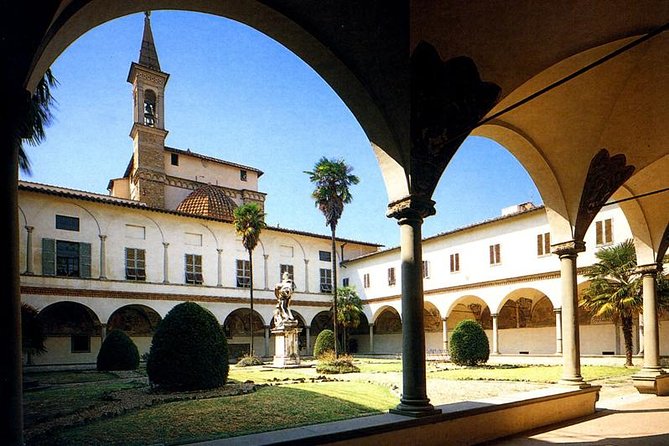
Florence is famous for huge, loud sights. San Marco is the opposite mood. Instead of chasing crowds through a checklist, you get a guided circuit through a working religious complex that was commissioned by the Medici and designed in part by Michelozzo. That context matters because it changes how you read everything you see.
On this tour, the guide doesn’t treat the building like a random museum backdrop. You’re guided through the complex as a system: architecture that signals power, artworks that served devotion, and living spaces that show what daily discipline looked like. I like tours like this because they help you leave with more than photos. You get the “why” behind the layout.
Also, your visit is 2 hours and ends back at Piazza San Marco. That makes it easier to plan around it on a Florence day without blowing up your whole schedule.
Michelozzo, Cosimo de’ Medici, and the Medici power play
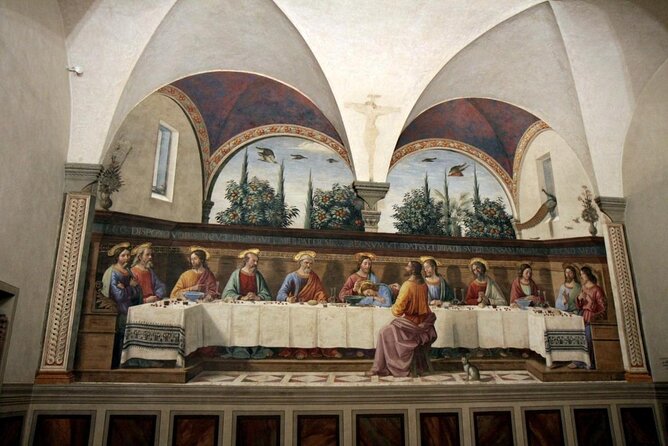
San Marco began as a Medici project, commissioned by Cosimo de’ Medici. Even if you know Florence basics, it’s still eye-opening to see how power expressed itself through institutions: convent life, religious instruction, and cultural production all linked back to the Medici sphere.
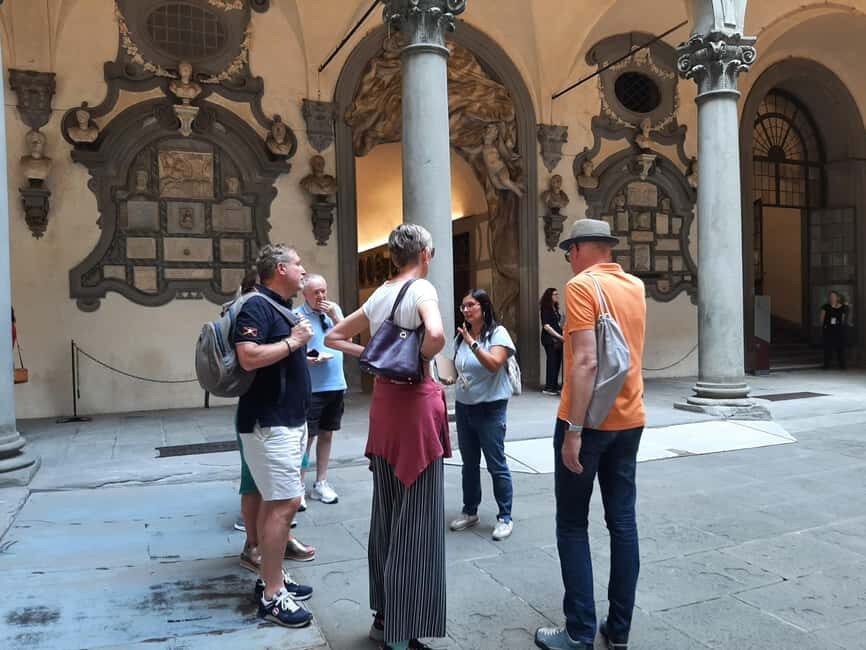
As you walk, pay attention to the overall logic of the complex. The guide breaks the site into five parts you visit: the church, the convent, the facade, and the first and second cloister. When someone explains that structure up front, the building stops being a blur. You start noticing how spaces shift from public to private, from ceremonial to quiet.
This is also where Michelozzo’s role becomes more than a name. The design choices create the calm you feel inside. Even if you’re not an architecture nerd, the building’s organization helps you understand why a convent could also function like a statement of influence.
Fra Angelico’s paintings: why the location matters
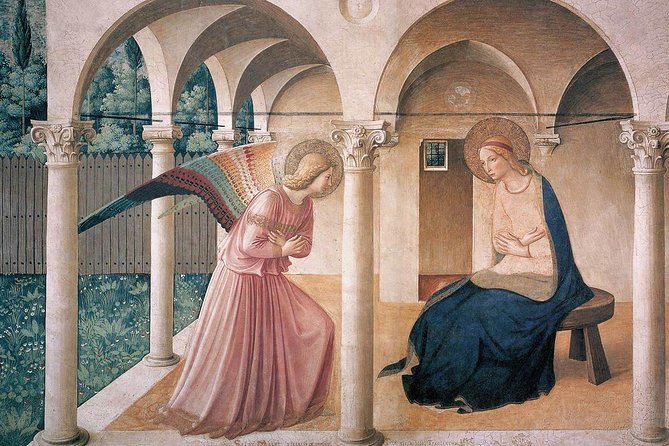
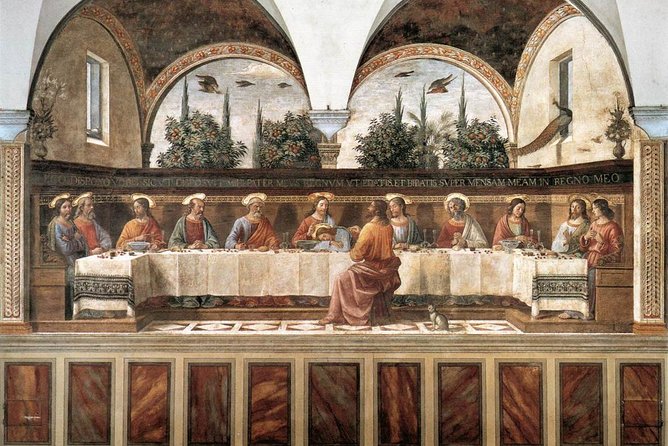
Fra Angelico is the headliner for many people, but the magic here is how your guide frames the art. You’re not just looking at paintings on a wall. You’re seeing them in a complex where they were created to support religious life.
The tour spotlights Fra Angelico’s work along with the surrounding rooms. In the context of a convent, the art reads differently. Instead of feeling like a gallery piece, it feels like something meant for reflection. The best tours of this sort bring out small cues: what kind of atmosphere the art creates, why it fits the spiritual routines, and how the building’s rhythm shapes what you notice first.
The reviews give a clear pattern: guests loved when the guide made Fra Angelico come alive. One guide named Katherine was specifically praised for turning the works into something you could understand, not just admire. Another guide named Suzanna was described as very interesting and pleasant, with lots of learning for her group. In other words, the art is strong either way, but the explanations can be the difference between seeing and really getting it.
Leo X’s Renaissance Library: the book-lover’s moment
One of the most distinctive stops is the Renaissance Library of Pope Leo X. A library in a convent complex sounds straightforward until you’re actually there. It signals how education and manuscript culture fit into the same world as devotion and art.
If you like Renaissance details, this part can be a highlight. You’ll have a chance to connect the idea of learning with the physical space designed for study and preservation. The guide’s job is to make the library more than a room name by tying it back to the bigger story of the people connected to San Marco.
Even if you’re not obsessed with libraries, this is one of those moments that changes the tone of the tour. You go from visual art to the idea that knowledge was part of the spiritual mission. That’s a useful perspective for Florence, where so much is presented as art first and history second.
Savonarola’s cells: where reform and daily life collide
If Fra Angelico brings you into calm contemplation, Girolamo Savonarola brings intensity. San Marco is one of the places in Florence where his presence is felt not as legend, but as lived reality. During the tour, you’ll see the cells tied to Savonarola.
This is where the convent stops being only about art. Savonarola was connected to 15th-century Florence in ways that were not gentle or purely personal. Seeing his cells in the context of the complex helps you understand how ideas about reform could take root inside a place meant for discipline.
I like that your guide connects multiple figures in the same narrative thread. Cosimo de’ Medici, Fra Angelico, and Savonarola aren’t presented as isolated “famous names.” Instead, you get a sense that these people shared the same environment, sometimes harmoniously, sometimes with tension, but always within the same physical space.
The church, facade, and cloisters: what to look for as you move
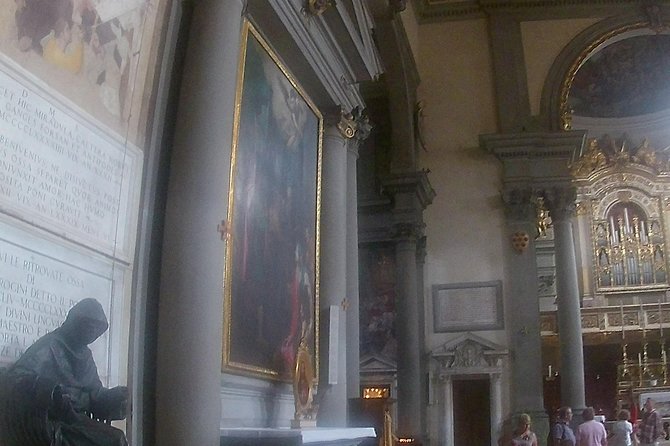
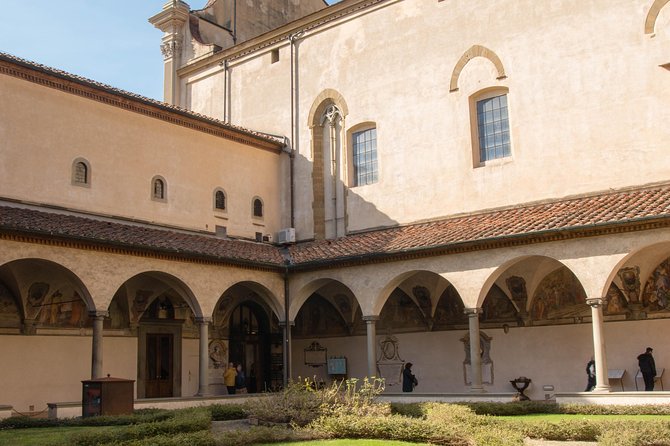
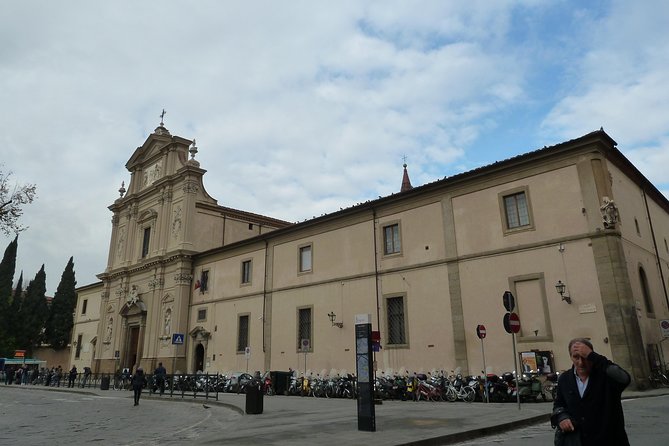
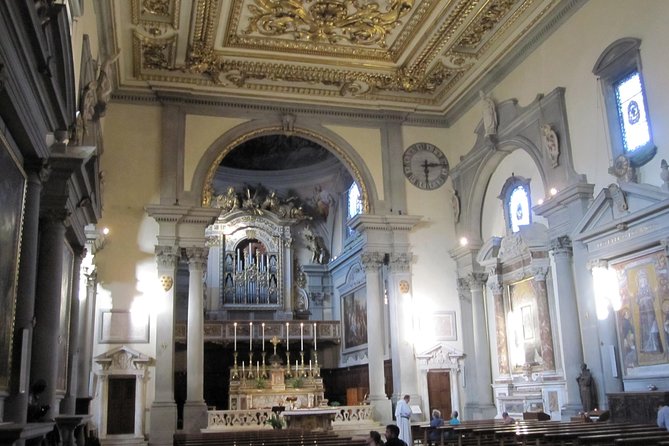
The walk-through isn’t a random wander. You visit the church, then move through the convent areas, see the facade, and tour both the first and second cloisters. That sequence matters because it mirrors how the complex functions.
In practical terms, here’s how you can get the most from this section:
- In the church, listen for how the guide connects architecture to function. Don’t just look upward; look at what the space encourages people to do.
- At the facade, treat it like a face you can read. Ask yourself what kind of message a Medici-backed site would want to project.
- In the first and second cloisters, slow down. Cloisters are where buildings become “people-scale.” They help you understand the pace of convent life.
Because this is a private tour, you can take a breath when you want. In a standard group tour, you often lose those quiet pauses. Here, you’re more likely to get to the point where questions don’t feel rushed.
Your guide matters: Katherine and Suzanna as examples
A tour like this lives or dies on the person leading it. You’re looking at art and spaces tied to major figures, but you’re also learning how to interpret them as a single system. That’s not automatic.
The feedback you have here points to two guide strengths:
- Making Fra Angelico’s works easier to understand and emotionally real (Katherine was singled out for this).
- Teaching in a friendly way that still feels substantive (Suzanna was praised as very interesting and pleasant).
There’s also a caution worth paying attention to: one experience noted that English clarity wasn’t as strong as hoped for an English speaker. That doesn’t mean every guide will have the same issue, but it does suggest you should care about language comfort. If you’re relying on the tour to understand subtle context, ask the operator about English delivery ahead of time when booking.
Price and time: does $189.18 make sense for San Marco?
At $189.18 per person for about 2 hours, this is not a budget add-on. So what makes it feel worth it?
First, the tour includes entrance to Museo San Marco and uses pre-booked tickets. In Florence, entrance lines can waste real time. If your schedule is tight, buying time can be a value, not just a convenience.
Second, it’s private. Private usually means fewer compromises. You get a guide to focus on your group pace and questions. For a site like San Marco, where the story depends on context, that matters more than it does at a pure “look-and-go” attraction.
Third, you’re paying for interpretation of multiple layers: Medici patronage, Fra Angelico’s convent art, Savonarola’s role, and the library tied to Pope Leo X. A generic audio guide might help you move through the rooms. A good guide helps you understand what to notice while you’re there.
One more practical angle: this tour ends back at the meeting point at Piazza San Marco. That makes it easier to pair with another nearby Florence stop without expensive taxis or long detours. If you’re planning an efficient day, that can offset some of the higher per-person cost.
Practical tips for planning your San Marco morning or afternoon
San Marco is best when you treat it like a real appointment, not a random stop.
- Meet at Piazza San Marco. There’s no hotel pickup, so plan a simple walk or transit route to the square.
- Wear shoes you can tolerate for a two-hour indoor/outdoor mix. Cloisters and quiet rooms tend to invite you to linger.
- If you’re sensitive to timing, double-check opening hours for the day you book. Schedule changes can happen, and San Marco is a sight you don’t want to miss entirely when Florence is already packed.
- Build a Plan B. When San Marco timing doesn’t cooperate, it helps to have another Medici-themed option in mind nearby. Even a classic Medici stop like Palazzo Medici can keep the day on-theme.
Who this private tour suits best
This is a great fit if you want Florence without the loud overload.
You’ll likely enjoy it if:
- You like art with context, not just famous names.
- You want a quieter alternative to the busiest museums.
- You’re interested in how the Medici, Fra Angelico, and Savonarola fit into one physical story.
- You prefer private pacing so you can ask follow-up questions.
You might want to skip or rethink if:
- You want a super-short stop with minimal explanation.
- Language clarity is a major requirement for you and you’re worried about English delivery. In that case, confirm details with the operator before you go.
Should you book this Museo di San Marco private tour?
I’d book it if San Marco is on your Florence “must understand” list. The combination of Fra Angelico, Savonarola, and Medici-era design is a rare mix, and the tour structure—church, convent, facade, first cloister, second cloister—keeps it from feeling like a checklist.
The risk is mainly about timing and expectations: check hours in advance because your start depends on meeting at Piazza San Marco and getting into the museum as scheduled. If you do that, you’ll likely get the value you’re paying for: a guided, coherent visit that turns the art and the setting into one story.
FAQ
How long is the Museo di San Marco tour?
It’s approximately 2 hours.
What does the tour price include?
Entrance to the Museo San Marco is included, along with a professional guide and a private tour.
Is hotel pickup included?
No. You’ll make your own way to the meeting point.
Where do I meet the guide?
You meet at Piazza San Marco, Firenze FI, Italy. The tour ends back at the meeting point.
Is the tour private or group-based?
It’s private. Only your group participates.
Is it offered in English, and is cancellation possible?
The tour is offered in English. Free cancellation is available up to 24 hours before the experience start time for a full refund.