Pisa rewards slow looking, even when you only have 90 minutes. This walking tour strings together the big icons of Piazza dei Miracoli with smarter stops nearby, so you get the story behind the marble, the tilt, and the quiet corners. You’ll also get a breather view from the Mura di Pisa—those old 12th-century walls with a surprisingly good overlook.
I like that the guide doesn’t just point at postcards. The Leaning Tower tilt is explained in plain terms (unstable foundation soil), and the walk keeps you oriented in the right order. I also like that it’s led by an enthusiastic English-speaking guide—like Alice—who shares details and even tips on local dishes to try.
The main drawback to consider: you are paying for guidance more than paid entries. Some of the biggest sights are free to access during this tour, so if you mainly want to wander on your own, it can feel pricey for the time.
In This Review
- Key highlights at a glance
- Why Piazza dei Miracoli is a must-walk in Pisa
- Meeting point: easy start, less wandering
- Mura di Pisa walk: the “you didn’t expect this” viewpoint
- Leaning Tower of Pisa: the tilt, explained without the drama
- Cattedrale di Pisa (Duomo): Romanesque marble you’ll actually notice
- Battistero di San Giovanni: the acoustics and the Nicola Pisano connection
- Camposanto Monumentale: the peaceful stop people rush past
- Museo dell’Opera del Duomo: an optional add-on you’ll decide on
- Timing and pacing: how 1.5 hours can feel like 2
- Price and value: what you’re actually paying for
- Who this Pisa walking tour suits best
- Should you book the Pisa Leaning Tower and Miracle Square tour?
- FAQ
- What is the duration of the Pisa walking tour?
- How much does the tour cost?
- What’s included in the price?
- Are tickets to the main sights included?
- Is the Museo dell’Opera del Duomo ticket included?
- Where do I meet for the tour?
- Is the tour offered in English?
- What is the group size limit?
- Do I get a mobile ticket?
- Can I cancel for a full refund?
- Are service animals allowed?
Key highlights at a glance
- Mura di Pisa viewpoint: ancient 12th-century walls with panoramic landmark views
- Leaning Tower context: a simple explanation for the tilt tied to the ground under it
- Duomo + marble façade: Romanesque architecture with intricate marble work and bronze doors
- Baptistery details: dome acoustics plus the marble font and a pulpit by Nicola Pisano
- Camposanto Monumentale calm: a Gothic cloister with ornate tombs and ancient Roman sarcophagi
- Small group pacing: max 20 people keeps photos and questions from getting chaotic
Why Piazza dei Miracoli is a must-walk in Pisa
Piazza dei Miracoli is one of those places where the landmarks feel like they’re all speaking the same architectural language. The trick is knowing what you’re looking at—why the marble is the way it is, why the buildings relate to each other, and why the whole area is treated as one grand UNESCO-worthy complex.
This tour is built for that exact problem: too many visitors arrive, snap photos, and miss the meaning between the buildings. Here, the sequence keeps you moving, but not rushing. You go from the broader city context to the tower, then into the cathedral-baptistery complex, and finally to the Camposanto, which often gets overlooked because it’s calmer than the tower.
Meeting point: easy start, less wandering
You meet at P.za Daniele Manin, 6 in Pisa. Since the tour ends back at the same meeting point, you’re not stuck figuring out a finish line somewhere else in the center.
This matters because Pisa is simple but not always straightforward for first-timers. The first few minutes are when you either get your bearings fast or spend time backtracking. A scheduled start helps you avoid that head-scratching stage.
Plan to arrive a bit early. Even if you know where you’re going, it’s worth giving yourself a buffer for street traffic and finding the exact spot.
Mura di Pisa walk: the “you didn’t expect this” viewpoint
Stop 1 takes you to the Mura di Pisa, the ancient city walls built in the 12th century. The walls stretch roughly 7 kilometers, and this portion gives you an elevated walkway feel with panoramic views over Pisa’s historic sights—including the Leaning Tower in the bigger frame.
What I like about starting here is how it changes your perspective. The tower is famous for its tilt, but seeing it from a slightly different height and angle helps you understand how it fits into the larger urban landscape. It’s the kind of view that instantly turns the monuments from isolated photos into part of a designed space.
The potential drawback: it’s still a walking tour, so if you have mobility limits, you’ll want to think about your pace before committing to the full route. Most people can participate, but comfort on foot is key.
Leaning Tower of Pisa: the tilt, explained without the drama
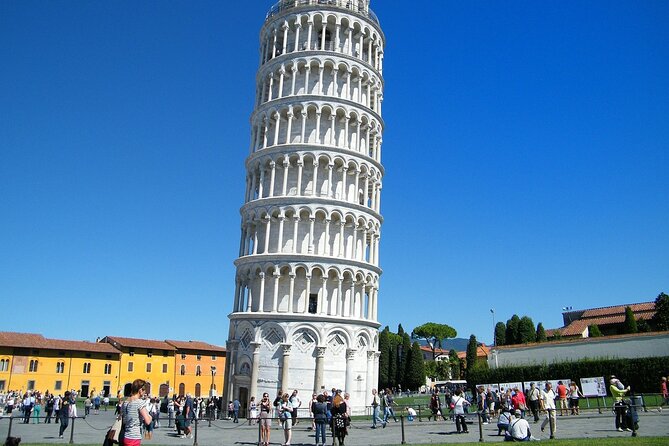
Stop 2 is the star—the Leaning Tower of Pisa—a freestanding bell tower completed in the 14th century. It rises about 56 meters tall, and yes, the lean is the headline.
Here’s the helpful part: you don’t just hear that it leans. You get the why. The explanation ties it to unstable foundation soil, which makes the tilt feel less like magic and more like engineering stress over time.
I also like that the time at the tower is intentionally short. Many people spend too long staring straight up and forget to look around. Having a guided moment means you can enjoy the iconic view and still keep moving to other highlights that are just as interesting once you’re in the area.
Cattedrale di Pisa (Duomo): Romanesque marble you’ll actually notice
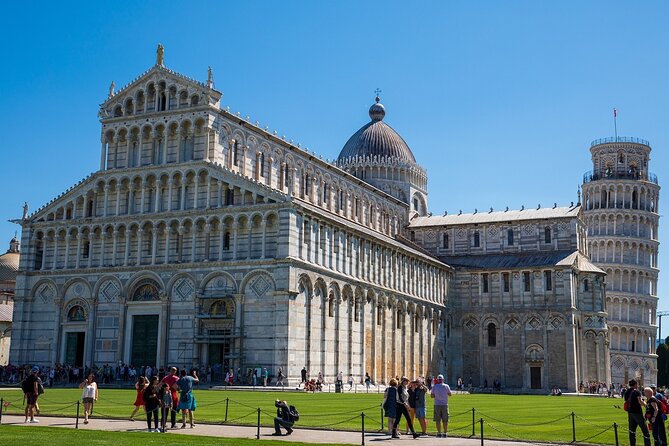
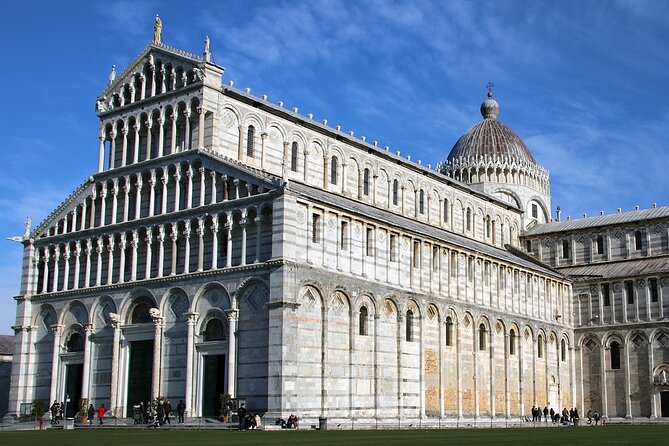
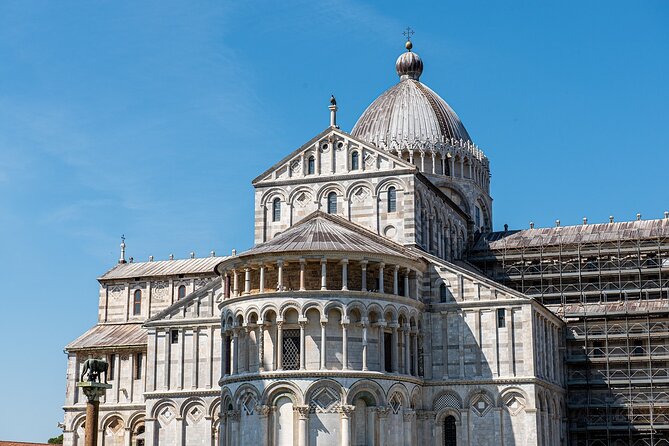
Stop 3 brings you to the Cathedral of Pisa, also called the Duomo di Pisa. Built in the 11th century, it’s known for its Romanesque style and a dramatic marble façade.
This is where a guide helps most. From a distance, the cathedral looks like a pretty stone showpiece. Up close, those marble details and grand arches become a lot easier to decode—especially when someone points out what you should look for first: the overall shape, the rhythm of the arches, and the way the façade catches light.
You’ll also hear how the cathedral fits into the broader UNESCO World Heritage picture. The Leaning Tower, cathedral, and the Baptistery are all part of that same protected complex in the Piazza dei Miracoli.
Battistero di San Giovanni: the acoustics and the Nicola Pisano connection
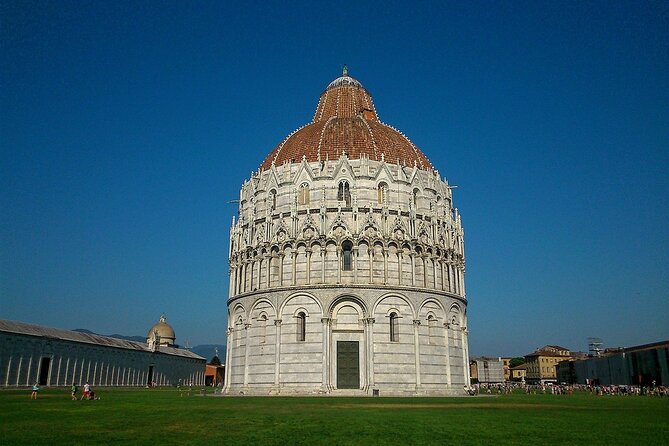
Stop 4 is the Baptistery of Saint John. It’s described as the largest baptistery in Italy, with a mix of Romanesque and Gothic architectural features. One reason this building is so memorable is its dome, which creates remarkable acoustics.
Even if you don’t spend a long time inside during your visit, learning what to listen for (the way sound behaves in that dome) changes the experience. It turns a “pretty building” into a place with a physical effect.
The interior also has standout sculptural and artistic elements. You’ll be pointed toward the marble font and a pulpit by Nicola Pisano. That name helps you connect the artistry to the people behind it, rather than treating everything as anonymous stonework.
Camposanto Monumentale: the peaceful stop people rush past
Stop 5 is Camposanto Monumentale, the monumental cemetery in the Piazza dei Miracoli. This is the surprise mood shift of the tour.
Instead of tower-energy, you get quiet. The site is built around a Gothic cloister filled with ornate tombs, and it’s also home to ancient Roman sarcophagi. That combination—medieval cloister calm with older Roman remains—makes it feel like Pisa is stacking eras on purpose.
The walls were once decorated with famous frescoes, and some of those are still visible today. That detail matters. Even when you’re looking at surviving fragments, you can appreciate that this place used to be a much bigger art canvas than what remains.
Potential drawback: because it’s serene, some people with short attention spans may prefer to spend more time on the tower and cathedral area. If you’re the type who likes atmosphere, though, this stop is often the one you remember after the photos fade.
Museo dell’Opera del Duomo: an optional add-on you’ll decide on
Along the way, there’s also time for Museo dell’Opera del Duomo—but the ticket isn’t included in the tour price. So think of it as a possible expansion rather than a guaranteed included element.
This is a good setup because it gives you control. If you want more depth after the main monuments, you can keep the momentum. If you’re done with museums for the day, you still get a complete loop with the core Pisa icons.
Timing and pacing: how 1.5 hours can feel like 2
The tour runs about 1.5 hours on paper (roughly 15 minutes at each main stop), but real walking pace and photo time can change things. One key detail from the guidance style is the relaxed approach. In practice, it can stretch a bit depending on questions and how long you linger.
The maximum group size is 20, which is helpful. Big groups make small stops stressful. Here, the group size supports photos and questions without the guide having to sprint to the next corner.
If you want a smooth experience, show up ready to walk and keep your phone charged. You’ll be taking pictures—everyone does—and it’s easier if you’re not doing it while hunting for the next meeting point inside the square.
Price and value: what you’re actually paying for
At $36 per person, this isn’t a budget “just show me the sites” deal. Some of the major sights in this loop are free with the tour timing (like the Leaning Tower and the cathedral-related stops listed as free). So the value isn’t entrance fees.
The real value is interpretation + order + time-saving flow:
- A guide helps you focus on what matters fast, especially when the buildings look similar at first glance
- You learn the practical “why” behind the tilt and architectural choices
- The tour keeps you from skipping the places that are meaningful, like Camposanto
That said, one caution is fair: the criticism you might hear is that you could cover parts of Piazza dei Miracoli on your own. If you’re comfortable reading a guidebook, and you don’t care much about context, you may feel underwhelmed.
My take: book it if you want the buildings to make sense in real time. Skip it if you just want photos and you’re happy to wander at your own pace.
Who this Pisa walking tour suits best
This tour is a strong fit for:
- First-time visitors who want a coherent route around Piazza dei Miracoli
- People who like architectural explanations more than long museum hours
- Anyone who enjoys a calm ending, thanks to Camposanto Monumentale
It may be less ideal if:
- You hate structured pacing and prefer free-roam wandering
- You expect everything to be a long, inside-heavy experience (this is mainly a guided walk with key stop moments)
It also makes sense for English speakers who want someone to narrate the places instead of you guessing what’s worth your attention.
Should you book the Pisa Leaning Tower and Miracle Square tour?
If you’re in Pisa for a short window and you want the square to click fast, I’d book it. The combination of Mura di Pisa views, the plainspoken explanation of the Leaning Tower’s tilt, and the quieter payoff at Camposanto Monumentale creates a complete experience without wasting your time.
If you’re already confident you can handle Piazza dei Miracoli on your own, and you don’t care about learning what you’re seeing, you might feel the cost more than the benefit. In that case, consider doing it independently and spending that money on food or a separate museum visit.
FAQ
What is the duration of the Pisa walking tour?
It’s listed at about 1.5 hours.
How much does the tour cost?
The price is $36.00 per person.
What’s included in the price?
You get a 1.5-hour guided walking tour with a professional tour guide.
Are tickets to the main sights included?
The listed admission for several key stops is free, including the stop at the Leaning Tower and the other main monuments in the Piazza dei Miracoli area.
Is the Museo dell’Opera del Duomo ticket included?
No. Admission to Museo dell’Opera del Duomo is not included.
Where do I meet for the tour?
The start is at P.za Daniele Manin, 6, 56126 Pisa PI, Italy.
Is the tour offered in English?
Yes, it’s offered in English.
What is the group size limit?
The tour has a maximum of 20 travelers.
Do I get a mobile ticket?
Yes, it uses a mobile ticket.
Can I cancel for a full refund?
Yes. You can cancel up to 24 hours in advance for a full refund.
Are service animals allowed?
Yes, service animals are allowed.