REVIEW · FULL-DAY
Private Tour from Florence: Venice Full Day Tour by Train
Book on Viator →Operated by Rental and Tour · Bookable on Viator
Venice looks like postcards, then gets even better once someone explains it. This private full-day plan strings together a high-speed train round-trip from Florence with a guide-led walk through the city’s key canals, bridges, churches, and squares.
I especially like how the day is built around the Canal Grande and the Rialto area, so you get the big Venice images fast. I also like that you can go at your own pace within the private format, with the guide keeping the narration moving so you’re not stuck in one spot for hours.
The main drawback to consider is time: many stops are short (often around 30 minutes), so if you want long museum stays or unhurried wander time, you may feel like you’re doing a busy highlights route.
In This Review
- Key Things to Know Before You Go
- A Day Trip Contract: Florence to Venice by High-Speed Train
- What Private Really Means Here: Your Guide and Your Pace
- Canal Grande to Rialto: Venice’s Signature Views on Foot
- Drawback to watch for here
- Greek Merchants and a Leaning Campanile at Chiesa di San Giorgio dei Greci
- St Mark’s Square: The Open-Air Stage You Actually Want to See
- Bridge of Sighs: Prison History That’s Hard to Forget
- San Zaccaria, Accademia Bridge, and a Gondola Workshop Peek
- Dorsoduro Squares: Banksy Wall Art and Student Life in Campo San Pantalon
- Piazzale Roma and the Last Look Before the Train Back
- Price and Value for a $388 Venice-by-Train Private Day
- Who This Tour Fits Best (and Who Might Want a Different Plan)
- Should You Book This Train-to-Venice Private Tour?
- FAQ
- What time does the tour start?
- Is train transportation included?
- How long is the tour?
- What’s included besides the guide?
- Is food and drink included?
- Does the tour end back at the start point?
- Are tickets provided digitally?
- Can I cancel for a refund?
- What should I expect at Piazza San Marco?
Key Things to Know Before You Go
- Train day included: round-trip high-speed service to Florence with 2nd-class tickets
- Personal guide, private pacing: only your group goes with the guide, and you can steer the stops
- Classic Venice sights, grouped sensibly: Grand Canal, Rialto, St Mark’s Square, and major bridges
- A mix of famous and local: from Rialto to San Trovaso shipyard and student squares in Dorsoduro
- Short stop times: expect quick hits more than deep dives at each location
- Bring your own earbuds: some guides may not use audio gear, so you’ll want to hear clearly
A Day Trip Contract: Florence to Venice by High-Speed Train
This is a one-day Venice escape that starts in Florence at Santa Maria Novella. You depart at 8:30am, then you’re on a train ride of about 2.5 hours before you even reach the city sights—so your day already feels “in motion,” not staged and slow.
The total tour time is listed at about 11 hours, and it includes the train travel both ways. You’ll return by train at the end for another 2.5 hours, so you’re not stuck in Venice until late night—good if you like your trip to feel intense but not exhausting.
The tour also uses ticket tech that’s practical for a day trip: you get a mobile ticket, and you should receive the train ticket and details the day before. That matters because a train day can turn stressful fast if you’re still figuring out confirmations at the station.
What Private Really Means Here: Your Guide and Your Pace
This is billed as a private tour, meaning only your group participates. In real-world terms, that usually changes the vibe: you can ask questions freely, change the order of small choices, and linger when something grabs your attention.
In the best versions of this kind of tour, the guide does two jobs at once. They keep you oriented—where you are, what you’re seeing, and why it matters—while still letting you slow down when you find a shop, a view, or a corner street worth a second look. One guide named Droğan stood out for pacing that never felt rushed but still packed in historical, cultural, and even current Venice context.
Another guide, Su, was praised for solid communication, meeting at the exact place, and letting people explore shops they cared about. That’s a big deal on a day like this, because Venice rewards curiosity, and a private guide can actually support that instead of steamrolling you through the route.
The one caution: stop times are short, so if your group wants long time in a single church or a long gondola-style slow glide, you’ll need to adjust expectations and ask early where to spend extra minutes.
Canal Grande to Rialto: Venice’s Signature Views on Foot
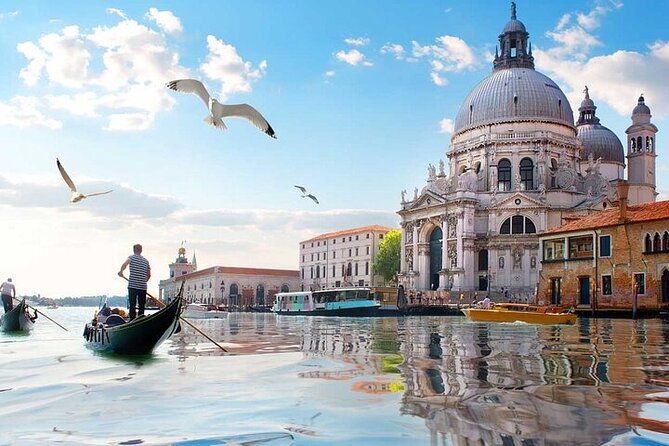
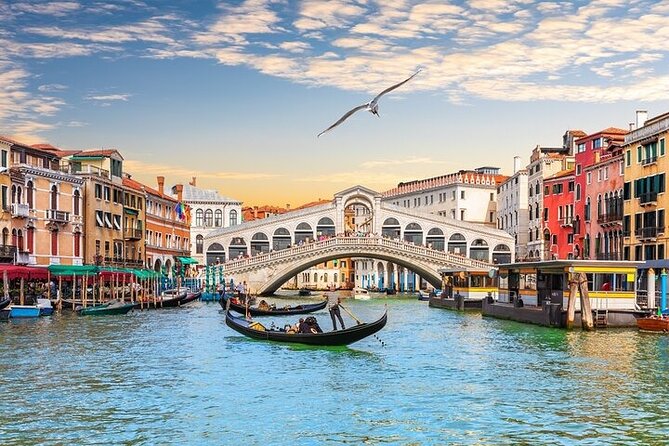
You start in Venice with the Grand Canal (Canal Grande), where the city’s water “streets” split and curve through Venetian life. The Grand Canal is the largest canal, about four kilometers long, and it runs like the main visual artery through Venice’s core.
You also get a chance to spot the Sanctuary of St. Lucy (Sanctuary of St. Lucy) from this larger canal viewpoint. Even if you don’t go inside, it’s the kind of detail a guide can help you connect to the wider city story.
After that, you move into the practical side of walking Venice: Strada Nova, the wide street that connects areas near Rialto and the railway station. It was created in the 19th century to help pedestrians move faster through an area that used to funnel people through narrower, slower paths.
Then comes the postcard centerpiece: Rialto Bridge (Ponte di Rialto). It’s described as the oldest of Venice’s four Grand Canal bridges, and for years it served as the economic hub. Even when you’re just standing on a walkway and looking across the canal, your brain starts mapping Venice differently—this bridge wasn’t just scenery, it was commerce.
Drawback to watch for here
This whole section can feel like “big views, short moments” because each stop is time-limited. If you’re traveling with kids, or you’re sensitive to crowds and standing still, plan to take photos fast and keep moving.
Greek Merchants and a Leaning Campanile at Chiesa di San Giorgio dei Greci
Next up is Chiesa di San Giorgio dei Greci, tied to Venice’s Greek community—especially sailors and merchants. The bell tower, the campanile, is famously the leaning clocktower, designed by Simone Sorella and completed in 1592.
That leaning detail is the headline, but the bigger value is how the guide can connect the tower to community identity. It’s not just a fun quirky structure; it reflects who lived and worked there and why Venice shaped different cultures into its architecture.
The stop is short—about 30 minutes—and entry is listed as free. So treat it as a “check-in” church: get oriented, notice the tower, then move on with your eyes more trained for what makes Venice feel distinct.
St Mark’s Square: The Open-Air Stage You Actually Want to See
In any Venice day plan, Piazza San Marco is the unavoidable center of gravity. You get about 30 minutes there, and the tour’s description makes clear why: St Mark’s Square is a major public space and one of the most famous squares in the world.
Right near it is St Mark’s Basilica, known for gold-ground mosaics covering domes, vaults, and upper walls. The practical upside of a guide here is that they can point out where you should look first so you don’t just stare at everything at once.
Because your time is limited, I recommend keeping your focus simple. Pick one area inside the basilica for your eye to lock onto, and let the rest support that anchor. Otherwise, the gold and detail can blur together, and you’ll leave with photos but not much sense of what you saw.
Bridge of Sighs: Prison History That’s Hard to Forget
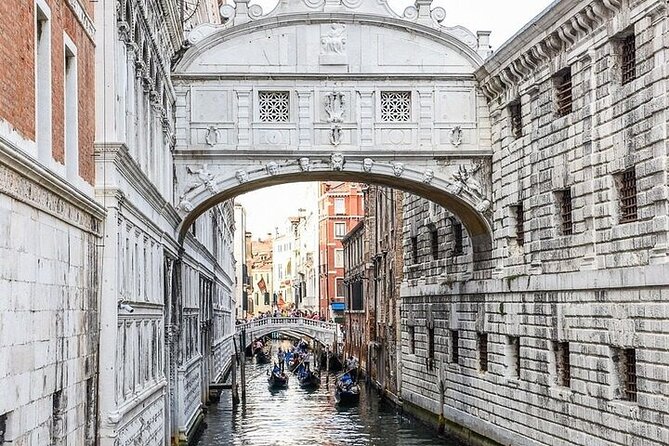
Ponte dei Sospiri (Bridge of Sighs) is one of Venice’s most iconic monuments, and it’s also deeply specific. It connects the Doge’s Palace to the historic prison across the canal, built in the 1600s.
The nickname matters: it’s called the Bridge of Sighs because tradition says prisoners crossed it and sighed at the idea they wouldn’t see the outside world again. Even if you don’t care about the romantic legend, the real payoff is the bridge’s location and purpose—this is Venice architecture tied to power and confinement, not just beauty.
Again, your time here is limited (about 30 minutes), but the key is to pause long enough to understand the “two buildings on either side” relationship. A guide can usually help you interpret what you’re seeing without turning it into a lecture.
San Zaccaria, Accademia Bridge, and a Gondola Workshop Peek
Venice’s big famous sites grab attention, but this tour also threads in places that feel more lived-in.
You’ll stop at Chiesa di San Zaccaria, a 15th-century former monastic church in central Venice. The current church was built between 1458 and 1515, and the facade blends late-Gothic and Renaissance styles. It’s a good contrast stop after the intensity of St Mark’s area—less “showpiece” and more character.
Then it’s over the water to Ponte dell’Accademia, one of only four bridges crossing the Grand Canal. It’s near the southern end of the canal and named for the Accademia di Belle Arti di Venezia. Bridges in Venice are more than crossings; they create viewpoints, and this one helps you reframe the canal’s length.
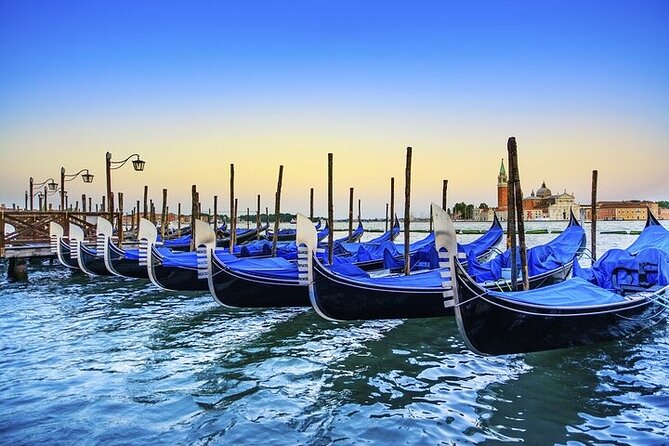
Finally, you get the practical craft side of Venice at Squero di San Trovaso. A squero is a classic Venetian shipyard where small boats like gondolas are repaired. The time here is short (about 30 minutes), but it’s valuable because it shows how Venice survives beyond tourism.
If you’re the type who likes details, this is where you can actually picture work: the tools, the repair benches, the boat shapes. And that makes the rest of your day feel more grounded.
Dorsoduro Squares: Banksy Wall Art and Student Life in Campo San Pantalon
From the workshops, you shift into Dorsoduro with Campo San Pantalon. This square is known for a Banksy painting often referred to as the shipwrecked or migrant child. The key value here isn’t just the art—it’s the way it marks a corner of Venice that feels current, not frozen in marble.
Then the route continues to Campo Santa Margherita, another square, this time in the sestiere of Dorsoduro near university buildings. It’s described as a gathering place where students meet at the end of the day. That’s the kind of detail you rarely get from a generic sightseeing-only plan.
A guide can help you spot what’s “in use” versus what’s only for viewing. In Venice, that difference is huge. When you land in a square where people actually linger, the city stops feeling like a museum and starts feeling like a place you could live.
Piazzale Roma and the Last Look Before the Train Back
Near the end, you reach Piazzale Roma, the main entrance area of Venice at the end of the Ponte della Libertà. It’s also where you find the one big reality check: this is where ground vehicles can enter the urban core. The tour notes that Piazzale Roma and nearby Tronchetto island are the only places in Venice’s insular core accessible to cars and buses.
That makes the final stop useful. You get to see the city’s boundaries—where the car world ends and the pedestrian-only Venice begins. It’s a clean way to close a day trip and avoid the “wait, we’re leaving already?” feeling.
Then it’s straight into the train ride back to Florence, about 2.5 hours, returning you to the same meeting point.
Price and Value for a $388 Venice-by-Train Private Day
The price is $388.13 per person for a private full-day experience. At first glance, that’s steep. But you’re not paying for just a walking tour—you’re paying for a structured day that includes round-trip train transport (2nd class), a guided experience, and the Venice visitor fee.
In other words, the cost is doing several jobs:
- Buying the logistics out of your hands (train included)
- Paying for a guide to connect the dots between sights
- Packing a lot of key areas into one day without you managing transfers
Where the value can wobble is when expectations don’t match the format. Since the tour includes many short stops, it’s not designed as a slow, museum-heavy Venice plan. If your personal style is “sit down, go deep, and linger,” you might feel like you’re just walking.
A few people also raised concerns about what’s included and how the day is paced. The most practical way to protect your budget is to treat this as a guided highlights circuit—then add your own optional time on top if you want more.
Who This Tour Fits Best (and Who Might Want a Different Plan)
This works best if you want a first-time Venice day with a guide who keeps you oriented and focused. It also suits groups who like seeing both famous landmarks and smaller, local spots—like the shipyard and neighborhood squares.
It’s a strong choice for couples and small families who can tolerate short stops and enjoy “show me the highlights, then let’s see what else we can find.” Private format is also helpful if you have questions about architecture, the canal system, or why Venice looks the way it does.
It might not be the best match if you expect long time in St Mark’s Basilica, extended church-hopping, or a relaxed, low-step schedule. Venice is Venice, and a day with many stops will involve plenty of walking and plenty of standing.
One more practical note: audio. Some tour setups don’t provide earphones, so if you want the guide clearly, consider bringing your own earbuds and keeping them ready.
Should You Book This Train-to-Venice Private Tour?
If your goal is a smooth Florence-to-Venice by train day with a private guide and you’re happy with a packed highlights route, I think this is a reasonable way to do it. The pairing of Grand Canal and Rialto with St Mark’s Square and then local Dorsoduro squares gives you a Venice snapshot that’s more than just a list of monuments.
I would book if you like structure, want your questions answered, and appreciate guides like Su and Droğan who are praised for clear communication and pacing. I’d hesitate only if you know you want slow travel at a single sight for a long time, because the day moves quickly by design.
FAQ
What time does the tour start?
The tour starts at 8:30am at Santa Maria Novella, Firenze FI, Italy.
Is train transportation included?
Yes. The tour includes round-trip train tickets to Florence as part of the experience, using 2nd class transport.
How long is the tour?
The total duration is listed at about 11 hours, including train travel time.
What’s included besides the guide?
Included items are the private guided tour, train transport (2nd class), and the Venice visitor fee.
Is food and drink included?
No. Food and drink are not included.
Does the tour end back at the start point?
Yes. It ends back at the same meeting point in Florence.
Are tickets provided digitally?
Yes. You’ll receive a mobile ticket, and the day before the tour you should get an email with the train ticket and all information.
Can I cancel for a refund?
Yes. Free cancellation is available if you cancel up to 24 hours in advance for a full refund.
What should I expect at Piazza San Marco?
You’ll have about 30 minutes at Piazza San Marco, with St Mark’s Basilica nearby, including focus on its gold mosaics as part of the experience.