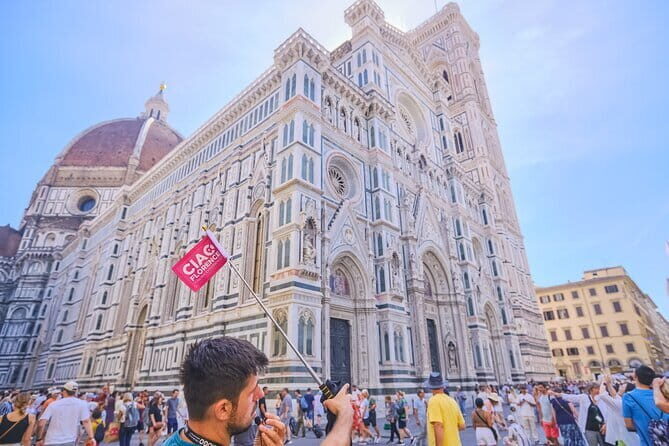
Your first look at the Uffizi can feel overwhelming. This small-group tour is built to make the world-famous museum readable fast, using a licensed guide and radio headsets so you don’t lose the story while you’re walking. You’ll follow a guided path through major Renaissance and Baroque treasures, with context that ties the art to Florence and the powerful Medici family.
Two things I’d call out right away: the max 9-person group keeps the experience human instead of herding cats, and the tour includes admission so you can keep going after the guided portion. A practical plus is that you get real chances to ask questions, not just a quick nod as you move on.
The main drawback to plan for is time. With about 1 hour 30 minutes focused on highlights, you won’t see everything, and if you’re hunting for a specific masterpiece, you may need a second visit to the right museum.
In This Review
- Key things to know before you book
- Why the Uffizi Small-Group Tour Feels Different Than Wandering
- Meeting at Piazzale degli Uffizi: Where You Need to Be
- The 90-Minute Highlights Route: How the Uffizi Story Gets Told
- Crowd Management with Headsets and a Max-9 Group
- Price and Value: What $72.41 Really Buys
- Guide Style: The Sweet Spot Between Detail and Time
- After the Tour: Using Your Ticket Like a Pro
- Common Snags to Avoid: Timing, Meeting Points, and Expectations
- Who This Tour Suits Best (And Who Might Prefer Something Else)
- Should You Book This Uffizi Small-Group Tour?
- FAQ
- How long is the Uffizi Gallery small-group guided tour?
- Where does the tour start and end?
- Is the tour offered in English?
- What group size should I expect?
- Is museum admission included?
- What’s included in the tour price?
- What do I need to bring for entry?
- Do I need to provide my full name at booking?
- What is the price of the tour?
- Can I cancel or change the tour date?
Key things to know before you book
Max 9 travelers means more attention and better pacing in packed galleries.
Headsets help you hear your guide clearly while you weave through crowds.
Named tickets + ID match are required for entry, so double-check names.
Medici-backed context gives you a quick map of why these works matter.
Highlights route, not the whole museum means you’ll likely want to explore more after.
Multiple guides show up (Alex, Andrea, Olga, Vittoria, and others), so you may feel a different style each time.
Why the Uffizi Small-Group Tour Feels Different Than Wandering
The Uffizi is famous for a reason, but it can also mess with your focus. Rooms are dense, lines are unpredictable, and it’s easy to leave thinking you saw a lot without really knowing what you saw. This format solves that with a guide-led route plus headsets that keep the narration from disappearing under the crowd noise.
The small-group cap of 9 is more than a comfort perk. It changes the whole rhythm. You’re not waiting for the slowest person at every painting. You also get better positioning so you can actually look at works instead of craning around shoulders.
One more smart detail is the tour time flexibility. You can usually pick a schedule that fits your day in Florence, which matters when you’re also trying to fit in other major sights.
Meeting at Piazzale degli Uffizi: Where You Need to Be
Start at the Statua di Giotto, Piazzale degli Uffizi, 1, 50122 Firenze. The tour ends back at the meeting point, so you’re not trying to figure out where your group disperses in a maze of halls.
There’s a practical ticket detail to take seriously. Your entry is tied to nominative tickets, and each traveler must present a valid passport or ID document that matches the name used when booking. Also, you’ll need to provide full names for everyone at booking time. If your ticket and ID don’t match, entry risk goes up.
Then there’s the redemption point: Uffizi Galleries, Piazzale degli Uffizi, 6, 50122 Firenze. Even if it sounds like the same area (it is), it’s worth treating the exact spot as important. I’d build in extra buffer time so you’re not sprinting across piazzas with a museum ticket in your hand.
The 90-Minute Highlights Route: How the Uffizi Story Gets Told
This tour is built around one main “stop” in the Uffizi Gallery, but it’s not just a quick walk past famous paintings. It’s a guided sequence through the museum’s corridors, statuary, portrait halls, and painted ceilings, with the guide explaining how the collection connects to Florence’s art-making world.
Here’s what you can expect the guide to focus on:
- Major Renaissance and Baroque works and the artists behind them
- How the Uffizi developed as a collection connected to Medici power
- The big shifts in style across periods you’ll see grouped together in the museum
The works are highlighted through artists like Botticelli, Michelangelo, Leonardo da Vinci, Filippo Lippi, and Caravaggio, plus others. Even if you’ve seen reproductions in books, seeing these paintings in person is different because the scale and materials hit you. The guide helps you look past the first impression and notice why each work stands out.
You’ll also get a sense of the museum as a building, not just a catalog of masterpieces. The “corridor walk” part matters. Uffizi rooms can blur together when you don’t have a plan. The route helps you connect the art you’re seeing to a timeline rather than treating every room like a random stop.
Crowd Management with Headsets and a Max-9 Group
The Uffizi can be brutally crowded. That’s where this tour’s listening device earns its keep. Instead of leaning in or guessing what the guide said after you turned a corner, you can keep your eyes on the art and still follow the story.
The small-group size also helps your attention stay on the works. In larger group tours, you often spend time catching up, stopping, or getting pushed back by flow of foot traffic. Here, your guide can keep the group moving with fewer bottlenecks.
That said, there’s one practical caution from the experience details: in at least one case, headsets didn’t work properly and had to be replaced. If that happens to you, don’t just suffer quietly. Tell the guide right away so you can get a working device and stay synced with the commentary.
Price and Value: What $72.41 Really Buys
At $72.41 per person, the value math is much easier if you know what’s included. The tour price covers the guide and the experience services, and it also includes the museum admission. The breakdown provided is helpful: 29 euros paid to the museum for entry tickets, with the remainder covering taxation fees and guide/host charges.
So you’re not paying just for the ticket. You’re paying for:
- A licensed tour guide
- A host
- Headsets/radio so you can hear clearly
- A structured highlights route that saves you time and confusion inside the museum
For many first-timers, that’s money well spent. The Uffizi is not a place where you want to “wing it” if your time in Florence is limited. If you only have a single afternoon for art, a guided highlights route helps you leave with an actual framework for what you saw.
If you’re an art super-fan with plenty of hours to spare, you might value a longer self-guided visit even more. But this tour works best as the fast orientation layer: see the key works with context, then go back to linger where you want.
Guide Style: The Sweet Spot Between Detail and Time
The tone of the tour depends on the guide. Some guides are very focused on turning your attention to what you might miss on your own. Names mentioned across guide experiences include Alex, Angela, Andrea, Olga, Vittoria, Freddie, and Francesca Ciaopi. Different personalities can change how fast you move and how much background you get.
One caution to keep in mind: the tour is only about 90 minutes, but art stories can expand quickly. In one case, the route leaned heavily toward medieval art, so a group felt they ran out of time before they reached the parts they cared about most. The fix is partly you: if you have strong preferences, go in with them. Decide what you most want to see, then treat the tour as your fastest way to get there.
Also note language and pace. A couple of experiences mention that the guide’s accent or speed made the commentary hard to follow. That’s exactly why the headsets matter. If you’re struggling, request adjustments early rather than waiting until you’re already lost in the middle of a gallery.
After the Tour: Using Your Ticket Like a Pro
Here’s a practical benefit that can turn a short tour into a full-day win: your admission ticket lets you stay and explore the museum on your own after the guided portion ends. So the plan is not just “listen for 90 minutes and go home.”
I like using the tour this way:
1) Get your bearings and identify a handful of works you truly care about
2) After the group finishes, return to the pieces that pulled your attention
3) Slow down in the rooms you now understand better
The best moment for me to recommend this approach is when you know you’ll want more than one pass through the collection. Uffizi can be mentally exhausting. A guided start reduces the stress, then your free time becomes more intentional.
You may also pick up chances for views from inside the museum, including sightlines connected to the Arno River, the Ponte Vecchio, and the Cathedral, depending on where your route takes you. Even a few minutes of that helps reset your eyes before you go back to the paintings.
Common Snags to Avoid: Timing, Meeting Points, and Expectations
Most tours like this run smoothly, but the details matter more than you’d think.
First: arrive on time for the Statua di Giotto meeting spot. One negative experience described a situation where someone reached the wrong statue and ended up missing the tour. That’s an avoidable stress if you do two things: find the meeting point early and double-check the exact location before your scheduled time.
Second: double-check your names. Entry can be denied if the names on your nominative tickets don’t match your passport or ID.
Third: manage expectations about what a 90-minute “highlights” tour can cover. The Uffizi is huge. You might finish thinking, I need to come back and do this properly. That’s not failure. That’s the Uffizi being the Uffizi.
And one more key note for planning: if you’re hoping to see Michelangelo’s David, this specific tour route is in the Uffizi Gallery. The original David is not housed in the Uffizi, so if that masterpiece is your top goal, you’ll need to plan the right museum for it.
Who This Tour Suits Best (And Who Might Prefer Something Else)
This experience fits best if you’re:
- Short on time in Florence but still want the big-name works
- Nervous about museum crowds and want a guide to manage the flow
- First-timers who want a quick timeline and key artist context
- Travelers who like asking questions and getting real answers on the spot
It also can work for families, but keep in mind that pacing and attention spans can vary. The museum is indoors and stair-based, and the tour moves through multiple rooms without long stops. If you want long breaks or a slower pace, you may prefer a different format.
If you’re a deep research type with a personal list of works you want to study for hours, you might still book this—but plan to treat it as part one, not the whole journey.
Should You Book This Uffizi Small-Group Tour?
I’d book it if you want an efficient, guide-led way to see the core masterpieces and understand the Medici-connected story behind the collection. At $72.41 with admission included, plus headsets and a small group that keeps things moving, it’s a solid value for most visitors.
I’d reconsider if any of these are true for you:
- You only want one single museum visit and you’re determined to see every major work
- You’re very sensitive to speaking pace or accents and really want maximum listening clarity at every moment
- Your schedule depends on perfect timing with no buffer at all
One last practical tip: the tour is typically booked about 33 days in advance on average, so don’t wait until the last minute if your dates are fixed.
If you want Florence’s biggest art hit without getting lost in the noise, this is a strong plan. Start with the guided highlights, then use your ticket to slow down where your favorites land.
FAQ
How long is the Uffizi Gallery small-group guided tour?
It lasts about 1 hour 30 minutes.
Where does the tour start and end?
It starts at the Statua di Giotto, Piazzale degli Uffizi, 1, 50122 Firenze. It ends back at the same meeting point.
Is the tour offered in English?
Yes, it is offered in English.
What group size should I expect?
The tour has a maximum of 9 travelers.
Is museum admission included?
Yes. Admission ticket is included as part of the tour.
What’s included in the tour price?
It includes nominative tickets, a licensed tour guide, a listening device (headsets/radio), and a host.
What do I need to bring for entry?
Each traveler must present a valid passport or ID document matching the name provided at booking.
Do I need to provide my full name at booking?
Yes. You must provide the full names of all travelers when booking, and a voucher with all full names must be presented at the ticket office before entry.
What is the price of the tour?
The listed price is $72.41 per person. The admission portion is noted as 29 euros paid to the museum.
Can I cancel or change the tour date?
This experience is non-refundable and cannot be changed for any reason.