REVIEW · FLORENCE DUOMO COMPLEX
Florence Cathedral, Baptistery and Opera del Duomo Museum
Book on GetYourGuide →Operated by Florence Tours by Made of Tuscany · Bookable on GetYourGuide
That golden Baptistery catches your eye fast. This guided tour strings together the big-three stops in Florence’s Cathedral complex: Santa Maria del Fiore, the Florence Baptistery, and the Opera del Duomo Museum, where you can see original Renaissance sculpture and key treasures like the Paradise Doors.
I really like the way the museum content is set up for first-timers. You get a guided look at major works including Donatello’s Magdalene and Michelangelo’s Pietà Bandini, plus the original version of the Paradise Doors inside the museum.
One drawback to consider: the Cathedral area can be unpredictable on the ground. Some visitors have had trouble with parts of the visit they expected (like dome access or even access to the Baptistery), so if that’s your must-do, double-check what’s actually included with your guide ahead of time.
In This Review
- Key Things to Know Before You Go
- Why This Cathedral Tour Feels Like Florence at Its Most Real
- Opera del Duomo Museum: Original Paradise Doors and Big Names
- Santa Maria del Fiore Inside: Vasari Frescoes and the Cathedral’s Inner Rhythm
- Baptistery Visit: Byzantine Mosaics That Actually Look Like Gold
- Underground Crypt: Why the Sublevel Stop Is More Than a Bonus
- Timing, Skip-the-Line, and Real-World Crowd Pressure
- Small Group Value: Why It Usually Works Better Than Big Tours
- What to Wear and Bring (So You Don’t Cut Your Own Trip Short)
- Who This Tour Fits Best (And Who Might Want a Different Plan)
- Price and Value: Is $163 Fair for This Much Art?
- Meeting Point Reality: Don’t Lose Time on Piazza del Duomo
- Should You Book This Florence Cathedral and Baptistery Tour?
- FAQ
- How long is the tour?
- What’s included in the guided experience?
- Where do I meet the guide?
- Is there a skip-the-line benefit?
- What languages are the guided tours available in?
- Do I need to buy a reserved entrance separately for the Cathedral?
- What should I bring?
Key Things to Know Before You Go
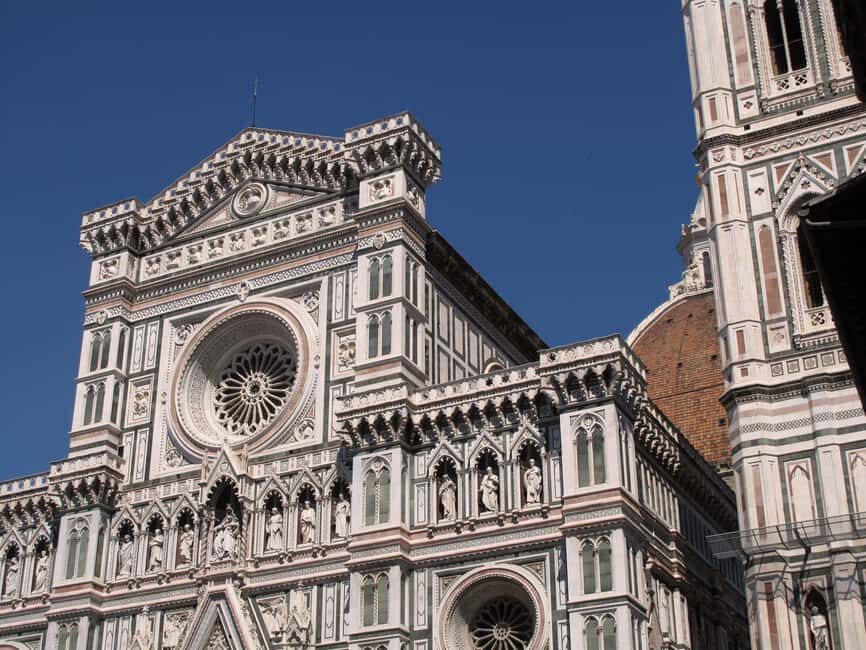
- Golden Byzantine mosaics in the Baptistery are the quick visual payoff you’ll remember later
- Original Paradise Doors are inside the Opera del Duomo Museum, not on the building facade
- Donatello and Michelangelo highlights make the museum feel like the real deal
- You also see inside the Cathedral with frescoes by Vasari plus a stop underground
- Small group format helps you keep your place in this crowded complex
- Hearing matters in busy churches, so come ready to listen clearly
Why This Cathedral Tour Feels Like Florence at Its Most Real
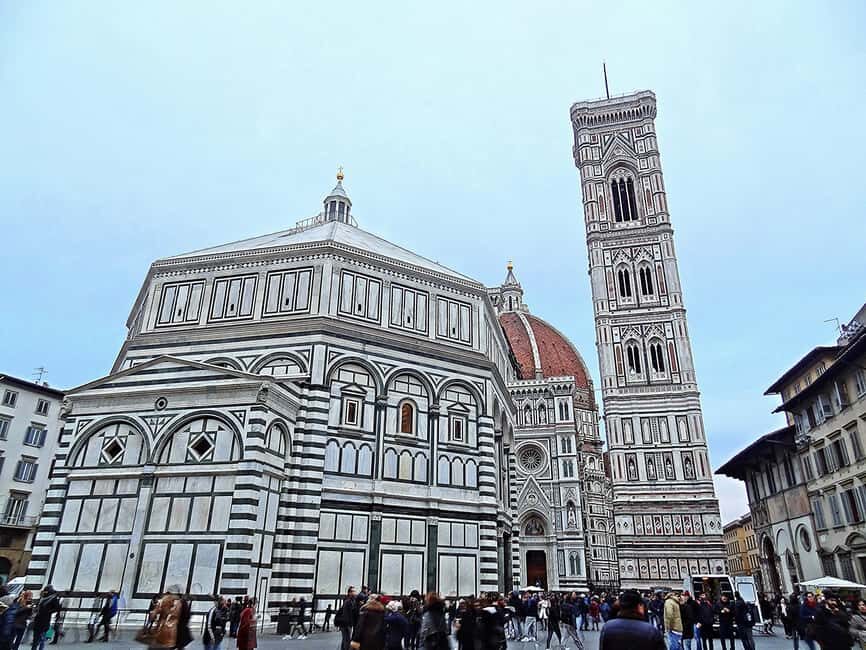
Florence does something special with art: it doesn’t keep it in one place. It spreads it across buildings, rooms, and layers of history, and the Cathedral complex is the best place to see that system work.
This tour is built for time-crunched visitors. In about 2 hours, you cover the Cathedral interior, the Baptistery, and the Opera del Duomo Museum, which is where many of the most important objects are protected indoors. That matters because the complex gets packed. A guide helps you move with purpose instead of getting swept into random lines.
You’ll also learn some behind-the-scenes context as you walk. The construction and conservation of the Duomo were managed by the Fabbriceria della Cattedrale di Firenze, founded in 1296, and it still plays a conservation role today. That historical thread makes the artwork feel less like decoration and more like a long-term project.
Opera del Duomo Museum: Original Paradise Doors and Big Names
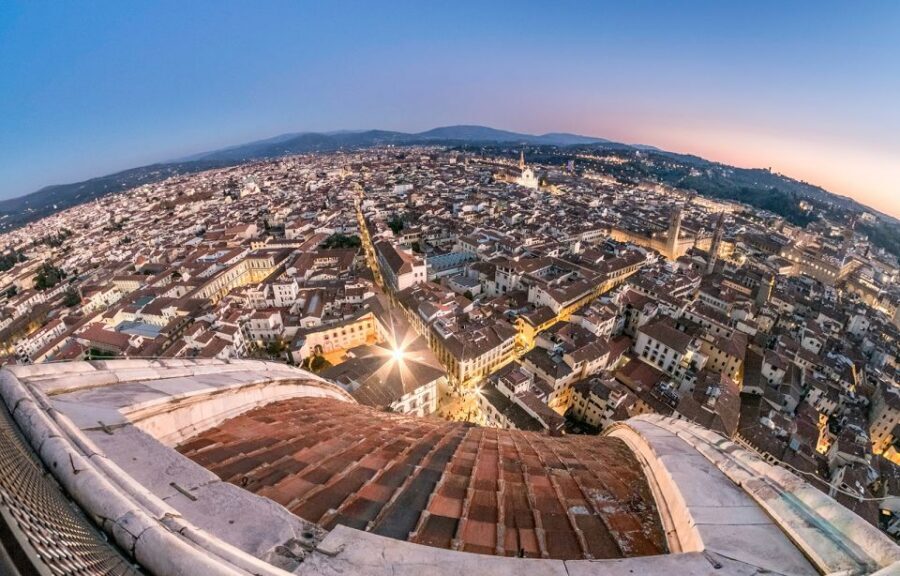
The museum stop is where this tour earns its keep. Seeing the Cathedral complex from the outside is impressive, but the Opera del Duomo Museum is where the story becomes tangible because you’re looking at originals.
You’ll focus on major works, including Donatello’s Magdalene and Michelangelo’s Pietà Bandini. Those names aren’t just “famous for famous.” They’re useful because the museum gives you the scale, finish, and placement that photos often miss. In person, you can judge how sculptors used posture, drapery, and expression to pull your eyes where they wanted them.
The museum also gives you the experience most people chase: the original Door of Paradise. Outside, you see a stunning monumental facade. Inside the museum, you see the craftsmanship and details more closely, and you understand why copies exist. If you care about the exact objects, this is the difference between checking off a landmark and actually seeing what makes it special.
Practical note: the museum portion can feel busy inside because people want to photograph everything. A guide helps you avoid the trap of drifting through rooms without a clue what you’re seeing. You’ll also be on a guided clock, so you’ll spend less time wandering and more time looking at the right pieces.
Santa Maria del Fiore Inside: Vasari Frescoes and the Cathedral’s Inner Rhythm
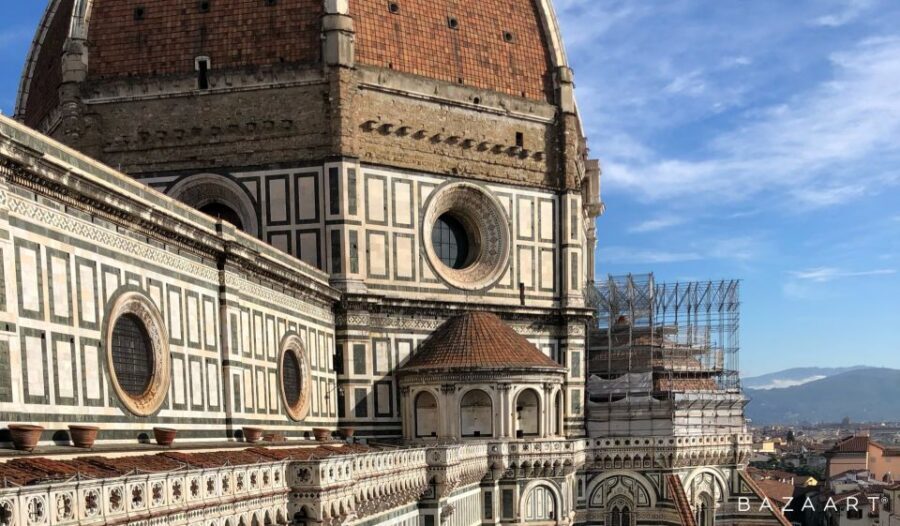
The Cathedral interior is where the tour turns from “art gallery” into “sense of place.” You’re not just walking into a pretty building. You’re stepping into a space designed for overwhelming scale and planned views.
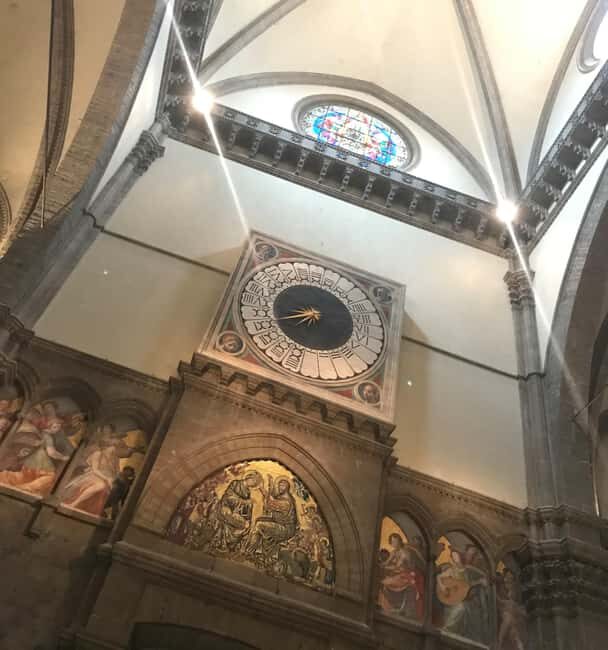
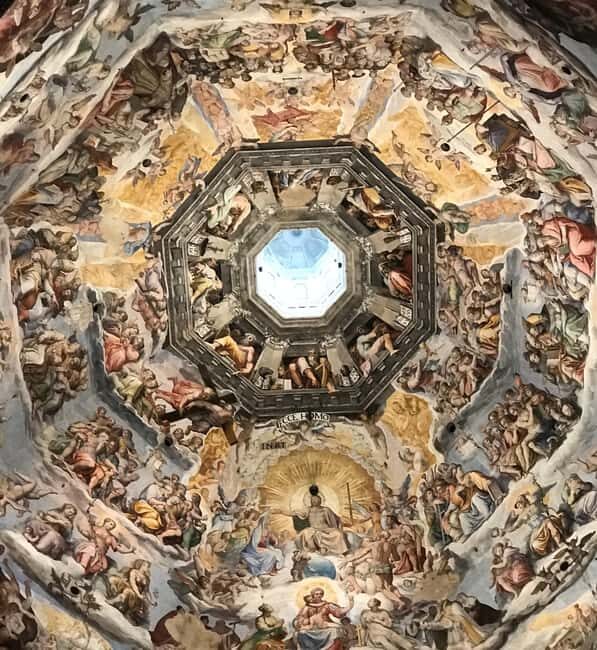
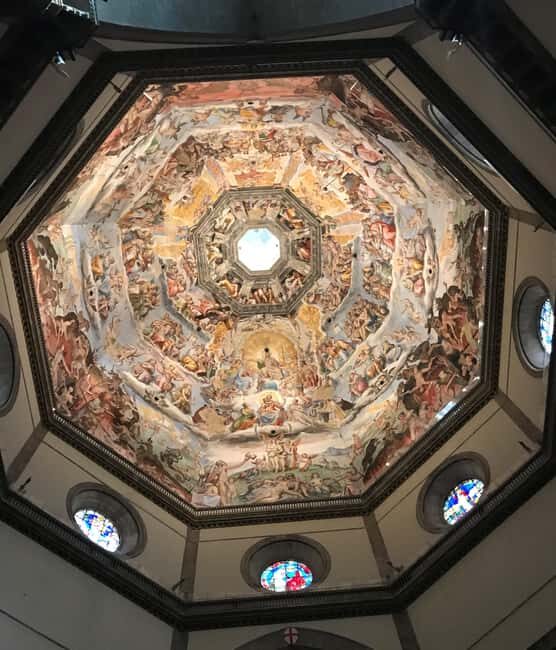
You’ll visit inside Santa Maria del Fiore with frescoes by Vasari. Those frescoes matter because they’re part of how the Duomo complex creates a visual narrative. Even if you’re not a museum person, the guide framing helps you notice what you’d otherwise miss: where your eye is being led, and how painted surfaces interact with the architecture.
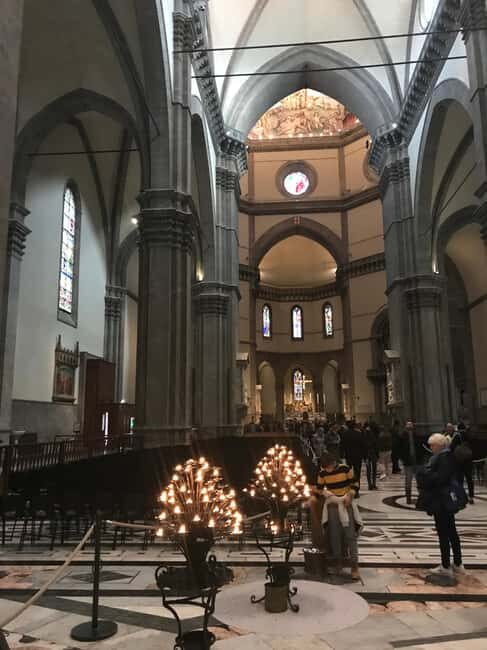
This stop also gives you the Cathedral’s overall feel and layout. In a complex like this, it’s easy to get lost in the crowd. A structured visit helps you keep your bearings, so you understand what you’re looking at rather than only how it looks.
One added layer: you’ll go underground to discover the crypt of Santa Reparata. This is the kind of stop that rewards patience. The underground spaces shift your perspective from the grand cathedral above to the earlier layers beneath it, which makes the whole complex feel like a built timeline.
Baptistery Visit: Byzantine Mosaics That Actually Look Like Gold
If you’re only going to remember one visual moment from the whole trip, make it the Baptistery mosaics. The highlights here are the golden Byzantine mosaics—the kind of surface that feels different when you’re standing in front of it instead of staring at a screen.
The Baptistery is compact compared to the Cathedral, so the impact is fast. The mosaics catch light in a way that feels almost physical, and the guide’s explanation helps you connect the look to the tradition behind it. It’s not “just pretty.” It’s a different visual language than Renaissance frescoes.
The tour includes a guided visit here, usually short, but timed well so you can see without burning up your energy. That matters because this whole area is exhausting if you’re not careful. You’ll be standing in lines at least some of the time, and moving between sites takes time and attention.
Important consideration from real-world experience: access can be affected. Some guests have reported issues like the Baptistery being closed on their day. You can’t control that, but you can protect yourself by knowing that your “must-see” mosaic time may not be guaranteed if conditions change.
Underground Crypt: Why the Sublevel Stop Is More Than a Bonus
The underground crypt is easy to treat like a quick side note. Don’t. It helps you make sense of why the Duomo complex is so layered.
When you see the crypt connected to Santa Reparata, the Cathedral stops being a single building you admire from afar. It becomes a site where older structures and earlier history sit under the big Renaissance crown. That is exactly the kind of context that makes your photos feel smarter, because you know what’s happening beneath the surface.
From a practical point of view, the crypt stop also gives your brain a reset. After the Museum and Cathedral interior, moving underground changes the pace and lighting. It’s a good moment to slow down.
Timing, Skip-the-Line, and Real-World Crowd Pressure
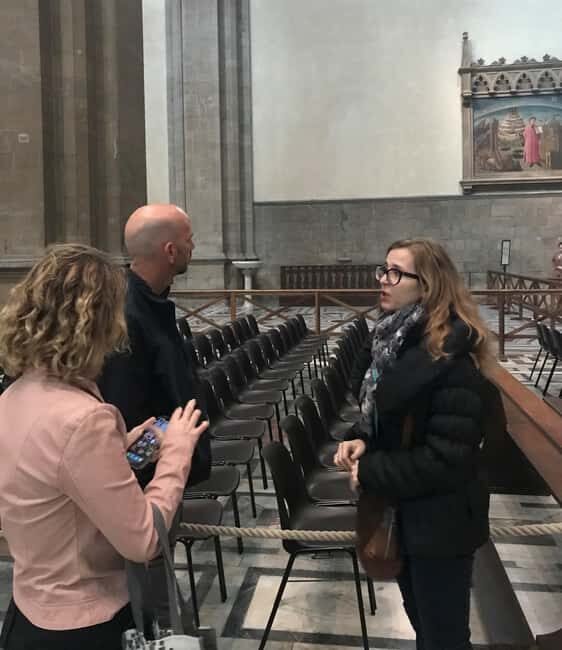
On paper, the tour is 2 hours, with guided time split across the museum, Cathedral, and Baptistery. In reality, the timing lives or dies by the crowds and the day’s operations.
The big promise here is skip-the ticket line. That can be a real relief in this area, where waiting can eat up your energy. Still, some visitors have experienced delays for specific parts like museum entry or tower/dome access, and a few reported confusion around included access types.
So here’s the practical move: arrive ready to follow your guide’s lead fast. This complex rewards people who don’t second-guess. If the guide says move now, move now. Your payoff will usually be that you get more looking time, not more waiting time.
Also, watch your expectations around the dome or tower. The provided tour description focuses on Cathedral interior, Baptistery, and the Opera museum. Yet some guests mentioned dome/tower access and “pass” confusion. If climbing is your #1 goal, ask directly what access is included on your specific booking, and what is not.
Small Group Value: Why It Usually Works Better Than Big Tours
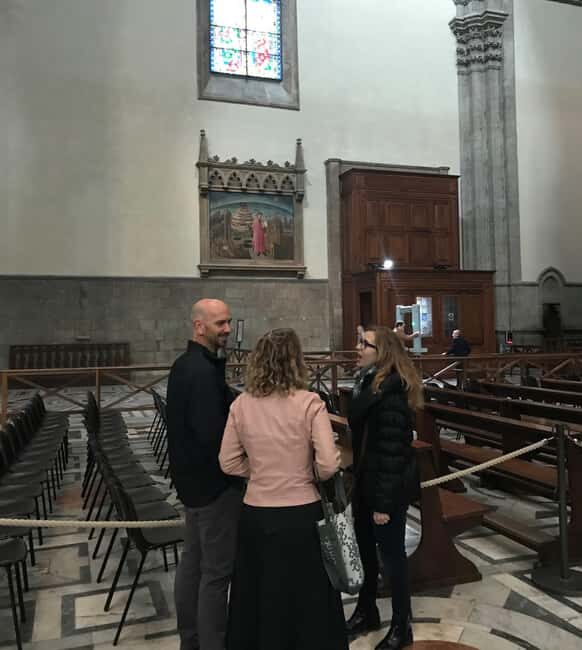
This is offered as a small group tour. That’s not just a feel-good detail. In a site like this, group size affects how long you linger in front of the right objects and whether you can actually hear the guide when the space gets loud.
You’ll be taught through multiple languages (German, French, Italian, Spanish, English), and a live guide is included. That helps if you’re traveling with friends of different backgrounds, or if you want your explanation tailored to where your eyes are going.
One caution from the experience of others: some guests reported difficulties hearing the guide due to audio setup (they expected headsets). If you’re sensitive to noise or hearing in busy environments, plan to position yourself toward the guide when the group settles. Bring a pair of earbuds if you use them for focus in general, even if you don’t know the tour’s audio system.
What to Wear and Bring (So You Don’t Cut Your Own Trip Short)
You’ll do a fair amount of standing and moving across a concentrated area. Bring comfortable shoes, because you’ll be in church interiors and around the Cathedral complex.
Bring an ID or passport, too. It’s required for the booking entry setup for many attractions in Italy, and the tour explicitly requests it.
If you’re the type who plans to take lots of photos, keep your phone charged. You’ll be taking pictures in bright indoor spaces and outside in the Piazza del Duomo area, so battery drain happens fast.
Who This Tour Fits Best (And Who Might Want a Different Plan)
This is a strong fit if you want an efficient overview with major art anchors. You’ll like it if you want to see major Renaissance works in one tight block and also get the Cathedral’s interior plus the Baptistery mosaics.
It’s also a good choice if you enjoy guided storytelling, because the tour is designed to make the museum and church stops click together.
You might want a different plan if any of these are your top priorities:
- Dome or tower climbing is your main goal, and you need certainty about included access
- You’re very hard of hearing and you rely on specific audio equipment
- You dislike structured pacing and prefer to roam at your own speed
If you fall into one of those categories, don’t skip the Cathedral complex. Just verify exactly what your ticket includes and consider an alternative tour format.
Price and Value: Is $163 Fair for This Much Art?
At $163 per person for a 2-hour guided experience, the value comes down to what you get in that time: guided access to the Duomo interior plus the Baptistery and the Opera museum, with key original artworks like the Paradise Doors, Donatello, and Michelangelo.
For many visitors, those museum names are the real “why.” If you only visited on your own without a guide, you’d still see the spaces, but you’d likely miss some of the meaning behind what you’re looking at. A good guide turns the museum from a room of objects into a coherent experience.
That said, the value depends on the day’s access. If you arrive expecting every area to be open and it isn’t, the price can feel steep. This is the biggest reason I’d treat this tour as a strong plan, but not a guarantee that every single extra access angle will land perfectly.
Meeting Point Reality: Don’t Lose Time on Piazza del Duomo
Your guide meets you in front of the central door of the Cathedral, Piazza del Duomo, 50122 Firenze. Look for a sign with the tour name.
This meeting point matters because the Cathedral complex is confusing when you’re rushing. Arrive a few minutes early, orient yourself quickly, and then follow your guide’s movement. The best tours are often the ones where you don’t spend the first 20 minutes finding the right door.
Should You Book This Florence Cathedral and Baptistery Tour?
Book it if you want a high-impact hit list in limited time: Cathedral interior, Baptistery mosaics, and the Opera del Duomo Museum with original treasures like the Paradise Doors. This is also a good option for first-timers who want their Florence Cathedral experience to feel organized and meaningful, not random.
Skip booking (or ask extra questions first) if dome/tower access is your top priority, because access expectations can vary and some guests have had issues tied to the type of pass or inclusion. Also consider another format if you know you struggle to hear without strong audio support.
If you book, go in with a simple mindset: let the guide set the pace, focus on the big masterpieces, and treat the complex as one connected experience rather than three separate stops. That approach is how you get the most value out of those two hours.
FAQ
How long is the tour?
The tour lasts about 2 hours.
What’s included in the guided experience?
You get a guided tour of the Duomo complex that includes the Cathedral visit along with the Florence Baptistery and the Opera del Duomo Museum.
Where do I meet the guide?
Meet in front of the central door of the Cathedral of Santa Maria del Fiore, Piazza del Duomo, 50122 Firenze FI, Italy. The guide will have a sign with the tour name.
Is there a skip-the-line benefit?
Yes. The tour description says it includes skip the ticket line.
What languages are the guided tours available in?
The live guide is available in German, French, Italian, Spanish, and English.
Do I need to buy a reserved entrance separately for the Cathedral?
Reserved or dedicated entrance for the Cathedral is listed as not included, so you should be prepared for the possibility that you may need additional access depending on what you want to do in the Cathedral.
What should I bring?
Bring a passport or ID card and wear comfortable shoes.