REVIEW · WORKSHOPS
Oil Painting Class in Florence
Book on Viator →Operated by The Florence Studio · Bookable on Viator
Oil paint in Florence is a fast route to confidence. This class teaches you to copy Vermeer’s Girl with a Pearl Earring while learning the nuts-and-bolts techniques artists actually use. I love that the session starts with clear instruction on materials and color mixing, so you’re not stuck guessing at supplies or skin tones. I also love the small-group feel (max 10), with personal guidance that makes it beginner-friendly without being babyish. One consideration: you’re creating a guided copy, not a totally freehand original, so if you want full creative freedom, you’ll need to temper your expectations.
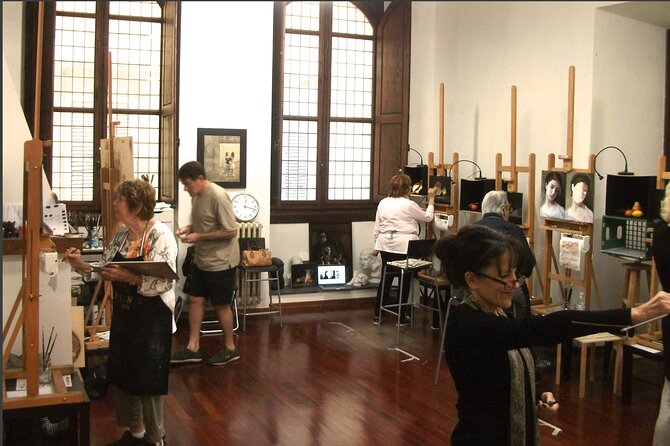
The setting matters, too. The instructor is Laura, a professional artist and teacher and Director of The Florence Studio in Florence, and you’ll work in a studio environment that feels like you’re stepping into an artist’s real day. In one review, the husband Frank (a sculptor) and their pet rabbit Leo were part of the warm, lived-in atmosphere, which helps turn art practice from intimidating to genuinely fun. If you’re sensitive to strong smells or messy materials, know that oil painting is, by nature, an in-studio hands-on process with paint and cleanup.
In This Review
- Key highlights to know before you go
- Entering The Florence Studio and getting set up in Borgo Santi Apostoli
- The Vermeer copy: what you’ll actually paint (and why it’s a smart choice)
- Materials, color mixing, and chiaroscuro: the parts that make skin tones look real
- How the session flows: demo, then your turn with the brush
- Soft edges vs hard edges: making your copy look like painting, not coloring
- The studio experience: Laura, Frank, and Leo (yes, really)
- Packing your painting for the ride home
- Price and value for 3 hours in Florence
- Who should book this oil painting class (and who should think twice)
- Should you book the Oil Painting Class in Florence?
- FAQ
- How long is the oil painting class in Florence?
- What artwork will I paint?
- Do I need prior drawing skills?
- Is the class taught in English?
- How many people are in the group?
- What happens at the end of the activity?
Key highlights to know before you go
- Vermeer as your template: You paint a copy of Girl with a Pearl Earring as your guided subject.
- Chiaroscuro practice: You learn how light-dark contrast shapes realism.
- Color mixing for skin tones: You practice mixing vibrant colors and realistic skin hues.
- Soft and hard edges: You get taught how to control transitions for a more lifelike look.
- Prepared drawing, no prior drawing skills needed: You start with an already set-up sketch.
- Your finished work is packed for transport: You leave with help getting it home.
Entering The Florence Studio and getting set up in Borgo Santi Apostoli
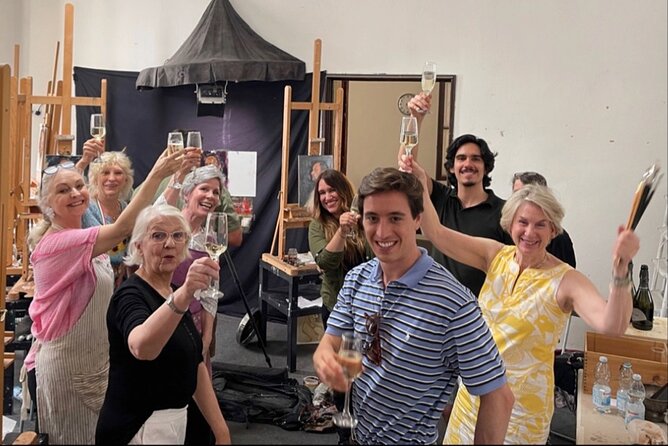
You’ll meet at Borgo Santi Apostoli, 18 (50123 Firenze FI), starting at 10:00 am. The good news is that this area is straightforward to reach by public transportation, so you’re not building your whole day around a difficult route. The class ends back at the meeting point, which keeps your planning simple when you’re deciding what to do later in Florence.
Once you’re there, the workshop vibe is less lecture hall and more studio session. You’ll meet your instructor and group, then shift into the art-focused rhythm of demo, then you try. Because the group is capped at 10 people, you’re less likely to get lost in the shuffle. That matters with oil painting, where a tiny change in technique can make a huge visual difference.
Also, check that you’re comfortable around art materials and the slow, deliberate feel of painting. Three hours sounds short, but it’s enough for a guided copy if you’re given the right starting point—and you are.
The Vermeer copy: what you’ll actually paint (and why it’s a smart choice)
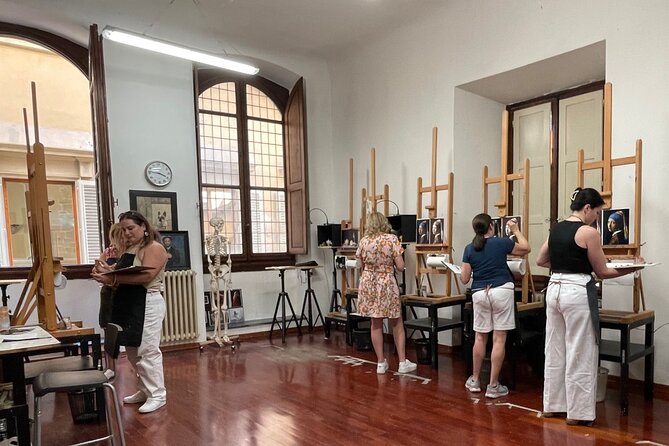
Your end goal is a copy of Girl with a Pearl Earring. That specific choice is practical. Vermeer’s work has strong light-dark structure, subtle skin tones, and a face that rewards the exact skills you’ll be taught: color mixing and handling edges.
Instead of starting from blank canvas, you work from an already prepared drawing. That’s a big deal if you’re new. It means the class can focus on what you came for—how to mix paint, how to place it, and how to make it look believable—rather than spending your time on sketching proportions.
The structure also keeps your expectations realistic. You’re not trying to reproduce every microscopic detail of a famous old master in one sitting. You’re learning the painterly decisions behind the look. That’s why this style of workshop works for beginners, and it’s also why people who paint occasionally often come back to the basics and discover what they’ve been missing.
If you want a freeform painting session where you invent everything from scratch, you might find this format limiting. If you want the quickest path to painterly confidence, this is a solid approach.
Materials, color mixing, and chiaroscuro: the parts that make skin tones look real
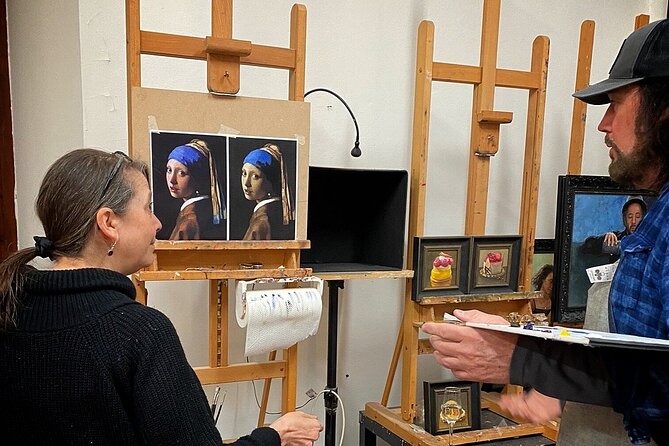
The class includes a lecture and demonstration first: materials, methods, and color mixing. This is where you get the tools to stop treating paint like mystery paste. Oil painting can feel intimidating because you’re mixing colors with intention and building layers and values over time. The workshop breaks that down into workable steps.
You’ll specifically learn:
- how to approach vibrant color mixing
- how to create realistic skin tones
- how to use chiaroscuro (the contrast between light and dark)
Chiaroscuro isn’t just a fancy term. It’s the engine of realism. When you understand where the shadows sit and how values shift, faces and forms suddenly look like they belong to the same world. Even if your brushwork is still developing, strong value placement makes a painting read correctly.
And because you’re working from Vermeer, you get a subject that naturally exposes these skills. You’re not mixing random palettes; you’re using color mixing and light-dark structure where it visibly counts.
One other smart detail: the instruction is personalized. That’s important in a group, because oil painting skill gaps are real—some people arrive with practice, others have only watched paint dry (figuratively). Personalized coaching lets you keep moving without feeling lost, and without feeling bored.
How the session flows: demo, then your turn with the brush
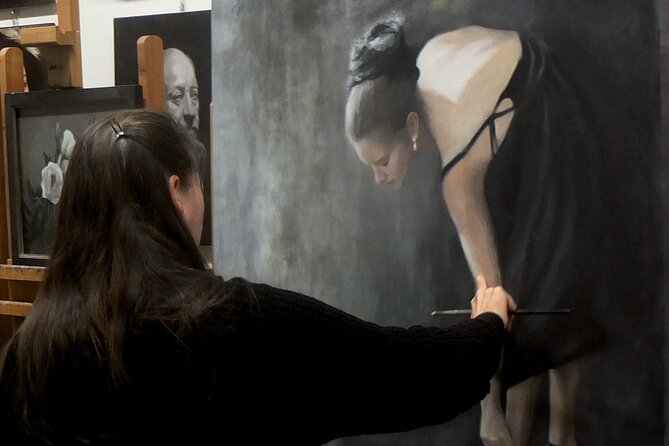
After the initial teaching moment, you’ll paint your copy yourself. The process is laid out as a learning loop:
1) you watch materials and techniques explained
2) you try those techniques on your prepared drawing
3) you adjust based on guidance
This is exactly how you learn paint fast: you see a method, then you apply it immediately while the idea is still fresh.
You’ll also work through the specific technique focus that the workshop highlights, including soft and hard edges. That’s one of those things that separates flat, correct-looking sketches from paintings that feel alive.
A short, practical note: oil painting isn’t like watercolor or acrylic where everything changes quickly and demands immediate decisions. Oils give you a little breathing room, but that also means you need patience with transitions and value structure. The class pacing helps you build that patience instead of rushing.
Soft edges vs hard edges: making your copy look like painting, not coloring
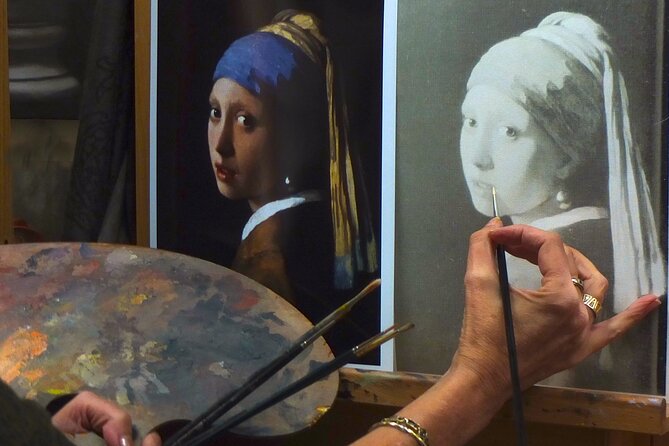
This class calls out learning how to create soft and hard edges. Here’s why you should care: edges are where the eye decides what’s in focus, what’s transitioning, and what’s closer to light.
Hard edges often signal clarity and shape. Soft edges help blend transitions in skin and shading so they don’t look harsh. For a face like the one in Girl with a Pearl Earring, that blend is critical. If everything is hard, it can look cut out. If everything is soft, it can look blurry or unfinished.
What I like about teaching this in a workshop format is that it gives you control. You’re not stuck with one default brushstroke style. You learn how to make choices—then you practice them during your session so you start building an instinct for it.
And again, personalization matters. If you’re over-blending or not blending enough, your instructor can point out what to change right away rather than letting you wander for an hour.
The studio experience: Laura, Frank, and Leo (yes, really)
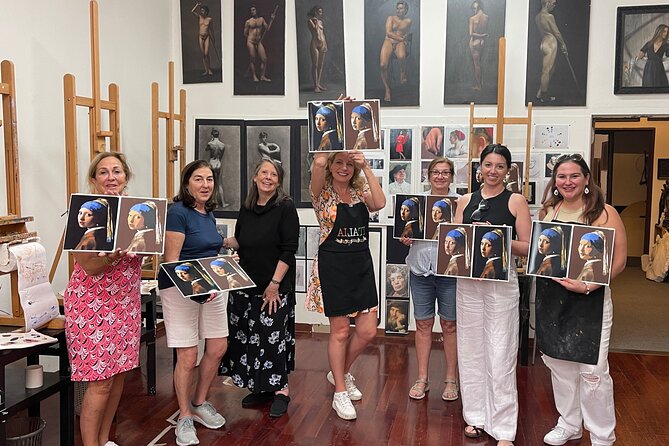
A studio class can be either dry or inspiring. Here it leans inspiring. Laura is described as a fabulous artist and teacher, and the teaching style seems to focus on the basics in a way that feels relatable. In one account, the biggest help was getting started without intimidation—tools, paints, and the basic question of where to begin were handled step by step.
There’s also a welcoming, lived-in studio feel. In the same spirit, one review notes that Frank (Laura’s husband, a sculptor) and their pet rabbit Leo were part of the environment. That’s not “art instruction,” but it changes the tone. When you feel comfortable, you take more risks. That’s how you get better faster.
If you worry about judgment, this kind of studio atmosphere helps you relax. And when you relax, your hands behave better and your eyes notice more.
Packing your painting for the ride home
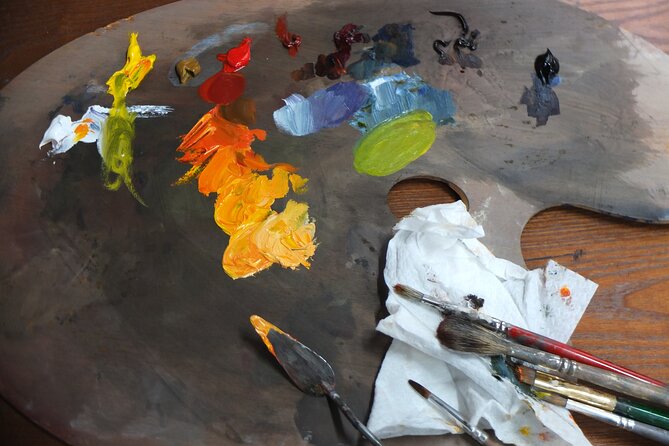
One of those small workshop perks that matters: you’ll have help packing your painting for easy transport home. That’s huge, especially if you’re moving through Florence with other plans—museum tickets, long walks, and bags that are already full.
Oil paintings can be tricky for travel because you don’t want smudges, bends, or accidental contact. Getting packing support takes the stress out of the last step, so you can enjoy your day instead of babying your artwork like it’s made of glass.
Price and value for 3 hours in Florence
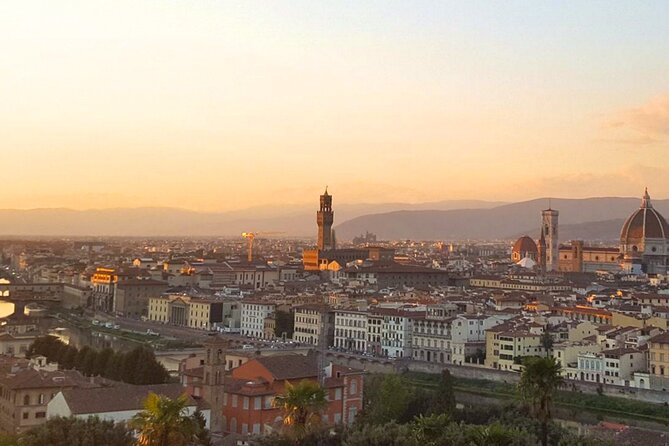
The price is $266.16 per person for about 3 hours. Is it worth it? For me, the value comes from the combination of:
- a famous artwork as your structured subject
- instruction on core skills (color mixing, chiaroscuro, edge control)
- a prepared drawing, so you’re not paying for an art history lecture or wasting time on sketching fundamentals
- a small group size (max 10) with personalized help
- packing support so you don’t turn your finished work into a travel problem
If you’ve ever tried to learn oil painting from scratch via YouTube or a book, you know how often you stall at the “what do I do first?” stage. This class tackles that. You get guided practice in a real setting with an instructor who can adjust as you work.
The one trade-off is time. Three hours won’t turn you into a master painter. But it can absolutely give you a foundation you’ll use again, and it can produce a tangible, transport-ready result you can actually bring home.
Who should book this oil painting class (and who should think twice)
This is a great fit if you:
- want a beginner-friendly start to oils
- want to learn practical basics like mixing colors and building realistic skin tones
- like structured teaching with clear technique goals
- want a small group with personalized attention
- don’t have prior drawing experience and prefer starting with a prepared outline
You might think twice if:
- you’re hoping for an entirely original, freehand painting session with full creative control
- you strongly dislike guided copying formats
- you want a long, deep session focused on finishing every last detail
Overall, it’s a “learn fast and feel good while doing it” kind of class.
Should you book the Oil Painting Class in Florence?
I’d book it if you want a confident start to oil painting without the usual chaos of figuring out where to begin. The focus on color mixing, chiaroscuro, and edge control gives you skills that carry over to any subject, even if you only paint for fun. And the fact that you start from an already prepared drawing makes the class work for beginners while still being valuable to someone who paints occasionally.
If you’re okay with a guided copy and you want your time to turn into real technique—not just watching someone else paint—this is a very strong use of a half-day in Florence.
FAQ
How long is the oil painting class in Florence?
It lasts about 3 hours.
What artwork will I paint?
You’ll paint a copy of Vermeer’s Girl with a Pearl Earring.
Do I need prior drawing skills?
No. You’ll paint on an already prepared drawing, and previous drawing skills are not necessary.
Is the class taught in English?
Yes, it’s offered in English.
How many people are in the group?
The class has a maximum of 10 travelers.
What happens at the end of the activity?
It ends back at the meeting point, and your painting is packed for easy transport home with you.