REVIEW · PRIVATE
Private Tour of Florence on a Golf Cart Tour
Book on Viator →Operated by Florencyatour · Bookable on Viator
Florence from a golf cart feels smarter than walking. This private tour in a golf cart zips you past major sights with English narration, so you can get your bearings fast without burning your legs. It starts near Piazza del Mercato Centrale and keeps the pace gentle enough for most people who don’t want a marathon.
I like two things right away: the short, high-impact route and the chance to ask questions while you’re rolling. Stops are clustered around the historic center, so you’re not guessing where to go next. The experience also tends to shine when the guide leans personal—names like Moin, Simone, Farina, Freddy, Joseph, and Johnny show up in guides’ styles, including extra time for photo views like Piazza Michelangelo.
One drawback to consider: the experience can lean partly on recorded audio, and reviews also mention occasional timing problems or an older cart. If you’re the type who wants nonstop live, detailed commentary at every stop, read the pace and format as a quick highlights tour, not a deep museum day.
In This Review
- Key things to know before you go
- Why a Florence Golf Cart Tour Works When Your Feet Are Done
- Meeting at Piazza del Mercato Centrale and What the 1-Hour Pace Feels Like
- Stop-by-Stop: Santa Maria Novella, Ognissanti, and the Arno Crossings
- Santa Maria Novella (your opening square)
- Piazza Ognissanti (quick square break)
- Santa Trìnita bridge area (the view and the poetry of the bend)
- Santo Spirito and the Oltrarno side: a calmer Florence moment
- Santo Spirito (church square, simpler façade, big neighborhood vibe)
- Ponte Vecchio and the “yes, that’s the one” moment
- Ponte Vecchio (the icon that lives up to the hype)
- Palazzo Pitti and the rise of Medici power (without forcing museum time)
- Palazzo Pitti (a major residence with a huge “why it matters”)
- San Niccolò (medieval feel, different Florence mood)
- Biblioteca Nazionale Centrale and why “not-a-famous-name” stops can still help
- Biblioteca Nazionale Centrale (a big European library)
- Piazza Santa Croce and Duomo area icons: where Florence goes big
- Piazza Santa Croce (the square, the stage, the crowd energy)
- Cupola del Brunelleschi (the dome as a visual anchor)
- Uffizi and Cappelle Medicee: Medici power and art gravity
- Uffizi Gallery complex (a stop with real weight, but not a full museum day)
- Cappelle Medicee (a museum that grew out of a religious space)
- Duomo and Basilica di San Lorenzo: Florence’s core, plus a market moment
- Duomo (Santa Maria del Fiore, the symbol stop)
- Basilica di San Lorenzo and the San Lorenzo market area
- Price and value: what $60.34 buys in a city of expensive tickets
- Guides make or break it: names, style, and what to watch for
- Who should book this golf cart tour?
- Should you book this Florence Golf Cart Tour?
- FAQ
- How long is the Private Tour of Florence golf cart tour?
- Where is the meeting point?
- Is this tour private?
- What language is the tour offered in?
- Are tickets included for each stop?
- How much does the tour cost?
- What is the cancellation policy?
Key things to know before you go
- Private for your group: you ride together, so you’re not stuck with random pacing.
- Designed for limited time: the whole circuit is about an hour, with brief stops for photos and views.
- Mix of free viewing and paid entries: several landmarks are free to see from outside, while some major sites may cost extra.
- Arno river moments are built in: you’ll see the Santa Trìnita area vibe and then cross at Ponte Vecchio.
- You may hear recordings: some guides blend live info with a speaker system that can affect clarity.
- Photo stops matter: guides often make time for family pictures and big view angles.
Why a Florence Golf Cart Tour Works When Your Feet Are Done
Florence can be a lot. Even if you’re in great shape, the sidewalks, crossings, and heat can wear you down faster than the guidebooks admit. This private golf cart format is built for the real-world problem: you want to see the classics without losing half your day to walking between them.
The tour is also a good “first day” move. You’re shown the city’s skeleton—squares, churches, bridges, and the Duomo area—so later, when you’re choosing where to linger, you already understand the geography. You’ll recognize streets and districts. You won’t feel like you’re crossing Florence blindly.
And because it’s private, it’s easier to steer the visit toward what you care about. If you’re into big views, you’ll want the stops that create photo opportunities. If you just need to get the highlights checked quickly, you’ll appreciate the steady rhythm.
Meeting at Piazza del Mercato Centrale and What the 1-Hour Pace Feels Like
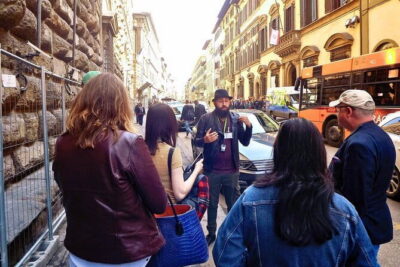
You meet at Piazza del Mercato Centrale, 39 R, 50123 Firenze FI. From there, you head into central Florence in the golf cart.
The posted duration is about 1 hour. In real life, that means you should expect short photo breaks rather than long conversations at each stop. You’ll likely have enough time to get a few photos, absorb what you’re seeing, and then move on.
Reviews point to two common patterns:
- When the guide is fully on and engaged, you get a friendly explanation plus helpful “what to notice” moments.
- When the experience leans more on recordings or the cart/driver is struggling, the tour can feel more like an audio slideshow with quick stops.
So manage your expectations like you would for a city overview. This is a highlights circuit. It’s not a multi-hour sit-down tour of churches and museum interiors.
Stop-by-Stop: Santa Maria Novella, Ognissanti, and the Arno Crossings
Santa Maria Novella (your opening square)
The tour begins at Piazza Santa Maria Novella, dominated by the Basilica of Santa Maria Novella. Even if you don’t go inside, the square gives you an instant Florence snapshot: grand architecture, a clear sense of where you are in the city center, and a look at how the Duomo area will later connect in your mind.
The admission note here is free, so you can view the basilica area without needing to plan around ticket lines for this first moment.
Piazza Ognissanti (quick square break)
Next is Piazza Ognissanti, west of central Florence near the Arno. This stop is brief, but it’s useful. Squares like this help you understand the layout: Florence isn’t only one famous church. It’s a chain of neighborhoods and plazas, each with its own feel.
Here, the tour indicates admission is included, which usually means your guide expects you to do a quick entry or a structured visit related to the spot.
Santa Trìnita bridge area (the view and the poetry of the bend)
You’ll pass along the Santa Trìnita bridge area. This bridge is described as one of the most beautiful in Italy, and that line matters because it explains why guides often slow down here. Bridges in Florence aren’t just crossings—they’re viewpoint machines.
Even if you just take photos, you get a different angle on the Arno and the riverbanks than you’ll get from the main river crossings later.
Santo Spirito and the Oltrarno side: a calmer Florence moment
Santo Spirito (church square, simpler façade, big neighborhood vibe)
The tour heads to Santo Spirito, in the Oltrarno district. This church is built on the remains of a 13th-century Augustinian convent destroyed by a fire in 1371. That kind of backstory helps you see the place as more than a pretty stop. It’s a layer cake of rebuilding—Florence’s specialty.
Admission is free here. That’s a plus if you want to spend money on a later paid stop instead of using entry tickets at every location. It also keeps the pacing smooth for a quick circuit.
Oltrarno is a side of Florence many people rush. This stop nudges you toward that reality: the city has a calmer, more local rhythm just across the river.
Ponte Vecchio and the “yes, that’s the one” moment
Ponte Vecchio (the icon that lives up to the hype)
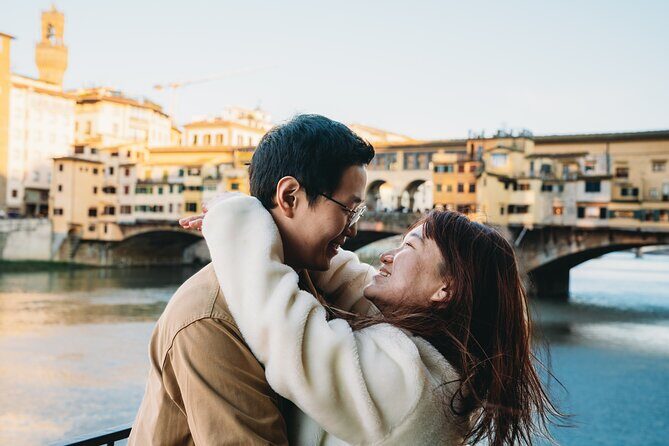
Then comes Ponte Vecchio, Florence’s best-known bridge. The tour notes it crosses the Arno about 150 meters, and that’s exactly why it hits so hard. You’re not peeking at a landmark from the side street—you’re on the main stage.
Admission is listed as included for this stop. That’s important for value: you’re not just taking an outside photo. You’re set up to experience the bridge as a destination.
For many visitors, this is the one stop you remember clearly because it’s the city’s symbol rendered in stone and daily life. The river traffic, the architecture, and the way the bridge frames the skyline make it feel like you’re seeing Florence the way painters did.
Palazzo Pitti and the rise of Medici power (without forcing museum time)
Palazzo Pitti (a major residence with a huge “why it matters”)
Next is Palazzo Pitti, purchased in 1550 by Cosimo I de’ Medici and Eleonora of Toledo to transform it into the new Grand Ducal residence. That’s a big deal. It’s not just a beautiful building; it’s a political move—Medici power made visible in architecture.
Admission is marked as not included. Translation: if you want interior rooms, you’ll likely need separate planning. For this tour, the value is in the exterior context and your guide’s explanation so that later, when you decide whether to go inside, you know what you’re buying.
San Niccolò (medieval feel, different Florence mood)
You also pass through San Niccolò, noted as a part of Florence that has preserved its medieval atmosphere. Even if you don’t go deep into the neighborhood, the cart route gives you a sense of texture and slope—Florence isn’t flat, and these pockets make the city feel lived-in rather than staged.
Biblioteca Nazionale Centrale and why “not-a-famous-name” stops can still help
Biblioteca Nazionale Centrale (a big European library)
The Biblioteca Nazionale Centrale di Firenze is one of the most important Italian and European libraries. Admission is not included, so think of this stop as context, not an inside visit.
Still, this is useful. Florence isn’t only art and churches. It’s also learning, books, archives, and the institutions that made the city’s cultural machine run. A brief stop like this can make your later museum visits feel more connected.
Piazza Santa Croce and Duomo area icons: where Florence goes big
Piazza Santa Croce (the square, the stage, the crowd energy)
The tour includes Piazza Santa Croce, dominated by the Basilica of Santa Croce. Admission is free for this spot, so you’re not paying to appreciate it, which helps value.
Squares are where Florence becomes social. Even on a quick stop, you’ll see how the architecture frames movement. It’s the kind of place where your photos look like postcards because the setting does half the work.
Cupola del Brunelleschi (the dome as a visual anchor)
You’ll also see Cupola del Brunelleschi, the dome covering the Duomo of Florence. The tour notes it was the largest dome in the world at the time of construction. That fact matters because it changes how you look at it: not as decoration, but as engineering confidence.
Admission is listed as not included. So treat this as a view stop. If you want to climb or go deeper into the Duomo complex, that’s beyond this quick circuit.
Uffizi and Cappelle Medicee: Medici power and art gravity
Uffizi Gallery complex (a stop with real weight, but not a full museum day)
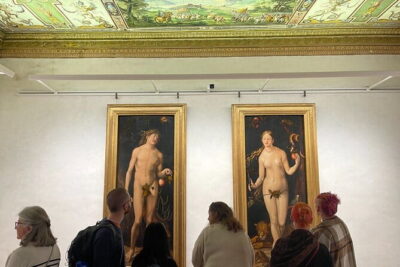
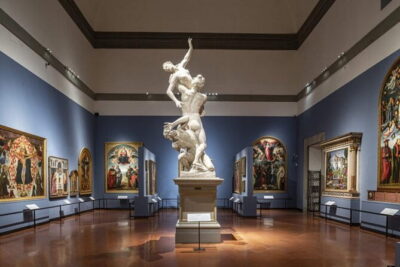
The tour points out the Uffizi Gallery as a museum complex in Florence that includes the Gallery of Statues and Paintings. Admission is not included.
This is a key value question for you: do you want to spend your limited time inside Uffizi? If yes, this tour is still helpful because it places you in the right neighborhood and makes the next step feel obvious. If no, you still get to understand why people line up for that address.
Cappelle Medicee (a museum that grew out of a religious space)
Next are the Cappelle Medicee, the Medici chapels, now a museum accessed from behind the basilica in Piazza Madonna degli Aldobrandini. Admission is not included.
This stop is about meaning. Medici stories connect the city’s political history to its art and religious symbolism. Even without tickets, your guide can help you spot why visitors care.
Duomo and Basilica di San Lorenzo: Florence’s core, plus a market moment
Duomo (Santa Maria del Fiore, the symbol stop)
The tour includes Duomo, officially Santa Maria del Fiore, a central Florence symbol. Admission is free here, which makes it a smart stop for a one-hour tour.
This is the moment your brain clicks: the dome and the cathedral dominate the skyline, and suddenly Florence feels like one unified experience rather than separate landmarks.
Basilica di San Lorenzo and the San Lorenzo market area
Then you reach Basilica di San Lorenzo in the homonymous square. Admission is marked as not included. The tour notes there’s a tourist market nearby, which matters because this area is where browsing becomes part of the city experience.
If you like to wander after tours, this is a practical landing zone. You can grab a snack, look for local goods, and keep your day moving without losing your orientation.
Price and value: what $60.34 buys in a city of expensive tickets
The price is $60.34 per person for about 1 hour, and it’s private for your group. That price can feel reasonable—or steep—depending on what you expect to get.
Here’s how I’d judge value:
- If you want a fast orientation and photo-ready stops (Santa Maria Novella, Ponte Vecchio, Duomo) without doing multiple museum entrances, you’ll feel good about the cost.
- If you’re hoping this replaces expensive paid tickets for big interiors, it likely won’t. Several major sites are marked as admission not included, including Palazzo Pitti, Biblioteca Nazionale Centrale, Cupola del Brunelleschi, Uffizi, Cappelle Medicee, and San Lorenzo.
In plain terms: this tour sells you time and convenience, not a full museum checklist. It’s a smart buy for a first day or a hot afternoon when you’d rather see more than sweat.
Guides make or break it: names, style, and what to watch for
A lot of the best moments in reviews revolve around guides who go beyond the script. I’m looking for these signs in a tour like this:
- Friendly, proactive guidance while driving through busy streets
- Extra time when you ask for a photo angle or a specific viewpoint
- Clear communication, whether it’s live narration or audio support
In the feedback you can see names like Moin, Simone, Farina, Freddy, Joseph, and Johnny. A few reviews mention guides taking photos for families and making the experience feel personal, not like a canned route.
Then there are the opposite signals:
- Audio clarity issues (recording problems or speaker volume)
- Carts described as old or uncomfortable
- Drivers late for pickup or the tour feeling shorter than expected
So your best move is simple: treat this as a highlights experience with a strong chance of being great, but don’t assume every run is flawless.
Who should book this golf cart tour?
This tour is ideal if you:
- Have limited time in Florence and want a fast overview
- Prefer shorter walking stretches or need a lower-effort option
- Want a guide to point out what matters, then you’ll go back later on your own
- Travel with family members who need frequent photo breaks
It’s less ideal if you:
- Want long museum visits inside Uffizi, Medici chapels, or major interiors
- Are very sensitive to audio recordings and want fully live narration only
- Are strict about timing and would be unhappy if the tour runs shorter due to on-the-ground issues
Should you book this Florence Golf Cart Tour?
If your goal is to get your bearings fast and see Florence’s biggest icons in an hour, this tour makes a lot of sense. The route hits the big mental markers—Santa Maria Novella, Santo Spirito, Ponte Vecchio, the Duomo area, and Santa Croce—without forcing a full-day walking grind.
I’d book it when you’re arriving with a tight schedule, traveling with mixed mobility, or planning a first pass through the city. I’d skip or replace it with something longer if you’re mainly chasing museum interiors, dome access, or you want uninterrupted, purely live commentary.
FAQ
How long is the Private Tour of Florence golf cart tour?
It’s listed as about 1 hour (approx.).
Where is the meeting point?
You meet at Piazza del Mercato Centrale, 39 R, 50123 Firenze FI, Italy, and the tour ends back at the meeting point.
Is this tour private?
Yes. It’s a private tour/activity, and only your group participates.
What language is the tour offered in?
The tour is offered in English.
Are tickets included for each stop?
Some stops are listed as free or admission included, while others are listed as admission not included. The tour notes several free viewing stops and indicates which ones have included admission.
How much does the tour cost?
The price is $60.34 per person.
What is the cancellation policy?
You can cancel for a full refund up to 24 hours in advance of the experience’s start time. Cancellation is free, and changes within 24 hours aren’t accepted.