REVIEW · HISTORICAL TOURS
The History of Florence: The Renaissance Era Private Tour
Book on Viator →Bookable on Viator
Florence hits you fast. This Renaissance-focused private tour helps you make sense of what you’re seeing in just a few hours. I especially love how the stops are chosen to connect big ideas—Medici power, the Duomo’s design, and Dante’s Florence—in plain, human terms. I also like the private guide adjustments, so the pace and route can fit what you care about most. The one drawback to plan around is that Cappelle Medicee requires an extra entrance ticket (and it’s replaced by San Lorenzo on Tuesdays).
Because it’s private, you don’t get herded. You can also pick a start time that works for your day, which is a big deal in Florence when everything is timed by lines, church hours, and your energy level. Guides like Michele, Martina, and Zeynep all show the same pattern: clear explanations, strong city context, and practical tips you can use after the tour.
Expect an end-of-tour payoff too. You finish on a terrace near Brunelleschi’s dome, where the view over the Cathedral is exactly the kind of thing you want to linger over with a gelato in hand.
In This Review
- Key highlights worth your attention
- Why a Renaissance-focused Florence tour works in 3 hours
- Picking your start time and meeting point without stress
- Cappelle Medicee: the Medici legacy in marble and politics
- Opera del Duomo: getting the dome’s design story fast
- House of Dante: literature you can walk through
- The flexible extra stops: how your guide shapes the day
- Ending at Brunelleschi’s dome terrace: the view you plan the whole day for
- Price and value: is $198.24 per person a good deal?
- Practical tips so you don’t waste time (or money)
- Should you book this private Renaissance history tour?
- FAQ
- How long is the Florence Renaissance private tour?
- What does the tour cost?
- Is this a private tour or a group tour?
- What language is the tour offered in?
- Are tickets included for all stops?
- What happens if I book for a Tuesday?
- Where does the tour start and end?
- Is hotel pick-up or drop-off included?
- What’s the cancellation policy?
Key highlights worth your attention
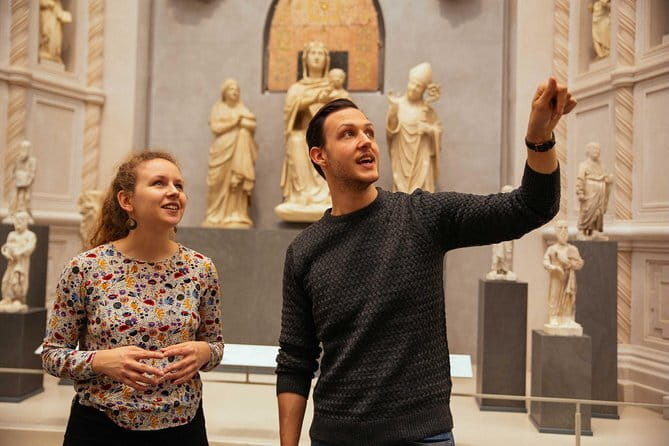
- Private guide, only your group: you get personal pacing and room to ask questions.
- Flexible start times: easier planning if you’re juggling tickets or other tours.
- Duomo dome stop with free admission: a strong design moment without extra ticket cost.
- Cappelle Medicee access with a ticket you pay separately: plan ahead for that extra expense.
- House of Dante stop is free: great for pairing street-level Florence with literature.
- End at a dome-view terrace: you wrap up with the best photo angle and a breath of fresh perspective.
Why a Renaissance-focused Florence tour works in 3 hours
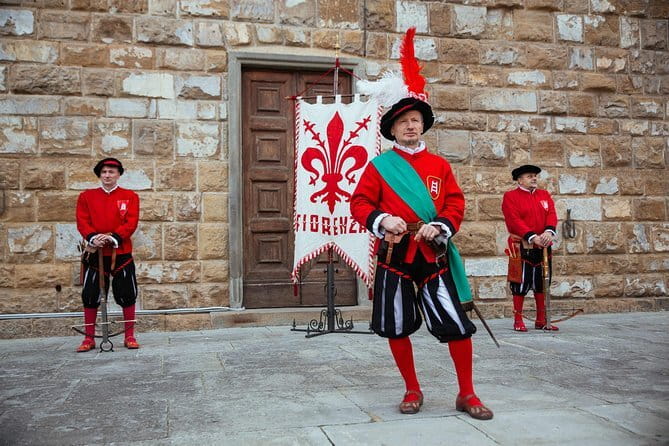
Florence is not short on sights. The problem is time. In three hours, it’s easy to bounce from one landmark to the next and still feel like you missed the point.
This tour solves that by using a tight theme: Renaissance Florence through the people and buildings that shaped its identity. You start with the Medici Chapels (a physical record of Medici status), then shift to the Duomo’s dome (engineering turned into civic pride), and finish with Dante’s house (culture that outlived the city’s politics). The result is a logical path, not a random checklist.
And because it’s private, you’re not stuck waiting for a group who moves slower—or rushing to keep up with people who sprint. That matters in Florence, where a “quick stop” can turn into 45 minutes if you’re stuck in a crowd.
Picking your start time and meeting point without stress
You get flexibility here. You choose a start time that suits your schedule, so you’re not forced into the same morning slot as everyone else. That’s handy if you want to pair this with museum time later, or if you’re arriving by train and just need the day’s rhythm to work.
The tour begins at 50123 Florence, and you’ll end at Piazza del Duomo, 50122 Firenze FI, on a terrace with a view over the Cathedral. The start point is near public transportation, and people often find it walkable from the station area, which is useful if you’re traveling light.
One practical thing: hotel pickup and drop-off are not included. So I’d plan to meet your guide at the designated meeting spot and then walk from there. If you’re staying near the Duomo, that’s even easier. If you’re farther out, just make sure your commute timing is realistic.
Also note the language: it’s offered in English. If you’re English-speaking, you’ll likely spend the whole tour feeling in control of what you’re seeing.
Cappelle Medicee: the Medici legacy in marble and politics
Your first stop is Cappelle Medicee, the Medici Chapels—two chapels built between the 16th and 17th centuries as an extension to the Basilica of San Lorenzo. Even without being a history buff, you can feel what this place is: a statement in stone about power, taste, and legacy.
Plan for about 20 minutes here. That sounds short, but it’s realistic for this kind of high-information site. You’re not trying to “see everything.” You’re learning how to read it: what was emphasized, why the Medici mattered, and how art became a tool for authority.
Two important considerations:
- Admission ticket is not included, so you’ll need to pay separately for entry.
- On Tuesdays, Cappelle Medicee is closed, and the tour visits the Church of San Lorenzo instead.
That Tuesday detail is more than trivia. If you’re traveling on a Tuesday, you’ll want to accept that your first “Medici Chapels” moment turns into a San Lorenzo experience. The tour is still themed, but the exact surfaces and exhibits will be different.
If you’re the type who likes to understand what you’re photographing, this first stop is where you’ll gain your “decoder ring” for the rest of the city.
Opera del Duomo: getting the dome’s design story fast

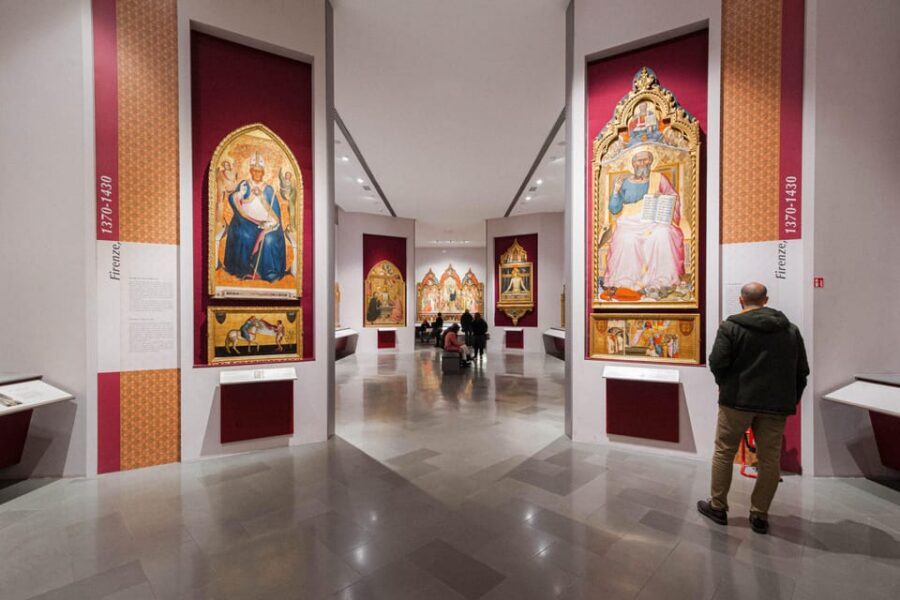
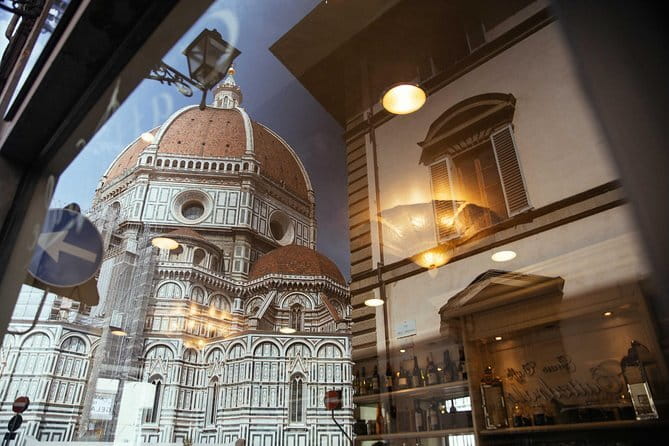
Next up is Museo dell’Opera del Duomo, the museum tied to the Cathedral complex. The highlight is the dome itself—those striking eight white ribs against terracotta tiles.
This stop is timed at around 20 minutes, and the good news is admission is free for this part. That instantly improves the value of the tour because you’re paying for the guide and the flow, not constantly paying for entries.
What you’ll get out of it is the “why” behind what you see. In Florence, architecture is never just architecture. The Duomo design choices connect to engineering challenges, artistic ambition, and civic identity. A guide helps you notice the specific features you’d otherwise miss if you just walked past.
A practical tip: wear shoes that can handle stone floors and a bit of walking. Even short museum stops can include stairs and tight spaces.
House of Dante: literature you can walk through
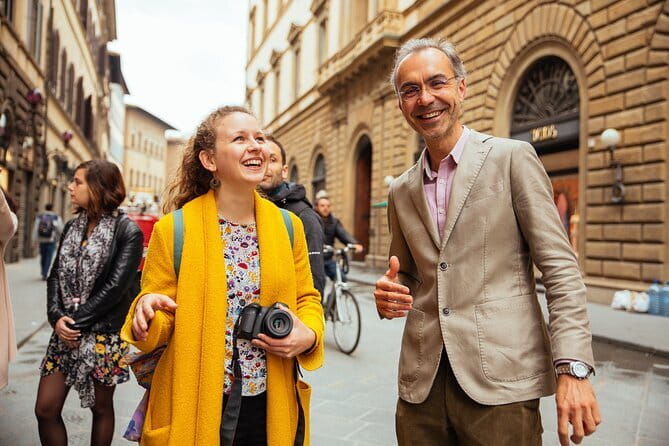
Then you head to the House of Dante, located on the site associated with Dante’s birthplace. This is one of those places where Florence stops being just visual and becomes intellectual.
Again, you get about 20 minutes, and admission is free. The exhibits focus on Dante’s work and his life in Florence in the era you came to study.
The best way to enjoy this stop is to treat it like a time machine with an address. Your guide can tie Dante to the physical city—streets, institutions, and culture—so you don’t just admire a plaque. You start connecting references you’ll hear later in the day while walking around Florence.
If you’re deciding between “art-only” Florence and “culture + art” Florence, this is a great compromise. You get artistic context, but you also get the human story that made that art necessary.
The flexible extra stops: how your guide shapes the day
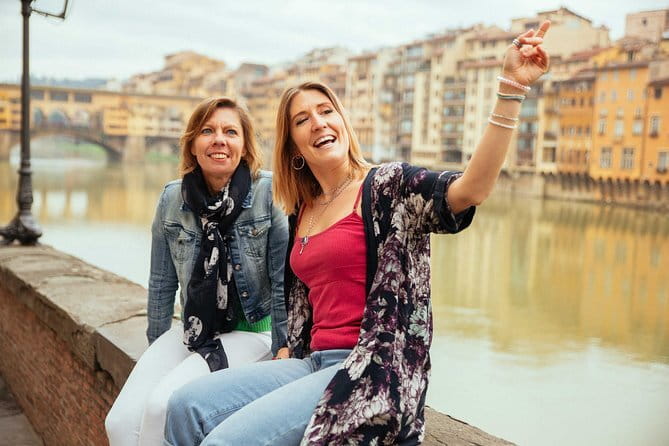
You’ll notice something in the structure: there can be additional stops depending on the host and the route. The exact sites aren’t fixed in the details you provided, but the key idea is that the guide can adjust.
That flexibility shows up in a couple ways:
- If you’ve already seen something, a guide can reroute to protect your time.
- If you care more about certain themes—architecture, major figures, or city storytelling—you can steer the emphasis.
From my point of view, this is where a private tour earns its keep. You’re not trapped in a script. You’re working with a local who can shift the route based on your interests and the day’s pace.
Guides like Michele and Martina were described as adjusting for preferences and giving strong local recommendations during the walk. Zeynep’s approach was highlighted as professional and very clearly explained, which matters when you’re trying to absorb history without feeling overwhelmed.
Ending at Brunelleschi’s dome terrace: the view you plan the whole day for
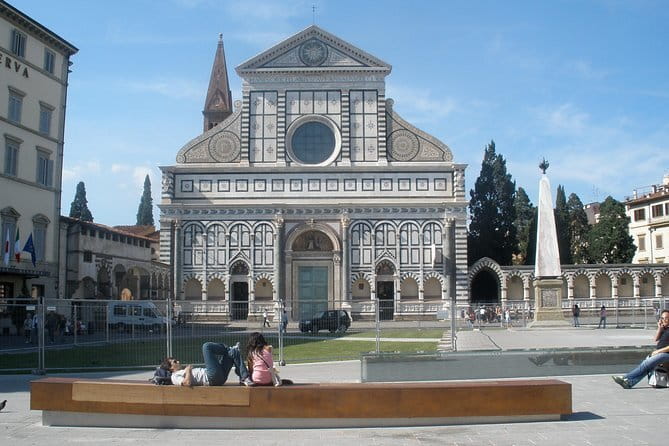
The tour ends on a terrace with a view over the Cathedral, tied to Brunelleschi’s dome at Piazza del Duomo.
This matters because the best Florence photos aren’t always the first ones you take. Sometimes you need a guided build-up—Medici power, then civic art, then literature—so the dome view lands with meaning, not just size.
You’ll have the chance to slow down at the end. That’s when you can:
- compare what you learned to what you see,
- take photos without rushing,
- and decide where you want to spend extra time after the tour.
If you like ending tours with a clear finish line, this one does that.
Price and value: is $198.24 per person a good deal?
Let’s talk math. $198.24 per person for about 3 hours is not “cheap,” especially if you’re traveling solo. But it’s a private tour with a local guide, and that changes the equation.
Here’s why it can still feel worthwhile:
- You pay for time and clarity. Instead of wandering for hours and guessing what matters, you get a guided storyline fast.
- Two included stops are free admission (Opera del Duomo and House of Dante), which helps balance out the cost.
- The Medici Chapels stop is meaningful, but you’ll need to pay the entrance ticket separately. So the value depends on how strongly you want that specific stop.
- Group discounts and a mobile ticket option can make logistics smoother if you’re traveling with others.
- People also noted that the experience can reduce line-time by using a more direct entrance approach at key spots. Even if that’s not the exact same for every day, it’s a sign the tour is designed to respect your time.
So who is this best for?
- Couples and small groups who want private pacing
- First-timers who want a high-impact Florence introduction
- People who care about connecting buildings to people and ideas, not just collecting photos
- Travelers who dislike wasting time sorting out where to go next
If you’re budget-first and happy to self-guide, you might choose a free walking route. But if you want structure and a guide to point out what you’ll otherwise miss, the private format is the point.
Practical tips so you don’t waste time (or money)
A few details can help you avoid common Florence headaches:
- Bring the right entry planning mindset for the Medici Chapels. The ticket is not included, so factor that into your schedule and budget.
- If your day is Tuesday, expect a replacement. Cappelle Medicee closes, and San Lorenzo will be visited instead.
- Use the mobile ticket if that’s how you access your experience. It keeps your check-in smoother.
- Wear comfortable shoes. The tour includes museum areas and outdoor walking near the Duomo complex.
- Have a flexible attitude about extra stops. Because additional stops depend on the route, you’ll get better value if you stay open rather than trying to “lock in” every minute.
If you’re also planning a second part to your Florence day, use the tour as the foundation. Afterward, you’ll know what to target: return to the dome area, spend more time around San Lorenzo, or linger near Dante references.
Should you book this private Renaissance history tour?
If you want a fast, coherent Florence story, I’d book it. This tour is built for a real goal: help you understand what you’re looking at, not just what to look at.
I would book it if:
- you’re short on time and want 3 hours that actually add up
- you care about the Medici, the Duomo, and Dante as three different angles on the same city
- you want a guide who can adjust your route based on your interests
- you like ending with a strong view from the Duomo area
I might skip it if:
- you’re very budget-focused and don’t want to pay for the Medici entrance ticket on top of the tour
- you’re happy to self-guide and read plaques slowly on your own
- you’re visiting on a day where you specifically must see Cappelle Medicee (because Tuesday means San Lorenzo instead)
Overall, this is a solid first-or-second tour choice. It helps you get your bearings quickly, then lets you wander with more purpose the rest of your day.
FAQ
How long is the Florence Renaissance private tour?
It runs for about 3 hours (approx.).
What does the tour cost?
The price is $198.24 per person.
Is this a private tour or a group tour?
It’s a private tour. Only your group participates.
What language is the tour offered in?
The tour is offered in English.
Are tickets included for all stops?
No. The Medici Chapels entrance ticket is not included. The Museo dell’Opera del Duomo and the House of Dante are listed as free admission.
What happens if I book for a Tuesday?
On Tuesdays, the Medici Chapels are closed. The tour will visit the Church of San Lorenzo instead.
Where does the tour start and end?
It starts at 50123 Florence and ends at Brunelleschi’s dome area on Piazza del Duomo, finishing on a terrace with a view over the Cathedral.
Is hotel pick-up or drop-off included?
No. Hotel pick-up and drop-off are not included.
What’s the cancellation policy?
You can cancel for a full refund up to 24 hours before the experience’s start time.