REVIEW · PISA
Tour of Carrara Marble: Quarry, Museum and Food Tasting
Book on Viator →Bookable on Viator
Marble work happens right in the mountains.
This tour takes you through the Carrara marble quarry country and into the nearby village of Colonnata, where the quarry tradition is still part of daily life. You’ll learn how stone becomes art and tools from a guide who’s also a trained geologist, and you’ll finish with a food stop built around Carrara’s most famous ingredient: the marble-aged lardo. The group is small (max 8), so you’re not shouting over a crowd or losing the meaning of what you’re seeing.
What I really like is how practical the talk feels. You’re not just hearing marble facts. You’re understanding why the rock breaks the way it does, how extraction and processing work, and what “marble quality” actually means in the real world. I also love the Lardo di Colonnata tasting in Colonnata itself. It’s a simple stop on paper, but the marble-basin aging makes it click with everything you just learned. One drawback to consider: this is weather-dependent, and the day can shift if conditions aren’t good—so keep your schedule flexible if you can, and don’t plan this as your only outdoor activity.
In This Review
- Key things I’d plan around
- Carrara’s marble mountains: why this tour feels real
- Ponti di Vara: quarry viewpoints and the “how it’s done” part
- Colonnata: the quarry-men village and the lardo moment
- Nicola the geologist: why the guide can make or break the day
- What 2 hours 30 minutes feels like (and why the group size matters)
- Price and value: is $95.34 really fair?
- Weather, comfort, and what to bring
- Who this tour suits best
- Should you book this Carrara quarry and lardo tour?
- FAQ
- How long is the Carrara Marble: Quarry, Museum and Food Tasting tour?
- Where does the tour start and end?
- What group size should I expect?
- Is the tour offered in English?
- Is the tour suitable for most people?
- What happens if weather is poor?
Key things I’d plan around
- Small-group size (max 8): easier questions, better pace, less standing around.
- Geologist guide (Nicola): you get clear explanations of mining and marble formation, not generic history.
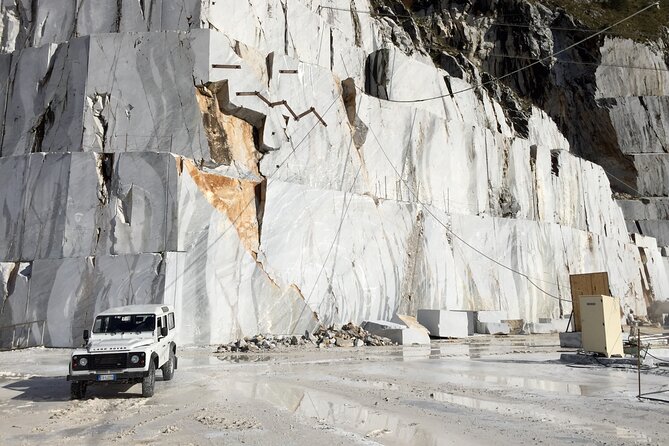
- Quarry views from multiple spots: you’ll see more than one angle of the extraction process.
- Colonnata food stop: you taste Lardo di Colonnata, tied to the area’s quarry tradition.
- Weather can change the order: Nicola can rearrange the route on rainy days.
Carrara’s marble mountains: why this tour feels real
Carrara is one of those places where the headline is obvious, but the details are the fun part. Yes, you come for the marble. But you stay because you can see the system: rock, tools, workers, and the long chain that turns stone into something people want to buy and build with.
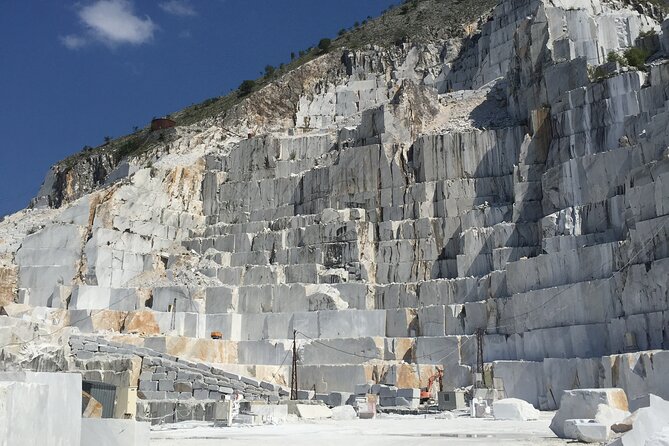
On this tour, you’re not staying behind glass. You’re in the mountains and up close to how quarrying shows itself in the landscape. You’ll pause at different quarry-view points in the Carrara hills so you can connect what the guide is explaining with what you’re seeing. That matters, because marble looks similar until you learn what to notice.
Ponti di Vara: quarry viewpoints and the “how it’s done” part
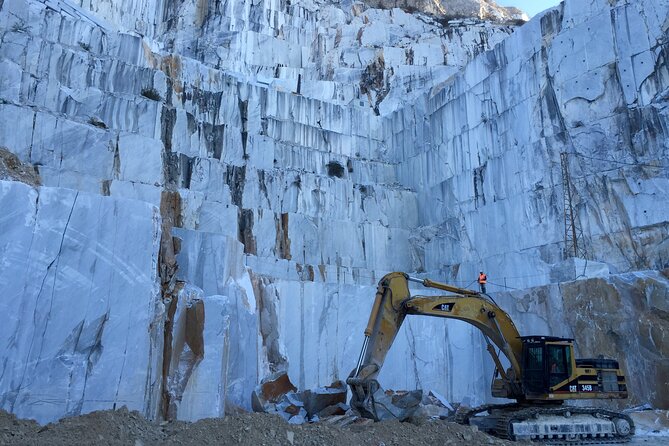
The tour starts in the Carrara mountains, with several stops near quarry fronts around the Ponti di Vara area. This is where you get your first big shift in perspective: marble isn’t just a pretty surface. It’s a rock with a specific structure, and quarrying is basically a controlled conversation with that structure.
At these viewpoints, your guide explains the history of quarrying and the excavation methods used in the region, then brings it into the present. The goal is simple: you should leave understanding the step from rock to product. Think of it like learning the “language” of the industry—terms, patterns, and cause-and-effect—so later, when you see marble furniture or sculpting, you know what’s behind the finish.
On a weekday, you may even catch the rhythm of the working site—like diamond saws and heavy equipment in action. That’s one of the most memorable parts of the experience because it turns explanations into something you can practically picture.
Practical note: quarry viewpoints can mean uneven ground and outdoor time. If you’re sensitive to cold or wet weather, plan layers. If it’s raining, the guide can adjust the route so the day still works.
Colonnata: the quarry-men village and the lardo moment
After the mountains, you head to Colonnata, a small village tied directly to the people who worked the quarries. This stop isn’t just a change of scenery. It’s the “people and tradition” counterpart to the quarry explanation you just heard.
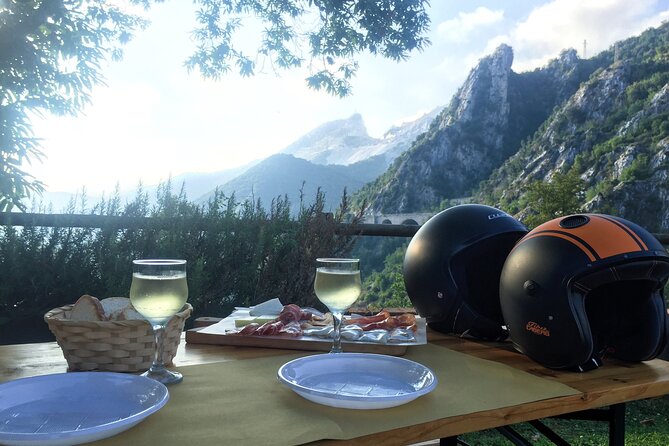
Colonnata is famous for its lardo, specifically Lardo di Colonnata, a cold cut aged in a marble basin using a traditional recipe. The big value here is the way the food stop connects to the stone story. Marble isn’t only something you carve. It plays a role in the local method of aging and flavor.
You’ll taste the lardo as part of this visit, and you’ll do it in the village where the tradition comes from, not in a themed restaurant where everything feels detached from the place. If you’re the type who usually skips food tours, this one still works because the lardo isn’t random. It’s local technique tied to local material.
One more detail that makes this stop better: it’s not rushed through as a checklist. The timing gives you enough room to settle after the mountain portion and actually enjoy the village.
Nicola the geologist: why the guide can make or break the day
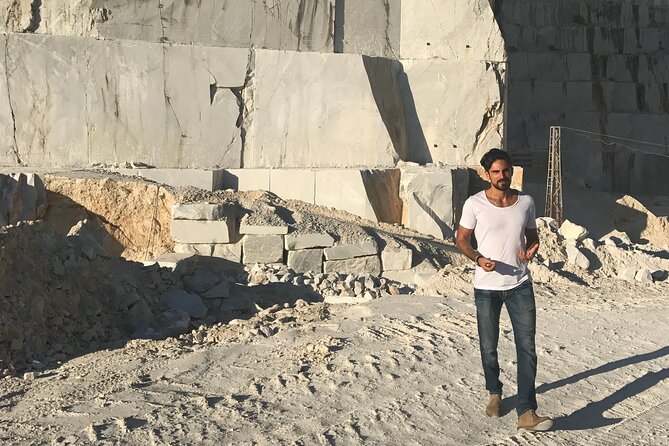
A great tour guide doesn’t just translate. They connect dots. In this case, Nicola does both because he’s not only a guide—he’s a geologist. That’s why explanations tend to land clearly.
When you ask a question about marble formation, extraction, or the differences you’re seeing in quarry stone, you get answers that match what’s in front of you. The guide’s style is direct and friendly, and the pace lets you follow without feeling lost.
This is also the kind of tour where curiosity pays off. Even if you don’t have specific questions ahead of time, Nicola’s explanations give you handles you can use later while you walk through Carrara on your own.
And when weather hits, Nicola can adapt. On rainy days, the tour order may shift to keep the experience comfortable and workable, while still delivering the core parts—quarry seeing, the marble connection, and the Colonnata tasting.
What 2 hours 30 minutes feels like (and why the group size matters)
The total time is about 2.5 hours, and with a maximum of 8 travelers, it tends to feel focused rather than frantic. You’re moving through two main phases: quarry viewpoints first, then Colonnata for the lardo tasting.
A small group changes the tempo in a big way:
- You can hear explanations without constantly asking for repeats.
- You don’t get stuck watching the back of someone’s phone.
- The guide can pause for questions instead of rushing to the next stop.
If you prefer tours where the guide can actually answer your curiosity, this size is a strong point. If you’re someone who hates waiting, it’s also a plus because the itinerary keeps moving while still making each stop meaningful.
The tour starts at 10:00 am from Via Miseglia Fantiscritti, 54033 Carrara MS, Italy and returns to the same meeting point at the end. That round-trip simplicity helps you plan the rest of your day in Pisa or nearby without complicated transfers.
Price and value: is $95.34 really fair?
At $95.34 per person for about 2.5 hours, this isn’t the cheapest thing you’ll do in the area. But the value comes from what’s included and what the day delivers.
You’re paying for:
- A guide who can explain marble and quarrying with a real technical background
- Small-group attention (max 8)
- Quarry stops with learning built around what you see
- A food tasting in Colonnata tied to local technique
Also, the tour mentions free admission tickets for the stops, which helps keep the overall cost grounded in the guiding experience and the local tastings rather than entry fees stacking up.
If you love material culture—how things are made, how industries work, and how places earn their reputation—this price can feel very reasonable. If you only want a quick postcard tour, you might think it’s pricey for the time. For most people who want to understand Carrara beyond the surface, it’s a solid buy.
Weather, comfort, and what to bring
This experience requires good weather. If it’s canceled due to poor weather, you’ll be offered a different date or a full refund. That’s the best kind of safety net: the operator is acknowledging that quarries aren’t always a friendly place when conditions turn.
Because the day is partially outdoors and involves quarry-view terrain, I’d plan for comfort:
- A light rain layer or compact umbrella if you’re traveling in shoulder season
- Closed-toe shoes you trust on uneven ground
- Sun protection when the weather is clear
If you’re visiting with a family and thinking about bringing younger kids: one point to consider is that the cost may not feel reduced for kids, so you may want to judge whether your children will enjoy the quarry and geology focus.
Who this tour suits best
This is ideal if you:
- Want to understand how marble becomes a product, not just view monuments
- Enjoy technical explanations from someone like Nicola with geology training
- Like food when it’s tied to real place-based tradition (the lardo aging in marble is the standout here)
- Prefer a small group where questions aren’t a hassle
It’s less ideal if you:
- Need a fully indoor experience
- Dislike outdoor walking or you’re extremely sensitive to weather changes
- Are expecting a casual, mostly scenic stroll with minimal explanation
Should you book this Carrara quarry and lardo tour?
If your interest is anything more than surface-level marble photos, I’d book it. The mix of quarry viewpoints, geology-based explanations, and the Colonnata Lardo di Colonnata tasting gives you a complete sense of Carrara’s marble world—from stone to people to plate.
Two final decision helpers:
- If you can travel on a weekday, you may have a better chance to see diamond saws and heavy equipment during working hours.
- If your schedule is fixed, book earlier so you have flexibility if the tour needs to adjust for weather.
FAQ
How long is the Carrara Marble: Quarry, Museum and Food Tasting tour?
It’s about 2 hours 30 minutes.
Where does the tour start and end?
It starts at Via Miseglia Fantiscritti, 54033 Carrara MS, Italy, and ends back at the same meeting point.
What group size should I expect?
The tour has a maximum of 8 travelers.
Is the tour offered in English?
Yes, it’s offered in English.
Is the tour suitable for most people?
Most travelers can participate.
What happens if weather is poor?
The experience requires good weather. If it’s canceled due to poor weather, you’ll be offered a different date or a full refund. You can also cancel for free up to 24 hours in advance for a full refund.