REVIEW · ACCADEMIA GALLERY
Florence: Michelangelo’s David Priority Ticket & Audio App
Book on GetYourGuide →Operated by ACCORD Italy Smart Tours · Bookable on GetYourGuide
Skip the line and see David faster. This Accademia Gallery visit is built around a priority entry ticket plus a mobile audio guide app so you can move at your pace, not in a human queue. You’ll get reserved entrance for a chosen time, meet hosts near the museum for the check-in moment, then spend your time where it matters most: Michelangelo’s David and the rooms around it.
I especially like that the app is designed for self-guided looking, including guidance for what you notice as you walk through the David area. I also like the extra layers the ticket brings, like the collection of old instruments (including a Stradivarius violin) and the bonus Tuscan food tastings. The main consideration: the audio app depends on your phone setup, so if downloads or audio playback go wrong, your experience can feel more stressful than it needs to be.
In This Review
- Key points to know before you go
- Why priority entry matters at the Accademia Gallery
- Meeting point and getting through security fast
- The mobile audio app: what you need before you go
- Michelangelo’s David: how to get the most from the room
- Prisoners (Prigioni) and the rest of Michelangelo’s impact
- Renaissance paintings and pacing: avoid the stuck-in-traffic feeling
- The old musical instruments room, including the Stradivarius
- Bonus Tuscan food tastings: a small extra that’s actually useful
- Price and value check for about $23
- Tips to enjoy David day without getting lost
- Should you book this Accademia priority ticket with audio app?
- FAQ
- What does this ticket include?
- Is there a live guide during the museum visit?
- Where do I meet the host?
- What time should I arrive?
- What should I bring with me?
- What languages are available in the audio app?
- Can I bring luggage or bags?
- Is the museum wheelchair accessible?
- How long is the security check line?
- Is cancellation allowed?
Key points to know before you go
- Priority time entry at the Accademia so you skip both the ticket-buying line and the ticket-pickup line
- Mobile audio app made for on-your-own visiting with many language options and an art-historian style approach
- David viewing gets better as you walk because the expression shifts across the room
- Michelangelo beyond David with Prisoners (Prigioni) plus other Renaissance works
- Old instruments room includes a Stradivarius violin connected to the Medici musical tradition
- Bonus Tuscan tastings like olive oil, truffle specialties, and baked goods (schiacciata, cantuccini, etc.)
Why priority entry matters at the Accademia Gallery
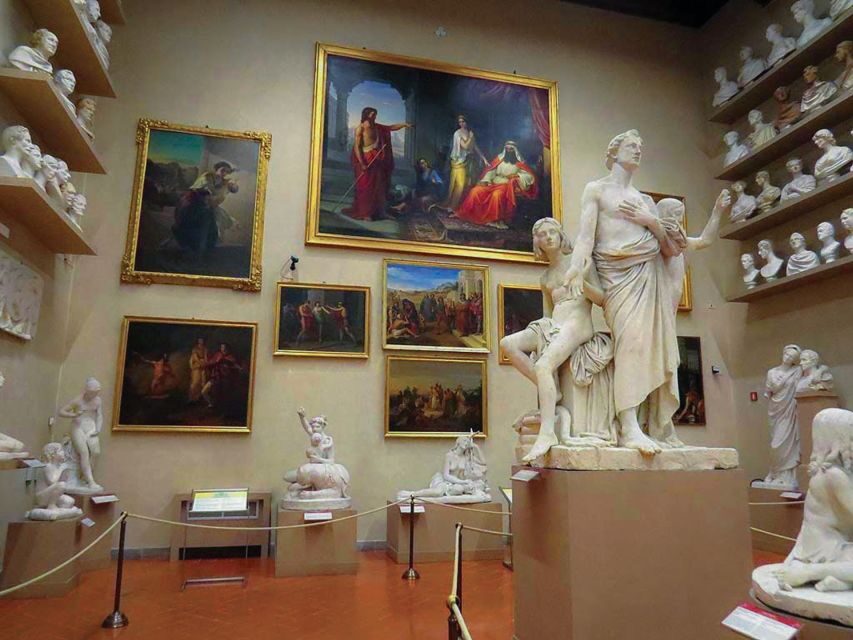
Accademia Gallery is one of Florence’s most in-demand museums, and that demand shows up as lines. This experience is designed to cut two headaches: finding the right ticket desk and waiting while the museum filters everyone through the basics. With a priority ticket for your chosen time slot, you’re set up to arrive, check in, and start looking quickly.
If you’re short on time, that speed matters more than you’d think. The Accademia is “small but packed,” meaning you can miss the good stuff if you lose momentum to queues. With priority entry, you can spend your limited hours focusing on the specific pieces that sell out everywhere else.
Still, it’s not a live guided tour. You’re getting help at the start and then going mostly on your own with audio, so you’ll want to be the kind of traveler who likes directing your own attention.
You can also read our reviews of more tours and experiences in Accademia Gallery.
Meeting point and getting through security fast
Your first win is location. Go to Via Ricasoli 57, a few steps from the Accademia entrance and just in front of the Carrefour Express supermarket. Look for the assistant in a yellow vest wearing an ACCORD ID badge. Hosts are English- and Italian-speaking and they’ll help you with the next step: walking you to the security check gate with your ticket ready.
Plan timing like a local. Arrive 15 minutes before your start time so you’re not rushing while people around you are trying to find the meeting point. Once you’re inside the museum flow, remember that security lines can take about 10–15 minutes at busy times.
Two small rules help your day go smoother:
- Don’t bring large bags (luggage isn’t allowed).
- Bring only one bottle of water (max 500 ml) inside.
The mobile audio app: what you need before you go
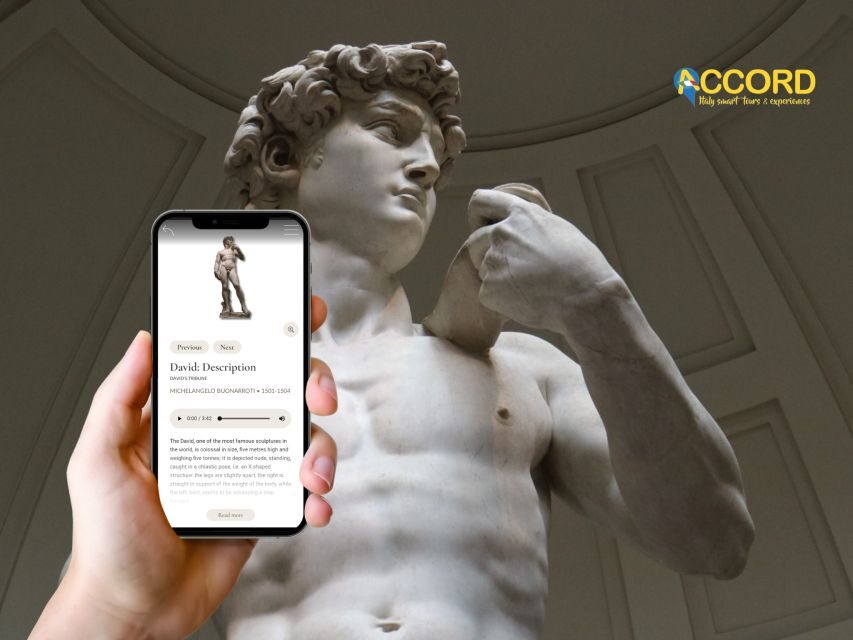
This is a self-guided experience powered by a multilingual mobile audio guide app. On the day before your visit, you’ll get a WhatsApp message with a reminder for the meeting point and instructions to download the app. The app is available in a long list of languages including English, Italian, Spanish, German, French, Russian, Chinese, Japanese, Polish, Turkish, Portuguese, Dutch, Korean, Hungarian, Greek, Croatian, Romanian.
You’ll want to treat your phone like part of the ticket. The voucher instructions recommend installing the app before your visit using Wi‑Fi, then charging your phone fully. And yes, bring your own earphones—earphones are not included.
One more practical note: several people reported app-download hiccups, especially when mobile service isn’t reliable. Your best move is simple: download on Wi‑Fi at your accommodation, then test playback before you head out. If audio fails at the last second, it can turn a calm museum visit into a tech problem.
Michelangelo’s David: how to get the most from the room
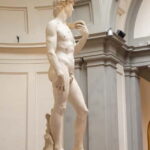
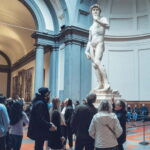
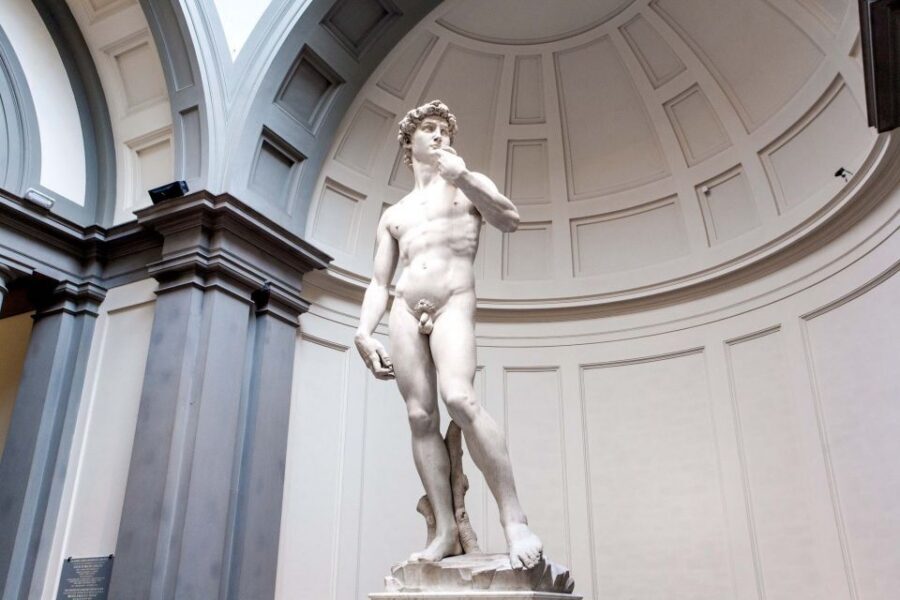
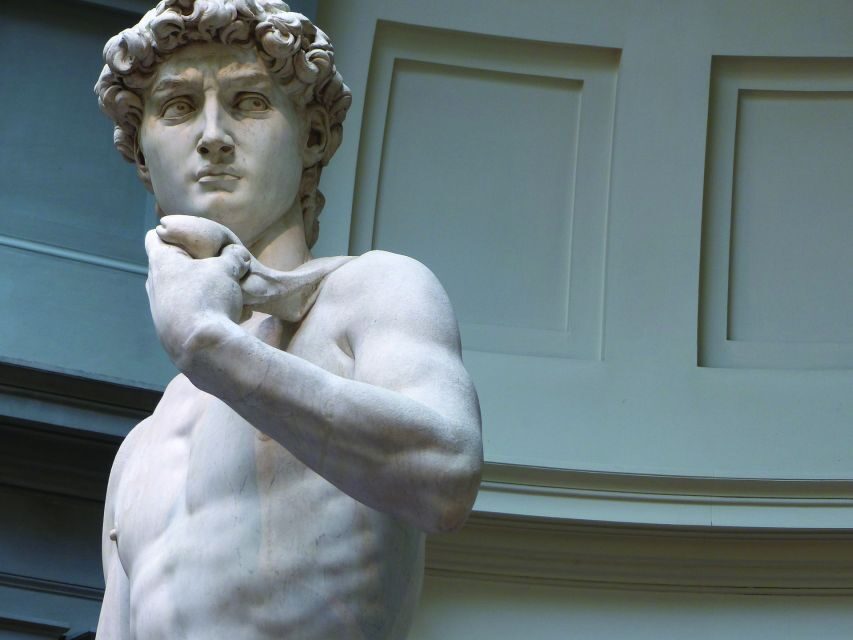
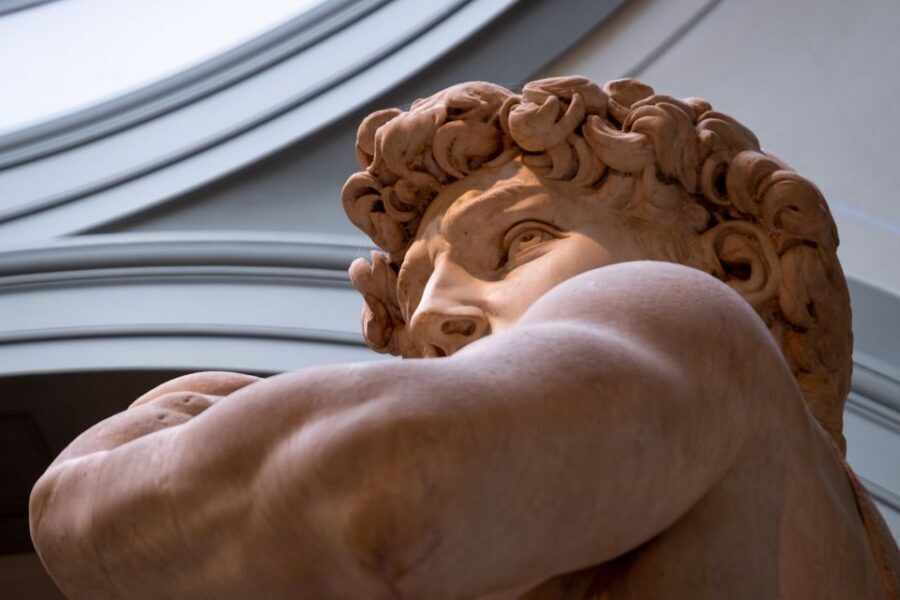
Michelangelo’s David is the headline for a reason, but the real trick is how you look at it. The audio guide is built to help you understand what you’re seeing, and it includes guidance for noticing how David’s expression changes as you move across the room.
When you first arrive in the David space, give yourself a minute to slow down. Stand back once, then walk to a second viewing angle so you can catch that shift in feeling—David doesn’t look like one fixed statue. It reads differently as your body position changes, and that’s exactly what makes the experience worth your time and money.
David also carries political weight for Florence. The sculpture represents a biblical hero defeating Goliath, but in Florence it was also read as a symbol of defending civil liberties and the identity of the Republic of Florence. The museum’s layout makes this idea land better because you’re not just looking at a famous face—you’re seeing how power, faith, and civic pride were tied together through art.
If you only do one thing in Accademia, make it this: spend your best attention time with David, then use the audio app to connect what you saw to what you’ll see next.
Prisoners (Prigioni) and the rest of Michelangelo’s impact
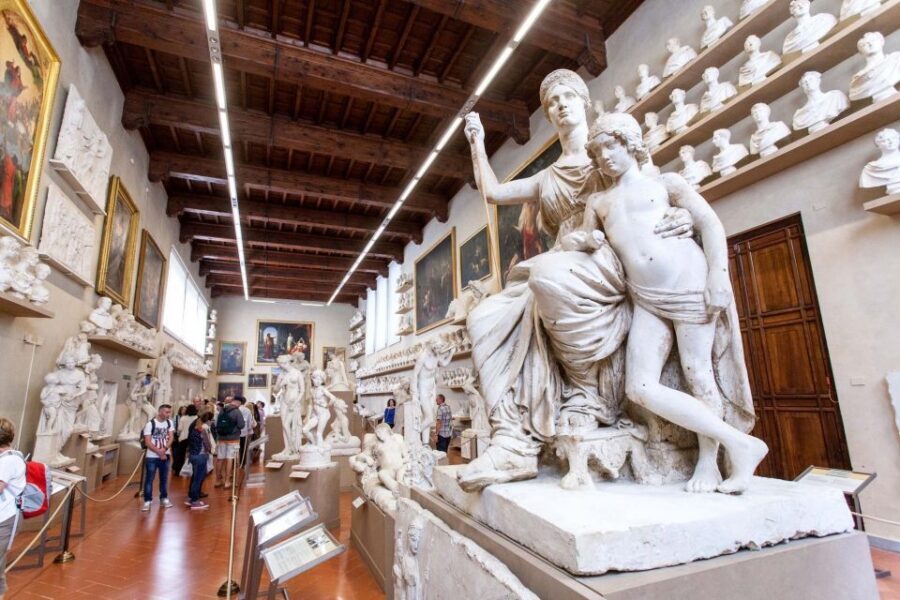
David is only the start of Michelangelo’s story here. You’ll also be able to see his sculpted Prisoners, known as Prigioni. These contorted bodies were originally meant for the tomb of Pope Julius II, but that tomb was never completed—so these figures became something else: evidence of ambition, struggle, and the sculptor’s obsession with form.
The Prisoners room tends to shift the way people feel about Michelangelo. David is triumphant and controlled. The Prisoners are tense, like bodies caught between revelation and restraint. If you’re listening with headphones, the audio app helps you connect those differences to Michelangelo’s broader thinking rather than treating each statue as an isolated masterpiece.
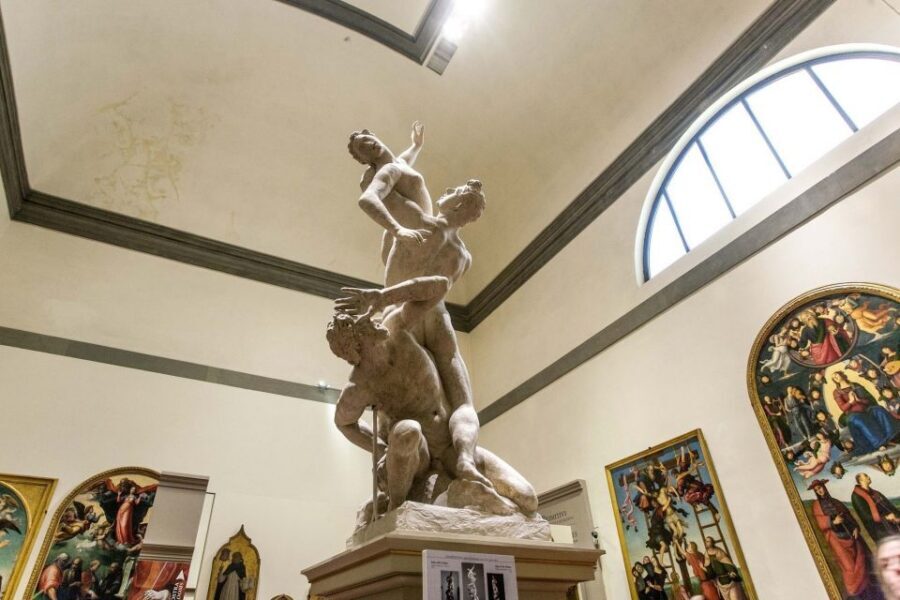
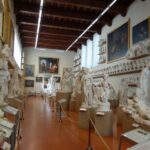
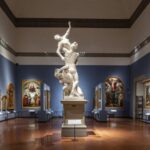
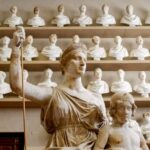
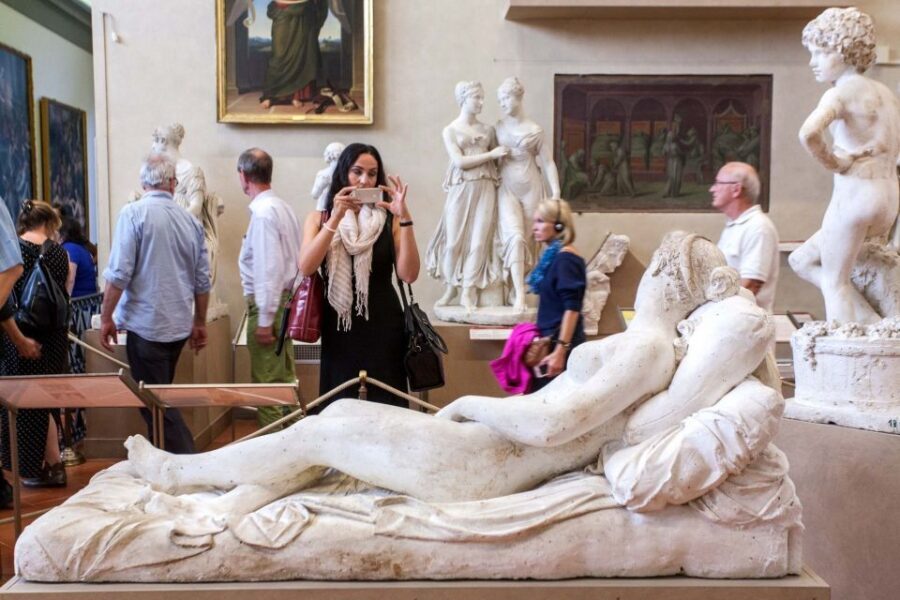
After you’ve absorbed Michelangelo’s sculptural language, expand outward to the surrounding Renaissance world. You’ll encounter works and rooms tied to artists such as Andrea Orcagna, Taddeo Gaddi, Domenico Ghirlandaio, Filippino Lippi, and Sandro Botticelli. This matters because the Accademia isn’t just one famous statue—it’s a museum where you can feel the orbit of ideas around Florence’s artistic peak.
Renaissance paintings and pacing: avoid the stuck-in-traffic feeling
The Accademia layout can tempt you to rush—especially if you’re coming during peak hours. What helps most is choosing a pacing strategy before you enter: give David your full attention first, then move through the rest of the museum with a flexible plan.
The audio app approach makes this easier than a strict guided tour. You can pause when something catches your eye, then move on when you’re ready. That’s a real value if you like reading details instead of just walking past them.
Also, don’t expect huge crowds to behave like Uffizi crowds. Accademia can feel busy, but priority entry helps you avoid the longest bottlenecks at the start. If you arrive early in your time slot window, you often get the benefit of calmer viewing before the room tightens up.
If you want a simple rule: spend less time hunting for information and more time letting the app point your attention to what changes as you look, walk, and compare.
The old musical instruments room, including the Stradivarius
This ticket doesn’t just stop at sculpture. You can also visit the room dedicated to old musical instruments from the Cherubini Conservatory, the Department of Musical Instruments. It’s one of the most surprising parts of the day because it turns art into sound and craftsmanship into something you can almost imagine hearing.
The highlight is a violin by Antonio Stradivarius connected to the Medicean Quintet. Even if you’re not a classical-music expert, the point here is the same as with the sculptures: you’re seeing elite craftsmanship preserved across centuries.
I like this stop because it breaks the museum rhythm. After marble, it gives your eyes a different kind of detail work—materials, age, and how instruments reflect wealth and culture. It also makes the visit feel more like a complete Accademia experience rather than a single-attraction sprint.
Bonus Tuscan food tastings: a small extra that’s actually useful
This experience includes bonus Tuscan food tastings, such as extra-virgin olive oil, truffle specialties, and traditional baked goods like schiacciata and cantuccini. Think of it as a reward for focusing on art, not a replacement for lunch.
It’s especially helpful if you’re doing a tight Florence schedule. A tasting gives you a taste of the local food identity without forcing you to find a sit-down meal immediately after the museum. It’s a practical add-on when you’re trying to keep the day smooth.
Just plan to keep room in your schedule and your stomach. If you’re prone to skipping food while you wander, tastings can be a good checkpoint to make sure you don’t crash before your next stop.
Price and value check for about $23
At about $23 per person, this isn’t the cheapest way into Accademia. The value comes from the trade you’re making: you pay for time savings and for the audio experience packaged with the ticket.
Priority entry is the big cost lever. If you know the standard line will eat into your schedule, paying extra can be worth it immediately, especially because the museum is most exciting when you can actually linger. The audio app is the second value driver. Even though it’s self-guided, the app adds context you might otherwise miss while scanning artwork fast.
Then there are the extras: the musical instrument room access is part of the museum visit, and the ticket includes the bonus Tuscan tastings. Those small inclusions add up.
The main reason this might not be a perfect fit: if you hate relying on phones or you’re traveling without reliable Wi‑Fi for app downloads, the experience depends on your setup. In that case, you can still use the priority entry, but be ready for the audio side to be less effortless.
Tips to enjoy David day without getting lost
You can make this day feel smooth with a few simple habits:
- Download the audio app on Wi‑Fi before you go, then charge your phone fully.
- Bring earphones and keep them handy so you’re not stuck at the start.
- Arrive 15 minutes early at Via Ricasoli 57 and look for the yellow vest ACCORD ID badge.
- Inside, start with David, then come back to the rest with calmer energy.
- Use the app when you want context, not as a chore.
Also, remember the museum rules. No large bags and only one 500 ml water bottle is allowed. If you pack light, you’ll waste less time at security and have more time for art.
Should you book this Accademia priority ticket with audio app?
Book it if you want to see Michelangelo’s David without losing your morning to lines. You’ll especially like it if you enjoy self-guided museums, want audio context in your language, and you have a tight schedule in Florence.
Skip it (or prepare differently) if your phone setup is unreliable. The app is central, and some people reported trouble downloading the guide when service was weak. If you’re the kind of traveler who always plans for offline options, you’ll be fine.
If your main goal is David plus a broader Accademia experience that includes Michelangelo’s Prisoners and even the Stradivarius violin room, this ticket hits the right mix of speed, context, and value.
FAQ
What does this ticket include?
It includes reserved entrance tickets to the Accademia Gallery, a multilingual mobile audio guide app, and English-speaking on-site staff. There’s also a bonus selection of Tuscan food tastings.
Is there a live guide during the museum visit?
No. The experience is self-guided with a mobile audio app. On-site staff help with the start and moving you toward the security gate, but you don’t get a live tour during the gallery time.
Where do I meet the host?
Meet at Via Ricasoli 57, a few steps away from the Accademia Gallery, in front of the Carrefour Express supermarket. Look for an assistant in a yellow vest with an ACCORD ID badge.
What time should I arrive?
Arrive 15 minutes before your activity start time. This helps you check in calmly and get through the security process.
What should I bring with me?
Bring your headphones (earphones are not included), download the app on your device, and have a passport or ID card as required for children.
What languages are available in the audio app?
The audio guide app is available in many languages, including English, Italian, Spanish, German, French, Russian, Chinese, Japanese, Polish, Turkish, Portuguese, Dutch, Korean, Hungarian, Greek, Croatian, Romanian.
Can I bring luggage or bags?
Large bags are not allowed. You should plan to travel light to avoid problems at security.
Is the museum wheelchair accessible?
Yes, wheelchair accessible information is included.
How long is the security check line?
At busiest times, the security line can take about 10–15 minutes.
Is cancellation allowed?
Yes. Free cancellation is available up to 24 hours in advance for a full refund.