REVIEW · PASTA
Tuscan Pasta & Wine Experience in San Gimignano: Cook & Taste
Book on Viator →Bookable on Viator
Fresh pasta beats your average San Gimignano souvenir. In this San Gimignano cooking-and-wine experience, you get to work in a private home kitchen with a local host, making three classic pastas from scratch before sitting down for what you cooked. You’ll also include a winery tour plus a tasting of three local wines, all in one compact morning.
What I like most is the focus: you’re not just watching. You’re hands-on with tagliatelle, gnudi, and ravioli, and then you pair each dish with the right homemade sauce and local wine. A small drawback to consider is that it’s only about 3 hours, so if you’re a total beginner, go in ready to learn quickly and don’t expect leisurely pacing.
In This Review
- Key things to know before you go
- Why This Class Feels Like Real Tuscany Food, Not a Show
- The 10:30 Start at Località Casale (And What That Means for Timing)
- Learning Fresh Pasta: Tagliatelle, Gnudi, Ravioli
- Tagliatelle: the dough-to-noodles lesson
- Gnudi: the ricotta-led curveball
- Ravioli: shaping discipline and flavor control
- Two Homemade Sauces and the Art of Pairing
- The Winery Tour and Three Local Wines: What to Notice
- How Long It Really Takes (And How to Make the Most of 3 Hours)
- Who This Is Best For (And Who Might Want Something Else)
- Price and Value: Is $218.64 Reasonable?
- The Main Downsides to Plan Around
- Should You Book Cook & Taste in San Gimignano?
- FAQ
- What is the duration of the Tuscan Pasta & Wine Experience in San Gimignano?
- What pasta dishes will I learn to make?
- Does the experience include wine?
- How many people are in the group?
- Where does the tour start?
- Can I get a full refund if I cancel?
Key things to know before you go
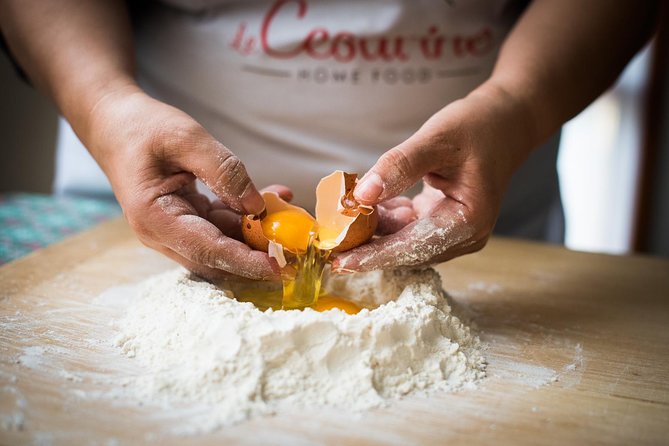
- Private-home cooking in San Gimignano’s countryside, not a big cooking studio
- Three pasta styles taught from scratch: tagliatelle, gnudi, and ravioli
- Two homemade sauces to learn how pairing actually works
- Winery tour + tasting of three wines included with your meal
- Small group size (up to 14) for more hands-on time with the host
Why This Class Feels Like Real Tuscany Food, Not a Show
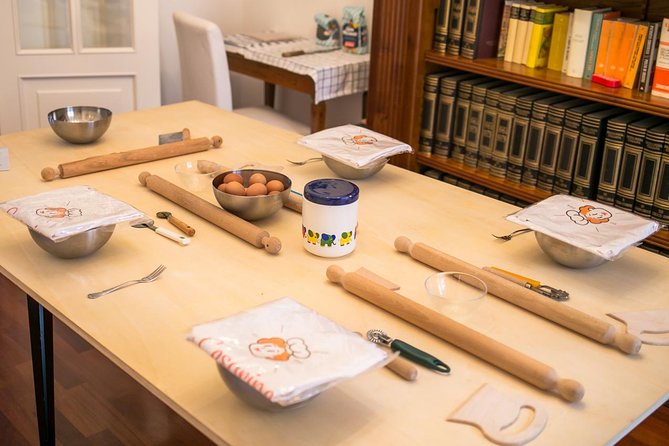
If your idea of a good day in Tuscany includes bread, butter, and carbs that taste like they mean it, this experience hits hard. The format is refreshingly simple: you make pasta in a local home, you learn technique you can use later, and you eat what you made with wine that matches the flavors.
I also like how the class is built around the kitchen basics that matter most. Fresh pasta is not just about taste; it’s about feel—how the dough behaves, how it rolls, and how you keep it from getting sticky or tough. When you finish with tagliatelle, gnudi, and ravioli in your hands (and on your plate), you come away with a real sense of what makes each one distinct.
The winery portion adds a second layer that’s easy to overlook on a tight itinerary. When the wine comes with context—what to look for, what to notice with each dish—it turns a tasting into something you can remember and repeat.
The 10:30 Start at Località Casale (And What That Means for Timing)
The experience starts at 10:30 am at Località Casale, 26, San Gimignano. It ends back at the same meeting point, so you’re not stretched across town or stranded after the food is gone.
It’s also noted as being near public transportation, which matters in a place like San Gimignano where parking and walking logistics can get annoying fast. And with a mobile ticket, you’ll likely spend less time wrestling printed confirmations and more time getting to the house.
One practical thing to keep in mind: this is a “show up and cook” morning. The schedule is short (about 3 hours), so you’ll want to arrive with a calm, ready mindset. If you’re late, the class can’t magically slow down just for you.
Learning Fresh Pasta: Tagliatelle, Gnudi, Ravioli
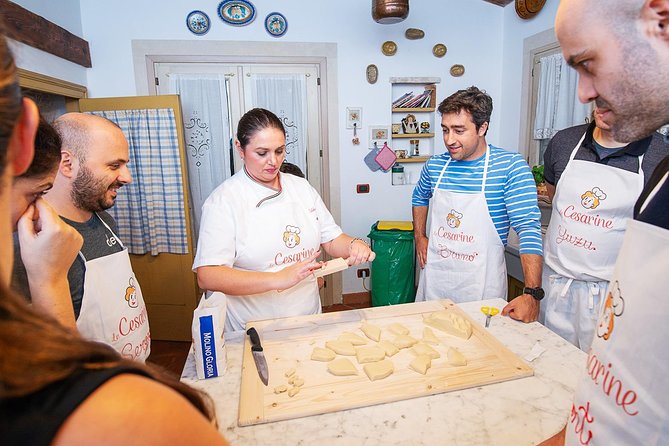
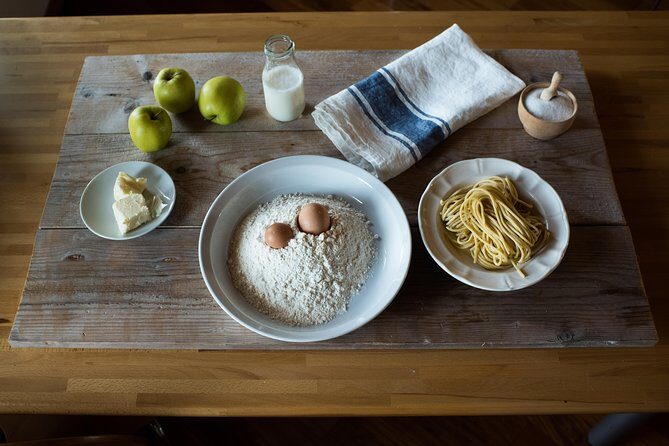
This is the core of the experience, and it’s why it’s worth serious attention. You’re guided through making three different classic pasta dishes from scratch, which means you learn more than one dough approach and more than one cooking method.
Tagliatelle: the dough-to-noodles lesson
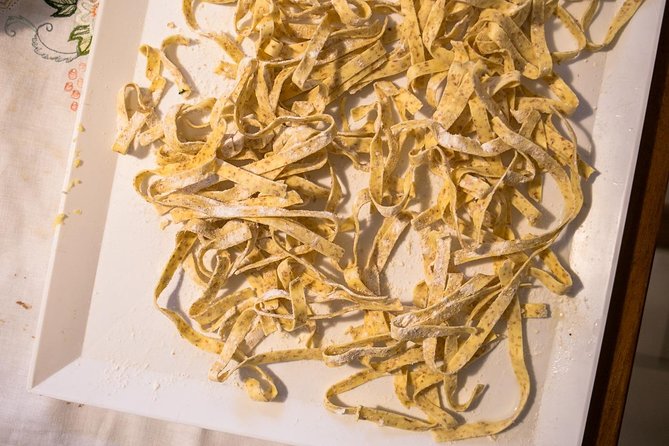
Tagliatelle is a great entry point because it teaches you the physical workflow: dough texture, rolling thickness, and cutting consistency. The host-style instruction matters here—fresh pasta rewards small adjustments, and a good teacher helps you feel the right point before you go too far.
When you finish, you’re not eating a random plate of pasta. You’ve made the strand-based shape that Tuscan tables often lean on when they want comfort without shortcuts.
Gnudi: the ricotta-led curveball
Gnudi can feel like the class’s “wait, what is this?” moment—in a good way. Instead of traditional filled pasta, gnudi are shaped and cooked with a different rhythm, often linked with ricotta and a soft, delicate structure.
This matters because it shows you pasta as a concept, not a single category. You get practice handling a gentler filling-style texture and learning how to cook it so it stays tender rather than turning heavy.
Ravioli: shaping discipline and flavor control
Then you get to ravioli, where technique changes again. Ravioli demand care: portioning, sealing, and managing thickness so the pasta cooks evenly around the filling.
This part is where you can really see how quality comes from small actions. If you’ve ever bought ravioli and wondered why some taste refined while others taste mass-produced, ravioli training gives you the answer: control, not volume.
Two Homemade Sauces and the Art of Pairing
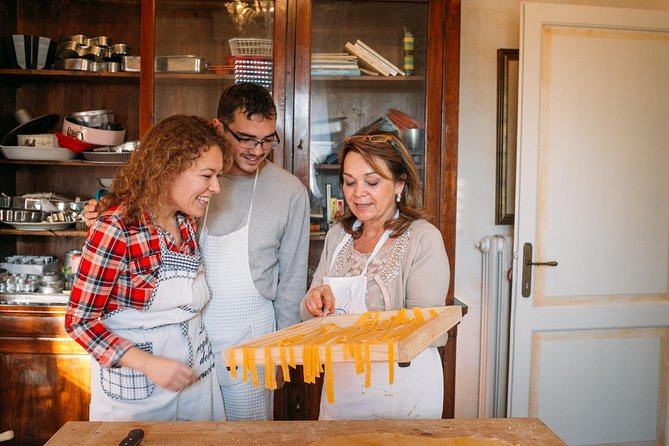
The class includes two homemade sauces, and they’re used to pair with what you make. That’s a big deal because sauce-pasta matching is where most people (honestly) stay clueless even after a great meal.
I like that you’re taught how to think in pairings rather than just dumping sauce on top. With fresh pasta, the sauce needs to cling, not overpower. With gnudi, you usually want a sauce that supports rather than bulldozes the delicate texture. And for ravioli, you want flavor that holds up to filling richness.
The experience is also set up so you actually taste what you made. Sampling each recipe paired with local wine turns the lesson into something you can calibrate with your own palate.
The Winery Tour and Three Local Wines: What to Notice
This experience also includes a winery tour and a tasting of three local wines. You’re not just getting a glass handed to you; the structure suggests a sequence where you learn as you go.
When you’re pairing wine with pasta, here’s what helps you get more out of it:
- Notice acidity first: it usually keeps heavier sauces from feeling too thick.
- Watch the finish: if a wine feels short or harsh, it may not love delicate pasta textures.
- Smell for fruit and herbs: those notes can line up with the sauce flavors you just made.
A big plus from past participants is how the class feels like a real meal with real people—not a forced script. People have praised the warmth of the home and the teaching style, plus the view you can see from the kitchen when the day is clear.
How Long It Really Takes (And How to Make the Most of 3 Hours)
With a duration of about 3 hours, this is a focused class. You should expect:
- time for hands-on dough work,
- structured instruction rather than free-for-all,
- cooking and sampling on a schedule.
That fast pace is also the reason this works for many skill levels. The class is described as customizable to your experience and skill level, which means the host can slow down when you need basics or move ahead when you’re comfortable with kitchen steps.
If you’re a beginner, your job is to stay relaxed and copy what the instructor demonstrates. Fresh pasta has a short learning curve, but only if you don’t fight the dough too long.
If you’re more experienced, this still pays off because making three formats back-to-back forces you to compare textures and cooking behavior. It’s one thing to cook pasta once; it’s another to understand why tagliatelle feels different from gnudi and why ravioli demands patience.
Also: look for the small teachable moments. Some participants mention tips and tricks that help both beginners and more advanced cooks. That’s exactly what you want in a short class—high-impact guidance, not just recipes.
Who This Is Best For (And Who Might Want Something Else)
This is best for you if:
- you want a hands-on food day instead of another walking tour,
- you care about learning pasta technique you can repeat at home,
- you enjoy wine and want pairing tied directly to what you ate.
It’s also a smart pick if you’re traveling with a partner or small circle and want a shared experience you’ll talk about for weeks, not just a set of photos from viewpoint A to viewpoint B.
You might want a different kind of activity if you prefer super-long meals or you dislike structured cooking sessions. The format is tight. You’ll get a full experience, but it’s not a slow, all-day feast.
Price and Value: Is $218.64 Reasonable?
At $218.64 per person, this isn’t a budget add-on. So the value question is really: what’s included?
You’re paying for:
- instruction in making three pastas from scratch,
- ingredients and kitchen time in a private home setting,
- two homemade sauces,
- sampling of each dish,
- a winery tour,
- and a three-wine tasting.
When a class includes wine service plus a winery portion, the cost starts to make more sense—because you’re getting more than one “activity.” For food-focused travelers, that bundling can be a win, especially in an area like San Gimignano where doing cooking plus wine separately can add up quickly.
If you’re the type who loves to learn technique and actually eat what you make, I’d call this a solid value for the experience level. If you mostly want to sample Italian food without getting your hands dirty, you may feel the price more sharply.
The Main Downsides to Plan Around
Two things can trip you up if you’re not prepared.
First is the setting. A private home kitchen is wonderful, but it also means you should treat the start time and meeting details seriously. The experience depends on everyone arriving together so the host can manage dough timing, cooking steps, and tastings without chaos.
Second is the short duration. Because it’s about 3 hours, you won’t have time for leisurely detours. If you arrive hungry but stressed, the class can feel rushed. If you arrive calm and ready, you’ll feel like you’re learning at the right speed.
There’s also a broader booking reality to consider: when a tour is coordinated through a platform and an operator communicates separately, misalignment can happen. The best move is simple—double-check your booking details and confirm any timing instructions the day before so you’re not hunting answers in the morning.
Should You Book Cook & Taste in San Gimignano?
I’d book this if you want a true Tuscan food morning with real instruction, small-group energy, and wine that’s tied to what you cooked. The combination of tagliatelle, gnudi, and ravioli, plus homemade sauces and a winery visit with three wines, gives you a complete, satisfying story—not just one fun hour.
If you’re excited by the idea of learning technique you can repeat at home, this class is the kind that pays you back later when you make fresh pasta for friends. If you’re only lukewarm about cooking, you might prefer a simpler tasting-focused experience.
FAQ
What is the duration of the Tuscan Pasta & Wine Experience in San Gimignano?
It lasts about 3 hours.
What pasta dishes will I learn to make?
You’ll make tagliatelle, gnudi, and ravioli from scratch.
Does the experience include wine?
Yes. You’ll pair what you cook with wine, and the experience also includes a winery tour and a tasting of three local wines.
How many people are in the group?
The maximum group size is 14 travelers.
Where does the tour start?
It starts at Località Casale, 26, 53037 San Gimignano SI, Italy.
Can I get a full refund if I cancel?
Yes. You can cancel up to 24 hours before the experience starts for a full refund.