REVIEW · VINCI
Vinci: Museo Leo Lev – Leonardo da Vinci Experiential Museum
Book on GetYourGuide →Operated by Leo Lev Museum - Leonardo da Vinci Experiential Museum · Bookable on GetYourGuide
Leonardo feels close here. In Vinci, the Leo Lev Museum turns private da Vinci works into something you can actually use, starting with official reproductions of rare masterpieces and then moving into hands-on machines you can interact with.
My favorite part is the concept of learning through your hands, not just your eyes. You also get a 360° VR zone where the museum’s source artwork is brought to life, which is a fun change of pace if you like tech. One note to plan around: the VR experience is listed as extra, so budget the $14 ticket plus the optional VR add-on.
In This Review
- Key things to know before you go
- Entering the Leo Lev Museum in the heart of Vinci
- What you’re actually seeing: private masterpieces, officially reproduced
- The hands-on part: the forbidden NOT to touch machines
- VR Zone at 360°: stepping inside the sketches with optional add-on
- Temporary exhibitions and what to expect from the gallery flow
- Translations, phones, and language support that actually helps
- Rules that affect your day: photos, food, and where you can move freely
- Pricing and value: $14 ticket plus the VR add-on
- Who will enjoy the Leo Lev Museum most?
- Should you book the Vinci: Museo Leo Lev experience?
- FAQ
- How much does the Leo Lev Museum cost?
- How long is the experience?
- Is the museum wheelchair accessible?
- What languages are available for the exhibits?
- Do I need a smartphone for translations?
- Is the virtual experience included in the ticket price?
- Can I take photos with a flash?
Key things to know before you go
- Official private-work reproductions: the museum is built around rare, usually-hidden Leonardo pieces.
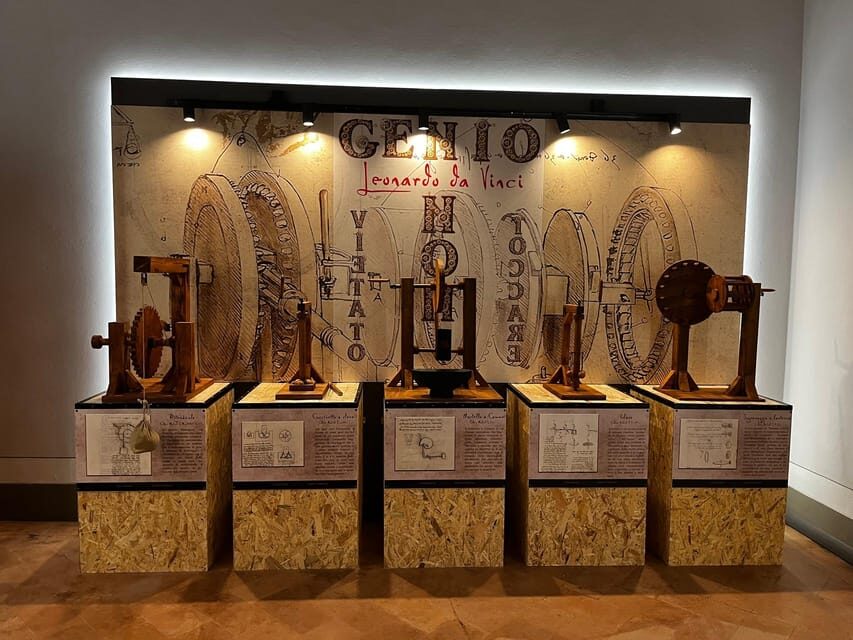
- Forbidden NOT to Touch philosophy: you’re encouraged to interact with Leonardo’s mechanical inventions.
- 360° VR zone: optional virtual experience uses Virtual and Augmented Reality for a full wraparound view.
- Archangel Gabriel focus: you’ll see the sculpture of the Archangel Gabriel as part of the private-collection storyline.
- Smartphone translations: exhibits have translation support across several languages, using your phone.
Entering the Leo Lev Museum in the heart of Vinci
Plan a simple day in Vinci, because the Leo Lev Museum is in the center of town and easy to reach on foot. That matters, especially if you’re pairing it with other Leonardo stops or just want an easy walk instead of bus wrangling.
The vibe inside is experiential, not hushed. You’re moving through exhibition areas that come with translation help, plus interactive zones where the museum’s whole idea is very physical: look, read, then touch what you can. If you like museums that feel like a workshop, this fits.
Also, the museum is wheelchair accessible. If you’re traveling with mobility needs, that’s a big plus for a small-town attraction.
You can also read our reviews of more museum experiences in Vinci



What you’re actually seeing: private masterpieces, officially reproduced
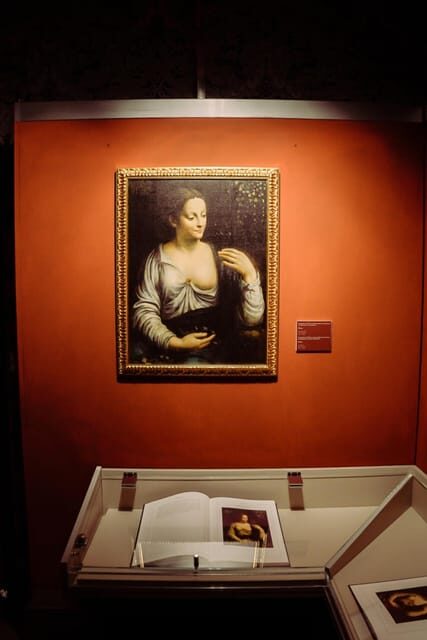
The museum’s central hook is that the displays are based on a private collection of unpublished paintings and Leonardo-related masterpieces. The museum emphasizes that it has the world’s only official reproductions of these rare private works. That’s not a small detail. It changes the value of the visit: you’re not just seeing famous, widely available images—you’re seeing reproductions tied to an unusual private set.
One featured highlight in this storyline is the sculpture of the Archangel Gabriel. Even if you’re not a Renaissance art expert, the museum frames it in a way that helps you understand why these works matter to the Leonardo puzzle it’s trying to solve.
Here’s the practical takeaway: plan to spend time reading the translation support and following the thread connecting the art to the machines and VR. If you rush, you’ll miss why the museum treats the artwork as the starting point for the technology.
The hands-on part: the forbidden NOT to touch machines
The museum’s most memorable sections follow a “Forbidden NOT to touch” approach. Yes, it’s a playful phrase, but the concept is serious. You’re meant to interact with faithful reproductions of Leonardo’s mechanical inventions, so you can grasp how his thinking works at the parts-and-mechanisms level.
What I like about this kind of exhibit is that it shifts the learning from passive viewing into problem-solving. You look at a design, then you handle it and see how motion and structure connect. Even if your Italian is zero, the museum provides exhibit translations in multiple languages, and you can rely on your phone for the wording.
Possible drawback: interactive zones can mean the visit feels more like a guided experience than a quiet gallery stroll. If you strongly prefer slow, silent museum time, you might find the pace a touch active.
VR Zone at 360°: stepping inside the sketches with optional add-on
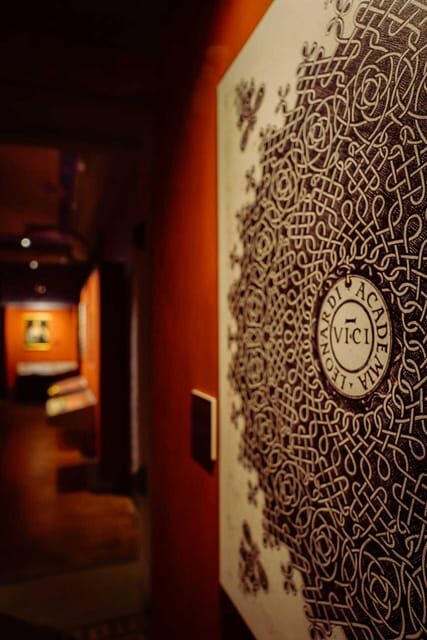
The Leo Lev Museum builds to a VR Zone with 360° immersive technology. The museum describes it as Virtual and Augmented Reality, with a goal that you can literally step inside Leonardo’s drawings and thoughts in a wraparound environment.
Here’s the key planning detail: the listed price includes entry to the exhibition centre and access to temporary exhibitions, but the virtual experience is listed as extra (2 euro) and only in Italian, English, and Russian. So treat the $14 as your base museum ticket, and treat VR as an add-on you choose after you see the rest of the exhibitions.
If you do add VR, give it time and don’t multitask. These experiences tend to reward focus, and VR also goes better when you’re not trying to hurry to another stop.
Also check the photo rules before you go, because a lot of people assume they can document everything. Flash photography is not allowed, but photography without flash is allowed.
Temporary exhibitions and what to expect from the gallery flow
Your ticket includes access to temporary exhibitions along with the main Leo Lev exhibition areas. That’s useful for two reasons. First, it adds variety if you’re spending a full day at the museum. Second, it helps break up the experience between the interactive mechanical sections and the more tech-forward VR moment.
You should expect multiple learning modes in the same visit: reading and translation, hands-on interaction, then the VR zone. This is the museum’s fusion idea—historical research and cutting-edge VR innovation in one day.
If you want the most value, I’d suggest you don’t treat the temporary exhibits as filler. Even short exhibits can help you understand how the museum sets up its theme: private Leonardo works connect to mechanical invention ideas, and then VR turns those concepts into something you can stand inside.




Translations, phones, and language support that actually helps
The museum provides translations across several languages: English, German, French, Spanish, and Russian. The museum also states that smartphones are required to do translations, so don’t plan on leaving your phone in your hotel.
There are also language-specific rules for guided tours and the virtual experience. Guided tours are only in Italian, and the virtual experience add-on is only available in Italian, English, and Russian. That means if you’re counting on a fully guided English-style tour, you’ll likely rely on the translation system rather than a dedicated guide-led route.
Practical tip: bring headphones if you’re sensitive to sound. The data doesn’t mention audio hardware, so I can’t promise what’s provided, but having your own comfort gear helps in tech zones.
Rules that affect your day: photos, food, and where you can move freely
A few policies shape how you should plan your visit.
Flash photography is not allowed. Photography without flash is allowed, so you can still capture memories as long as you keep it low-key.
Food and drinks are not allowed inside the exhibition areas. That’s common in museums, but it changes how you plan snack timing. If you want a comfortable visit, eat before you enter and save drinks for outside the exhibition zones.
Because the museum encourages touching and interaction, expect some areas to feel busier. Keep an eye on posted signage and move through at a reasonable pace so you don’t slow down other people around interactive stations.
Pricing and value: $14 ticket plus the VR add-on
At $14 per person for a 1-day visit, the price feels designed for a full museum experience rather than a quick stop. You’re not just paying to look at objects. You’re paying for a package of: exhibition access, temporary exhibitions, multilingual translation support, and interactive machine areas that fit the museum’s main idea.
Then there’s the optional virtual experience add-on for 2 euro. That’s a small add-on cost, but it’s still an extra charge you should expect. I like thinking about it this way: you can treat VR as the bonus layer if you’re tech-curious, and you won’t feel like you missed something essential if you skip it.
If you’re traveling as a family or as a group of friends with mixed interests, this pricing structure is a plus. Non-tech people can still get a meaningful experience from the hands-on mechanical inventions and the museum’s Leonardo artwork focus. Tech fans can add VR.
Who will enjoy the Leo Lev Museum most?
This museum is a strong fit for people who learn by doing—hands-on learners, curious adults, and families with kids old enough to follow basic translation text. If you like Leonardo da Vinci as an inventor and not only as a painter, the machine interaction is where you’ll likely feel the biggest payoff.
It’s also good for travelers who don’t want an all-day bus itinerary. You’re in Vinci, in town, with a 1-day structure that’s easy to slot into a Tuscany plan.
If you’re the type who wants only silent galleries and minimal movement, you might find the interactive focus a bit too active. But even then, the combination of official reproductions and VR makes it hard to call it a typical museum day.
Should you book the Vinci: Museo Leo Lev experience?
Yes, I think you should book it if you want a Leonardo museum day that mixes art, mechanics, and a 360° tech component. The museum’s emphasis on official reproductions of private works plus “Forbidden NOT to Touch” interaction is a clear identity, and the optional VR add-on lets you match the experience to your budget and interests.
Skip or reconsider if you hate interactive exhibits, you don’t want to rely on a smartphone for translations, or you’re certain you won’t pay the extra 2 euro for VR.
If you’re visiting Vinci anyway, this is one of the more distinctive ways to spend your time there because it’s not only about looking at da Vinci. It’s about trying to understand how he built ideas you can almost handle.
FAQ
How much does the Leo Lev Museum cost?
The price is $14 per person.
How long is the experience?
It’s listed as 1 day. You should check availability to see starting times.
Is the museum wheelchair accessible?
Yes, the center is wheelchair accessible.
What languages are available for the exhibits?
Exhibits are translated into English, German, French, Spanish, and Russian.
Do I need a smartphone for translations?
Yes. Smartphones are required to do translations.
Is the virtual experience included in the ticket price?
No. The virtual experience is listed as extra 2 euro, and it is only available in Italian, English, and Russian.
Can I take photos with a flash?
No, flash photography is not allowed.