REVIEW · BOLOGNA
Best of Bologna in one day : Food, architecture, art and history
Book on Viator →Operated by Riccardo Bacchi · Bookable on Viator
Bologna can feel like a secret, even at full daylight. This one-day route connects the city’s best architecture and art with real food culture, all paced for a single day and led by Riccardo Bacchi. I especially love the way he links each stop to a clear story, so the buildings and artworks don’t feel like random postcards. Two standouts for me are the university’s anatomy theatre and the trip to the Quadrilatero for classic local bites. A possible drawback: this is a fast day with lots of facts, so if you prefer slow and light commentary, you may need to focus hard to keep up with his level of detail.
What makes it work is variety. You start in the big public heart of Piazza Maggiore, then you bounce through medieval lanes, baroque churches, and major museum rooms—ending with church art that feels almost too good to be real. Another plus is the food portion at Bruno e Franco: you get tastings of Bologna staples plus a short pasta instruction slice. The main consideration is simple: comfortable shoes are not optional. The day is long (about 7 hours) and fully walking.
Key Point Highlights
- Bacchi’s story-led approach connects art, architecture, religion, and even science and medical history
- University of Bologna sights include frescoed halls and the wooden anatomical theatre
- Art museum depth at the Pinacoteca Nazionale covers major names from Giotto onward
- Emilia-Romagna food time includes multiple tastings at Bruno e Franco, plus a pasta alla bolognese class
- A compact route with big variety from Piazza Maggiore to San Domenico and the Santo Stefano complex
In This Review
- Why Bologna’s Best Hits Fit into One Day
- Piazza Maggiore: Where the City’s Power Shows Up
- Piazza Santo Stefano: A Medieval Complex with Romanesque, Gothic, and Views
- Santa Maria della Vita: Baroque Drama and Terracotta Mastery
- Archiginnasio di Bologna: The University Palace and the Wooden Anatomy Theatre
- Pinacoteca Nazionale: Painting from Giotto to the Carracci Era
- Quadrilatero: The Medieval Market Made for Eating
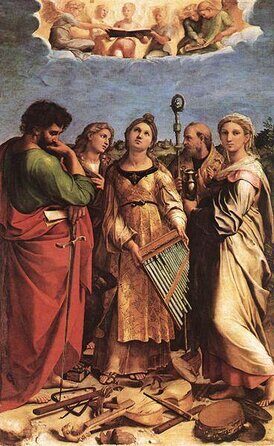
- San Giacomo Maggiore: Bentivoglio Chapel and Santa Cecilia’s Artistic Side
- Canale delle Moline: Old Streets, Towers, Arcades, and a Hidden Canal Feeling
- San Domenico and Santo Stefano: Big Art, an Alchemical Choir, and a Jerusalem-Style Plan
- La Salumeria: Tastings and a Pasta alla Bolognese Mini Cooking Class
- Price, Pace, and Getting the Most Out of the Day
- Who Should Book This Best of Bologna One-Day Tour
- Should You Book This Tour?
- FAQ
- What does the tour cost?
- How long is the experience?
- Are admission tickets included?
- Where does the tour start?
- Is this tour private?
- Can I cancel for a refund?
Why Bologna’s Best Hits Fit into One Day
This tour is built around a smart idea: Bologna’s wow moments are close enough to chain together, as long as you don’t treat it like a casual stroll. You’re moving through major squares and key churches, then into museums, then into the Quadrilatero food market zone. The payoff is that you leave with a working mental map of the city—not just a list of places.
You’ll also spend more time where the details matter. In places like the Palazzo Comunale rooms or the university complex, it isn’t just the main facade that counts; it’s the interior flourishes, the symbolism, and the craft. Riccardo Bacchi’s strength is explaining why those details exist, not just pointing at them.
Value-wise, the $174.69 per person price starts to make sense once you notice how many stops include admission tickets. Several key sites are built into the cost, and the day isn’t only sightseeing—it includes tastings and an actual mini cooking class. If you only have a short visit window, this is one of the most efficient ways to see a lot without turning the day into a rushed self-guided checklist.
Piazza Maggiore: Where the City’s Power Shows Up
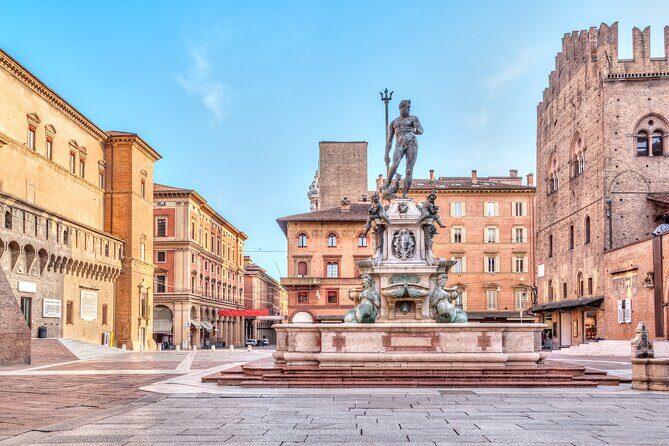
Piazza Maggiore is the dramatic starting gun. This square is all about civic identity—who ruled, what the city valued, and how faith and government shared the same stage. The tour focuses on some of the square’s big signature works, including the Fountain of Neptune and landmarks like the Palazzo Comunale and San Petronio.
One of the most memorable parts here is the attention to terracotta works tied to Nicolò dell’Arca. You’ll also spend time in frescoed rooms inside the Palazzo Comunale, plus you’ll get a moment to see the grand staircase featuring Bramane’s horses. That staircase detail matters because it’s a visual statement: Bologna likes to show its art and ambition in public spaces.
What to watch for: in a square this iconic, it’s easy to glance upward and move on. This stop is worth slowing down for, because the tour frames these pieces as part of one larger story: the city’s pride in art, religion, and local power.
Possible downside: it’s a major hub, so if you hate crowds in open plazas, you’ll want to stay flexible and keep your head on a swivel.
You can also read our reviews of more food & drink experiences in Bologna
Piazza Santo Stefano: A Medieval Complex with Romanesque, Gothic, and Views
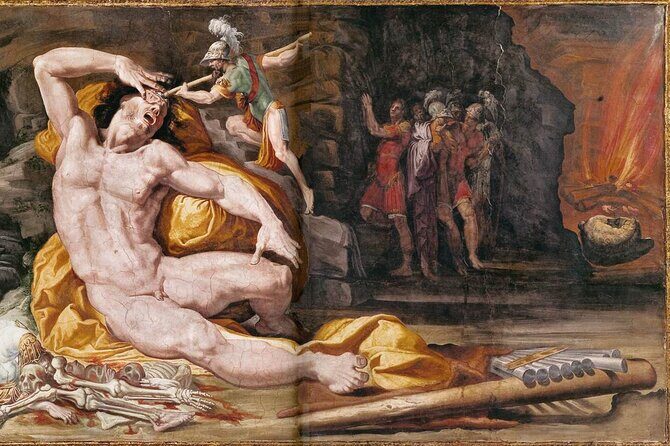
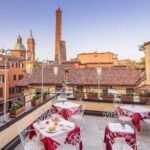
From the broad civic feel of Piazza Maggiore, Piazza Santo Stefano changes the mood fast. This is a complex of early medieval buildings with Romanesque and medieval interiors, Gothic palaces, and specialized art museum rooms. The porticoes feel like a time machine—plus there are spiral staircases and a terrace view where you can spot Bologna’s towers from above.
This stop is a great example of what makes Bologna special: the city doesn’t just have one historic layer. It stacks. The result is that you can move from one architectural language to another in minutes, without crossing the whole city.
You’ll also appreciate that you’re not only looking at one church door. The tour works through the whole area’s rhythm—interior spaces, frescoed passages, and viewpoint moments—so you don’t end the stop feeling like you barely scratched the surface.
Santa Maria della Vita: Baroque Drama and Terracotta Mastery
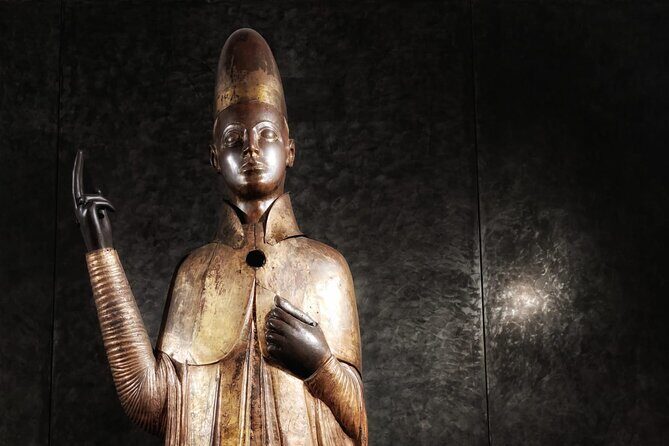
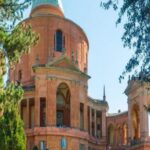
At Chiesa di Santa Maria della Vita, the focus is on art that pulls you in emotionally. This baroque church holds the Lamentation of Nicolò dell’Arca, a terracotta Renaissance masterpiece. The work has that specific terracotta power: it feels close, physical, and real in a way that stone sometimes doesn’t.
The tour keeps this stop short, but it’s the right kind of short. You’re not spending hours wandering for your own clues; you’re getting an guided landing into the meaning of the artwork and why it belongs here.
If you like: sculpture, religious art, and the human side of Renaissance craftsmanship, this is a highlight. It’s one of those moments where the location matters as much as the work itself.
Archiginnasio di Bologna: The University Palace and the Wooden Anatomy Theatre
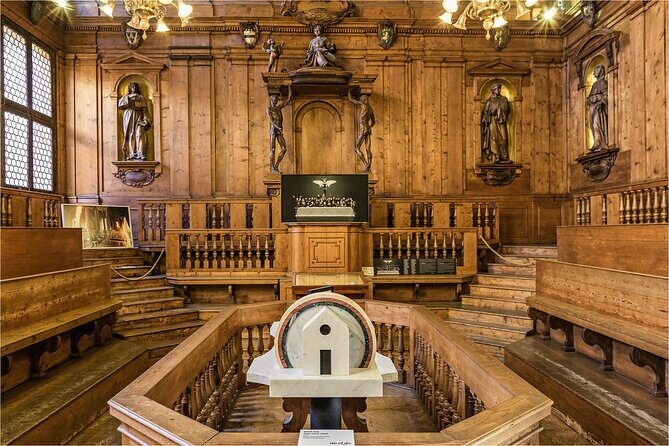
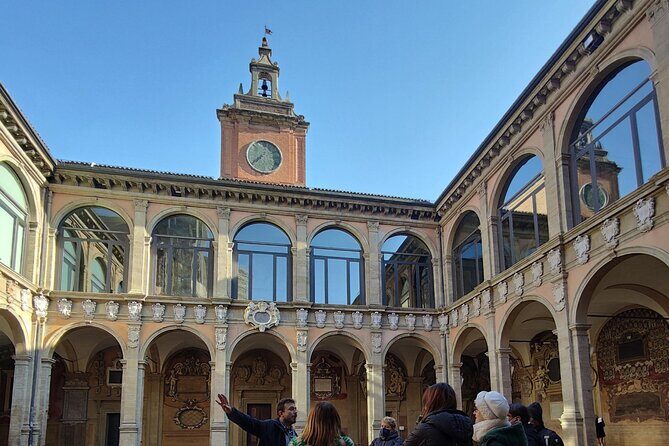
The Archiginnasio is the kind of place that makes you rethink what a university building can feel like. This ancient Renaissance and Baroque palace of the University of Bologna isn’t only about academics—it’s about spectacle, preservation, and the blend of art and science.
You’ll see frescoed rooms, a historical library, and a wooden anatomical theatre. The anatomical theatre is the standout for many people for a simple reason: it turns medicine history into architecture. You’re watching how knowledge was taught and displayed, not just written down.
This stop also connects well with how Riccardo Bacchi guides. He’s not only describing what you see; he’s explaining why Bologna became known for both learning and specialized study, including medical and science history. If you enjoy context, you’ll feel like the day suddenly gains depth.
Consideration: you’ll likely hear a lot of detail here. If you like to read every label and take your time, you may need to balance your pace with the group’s flow.
Pinacoteca Nazionale: Painting from Giotto to the Carracci Era
The Pinacoteca Nazionale di Bologna is where the tour becomes a true art museum day. You’re working in one of Italy’s important painting collections, spanning major names and styles. Think Giotto through Raphael, Titian and Guido Reni, plus Ercole de Roberti, the Carracci, Guercino, Vitale da Bologna, and Parmigianino. That’s a serious range for a single stop.
What makes this stop valuable isn’t just the list of famous artists. It’s that Bologna’s art world sits at an intersection of traditions—regional craft meets big Italian movements. With Riccardo Bacchi’s commentary, you’re less likely to walk out with only one favorite painting and more likely to come away with a sense of how the styles relate.
Tip: in museums, your eyes can drift. Pick a few “anchors” from what your guide points out, then let your brain connect the rest.
You can also read our reviews of more tours and experiences in Bologna


Quadrilatero: The Medieval Market Made for Eating
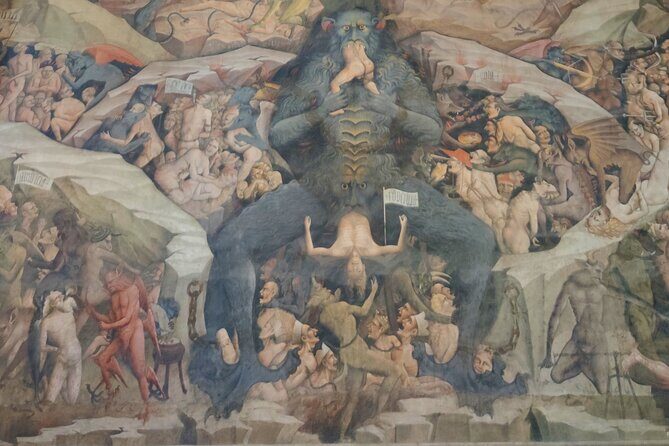
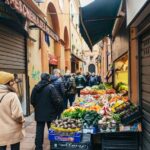
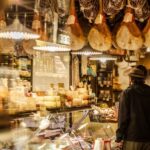
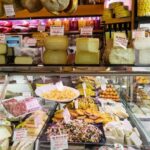
Now the day gets practical in the best way: food culture, right where it historically happened. The Quadrilatero is the ancient market area of Mezzo di Bologna, with historic stalls, taverns, and traditional shops. The tour time here is about sampling Bologna’s flavors in a concentrated way, not eating until you can’t move.
You’ll get a free stop window for the market area, but the real payoff comes when it connects into the Bruno e Franco experience later. Still, being in the Quadrilatero matters. It gives you the setting: Emilia-Romagna food isn’t a theme. It’s an everyday identity.
What you’ll feel: less like a tourist at a market, more like someone stepping into a local rhythm—especially if you’re hungry and ready to taste.
San Giacomo Maggiore: Bentivoglio Chapel and Santa Cecilia’s Artistic Side
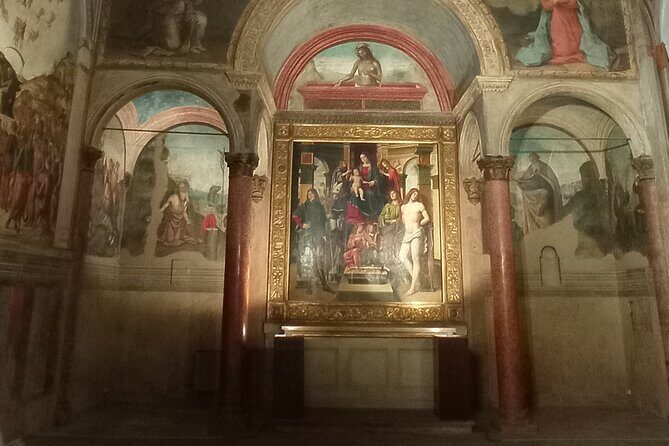
Chiesa di San Giacomo Maggiore brings you back to church art, but with a different tone. The highlight is the Bentivoglio Chapel, a masterpiece of the Emilian Renaissance. This is the type of chapel that changes the way you look at religious spaces—ornament that isn’t only decorative, but meaningful in message and power.
The stop also includes the Oratory of Santa Cecilia with frescoes and musical venues. That music connection is a fun detail because it reminds you that art in Bologna isn’t limited to what you see. It’s also something you experience.
This is a good place to take notes in your head. If you’ve been tracking themes across the day—power, faith, art, education—this stop helps stitch those themes together.
Canale delle Moline: Old Streets, Towers, Arcades, and a Hidden Canal Feeling
Canale delle Moline is short on time but rich in atmosphere. You’ll move past towers, arcades, medieval houses, and palaces with extravagant architecture. There are also hidden canal vibes, noble staircases, and frescoed halls and oratories tied to the city’s university roots.
This stop is valuable because it slows the day down just enough for you to see Bologna as a living city, not only a museum town. Even if you don’t memorize every facade, you’ll come away with a stronger sense of where the city’s characters lived and how architecture shaped daily movement.
Shoes note: this is still walking country. Uneven pavement and quick turns are part of the deal.
San Domenico and Santo Stefano: Big Art, an Alchemical Choir, and a Jerusalem-Style Plan
Basilica di San Domenico is one of those places that feels like a treasure chest with multiple compartments. The tour points out major art and architecture features, including the Ark of Nicola Pisano, works connected to Nicolò dell’Arca and Michelangelo, plus an alchemical wooden choir. You’ll also hear about Mozart’s favorite organ, which is a detail that makes the church feel even more alive.
Then you shift to Basilica – Santuario di Santo Stefano, a medieval and early medieval complex built in the image and likeness of the Holy Sepulcher of Jerusalem. Even if you don’t know every religious reference, the layout and concept give you something real to hold onto: Bologna built a spiritual map in brick and stone.
These two stops are why the tour feels like more than “a few landmarks.” You’re seeing the way art and belief were packaged into architecture over centuries.
Consideration: churches often mean controlled spaces and slower movement. Plan to go with the group pace and use your short breaks to reset your legs.
La Salumeria: Tastings and a Pasta alla Bolognese Mini Cooking Class
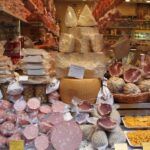
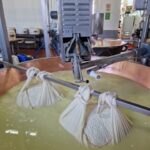
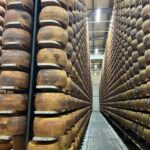
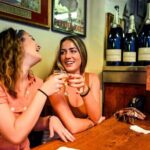
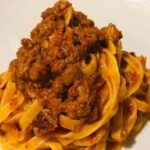
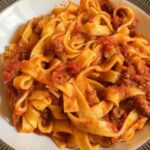
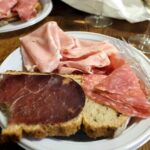
By the time you reach Bruno e Franco – La Salumeria, you’re ready for the payoff: Emilia-Romagna food you can recognize immediately and talk about for days. You’ll taste figs with Parma ham, culatello, salami, mortadella, meatballs and peas (Bologna style), tagliatelle with ragout, Parmigiano Reggiano aged for 3/4 years, traditional green lasagne bolognesi, and traditional Modena balsamic vinegar aged up to 24 years. Much else may be included, but those are the anchors.
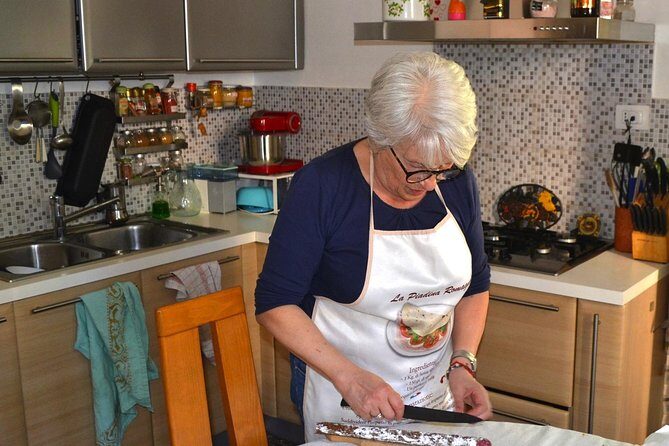
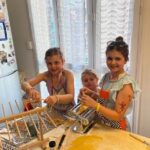
Then the experience gets hands-on. You’ll do a cooking class slice for pasta alla bolognese, focusing on pasta made with egg for tagliatelle, tortellini, lasagna, and related shapes like balanzoni and tortelloni, plus passatelli. It’s shorter than a full-blown class, but it gives you the satisfaction of doing something—not only eating something.
Why it’s good value: the tastings are a structured way to sample Bologna staples without guessing what to order. And the pasta class helps the food land in your brain beyond taste. You’ll remember what you learned, even when you later try to recreate it at home.
Price, Pace, and Getting the Most Out of the Day
At $174.69 per person for about 7 hours, you’re paying for a guided chain of major sites plus several admissions included in the cost. Several stops include admission tickets, while other church and walking portions are free. Add the food tastings and the pasta class, and the price stops feeling like a “generic walking tour fee” and starts resembling a full-day cultural program.
Pace is the big variable. This is not a slow meander. It’s a well-organized run from early morning through late enough that you’ll likely feel it in your feet. Reviews also stress comfortable shoes and note that the guide’s passion can mean a lot of information—so you’ll get more if you listen actively.
This tour also benefits from being private for your group. That means you’re not dealing with constant shuffling among unrelated groups. You can stay focused and keep your questions in real time.
One more practical note: the meeting point is at Bar Vittorio Emanuele in Piazza Maggiore (Piazza Maggiore, 1). If you’re the type who likes to arrive early for orientation, this is a good base to do it.
If plans change, there’s free cancellation up to 24 hours before the start time for a full refund.
Who Should Book This Best of Bologna One-Day Tour
Book this if you want a high-impact Bologna day with strong guidance and strong art/food payoff. It’s especially well-suited for:
- First-timers who want a fast but coherent introduction to the city
- People who love art history that connects to the place, not just the facts
- Food lovers who want Bologna classics in a guided, structured format
- Travelers who enjoy learning about science and medical history alongside art and architecture
It’s less ideal if you hate walking or you prefer a quiet pace with minimal commentary. Also, because the commentary can be dense, you’ll enjoy it more if you’re willing to pay attention and treat it like a real lesson.
Should You Book This Tour?
Yes, if your goal is to see a lot of Bologna’s real highlights in one day without wasting time figuring out what matters. The combination of art and architecture with food tastings and a pasta class is a smart mix. And the guide, Riccardo Bacchi, has a teaching style that makes the city feel connected—like one story told across squares, churches, museums, and markets.
If you only have a short window in Bologna, this is one of the more efficient ways to turn that window into real understanding. Just plan for the pace, wear good shoes, and show up ready to listen.
FAQ
What does the tour cost?
It costs $174.69 per person.
How long is the experience?
It runs about 7 hours.
Are admission tickets included?
Admission tickets are included for several stops, including Piazza Maggiore, Piazza Santo Stefano, Chiesa di Santa Maria della Vita, Archiginnasio di Bologna, and the Pinacoteca Nazionale di Bologna. Other stops are marked as free within the experience.
Where does the tour start?
The meeting point is Bar Vittorio Emanuele in Piazza Maggiore, Piazza Maggiore 1, Bologna.
Is this tour private?
Yes. Only your group participates.
Can I cancel for a refund?
Yes. You can cancel up to 24 hours in advance for a full refund. If you cancel less than 24 hours before the start time, the amount paid is not refunded.