REVIEW · BOLOGNA
Bologna Murder Mystery: Self-Guided City Quest
Book on Viator →Operated by Questo · Bookable on Viator
Bologna, solved one clue at a time. I like how this quest turns the city into a puzzle trail you can do at your own speed, and I also like the offline-friendly app so you’re not hunting for Wi-Fi. One thing to keep in mind: the mystery storyline may not feel perfectly tied together from start to finish, so treat it as a playful frame for seeing the city rather than a tightly plotted whodunit.
You get a phone-based experience (English) with 11 puzzle challenges and a flexible format where you can pause/resume. It’s designed for walking through major Bologna landmarks—medieval gates, big squares, theatres, fountains, and university-era sites—then finishing around Piazza Rossini in about an hour if you keep moving.
In This Review
- Key things I’d bookmark before you go
- Why this Bologna app-quest works (and who it fits)
- Price and value: $6 for a full walk-based puzzle game
- How the murder mystery quest plays in real life
- The walking route: from Porta Galliera to Piazza Rossini
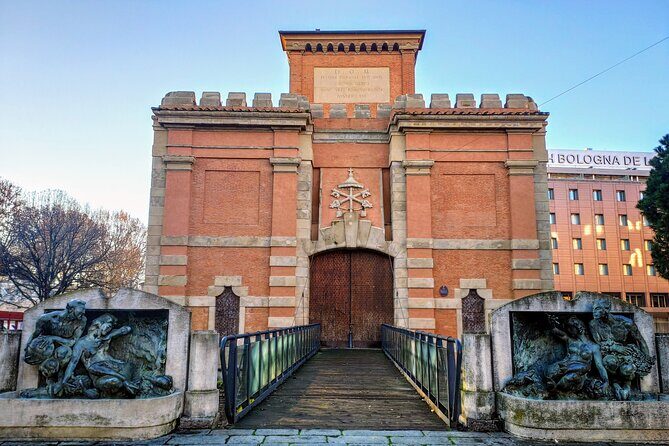
- Porta Galliera: ornamented gate and your first clue
- Piazza VIII Agosto and the market rhythm
- Arena del Sole: a theatre with a modern comeback
- Fountain of Neptune: the bronze detail you can’t miss
- An oratory built into older city fabric
- Basilica di San Petronio: a facade that never finished
- The Baroque church and Niccolò dell’Arca’s sorrow
- The leaning towers: Asinelli and Garisenda
- Bologna’s university origins: classes before a base
- Park of Montagnola: Napoleonic-era green space
- Bologna Cathedral (San Pietro): 17th-century focus
- Archiginnasio: the university’s “new schools” made fast
- Palazzo dei Banchi: a facade that hides the messy parts
- Timing and day-to-day tips for a smoother walk
- Should you book this Bologna Murder Mystery quest?
- FAQ
- How long does the Bologna Murder Mystery city quest take?
- Do I need an internet connection to play?
- What language is the quest offered in?
- How many puzzle challenges are included?
- Can I start and end whenever I want?
- Where do I start and where does it end?
- Is there a physical tour guide with this experience?
- What’s the cancellation policy?
Key things I’d bookmark before you go
- Offline play means no data worries while you hunt for answers.
- Choose your own timing so you can fit this into your day.
- 11 puzzle challenges keep you looking at details, not just taking photos.
- A true self-guided format with a step-by-step app flow (no guide needed).
- Built for groups and families who want to move together at a relaxed pace.
Why this Bologna app-quest works (and who it fits)
This kind of city quest is ideal when you want structure without the feel of a scripted group tour. Instead of spending time listening to a guide, you spend time looking: reading inscriptions, checking statues and facades, and comparing what you see in the streetscape.
I also like that the experience is explicitly independent. You can decide when to start and when to end, so you’re not stuck at someone else’s schedule. Bologna rewards that approach. You can wander a little, stop for gelato, and still come back to the app with minimal stress.
Who it fits best:
- Families who want an activity that keeps kids (and adults) engaged while walking.
- Friends who like light competition: who spots the clue first?
- Anyone who prefers learning by noticing small details rather than sitting through long explanations.
You can also read our reviews of more guided tours in Bologna


Price and value: $6 for a full walk-based puzzle game
At $6.00 per person, this is a low-cost way to add purpose to a Bologna stroll. You’re paying for a guided-style route and a storyline delivered through your phone, not for a live guide or paid museum entry (none are listed).
That “cheap but not flimsy” value comes from a few things you can feel immediately:
- You get 11 puzzle challenges instead of a single scavenger list.
- The app works without internet, which matters in Italy when signal can be hit-or-miss.
- You’re also getting mobile access code and a self-paced structure that can stretch or shrink to match your group.
If you’re already comfortable navigating on your own and you don’t need someone to talk at you, this price makes a lot of sense.
How the murder mystery quest plays in real life
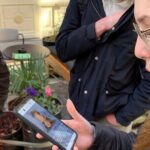
Think of it like an ongoing prompt on your phone. At each stop, the app asks you to look around and find an answer to advance. The “mystery” thread is delivered through real-world clues tied to specific places you pass.
You’ll also get some practical benefits that make the experience smoother:
- Pause/resume any time, which helps if you need a break, step out for a snack, or slow down at a crowded square.
- Mobile ticket access (so you don’t need to print anything).
- A simple workflow: follow the instructions, then arrive at Piazza Rossini at the end.
Because it’s a puzzle game, the biggest skill isn’t language. It’s patience: slow down for 30 seconds at each site and scan the details the app is pointing you toward.
The walking route: from Porta Galliera to Piazza Rossini
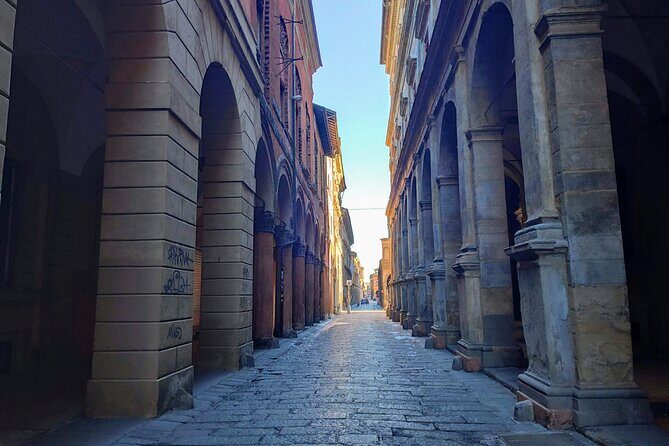
This quest covers a chain of well-known Bologna landmarks, moving you through different “Bologna moods,” from medieval walls to university streets to grand religious architecture. Even if you already know the headlines—Towers, Piazza Maggiore, big churches—you’ll be forced to look closer.
A quick timing note: the experience says about 1 hour (approx.). In real life, I’d plan 60–90 minutes if your group enjoys reading the clues carefully and doesn’t power-walk.
Porta Galliera: ornamented gate and your first clue
Start by spotting Porta Galliera, one of Bologna’s remaining gate structures tied to the former outer medieval walls. This gate is especially ornate, built between 1659 and 1661, following designs by architect Bartolomeo Provaglia.
Why it’s a good first stop: a gate is naturally “readable.” You can stand in front of it, look at its form and decoration, and answer the app’s prompt without needing to enter anywhere. It sets the tone: Bologna’s past isn’t just in museums—it’s on street corners, in stonework you usually walk past.
Practical tip: give yourself enough time to stop without blocking pedestrians. Portas and gates sit right in the flow of the city.
You can also read our reviews of more city tours in Bologna

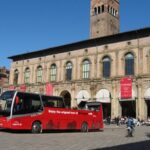
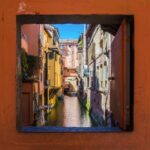
Piazza VIII Agosto and the market rhythm
Next is Piazza VIII Agosto, known for the large traditional Piazzola market on Friday and Saturday, with over 400 street stalls.
This stop is great for two reasons. First, the setting is visual—lots to see, lots of signs and activity. Second, it changes the experience depending on the day. On market days, you’ll likely need to move carefully through crowds while you hunt for the app’s answer.
If you’re going on a Friday or Saturday, expect the app’s puzzle time to feel longer just because the piazza is busier. If you’re sensitive to crowds, choose a calmer day.
Arena del Sole: a theatre with a modern comeback
Then you’ll be guided to Arena del Sole, a historic theatre in Bologna with origins in 1810. It reopened in 1995 after eight years of reconstruction.
What I like about using a theatre as a clue stop is that you can connect architecture and time. Even if you don’t go inside, the building still tells a story: something old that had to be repaired and brought back.
Practical note: theatres can be areas with nearby foot traffic. Keep an eye on where you’re standing while reading the details for your puzzle.
Fountain of Neptune: the bronze detail you can’t miss
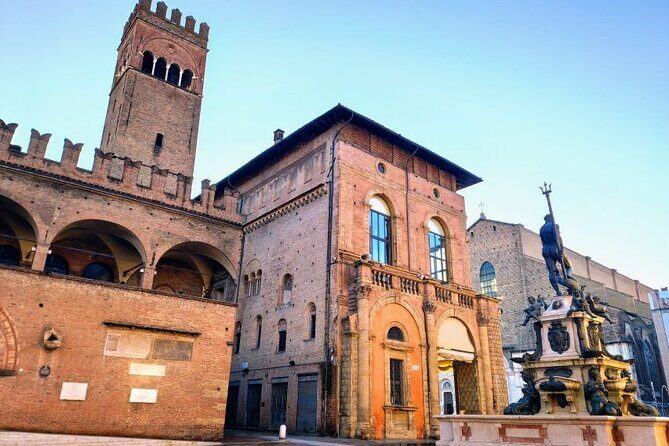
A major visual payoff comes at the Fountain of Neptune. The fountain was completed in 1565, and the over-life-size bronze figure of Neptune was completed and fixed in place around 1567.
The design link is especially interesting: the early concept is credited to Giambologna, who had submitted a model for the Fountain of Neptune in Florence but had lost the commission to Baccio Bandinelli.
This is one of those places where your instinct is to take a photo and keep walking—but the puzzle format pushes you to look longer. That’s when the fountain stops being just “a big statue” and becomes a set of clues tied to Renaissance sculpture and rivalry.
An oratory built into older city fabric
Another stop brings you to an oratory built between 1481 and 1497. The celestine fathers of the nearby church of San Giovanni Battista planned a small church in an area below which was part of an earlier medieval wall structure. There was also an ancient image of the Madonna, protected by a simple tabernacle.
This kind of layered storytelling is exactly why I like quests like this. Bologna often feels like you’re walking through time without realizing it. Here, the app’s challenge turns that into something you actively notice instead of something you miss.
Practical tip: for quieter stops like this, you’ll probably do best when your group stays close together while you solve the clue.
Basilica di San Petronio: a facade that never finished
In the heart of the city, you’ll reach the basilica dedicated to Saint Petronius, the patron saint of Bologna. Construction began in 1390, and the main facade has remained unfinished since.
This stop is powerful because it’s big and obvious, yet the story behind it isn’t. Bologna isn’t shy about grand plans—and it also shows what happens when projects don’t get completed the way people expect.
For the quest: unfinished means visible scaffolding logic, exposed design choices, and plenty of points to examine for puzzle answers. It’s a good site if your group likes architecture.
The Baroque church and Niccolò dell’Arca’s sorrow
Next comes a Baroque church area where the construction began in 1687–1690, based on designs by Giovanni Battista Bergonzoni. The church has an elliptical plan with a dome designed by Giuseppe Tubertini, completed in 1787. The facade was added in 1905.
Most importantly for your visit: the sanctuary houses the sculptural group Sorrow over Dead Christ (1463) by Niccolò dell’Arca.
Even if you’re not a sculpture specialist, this is a stop that rewards attention. The app’s clue approach helps you slow down enough to notice the details you’d otherwise skip. If your group tends to speed through churches, this one can pull you back in.
The leaning towers: Asinelli and Garisenda
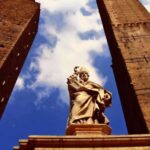
Then you’ll hit the famous pair: the taller Asinelli tower and the smaller but more leaning Garisenda tower. Their names come from families traditionally credited with constructing them between 1109 and 1119.
This is a classic “you see it, then you learn something new” moment. The puzzle format usually does two useful things here: it forces you to compare the towers instead of treating them as one landmark, and it nudges you to notice the details that make each tower distinct.
Practical tip: towers are popular photo targets. Give yourself space so you’re not standing in the middle of people posing for shots while you answer the puzzle.
Bologna’s university origins: classes before a base
One stop highlights a key Bologna idea: it’s home to the oldest university in Europe, and it didn’t have a base until well into the Renaissance. Before that, classes were held in professors’ homes or in public spaces around the area.
For the quest, this works as a reset. After standing in front of towers and grand monuments, you’re reminded that Bologna’s identity isn’t only art and architecture—it’s also education and daily life.
If you like learning how cities actually functioned historically, this part will click. It turns the walking tour into a timeline of where knowledge happened.
Park of Montagnola: Napoleonic-era green space
Next is Park of Montagnola, a public park in Bologna. Its original construction in 1805 is tied to Napoleonic rule, with the park design commissioned from Giovanni Battista Martinetti.
A park stop is a smart pacing tool in a one-hour quest. You can take a breath, regroup, and refocus for the next set of buildings. It also changes the visual texture of your walk, so you’re not stuck only in architecture.
If your group tends to get restless, a park pause helps you finish the quest with energy rather than fatigue.
Bologna Cathedral (San Pietro): 17th-century focus
You’ll then pass Bologna Cathedral, dedicated to Saint Peter. It’s the metropolitan cathedral of the Archbishop of Bologna, and most of the current building dates from the 17th century, with parts from the late 16th century.
This stop is a great example of what Bologna does well: mixing the monumental with the familiar. Even if you’ve seen cathedrals elsewhere, the exact timeline here matters, and the puzzle prompts likely help you notice features that line up with those centuries.
Practical note: cathedrals often have rules about movement and quiet areas. Keep your group respectful and follow any on-site signage.
Archiginnasio: the university’s “new schools” made fast
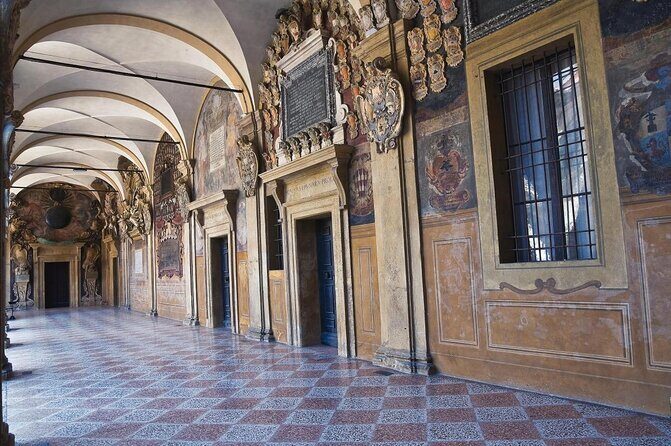
The quest also includes Archiginnasio, where construction began at the end of February 1562 and the building was inaugurated on October 21, 1563—built remarkably quickly. It was called Archiginnasio after a classical term linked to the Studium, the original name for the University of Bologna.
This is a stop where timing becomes part of the story. The app clue approach makes you treat the building like more than a pretty facade; it’s a marker of how quickly Bologna invested in education infrastructure.
If you enjoy “how fast things happened” stories, this part will feel unusually concrete.
Palazzo dei Banchi: a facade that hides the messy parts
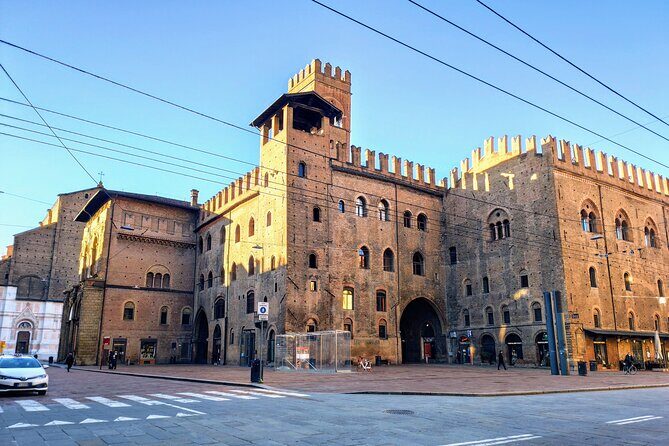
Finally, you’ll reach Palazzo dei Banchi in Piazza Maggiore. It was the last building erected there and designed by Vignola in the 16th century. The spectacular facade was intended to hide the alleys of the rear market. Its name comes from ancient currency exchange “banks” that existed in the area.
This is a fun way to end the quest because it explains a city-building trick: keep the front grand, but manage the practical chaos behind.
For puzzle-solving, facades are naturally good clue surfaces—so you’ll likely be able to finish strong without needing to chase answers through side streets.
Timing and day-to-day tips for a smoother walk
Because this experience is designed around puzzles at specific points, the biggest variable is crowd density—especially around markets and central squares.
- If you’re visiting on Friday or Saturday, the Piazza VIII Agosto market can slow you down a bit. Build in extra patience.
- If you get turned around, keep calm. This kind of quest is meant to be self-correcting: the phone instructions are there to bring you back to the next clue point.
- Bring a fully charged phone. The app is offline-friendly during play, but your battery still powers everything.
Also, since it’s a private activity for your group, you don’t have to coordinate with strangers. That’s a real advantage if you’re traveling with family or friends.
Should you book this Bologna Murder Mystery quest?
Book it if:
- You like walking and want a reason to slow down at the details.
- You want a low-cost activity that works well for groups and families.
- You prefer an app-based structure instead of committing to a live guide.
- You’ll enjoy learning through visual clues—gates, statues, facades, and squares.
Skip it (or at least reconsider) if:
- You need a tightly scripted mystery plot that makes sense every step of the way.
- You dislike phone-guided navigation or puzzle-style activities.
- You want mostly inside-the-building visits. This quest’s strength is in public landmarks and “look around” clues.
FAQ
How long does the Bologna Murder Mystery city quest take?
The duration is listed as about 1 hour.
Do I need an internet connection to play?
No. It’s designed to work without internet connection, so you won’t use up your data.
What language is the quest offered in?
It’s offered in English.
How many puzzle challenges are included?
The experience includes 11 puzzle challenges.
Can I start and end whenever I want?
Yes. It’s completely independent, and you can choose your beginning and end time. You can also pause and resume.
Where do I start and where does it end?
Start at P.za XX Settembre, 15, 40121 Bologna BO, Italy, and the experience ends at P.za Rossini, 1, 40126 Bologna BO, Italy. The app guides you step by step to Piazza Rossini.
Is there a physical tour guide with this experience?
No. It’s a self-guided city quest with mobile access.
What’s the cancellation policy?
Free cancellation is available. You can cancel up to 24 hours in advance for a full refund. If you cancel less than 24 hours before the start time, the amount paid is not refunded.