REVIEW · FLORENCE
Best of Florence Highlights with private guide
Book on GetYourGuide →Operated by Raphael Tours & Events · Bookable on GetYourGuide
Florence is best explained on foot. This private, 2-hour stroll is a clean way to understand the Renaissance without drowning in dates, because your guide connects buildings to the people who used them. In the best guides I’ve seen for this route, you get that mix of big-picture story and small, street-level details, like what Roberta focuses on with clear, honest explanations, or how Leonardo keeps it relaxed and points out what you would miss in a guidebook.
I love the way this tour hits Florence’s main “story zones” fast. You start at the Basilica di Santa Croce area, then move through places tied to civic power and art influence, including Palazzo Bargello, Ponte Vecchio, the Piazza della Signoria government square, and the marble spectacle of Piazza del Duomo. I also like the private-group setup: Daniel and others have used the time to tailor pacing, and to throw in practical tips for the rest of your stay.
One possible drawback: 2 hours in Florence center is a lot of moving. If you want long museum stops or lots of indoor time, this format will feel tightly scheduled. You’ll want comfy shoes and a plan for heat, because the route spends real time walking between landmarks.
In This Review
- Key points before you go
- Why a 2-hour Renaissance walk in Florence makes sense
- Meeting by Dante at Santa Croce: your tour’s grounding point
- Cloisters to Bargello: going from faith to civic power
- Porcellino market and Ponte Vecchio: stories you can’t get from a sign
- Piazza della Signoria and Palazzo Vecchio views: politics in open air
- Piazza del Duomo: marble engravings and the dome’s impact
- Basilica di San Lorenzo: a smart ending that keeps your day flexible
- Price and value: is $210 per person fair for 2 hours?
- Who this tour fits best
- A quick note on guide style and what it means for you
- Should you book this private Florence Highlights walk?
- FAQ
- Where does the tour meet?
- How long is the tour?
- Is the tour private or group-based?
- What languages are available?
- Is the tour wheelchair accessible?
- What’s included in the price?
- Is there free cancellation?
- Do children need an adult?
- Can I reserve now and pay later?
- Which main sights are covered?
Key points before you go
- Santa Croce start near Dante at the statue on the steps, so you begin with context, not just postcards.
- Cloisters of Santa Croce add a quieter, more atmospheric layer to all the street noise.
- Ponte Vecchio storytelling includes the city’s oldest bridge angle, which makes the crossing make sense.
- Piazza della Signoria + Palazzo Vecchio views connect politics, art, and power in one sweep.
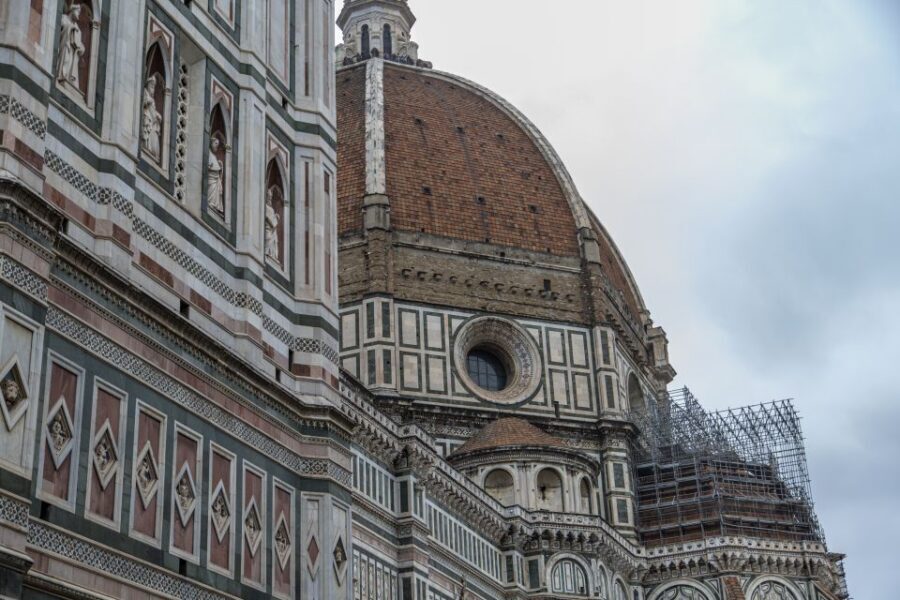
- Piazza del Duomo marble engravings and the dome give you the Renaissance in a single public square moment.
- San Lorenzo as your end point works well, because you can keep exploring the market district after the tour.
Why a 2-hour Renaissance walk in Florence makes sense
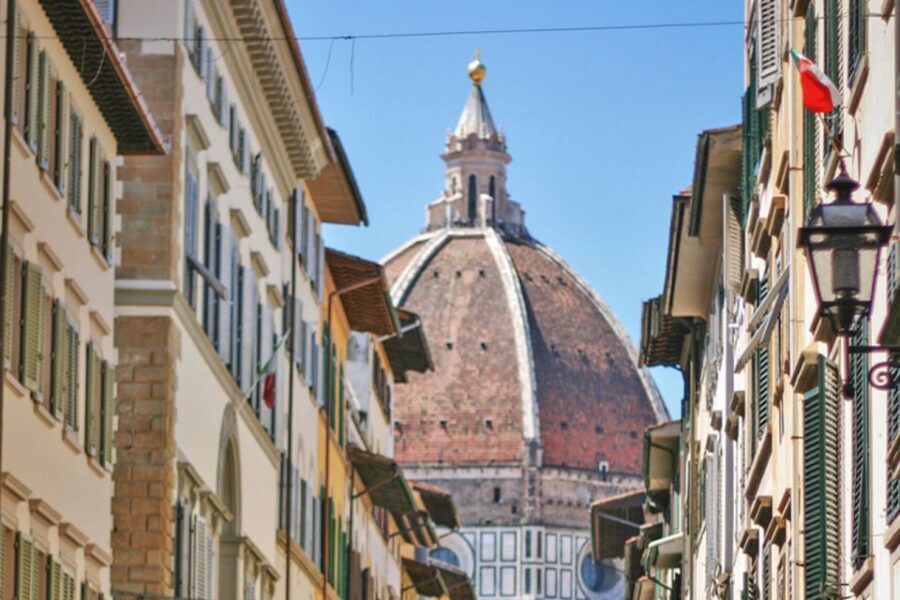
Florence can feel like a greatest-hits album where every track is famous. This tour is designed as a short orientation loop that helps the city click into place. In a compact timeline, you cover several key locations tied to Renaissance culture, but you also see the medieval street fabric that came before it.
The value here is not only “seeing famous stuff.” It’s learning how the pieces relate. A local guide can point out how civic life, religious power, and artistic ambition overlap in the same neighborhoods. That’s why people rate this so highly, especially for first-timers who want a map in their head before they spend more days wandering.
Also, the format is private. That matters in Florence, where group tours can sometimes feel like you’re being marched from one photo spot to another. With this setup, guides like Leonardo have been praised for making it feel like walking with someone who knows the city well enough to share the in-between details.
You can also read our reviews of more guided tours in Florence
Meeting by Dante at Santa Croce: your tour’s grounding point
You meet by the statue of Dante on the steps of the Basilica di Santa Croce, in Piazza Santa Croce. It’s a strong starting choice because it anchors the walk in Florence’s literary and civic identity, not just the architecture checklist.
From there, you head into the Basilica di Santa Croce cloisters. Even if you’re not there for religion, cloisters have a way of slowing the pace. They’re a reminder that Florence’s cultural story didn’t start with the grand domes and gallery walls—it grew through religious orders, scholarship, and community spaces.
Practical tip: this is a good moment to look at how your guide is reading the building. Great guiding isn’t only telling you what something is. It’s showing you what to notice—shapes, placement, and why a space was meant for certain kinds of people and gatherings.
Cloisters to Bargello: going from faith to civic power
After Santa Croce, your route moves toward Piazza dei Peruzzi and then Palazzo Bargello. This is one of the smarter segments because it shifts the tone. You go from a religious campus feeling to a more civic, government-flavored Florence.
Palazzo Bargello represents authority in a very direct way. As the tour connects Renaissance life to political reality, you start understanding why Florence produced art so intensely: power and prestige were tied together. You’re seeing how buildings functioned as stages for influence.
A big plus is that you’re not just staring at facades. A strong guide will explain what these sites signaled in their time—who had control, how justice and leadership worked, and why certain squares became crucial meeting points. People who booked this as an early trip often say it helped them orient fast, and this section is a big part of that.
Porcellino market and Ponte Vecchio: stories you can’t get from a sign
Next up is the Porcellino market area, a lively step on the route that helps Florence feel like a living city. Markets do that. They keep the tour from turning into a history lecture with a skyline view.
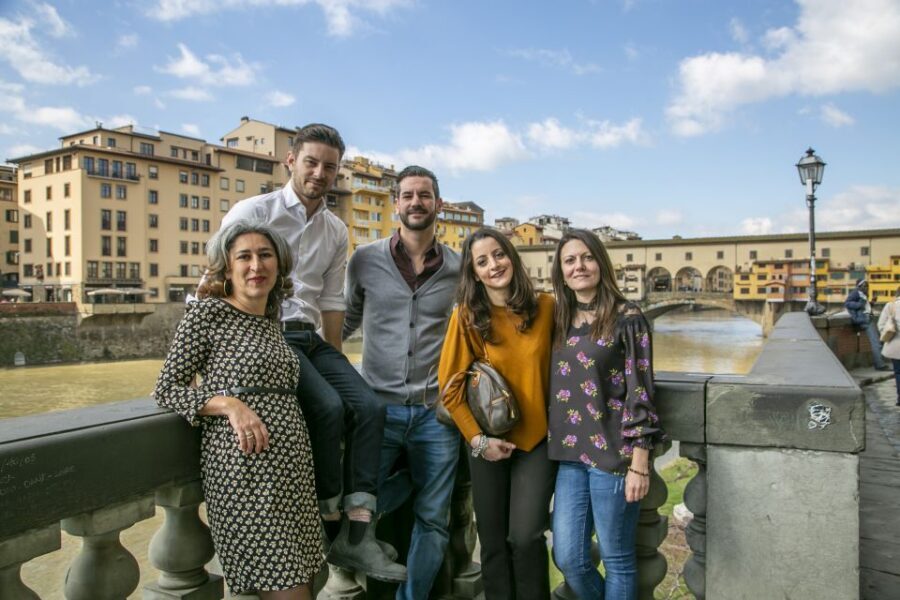
Then comes Ponte Vecchio, where you hear the story of the city’s oldest bridge. That detail matters, because the bridge isn’t just a famous photo line. Once you understand it as a long-running piece of infrastructure—something people relied on through changing eras—it stops being only picturesque.
You’ll also walk small streets that date back to the Middle Ages to reach the next major hub. This is where you’ll feel Florence’s layers. The stones may look similar up close, but your guide’s explanations can make you notice what changed: street use, neighborhood role, and how people moved through the city when it wasn’t built for tourists.
Piazza della Signoria and Palazzo Vecchio views: politics in open air
Your walk reaches Piazza della Signoria, often described as the political heart of Florence. This is one of the most valuable moments of the tour because it’s outdoors, wide, and dramatic in how the surrounding buildings face each other. You get a sense of governance as a visible thing.
As you arrive, you also get impressive views toward Uffizi Gallery and Palazzo Vecchio. Even if you don’t go inside, those sightlines help you understand geography: how Renaissance art and state power grew next to each other, and why the square mattered for major decisions and public display.
This stop is a good time to slow down. If you’re the kind of traveler who likes to translate places into meaning, Piazza della Signoria is where your brain gets the reward. The guide’s job here is to connect what you see now (a famous square) to what it used to do then (a public stage).
One small consideration: because this is a central square, it can be crowded at peak times. That doesn’t ruin the experience, but it can make it harder to hear every word. If you really care about soaking up explanations, wearing your listening mode and keeping close to the guide helps.
You can also read our reviews of more private tours in Florence


Piazza del Duomo: marble engravings and the dome’s impact
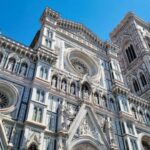
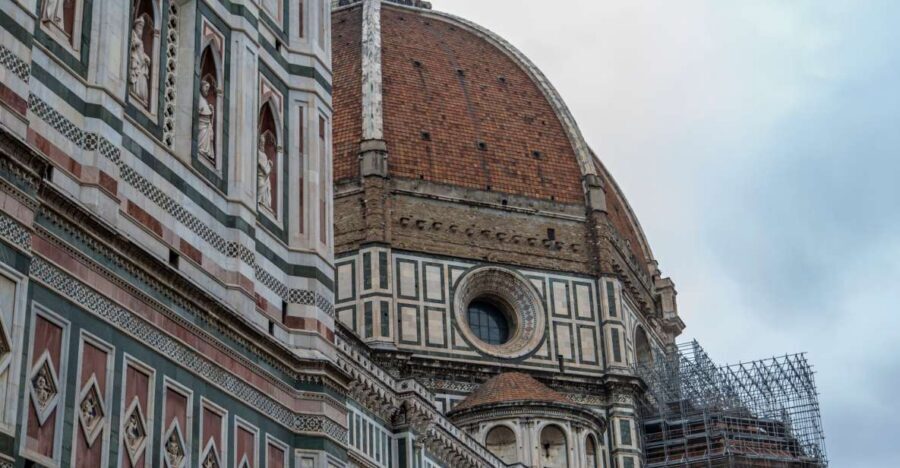
Then you arrive at Piazza del Duomo, in the oldest part of the city. This is the “wow” moment, and it’s not only the dome. The tour emphasizes the marble engravings and the magnificent dome—details that make the Duomo feel like a whole project, not just a big landmark.
Even if you’ve seen pictures, it’s different in person because you’re surrounded by scale. Standing in the square, you can appreciate how Florence built a city around visible religious ambition. The guide’s story helps you see the Renaissance here as craftsmanship and engineering as much as it is art theory.
Practical advice: bring water and give yourself a moment before you look around too fast. Many people rush this part and miss what the guide is pointing at—especially the way marble patterns shift across surfaces. If your goal is to learn, not just photograph, take the extra minute.
Basilica di San Lorenzo: a smart ending that keeps your day flexible
The tour continues to Basilica di San Lorenzo. From here, you can explore the market district by yourself. This is a smart way to finish because it gives you options right when you’re likely to want food, browsing, and casual wandering.
Ending at San Lorenzo also helps you avoid that “tour dumps me somewhere random” feeling. You’re still in a neighborhood where daily life is part of the experience. Plus, once you’ve had your Renaissance orientation, you’ll be able to interpret the streets you see next with better context.
If you like continuing on your own, you’ll enjoy this. If you prefer an itinerary that keeps you moving to a strict end point, you might wish the tour included more time here. But as a 2-hour sampler, the ending makes sense.
Price and value: is $210 per person fair for 2 hours?
At $210 per person for 2 hours, this isn’t a bargain-basement walking tour. But it’s also not trying to be. The private-group format is part of what you’re paying for, and in Florence, that usually means a better experience than being squeezed into a big crowd.
Here’s the value logic I see: in 120 minutes, you cover multiple signature areas—Santa Croce cloisters, Bargello, Porcellino, Ponte Vecchio, Piazza della Signoria, Piazza del Duomo, and San Lorenzo. You also get a guide in English or Italian who can connect the dots between Renaissance art and civic life.
The strongest reviews emphasize the guide quality and the way they point out things you would miss on your own. That’s the real product. If your guide is excellent, $210 can feel reasonable because it buys you context plus time saved, especially if you only have two or three days in Florence and want to hit the key areas without guessing.
If you’re traveling with a group of two, this tends to feel even more worth it, because you’re paying for one guide instead of splitting a big-group experience. If you’re solo and price-sensitive, you may want to compare options, but the private structure is a clear advantage here.
Who this tour fits best
This tour is ideal if you want a smart first pass through Florence. People booking it early often want orientation, and this route gives you that. The guide stories can help you understand what you’ll see later when you wander independently.
It also works well if you like balance. The tour includes religious spaces (Santa Croce cloisters, Duomo area, San Lorenzo) and civic power stops (Bargello, Piazza della Signoria). That mix keeps the Renaissance from feeling like a single-topic museum tour.
If you’re sensitive to long walks, plan accordingly. The route is walking-heavy, and it’s concentrated in the center. Bring good shoes, and if it’s hot, pace yourself and take short breaks.
A quick note on guide style and what it means for you
From the reviews provided, the most praised guides share a few traits. They give explanations clearly, they keep the tone relaxed and friendly, and they add local advice you can use after the tour. Names like Roberta, Leonardo, and Daniel show up again and again, and the common theme is that the experience feels personal rather than scripted.
One reason this matters: Florence rewards curiosity. When your guide points out small things you didn’t know to look for, you start seeing the city differently. That also makes your later self-guided walks more satisfying because you can connect landmarks you notice on your own.
Should you book this private Florence Highlights walk?
Book it if:
- You want a 2-hour orientation that connects the Renaissance to real street-level Florence.
- You prefer a private group where the guide can keep things relaxed and responsive.
- You’re excited by major sights like Ponte Vecchio and the Duomo, but you also want the “why,” not just the “what.”
Skip it or switch plans if:
- You’re hoping for a long, slow day with lots of indoor time and museum ticketing built in.
- You don’t like walking between several big squares in a short window.
If you’re on a tight schedule, this is one of the smartest ways to spend an early morning or afternoon. You’ll finish with a map in your head and better questions for whatever you explore next.
FAQ
Where does the tour meet?
Meet by the statue of Dante on the steps of the Basilica di Santa Croce, Piazza Santa Croce.
How long is the tour?
The tour lasts 2 hours.
Is the tour private or group-based?
It’s a private group.
What languages are available?
The live tour guide is available in English and Italian.
Is the tour wheelchair accessible?
Yes, it is listed as wheelchair accessible.
What’s included in the price?
A local guide is included.
Is there free cancellation?
Yes, you can cancel up to 24 hours in advance for a full refund.
Do children need an adult?
Yes, children must be accompanied by an adult.
Can I reserve now and pay later?
Yes, reserve now and pay later is available.
Which main sights are covered?
You’ll see and learn about major Florence landmarks including Basilica di Santa Croce (cloisters), Palazzo Bargello, Ponte Vecchio, Piazza della Signoria, the Duomo area (Piazza del Duomo), and Basilica di San Lorenzo.
More Private Tours in Florence
More Guided Tours in Florence
More Tour Reviews in Florence
- Tuscany Day Trip from Florence: Siena, San Gimignano, Pisa and Lunch at a Winery
★ 5.0 · 21,634 reviews - The Best tour in Florence: Renaissance & Medici Tales – guided by a STORYTELLER
★ 5.0 · 12,316 reviews