REVIEW · FLORENCE
The Best Of Classic Florence – Private Tour
Book on Viator →Operated by ACCORD Italy Smart Tours & Experiences · Bookable on Viator
Florence, packaged into two very smart hours. This private tour is built for getting your bearings fast, with a local guide walking you past Florence’s top landmarks from the Uffizi area to the Duomo and beyond. I also love that you get Tuscan food tastings included, so the tour feels like more than just sightseeing.
What makes it work in real life is the small, guided flow. You’ll have an English-speaking professional guide and earphones if you need them, which matters when you’re dodging crowds and trying to hear the story behind the stones.
One thing to consider: monument entry is not included along the route, so you may need to budget extra for places that require tickets. Also, it’s only about two hours, so each stop is short—great for a first look, less ideal if you want to linger.
In This Review
- Key things that make this tour worth your time
- A two-hour overview that helps you plan the rest of your trip
- Start at the Piazzale degli Uffizi: open-air art and quick orientation
- The catch
- Piazza della Repubblica and the Triumphal Arch: where modern Florence crowds meet old layers
- Why it’s a smart stop
- Ponte Vecchio: goldsmiths, WWII survival, and a Medici shortcut
- What you should watch for
- Palazzo Vecchio and Piazza della Signoria: Florence’s political engine, not just statues
- Palazzo Vecchio: the tower and the Hall of Five Hundred
- Piazza della Signoria: open-air sculpture and power symbols
- Small timing warning
- The Cathedral of Santa Maria del Fiore area: quick, dramatic, and worth returning to
- Timing reality check
- Via de’ Tornabuoni: luxury street as a living museum
- Why this stop works
- Palazzo Pitti and Boboli Gardens: Medici power on the Oltrarno side
- Why end here
- Tuscan tastings: the bonus that makes the tour feel lived-in
- Practical tip
- Price and what you actually get for $114.15
- Value in one sentence
- Who should book this private Florence highlights tour
- Should you book The Best Of Classic Florence Private Tour?
- FAQ
- Is this tour private?
- How long is the tour?
- What language is the guide?
- Is pickup included?
- Where do I meet the guide?
- Are earphones provided?
- Are monument tickets included?
- What’s included besides the guide?
- Can I cancel and get a full refund?
Key things that make this tour worth your time
- Private group pacing that keeps the walk feeling personal, not like a conveyor belt
- Uffizi area to Duomo coverage that gives you a clean overview of central Florence
- Ponte Vecchio + Vasari Corridor context, so the bridge isn’t just a photo spot
- Palazzo Vecchio and Piazza della Signoria explained as Florence’s political and artistic core
- Bonus Tuscan tastings (olive oil, truffle treats, and baked goods like schiacciata/cantuccini)
A two-hour overview that helps you plan the rest of your trip
If you only have a short time in Florence, this kind of tour is the smart move. It’s designed to show you the city’s most important landmarks in one tight loop, which does two things for you: it helps you understand how neighborhoods connect, and it gives you a shortlist of places you’ll want to return to later.
The private format matters. You’re not stuck waiting for a big group to move at a pace that doesn’t match your questions. In a city where streets pinch and sidewalks fill up, having a guide who can adjust your timing and explain what matters saves energy.
It also feels practical because the tour is only about two hours. That’s enough time to hit the headline sights—without turning the day into an endurance test.
You can also read our reviews of more private tours in Florence

Start at the Piazzale degli Uffizi: open-air art and quick orientation
The tour begins in the Uffizi area, at the Piazzale degli Uffizi. This is one of those Florence spots where the setting already tells a story. It’s an architectural space connecting Piazza della Signoria toward the Arno River, known for statues of important Italian artists and historical figures, designed in the 16th century by Giorgio Vasari.
What I like here is that you’re not starting at a museum door right away. You start in a space that sets the theme: art, power, and Florence’s Renaissance self-image. It’s a good way to understand why so many masterpieces and political moments cluster in this part of town.
From there, the Uffizi Gallery sits right in the piazzale. The Uffizi is one of the world’s major Renaissance art museums, with famous works by Botticelli, Leonardo da Vinci, Michelangelo, Raphael, and Caravaggio. If you’re the kind of person who sees a title like The Birth of Venus or Primavera and actually gets excited, you’ll recognize what you’re being pointed toward.
The catch
Uffizi entry is not guaranteed in this price. The tour includes guided viewing time and context, but admission fees to monuments are not included along the itinerary. So treat this stop as your art-introduction phase, then decide later whether you want a ticket day.
Piazza della Repubblica and the Triumphal Arch: where modern Florence crowds meet old layers
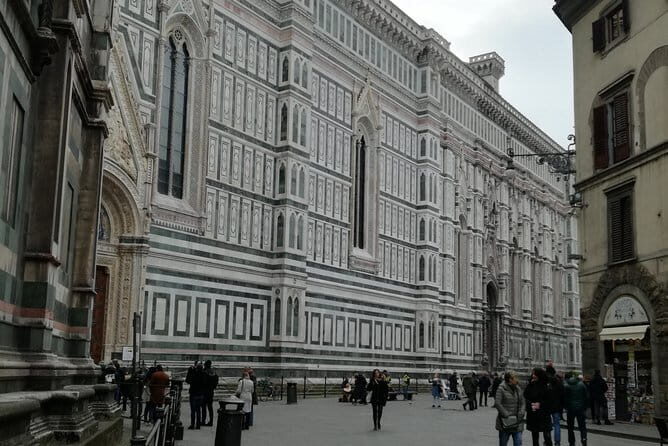
Next you’ll move to Piazza della Repubblica, right in the heart of Florence’s historic center. This is a square that wears multiple identities. It began as the site of a Roman forum, then later became tied to the city’s ghetto and market areas, before being reshaped in the 19th century when Florence was the capital of Italy.
The square’s visual anchor is the Triumphal Arch, and the place still has a classic café identity. You’ll also pass longtime favorites such as Caffè Gilli, Paszkowski, and Le Giubbe Rosse, plus you may catch street performers and musicians while you’re there.
Why it’s a smart stop
This is where you get a feel for “day-to-day” Florence. The Duomo area can feel like a museum zone. Piazza della Repubblica gives you contrast, so the rest of the tour doesn’t blur together.
Also, since this stop is about 10 minutes, you’re not stuck—just oriented.
- Tuscany Day Trip from Florence: Siena, San Gimignano, Pisa and Lunch at a Winery
★ 5.0 · 21,634 reviews - The Best tour in Florence: Renaissance & Medici Tales – guided by a STORYTELLER
★ 5.0 · 12,316 reviews


Ponte Vecchio: goldsmiths, WWII survival, and a Medici shortcut
Then comes Ponte Vecchio, Florence’s iconic bridge. It dates to the 14th century and is the only bridge in the city that survived the bombings of World War II, which is a big part of why people feel like they’re standing on something rare.
The bridge is famous for its historic goldsmith shops—jewelry and artisan boutiques that keep the place visually busy even when the rest of Florence is crowded.
Here’s the extra story that makes the stop better than a simple photo break: above the bridge runs the Vasari Corridor, a secret passage built by Giorgio Vasari in 1565. It connected Palazzo Vecchio with Palazzo Pitti, letting the Medici family cross town without blending with the crowd. In other words, you’re seeing the city built with access control in mind—Renaissance style.
What you should watch for
When you walk Ponte Vecchio, you’re also walking a timeline. Shops, views over the Arno, and the presence of the corridor create a layered experience, and you’ll probably find yourself slowing down when you reach the middle.
This stop is short—about 10 minutes—but it’s one of the best “high-impact” places on the itinerary.
Palazzo Vecchio and Piazza della Signoria: Florence’s political engine, not just statues
The tour then hits Palazzo Vecchio and Piazza della Signoria, which are basically the city’s headquarters for politics and art. If you want a Florence that makes sense, this is where it clicks.
Palazzo Vecchio: the tower and the Hall of Five Hundred
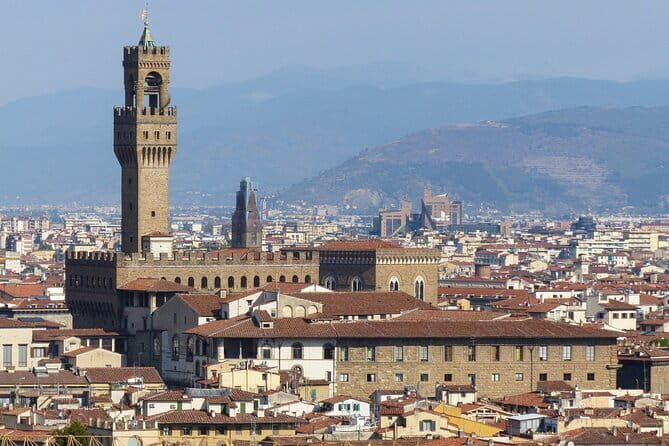
Palazzo Vecchio sits in Piazza della Signoria, originally the seat of the Florentine government in the 14th century, later tied to the Medici family. The building is dominated by its imposing, battlemented tower, rising to 94 meters. Even if you don’t go inside, it’s hard to ignore.
The palace is also home to the Hall of the Five Hundred, one of Italy’s largest halls, with frescoes by Vasari. Today, Palazzo Vecchio serves as Florence’s city hall and houses a museum.
Admission is not included here, so you’ll likely spend your time outside and at the main public-facing areas.
Piazza della Signoria: open-air sculpture and power symbols
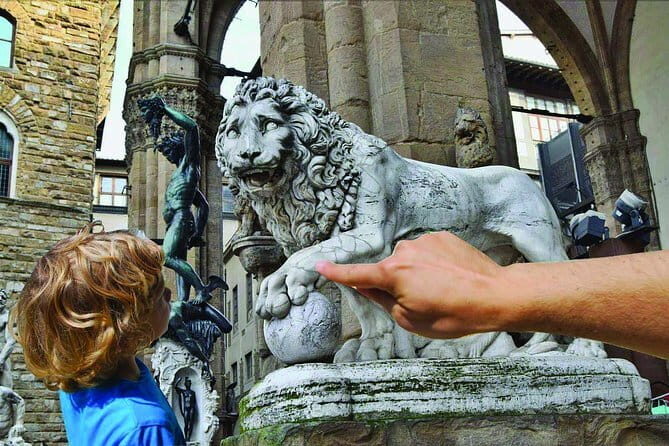
Piazza della Signoria is the public stage where Florence’s story played out for centuries. You’ll see the Loggia dei Lanzi, an open-air museum of Renaissance sculpture. Highlights include Perseus with the Head of Medusa by Benvenuto Cellini and The Rape of the Sabine Women by Giambologna.
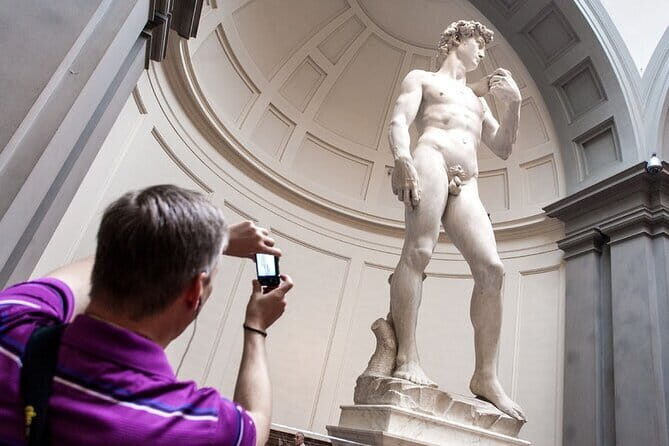
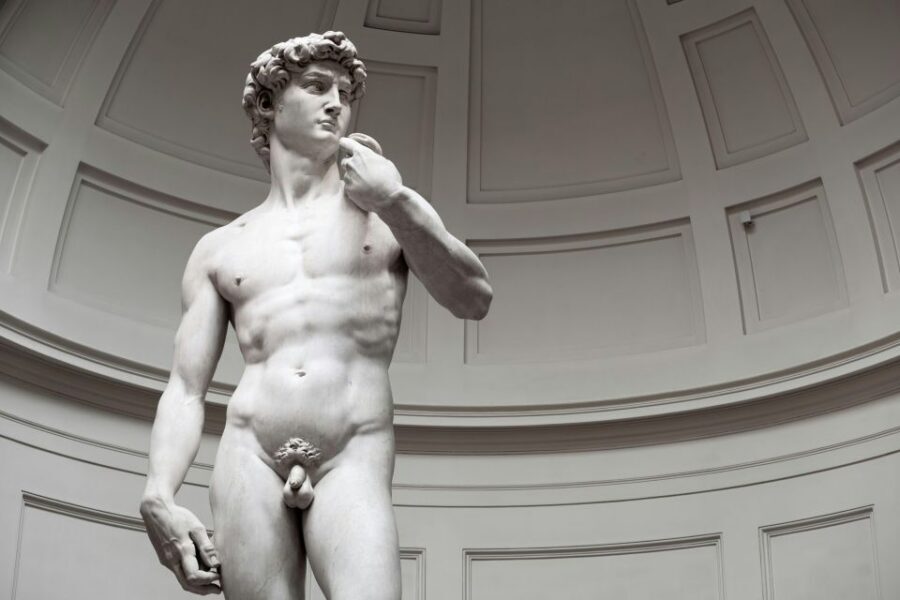
You’ll also notice the Fountain of Neptune and a replica of Michelangelo’s David. That replica detail is useful: it helps you understand how Florence “teaches” its masterpieces in public spaces, even when the original isn’t here.
Small timing warning
Both stops are about 10 minutes each. That’s enough to grasp the layout and the main works, but not enough to read every plaque or study every sculpture closely.
If you love art for art’s sake, you may want a longer museum visit later. If you love the big picture, this timing is ideal.
The Cathedral of Santa Maria del Fiore area: quick, dramatic, and worth returning to
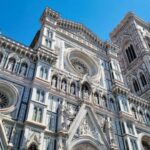
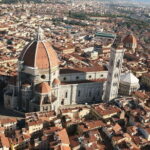
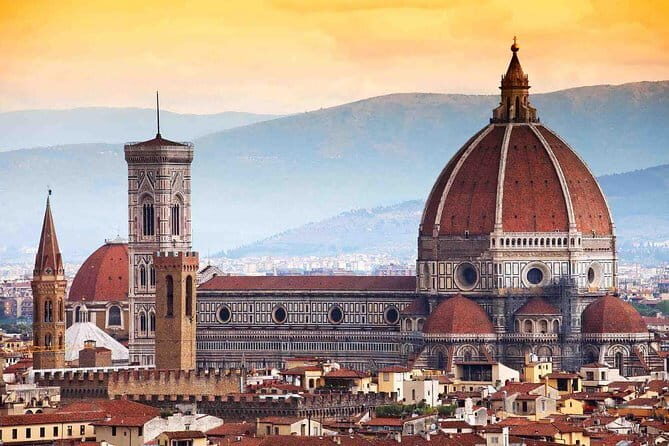
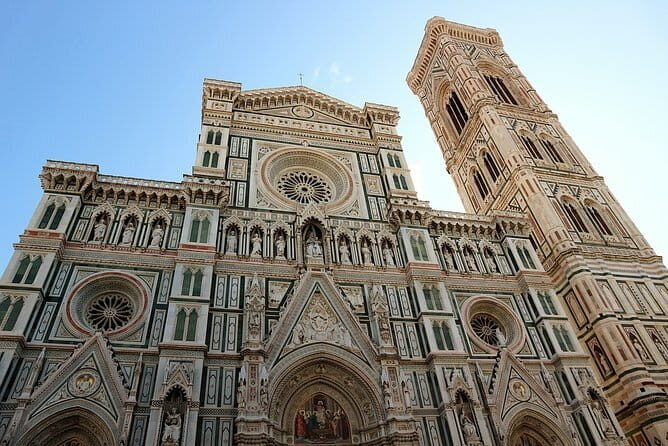
Next is the Cathedral of Santa Maria del Fiore in Piazza del Duomo, Florence’s spiritual and artistic centerpiece. The square is famous for the density of major monuments in one place.
You’ll be guided around key landmarks:
- Brunelleschi’s Dome on the cathedral
- Giotto’s Bell Tower
- The Baptistery of St. John, known for the Gates of Paradise
This square can feel like information overload if you’re unprepared. That’s exactly why a guide helps. You need a “what am I looking at?” frame, otherwise it’s just gorgeous stone.
Timing reality check
Admission is not included for the cathedral area. Your tour time there is around 10 minutes, so it’s best treated as a first encounter, not a full visit. If you want to actually enter and see interiors up close, plan tickets for a separate time slot.
Via de’ Tornabuoni: luxury street as a living museum
After the big political and religious stops, the tour shifts to Via de’ Tornabuoni, one of Florence’s most prestigious shopping streets. It connects Piazza Santa Trinita to Piazza Antinori and is known for luxury boutiques including Gucci, Prada, Ferragamo, Cartier, and Bulgari.
Shopping isn’t the only point here. The street also carries architectural weight. You’ll pass landmarks such as Palazzo Strozzi and Palazzo Spini Feroni.
Palazzo Spini Feroni is tied to the Ferragamo name and includes a museum about footwear and design. Even if you don’t step inside, walking the street gives you a sense of how Florence keeps reusing its classic buildings for modern identity.
Why this stop works
It’s a palate cleanser. You go from domes and government squares to Renaissance palaces dressed for luxury. It helps you understand Florence as a city that keeps evolving without deleting the past.
This stop is about 10 minutes, so keep an eye out for interesting façades rather than expecting a shopping spree.
Palazzo Pitti and Boboli Gardens: Medici power on the Oltrarno side
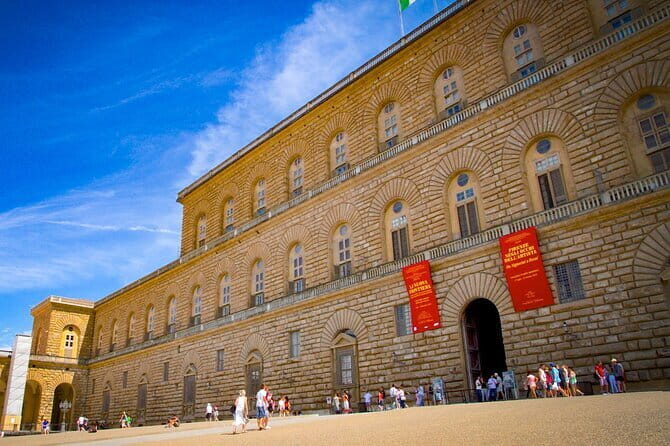
The final major highlight is Palazzo Pitti, across the Arno in the Oltrarno district. Palazzo Pitti started as a 15th-century palace for the Pitti family, then was acquired by the Medici and became their grand ducal residence. That’s why the museum collection leans so strongly toward court culture and prestige.
Palazzo Pitti today includes several museums. You might see it referenced for:
- the Palatine Gallery with works by Raphael, Titian, Rubens, and Caravaggio
- the Museum of Silver
- the Gallery of Modern Art
- the Museum of Fashion and Costume
And behind the palace are the Boboli Gardens, one of the most spectacular Italian-style gardens. Expect fountains, statuary, and tree-lined avenues.
Admission is not included for this stop, so you’re likely looking at the exterior and key areas with guidance rather than doing full museum time during the tour window.
Why end here
This part of Florence feels like a change of tempo. The Duomo and Signoria area are “public stage” zones. Oltrarno feels more like a seat of influence. And since Ponte Vecchio puts you visually close to the Arno, it’s a natural payoff to head to the palace side.
Tuscan tastings: the bonus that makes the tour feel lived-in
One of the most enjoyable parts is the snacks bonus: a selection of Tuscan food tastings. The list includes extra-virgin olive oil, truffle specialties, and traditional baked goods such as schiacciata and cantuccini.
This is a small thing, but it changes the tone. Florence can be all monuments and no breaks. Food gives you a reset. It also reinforces the “local” side of the city—Florence is art, yes, but it’s also what people eat while they argue about it.
Practical tip
Go easy on breakfast if you can. Even a small tasting can spoil you for later snacks, and you’ll want your appetite to stay ready for a real meal after the tour.
Price and what you actually get for $114.15
At $114.15 per person for an approximately 2-hour private tour, you’re paying for three main things:
1) a professional guide who explains what you’re seeing
2) private-group pacing
3) included Tuscan tastings
This isn’t a museum ticket bundle. Admission fees are not included for several stops, and that can add up depending on what you want to enter (especially for big-ticket sites like museums). So I treat this tour as a guided “best of” foundation, then I budget separately for the places that truly hook me.
Also note the small-but-important logistics:
- You’ll get pickup at your hotel only if it’s centrally located, and pickup is on foot at the departure time.
- You’ll use a mobile ticket.
- Earphones are provided if necessary.
- The end point may vary depending on the guide, and the stop sequence can shift.
Value in one sentence
You’re buying time, context, and direction—and the tastings are a bonus that makes the money feel less purely transactional.
Who should book this private Florence highlights tour
Book it if:
- you’re a first-time visitor who wants major landmarks in a short window
- you like being told what matters, so you don’t wander the Duomo and Piazza del Signoria area like a lost tourist
- you want a private experience with a guide speaking English
- you’d rather get oriented now and return later for deep visits
Skip it (or plan differently) if:
- you want long museum time inside major sites during the same outing
- you hate tight schedules and can’t stand the idea of multiple stops that are around 10 minutes each
Also, your experience can depend on your guide’s energy and organization. In the past, guides like Manuela have earned praise for answering questions in detail, and Gaetano Cantone was noted for arriving on time and being courteous. If your guide seems rushed, ask your top question early—front-load the curiosity so you get what you came for.
Should you book The Best Of Classic Florence Private Tour?
Yes, if your goal is to get it all in one go and then choose what to repeat later. The mix of Ponte Vecchio, Palazzo Vecchio, Piazza della Signoria, and the Duomo square gives you a clean Florence overview, and the Tuscan tastings turn the tour into something you’ll remember beyond photos.
Book it with two realistic expectations: admission is extra, and each stop is brief. If that sounds like the right trade—fast orientation, strong landmarks, and a guided story—this is a good fit.
FAQ
Is this tour private?
Yes. It’s listed as a private tour/activity, so only your group participates.
How long is the tour?
It’s about 2 hours (approximately).
What language is the guide?
The tour is offered in English.
Is pickup included?
Pickup is offered if your hotel is centrally located in Florence. Pickup is on foot at the departure time.
Where do I meet the guide?
The meeting point is Piazza di Madonna degli Aldobrandini, 8, 50123 Firenze FI, Italy. You’re requested to arrive about 15 minutes before departure.
Are earphones provided?
Earphones are included if they are necessary.
Are monument tickets included?
No. Admission fees to the monuments along the itinerary are not included.
What’s included besides the guide?
Besides the guided 2-hour tour, there are bonus Tuscan food tastings (like extra-virgin olive oil, truffle specialties, and baked goods such as schiacciata/cantuccini).
Can I cancel and get a full refund?
Yes, you can cancel up to 24 hours in advance for a full refund. If you cancel less than 24 hours before, the amount paid is not refunded.
More Private Tours in Florence

More Tours in Florence


More Tour Reviews in Florence
- Tuscany Day Trip from Florence: Siena, San Gimignano, Pisa and Lunch at a Winery
★ 5.0 · 21,634 reviews - The Best tour in Florence: Renaissance & Medici Tales – guided by a STORYTELLER
★ 5.0 · 12,316 reviews