REVIEW · FLORENCE
Florence: Hop-on Hop-off Bus Tour: 24, 48 or 72-Hour Ticket
Book on GetYourGuide →Operated by Sightseeing Experience · Bookable on GetYourGuide
A second look at Florence starts on a bus. This open-top double-decker setup helps you see the main sights without planning every turn, and the onboard multilingual audio commentary turns street scenes into a quick lesson on what you’re looking at. With free Wi‑Fi and a mobile app, you can figure out where the next bus is and jump on when it fits your day.
I also like the way the tour gives you options: you’re not stuck doing one loop at one pace, because you can ride for 24, 48, or 72 hours and hop off to spend real time where you want it most. The audio and staff can be excellent too—people have specifically praised guides like Roberto and drivers like Antonio. One heads-up: the recording doesn’t always line up perfectly with the exact view outside the window, so keep your eyes on the street and stop information, not just the headphones.
In This Review
- Key highlights at a glance
- Florence Hop-on Hop-off: how this bus tour fits real travel days
- The big decision: one route or both?
- Line A around Florence center in about 1 hour (Santa Maria Novella, Santa Croce, and the views)
- How to use Line A like a pro
- Key stops to pay attention to on Line A
- A small reality check on Line A timing
- Line B to Fiesole in about 2 hours (views, countryside contrast, and a slower pace)
- The Fiesole strategy
- Key stops you’ll care about on Line B
- Winter schedule matters (Nov 2025 to Mar 2026)
- Using the app, Wi‑Fi, and stop layout to reduce waiting and stress
- Real-time bus location is the difference between fun and frustration
- Headphones and audio ports: what to watch for
- What the onboard audio commentary does well in 8 languages
- Audio pacing: useful context, not a lecture
- Where it can fall short
- The stops that deserve your time: Piazzale Michelangelo, Santa Croce, and Arno moments
- Piazzale Michelangelo: the photo-and-views anchor
- Santa Croce: ideal for a structured walk
- The Arno corridor: enjoy it even without stepping off
- Santa Maria Novella area: where your day starts
- Price and value: is this $24 ticket worth it?
- When it’s a great deal
- When it might not be the best use of money
- Seasonal notes, crowds, and practical tips that make the tour smoother
- Expect a queue at popular stops
- Line B can be the planning headache
- Clean ride vs. the occasional weird surprise
- Who this hop-on hop-off bus suits best
- Should you book this Florence hop-on hop-off bus tour?
- FAQ
- How long are the two bus routes?
- What stops are included on the routes?
- Are attraction tickets included?
- What languages is the audio commentary available in?
- Is Wi‑Fi available on the bus?
- Is help available at the ticketing area?
Key highlights at a glance
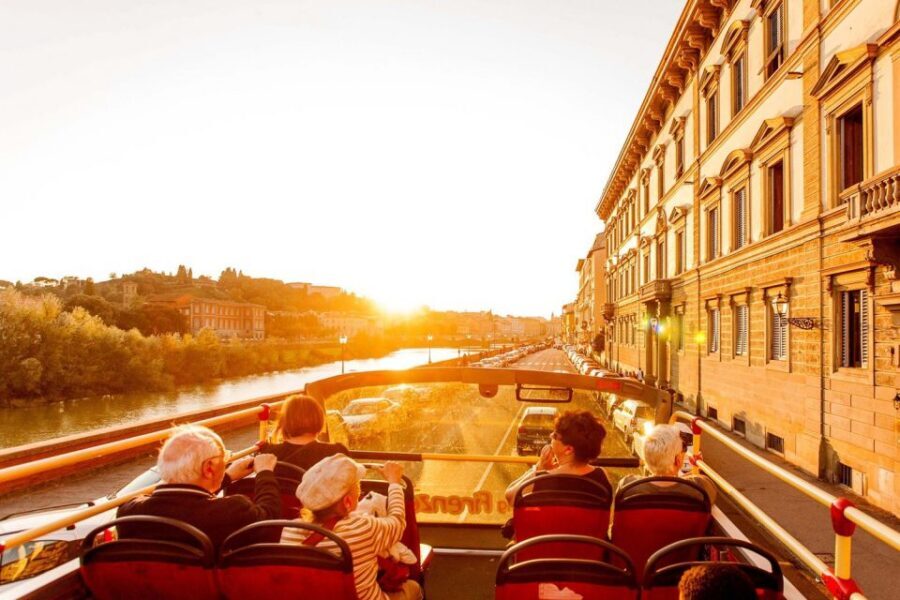
- Two routes with different moods: Line A keeps you in the core, while Line B adds Fiesole viewpoints.
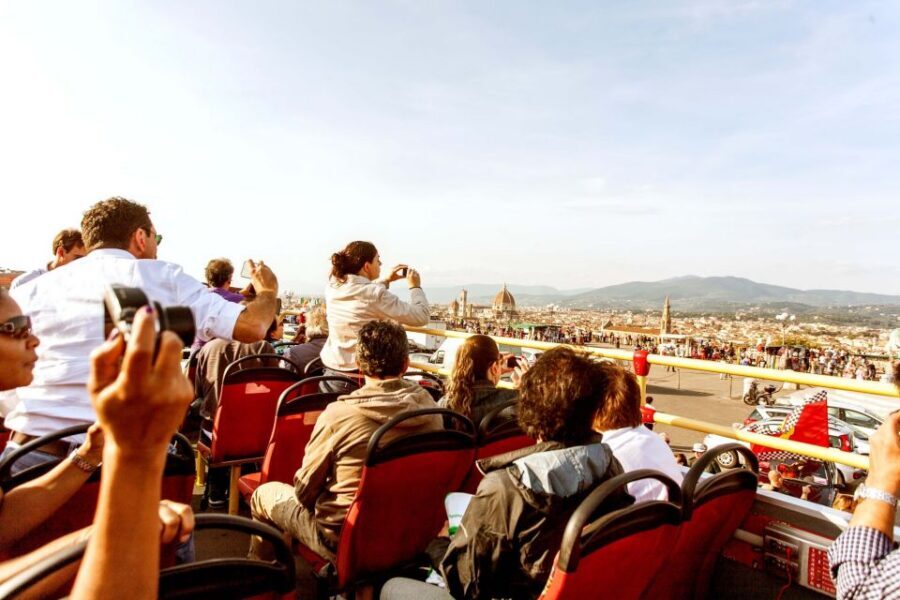
- Open-top photo time on top: You’ll get the angles for Arno river views and big skyline shots.
- Audio in 8 languages: Spanish, English, French, German, Italian, Japanese, Russian, Portuguese.
- Free Wi‑Fi + mobile app: Use the app for real-time location so you waste less time waiting.
- Useful stops for major landmarks: Santa Croce, Piazza Indipendenza, and Piazzale Michelangelo are on the map.
- Red route timing matters in winter: Line B can run limited or suspended on weekdays during the Nov–Mar schedule.
Florence Hop-on Hop-off: how this bus tour fits real travel days
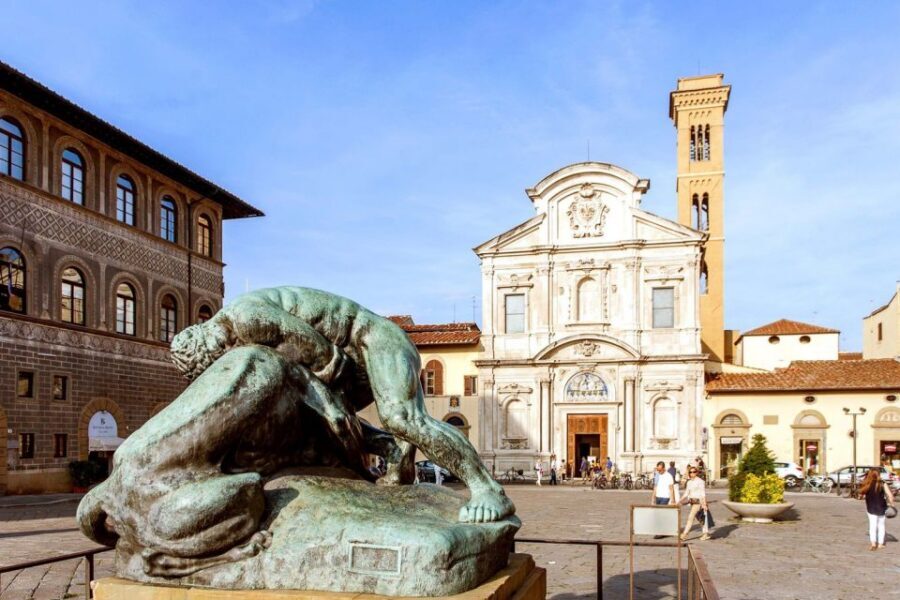
If you’re in Florence for a short stay, this kind of bus ticket is practical. You’re basically buying time and convenience: instead of zigzagging by foot or hunting taxis, you get a predictable hop-on, hop-off flow around the city. The open-top rides also mean you can actually enjoy the streets and viewpoints as you move.
You also get structure without rigidity. The buses cover two lines, and you choose how many times you ride and where you step off. That flexibility is the real value—especially if your timing is messy (jet lag, a late museum start, rain, or just the need for a slower day).
What I like most is that the tour isn’t only about sightseeing. The audio commentary adds context as you pass major areas like the river Arno and the central sights, so the city starts to make sense faster. And because the ticket lasts 1 to 3 days, you can spread the highlights across more than one outing instead of cramming everything into a single loop.
You can also read our reviews of more tours and experiences in Florence
The big decision: one route or both?
Your best move is to plan around your must-sees:
- Want the classic Florence loop and easy bearings? Start with Line A.
- Want the high viewpoint over Florence and a countryside contrast? Add Line B.
In the real world, Line B can be less frequent, so it’s smarter to treat the red route as the “photo and views” plan, not the filler between lunches.
Line A around Florence center in about 1 hour (Santa Maria Novella, Santa Croce, and the views)
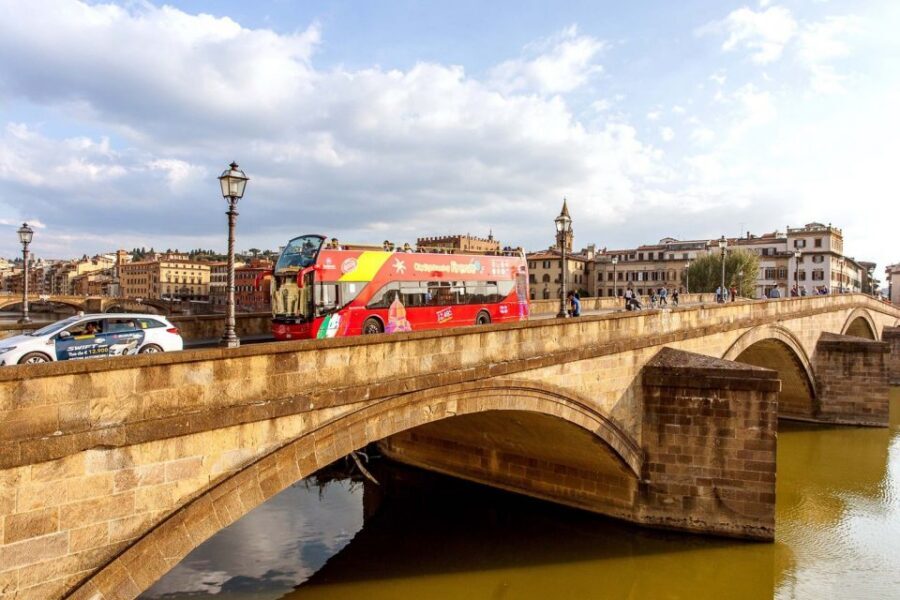
Line A is your city-center workhorse. The full loop runs about 1 hour, and it’s designed to keep you near the neighborhoods most people want to see first. If this is your first day in Florence—or you want to keep walking to a minimum—this is the line that makes sense.
How to use Line A like a pro
I recommend riding Line A once early to learn the layout, then using it again as transport. Florence is compact, but it’s also hilly in places and full of pedestrian-only zones. The bus gets you close to the sights without you doing a ton of guesswork.
When you hop off, think in “clusters”:
- Walk one or two anchor sights
- Stop for a drink or gelato
- Get back on if you’re ready to move
Key stops to pay attention to on Line A
Here are the stops that matter most for what you’ll actually do with your time:
Santa Maria Novella area (Start point for many plans)
The route references Stop 7 at Santa Maria Novella Train Station – Largo Alinari and also includes other Galileo-area access points. If you’re staying near the station or you’re arriving by train, this is convenient.
Piazza Indipendenza (a practical central hub)
This shows up as a stop, and it’s useful because it’s tied to major movement in the city. You can use it as a reset point if you find yourself too far from where you want to be next.
Santa Croce (the church stop that turns into a walk-and-stay)
There’s a clear Santa Croce stop on the route. This is one of those “get off and go inside” moments, because the area is walkable and you can extend your time there instead of rushing.
Arno river views (a Florence must, even if you don’t stop)
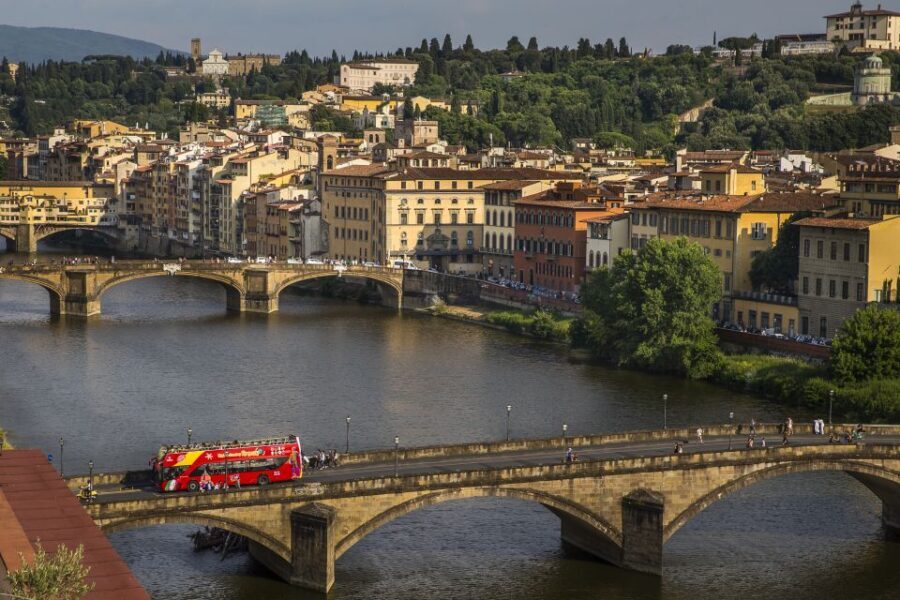
The route includes Lungarno Serristori, which gives you that river-side perspective that feels like Florence even if you haven’t reached the big monuments yet. Riding past is often enough to set the mood.
Piazzale Michelangelo (your top-photo payoff)
Line A includes Piazzale Michelangelo. Many people treat this as the don’t-skip viewpoint, because the open-top ride plus the high vantage is made for photos. If you’re going for sunset energy, keep in mind you might want extra time at the viewpoint itself.
- The Best tour in Florence: Renaissance & Medici Tales – guided by a STORYTELLER
★ 5.0 · 12,316 reviews





A small reality check on Line A timing
Line A frequency varies by day: about 40 minutes on weekends and 75 minutes on weekdays. That means you don’t want to assume the bus will be there in a few minutes. If you’re timing a museum entry or a specific dinner reservation, check the app and plan to arrive a little early.
Line B to Fiesole in about 2 hours (views, countryside contrast, and a slower pace)
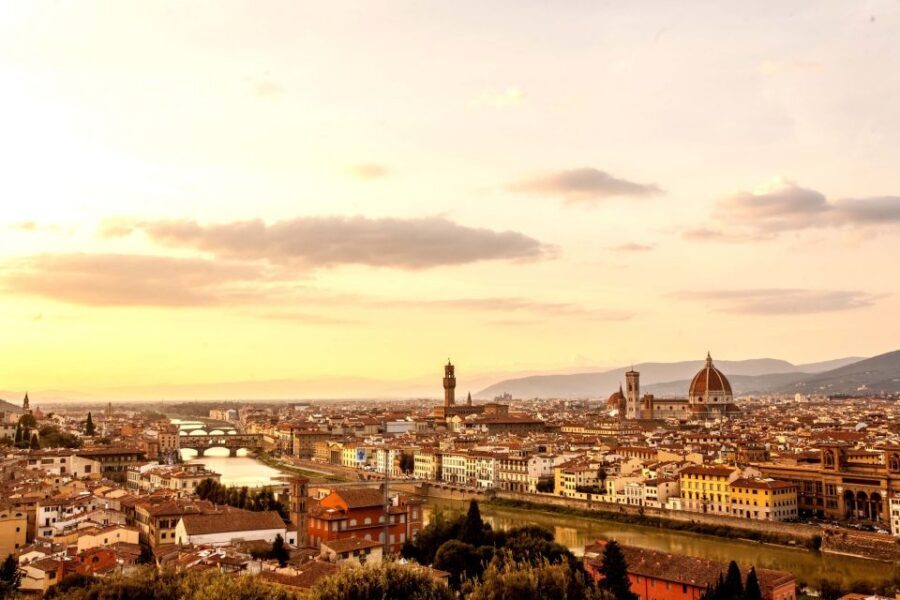
Line B is where the trip turns from city sights into “wow, that’s Florence” views. The full route runs about 2 hours, and the headline is Fiesole, the famous Etruscan hillside city above Florence. If you want a break from streets and crowds, this route does that.
The Fiesole strategy
Don’t treat Line B like a quick photo stop. Plan it like a mini excursion: ride up, enjoy the viewpoint, and build in time for a slow wander. When people say the views are breathtaking, this is usually what they mean.
There are also other stops on the route that add texture beyond Florence proper, including areas like Grazie, and sections that pass by local points of interest. The main payoff remains the height and perspective.
Key stops you’ll care about on Line B
Line B includes:
- Piazzale Michelangelo (yes, it’s on both lines, but you’ll experience it differently depending on which route you take)
- Lungarno Serristori (shared corridor feel, but it helps connect your timing)
- San Domenico and other local stops as you work your way up and around
- Fiesole itself (the reason most people book the red line)
One important practical note: Line B’s frequency is about every 120 minutes, so you’ll wait longer between buses than on Line A. That changes how you plan your day. If you only have one afternoon, you’ll want to be decisive about when you go up.
Winter schedule matters (Nov 2025 to Mar 2026)
From 3 November 2025 to 31 March 2026, Line B is suspended on Mondays through Fridays. It becomes active every day with limited service from 20 December to 6 January.
So if your trip falls in that weekday window, your Fiesole plan might need adjusting. You can still get Florence views from Line A, but if Fiesole is your must-do, pick your days carefully.
Using the app, Wi‑Fi, and stop layout to reduce waiting and stress
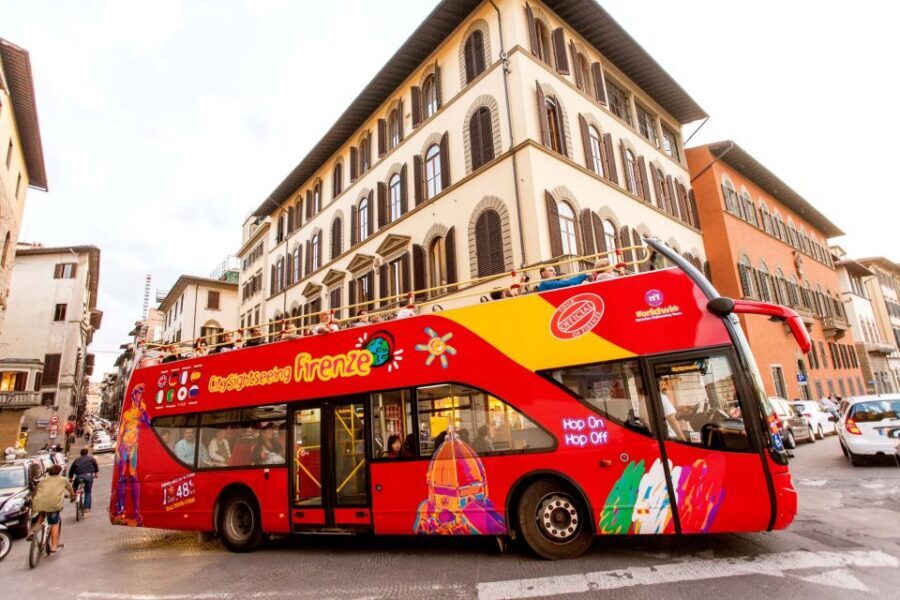
One reason this tour scores well for practical travelers is how easy it can be to manage your timing—if you use the tools. The ticket includes a free mobile app and free Wi‑Fi on the bus, and both are meant to make the experience smoother.
Real-time bus location is the difference between fun and frustration
The best habit: use the app to find the bus location and time your walk to the stop. People specifically like this because it prevents the classic hop-on hop-off problem: standing around guessing.
It also helps with another common issue: getting the right side of the road at certain stops. Some stops can be easy to miss or confusingly placed, so don’t treat the first sign you see as the answer. Use the map in the app, then cross only when it’s safe and needed.
Headphones and audio ports: what to watch for
Audio is included, but the system is only helpful if the headphones work. A few people noted that headphone ports can fail occasionally, so it’s worth checking early. If something doesn’t sound right, ask staff onboard before you write off the commentary.
Also, the audio doesn’t always match the view perfectly. That usually comes down to timing—your bus may pass a landmark slightly earlier or later than the script expects. My advice: listen for the big idea, then glance up when you see a landmark. Treat the audio as a guide, not a perfect GPS.
What the onboard audio commentary does well in 8 languages
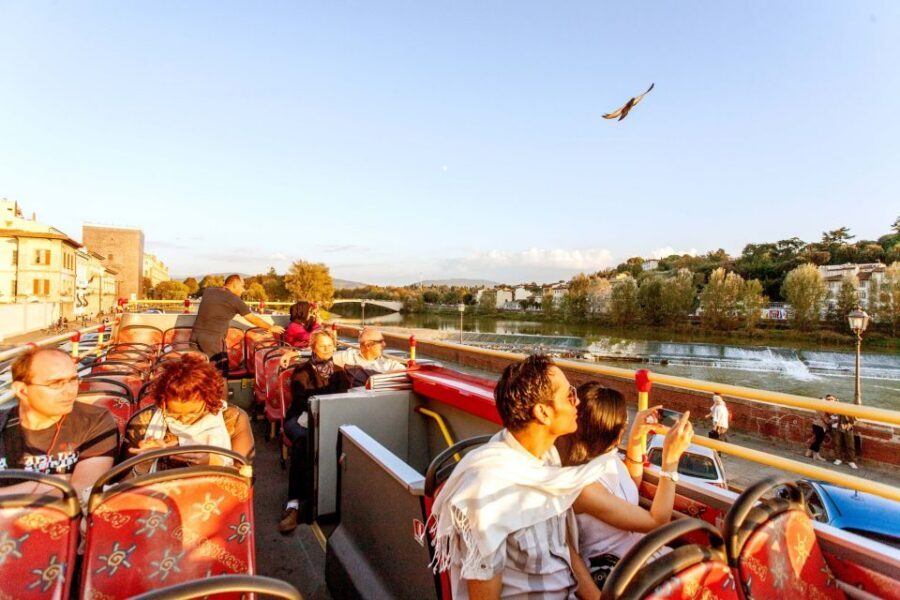
The tour provides multilingual audio in Spanish, English, French, German, Italian, Japanese, Russian, and Portuguese. That’s great for mixed groups, and it also means you can switch languages without needing to find a specific person or guide.
Audio pacing: useful context, not a lecture
In general, the commentary is meant to give you quick historical and cultural context as the bus passes key spots. For many people, that’s perfect: a flowing explanation while you move through the city, plus enough background to decide what to explore later.
Where it can fall short
A recurring complaint is that the recording sometimes feels slightly out of sync with what you’re seeing outside. Another issue is that on some rides, the audio content can feel like it talks for only a short stretch before fading out. If that happens, you’ll get more from the tour by:
- using the bus route as a sightseeing framework
- reading the stop names before you hop off
- focusing on visuals for photo moments like Piazzale Michelangelo
The stops that deserve your time: Piazzale Michelangelo, Santa Croce, and Arno moments
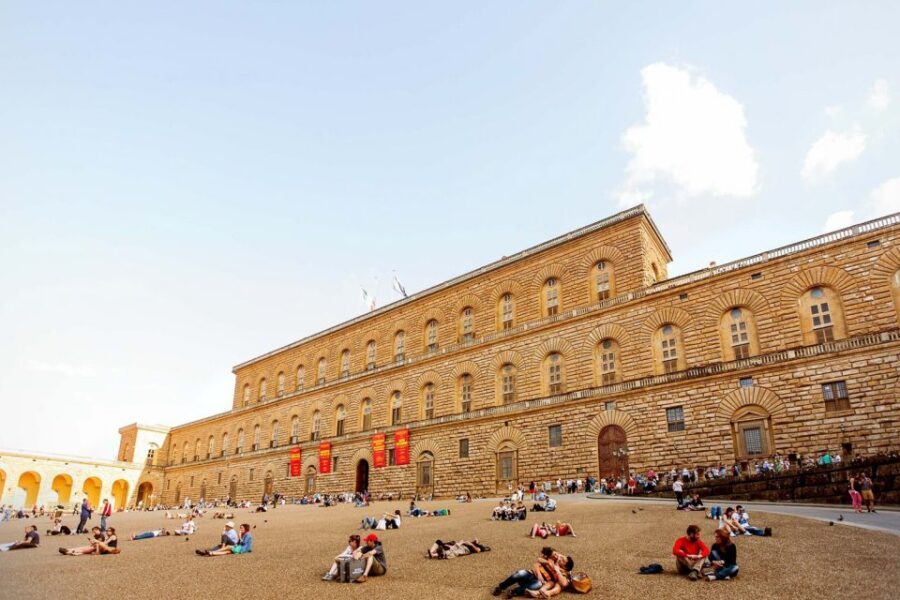
This is where the hop-on hop-off becomes more than just transportation. Certain stops are so meaningful that you should plan your day around them.
Piazzale Michelangelo: the photo-and-views anchor
If you’re going to choose just one “get off and don’t rush” stop, make it Piazzale Michelangelo. It’s consistently connected with the best panorama over the city, and the combination of elevation plus open-top viewing makes it easy to take good shots.
One useful tip from people who’ve done this route: once you get off at the top, consider spending time beyond the first viewpoint. That area can turn into a longer, calmer pause—an opportunity to watch the city settle into evening light.
Santa Croce: ideal for a structured walk
Santa Croce is a strong choice because it’s both a major sight and a walkable area. When you hop off here, you can combine church time with strolling, and you don’t need to plan an elaborate route. It’s an easy win stop.
The Arno corridor: enjoy it even without stepping off
The line includes Lungarno Serristori. Even if you don’t get off, passing along the river is part of Florence’s identity. The bus gives you a moving vantage, which can be a good way to absorb the city’s layout without committing to a long walk.
Santa Maria Novella area: where your day starts
Since the route references Santa Maria Novella Train Station and nearby stops, it’s straightforward to start here if you’re arriving by train. It also helps you avoid the early-day stress of figuring out transport before you’ve even had coffee.
Price and value: is this $24 ticket worth it?
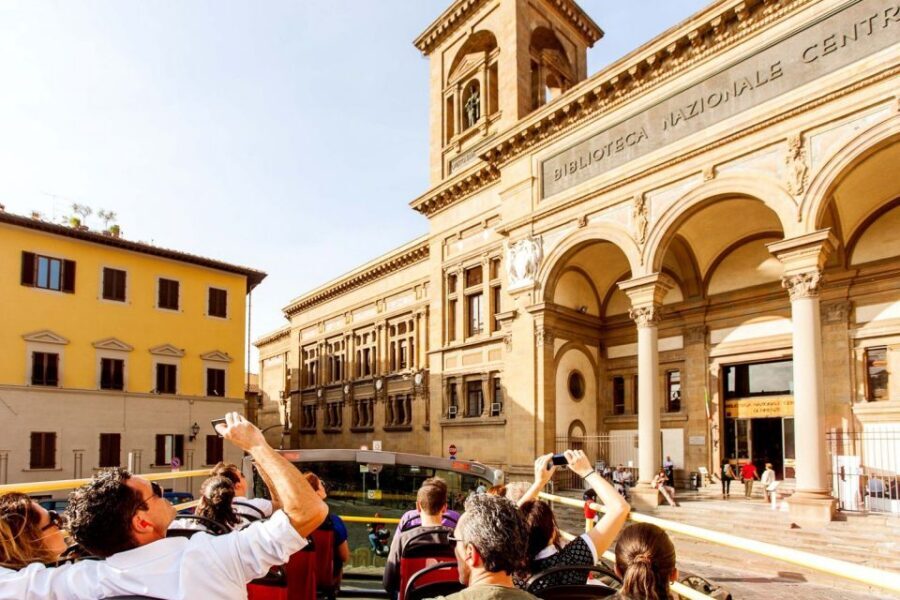
The price shown is $24 per person, and the ticket options include 24, 48, or 72 hours (with longer durations costing more, though only the base price is provided here). So the “value” question comes down to how many times you’ll ride and how many places you’d otherwise reach by walking or taxi.
When it’s a great deal
This ticket tends to pay off if:
- you want to see a lot fast on a first trip
- your schedule is tight and you don’t want transportation headaches
- you’d rather ride between sights than repeatedly re-navigate the city center on foot
Many people also like this because the bus is a low-pressure break in a busy day. It’s a real reset when you’re tired of walking uphill.
When it might not be the best use of money
If you only have a short time and you’re very set on a small number of attractions, you might not use enough rides to justify the price. One point to consider: the two lines can overlap in places, so doing both doesn’t always mean completely new sights every single time. Still, even overlapping areas can feel different when you’re approaching from a different direction or timing a viewpoint moment.
Seasonal notes, crowds, and practical tips that make the tour smoother
Expect a queue at popular stops
At major stops, the bus can fill quickly. That’s not a dealbreaker, but it does mean you should show up with time and be ready to board promptly when the bus arrives.
Line B can be the planning headache
Because Line B frequency is about 120 minutes, you can end up waiting longer if you miss your timing. If Fiesole is the goal, build in slack and don’t plan your entire day around back-to-back commitments.
Clean ride vs. the occasional weird surprise
Most of the experience can feel smooth and organized, including helpful staff. Still, one practical complaint was an unpleasant smell upstairs on one ride. If you’re sensitive to that kind of thing, and you have the choice, pick a seat and re-evaluate when you board.
Who this hop-on hop-off bus suits best
This is a good fit if you:
- want an easy way to cover the main sights without stressing over routes
- need a sightseeing plan for different energy levels (walk a bit, ride a bit)
- appreciate audio guidance and want help understanding what you’re seeing
- are traveling with limited time and want practical transport between viewpoints
It may be less ideal if you’re the type who hates waiting. Line B in particular can require patience because buses run less often. If you love long walks and already know exactly which neighborhoods you want, you might skip the ticket.
Should you book this Florence hop-on hop-off bus tour?
Yes—if you want low-stress logistics and a fast way to build a mental map of Florence. The open-top views, the strong stop choices (especially Piazzale Michelangelo and Santa Croce), and the 8-language audio make it a smart first-weekend-in-Florence kind of purchase.
I’d especially book it if you’re staying for more than one day, because the 48- or 72-hour window gives you room to ride again when you’re in the mood—rather than treating the whole city like one sprint.
Just plan around two things: Line B’s winter weekday suspension (Nov–Mar) and the fact that the audio won’t always be perfectly synchronized with every photo moment. If you keep those in mind, this ticket can save you time and make Florence feel instantly more navigable.
FAQ
How long are the two bus routes?
Line A takes about 1 hour for the full route, and Line B takes about 2 hours.
What stops are included on the routes?
Line A includes stops such as Santa Maria Novella Train Station – Largo Alinari, Santa Croce, Lungarno Serristori, and Piazzale Michelangelo, among others. Line B includes stops such as Lungarno Serristori, San Domenico, and Fiesole, among others.
Are attraction tickets included?
No. Attraction tickets are not included.
What languages is the audio commentary available in?
The audio commentary is available in Spanish, English, French, German, Italian, Japanese, Russian, and Portuguese.
Is Wi‑Fi available on the bus?
Yes. Free Wi‑Fi is included on the bus.
Is help available at the ticketing area?
Yes. Assistance is available from the activity provider’s visitor center in the ticketing area of Santa Maria Novella Train Station.


More Tickets in Florence


More Tours in Florence



More Tour Reviews in Florence
- Tuscany Day Trip from Florence: Siena, San Gimignano, Pisa and Lunch at a Winery
★ 5.0 · 21,634 reviews - The Best tour in Florence: Renaissance & Medici Tales – guided by a STORYTELLER
★ 5.0 · 12,316 reviews