REVIEW · FLORENCE
The Best Tour in Florence: Renaissance and Medici Tales
Book on Viator →Operated by All Around Florence · Bookable on Viator
Florence clicks when you hear the Medici story. This Medici-led walking tour strings together the city’s big sights and some quieter corners, starting right by San Lorenzo and ending near the Uffizi. You follow a licensed guide on foot, with the kind of commentary that turns buildings into power plays.
I love how efficient the route is for 2 hours. You’ll pass the Duomo complex, pause at the Baptistery of St. John, and end in the Piazza della Signoria area where you can keep exploring. I also like that you get a stop at the Museo Casa di Dante, so Florence isn’t only about art and banking.
One possible consideration: several stops are marked as admission not included, so if you want interiors (not just looks from the street), you should expect extra tickets for parts of the route.
In This Review
- Key takeaways before you go
- A smart way to start Florence: Medici tales in 2 hours
- San Lorenzo: meeting Giovanni de’ Medici and learning why it mattered
- Palazzo Medici Riccardi and the Baptistery: banking money meets sacred stone
- The Duomo complex: Campanile di Giotto and Brunelleschi’s dome from the right angles
- Dante’s House and Piazza della Signoria: where literature and politics collide
- Uffizi neighborhood finish: closing in on the museum you’ll likely want next
- Price, time, and what you actually get for the money
- Weather, comfort, and practical tips for walking the center
- Who should book this tour (and who might want a different format)
- Should you book this Florence Medici walk?
- FAQ
- How long is the tour?
- Where does the tour start?
- Where does the tour end?
- Is the tour offered in English?
- What’s included in the tour price?
- Are tickets included for every stop?
- Is this tour mostly walking?
- How big is the group?
- Is good weather required?
- What are the cancellation rules?
Key takeaways before you go
- Medici power story, not just landmarks: You’ll connect families, architecture, and Renaissance ambition in plain language.
- Duomo complex in one sweep: You’ll see the Duomo area plus the Campanile di Giotto and the view-focused stop for Brunelleschi’s dome.
- A smart end point: You finish close to the Uffizi Gallery, so you can pivot into museums with less wandering.
- Story-first guides: The most common win in the guide feedback is how the commentary stays clear, funny, and easy to follow. Names like Aurora, Manuel, Alberto, Camilla, Deborah, Simona, and Elizabeth show up a lot in guide notes.
- Good group size for questions: Maximum 30 travelers means you’re less likely to feel glued to the back of the pack.
A smart way to start Florence: Medici tales in 2 hours
If you have only a short window in Florence, this tour is a strong use of it. The reason is simple: you get a guided path through the center that explains what you’re seeing, so later you recognize patterns instead of just collecting photos.
It’s also value-forward because it’s donation based. The price shown for booking is low, but the guide is paid only through what you choose to donate at the end. One practical note from guide-focused feedback: if you liked the experience, plan to donate thoughtfully, and at least enough that it feels fair for a licensed guide who’s with you for two hours.
You’ll be in English, walking the core streets, and keeping the pace steady. Since it’s capped at 30 people, you should be able to ask questions without the tour turning into a moving slideshow.
You can also read our reviews of more tours and experiences in Florence.
- Tuscany Day Trip from Florence: Siena, San Gimignano, Pisa and Lunch at a Winery
★ 5.0 · 21,634 reviews


San Lorenzo: meeting Giovanni de’ Medici and learning why it mattered
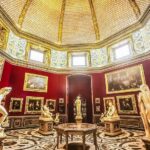
Your tour starts at Piazza di San Lorenzo, right by the Basilica di San Lorenzo. The meeting spot is next to the statue of Giovanni de’ Medici sitting on a throne, which is a neat way to frame the whole day: you’re starting with the Medici story before you even move.
San Lorenzo itself is more than a pretty church. It’s a major Medici site, since the principal Medici family members are buried here, from Cosimo il Vecchio through Cosimo III. That’s the sort of detail that makes later stops click, because you’ll understand why certain families built power where they did.
Plan for about 10 minutes here. If you want interiors, double-check timing and ticket needs on the day, because this stop is listed as admission ticket not included.
Palazzo Medici Riccardi and the Baptistery: banking money meets sacred stone
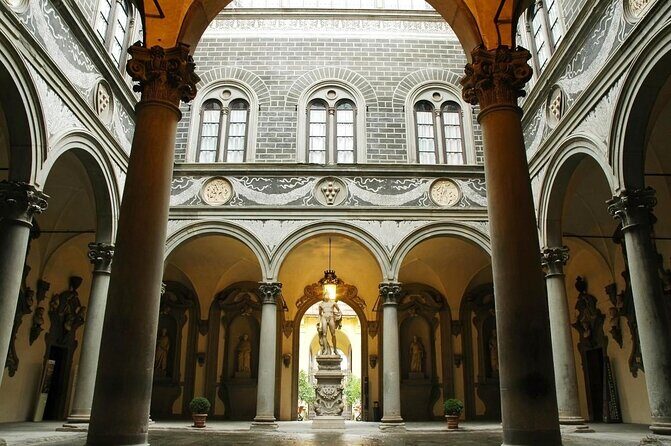
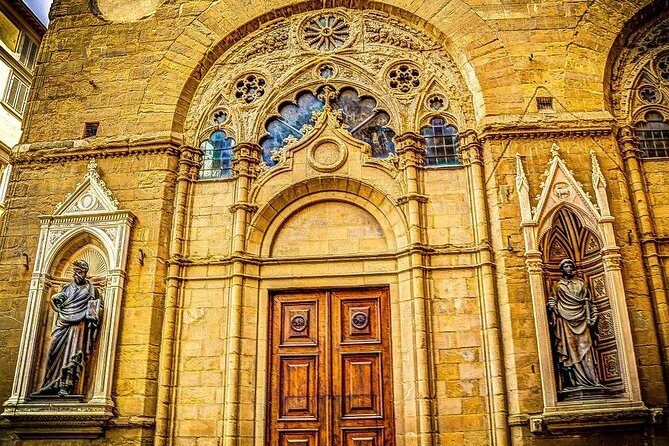
Next up is the Palazzo Medici Riccardi, built for Cosimo de’ Medici between 1444 and 1484. This is where you see the Medici idea in architecture: banking influence turning into Renaissance prestige, in a building designed for a family with real political weight.
Then you head to the Baptistery of St. John. It’s one of the oldest buildings in Florence, constructed between 1059 and 1128 in the Florentine Romanesque style, and it sits across from the Cathedral area. Even if you don’t go inside, it helps to stop and orient yourself here, because the Baptistery becomes a visual reference point for everything around the Duomo complex.
This is another short stop, about 10 minutes. If you’re hoping for a deeper look inside, you may need extra time and separate tickets since the tour listing flags admission not included for this stop.
The Duomo complex: Campanile di Giotto and Brunelleschi’s dome from the right angles
Florence’s Duomo complex is big, and it can feel like sensory overload on your own. With a guide, it becomes a guided lesson in form and ambition.
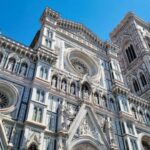
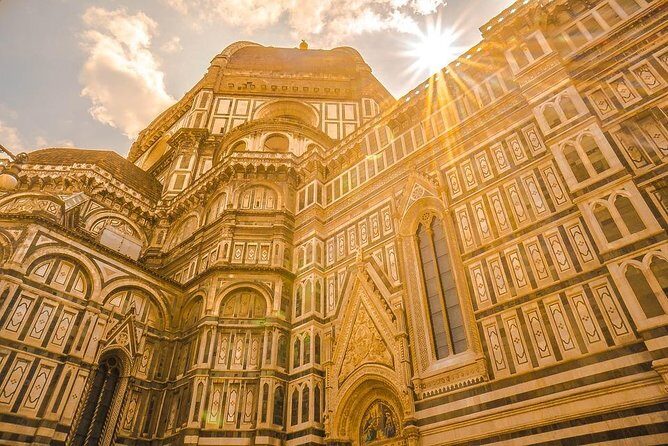
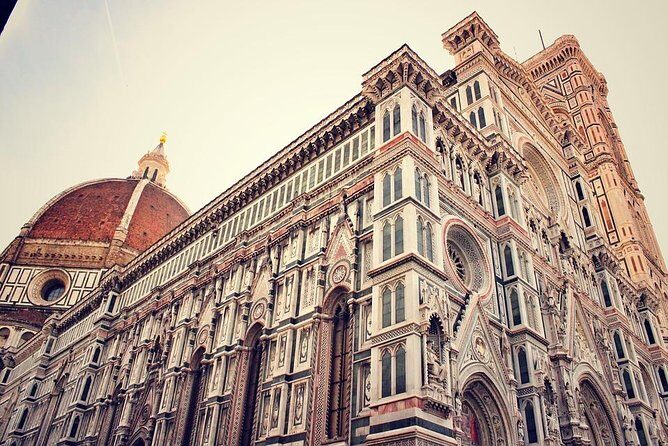
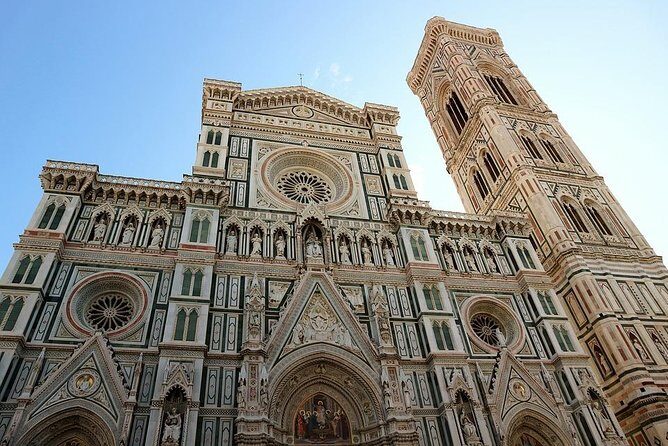
You’ll spend time at the Duomo itself, the Cattedrale di Santa Maria del Fiore, begun in 1296 in the Gothic style. This complex also includes the Baptistery and Giotto’s Campanile, and together they’re part of Florence’s UNESCO historic center.
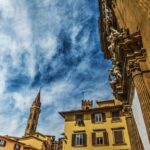
After that, you’ll pass the Campanile di Giotto. It’s known for Florentine Gothic architecture and for its rich sculptural decorations and polychrome marble encrustations. It’s the kind of stop where you start noticing why people cared about surfaces and symbols, not only structures.
Finally comes the Cupola del Brunelleschi, the dome everyone points to. What I like about a guided stop here is the framing: it’s often described as a major art-and-architecture mystery, and it was the largest in the world for a long time. It also remains the largest brick dome ever constructed, which makes it feel less like a random landmark and more like a human achievement.
Expect a quick look rather than an all-day ticketed visit. This tour lists admission not included for Campanile di Giotto and the dome stop, so if you want to go further, plan for extra tickets or choose a separate time block.
Dante’s House and Piazza della Signoria: where literature and politics collide
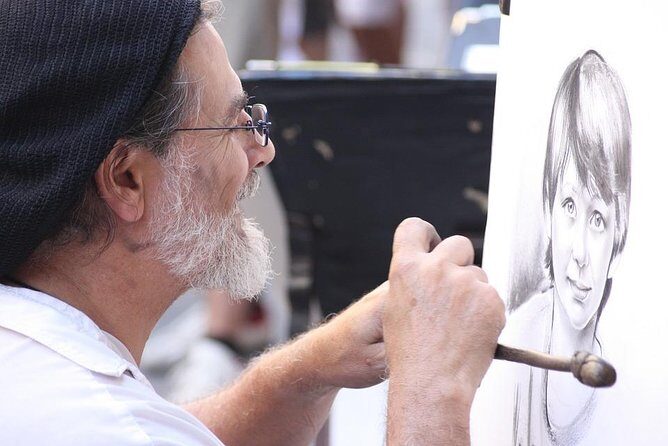
You then swing toward the literary side of Florence at the Museo Casa di Dante. Dante Alighieri wrote the Divine Comedy here, and the building connects Florence to the Middle Ages in a way that feels different from churches and palaces.
This stop is shorter, about 5 minutes, and it’s marked as free admission. Still, don’t treat it as a quick photo break. Even a short stop can help you place Dante in the city’s story, especially if you’ve been thinking of Florence as only a Renaissance city.
After Dante, you reach Piazza della Signoria. This is an L-shaped square in front of Palazzo Vecchio and a major meeting point for both locals and visitors. It’s also a gateway area toward the Uffizi, which is handy because it makes the end of the tour feel like the start of your next plan.
From here, you’ll move to Palazzo Vecchio, the Old Palace and the city’s town hall. It’s massive and fortress-like in feel, and it’s one of those places where public power becomes physical. You’ll also see the copy of Michelangelo’s David statue in the area, plus the adjacent Loggia dei Lanzi (a setting associated with statues and civic display).
This is about 10 minutes. The listing notes admission ticket not included for Palazzo Vecchio, so again: you’ll likely be appreciating it from outside or in the immediate public areas unless you add a separate visit.
- Tuscany Day Trip from Florence: Siena, San Gimignano, Pisa and Lunch at a Winery
★ 5.0 · 21,634 reviews - The Best tour in Florence: Renaissance & Medici Tales – guided by a STORYTELLER
★ 5.0 · 12,316 reviews

Uffizi neighborhood finish: closing in on the museum you’ll likely want next
The tour ends near Gallerie degli Uffizi. The museum is one of the most important Italian collections and the most visited, with a focus on Italian Renaissance works. The Uffizi building complex began in 1560 by Giorgio Vasari for Cosimo I de’ Medici, originally to accommodate the offices of Florentine magistrates, which is why the name connects to offices.
Even if you’re not planning to go inside right away, ending here is a win. You’ve already seen the power square and the Medici-era landmarks around it, so walking into the museum later feels less like a detour and more like following the story you started on.
The Uffizi stop is flagged as admission not included. If you want to go in, plan a separate ticketed block, ideally on a different time slot so you don’t feel rushed.
Price, time, and what you actually get for the money
On paper, the cost is shown as $3.62 per person, and the duration is about 2 hours. That’s the kind of price that looks almost too good to be true—until you understand the donation model.
Here’s the value logic I’d use: you’re paying a reservation fee for access to a licensed guide, and then you choose the donation amount at the end based on what you thought of the experience. Since the guide is only compensated through your donations, your choice matters.
Guides are central to this tour’s payoff. The most consistent praise in the experience notes is how the guides use storytelling—often with humor—to explain Medici influence, Renaissance context, and details you’d normally miss. Names like Aurora, Manuel, Alberto, Camilla, Deborah, Simona, and Elizabeth show up in that spirit, which suggests the format works regardless of who you’re paired with.
If you’re trying to optimize your Florence time, this tour is a smart investment because it reduces guesswork. After two hours, you’re in a better position to decide what to explore next: the Uffizi, more Medici sites, or a slow walk through the neighborhoods you now understand.
Also keep timing in mind: it’s booked around a month ahead on average, which tells you demand is real. If you’re traveling in peak season, book earlier rather than gambling on last-minute availability.
Weather, comfort, and practical tips for walking the center
This is a walking tour, and it’s designed for good weather. If rain is in the forecast, bring a light rain layer and plan for wet stone streets. Even in weather-challenged conditions, the guide’s job is to keep things moving and keep the story going, and that’s something the tour experience is built around.
You’ll be on your feet for short, frequent stops, which keeps it from feeling like one long slog. Still, wear shoes you trust. Florence center streets are cobbled in places, and your comfort level affects how much you enjoy the details.
You’ll have a mobile ticket, and the tour is near public transportation, so you can slot it in without complex logistics. Service animals are allowed, and most travelers can participate, so it’s fairly broad in who it suits.
Who should book this tour (and who might want a different format)
This one is for you if you want:
- A first-day orientation to Florence’s center
- The story behind major sights, especially the Medici angle
- A walking pace that keeps moving but doesn’t feel like a race
It’s also a good fit if you enjoy asking questions. The tour format is structured so you can engage with the guide’s explanations as you go.
You might consider a different option if you mainly want to spend long stretches inside museums and churches. This tour focuses on seeing and understanding, with some stops marked as admission not included. In other words: it helps you decide what you’ll want to revisit on your own with tickets.
Should you book this Florence Medici walk?
Yes, if you want your Florence to make sense fast. This tour connects Medici power, Renaissance art, and the major city landmarks into a route that ends in the most useful place possible near the Uffizi.
Book it early in your trip if you can. When you learn what to look for, you’ll spot more on your later self-guided visits, and you won’t waste time wondering why certain buildings matter.
If you’re budget-minded, this is also a good deal because the guide-driven storytelling is the core value, and your donation directly supports that human experience.
FAQ
How long is the tour?
It runs for about 2 hours.
Where does the tour start?
The meeting point is Piazza di San Lorenzo, 35R, 50123 Firenze FI, Italy. You meet your guide next to the statue of Giovanni de’ Medici sitting on a throne.
Where does the tour end?
It ends near Piazza della Signoria (P.za della Signoria, 50122 Firenze FI, Italy). The exact endpoint can vary slightly within the area.
Is the tour offered in English?
Yes, it’s offered in English.
What’s included in the tour price?
The tour includes a licensed guide. It’s also donation based at the end of the tour, where you decide what amount to compensate the guide.
Are tickets included for every stop?
No. Several stops list admission ticket not included, while some stops are marked free (like the House of Dante and Piazza della Signoria area). If you want to go inside certain sights, plan for extra tickets.
Is this tour mostly walking?
Yes. It’s a walking tour through central Florence, with multiple short stops.
How big is the group?
The tour has a maximum of 30 travelers.
Is good weather required?
Yes. The experience requires good weather, and if it’s canceled due to poor weather you’ll be offered a different date or a full refund.
What are the cancellation rules?
Free cancellation is available if you cancel at least 24 hours in advance for a full refund. If you cancel less than 24 hours before the start time, the amount you paid will not be refunded.


More Tours in Florence

More Tour Reviews in Florence
- Tuscany Day Trip from Florence: Siena, San Gimignano, Pisa and Lunch at a Winery
★ 5.0 · 21,634 reviews - The Best tour in Florence: Renaissance & Medici Tales – guided by a STORYTELLER
★ 5.0 · 12,316 reviews