REVIEW · FLORENCE
Florence Unveiled: The Rivalry of Leonardo and Michelangelo
Book on GetYourGuide →Operated by Senza Meta/Out & About · Bookable on GetYourGuide
Florence gives you a street-level art showdown. This 3-hour walking tour traces the Leonardo and Michelangelo rivalry through Florence’s key corners, anchored by what you see at Santo Spirito and Michelangelo’s wooden crucifix, the Crocifisso ligneo. I like that the guide, Antonio, keeps the story moving like a detective plot, not a lecture. I also love the practical value: frequent photo breaks and included food and drinks, plus a photo of Antonio’s secret diary for where to go next.
One thing to plan for: you’ll do a good amount of walking between major sights, and Florence summer heat can be real. Wear comfortable shoes, and bring water (the tour recommends at least 500 ml, plus a hat).
In This Review
- Key highlights I think you’ll care about
- Starting at the Neptune fountain beside Palazzo Vecchio
- Mapping the Medici power web (and why it still matters)
- Piazza della Signoria: politics, statues, and Michelangelo’s long shadow
- The Uffizi connection and the rivalry’s unfinished work
- Ponte Vecchio: crossing from Medici commerce to artist Florence
- Oltrarno and Pitti Palace: where Medici life becomes art life
- Cathedral and dome stops: seeing Brunelleschi through the street view
- Santo Spirito and the Crocifisso ligneo: Michelangelo at 17
- Antonio’s secret diary photo, food, and drink breaks you’ll actually use
- Price and value: what $53 for 3 hours gets you
- Who should book, and who might skip
- Should you book Florence Unveiled?
- FAQ
- Where is the meeting point?
- How long is the tour?
- Is the tour in English?
- What is included in the price?
- What is not included?
- Can I add other visits?
- Is the tour suitable for young children?
- What should I bring for Florence summer weather?
- Can I cancel and get a refund?
Key highlights I think you’ll care about
- Antonio’s story-driven guide style: you get Renaissance context without the boredom.
- Medici Florence as the engine: how power and patronage shaped the art rivalry.
- The rivalry tied to real places: including the dueling fresco commissions linked to Palazzo Vecchio.
- Piazzas and bridges in the right order: so the city’s geography makes sense as you walk.
- Santo Spirito and Crocifisso ligneo: a compact finale focused on Michelangelo’s early genius.
- Antonio’s secret diary photo: food, music, museums, gardens, and wine tasting ideas for after the tour.
Starting at the Neptune fountain beside Palazzo Vecchio
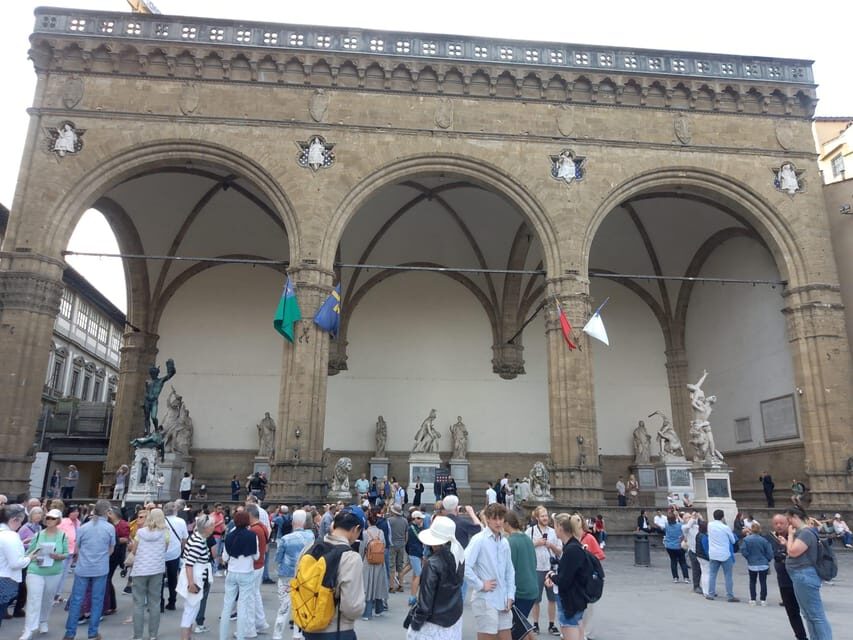
I like tours that start with a landmark that already tells you where the power is. Yours begins at the Fountain of Neptune in Piazza della Signoria, right by Palazzo Vecchio. That’s not an accident. This square has always been the political and civic stage of Florence, so it’s the perfect entry point for a tour centered on artists who worked under serious patrons.
From there, you’ll quickly understand the rhythm of the day: stop, look, move, stop again. The tour is designed for pictures, with regular breaks so you can frame the domes, façades, and statues without sprinting. If you’re the type who wants your phone photos to look like you planned them (you did), this pacing helps.
And because the tour is guided in English, you won’t be stuck guessing what you’re seeing. The focus stays clear: Florence through the Leonardo–Michelangelo lens, not just random “greatest hits” sightseeing.
You can also read our reviews of more tours and experiences in Florence.
- Tuscany Day Trip from Florence: Siena, San Gimignano, Pisa and Lunch at a Winery
★ 5.0 · 21,634 reviews

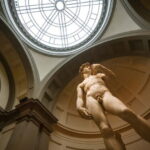
Mapping the Medici power web (and why it still matters)
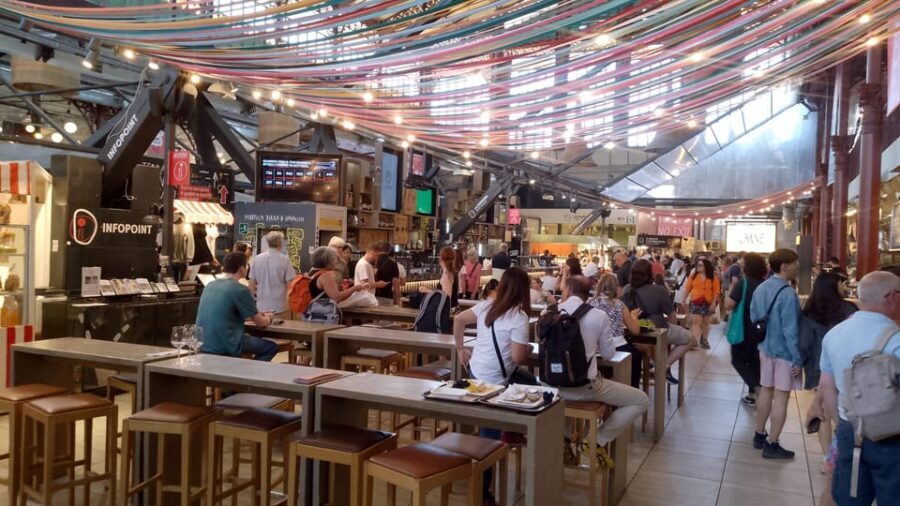
To get the Leonardo vs Michelangelo story, you need one background fact: Florence in their era ran on patronage—especially the Medici family. The tour explains how the Medici started as merchants turned bankers, then used wealth and influence to effectively steer Florence. Their support helped turn the city into a hub for humanism, science, and the arts.
Here’s why this matters for you as a visitor: the Renaissance didn’t happen in a vacuum. When you understand who funded commissions and why, the artwork becomes more than pretty objects. You start noticing what each commission signals—status, competition, ambition, and ideas about what the artist should deliver.
The guide’s approach also connects big art names to specific civic spaces. You’ll walk through Florence’s political heart at Piazza della Signoria, then connect that energy to the art that got made because of it. That’s a cleaner way to understand the rivalry: you’re seeing the stage where it played out.
Piazza della Signoria: politics, statues, and Michelangelo’s long shadow
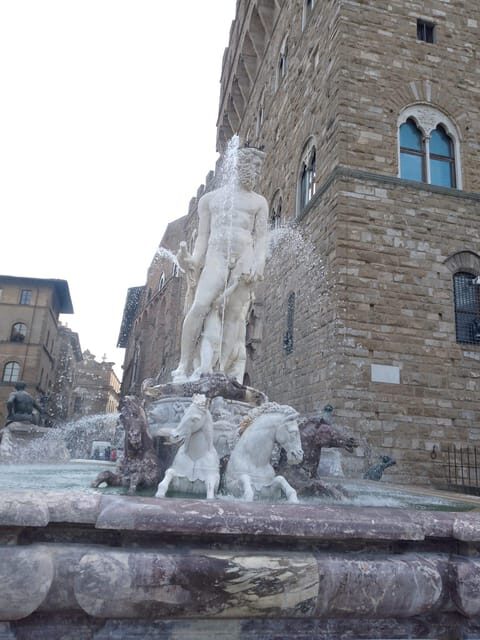
After the Neptune fountain, Piazza della Signoria becomes your outdoor classroom. The square has been a major public stage for centuries, and the tour uses it to show how civic life and art were linked.
Palazzo Vecchio sits right there, once the seat of Medici power. If you’ve seen photos of Michelangelo’s David before, you’ll also get a meaningful visual reminder in this square: a replica is part of the statuescape here. It’s a small thing, but it helps you anchor the Michelangelo name in the places Florence chose to display power and ideals.
This is also where the tour starts building the “rivalry” narrative in a way that feels logical. You’re not just told they competed; you’re shown the context that made competition useful. In Florence, prestige wasn’t abstract. It showed up in commissions and in what patrons demanded.
The Uffizi connection and the rivalry’s unfinished work
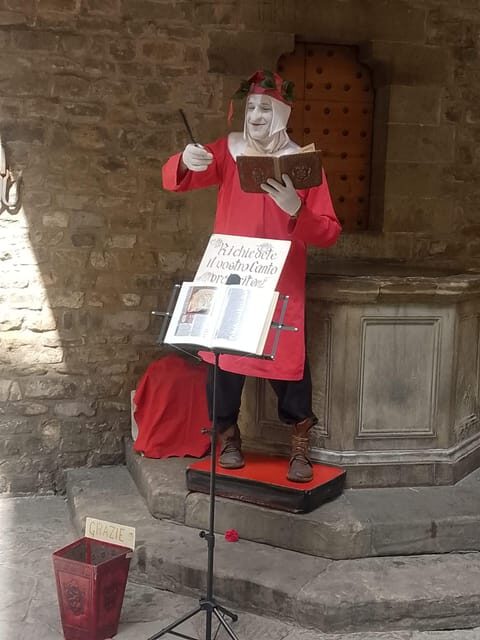
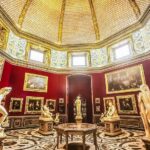
The walking route naturally brings you near one of the world’s most important art museums: the Uffizi Gallery. The tour frames the Medici connection again here, explaining that the Medici helped establish the collection and that it grew into a major Florentine arts engine.
In the Uffizi, you get a chance to see works by both Leonardo da Vinci and Michelangelo among other Renaissance masters. The tour ties this museum time to the bigger theme: the fierce artistic rivalry between Leonardo and Michelangelo, including the story of dueling fresco commissions tied to Palazzo Vecchio.
One detail I appreciate is the acknowledgement that the rivalry didn’t produce a clean, finished “victory lap.” The murals associated with those commissions remain unfinished. That matters. It makes the rivalry feel more real and human—artists pushing ideas, patrons demanding outcomes, and history refusing to wrap everything up neatly.
If your goal is to understand the why behind Renaissance masterpieces, this part helps you connect the artwork in rooms to the competition outside in the city streets.
Ponte Vecchio: crossing from Medici commerce to artist Florence
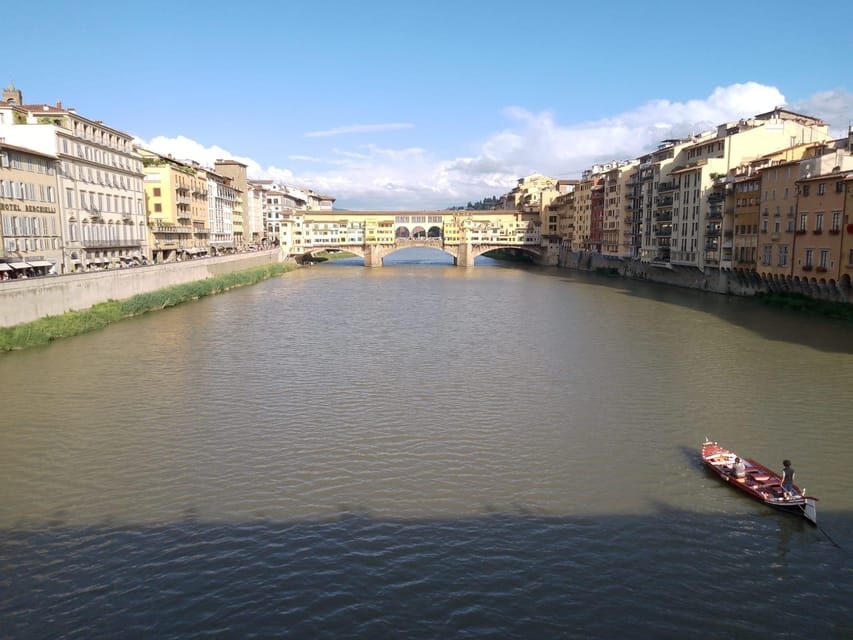
Next comes Ponte Vecchio, Florence’s oldest bridge and one of the city’s most recognizable crossings. The tour uses this stop as a transition: you’re moving from the dense civic core into Oltrarno, the side of the river that tends to feel more local and workshop-like.
Ponte Vecchio has long been lined with jewelry shops, and the tour positions that commercial history as part of Medici-era Florence’s identity. It’s a reminder that art and money weren’t separate departments. They were roommates.
Crossing the bridge is also practical for you. It gives you a natural break in the walking sequence and a reset in scenery. You’ll get time for photos, then you’re off into the Oltrarno district where the tone shifts from government square grandeur to a more crafts-and-art neighborhood vibe.
- Tuscany Day Trip from Florence: Siena, San Gimignano, Pisa and Lunch at a Winery
★ 5.0 · 21,634 reviews - The Best tour in Florence: Renaissance & Medici Tales – guided by a STORYTELLER
★ 5.0 · 12,316 reviews

Oltrarno and Pitti Palace: where Medici life becomes art life
On the Oltrarno side, the tour brings you to the imposing Pitti Palace area. The Pitti was once a Medici residence, and the tour leans into the idea that these elite spaces shaped what art survived and what art got celebrated.
This stop works because you get a sense of scale. Medici power wasn’t just in decrees and commissions. It was in the buildings they lived in and the collections they accumulated and protected. Walking around in the shadow of those walls makes the museum-and-painting story feel more grounded.
If you want to understand Renaissance Florence as a system—patrons, politics, residences, and artworks—Oltrarno is a big piece of the map. It’s also where the tour’s off-the-beaten-path promise starts to feel real, since you’re not only orbiting the most obvious postcard corners.
Cathedral and dome stops: seeing Brunelleschi through the street view
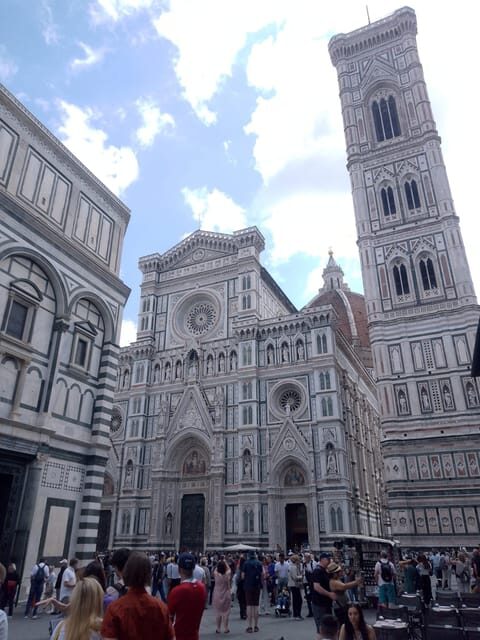
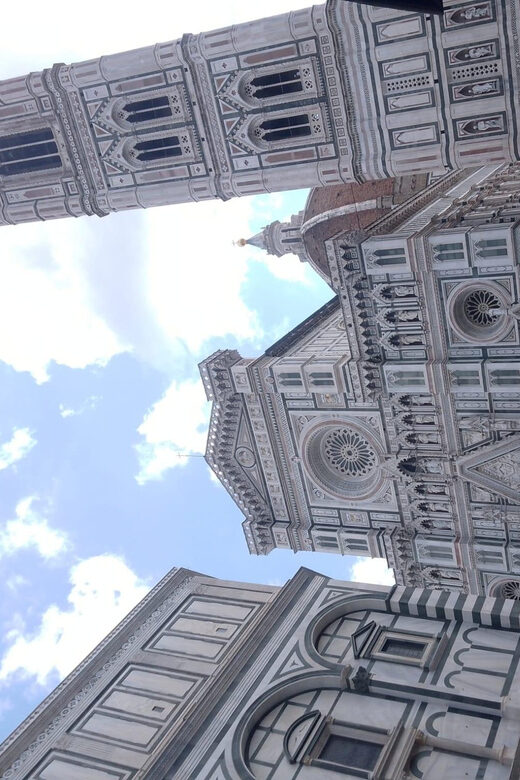
From Oltrarno, the route returns toward the city’s signature sacred and artistic architecture. You’ll make photo stops around:
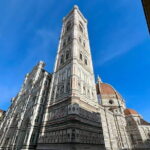
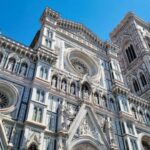
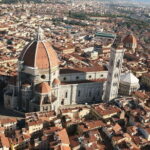
- the Cathedral of Santa Maria del Fiore
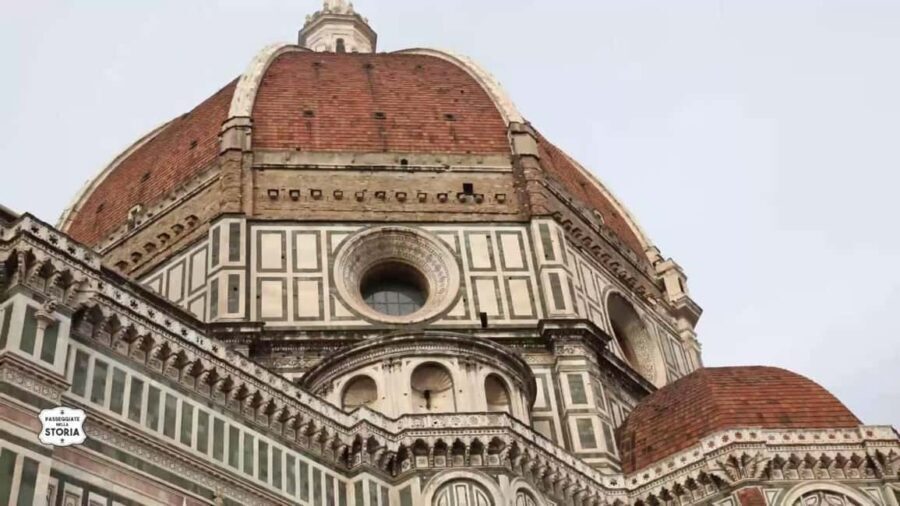
- Brunelleschi’s dome
- Giotto’s Bell Tower
These stops are short, but that’s exactly the point. The tour isn’t trying to turn you into an architecture critic with a clipboard. Instead, it gives you enough time to look carefully at the skyline features that define Florence, then move on before the crowds and heat flatten your attention.
Here’s what makes these stops useful: the guide’s talk helps you see the dome and bell tower as more than “big things.” You learn how the cathedral’s design and the dome’s revolutionary role became symbols of Florentine ambition and creativity.
You’ll also appreciate the photo breaks. In Florence, a quick stop can still be a great stop if you’ve been given a moment and a reason to look.
Santo Spirito and the Crocifisso ligneo: Michelangelo at 17
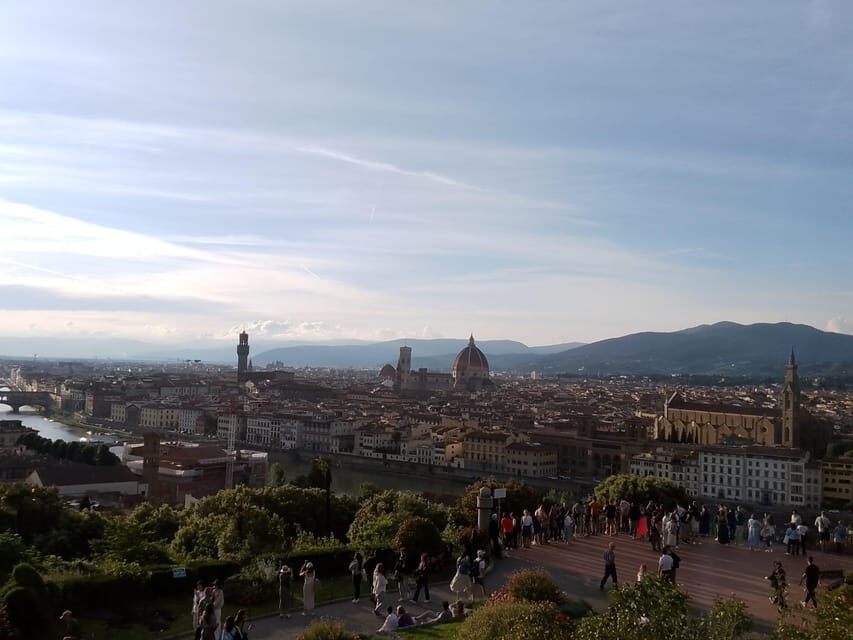
The finale is where the tour earns its title. It ends at Basilica di Santo Spirito, with a focus on Michelangelo’s early genius and the why behind his realism and emotional power.
The story the guide shares is specific and memorable: after Lorenzo de’ Medici died, the young Michelangelo lived at the monastery here around 1492. The monks allowed him to study corpses from the hospital. The result was rare insight into human anatomy, and the tour connects that learning to the lifelike, emotionally charged quality you see later in his sculpture work.
Then there’s the practical highlight you came for: inside the church is a wooden crucifix carved by Michelangelo at just 17, the Crocifisso ligneo. This is not the Michelangelo people usually talk about. It’s a smaller, more intimate work that helps you grasp his skills before he became the myth.
Even if you’ve already seen famous Michelangelo masterpieces in photos, this stop changes the angle. You’re watching his early understanding of anatomy and proportion, plus his spiritual sensitivity, in one object. That’s a different kind of “wow,” and it makes a strong end to a tour that started with the rivalry and now brings you to beginnings.
Antonio’s secret diary photo, food, and drink breaks you’ll actually use
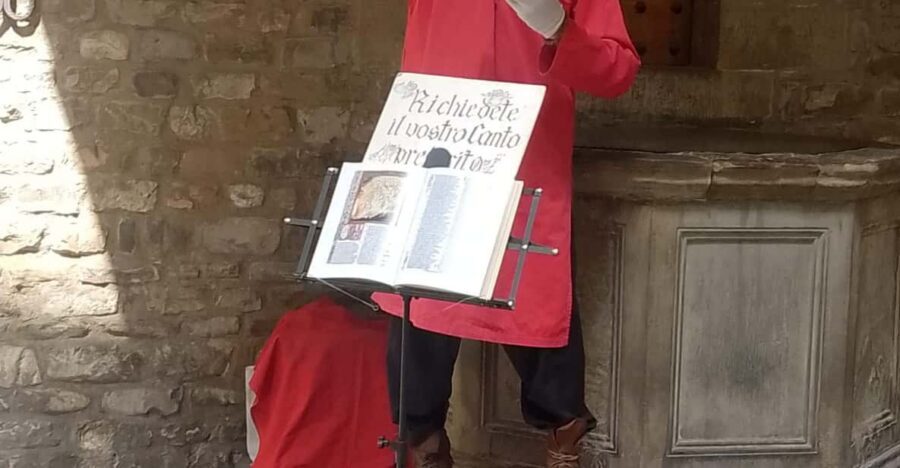
One of the smartest parts of the tour is what it does for your day after the guided walk. You get a picture of Antonio’s secret diary, described as a guide to the best places for food, music, museums, gardens, and wine tasting.
I love when a tour doesn’t end when the guide shuts off the enthusiasm. This is the opposite. It gives you next-step ideas that you can use immediately, especially if you’re trying to avoid only eating where the tour buses stop.
Food and drinks are also included, and the tour builds in breaks so you can actually enjoy them. That helps in two ways: you rest your feet and your brain, and you keep the energy steady for the last legs of the walk.
Because the guide also shares anecdotes about Florence beyond art—plus practical tips for regional Tuscan food—the tour doesn’t feel like a one-note museum lecture. It becomes a rounded introduction to how Florence tastes and thinks.
Price and value: what $53 for 3 hours gets you
At $53 per person for about 3 hours, this is priced like a specialty walking tour with “more than just pictures” baked in. You’re paying for:
- a professional English-speaking guide (Antonio, in these reports)
- multiple guided stops tied to a single theme (Leonardo vs Michelangelo)
- food and drinks included
- photo breaks built into the pacing
- the secret diary photo with suggestions for your next day or two
- and the chance to add paid extras online, if you want them
Whether you’ll feel like it’s a bargain depends on your priorities. If you only want quick highlights at major sites, Florence has plenty of cheaper ways to do that. But if you care about story, context, and a guided thread that connects places to art rivalry, the value makes sense fast.
Also, the optional add-ons are there if you want to go further. The Medici Chapel can be added for €19, and Leonardo’s interactive museum can be added for €9, with online booking. That lets you control your budget while still keeping the main tour strong.
Who should book, and who might skip
This tour is a great fit if you:
- want the Leonardo and Michelangelo rivalry explained through real Florence locations
- like guided storytelling with practical pacing and photo time
- plan to stay in Florence long enough to use the food and museum suggestions from Antonio’s diary
I think it’s also ideal as an early trip activity, because it gives you context before you start bouncing between museums on your own.
You might skip or choose a shorter option if you hate walking, or if you’re visiting with someone who struggles with heat. The tour is 3 hours, and the stops are concentrated in a way that still requires steady movement. Bring water, even if you think you’ll be fine. Florence can be persuasive like that.
Should you book Florence Unveiled?
If you want Florence with a point of view, book it. This tour focuses on one theme—Leonardo vs Michelangelo—and uses the city’s key spaces to make that rivalry understandable, not just famous.
The big wins for me are simple: Antonio’s storytelling, the included food-and-drink breaks that keep the pace pleasant, and the ending at Santo Spirito with the Crocifisso ligneo that makes the Michelangelo story feel personal and early.
If you’re in town for a short stay, treat this as your theme-setter. And when you’re done, open Antonio’s secret diary photo and use it to plan your next meals and museums like a local.
FAQ
Where is the meeting point?
You meet at the Fountain of Neptune, just beside Palazzo Vecchio in Piazza della Signoria.
How long is the tour?
The tour lasts 3 hours.
Is the tour in English?
Yes, the live tour guide speaks English.
What is included in the price?
The tour includes a professional guide, food and drinks, breaks for photos, and a picture of Antonio’s secret diary with recommendations for where to go for food, music, museums, gardens, wine tasting, and more.
What is not included?
Transport is not included, and there is no pick-up or drop-off.
Can I add other visits?
Yes. You can add a visit to the Medici Chapel (€19.00) and Leonardo’s interactive museum (€9.00), with online booking.
Is the tour suitable for young children?
No. It is not suitable for children under 2 years old, and babies under 1 year old.
What should I bring for Florence summer weather?
Wear comfortable clothes and comfortable shoes. The tour recommends a hat and carrying at least 500 ml of water.
Can I cancel and get a refund?
Yes. There is free cancellation up to 24 hours in advance for a full refund. You can also use reserve now & pay later to keep plans flexible.
More Tour Reviews in Florence
- Tuscany Day Trip from Florence: Siena, San Gimignano, Pisa and Lunch at a Winery
★ 5.0 · 21,634 reviews - The Best tour in Florence: Renaissance & Medici Tales – guided by a STORYTELLER
★ 5.0 · 12,316 reviews