REVIEW · BOLOGNA
Bologna: Historical Highlights Walking Tour with Local Guide
Book on Viator →Operated by Walks In Europe · Bookable on Viator
Bologna rewards slow looking. This guided route strings together the city’s big architectural moments with a live local voice, and it moves at a human pace for small groups. The only real catch is logistics: you need to be ready at the start, because you’ll have timed entry for interior stops and you can’t join once it’s underway.
What I like most is the mix of outdoor landmarks and real interiors. You get into San Petronio Basilica and the Santo Stefano Seven Churches complex, where the details feel less like a photo and more like a story you can stand inside.
In This Review
- Key highlights at a glance
- Meeting at Piazza del Nettuno: getting started on time
- Neptune’s Fountain: Bologna’s Renaissance intro in bronze and stone
- Piazza Maggiore: the city’s main stage, up close
- San Petronio Basilica: where Gothic structure meets science
- Archiginnasio di Bologna: the University that shaped the city
- The Two Towers: Asinelli and Garisenda, and why towers mattered
- Santo Stefano: the Seven Churches complex as a calm ending
- Portici di Bologna: Bologna’s covered streets you’ll want to remember
- What makes the guide matter: the kind of details you’ll actually use
- Value check: interior access, small groups, and a tight route
- Who should book, and who should skip it
- Should you book this Bologna historical highlights tour?
- FAQ
- How long is the Bologna Historical Highlights Walking Tour?
- Is the tour offered in English?
- How big is the group?
- Where do we meet for the tour?
- What’s included in the tour ticket price?
- Is the tour suitable for people with reduced mobility?
- Is the Archiginnasio inner courtyard available on Sundays?
Key highlights at a glance
- Start at Neptune’s Fountain and learn how Bologna uses art to explain power and belief
- San Petronio interior visit includes time for major details like the famous Meridian Line
- University of Bologna at Archiginnasio with a look at coats of arms in the inner courtyard
- Two Towers photo moment with context about Asinelli and Garisenda and medieval wealth
- Santo Stefano’s labyrinth of chapels makes the end feel calm, not rushed
- Porticoes walk gives you the best kind of Bologna street-level magic: covered and practical
Meeting at Piazza del Nettuno: getting started on time
Your tour starts at Piazza del Nettuno (40124 Bologna). Plan to arrive 15 minutes early. That sounds fussy until you realize why: some stops rely on timed access, and if you’re late you can lose your spot at the interior entry points. This is also why the tour can’t wait around or accept late joiners once it begins.
The group size caps at 8 people, which matters in a city this tight. With fewer people, you actually get room to hear your guide and ask questions without shouting over everyone else’s camera. Tours run for about 2 hours 30 minutes, mostly on foot, so wear shoes you trust.
One more thing to keep in mind: it’s not suitable for people with reduced mobility. If stairs or long walking distances are an issue for you, this one is likely to feel stressful rather than enjoyable. Also, larger bags and backpacks aren’t allowed inside monuments, so travel light.
You can also read our reviews of more walking tours in Bologna


Neptune’s Fountain: Bologna’s Renaissance intro in bronze and stone
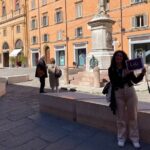
You kick things off at the majestic Neptune’s Fountain. It’s one of the best “first impressions” stops in Bologna because it’s instantly readable: you see the Renaissance ambition, and you also see the city’s habit of putting meaning into public art.
As you look up at the sculpture, focus on the sea god imagery. Neptune isn’t random decoration. Your guide will connect the symbolism to Bologna’s long relationship with learned culture and public life—basically, how a city displays status through art you can’t ignore.
This stop is short, but it’s a smart move at the beginning. Before you reach the big squares and churches, you’re already learning how to read Bologna. After that, every façade and arch feels less like scenery and more like a clue.
Tip for your photos: give yourself a few seconds to step back. The fountain is eye-level, but getting the full framing without blocking people takes a moment.
Piazza Maggiore: the city’s main stage, up close
From the fountain, you head to Piazza Maggiore, the social and cultural center of Bologna. This square is big enough to feel ceremonial, and it’s surrounded by historic buildings that make it clear you’re in the heart of the old city.
Here’s what’s useful: your guide doesn’t just point at famous façades. They connect what you’re seeing to what Bologna was doing in different eras—politics, religion, education, and civic pride. The square is also your visual bridge to the next stop, because it sets the mood: this city isn’t shy about scale, even when you’re walking.
You’ll likely have about 20 minutes in the area, and that time is plenty to slow down. Sit if you can, or just stand at a comfortable angle and watch how the light hits the stone. Bologna’s buildings reward that kind of patience.
Admission time at this stop is free, but the key value is not the ticket—it’s the orientation. By the time you leave Piazza Maggiore, you’ll understand why San Petronio feels like the centerpiece.
San Petronio Basilica: where Gothic structure meets science
Next up is Basilica Di San Petronio, and this is the stop that turns a walking tour into something you’ll remember.
You’ll step inside one of the largest churches in the world. Your guide frames the architecture as a blend of Gothic grandeur and later Renaissance splendor, so it doesn’t feel random. The goal is to help you notice how styles change without making the building feel inconsistent.
But the interior highlight is the mesmerizing Meridian Line—a physical tool linked to Bologna’s scientific heritage. Instead of talking science like it’s an abstract concept, the guide helps you understand what it would have meant to people who used the church not only for worship but for observation and knowledge.
You get about 20 minutes here. That’s not long for a cathedral-scale place, but it’s timed well for a group walking tour. You’ll see the major features without getting lost in the details that could swallow half a day.
This interior visit is included. Since it’s a sacred site, dress respectfully. Also note that closures can happen for holy observances, in which case your guide will explain from outside.
Archiginnasio di Bologna: the University that shaped the city
After the church, you shift from spiritual architecture to educational power at the Archiginnasio di Bologna. This building was once the main seat of the University of Bologna, known as the oldest university in the Western world.
You’ll spend about 20 minutes here, including time to explore the inner courtyard. The courtyard is where the university’s identity shows up in visual form—look for the coats of arms. It’s a simple thing to notice, but it’s powerful because it connects families, politics, and scholarship. You get the sense that education wasn’t “private study.” It was civic identity.
One practical note: the inner courtyard is not available for visits on Sundays. If your travel dates include Sunday, don’t assume you’ll see that exact courtyard experience.
Admission here is free for the time allocated, and the real value is how your guide explains Bologna’s role in learning. By the time you walk away, you’ll see Bologna less as a pretty stop on a train route and more as a place that built its reputation through study.
You can also read our reviews of more guided tours in Bologna
The Two Towers: Asinelli and Garisenda, and why towers mattered
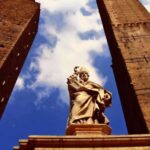
Then you reach the iconic Le due Torri: Torre degli AsinellI and Garisenda. These towers are medieval symbols, and your guide helps you understand that they weren’t just skyline decoration. In the past, Bologna had many towers, and families competed in stone. The towers signaled wealth, status, and influence.
Even though many towers are gone, the two that remain still tell the story. You’ll get about 30 minutes at this part of the route, which is enough to take photos and also learn how to interpret what you’re seeing—especially if you’ve never been to Bologna before.
The best approach here is to slow down and look for perspective. The towers are tall, but street corners make them look different from each angle. Spend a bit of time circling the area with your guide’s explanation in your head. You’ll feel like you’re reading a map made of vertical lines.
Admission is free for this stop, but again, the ticket is not the point. The point is the context.
Santo Stefano: the Seven Churches complex as a calm ending
You finish with the Basilica Santuario Santo Stefano – Complesso delle Sette Chiese. If the earlier stops felt grand, this complex feels different. It’s interconnected chapels and corridors that create a maze-like experience, with quieter pockets along the way.
You’ll have about 30 minutes here, and the time feels right. You’re not trying to “see everything.” Instead, you’re learning the layout and finding the quieter corners—those small courtyards and passageways that make the place feel lived-in rather than staged.
This is also a meaningful religious site, so your guide’s explanations matter more than usual. It’s one thing to look at a church from the outside. It’s another to walk the internal rhythms, where the spaces guide you.
The interior visit is included. As always with sacred sites, be respectful in how you dress and behave. And remember: closures can happen, so sometimes the guide may explain from outside if access is limited.
When the tour ends, you’re back at the meeting point.
Portici di Bologna: Bologna’s covered streets you’ll want to remember
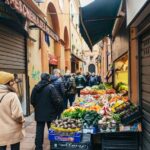
After the big interior stops, you still get Portici di Bologna—the famous arcades that give Bologna its recognizable look.
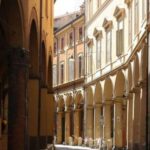
You’ll stroll along the porticoes for about 20 minutes. This is where Bologna turns from historical spectacle into everyday function. The arcades stretch for kilometers, acting like covered walkways that protect people from rain and sun. They also historically supported merchant activity, which is why you see a pattern of street life happening beneath these arches.
This stop is practical even if you don’t care about architecture. If you’ve ever traveled to a place where weather ruined plans, you’ll appreciate a city with built-in shelter.
Also, it helps you connect the “sites” into one coherent walk. Instead of hopping between isolated landmarks, you see how Bologna links them.
What makes the guide matter: the kind of details you’ll actually use
A walking tour lives or dies on the guide. The best versions of this tour are guided by locals who understand that facts aren’t the goal. Clarity is.
In past groups, guides including Maurizio have stood out for deep specialization and the ability to adjust to what the group wants to know. One highlight from that kind of guiding style is how questions can steer the route slightly—without throwing off the schedule. Another name you may see is Andrea, who has worked in more than one language and brought citywide tips alongside the historic narration.
Even when the tour hits the same major landmarks, these guides bring different angles:
- how the city’s institutions shaped daily life
- why certain symbols show up in art and buildings
- what to watch for inside churches so you don’t feel like you’re just “passing through”
With a group capped at 8, you’re more likely to get personal answers instead of a lecture that rolls over your head.
And yes—your guide can explain things in a way that makes the architecture easier to read. You’ll start noticing details on your own after the tour ends.
Value check: interior access, small groups, and a tight route
This tour is built around a simple idea: you get more than exterior sightseeing.
Here’s the value math in plain terms:
- 2.5 hours covering the central Bologna “greatest hits”
- Small group max of 8, which helps you hear and ask questions
- Interior visits included at San Petronio and Santo Stefano
- Several exterior stops are free within the time planned, like Piazza Maggiore and Archiginnasio
- You benefit from guided interpretation, especially at places where you can feel lost on your own
If you’re planning a first trip, this is the kind of tour that saves time. You’ll come away with mental anchors. Later, when you return to Bologna on your own, you’ll know what you’re looking at and why it matters to the city’s story.
Price isn’t listed here, so I can’t claim a cost advantage. But in terms of what you receive—guiding plus interior access—the structure is set up to feel fair.
Who should book, and who should skip it
This tour is a strong fit if you:
- want a first-timer orientation to central Bologna
- like architecture that comes with explanations you can actually picture
- enjoy stepping inside churches without feeling you need a full museum day
- are comfortable walking for the full route
Skip it or think twice if you:
- need accessibility support for walking or stairs
- prefer very slow tours with lots of breaks (this one keeps moving)
- travel with large bags/backpacks that could be restricted inside monuments
If you’re visiting on a Sunday, note the inner courtyard of Archiginnasio isn’t available, so you may not get that exact element.
Should you book this Bologna historical highlights tour?
If your goal is to see central Bologna with context—fast, but not rushed in the usual “line up and shuffle” way—this is a smart pick. The combination of San Petronio’s interior and the Seven Churches complex makes it feel more substantial than a surface-level photo walk. Add a small group and a guide who answers real questions, and you get a tour that helps you read Bologna instead of just ticking off stops.
If walking is a challenge for you, look for a different option. Otherwise, book it early in your trip. You’ll come back to the streets with sharper eyes.
FAQ
How long is the Bologna Historical Highlights Walking Tour?
The tour lasts about 2 hours 30 minutes.
Is the tour offered in English?
Yes, the tour is offered in English.
How big is the group?
The group size is maximum 8 travelers.
Where do we meet for the tour?
The meeting point is Piazza del Nettuno, 40124 Bologna BO, Italy.
What’s included in the tour ticket price?
The tour includes a 2.5-hour guided tour, interior visits to San Petronio Basilica and Santo Stefano, an expert local guide, and small groups (max 8).
Is the tour suitable for people with reduced mobility?
No. The tour is not suitable for people with reduced mobility.
Is the Archiginnasio inner courtyard available on Sundays?
No. The Inner Courtyard of Archiginnasio is not available for visits on Sundays.