Your phone turns Bologna into a puzzle walk.
Bologna Secrets Quest is a self-guided, app-based adventure that takes you through the city’s famous squares and towers with 14 puzzle challenges and an easy-to-follow story. The big plus for me is that it doesn’t require an internet connection to play, and you can pause and resume anytime on your schedule; the main catch is that a few people have had trouble with app access or with map links that guide you to the right spot.
You’ll start by the Two Towers at Piazza di Porta Ravegnana and finish at Via Giuseppe Petroni 37, and you can do it at almost any hour since the quest is open daily from 12:00 AM to 11:59 PM. It’s offered in English, it includes a mobile ticket/access code, and it’s set up well for families with kids and for groups of friends who want a relaxed way to see the city without committing to a fixed group tour.
In This Review
- Quick hit key points
- Turning Bologna into a take-your-time game
- Where you’ll start and how the timing actually feels
- The app quest: what you’re getting in your pocket
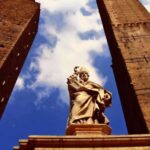
- Stop 1: Porta Ravegnana (Two Towers area) and the habit of looking up
- Palazzo Isolani and Piazza Santo Stefano: porticoes, Gothic meets Renaissance
- Piazza Galvani: silk trade roots and the academic shift
- The Quadrilateral: medieval market alleys and those “holes”
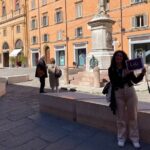
- Neptune’s Fountain: bronze mythology and Giambologna’s touch
- Torresotto (Porta Nova) and the logic of city walls
- Torre Prendiparte: red brick, strong stone, and 12th-century defense
- Piazza Giuseppe Verdi: student energy to close the loop
- The biggest value: structure without a guide
- What to watch for before you start
- Who should book Bologna Secrets Quest
- Should you book this quest?
- FAQ
- How much does Bologna Secrets Quest cost?
- How long does the quest take?
- Do I need an internet connection to play?
- How many puzzle challenges are included?
- Can I pause and resume during the quest?
- Where does the quest start and end?
- Is the quest offered in English?
- What’s the cancellation refund rule?
Quick hit key points
- Offline play: the quest works without internet once you’re in motion
- 14 puzzle challenges: short tasks that keep you scanning your surroundings
- Pause/resume freedom: you can stop for gelato, bathrooms, or a breather
- Classic stops in one loop: Two Towers area, Santo Stefano, Neptune’s Fountain, and more
- Phone map accuracy matters: plan to be ready to self-correct if directions feel off
Turning Bologna into a take-your-time game
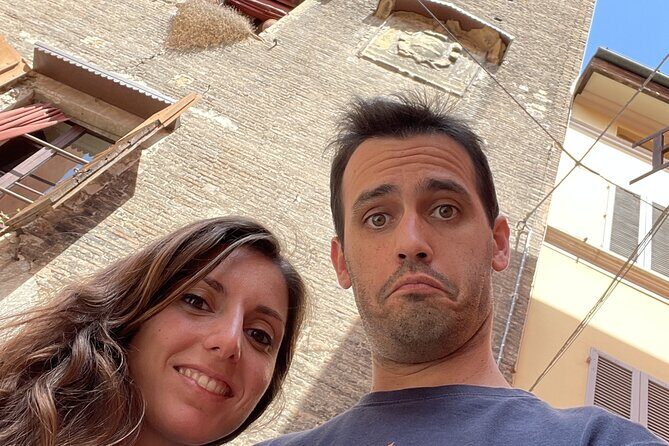
This is not a formal guided tour. It’s a self-paced mystery game that uses Bologna’s streets as your classroom. Instead of standing in one place listening for a half hour, you move from stop to stop, answer a question, then walk to the next location.
The game structure helps because each location is tied to a real landmark: porticoes, fountains, old gates, medieval brick towers, and student-life squares. You’re “working” in the lightest possible way—mostly looking around, reading clues in the app, and spotting details you might otherwise miss.
For $6.60 per person, that’s the main value equation: you’re paying for time on foot plus guided interpretation, not for a professional guide’s hours. Since it lasts about 1 hour 30 minutes, it fits well as either a first-day orientation walk or an afternoon activity when you want something structured but not rigid.
You can also read our reviews of more guided tours in Bologna


Where you’ll start and how the timing actually feels
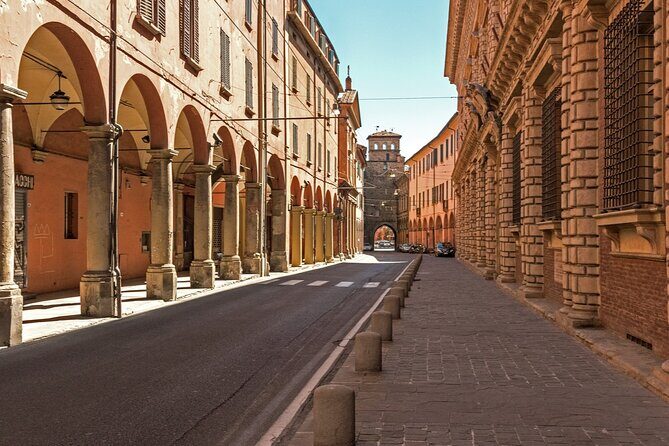
You start at Two Towers, Piazza di Porta Ravegnana, 40126 Bologna. The quest ends at Via Giuseppe Petroni 37, 40126 Bologna. There’s no single meeting-time drama here. The attraction is designed so you can begin and end based on your schedule, which is great if your group splits for lunch or if kids need breaks.
Even though the stops are listed in short chunks, the real pacing depends on the puzzles and how quickly you find the details. If you like “stroll and stop often,” this format matches your style. If you hate walking, you might find the route longer than you expect, especially if you get detoured around construction.
Practical tip: bring a fully charged phone and a way to keep it charged. An app quest is only as fun as your battery life.
The app quest: what you’re getting in your pocket
Here’s what’s included:
- Mobile access code to enter the quest
- 14 puzzle-based challenges
- An immersive storyline that ties clues to each stop
- Flexibility to pause and resume
Here’s what that means in real-world terms. You’re not just sightseeing; you’re doing small tasks that make you observe. The questions are quick, but the benefit is cumulative: after a few stops, Bologna starts to “click.” You notice architectural styles, you pick up on defensive walls and gates, and you start seeing how the city’s layout tells a story about trade, power, and learning.
One thing to watch: since the quest depends on phone access, don’t assume it will always be perfect on day one. A smooth start often comes from arriving ready—download and test anything you need before you begin, not mid-quest.
Stop 1: Porta Ravegnana (Two Towers area) and the habit of looking up
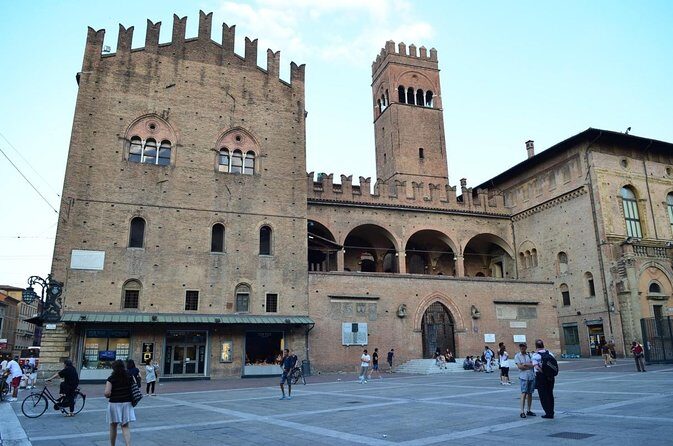
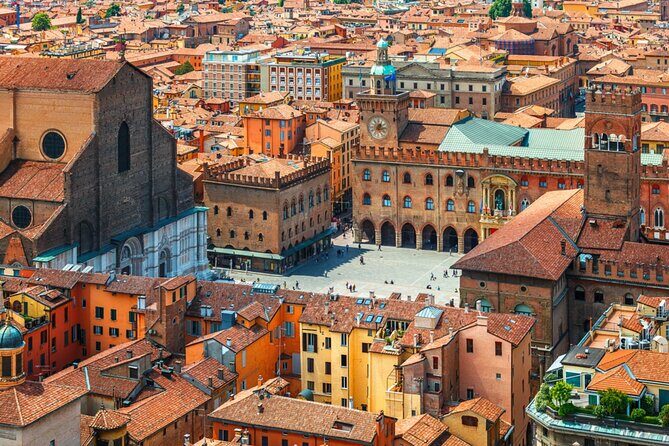
You begin at Piazza di Porta Ravegnana, the square associated with Porta Ravennate, and it’s the setting for the Two Towers of Bologna. This is the kind of place where your brain already expects something historic—so the puzzle works well because it nudges you to do more than take a quick photo.
The challenge here is simple: look around to find the answer and move forward. That’s the pattern for the whole quest—each location’s puzzle encourages you to scan surfaces, shapes, and spatial relationships.
What I like about starting here: it’s a strong anchor. The Two Towers area helps you orient fast, and it makes the game feel connected to something undeniably Bologna.
Palazzo Isolani and Piazza Santo Stefano: porticoes, Gothic meets Renaissance
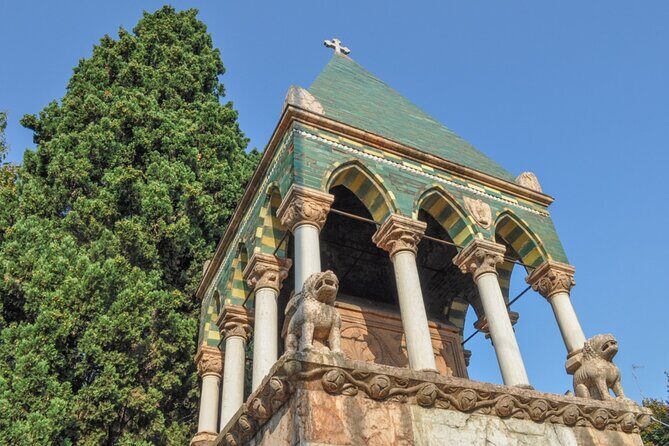
Next up is Palazzo Isolani at Via Santo Stefano 16, facing Piazza Santo Stefano. You’ll see a mix of Gothic and Renaissance architecture, and the clue is again based on finding the answer by looking carefully around you.
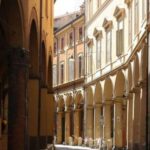
From there, you reach Piazza Santo Stefano, a space used for cultural events and even flea markets and concerts. The big visual takeaway is the porticos along the long sides, with the Basilica on one end. On the other side, you’ll also notice a complex of buildings linked to the powerful Isolani family.
Why this stop works in a game format: the architecture isn’t just “pretty walls.” Porticoes are part of daily life in Bologna, and seeing them through a puzzle task makes you pay attention to rhythm and structure—columns, angles, shadows, and the way people move under cover.
A small drawback: squares with foot traffic can make it harder to read details without people stepping into your line of sight. If you’re doing this with kids, plan a moment to pause, then continue when you’ve got a clear view.
You can also read our reviews of more tours and experiences in Bologna




Piazza Galvani: silk trade roots and the academic shift
At Piazza Galvani, the story shifts from towers and power to commerce and learning. This space was dedicated to the silk market from the 15th to 17th centuries. Later, the Palazzo dell’Archiginnasio began taking shape from 1563, which changed the nearby buildings and helped open up this larger square for a more prominent, decorated setting.
In the quest, you’ll again be asked to search your surroundings for the puzzle answer and then move on. The attraction of this stop isn’t just the facts—it’s how the square’s purpose changed over time. If you pay attention to the space itself, you’ll start to feel how economics and education shaped the city’s physical layout.
I recommend slowing down here for a minute even if the app says you only need a few. Let your eyes rest on the square’s edges. Bologna’s story often lives in the “why this place looks the way it does.”
The Quadrilateral: medieval market alleys and those “holes”
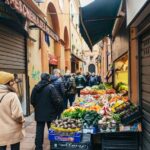
After Piazza Galvani, you’ll hit the area known as the Quadrilateral, a central district with a medieval craft, mercantile, and trading tradition. This is where the quest becomes extra fun because you move from open square space into narrow alleyways with that distinctive Bologna feel.
The description for this area gives you the exact mood: you walk through tall perspective archways leaving Piazza Maggiore behind, then slip into narrow lanes. The alleys have characteristic “holes,” and the area includes shops that often sell the same category of goods for generations. You may also spot historic chemist shops that still carry the atmosphere of old pharmacies.
What makes this a strong quest stop: it’s easy to walk past markets and only notice shopping. Here, the puzzle pushes you to pay attention to how trade shaped storefronts and street layout.
One practical note: if you’re with kids, this is a good place for quick breaks because the alleyways are full of small sights. Just keep your phone ready for the next clue.
Neptune’s Fountain: bronze mythology and Giambologna’s touch
Then comes one of Bologna’s most photogenic anchors: Neptune’s Fountain. It was completed in 1565, and the large bronze figure of Neptune was completed and fixed in place around 1567.
The app’s challenge here is still a look-around puzzle, but the real payoff is knowing what you’re seeing. The fountain includes an early design by Giambologna, who had submitted a model for a Neptune fountain in Florence but lost the commission to Baccio Bandinelli.
I like this stop because the visual payoff is immediate. Even if you’re tired, you’ll usually notice the statue without trying. The puzzle just gives you a reason to pause and look more closely than a quick stop for a photo.
Torresotto (Porta Nova) and the logic of city walls
Your next steps include the torresotto, also called the Porta Nova gate. This belongs to Bologna’s second ring of walls, the Torresotti ring, completed in 1192. That ring stretched about 4 km and included 16 gates and 2 posterns.
The walls were about 8 m high, with brick merlons (those upright crenel-like structures). And the big context here is that Bologna had three rings of walls built over centuries—each adding layers of defense and control.
This stop is less about “pretty views” and more about understanding how a city protected itself. For the quest format, that’s a good match: puzzles make it easier to absorb technical details without feeling like homework.
If you’re doing this in hot weather, this portion can be slower because you may want to step in and out of shade while you read the clue prompts. That’s still fine—the quest is flexible.
Torre Prendiparte: red brick, strong stone, and 12th-century defense
After the wall gate area, you’ll reach Torre Prendiparte, also known as the Coronata Tower. This tower was built in the 12th century by the guelph Prendiparte family as a defensive structure.
The description emphasizes what you can actually see: the typical Bolognese red bricks plus strong selenite blocks make the tower look like a medieval fortress. Even if you don’t know the architectural terms, your eyes can understand the message—thick, solid, built to last.
In a puzzle quest, towers work because they give you a “fixed object.” You can point your attention at one landmark and solve. That keeps the walking breakable and the challenge feel grounded.
Piazza Giuseppe Verdi: student energy to close the loop
The quest ends at the lively Piazza Giuseppe Verdi, halfway along Via Zamboni, the student street. This square is where you’ll see a mix of students and people enjoying a night out.
It’s also home to La Scuderia Café, and the area is described as a natural meeting point for il giro di Bologna, a social routine that links events, concerts, markets, street performances, and club nights.
This closing stop is smart because it doesn’t just end with a landmark—it ends with life. If you’re traveling with teens or friends, this is where the quest can feel like a bridge from “tour mode” into “hang out mode.”
I’d treat this as your decompression moment. Finish the final puzzle, then decide whether you want a quick snack nearby or a slower walk back.
The biggest value: structure without a guide
So why does this work for so many kinds of visitors?
First, it’s structured. 14 challenges give you a clear reason to move through the city in sequence. That matters because Bologna can feel “easy to wander” but hard to learn quickly.
Second, it’s not time-boxed like a bus tour. You can pause and resume anytime, so you’re not constantly negotiating with a group schedule. For families, it reduces stress: kids can rest, adults can snack, then you keep going.
Third, it’s cost-effective. At $6.60 per person, you get a guided-feeling experience that lasts about 1.5 hours. You’re paying for planning and interpretation, not just access to public spaces (many stops are free to visit).
What to watch for before you start
This is a phone-first experience, so a little prep pays off.
- Test app access early. Some people report trouble downloading or unlocking the experience, so don’t wait until you’re standing at the first stop.
- Stay flexible with maps and clues. There are cases where map links didn’t line up with the clues. If you hit a mismatch, pause and look around—Bologna is full of close alternatives.
- Construction can change sightlines. If scaffolding or road changes block what the clue expects, you might lose time. Give yourself extra cushion.
- Expect more walking than advertised. One issue noted is that the walking distance may be longer than the estimate shown in the app. Comfortable shoes are not optional here.
If you can handle minor hiccups, you’ll likely find the payoff worth it.
Who should book Bologna Secrets Quest
This is best for:
- Families with kids who like scavenger-hunt style tasks
- Friends who want a shared experience without listening to one voice the whole time
- Visitors who enjoy walking and learning through noticing details
- English speakers who want an app-led tour that doesn’t rely on internet to work
It might be less ideal if:
- You need a guaranteed, perfectly synchronized experience with zero phone fuss
- Your group can’t handle occasional detours or a longer walk
- You prefer guided narration over puzzle-solving and looking around
Should you book this quest?
Book it if you want a low-cost way to turn Bologna’s landmarks into a game, with offline play, flexible timing, and a route that covers major sights without feeling like a rigid schedule. It’s a smart pick for a family afternoon, a friend meet-up, or a light orientation day.
Skip it (or at least prep carefully) if your group is very sensitive to app issues. Do a quick tech check before you start, and build in a little buffer in case a clue location needs extra searching.
If you like cities best when you notice the details yourself, this quest style fits perfectly.
FAQ
How much does Bologna Secrets Quest cost?
It costs $6.60 per person.
How long does the quest take?
It takes about 1 hour 30 minutes (approx.).
Do I need an internet connection to play?
No. The quest is described as not requiring an internet connection to play.
How many puzzle challenges are included?
You get 14 puzzle-based challenges.
Can I pause and resume during the quest?
Yes. You can pause and resume anytime.
Where does the quest start and end?
It starts at Two Towers, Piazza di Porta Ravegnana, 40126 Bologna and ends at Via Giuseppe Petroni, 37, 40126 Bologna.
Is the quest offered in English?
Yes. It’s offered in English.
What’s the cancellation refund rule?
Cancellation is free. You must cancel at least 24 hours in advance for a full refund; within 24 hours you won’t get your money back.