REVIEW · PISA
Explore Pisa City with Skip-The-Line Leaning Tower Climbing
Book on Viator →Operated by DAVID DI GIACOMO · Bookable on Viator
Pisa is more than one tower. This 3-hour walk is built around two things you actually need in this city: skip-the-line priority entrance for the Leaning Tower and a small-group guide who explains how Pisa works beyond the postcard angle. I like the idea of starting your day with context, then landing at the Square of Miracles ready to enjoy the Cathedral and climb. The main catch is that the tower climb has a real stair-and-steps feel, and you’ll need to follow the bag and locker rules before you go in.
You’ll meet the guide at the fountain outside Pisa Centrale at 10:00am, and the group moves on foot through real neighborhoods, not just a quick highlight shuffle. You’ll hear the story through headsets (so you’re not stuck guessing), and you’ll also spot the Keith Haring mural Tuttomondo (painted in 1989, his largest and also his last). Plan for a walking route on city streets and you’ll get the most out of it.
In This Review
- Key Highlights Worth Your Time
- Getting Oriented in Pisa: Pisa Centrale to the Early Squares
- The Street Story: Piazza Vittorio Emanuele II, Corso Italia, and Keith Haring
- Crossing the Arno: Ponte di Mezzo and Medieval Borgo Stretto
- The Medieval Republic to UNESCO Square: Piazza dei Cavalieri and Piazza dei Miracoli
- Inside the Cathedral (Duomo di Pisa): What You’ll Need to Know
- Climbing the Leaning Tower: Priority Entry and Your 30-Minute Window
- Price and Value: Is $98.96 Worth It?
- Should You Book This Pisa Tower Climb Walk?
- FAQ
- Where is the meeting point and what time does the tour start?
- How long is the tour?
- What’s included in the price?
- Is the tour offered in English?
- How big is the group?
- Can kids climb the Leaning Tower?
- What is the dress code for the Cathedral?
- Do I need to leave bags at the tower?
- Is there free cancellation?
Key Highlights Worth Your Time
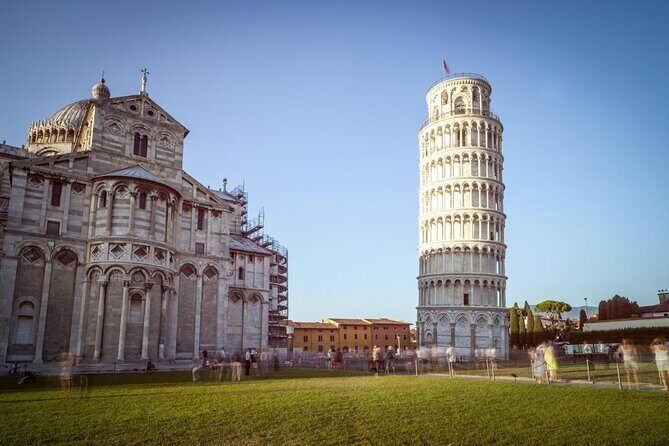
- Priority ticket office entry for the Leaning Tower so you don’t burn your time in slow moving lines
- Small group (max 15) with headsets so you can actually hear the guide
- Real Pisa stops beyond the tower, including Arno river views and medieval streets
- Duomo visit with clear dress guidance and time for photos and videos
- Tower climb happens after your guide deposits your bags, and you climb on your own
- A station-to-Square-of-Miracles flow that keeps the day moving cleanly
Getting Oriented in Pisa: Pisa Centrale to the Early Squares
The tour kicks off at 10:00am at the fountain outside Pisa Centrale, so you’re starting where most people naturally arrive. That’s a smart choice. You don’t waste your first hour hunting for the right bus stop or guessing which direction to walk. Instead, you get a guided route that builds in order: station area → key squares → towards the Arno.
Your first stretch includes a simple orientation by Piazza Vittorio Emanuele II, where the guide sets Pisa’s big-picture story. You’ll be hearing how the city’s geography and politics shaped daily life in Tuscany and why certain areas became important over time. Even if you know Pisa mainly for the Leaning Tower, this early setup makes the rest of the day feel connected, not random.
This part also helps you “read” Pisa while you’re walking. You start noticing how streets funnel people toward major landmarks, how the city layers older streets under newer commerce, and where the river starts to pull the whole urban plan into focus. If you’re the type who likes to understand what you’re looking at, this first half-hour helps a lot.
You can also read our reviews of more city tours in Pisa

The Street Story: Piazza Vittorio Emanuele II, Corso Italia, and Keith Haring
A Pisa walking tour should do more than point at buildings. This one pulls you into the city’s street life. After Piazza Vittorio Emanuele II, you’ll hit Tuttomondo di Keith Haring, the massive mural painted in 1989. The best part of this stop isn’t just the art. It’s the way the guide uses it to show Pisa as a living city with layers—ancient landmarks nearby, modern culture moving through the same streets.
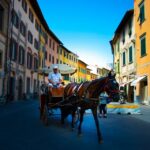
Then you continue along Corso Italia, Pisa’s main pedestrian and commercial spine. This is where the pace shifts. Instead of “let’s look at a landmark,” it becomes “let’s watch Pisa function.” You’ll see what people actually use every day: storefront rhythm, foot traffic patterns, and how the city’s energy concentrates along a walkway.
A small caution: Corso Italia is lively. If you’re traveling with anyone who gets tired fast or hates crowds, you may want to remind them this is a walking and viewing day. Bring water if you’re allowed what you carry (non-transparent bottles won’t work for storage later, since bags must be left at lockers before the tower climb).
Crossing the Arno: Ponte di Mezzo and Medieval Borgo Stretto
Soon the route reaches the Arno riverbanks and Ponte di Mezzo, the main bridge of the city center. This is one of those stops where the guide’s narration matters. From the bridge you get the classic Pisa perspective—but now you also understand how the river shaped the city’s movement, power, and design. You’ll also spot important buildings from the crossing, including Palazzo Blu.
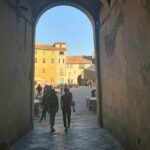
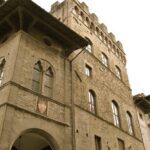
After that, you head to the north side along Borgo Stretto, described as the heart of Medieval Pisa. The value here is that you feel the change from “main street” to “old core.” Medieval streets don’t always look like museums. They look like places people once lived and merchants once moved through, with the street pattern doing a lot of the explaining.
This is also a good moment to slow your photo pace. Bridge photos are easy to rush, and medieval street photos need a little patience with angles. If you want sharp shots, step aside from the main flow and let the crowd move past, even if it means waiting an extra minute.
The Medieval Republic to UNESCO Square: Piazza dei Cavalieri and Piazza dei Miracoli
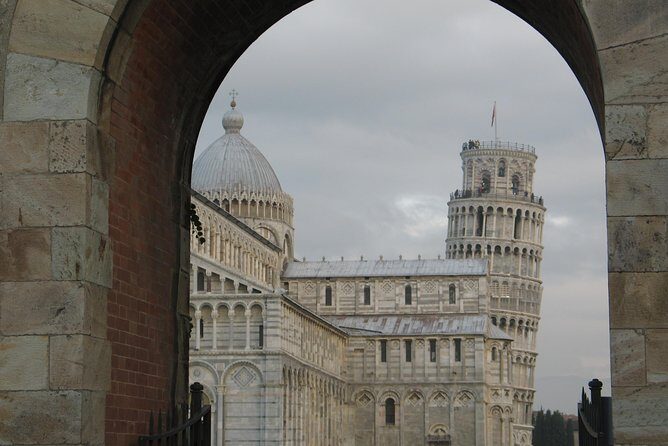
The tour brings you to Piazza dei Cavalieri, once the political center of Pisa’s medieval maritime republic. Today it’s known for late Renaissance architecture and it’s also home to a university. That combination—politics, buildings, and student life—helps you understand why Pisa doesn’t feel frozen in time. It’s a working city with famous landmarks attached.
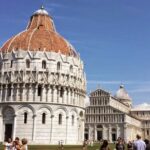
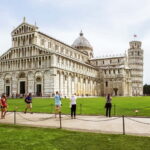
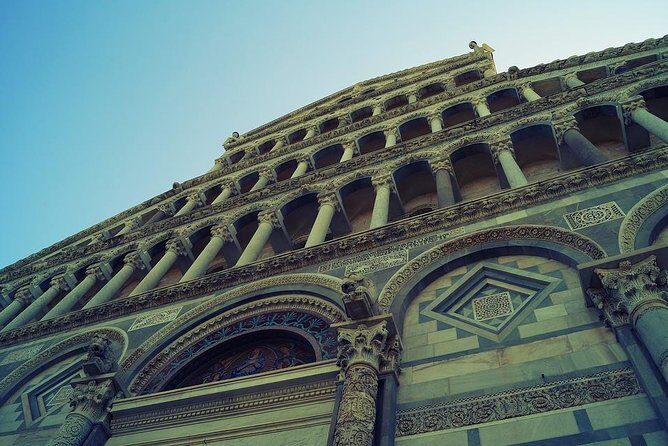
From there, your group moves toward Piazza dei Miracoli (the Square of Miracles), the UNESCO-protected monumental complex that holds the Cathedral and the Leaning Tower. This is where the guide transitions from “Pisa as a city” to “Pisa as a monument.” Expect an overview that frames how the Cathedral of Pisa and its bell tower fit into the same story.
One practical note: this area is the reason you’re here, so it’s also where foot traffic spikes. The small group size helps. You’ll get organized movement instead of everyone wandering like a free-range flock.
Inside the Cathedral (Duomo di Pisa): What You’ll Need to Know
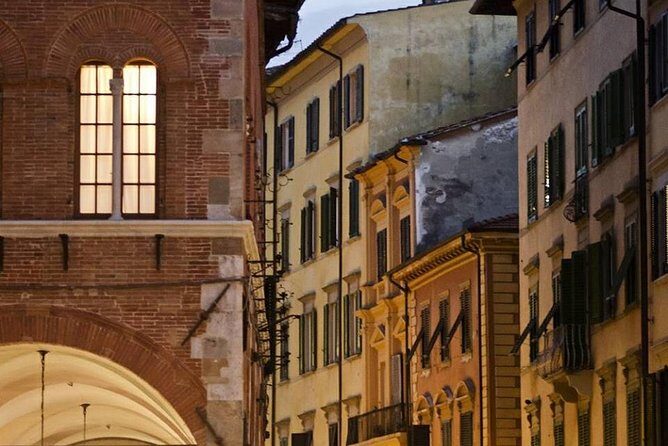
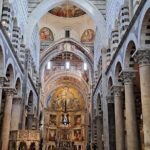
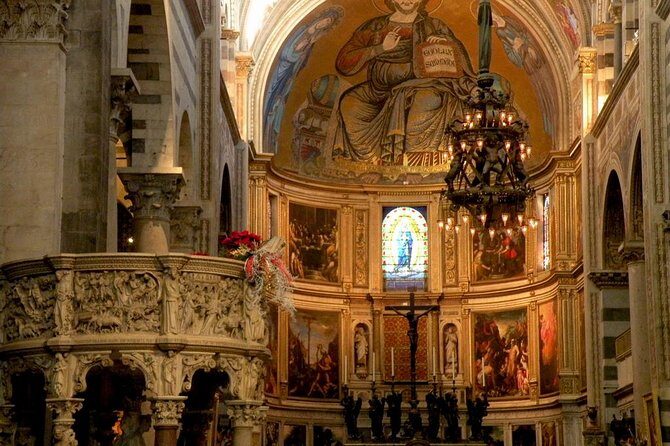
Next comes the Duomo di Pisa visit inside the Cathedral. You’ll be walking into a space that’s visually different from the street-level Pisa you’ve been seeing. Inside time matters too—this stop is short, but it’s long enough to take in the main interior features without feeling rushed.
There’s an informal dress code to remember:
- Shorts are allowed
- Men need to take hats/caps off
- Women need to cover their shoulders
You can take photos and videos, so you don’t need to treat this like a silent, no-memories kind of stop. Still, keep it respectful. Indoor photography can get tricky in any historic site, and the staff’s rules are the real deal even when the tour gives you permission.
If you want one tip: pause for a moment before you start photographing. Look up and around first. The interior rewards that kind of first glance, especially after you’ve been walking through Pisa’s streets.


Climbing the Leaning Tower: Priority Entry and Your 30-Minute Window
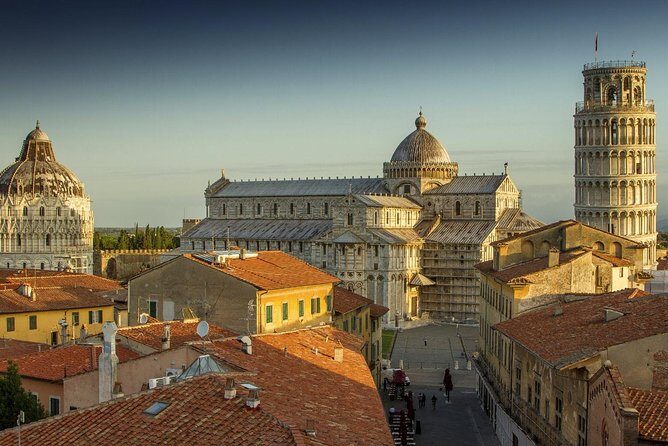
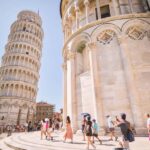
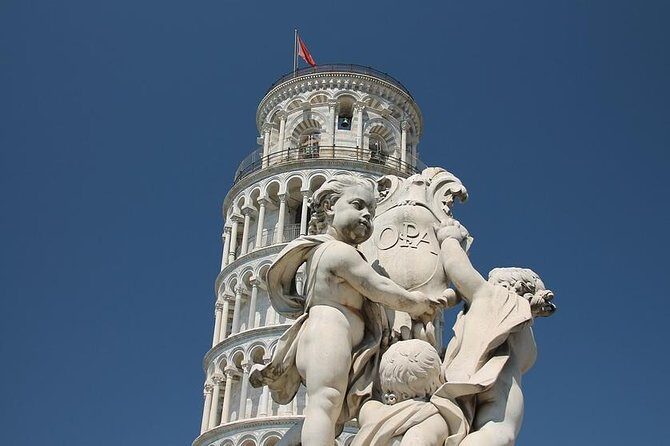
This is the moment everyone thinks about first, so it’s good that the tour handles it with priority entrance at the ticket office. When you reach the tower area, your guide assists you with depositing bags at the cloakroom, then helps you with entry. After that, you climb the tower on your own. Plan on around 30 more minutes for the climb time in the tower area.
The bag rules matter here:
- bags and backpacks must go to the locker room
- non-transparent water bottles must be left at the locker room
- camera containers also need to be left
Also, there are tower rules for kids. Children under 8 are not admitted to the Leaning Tower, so if your family is traveling with younger kids, you may want a separate plan for them.
One detail that surprised me from the climb expectations: the tower has 296 steps. That’s not a deal-breaker, but it’s enough to make pace important. If you’re traveling with anyone who gets winded, remind them early. The guide won’t be escorting you inside while you climb, so you’re the one who sets the rhythm up top.
Price and Value: Is $98.96 Worth It?
At $98.96 per person for about 3 hours, you’re paying for three main things: a local guide, headsets, and the tower access advantage. If you tried to DIY this, the tower day could easily become a time sink—lines, ticketing, and figuring out the right order on your own.
This tour packs a lot into a short window:
- a structured walk from Pisa Centrale to the Monument complex
- Cathedral interior time
- tower entrance with skip-the-line priority
You also get a guaranteed small group (max 15) which is a real value multiplier in Pisa. If you’ve ever been stuck behind slower walkers in a crowded square, you already know why small groups matter.
The value works best if you:
- want the stories behind the sites (not just the names)
- like walking tours, at least for a few hours
- want your Leaning Tower time to feel predictable
If you already know Pisa well and you just want photos fast, you might question the price. But most visitors benefit from having someone map the city’s meaning, not just its locations.
Should You Book This Pisa Tower Climb Walk?
Book it if you want Pisa to make sense. I’d especially recommend it when you care about context: why Pisa’s landmarks look the way they do, how the city’s medieval power connects to the monuments, and why the tower’s location matters as much as the angle. The priority entrance is the practical win, and the route through squares and river areas is the reason it feels like more than a ticket.
Skip it if:
- you hate walking through pedestrian streets for a few hours
- your group needs a totally self-paced itinerary
- you’re not interested in the Cathedral interior and prefer to focus only on the Leaning Tower
If you do book, show up on time at Pisa Centrale. It makes the whole route smoother, and it keeps you from feeling rushed when you get to the Square of Miracles.
FAQ
Where is the meeting point and what time does the tour start?
You meet at Pisa Centrale, at the fountain outside Piazza della Stazione (56125 Pisa), at 10:00am.
How long is the tour?
The experience lasts about 3 hours and ends around 12:45pm.
What’s included in the price?
Includes a professional local guide, headsets, walking tour time, priority entrance for the Leaning Tower, and entry to the Cathedral (Duomo di Pisa).
Is the tour offered in English?
Yes, it’s offered in English.
How big is the group?
The tour has a maximum of 15 travelers, so it stays small-group.
Can kids climb the Leaning Tower?
Children under 8 are not admitted to the Leaning Tower.
What is the dress code for the Cathedral?
Shorts are allowed. Men need to take hats/caps off. Women need to cover their shoulders.
Do I need to leave bags at the tower?
Yes. Bags, backpacks, camera containers, and non-transparent water bottles must be left at the locker room.
Is there free cancellation?
Yes, there is free cancellation up to 24 hours before the experience start time for a full refund.