REVIEW · ORVIETO
Pozzo della Cava Admission Ticket
Book on Viator →Operated by Pozzo della Cava · Bookable on Viator
The underground in Orvieto has a secret. Pozzo della Cava is a self-guided walk inside caves around a massive tuff well, with artifacts from Etruscan through medieval and Renaissance eras. It’s one of those rare stops where the building itself feels like the exhibit.
I especially like the range of finds you can actually see in one circuit, from an Etruscan cistern to medieval wine and pottery spaces. I also like the pacing: you go at your own speed, so you can linger over the details that catch your eye without herding.
One thing to consider: this is an underground route with enclosed passages. If you’re claustrophobic, take that seriously and don’t force it, since it’s not street-level and not open-air for much of the walk.
In This Review
- Key points to know before you go
- Pozzo della Cava in Orvieto: what you’re really paying for
- Ticket value and timing: why this is a smart buy at $6.05
- What’s inside: the well, the caves, and the story in layers
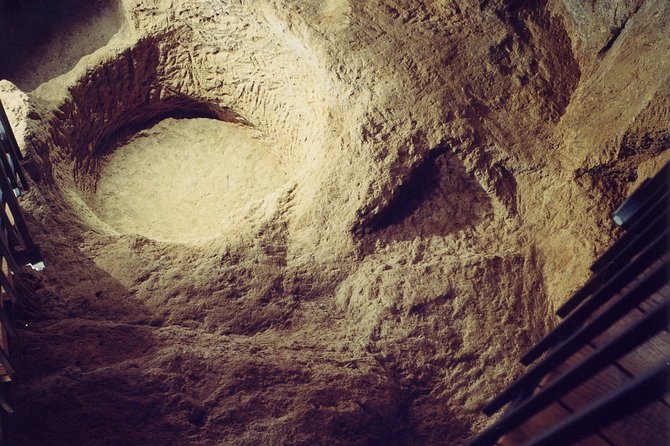
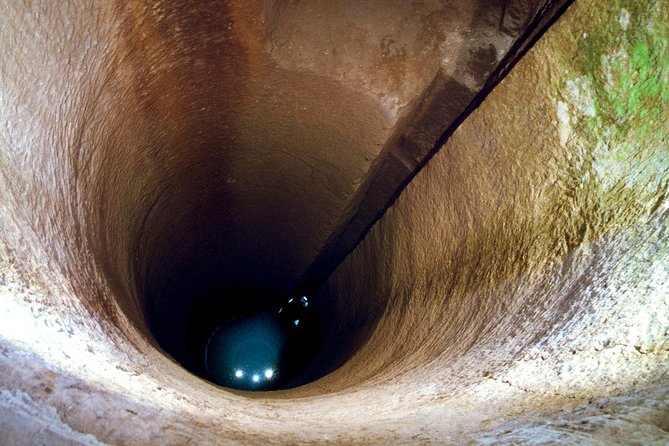
- The huge well in tuff rock
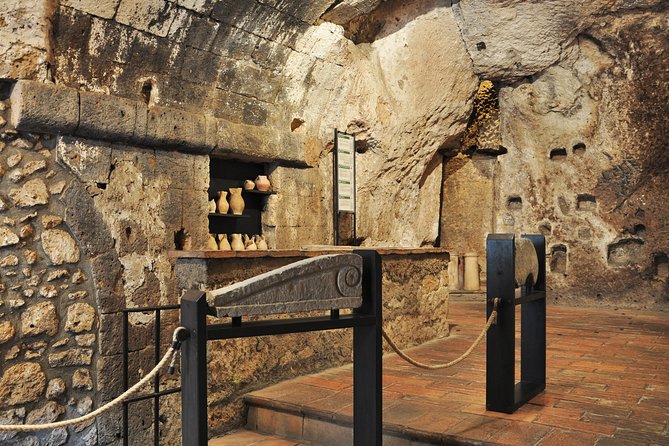
- Medieval pottery spaces (and the tools that make it real)
- Small medieval pits for rubbish
- An Etruscan cistern and older water logic
- Medieval wine cellar
- Etruscan burial remains
- Renaissance features and the final cave
- Self-guided at your pace: how to enjoy it without rushing
- Claustrophobia and comfort: what to expect underground
- Photography and small shopping: the pottery moment at the end
- Practical logistics in Orvieto: languages, group size, and getting there
- Should you book Pozzo della Cava? My take
- FAQ
- FAQ
- How long does Pozzo della Cava take?
- Where is Pozzo della Cava located?
- Is the experience self-guided?
- Does the ticket include admission?
- What hours is Pozzo della Cava open?
- Are food and drinks included?
Key points to know before you go
- Pre-book to skip entrance lines and get straight into the site
- Self-guided by design, so you control how fast you move
- A single complex, many eras: Etruscan, medieval, and Renaissance elements
- Cool underground comfort that’s especially welcome on hot days
- Small on-site group size (up to 15), even though you walk independently
- Language support for your visit: English plus multiple other options
Pozzo della Cava in Orvieto: what you’re really paying for
Pozzo della Cava is not a long tour with lots of stops. It’s one continuous, underground experience. That sounds simple, but it’s exactly why it works.
This archaeological complex is built around a huge well cut into Orvieto’s tuff rock. The well expands on an earlier Etruscan well, then gets a major Renaissance push. Pope Clement VII had it excavated between 1527 and 1530, and the site later closed to the public in 1646 before being forgotten for centuries. Then it was rediscovered after long neglect. In other words: you’re walking through layers of time that were literally carved out of the ground.
The value shows up fast. For a small ticket price, you get a compact route that ties together everyday medieval life—making pottery, storing wine, even dealing with rubbish—with much older Etruscan water infrastructure and burial remains.
You can also read our reviews of more tours and experiences in Orvieto.

Ticket value and timing: why this is a smart buy at $6.05
At $6.05 per person, Pozzo della Cava is priced like a “quick hit” attraction. But it doesn’t feel cheap because you’re not just looking at one object behind glass. You’re moving through a real network of caves and rooms connected to the well.
Two practical reasons to pre-book:
- You’ll skip the entrance lines and spend more time underground.
- The entry is set up so you can plan your visit around the daytime opening window.
The site runs daily from 10:00 AM to 8:00 PM during the listed season (01/08/2026–01/07/2027). That’s handy in Orvieto, where days can run hot, hilly, and crowded. Late afternoon is often a comfortable choice—just keep in mind you’re walking underground, where it will already feel cooler.
Typical visit length is about 20 minutes to 1 hour 30 minutes. If you’re the type who reads signs and stops to look closely at ceramics, tools, or water features, you’ll lean toward the longer end.
What’s inside: the well, the caves, and the story in layers
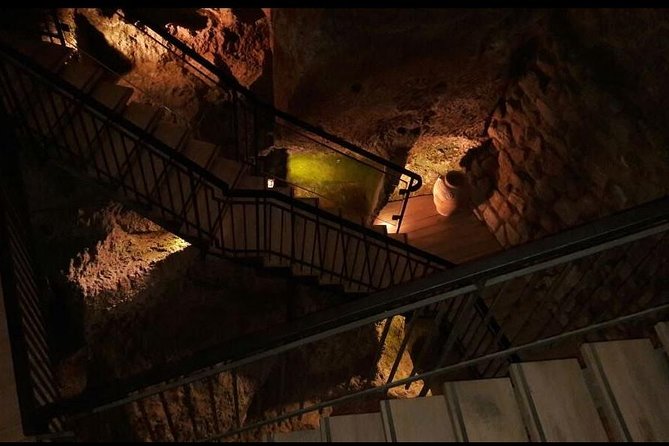
You enter the complex and follow a self-guided route around the well. The big hook is that the site isn’t a single “room.” It’s a whole set of spaces—nine caves around the well—each with a different function and era.
Here’s what to expect, in plain terms, as you move through the circuit.
The huge well in tuff rock
Start with the well itself—because it explains why everything else exists. This massive hole in the rock became the center of daily underground work and storage. You’ll see how the Renaissance period shaped the site, building outward from the earlier Etruscan structure.
Medieval pottery spaces (and the tools that make it real)
One of the most interesting areas is the medieval pottery workshop. This is where you’ll encounter evidence tied to majolica ceramics and the working tools of the ceramicists. You’re not just hearing that pottery happened here—you’re seeing the setup and context that makes pottery feel like labor, not legend.
If you like craft history, this is your zone. If you only want grand monuments, you might find yourself thinking: this place is about work more than spectacle. That’s not a bad thing. It just changes the mood.




Small medieval pits for rubbish
In the medieval layers, you can also spot small pits used to dispose of rubbish. It’s a reminder that these caves weren’t “museum quiet.” They were lived in. That kind of detail often sticks with you more than a single dramatic object, because it gives daily life a pulse.
An Etruscan cistern and older water logic
Then you reach older water infrastructure: an Etruscan cistern. Water features are a big deal in this part of Italy, and here you can connect the dots between ancient engineering and later reuse.
This is one of the best parts of the visit because it makes the timeline feel physical. The complex shows how later inhabitants didn’t start from scratch—they built, adapted, and continued using underground systems.
Medieval wine cellar
Another stop in the cave network is the medieval wine cellar. It adds variety to the story: not only making things (pottery) and managing waste (pits), but also storing food and drink where temperature and protection mattered.
Etruscan burial remains
You’ll also see the remains of ancient Etruscan burial tombs. This turns the visit from “underground industry” into something more human and older. It’s quieter in tone than the workshop areas, because it pulls you toward what people believed and how they marked death.
Renaissance features and the final cave
The circuit also includes a Renaissance muffola (a term you may see on site) and, depending on the part of the route you reach, you may encounter details that point to a deeper cave section with height described as 14 meters in provider materials. Even without chasing every label, you’ll feel the route changing as you progress—rooms and niches don’t feel identical.
And one more “why this matters” detail: Pozzo della Cava is linked to UNESCO’s World Water Museums network. That doesn’t change what you’ll see, but it helps you frame the complex as part of a broader story about water engineering and its cultural role.
Self-guided at your pace: how to enjoy it without rushing
This is a self-guided tour. That’s a plus if you’re tired of being moved in a straight line by a group schedule. It’s also a plus if you want to skim.
But self-guided does mean you’re responsible for your own rhythm. Here’s a simple way to set yourself up:
- Decide up front what you care about most: ceramics, water systems, medieval daily life, or the timeline.
- Spend extra time in the pottery and storage-related spaces.
- Don’t ignore the smaller features (like pits and cistern connections). Those are where the site often feels most “real.”
The “right” amount of time depends on your reading habits. The route is designed to feel just long enough for many people—especially those who want something efficient while sightseeing in Orvieto.
Also, the experience is offered in English, and information is available in multiple languages (Italian, English, German, French, Spanish, Dutch, Russian, Japanese). So if English is your anchor, you can still expect helpful context even if some signs are multilingual.
Claustrophobia and comfort: what to expect underground
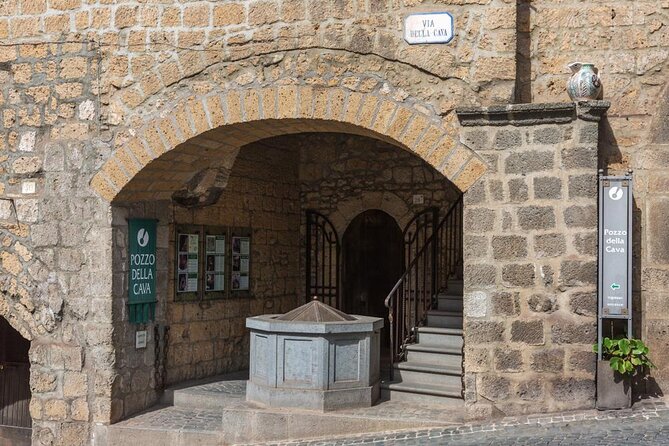
Underground means cool air, and it can feel great on hot summer days. People often remark that it’s a welcome break from the heat.
Still, don’t gloss over the access reality:
- This is not an open-air walk.
- Passages are enclosed enough that a serious claustrophobia warning is worth heeding.
- Provider materials note the caves are not on a single open ground-floor setting.
If you handle enclosed spaces okay, you’ll probably be fine. Just wear practical footwear and take it slow at any narrowing sections. Comfortable walking shoes matter more here than you might think, because your attention is split between footing and details on the walls.
Photography and small shopping: the pottery moment at the end
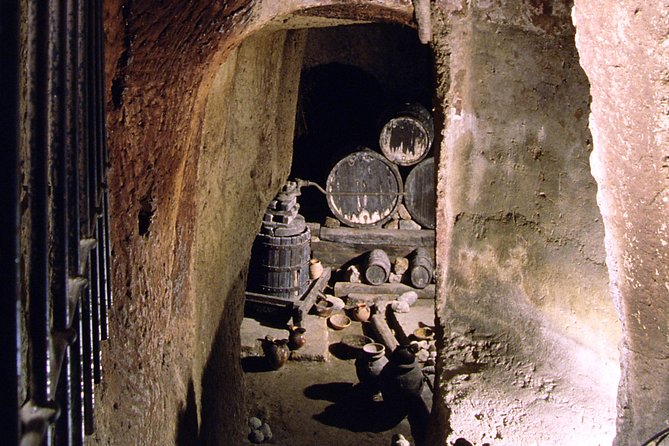
The visuals can be strong for photos—especially because underground spaces create dramatic light and textures. The complex also gives you plenty to shoot: stonework, cave rooms, and interpretive areas related to ceramics and water storage.
There’s also a human touch near the end of the route: an older man selling pottery he makes. That’s a small souvenir moment, but it fits the story. You’re buying something connected to the craft history you just saw, not a generic postcard-style shop.
If you’re traveling with kids or you want an activity that feels hands-on without being messy, the pottery angle can work well. The site is history, but it doesn’t feel like an abstract lecture.
Practical logistics in Orvieto: languages, group size, and getting there
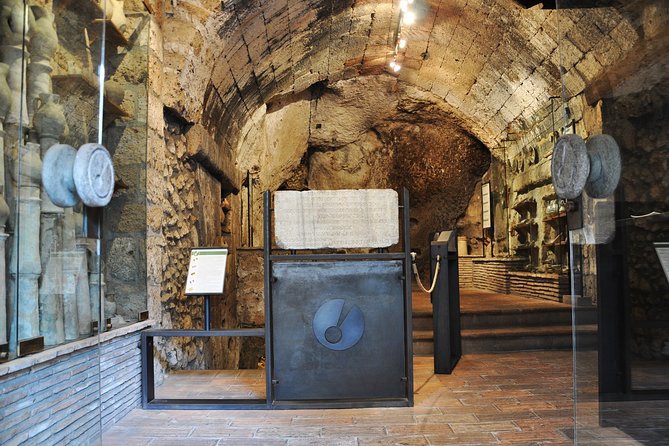
A few details make planning easier:
- Admission ticket includes entry to the Pozzo della Cava archaeological complex.
- It’s self-guided, but the experience is set with a maximum of 15 travelers. That smaller size helps keep the atmosphere calm even if you enter close to other people.
- Near public transportation, so you’re not stuck improvising a long taxi plan just to get to a cave entrance.
- Service animals are allowed, and “most people can participate,” so it’s not marketed as a niche extreme activity.
Food and drinks are not included. There’s a good chance you’ll want to pair this with another stop nearby, then grab a snack before or after. Plan to carry water if you’re spending a full day in Orvieto—especially if you’re doing several walks on stone streets.
One more practical note: you’ll get confirmation at booking time. And yes, free cancellation is available up to 24 hours before the experience start time, which makes pre-booking less stressful if your day schedule is still flexible.
Should you book Pozzo della Cava? My take
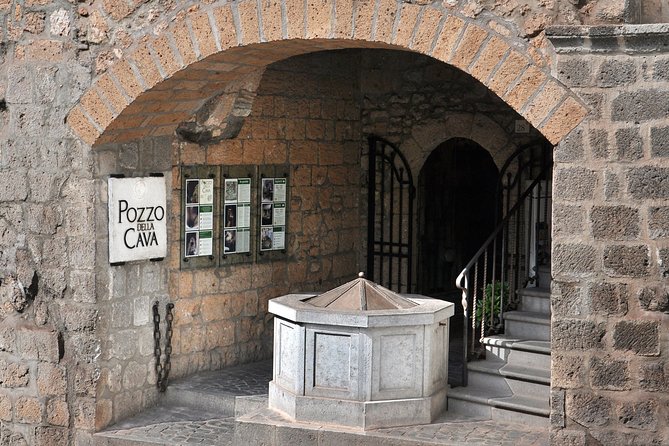
Book it if you want:
- A short, self-guided underground experience in Orvieto
- A place where you can connect Etruscan water systems to medieval and Renaissance practical life
- Something that fits into a sightseeing day without eating up your whole schedule
Skip it if you:
- Have serious claustrophobia and know enclosed spaces will stress you out
- Prefer famous, high-drama monuments over workshops, storage spaces, and archaeological rooms
- Expect a “single wow object” with lots of unrelated stops
If you’re on the fence, here’s the best test: ask yourself whether you enjoy the kind of history that lives in everyday work—pottery tools, storage logic, and how communities used underground space. If that sounds like your style, this ticket is a strong value.
FAQ
FAQ
How long does Pozzo della Cava take?
The visit typically takes about 20 minutes to 1 hour 30 minutes, depending on how slowly you walk and how much you read.
Where is Pozzo della Cava located?
It’s in Orvieto, Italy.
Is the experience self-guided?
Yes. It’s a self-guided visit, so you can explore at your own pace.
Does the ticket include admission?
Yes. The admission ticket to the Pozzo della Cava archaeological complex is included.
What hours is Pozzo della Cava open?
During the listed period, it’s open Monday through Sunday from 10:00 AM to 8:00 PM.
Are food and drinks included?
No. Food and drinks are not included, so you’ll want to plan snacks separately if needed.