REVIEW · FLORENCE
Florence: Accademia Gallery David Entry & Audio Guide App
Book on GetYourGuide →Operated by Tours About · Bookable on GetYourGuide
David, but with saved time.
This Accademia Gallery visit is built around a reserved timed entry ticket that helps you dodge the slow chaos at the ticket line. I like that you get direct access to the museum highlights fast, and that the visit is organized so you see the big moments in order, starting with Michelangelo’s David. One thing to keep in mind: even with a pre-booked slot, security or crowd control can cause a slight delay when the museum is busy.
I also like the specific stop that many first-timers miss: the Gipsoteca with original plaster models, plus the Medici musical instruments display. It’s not just “pretty art,” it’s material you can feel connected to the making of the Renaissance (and later sculptors). The possible downside is practical: the audio experience relies on your smartphone and internet, and you’ll need to bring your own headphones since they’re not included.
In This Review
- Key things to know before you go
- Skip-the-line entry at Accademia Gallery: the real money-saver
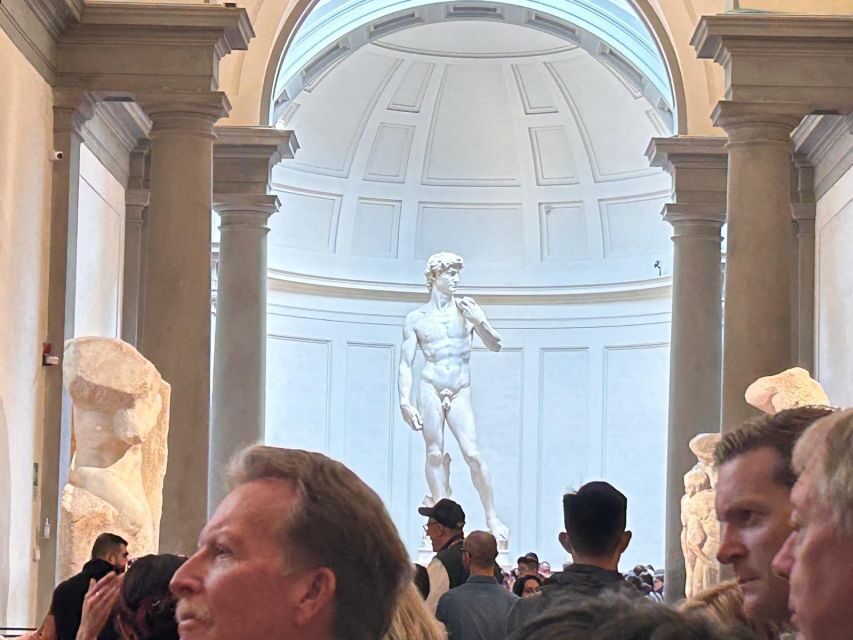
- Michelangelo’s David and the main hall: what to focus on
- Gipsoteca plaster models: where craft becomes the story
- Medici musical instruments and the Stradivari connection
- Medieval-to-Renaissance painting galleries: Giotto and Botticelli
- Top-floor altarpieces: plan for a strong finishing chapter
- POP Guide audio app: best practices for a smooth experience
- Price and value at about $38 per person
- Who this Accademia visit suits best
- Quick “should I book” decision
- FAQ
- What’s included with the Accademia Gallery entry?
- Are headphones included?
- Do I need to download the POP Guide app before arriving?
- Where do I meet the host to exchange my voucher?
- Do I need internet access for the audio guide?
- Is this a true skip-the-line ticket?
- What time should I arrive for a timed slot?
- How long is the experience?
- Is the museum visit wheelchair accessible?
- What ID do children need for discounted tickets?
Key things to know before you go
- Skip-the-line approach using a separate entrance tied to your timed ticket
- David in the main hall plus some related sculpture material in the same area
- Gipsoteca plaster models from 19th-century Florentine sculptors
- Medici musical instruments, including instruments associated with Stradivari
- Medieval-to-Renaissance painting galleries, with artists such as Giotto and Botticelli
- POP Guide audio app that works best if you download ahead and have a charged phone
Skip-the-line entry at Accademia Gallery: the real money-saver
If you’ve ever tried to get into the Accademia on a busy day, you know why people pay extra: lines can be slow, messy, and time-eating. This experience is designed to avoid the ticket-office bottleneck by using a separate entrance and a timed entry slot.
At the start, you meet your host outside the Carrefour express supermarket on Via Ricasoli 115. The meeting point marker is clear: look for a staff member holding a white flag with ENJOY ROME written on it, and you’ll exchange your GetYourGuide voucher for a physical ticket.
That physical ticket matters because the museum is strict about entry times. In practice, that means you should aim to arrive a bit early, not at the exact minute your slot begins. Several people found that getting to the line earlier helped them get through with less waiting.
One caution: crowd control is real. When the museum has too many people inside, entry can be slightly postponed as access is regulated, and there can also be longer waits due to organizational issues at the gallery. The good news is that this setup still generally helps you beat the worst of the public ticketing line.
You can also read our reviews of more guided tours in Florence


Michelangelo’s David and the main hall: what to focus on
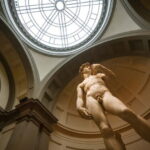
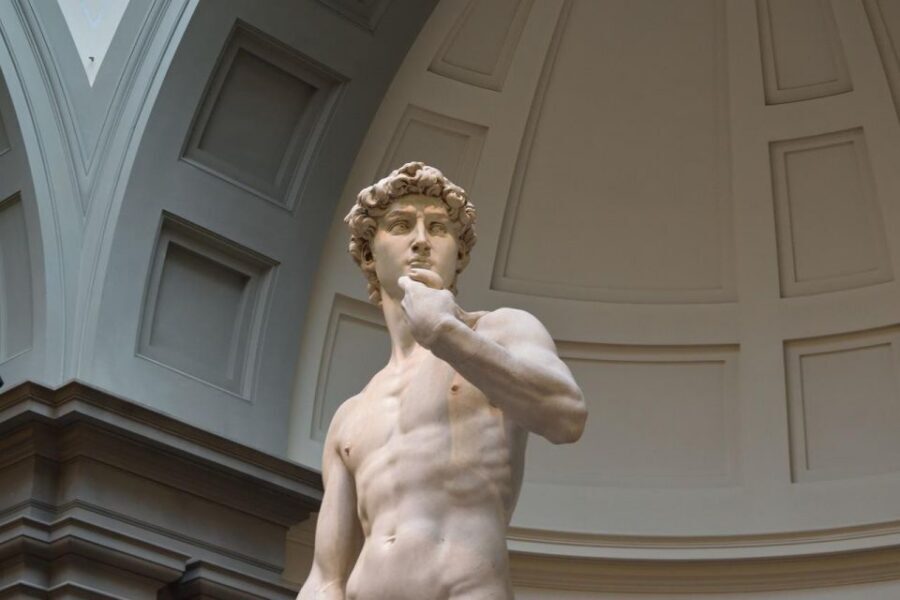
You’re here for Michelangelo’s David, and you’ll get your chance to see it up close in the museum’s main hall. Plan to slow down. The sculpture’s impact is in the details: the pose, the tension of the body, and the way the surface catches light as you move around it.
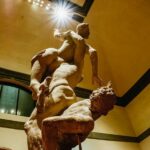
What I like about this visit format is that it doesn’t stop at David. You also see some of Michelangelo’s unfinished works in the same main-hall area. That’s a valuable contrast—David is finished and iconic, while the unfinished pieces help you understand Michelangelo’s process rather than just admiring the final result.
If you’re the type who loves “how it was made,” this is where your eyes get trained. Step back for the overall figure, then come in again for the details. You’ll also want to keep your pace steady; the museum is a walking route, not a sit-down show.
Gipsoteca plaster models: where craft becomes the story
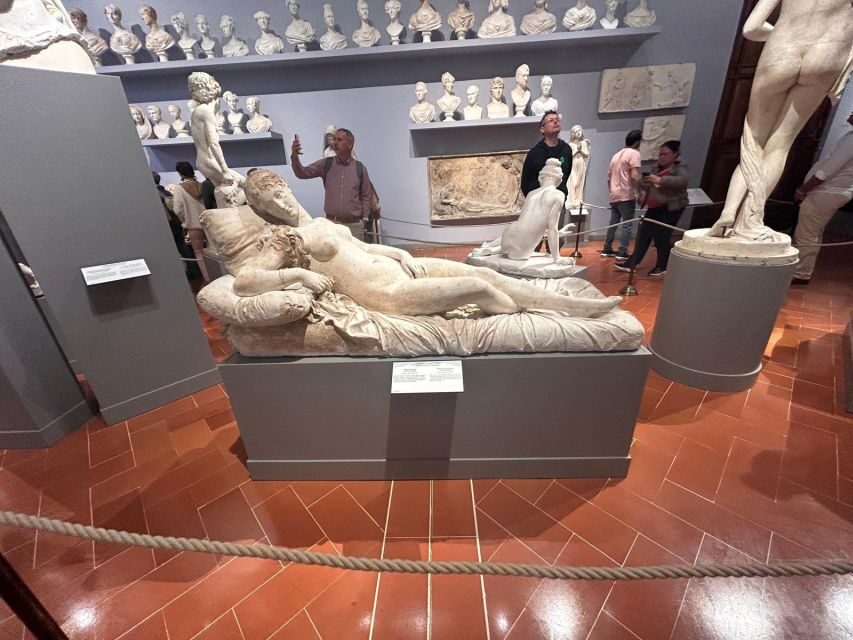
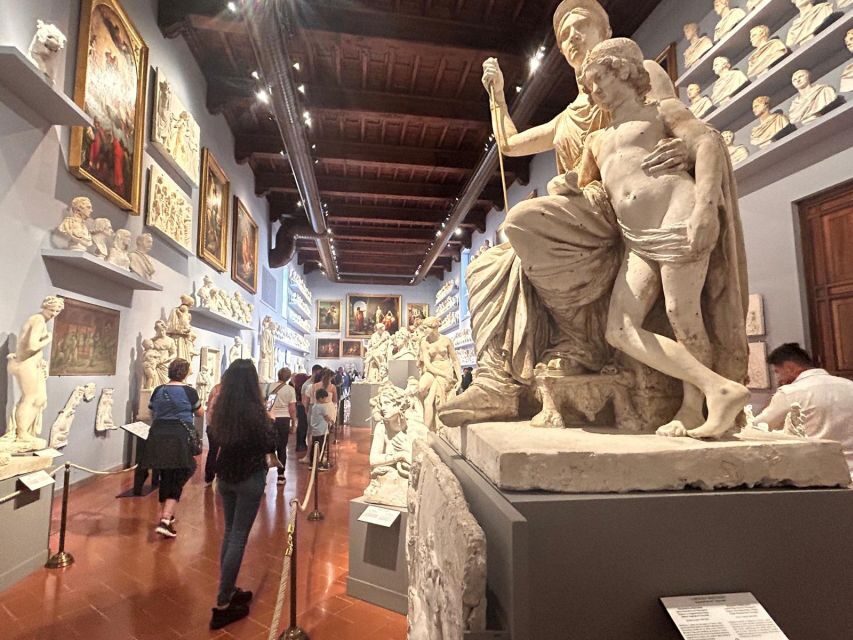
One of the strongest reasons to come here is the Gipsoteca, the plaster-model gallery tied to Florentine sculptural training and practice. You’re not just seeing finished statues; you’re seeing original plaster models by 19th-century Florentine sculptors.
This is the part of the visit that can feel quietly mind-blowing, especially if you like technique. Plaster models show proportions, decisions, and the practical steps artists and workshops took. It’s also a reminder that masterpieces often begin long before the final stone or bronze version.
Because the museum mixes sculpture and painting across multiple floors, your experience here depends on your energy level. Give yourself a little breathing room. Even if you’re moving fast for David, don’t skip the Gipsoteca. It’s one of the most educational stops in the Accademia.
Medici musical instruments and the Stradivari connection
After sculpture-focused rooms, you’ll reach a display of musical instruments from the Medici collection. The standout detail is that you can see instruments associated with Stradivari (the listing highlights three by Stradivari).
This might sound like a left turn in a sculpture museum, but that’s exactly why it’s valuable. The Medici story is about power, taste, and court culture. Musical instruments in a major art museum context help you understand the cultural world that supported Renaissance art—not only painters and sculptors, but patrons and their lifestyle.
You don’t need to be a music expert to appreciate it. Treat it like a “museum cross-brief” that connects art to everyday prestige. If you’re traveling with someone who doesn’t always love long galleries of paintings, this stop can be a nice reset.
Medieval-to-Renaissance painting galleries: Giotto and Botticelli
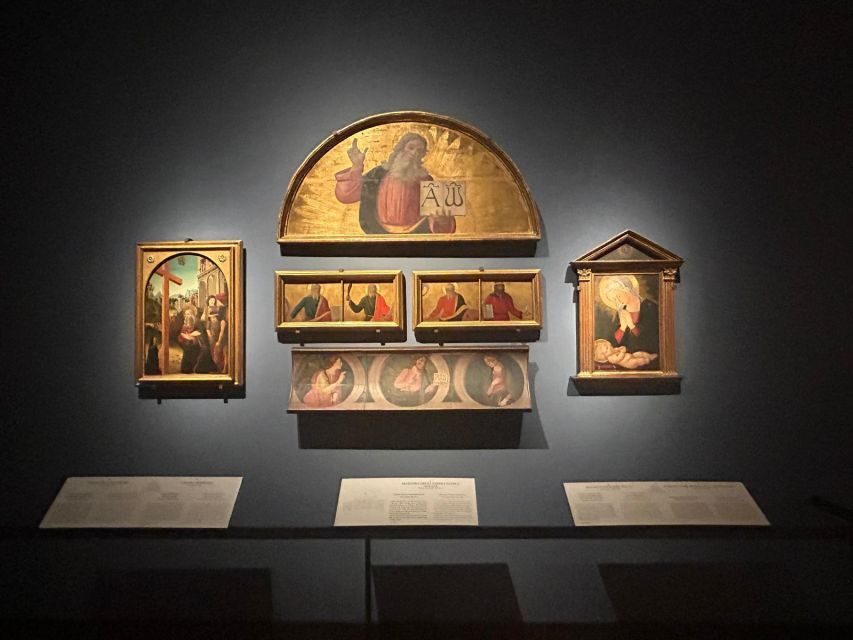
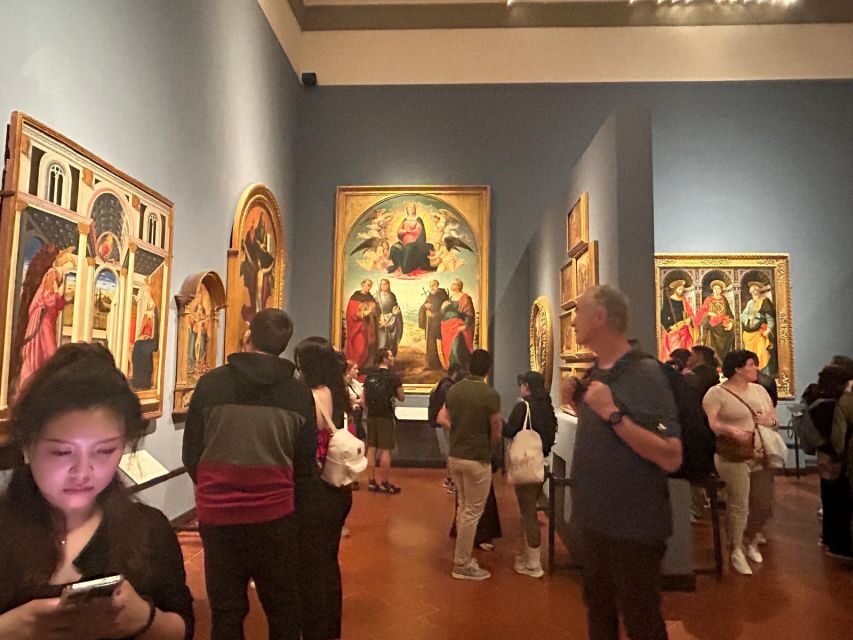
When you transition to the painting galleries, the mood shifts from stone-and-plaster realism to religious and narrative art. This section is where you start moving through Medieval and Renaissance-era masterpieces, and you’ll see works by painters such as Giotto and Botticelli.
Here’s how to make this part more rewarding: don’t just scan. Pick a couple of paintings and look for changes in how figures are posed, how space is suggested, and how emotion is expressed. Even without a live guide, your eye can start noticing patterns—how artists gradually moved toward more naturalism and storytelling.
If you’re relying on the audio app, you’ll want to keep the phone settings ready and your ears set. The Accademia’s painting galleries can be busy, and it helps to have your explanation queued up so you don’t miss the “why this matters” moments while you’re walking.
You can also read our reviews of more museum experiences in Florence




Top-floor altarpieces: plan for a strong finishing chapter
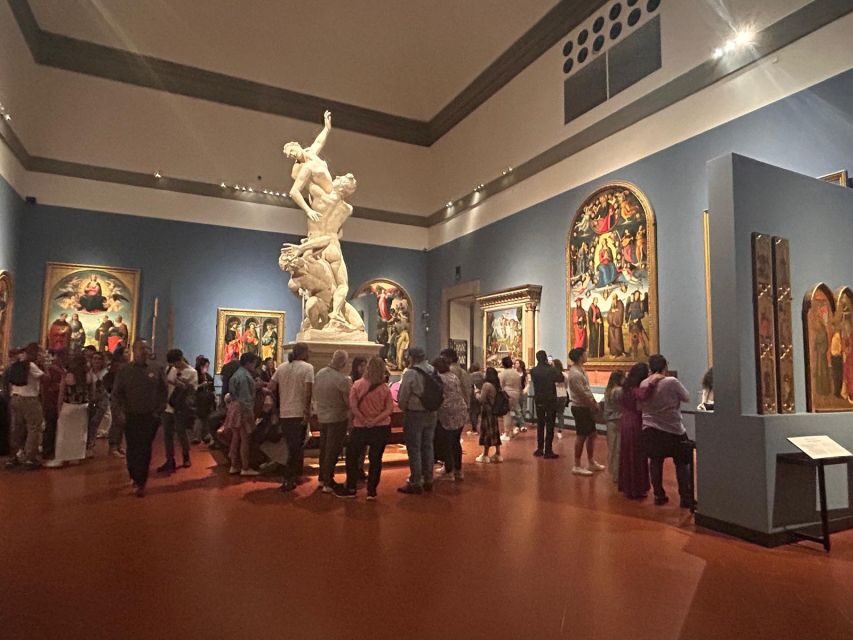
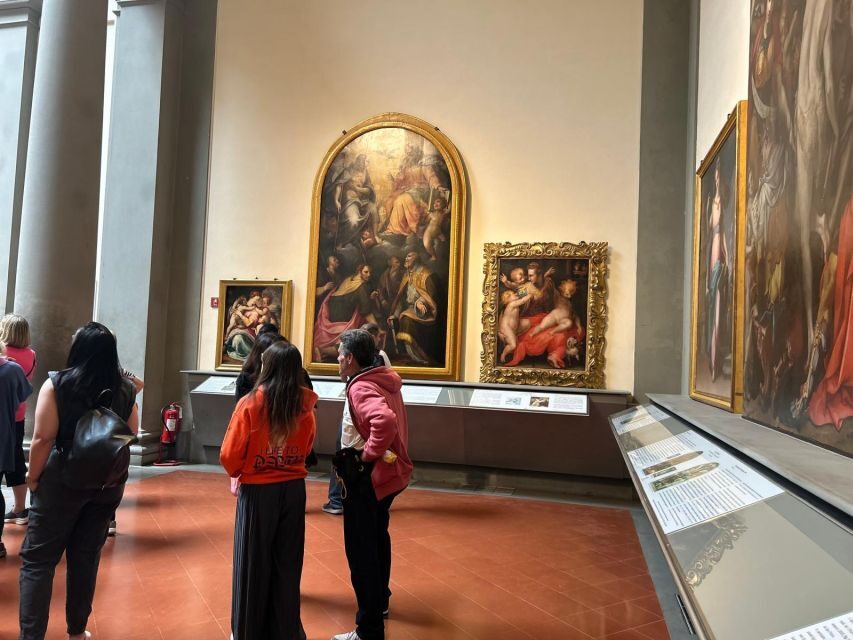
On the upper floor, you’ll see magnificent altarpieces. This is the part of the visit that helps the whole museum click into place: the sculpture and workshop-related rooms connect to the broader religious art culture that drove commissions in Florence.
If you’re the type who likes a clean arc, think of the top floor as your final act. You’ll finish after seeing altarpieces before the visit wraps up.
Practical note: moving up and down floors takes energy. Some people mentioned the museum visit involves a lot of walking and that the area outside can feel hot while you wait to get in. Bring water when you can, and don’t underestimate the stamina part.
POP Guide audio app: best practices for a smooth experience
You get an audio guide through the POP Guide app. It’s included, but headphones are not, so you’ll want to bring your own wired or Bluetooth headset.
Download is the key. You’re instructed to download the POP GUIDE app before arriving at the meeting point. At the meeting point, staff provide login credentials. That’s helpful, but it also means you should keep your smartphone charged and ready before you head to the supermarket meeting point.
Here’s the truth from real-world conditions: if you don’t have internet access or if the app doesn’t function offline for you, the audio plan can turn stressful. Some people said the audio guide wasn’t usable offline, and others said internet/data was required to download. That’s why I treat this like a “prepare your phone” activity, not a plug-and-play one.
Also, give yourself a little buffer time to start the app and get the correct content loaded before you reach the gallery rooms. Waiting until you’re standing inside trying to troubleshoot is the easiest way to waste your first minutes.
The app map can also be confusing if it doesn’t match how you’re moving through the museum. My advice: use the museum’s real layout and follow the flow you can see, then check the app when you’re ready to focus on a specific artwork.
Price and value at about $38 per person
At $38 per person, you’re paying mainly for two things: reserved timed entry and an included self-guided audio solution. The experience includes your Accademia entrance ticket and the POP Guide app.
What’s not included is important for true value. Headphones are not provided, and you’ll need internet capability for the best audio experience. Also, there isn’t a full-on guided tour included—your host meets you at the start, but the museum time is self-guided with the audio app.
So when does this feel like a good deal? When you value time. People consistently stress that skipping the worst entrance queues is the point. If you have limited time in Florence, paying for the smoother entry can be worth it even if the skip-the-line isn’t perfect every day.
If you already know you like learning from a person, not a phone, then consider whether a licensed guided tour would fit you better. Some people loved the audio pace, while others wished they had more depth from a human guide.
Who this Accademia visit suits best
This works best for you if:
- You’re an art fan who wants David plus more context (Gipsoteca, instruments, and paintings).
- You’re comfortable navigating a museum with an audio app on your phone.
- You want to arrive, enter efficiently, and move through at your own pace.
It might be less ideal if:
- You hate smartphone planning and worry about internet.
- You’re dependent on working audio at all times and don’t want to troubleshoot.
- You’re expecting a full guided lecture inside the museum, because the included experience is audio-led.
Good news: the activity is wheelchair accessible, and the staff includes an English-speaking host/greeter at the meeting point. Also, there are clear limitations on what you can bring: pets aren’t allowed, and luggage or large bags aren’t allowed (bags are not allowed), so you’ll want to travel light.
Quick “should I book” decision
Book it if you want a straightforward way to see Michelangelo’s David with a plan that saves time at the entrance, and if you’re willing to do a little prep for the POP Guide app. It’s especially smart if you’re visiting Florence during peak season or on a day when you don’t want your schedule derailed by long lines.
Skip it (or pair it with another option) if you know your group struggles with app tech, you won’t have reliable internet, or you prefer a live guide style that answers questions on the spot. In that case, a different guided format might match your expectations better.
FAQ
What’s included with the Accademia Gallery entry?
You get the Accademia Gallery entrance ticket and the POP Guide audio guide app.
Are headphones included?
No. You need to bring your own headphones.
Do I need to download the POP Guide app before arriving?
Yes. You’re instructed to download the POP GUIDE app from the App Store or Google Play before you arrive at the meeting point.
Where do I meet the host to exchange my voucher?
Meet in front of the Carrefour express supermarket on Via Ricasoli 115, at the red number. Look for a staff member holding a white flag with ENJOY ROME written on it.
Do I need internet access for the audio guide?
Yes. Internet access is listed as something you should have. Some visitors also report that the audio guide experience depends on having access/data.
Is this a true skip-the-line ticket?
It uses a separate entrance and a pre-reserved timed entry to help you avoid the ticket office line, but entry can be slightly postponed due to security/crowd control.
What time should I arrive for a timed slot?
Arrive early enough to handle app login and the queue process at the start, since security and visitor volume can affect entry timing.
How long is the experience?
The activity is listed as 1 day, with starting times based on availability.
Is the museum visit wheelchair accessible?
Yes, it’s listed as wheelchair accessible.
What ID do children need for discounted tickets?
For discounted tickets, visitors aged 6–17 need a valid photo ID with their birth date. Without it, they have to buy the full adult ticket.



More Museum Experiences in Florence
More Guided Tours in Florence


More Tour Reviews in Florence
- Tuscany Day Trip from Florence: Siena, San Gimignano, Pisa and Lunch at a Winery
★ 5.0 · 21,634 reviews - The Best tour in Florence: Renaissance & Medici Tales – guided by a STORYTELLER
★ 5.0 · 12,316 reviews