REVIEW · PIAZZA DELLA SIGNORIA
Florence: Piazza della Signoria Children’s Walking Tour
Book on GetYourGuide →Operated by Florence Tours by Made of Tuscany · Bookable on GetYourGuide
Myths feel like a live game in this square. This 1-hour Piazza della Signoria children’s tour turns big, intimidating art into short, funny stories kids can follow. You’ll meet legendary characters tied to what you see right in front of you, from Perseus to Hercules, with a guide who keeps explanations child-friendly.
I especially like the way the tour points out the details your eyes usually miss. You get two big wins: famous Renaissance sculptures used as story props (like Perseus and David), and a small group size that makes it easier for kids to ask questions. One possible drawback: it packs a lot of characters into just an hour, so if your child wants long stops and museum-style pacing, you may feel a bit rushed.
In This Review
- Key Highlights You’ll Actually Notice
- Why Piazza della Signoria Works So Well for Kids
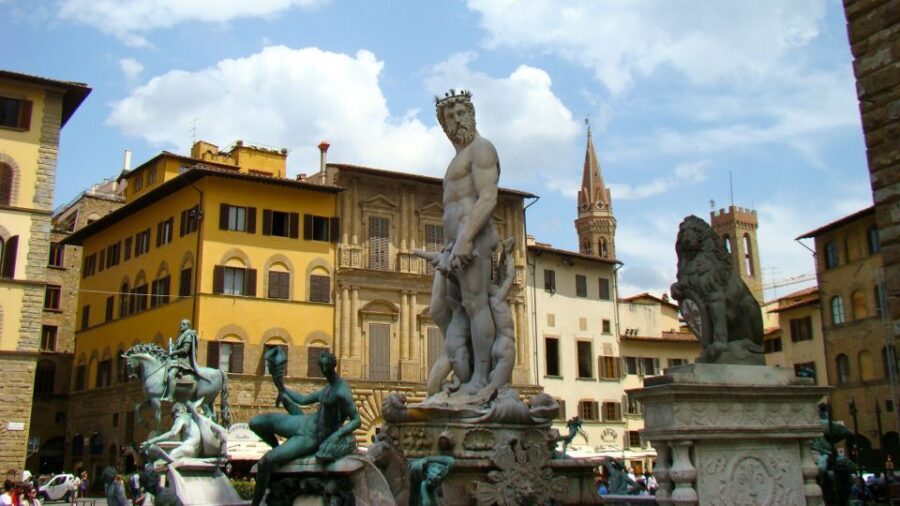
- Starting at Fontana del Nettuno: Easy Meet-Up, Clear “We’re Here”
- Piazza della Signoria: Perseus, Medusa, and David Without the Headache
- What can slow you down here?
- Loggia dei Lanzi: Lions, Zeus, Poseidon, and Hercules in One Hour Block
- How the Guide Shapes the Entire Experience (So Kids Actually Stay With It)
- Language matters more than you might think
- What $53 Gets You in Real Terms (And Why It’s Not Just “Paying for Walking”)
- Rain or Shine: A Tour Built for Real Weather Days
- Who This Tour Fits Best (And Who Might Want Something Else)
- Practical Tips to Make It Go Smoothly
- Should You Book This Kids’ Piazza Tour?
- FAQ
- Where do we meet for the tour?
- How long is the Florence Piazza della Signoria children’s walking tour?
- Is the tour held rain or shine?
- How many people are in the group?
- What languages are available for the guide?
- Is the tour wheelchair accessible?
- What’s included in the ticket price?
- Is there free cancellation?
- Can I reserve now and pay later?
- What will we actually see during the walk?
Key Highlights You’ll Actually Notice
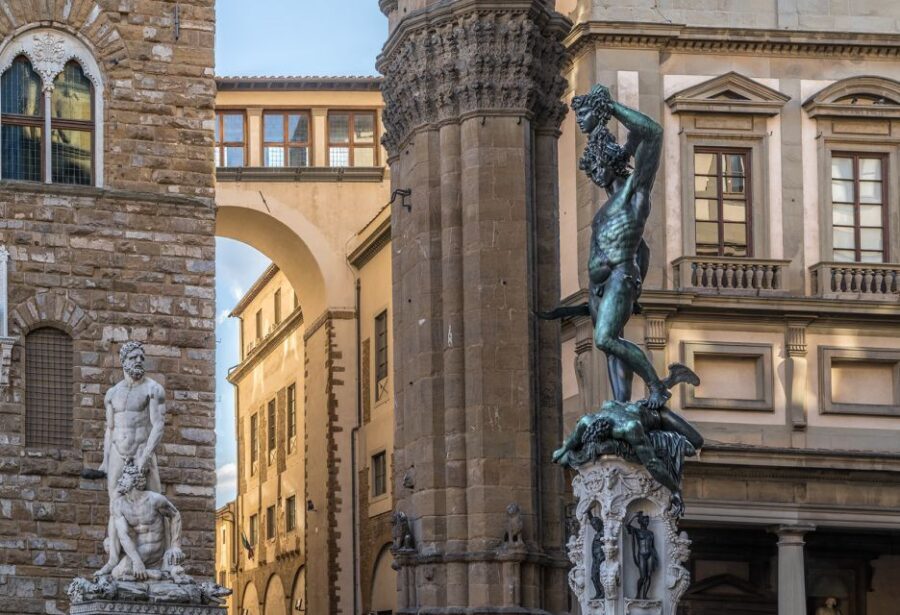
- Greek mythology meets real statues: Perseus, Medusa, Hercules, Zeus, and Poseidon mapped to what you’re looking at
- A guide built for kids: entertaining storytelling that responds to questions
- Perfect “first taste” art stops: bronze, marble, and sculpted scenes you can name after the tour
- Loggia dei Lanzi lions: hundreds of carved lions that kids spot fast and remember
- Bold Renaissance references: Michelangelo and Donatello connections shown in a kid-friendly way
- A compact route: everything happens around the Piazza and the Loggia, so you don’t burn time walking across town
Why Piazza della Signoria Works So Well for Kids
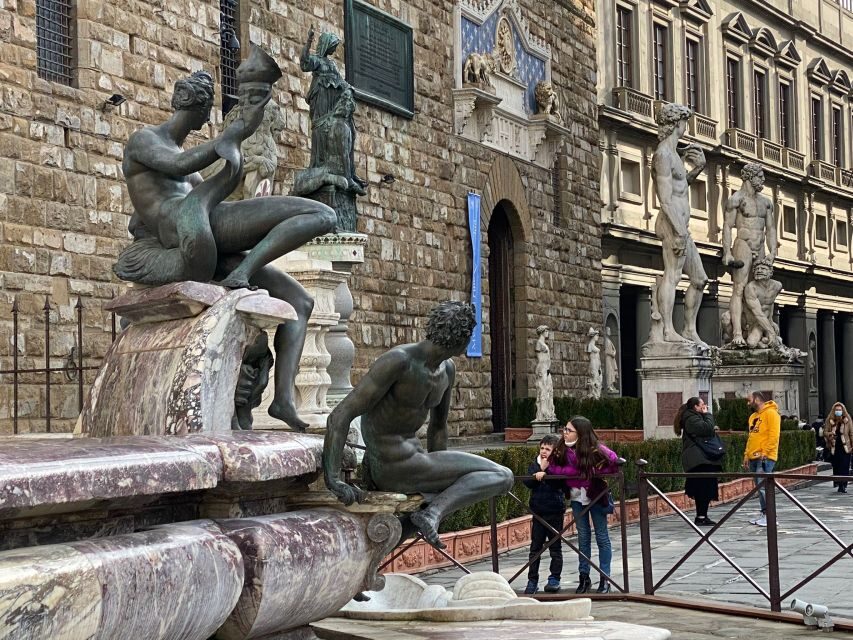
Piazza della Signoria is basically an outdoor classroom. The square is ringed with recognizable sculpture and dramatic stone scenes, so your guide can point, explain, and move on without you needing tickets or a second location.
For kids, the best part is that the stories and the art match up. When you’re talking about Medusa, you can literally look at the visual reference tied to Perseus’ victory. That cause-and-effect style helps children remember the plot.
Also, Florence rewards curiosity here. There’s enough visual variety to keep older kids engaged, but the tour is light enough for younger children to stay with you.
Starting at Fontana del Nettuno: Easy Meet-Up, Clear “We’re Here”
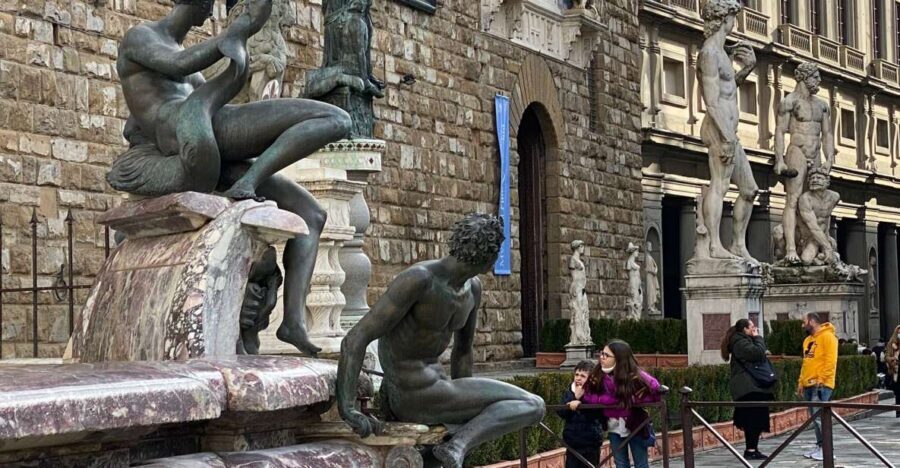
You meet your guide at the Fountain of Neptune. Starting at a big, obvious landmark helps families get settled fast, which matters a lot with kids. It also sets the tone: you’re already in the middle of a story-heavy zone, not walking in circles before the fun begins.
Once the group gathers, the guide typically uses the first moments to get everyone oriented—where you are, what you’ll see, and how the myth characters relate to the sculptures around the square. That short setup is one of the reasons the tour tends to feel smooth, even for families with short attention spans.
Tip: show up a few minutes early. With small groups, being late can ripple through the timing and cut into the flow.
Piazza della Signoria: Perseus, Medusa, and David Without the Headache
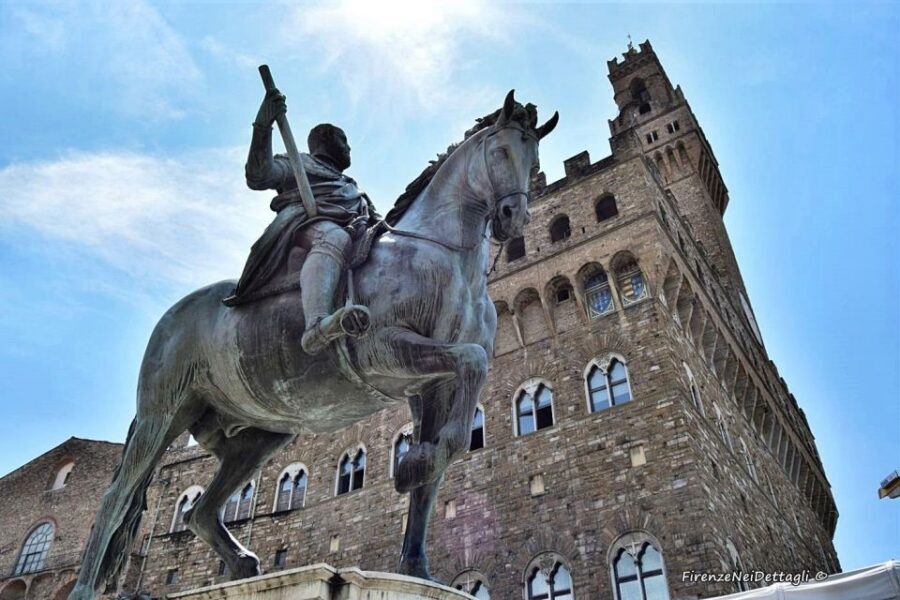
The heart of the experience is your walk through Piazza della Signoria, where you’ll spend about half an hour getting the mythology-and-art story straight.
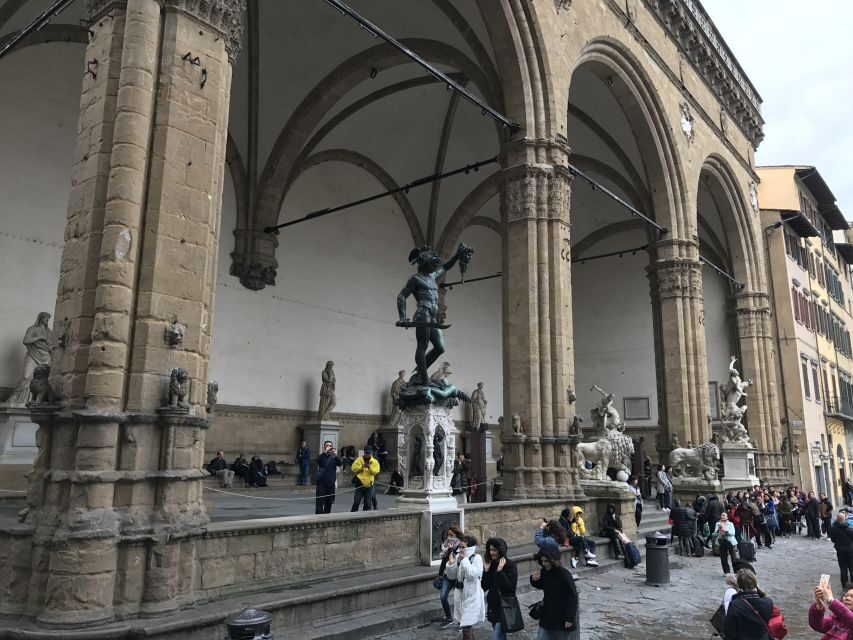
Perseus shows up first in bronze: you’ll see Perseus victorious after the battle with Medusa, represented in bronze by Benvenuto Cellini. Kids tend to latch onto the action here—monster, victory, and a clear “this is the moment” feeling—so it’s a strong opening character.
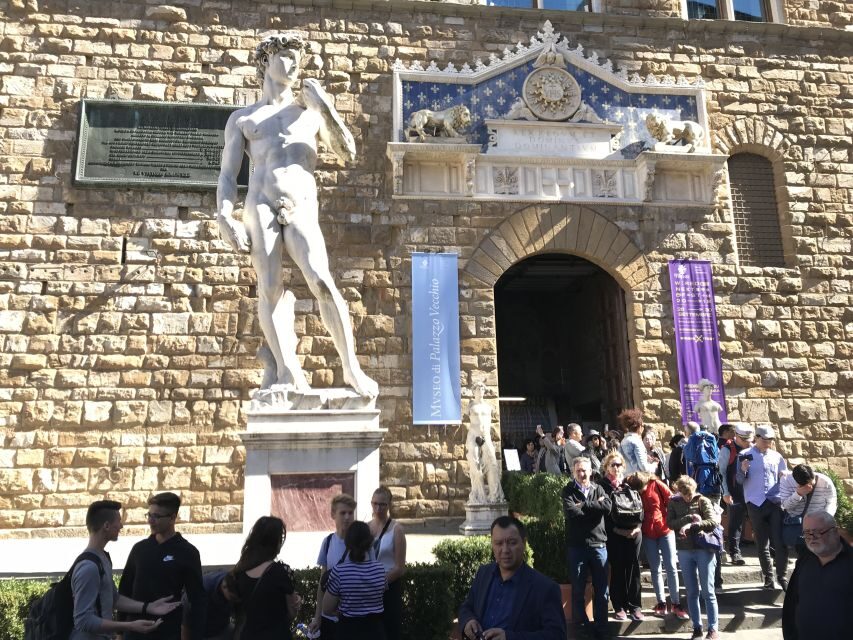
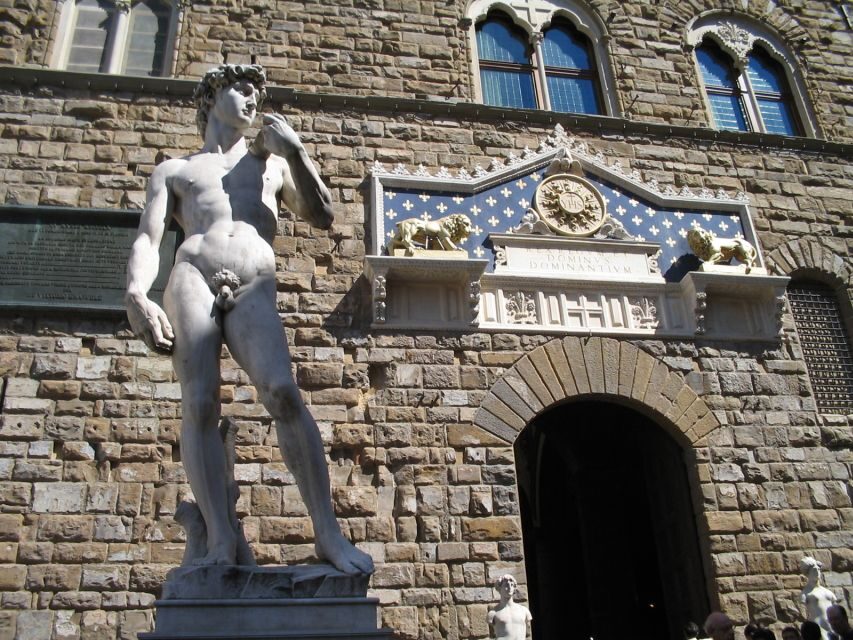
Then you’ll look at the David standing over the square. Your guide connects David to the idea of battling Goliath, so the scene isn’t just about a famous statue name. It becomes a story beat, which is how you help children remember Florence’s big artistic ideas without turning it into a lecture.
Even if you’re not a “myth person,” this section works. It’s built for kids who want simple motivations: Who fought whom, and why is everyone so proud of it?
What can slow you down here?
Because the square is open-air, you’ll occasionally deal with people passing through and the fact that it’s a busy public space. If you have a child who gets overwhelmed by crowds, choose a spot where your guide can speak clearly and you can keep an eye on everyone.
Loggia dei Lanzi: Lions, Zeus, Poseidon, and Hercules in One Hour Block
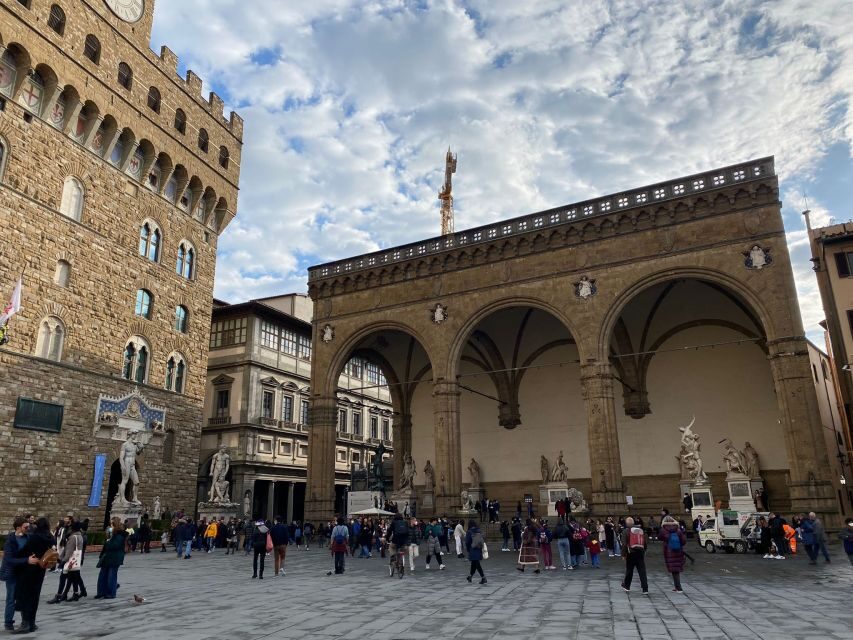
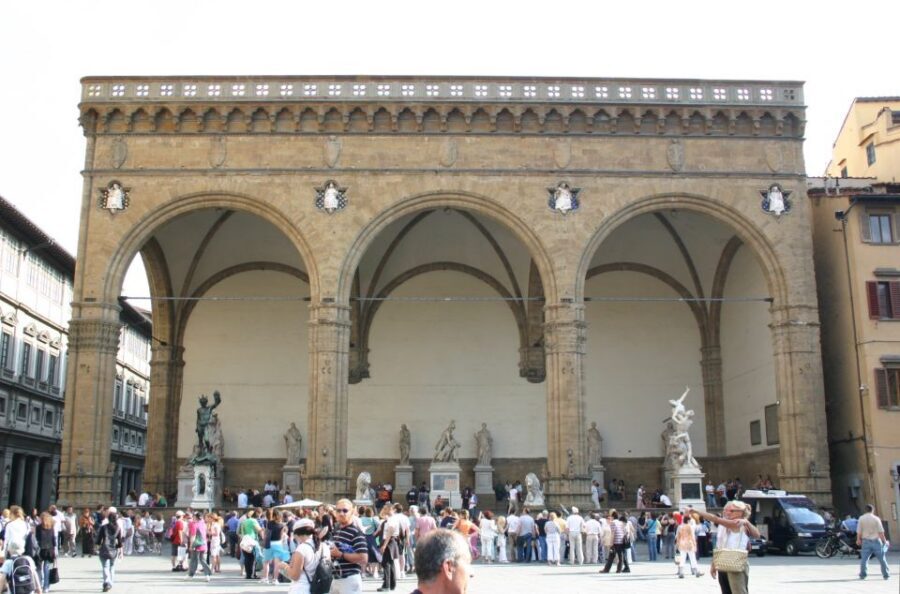
Next you move to the Loggia dei Lanzi for another focused half hour. This stop is special because it adds variety: the stories keep coming, but the visual energy changes from “one heroic figure at a time” to a whole environment you can scan.
Here’s what to expect:
- You’ll meet Hercules, including the scene of Hercules battling the Centaur, and learn how Hercules became a symbol tied to Renaissance Florence.
- You’ll also see Zeus, king of the Olympians, and his brother Poseidon. Your guide connects the mythic roles to what you’re viewing, so the characters aren’t random names on a sign.
Then comes the part kids talk about afterward: the lions. The Loggia dei Lanzi features hundreds of carved lions, and they’re the kind of detail children can spot quickly. It’s also a nice break from straight “hero vs. monster” storytelling because it gives kids something to discover with their eyes.
You’ll finish this area with references to sculpted characters from other famous artists. Your guide points out the copy of Donatello’s Judith and Holofernes, adding a darker, dramatic contrast to the more straightforward hero stories.
How the Guide Shapes the Entire Experience (So Kids Actually Stay With It)
The biggest strength of this tour is the way the guide handles pacing. Done well, it feels like a story that keeps turning pages: new character, quick context, then right back to the sculpture.
From what’s been shared about the experience, the most praised sessions are those where the guide:
- uses lively storytelling
- answers kids’ questions instead of brushing them off
- adapts the tone for very young children
You can feel this in moments like the opening explanations and the way the guide likely gives you choices for engagement. The tour is designed so you can relax in the square, or if your child is young, you can follow a child-focused “odyssey” path through the heroes and their statues.
There’s also a practical upside to the group size: with a maximum of 8 participants, it’s easier for the guide to see who’s following and who needs something repeated in simpler terms.
Language matters more than you might think
The tour runs in Italian, English, French, German, and Spanish. If your child is sensitive to speed or accent shifts, pick the language you trust most. A clear, comfortable language track helps children stay confident enough to ask questions.
What $53 Gets You in Real Terms (And Why It’s Not Just “Paying for Walking”)
This tour costs $53 per person and lasts about 1 hour. On paper, it’s simple: you pay for a live guide and a tight route centered on major sculpture viewing.
Here’s why that can be good value, especially with kids:
- You’re paying for interpretation. The Piazza and Loggia contain famous names, but your child likely won’t connect them without a guide telling the story in plain, timed chunks.
- The route is compact, so you’re not paying for transportation time inside your day.
- Small group size improves the odds that your child will be included rather than just observed.
Do note one limitation: this is not a long museum day. It’s a focused “meet the myths, see the statues” experience. If you want extended time around one masterpiece, you’ll probably want a second stop after the tour.
Rain or Shine: A Tour Built for Real Weather Days
The tour runs rain or shine. That’s important in Florence, where weather can change fast.
What I like about this setup is that it keeps the plan intact. You’re not stuck scrambling for alternatives when clouds show up. For families, that steadiness matters.
If it’s wet, you’ll likely need to dress for puddles and keep an eye on footing near stone edges. Bring a light rain layer for kids so they don’t get cold and start melting down right when the story gets exciting.
Who This Tour Fits Best (And Who Might Want Something Else)
This is ideal if:
- you’re traveling with kids who like stories, characters, and quick challenges
- you want an easy way to introduce Greek mythology in a place where it’s tied to real art
- your child asks lots of questions and you want a guide who handles them
It can be a good fit even if you’re not into art theory. Florence’s sculptures are famous, but this tour teaches the “why” in a kid-friendly way.
It might feel less ideal if:
- your child needs long stops and lots of free time to roam
- you prefer museum interiors where you can control noise and crowds
Practical Tips to Make It Go Smoothly
A few small choices can make the difference between a “fun hour” and a “great start that fizzles.”
- Start the tour with your child’s energy level in mind. If possible, avoid scheduling it when they’re already hungry and tired.
- Bring a snack plan. The tour is only 1 hour, but kids still need fuel.
- Take a photo early and again at the end. The end picture will help kids remember what the stories were about.
- If your child is very young, lean into the tour’s option to relax and return to a calmer pace.
Should You Book This Kids’ Piazza Tour?
Yes, if you want an hour-long Florence experience that’s built for children’s attention and imagination. The price makes more sense when you consider what you’re buying: a live guide translating myths and famous statues into a story your child can repeat.
I’d book it if your kids are curious and you like the idea of turning “big names” like Perseus, Medusa, Hercules, and David into something tangible you can see right there.
Skip it or plan a follow-up if you’re hoping for slow pacing, deep museum time, or quiet, uninterrupted viewing. This is a fast, lively route—and that’s exactly why it works.
FAQ
Where do we meet for the tour?
Meet your guide at the Fountain of Neptune.
How long is the Florence Piazza della Signoria children’s walking tour?
The tour lasts about 1 hour.
Is the tour held rain or shine?
Yes, it takes place rain or shine.
How many people are in the group?
The group is small, limited to 8 participants.
What languages are available for the guide?
The guide is available in Italian, English, French, German, and Spanish.
Is the tour wheelchair accessible?
Yes, the tour is wheelchair accessible.
What’s included in the ticket price?
The live tour guide is included.
Is there free cancellation?
Yes. You can cancel up to 24 hours in advance for a full refund.
Can I reserve now and pay later?
Yes. You can reserve now & pay later.
What will we actually see during the walk?
You’ll see key pieces connected to Greek mythology and Renaissance sculpture around Piazza della Signoria and the Loggia dei Lanzi, including references such as Perseus, Medusa, David, Hercules, Zeus, Poseidon, the lions in the Loggia, and Donatello’s Judith and Holofernes (as a copy).