
REVIEW · FLORENCE
Firenze: Italian Football Museum
Book on GetYourGuide →Operated by Museo del Calcio · Bookable on GetYourGuide
Italy’s biggest football moments, in one museum.
I like how this place is tied to the real home of the national teams: the Coverciano Technical Centre. You walk through the Italian team story from 1898 to today, then you’re able to look out toward the training pitch where the Azzurri work. The museum is a focused hour-long visit, not a half-day commitment.
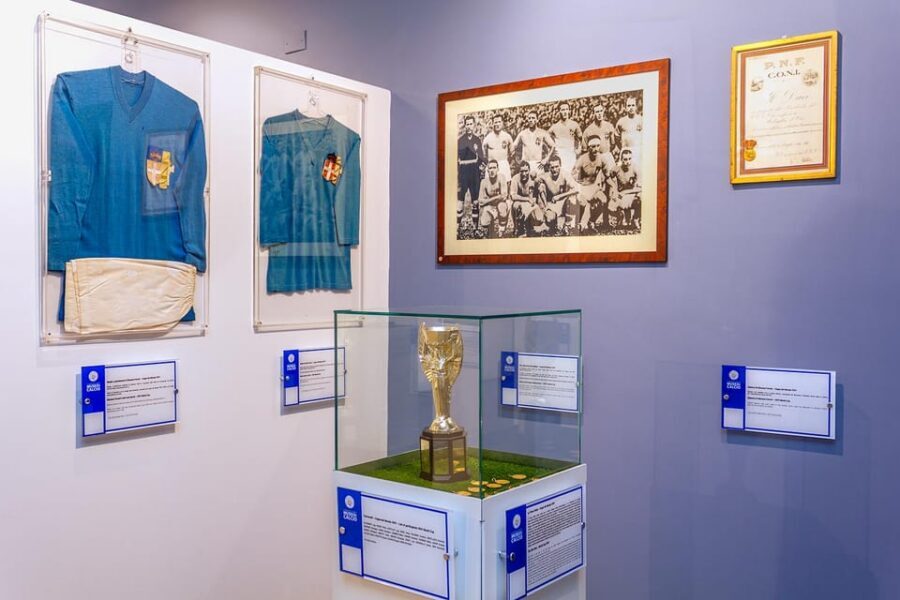
Two things I especially like: the way the big trophies are laid out—four World Cups (1934, 1938, 1982, 2006) plus European Championship wins (1968 and 2021)—and the free audio guide app you can download to your phone. One drawback to consider: it’s not a huge museum, so if you expect a massive, full-scale stadium-style experience, you may feel it moves quickly.
A big win: 1 hour fits neatly between other Florence plans.
A fair note: you’re seeing the museum, not a full guided training-centre tour, since that part isn’t included.
In This Review
- Key things to know before you go
- Italian Football Museum in Coverciano: what you’re really buying
- Where it is and what surrounds it
- The museum flow: from 1898 to modern Italy
- World Cups and European titles: the “show me the results” rooms
- Videos of iconic moments: the emotional shortcuts
- The free audio guide app: how to use it without overthinking
- Memorabilia and awards: what you’ll actually see
- Training pitch views: the subtle wow factor
- The FIGC Store with adidas merchandising
- Price and value in plain terms
- Who this suits best (and who might skip it)
- Quick FAQ (answers you can use)
- FAQ
- How long is the Italian Football Museum visit?
- Where is the museum located?
- What does the ticket include?
- Is the audio guide available on my phone?
- What major trophies can I see?
- Are videos of iconic moments part of the museum?
- Can I get a guided tour of the Coverciano training centre?
- Is the museum wheelchair accessible?
- Are pets allowed inside?
- Should you book Firenze: Italian Football Museum?
Key things to know before you go

- Coverciano setting: the museum sits in the Italian national teams training complex, not in some random mall-like building.
- Trophies front and center: World Cups from 1934, 1938, 1982, 2006, plus Euro titles from 1968 and 2021.
- Multimedia moments: you can watch videos of iconic Italian national team scenes.
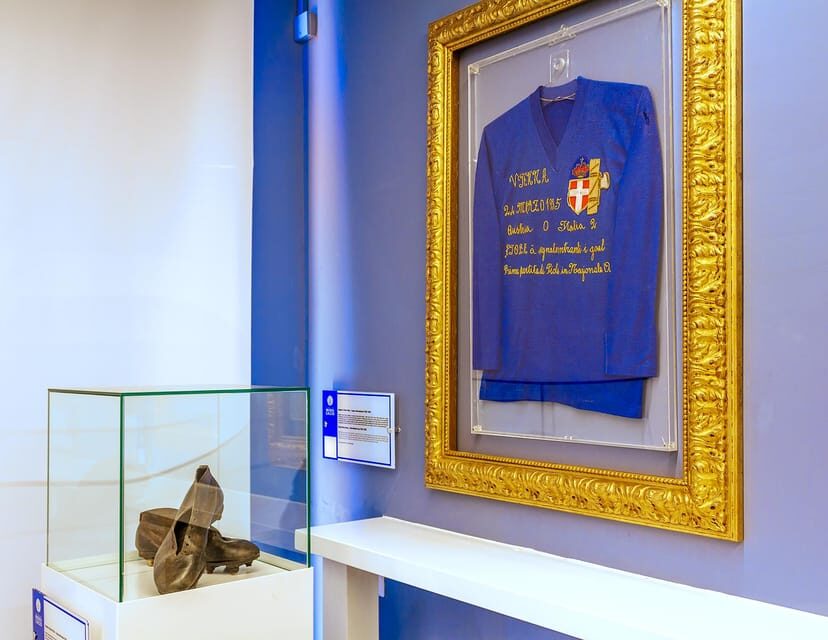
- Memorabilia collection: jerseys, awards, and items connected to major victories.
- Free mobile audio guide: downloadable app that adds context as you move through the rooms.
- Official shop nearby: the FIGC Store sells national-team merchandising made by adidas.
Italian Football Museum in Coverciano: what you’re really buying

You’re paying for a tight, football-focused experience with a specific payoff: the history of Italy’s national teams, told through trophies and artifacts in the exact environment where those teams prepare.
The price is $14 per person, and the time is about 1 hour. For that kind of money, it’s a good value if you care even a little about Italy’s football identity. The museum doesn’t try to cover every league and club in Italy. It zooms in on the Azzurri and Azzurre, so your brain knows what it’s looking for. If you only want a quick photo stop, it may feel like you’re paying for a small space. If you like national-team drama—finals, comebacks, and defining squads—it works.
The other smart part: you get an audio guide app included with the ticket. That matters more than you might think. A trophy case can look impressive but silent. The audio guide adds the “why this mattered” layer, so the displays feel like story beats instead of just shiny objects.
You can also read our reviews of more museum experiences in Florence


Where it is and what surrounds it
The Italian Football Museum is inside the Coverciano Technical Centre, the base for the Italian national teams. This is one of those locations that changes your mood the moment you arrive. You’re not wandering a generic exhibition hall. You’re in the working world behind the scenes.
During your visit, you can admire the pitch where the Azzurri train and prepare. Even if you’re not a tactics person, that sight gives meaning to the memorabilia. It connects the past trophies to present-day preparation. It also gives the visit a slightly different texture than most museums: you can feel the football rhythm around you, even while you’re indoors.
If you like experiences that feel tied to real places—training grounds, arenas, clubs—this setting is a big plus. It’s also helpful if you’re combining your day with other sights in Florence. This is easier to plug into a schedule than something that’s far out of the city.
The museum flow: from 1898 to modern Italy
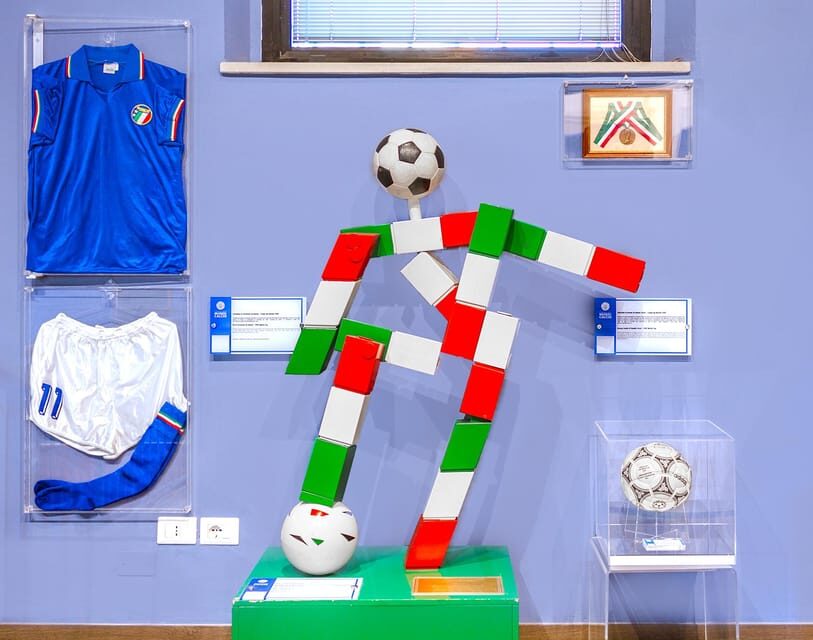
The museum covers the Italian national teams’ story starting in 1898 and continuing to today. That broad timeline is exactly why the museum feels focused: you’re not stuck in one era for too long. You get to see how the team identity evolved, then you jump to the “headline” moments that shaped Italian football.
A typical path through the exhibits feels like this:
- You begin with the historical arc of the national teams, setting the context for what comes next.
- Then the major victories become the anchors, with trophy displays and jerseys or awards connected to those seasons.
- Multimedia sections reinforce the emotional beats, including videos of iconic moments.
- You finish with an on-site sense of the present, including views connected to training.
Because the visit is designed for roughly one hour, don’t expect to linger for long in every corner. Plan to move at a steady pace. If you want to slow down, use the audio guide to pick what you’ll spend extra time on.
World Cups and European titles: the “show me the results” rooms
If you come for one reason, it’s probably the trophies. The museum showcases Italy’s major international wins clearly, with the four World Cups listed as 1934, 1938, 1982, and 2006. It also includes two European Championships: 1968 and 2021.
What I like about this approach is that it doesn’t bury the lead. You don’t have to hunt across dozens of rooms to find the big names. Italy’s biggest achievements are highlighted in a way that helps you connect the emotion of a tournament to an object you can actually stand in front of.
Also, these years aren’t random numbers on a wall. Even if your football memory is patchy, seeing the set of dates together gives you a fast grasp of Italy’s international rhythm: multiple generations, different eras, and a long tradition of reaching the biggest stages.
Videos of iconic moments: the emotional shortcuts
Museums sometimes overdo text. Here, you get a better pacing tool: video screens with memorable moments. This is where the experience starts to feel less like a scrapbook and more like a highlight reel.
Videos are also a practical move for a one-hour visit. You can process more information in less time. If you’re the kind of person who learns visually, the multimedia sections help you connect the trophies to the actual play on the pitch.
If you’re traveling with someone who isn’t a hardcore football fan, videos also help keep attention. It’s easier to share a reaction to a key moment than to read your way through a historical essay.
- Tuscany Day Trip from Florence: Siena, San Gimignano, Pisa and Lunch at a Winery
★ 5.0 · 21,634 reviews - The Best tour in Florence: Renaissance & Medici Tales – guided by a STORYTELLER
★ 5.0 · 12,316 reviews




The free audio guide app: how to use it without overthinking
The audio guide app is included and available as a free download to your phone. That gives you flexibility: you can go room to room with the story in your pocket.
Here’s how I’d use it for best value:
- Start it right away so you learn what you’re looking at before you get surrounded by jerseys and awards.
- When you reach the World Cups or European Championship displays, pause your normal pace. Let the audio explain what the moment represented.
- Save one extra pass for the multimedia area, where the audio can help you understand why certain scenes are remembered.
The app doesn’t just add facts. It turns the museum into a guided flow, which is key for a compact attraction.
Memorabilia and awards: what you’ll actually see
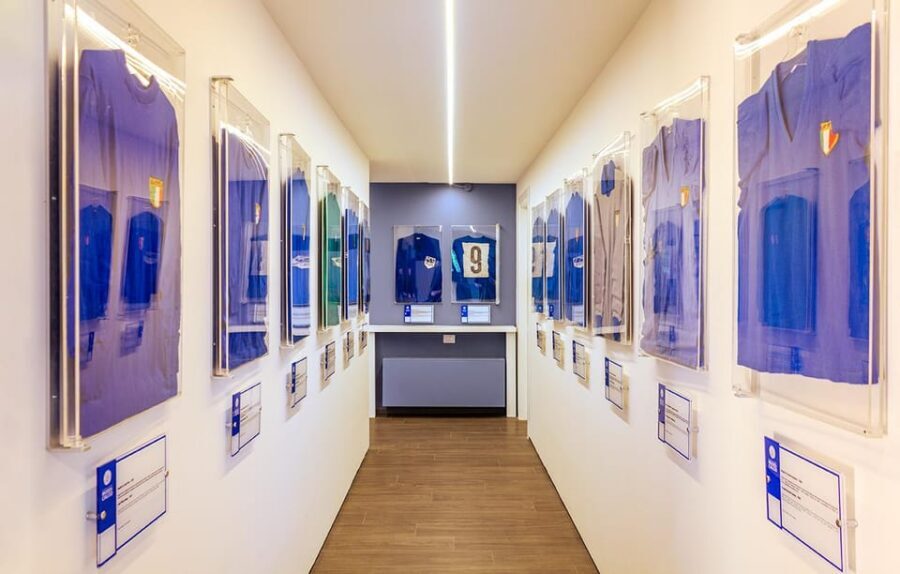
The museum has a large collection of memorabilia, including awards and items connected to major Italian national team victories. Expect jerseys, trophies, and other artifacts that help you see football culture up close.
This is also where opinions can split. One person felt the museum was small and didn’t justify the price. Another appreciated that even though it’s compact, the pieces are historically meaningful to the FIGC and linked to real achievements.
So think of it like this: you’re not shopping for a giant, encyclopedic display. You’re choosing a concentrated collection of football milestones—focused on what matters to the national teams.
If you love football history, that concentration is a strength. If you expected a huge museum like you might see with broader museum topics, you might wish there were more rooms. Keep your expectations aligned with the one-hour timeframe.
Training pitch views: the subtle wow factor
Don’t skip the part that connects the museum to the present. Being able to see the pitch where the Azzurri train is a quiet highlight. It’s not a full stadium tour, but it gives you a sense of place.
This matters for how you’ll remember the experience later. Instead of “I saw trophies,” it becomes “I saw trophies in the place tied to today’s preparation.” That’s the kind of detail that makes the museum feel grounded.
The FIGC Store with adidas merchandising
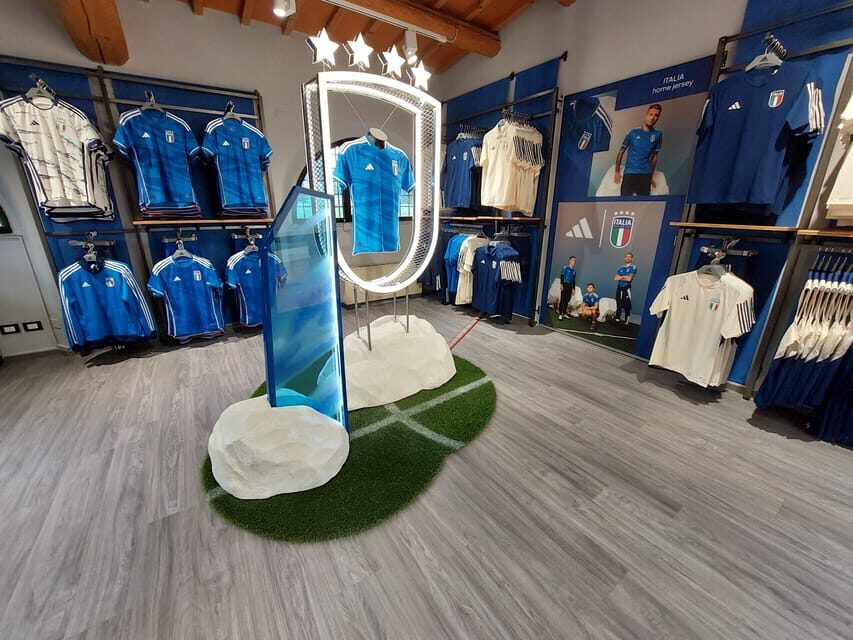
You can visit the FIGC Store inside the museum area for official merchandising by adidas. Even if you don’t plan to buy, it’s a useful way to connect the museum experience to modern fandom.
One practical tip: if you want a souvenir, check the store before you’re done with your visit. It’s easier to judge what you actually want while the experience is fresh. And if you enjoy chatting with staff, this store is a good place to do it—friendly service shows up as a real plus.
Price and value in plain terms
At $14 for about one hour, this museum is best seen as a value-priced football fix with a strong sense of place. You’re paying for:
- a focused walkthrough of national team history,
- major trophy displays,
- videos of iconic moments,
- and a free audio guide app.
If you’re a casual fan, it’s still worth it—especially if you enjoy short, structured stops. But if you’re the type who wants a big, multi-hour deep museum experience, you may feel it’s too short and too compact.
One more value point: the museum is in a real training complex. That can make the visit feel more “real-world” than a standalone museum. And for many people, that alone helps justify the ticket price.
Who this suits best (and who might skip it)
You’ll probably enjoy this more if:
- you follow Italy’s national team at all,
- you like trophies, jerseys, and sports artifacts,
- you enjoy short museum stops that fit into an itinerary.
You might hesitate if:
- you want a guided tour of the training centre itself, because that isn’t included,
- you expect a very large museum space,
- you prefer stadium tours over indoor exhibits.
It’s a good match for a solo stop, a couple stop, or a family stop where at least one person is a football fan and appreciates a clear hour-long plan.
Quick FAQ (answers you can use)
FAQ
How long is the Italian Football Museum visit?
Plan for about 1 hour.
Where is the museum located?
It’s in the Coverciano Technical Centre, home of the Italian national teams.
What does the ticket include?
Your ticket includes entrance to the museum and access to the audio guide app.
Is the audio guide available on my phone?
Yes. The audio guide app can be downloaded for free on your mobile.
What major trophies can I see?
You can admire Italy’s four World Cups (1934, 1938, 1982, 2006) and the European Championships won in 1968 and 2021.
Are videos of iconic moments part of the museum?
Yes, there are videos featuring iconic moments from the Italian national team.
Can I get a guided tour of the Coverciano training centre?
No. A guided tour of the training centre is not included.
Is the museum wheelchair accessible?
Yes, it is wheelchair accessible.
Are pets allowed inside?
No, pets are not allowed.
Should you book Firenze: Italian Football Museum?
Yes—if you want a compact, ticket-priced football experience with a real location at the heart of Italy’s national teams. The biggest reasons to book are the trophy focus, the audio guide app, and the chance to connect the museum to the Coverciano training pitch.
Hold off if you’re expecting a full training-centre tour or a big, multi-hour museum. This is built for an efficient hour, and it shines when you treat it like that: a concentrated hit of Italy’s football moments, right where modern preparation happens.


More Museum Experiences in Florence


More Tour Reviews in Florence
- Tuscany Day Trip from Florence: Siena, San Gimignano, Pisa and Lunch at a Winery
★ 5.0 · 21,634 reviews - The Best tour in Florence: Renaissance & Medici Tales – guided by a STORYTELLER
★ 5.0 · 12,316 reviews