REVIEW · FLORENCE
Florence: Artisanal Crafts and Workshops Guided Tour
Book on GetYourGuide →Operated by Martina Cappello · Bookable on GetYourGuide
Florence has a quiet craft side. This 3-hour guided tour focuses on working hands and old-school techniques, moving from goldsmithing and gemstone work to leather, carving, and the perfume world tied to Santa Maria Novella. It’s the kind of experience where you get context, not just photos.
I especially love how the guide experience can be tailored to what you care about, and Martina Cappello’s approach is calm and attentive—she can ask about your interests before you meet and then steer the pace accordingly. I also like that you visit places with serious craft credentials, including the oldest pharmacy in the world, Santa Maria Novella, founded in 1221.
One consideration: there’s a moderate amount of walking, and the tour isn’t suitable for wheelchair users or anyone with mobility impairments because the workshop locations are in historic areas. Comfortable shoes matter here, and food/drinks aren’t allowed inside the workshops.
In This Review
- Key things to know before you go
- Why Florence Crafts Feel Different Than Museum Time
- Starting at Piazza Repubblica: Quick Orientation, Then Workshops
- Goldsmithing and Semi-Precious Stones: The Florence Art of Putting Pieces Together
- Santa Maria Novella Pharmacy: Where Perfume Culture Started
- Leather Work at Scuola del Cuoio Inside Santa Croce
- Carving at Bottega d’Arte Maselli: Frames as Art Objects
- Bookbinding and Perfumery: Skills That Make Beauty Last
- Price and Value: What $116 Buys in 3 Hours
- Who This Tour Suits Best (And Who Might Skip It)
- Should You Book This Florence Crafts Tour?
- FAQ
- How long is the Florence artisanal crafts tour?
- Where do I meet the tour guide?
- Are hotel pickup and drop-off included?
- What languages is the tour offered in?
- Is food and drinks included?
- Is the tour suitable for wheelchair users or mobility impairments?
Key things to know before you go
- Real craft workshops, not staged “factory tours”: you see artisans working and hear how traditions pass down through generations.
- Gold + stones with named local techniques: you’ll learn about Florentine commesso work through a very specific family workshop.
- Santa Maria Novella is more than a landmark: it’s tied to Dominican apothecary origins and Renaissance perfume culture.
- Leather work inside Santa Croce’s craft orbit: you’ll spend time at the Scuola del Cuoio area tied to Il Bisonte and the Santa Croce complex.
- Carving that connects to famous art: Bottega d’Arte Maselli frames have even been used for work by Da Vinci and Rosso Fiorentino.
Why Florence Crafts Feel Different Than Museum Time
Museums give you distance. Crafts put you close to process. On this tour, the point isn’t to rush through big names—it’s to watch how materials become objects you can hold, wear, or display.
Florence is famous for art, but it also treats craftsmanship like part of its identity. The guide ties that together: how fine paintings needed careful framing, how Renaissance women wore jewelry and precious stones made by skilled artisans, and how Tuscan goldsmithing reaches back even to the Etruscan age. That framing matters, because suddenly the city’s “art world” stops being just paintings on walls.
You’ll also get a sense of how diverse Florence is when it comes to making. In just a few hours, you’re moving from metal and stone to leatherwork and carving, with perfumery and bookbinding conversations woven through. It’s a compact way to see why Florence became a hub for workshops that still matter today.
You can also read our reviews of more guided tours in Florence
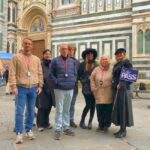
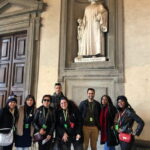
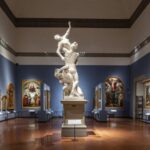
Starting at Piazza Repubblica: Quick Orientation, Then Workshops
You meet at Piazza Repubblica, right next to the obelisk. Hotel pickup and drop-off are included, which makes this one easier than tours that force you to navigate on your own right at the start of the day.
Duration is 3 hours, so the pace is guided and efficient. You’ll still do a moderate amount of walking, so I’d treat this as a “see-and-learn” morning or afternoon, not a leisurely stroll between major monuments.
One more practical note: food and drinks aren’t allowed inside the workshops. That means you’ll want to plan around timing—if you’re sensitive to hunger, eat before you go and keep it simple. Photography is usually allowed, which helps you bring the details home later, since craft work is all about small techniques you don’t want to forget.
Goldsmithing and Semi-Precious Stones: The Florence Art of Putting Pieces Together
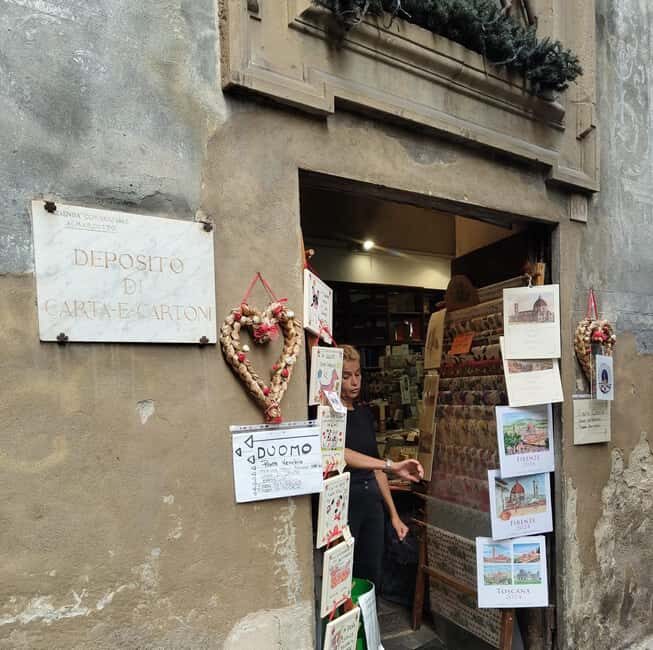
Goldsmithing in Florence isn’t just about sparkle. It’s about precision, patience, and design that makes sense up close. On this tour, you’ll see gemstone and metal craft through small workshops, including the workshop of Arlo Haisek and the Lastrucci family workshop.
What’s especially interesting here is the Lastrucci family connection to the Florentine commesso technique. This is rare enough that the tour specifically highlights the Lastrucci family as one of the very few in the world working this way inside the ancient Spedale di San Francesco. When a craft technique is that hard to find, watching it in person becomes more valuable than just learning the term.
You’ll also get a sense of why Florence pieces feel distinct. Craft objects aren’t made in isolation; they’re designed to fit Florentine tastes for refined materials and layered ornament. Even if you’re not buying jewelry, you’ll leave with a sharper eye for what makes a stone setting look balanced, how color gets used intentionally, and why “small” details take real labor.
Santa Maria Novella Pharmacy: Where Perfume Culture Started
Santa Maria Novella is often treated like a must-see stop. Here, it becomes a living story about how Florence made its scents and medicines.
The pharmacy was founded in 1221 by Dominican friars, and the tour frames it as the birthplace of the apothecary’s art. That gives you context before you even reach the shelves—this wasn’t just a shop; it was part of a tradition that grew around careful formulation.
Then comes the perfume link, which is one of the most fun bits of cultural trivia the tour brings to life: Renato Bianco, described as master perfumer to Catherine de’ Medici, left Santa Maria Novella for the French court with the fragrance called Aqua della Regina. It’s a neat reminder that Florence craft expertise didn’t stay local; it traveled with people and ideas.
You can also purchase room fragrances at the Aquaflor store during your visit. I like this because it turns learning into something you can test at home. If you prefer practical souvenirs, room scent is often easier to pack than fragile items—and it gives you a real “memory trigger” when you use it later.
Leather Work at Scuola del Cuoio Inside Santa Croce
Leather in Florence isn’t generic “handmade goods.” It’s a whole specialty with specific training and tools, and it makes sense that the Scuola del Cuoio is tied to the Santa Croce complex.
On this tour, you’ll admire leather work at the Scuola del Cuoio area (and the broader leather-shop ecosystem around it). What you’ll likely find compelling is the level of craft discipline: leatherwork looks simple until you watch how shaping, finishing, and detail work together.
This stop matters because leather shows you a different side of Florence making. Goldsmithing tends to dazzle immediately, but leather rewards close attention. You start noticing surface texture, how patterns land cleanly, and why finish quality is the difference between “nice” and truly excellent.
Also, the tour keeps you grounded in context. You’re not just staring at products—you’re learning how and where that expertise lives in the city, and why these workshop traditions keep surviving when so much modern retail has replaced them.
You can also read our reviews of more tours and experiences in Florence


Carving at Bottega d’Arte Maselli: Frames as Art Objects
Carving might sound like a side topic until you see how frames can carry the weight of a whole artwork. At Bottega d’Arte Maselli, the tour focuses on the carving tradition behind their famous frames.
This workshop is described as world-renowned, to the point that its craftsmen have had the honor of framing works by Da Vinci and Rosso Fiorentino. That’s a big claim, and it’s exactly why the stop is worth it. Frames aren’t always treated as serious art by tourists, but here you’re asked to think of the frame as part of the final experience of a painting.
Carving also gives you a different sense of craftsmanship: not just decorating, but subtracting material precisely. If you like objects where form depends on the maker’s control—tools, measurement, and clean edges—you’ll probably pay extra attention here.
This is also one of the best stops for souvenir-minded people who don’t want to buy jewelry. If you’re into home display or gift ideas, crafted frame work is one of the most logical ways to bring Florence craft into your everyday life.
Bookbinding and Perfumery: Skills That Make Beauty Last
The tour doesn’t treat perfumery and bookbinding as random add-ons. It uses them to show how Florence value spreads across categories: scent for the body and home, and binding that protects and dignifies written work.
You’ll learn about the art of bookbinding and perfumery in Florence as part of the workshop visits. Even without focusing on one single “big museum-style” artifact, the craft idea stays consistent: these aren’t fast, disposable creations. They’re built to last and improve with use.
This is where I think the tour gives the best mental model for Florence. You start seeing craft as infrastructure for taste. A bookbinding tradition supports culture (how stories are carried). A perfume tradition supports culture too (how identity and seasonality are expressed through scent). And that same mindset ties back to jewelry, leather, and frames.
Price and Value: What $116 Buys in 3 Hours
At $116 per person for a 3-hour private-group format, this tour sits in the “worth it if you care about crafts” category.
Here’s what you’re getting for that price, in practical terms:
- Hotel pickup and drop-off included
- Guided access to historic workshops
- Admission to the Scuola del Cuoio and the Lastrucci family workshop
- A stop at Santa Maria Novella (visit included)
- A live guide in Spanish or English
The value comes from the mix: you’re not paying just for a single attraction. You’re getting multiple specialist stops in one guided flow, plus access that’s more informative than a self-guided wander.
The tradeoff is that it’s 3 hours, so you won’t have time to become a serious shopper. If you want to compare products for a purchase, bring a calm expectation. The tour is best for learning and looking, with optional buying where it fits, like room fragrances at Aquaflor.
Who This Tour Suits Best (And Who Might Skip It)
This is a strong fit if you want Florence to feel personal and hands-on. If you like seeing how things are made—especially jewelry/gem work, leather craft, carving, and fragrance—you’ll get a lot out of the workshop-focused structure.
It’s also a good choice if you want the guide to adapt. One of the most praised elements tied to the experience is that Martina can ask about interests before you meet, then explain in a way that actually matches what you’re curious about.
I’d skip it if you have mobility limitations, since the locations are in historic areas with a moderate amount of walking. And if you’re expecting a food-centered tour, note that food and drinks aren’t allowed inside the workshops and they’re not included in the price.
Should You Book This Florence Crafts Tour?
Book this if you want a fast but meaningful craft-focused Florence experience—one that connects goldsmithing, leatherwork, carving, perfumery, and bookbinding into a single picture of how the city makes beauty. The strongest reason to choose it is the guided access to real workshop spaces and the way the guide helps you understand what you’re seeing, including the Santa Maria Novella perfume story and the rare commesso stone technique.
Skip it if you need fully step-free access or if you prefer large monuments over workshop time. For everyone else, this is a smart way to see Florence beyond the usual photo stops, and leave with ideas you can actually use when you shop and look afterward.
FAQ
How long is the Florence artisanal crafts tour?
It lasts 3 hours.
Where do I meet the tour guide?
You meet at Piazza Repubblica, next to the obelisk.
Are hotel pickup and drop-off included?
Yes, hotel pickup and drop-off are included.
What languages is the tour offered in?
The live guide speaks Spanish and English.
Is food and drinks included?
No. Food and drinks aren’t included, and food and drinks aren’t allowed inside the workshops.
Is the tour suitable for wheelchair users or mobility impairments?
No. It isn’t suitable for wheelchair users or those with mobility impairments due to the historic nature of the workshop locations.
More Guided Tours in Florence
More Tours in Florence


More Tour Reviews in Florence
- Tuscany Day Trip from Florence: Siena, San Gimignano, Pisa and Lunch at a Winery
★ 5.0 · 21,634 reviews - The Best tour in Florence: Renaissance & Medici Tales – guided by a STORYTELLER
★ 5.0 · 12,316 reviews