REVIEW · PISA
Love in Pisa: Self-Guided Romantic Puzzle Adventure
Book on Viator →Operated by Questo · Bookable on Viator
Love stories meet street puzzles in Pisa. This self-guided walk turns the city into a game: you follow smartphone clues to a dozen-plus stops and learn what to look for as you go. I especially like the flexible pacing, since you can start when you want, stop as long as you like, and continue right where you left off.
The main drawback is that it is not led by a person. If you want a live guide explaining everything in real time, you’ll need to bring your own curiosity and use the phone prompts to do the heavy lifting.
In This Review
- Key highlights to know before you go
- A puzzle walk that makes Pisa feel like a story
- Piazza della Stazione to the Leaning Tower: the practical route
- How the Questo app keeps the game moving
- Stop-by-stop: what to expect at each Pisa checkpoint
- Stop 1: Piazza Vittorio Emanuele II
- Stop 2: Chiesa di Santa Maria del Carmine
- Stop 3: Parroquia de San Martino
- Stop 4: Piazza XX Settembre
- Stop 5: Chiesa di Santa Maria della Spina
- Stop 6: Museo Nazionale di Palazzo Reale (outside)
- Stop 7: Piazza Dante Alighieri
- Stop 8: Piazza delle Vettovaglie
- Stop 9: Piazza dei Cavalieri
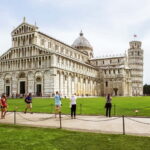
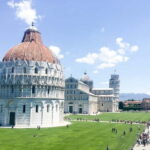
- Stop 10: Leaning Tower of Pisa (finish)
- Price and time: value that makes sense for Pisa
- The best time to play: evening light feels more romantic
- Who should book Love in Pisa (and who may want a different style)
- Should you book Love in Pisa?
- FAQ
- What language is this activity offered in?
- How long does the self-guided puzzle adventure take?
- Do I need a tour guide?
- Where does the adventure start and end?
- Is the Leaning Tower visit included with admission?
- Are entry tickets to attractions included?
- What do I use to play the game?
- Can I play at my own pace?
- Is there customer support if I have questions?
- Is it refundable if I cancel?
Key highlights to know before you go
- Phone-first start: download the app and begin on your schedule
- Follow clues across central Pisa: the route threads through landmark after landmark
- More than the Leaning Tower: you’ll be guided to squares, churches, and public spaces people often skip
- Stop-and-go friendly: perfect when you want slow photos or a quick coffee break
- Private to your group: limited to just your party for a calmer vibe
- Outside viewing only: stops are designed so you don’t need to enter paid attractions
A puzzle walk that makes Pisa feel like a story
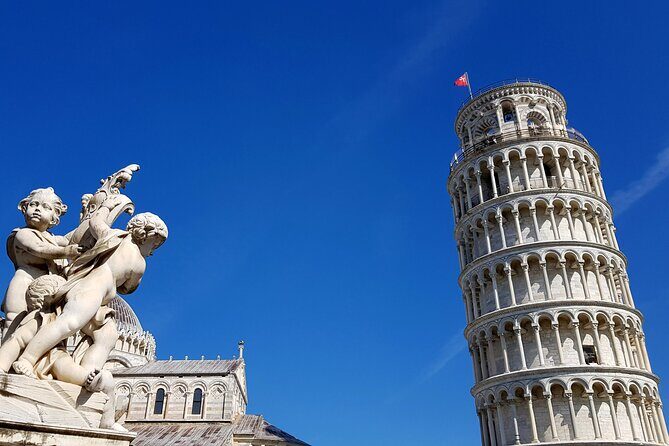
Pisa is famous for one thing, but it’s also full of satisfying corners: squares where locals linger, church façades you’d normally rush past, and museum buildings that look grand even from the sidewalk. This experience uses that exact layout. You aren’t just walking from point A to point B—you’re solving a sequence of clues that gives you a reason to pay attention.
What I like most is the way the game nudges you into real city sight-reading. Even when you don’t go inside, you can still spot details: proportions, materials, and placement that tell you why each spot matters. You’re basically doing a mini street-level orientation, but in an entertaining way.
And since it’s self-guided, you’re not forced into someone else’s pace. If your group wants photos at a certain angle, you can pause. If you want to check one extra landmark photo online before moving on, you can.
You can also read our reviews of more guided tours in Pisa


Piazza della Stazione to the Leaning Tower: the practical route
The walk starts at Piazza della Stazione and ends at Piazza del Duomo, with the finish at the Leaning Tower of Pisa. The whole thing takes about 35 minutes to 1 hour 5 minutes, depending on how long you linger on each clue and how often you stop to look around.
This is also easy to plan because you can treat it as a flexible add-on. You can fit it early in a sightseeing block to get oriented, or later when you feel ready to slow down and explore. The route is designed to keep you moving through the core areas without requiring paid entries.
Two logistics notes that matter:
- Outside-only stops: attractions aren’t entered, so you’re not stuck with ticket lines or opening-hour surprises.
- Private to your group: you’ll do the game together rather than getting pulled along with strangers.
How the Questo app keeps the game moving
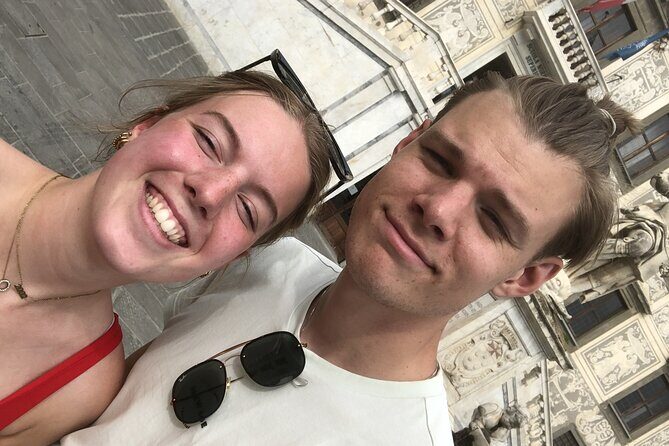
You’ll use a city exploration game on your phone called Questo. The big advantage of this setup is control. You don’t wait for a scheduled start time in most cases—you download and go when you’re ready.
The structure is simple and effective:
- You reach a stop.
- You get a clue on your phone.
- Solving it gives you direction to the next location in the story.
That might sound basic, but it changes how you walk. Instead of scanning streets randomly, you’re consistently looking for what the clue is trying to point you toward—symbols, views, and distinctive features around each square or building.
Also, there’s 24/7 customer support. So if your phone battery is low or the app acts odd, you’re not left totally stranded.
Stop-by-stop: what to expect at each Pisa checkpoint
This route weaves through squares and churches. Most stops are free to view from the street, and you’ll solve the clue there before moving on.
Stop 1: Piazza Vittorio Emanuele II
You begin in Piazza Vittorio Emanuele II, where your first clue sets the tone. This start matters because it helps you get your bearings quickly. Look at how the square opens up and how the nearby streets funnel you toward the next leg.
You’ll likely finish this first segment faster than the rest, but it’s worth taking 1 minute just to orient your group—once you see the direction of the route, the rest feels much easier.
You can also read our reviews of more tours and experiences in Pisa



Stop 2: Chiesa di Santa Maria del Carmine
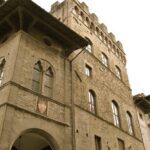
Next is the Chiesa di Santa Maria del Carmine. Since you’re not going inside, your job is to study the façade and the surrounding street approach. These clue-based walks work best when you treat the architecture like a visual prompt.
Practical tip: if your goal is photos, stand where the building is framed by the street lines rather than only from close range. The clues tend to reward that wider look.
Stop 3: Parroquia de San Martino
From there you move to Parroquia de San Martino. Again, you’re viewing from the outside. You’ll get a new clue and the game nudges your attention to what makes this church recognizable in context.
A small consideration here: churches can feel similar if you’re staring only at the closest details. Try to step back between clue attempts. It helps you see the overall shape and placement.
Stop 4: Piazza XX Settembre
Then you reach Piazza XX Settembre. Squares are where the game becomes extra fun, because they give you space to scan and reset. This stop is a good moment to pause, refill water, and let your group catch up if someone needed a snack break.
If you’re playing on a busier afternoon, this square also gives you an easy social buffer—people move around, but you’re not bottlenecked at a single doorway.
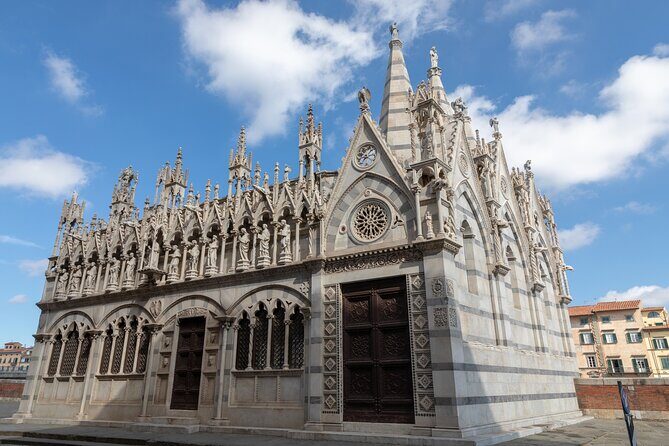
Stop 5: Chiesa di Santa Maria della Spina
Next is Chiesa di Santa Maria della Spina. This is one of those churches where the exterior can be the whole point—small, distinct, and worth a careful look even without entering.
When you solve the clue, don’t rush to the next stop immediately. Take an extra minute to confirm you’re looking at the right feature. It makes the next clue feel more satisfying rather than confusing.
Stop 6: Museo Nazionale di Palazzo Reale (outside)
Stop six is at Museo Nazionale di Palazzo Reale, and the admission ticket for this is not included. That’s fine because you’re not meant to enter; the game guides you to the exterior context.
This is a strong stop for architectural appreciation. Even without a ticket, you’ll likely notice the museum’s presence in the streetscape—how it anchors the area you’re in. If your phone clue points you toward something specific, use that as your checklist.
Stop 7: Piazza Dante Alighieri
Next comes Piazza Dante Alighieri. Squares like this help you connect the dots across Pisa. You’ll solve a clue here, but the bigger value is mental: it makes you feel like you’re moving through a designed web of civic spaces.
If you’re taking your time, this is a nice spot to step aside from the main flow and let the group regroup.
Stop 8: Piazza delle Vettovaglie
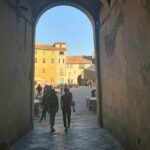
Then you arrive at Piazza delle Vettovaglie. This is the kind of place where you might otherwise walk through without a second thought. In a puzzle route, that changes. You’re forced to stop and look, which is exactly how you discover places that aren’t the headline postcard scenes.
If your group likes food markets or street life, this stop can feel especially rewarding, since squares like this tend to have personality even when you’re only viewing briefly.
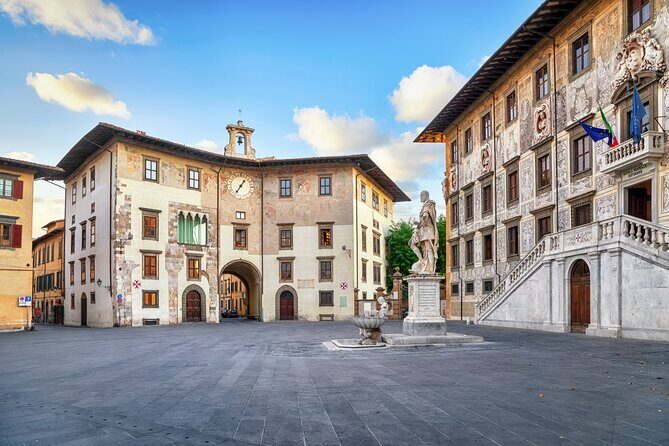
Stop 9: Piazza dei Cavalieri
Stop nine lands at Piazza dei Cavalieri. This square gives you another “pause and scan” moment. It’s also a strong setup for the final stretch, because it helps you feel the route funnel toward the iconic finish.
If you’re playing for the visuals, Piazza dei Cavalieri is a great spot to take wide shots before you head toward the tower area.
Stop 10: Leaning Tower of Pisa (finish)
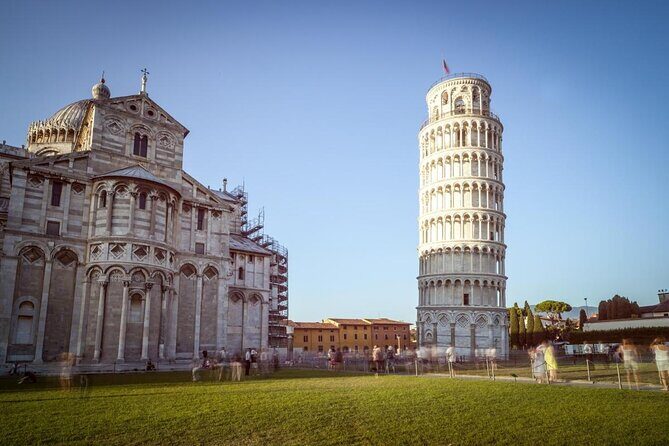
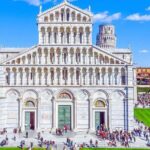
You finish at the Leaning Tower of Pisa in Piazza del Duomo. The game and the city exploration portion both end here, and an admission ticket is not included—so treat it as a dramatic viewing finish, not a guaranteed tower visit.
This ending works well because it gives you that classic Pisa payoff while still earning it. You’ve walked the city path to reach it, so the tower feels less like a random stop and more like the final chapter.
Price and time: value that makes sense for Pisa
At $7.14 per person, you’re paying for an efficient mix of route guidance and story-style prompts. You’re not paying for a human guide, and you’re not paying for entry tickets. That’s the value equation.
For Pisa, where time is often split between the tower area and the rest of town, this kind of self-guided route is smart. In under an hour, you cover a meaningful slice of the center—church exteriors, squares, and a museum façade—and it helps you see more than just the tower.
Your time cost is also reasonable. The range is 35 minutes to about 1 hour 5 minutes. If you move quickly, it won’t swallow your day. If you like slow photos, you can stretch it without turning it into a half-day production.
The best time to play: evening light feels more romantic
One tip that really matters here is timing. If you want the most romantic mood, plan to do at least part of the walk in the evening. The lighting changes how façades and squares feel, and it makes the whole experience more atmospheric—especially as you near the Duomo area and the tower.
So if you’re building your Pisa day, think about pairing this with a late-afternoon or early-evening stroll. It’s not just about comfort; it affects how the city photographs.
Who should book Love in Pisa (and who may want a different style)
I think this is a great fit if:
- You want a low-cost way to see more than the tower alone
- Your group enjoys puzzles, scavenger-style clues, or “find it with your phone” activities
- You like to control your own pacing and don’t want a rigid schedule
- You’re okay doing outside viewing only and using prompts instead of a tour guide
You might want a guided tour instead if:
- You strongly prefer a person telling you the story and answering questions on the spot
- Your group gets frustrated with app-based navigation or wants guaranteed deep explanations at every stop
- You’re expecting tickets or inside access as part of the experience
Should you book Love in Pisa?
If your goal is smart use of time plus a reason to look closely at Pisa, this is an easy yes. The route is short enough to fit into a sightseeing plan, but it still takes you through enough squares and churches that you won’t feel like you only came for one landmark.
I’d book it if you’re traveling with people who like activities and you want a calmer, private experience. Skip it only if you know you dislike phone-based games or you need an in-person guide to feel satisfied.
FAQ
What language is this activity offered in?
It’s offered in English.
How long does the self-guided puzzle adventure take?
Expect about 35 minutes to 1 hour 5 minutes.
Do I need a tour guide?
No. This is a self-guided city exploration game.
Where does the adventure start and end?
It starts at Piazza della Stazione, 56125 Pisa PI, Italy and finishes at Piazza del Duomo, 56126 Pisa PI, Italy, at the Leaning Tower of Pisa.
Is the Leaning Tower visit included with admission?
No. The stop at the Leaning Tower of Pisa is the finish, and admission tickets are not included.
Are entry tickets to attractions included?
No. You stop outside attractions, and entry tickets are generally not included. Admission is listed as free for several outside stops, while the museum and tower specifically list admission as not included.
What do I use to play the game?
You play using a phone-based city exploration game (Questo app).
Can I play at my own pace?
Yes. You can stop as long as you like and continue exploring at your own pace.
Is there customer support if I have questions?
Yes. There is 24/7 customer support.
Is it refundable if I cancel?
Yes, you can get a full refund with free cancellation up to 24 hours in advance.