REVIEW · FLORENCE
Pasta Cooking Class: Mastering Nonna’s Recipes
Book on Viator →Bookable on Viator
Pasta night in Florence hits different. This 3-hour class turns you from flour newbie into someone who can shape real Italian pasta, guided by a Michelin-level chef right in central Florence. I love the hands-on instruction and step-by-step guidance, plus the fact that chefs at different experience levels join in so you’re not stuck watching only.
The other big win is the food-and-drink payoff: you finish with a full meal and unlimited wine. The only drawback to consider is that the vibe is social and lively, so if you want quiet, slow, no-chat sightseeing energy, this may feel a bit more party than library.
In This Review
- Key Highlights to Know Before You Go
- Pasta Class in Florence: Where You Learn Real Technique Fast
- Finding the Place: Meeting Point and First Impressions
- The Hands-On Cooking Flow: Making Tortelli, Tagliatelle, Ravioli
- Chef coaching you’ll recognize by style
- Sauce and Ragù Lessons: The Part People Forget at Home
- Your Final Meal: Eating What You Made, With Unlimited Wine
- Wine and pacing
- Group Size and Comfort: What Small (Max 13) Really Means
- Price and Value at $126.98: What Makes It Worth It
- Who Should Book This Class (And Who Might Skip It)
- Quick Tips for Getting the Most Out of Your 3 Hours
- Should You Book This Florence Pasta Class?
- FAQ
- How long is the pasta cooking class in Florence?
- Where does the experience start?
- Is the class offered in English?
- How many people are in the group?
- What’s included in the ticket price?
- Are vegetarian options available?
- Can I get a full refund if I cancel?
Key Highlights to Know Before You Go
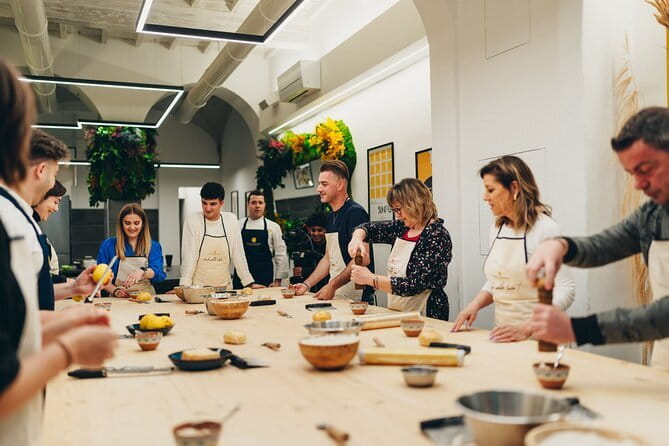
- Michelin-trained chef leadership with practical coaching for all skill levels
- Three classic pastas you actively make: tortelli, tagliatelle, and ravioli
- Sauce training so your plates taste like they came from Tuscany, not from a packet
- Unlimited wine during the experience, paired with what you’re cooking and eating
- Small group (max 13) for real hands-on time at the table
Pasta Class in Florence: Where You Learn Real Technique Fast
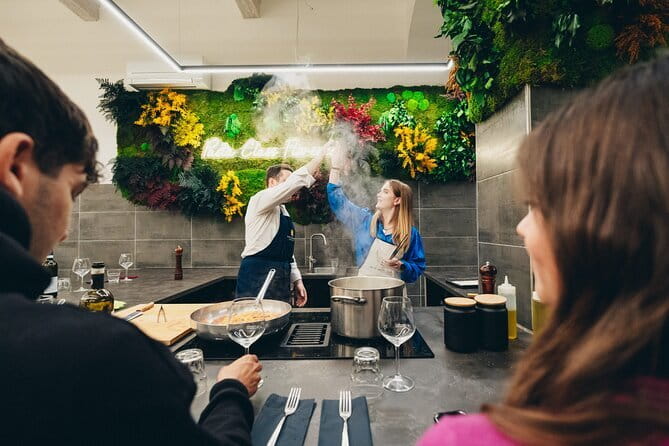
If you’re short on time in Florence but long on curiosity, this kind of class is a smart move. You’re not just sampling pasta. You’re making it—hands in, flour flying, questions asked—and doing it in a tight 3-hour window.
The class is set up so you learn technique you can actually use at home. That matters in Italy, where pasta is less about memorizing recipes and more about how the dough behaves, how thick it should be, and how the filling and sauce work together. You’ll also get context on typical local products, so the dishes aren’t random “Italian-themed” choices. They’re built around flavors Florentines recognize.
Your most important takeaway: you’ll come away understanding why certain steps work. That’s what lets you repeat results later, even if your kitchen is not exactly like a chef’s.
Finding the Place: Meeting Point and First Impressions
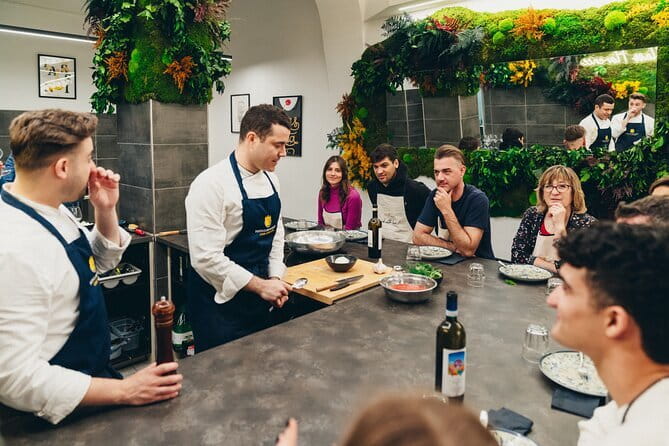
You’ll meet at V. Dell Agnolo, 77r, 50122 Firenze FI, Italy. The experience starts and ends back at the same meeting point, so you don’t need to worry about a complicated route across town.
One practical note: the meeting spot is described as a storefront setting. From the outside, it may not look like a “wow” location, but once you’re inside, the setup is clean and well-run. The good part for you is that they’re organized enough that you’ll spend your time cooking, not wondering where to stand.
You’ll also have a mobile ticket. That’s convenient in Florence, where paper tickets and last-minute printing can turn into small stress.
The Hands-On Cooking Flow: Making Tortelli, Tagliatelle, Ravioli
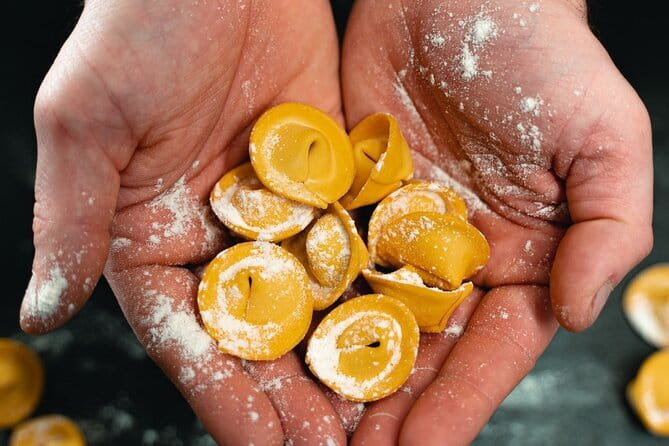
This is a true make-it-yourself class. You’re not just watching a chef demonstrate while you take notes. You’ll shape dough and assemble pasta, then see your work get cooked and served.
Across the class, you’ll work with three pasta styles that each teach a different skill:
- Tortelli (starter): filled with ricotta, brown butter, and herbs
- Tagliatelle (main): served with fresh Tuscan ragù
- Ravioli (main): garlic oil and sage, with a twist
That menu structure is a gift. Tortelli focuses on filling and sealing; tagliatelle pushes you toward shaping long pasta; ravioli brings you back to portioning and finishing. The result is you learn variety instead of one trick repeated three times.
You’ll also get technique that helps across dishes. For example, your dough thickness and handling matter whether you’re sealing tortelli or shaping tagliatelle. If you’ve only made pasta at home before, this is the moment where it stops feeling like a mystery.
Chef coaching you’ll recognize by style
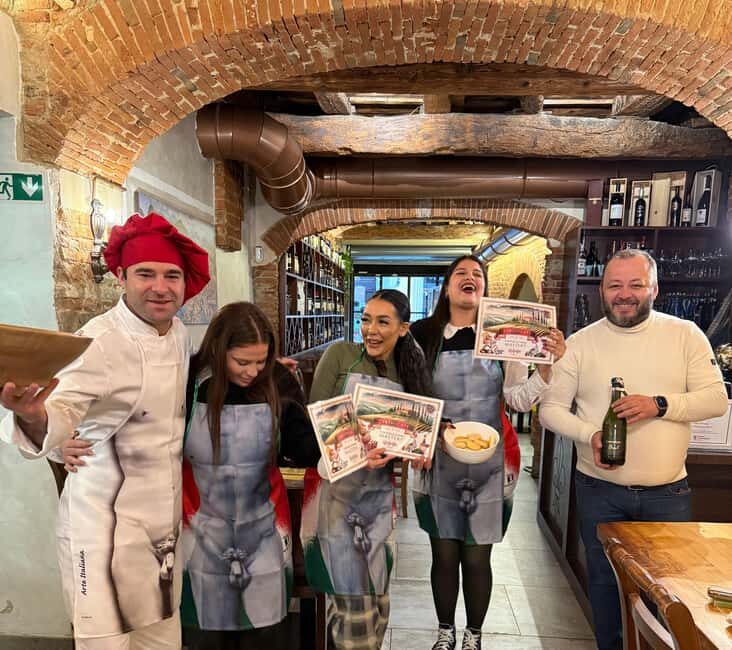
Different nights feature different instructors, and you might hear names like Michele, Simona/Simone, Marco, Davide, Andreas, Andrea, or Thomas. What stays consistent is how they teach: patient, with clear steps and an eye on small details.
And yes, hygiene gets called out. One chef in particular (Thomas) is described as very strict about hygiene and “no special pasta” rules. That’s the kind of control you want in a class where you’ll eat what everyone makes.
Sauce and Ragù Lessons: The Part People Forget at Home
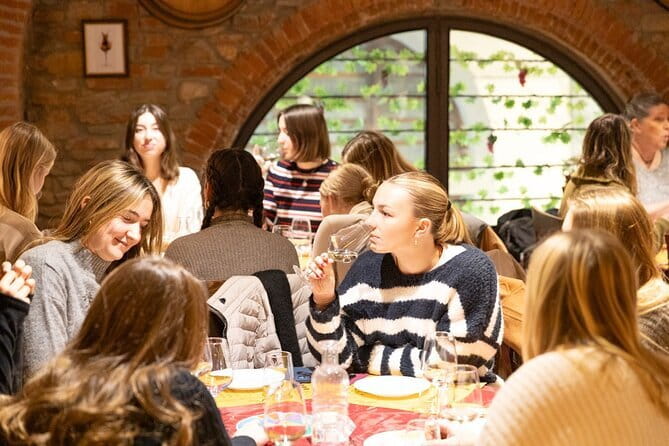
Here’s the secret that changes everything: pasta is only half the meal. The sauce is the whole personality of the dish.
In this class, you don’t just get a sauce poured over your pasta at the end. You learn how to build sauces that match the pasta shape and the flavors of typical local products. Reviews mention that chefs start by preparing elements like ragù and sauce components before shifting into dough work, so you understand how sauces develop and why timing matters.
For your plate, that shows up in two major ways:
- Fresh Tuscan ragù with tagliatelle teaches you how meat sauce behaves and how it clings to long pasta.
- Garlic oil and sage with a twist over ravioli shows you how lighter sauces can still feel rich.
This is where you’ll feel the difference between homemade cooking and store-bought shortcuts. Even if you only remember a few techniques—like how to balance garlic aromatics with fat, or what makes a ragù taste deep—you’ll cook differently at home.
A practical benefit: chefs often share everyday cooking tips beyond pasta itself. One review specifically mentioned learning practical things that helped with day-to-day cooking, including spotting habits that even affect knife care. It’s a reminder that a good cooking teacher doesn’t just teach the recipe—they teach how to think in the kitchen.
Your Final Meal: Eating What You Made, With Unlimited Wine
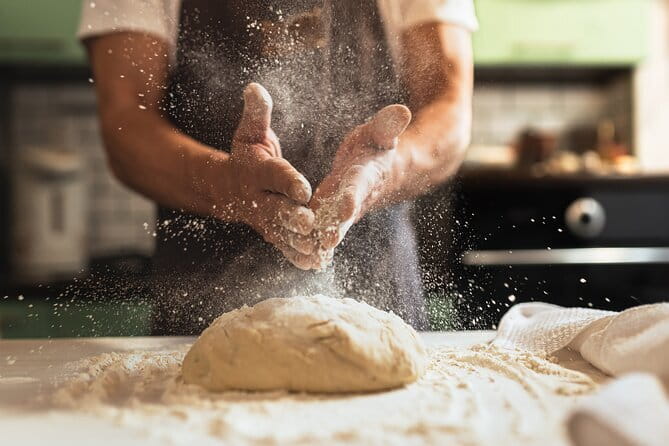
The best part is the payoff: you cook, then you eat. The class finishes with a full meal featuring three different pasta dishes—each one tied to what you made during the session.
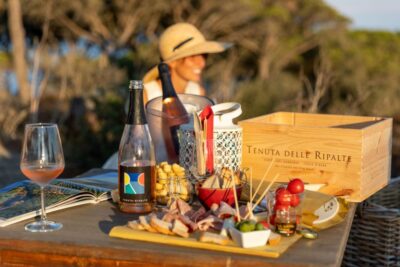
And then there’s the wine. The experience includes unlimited wine throughout, with a wine pairing planned around the meal. Reviews describe everything from never-empty glasses to having more food than you could comfortably eat. So plan for a real lunch or dinner, not a snack.
If you’re thinking about value, this is a key part of the math. At $126.98 per person, you’re not just paying for instruction. You’re paying for three full dishes, plus wine service as part of the experience. When a class includes food and drink on top of hands-on teaching, the cost can look much more reasonable than a “cook-only” class with you leaving hungry.
Wine and pacing
Unlimited wine can affect your energy, for better or worse. The upside is that people loosen up, laugh, and trade kitchen tips. The downside is that you’ll want to pace yourself so you can focus during the hands-on parts—especially when dough work gets fiddly.
Group Size and Comfort: What Small (Max 13) Really Means
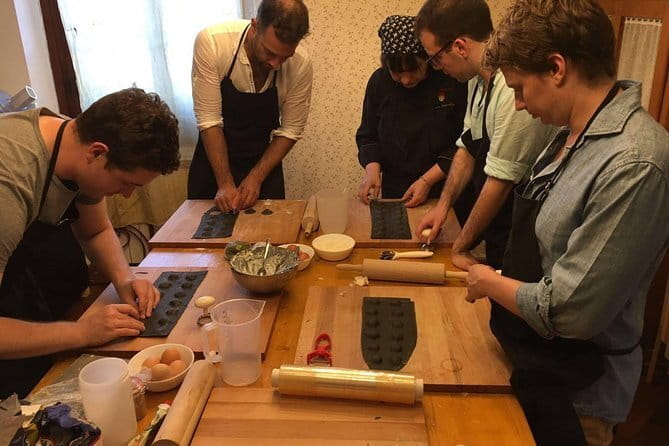
A max group size of 13 is a big deal. It affects how much coaching you get, and how often the chef can check your dough, your shaping, and your filling.
In larger classes, you often wait your turn. Here, you’re more likely to move with the group at a comfortable pace and still get attention when you need it. Reviews also mention ages ranging from about 20 to 80 in the same class, which suggests the instruction is built for mixed experience levels.
That flexibility is one of the biggest reasons to book a class like this in the first place. You don’t need to be a pasta expert. You just need to show up curious and ready to try.
Price and Value at $126.98: What Makes It Worth It
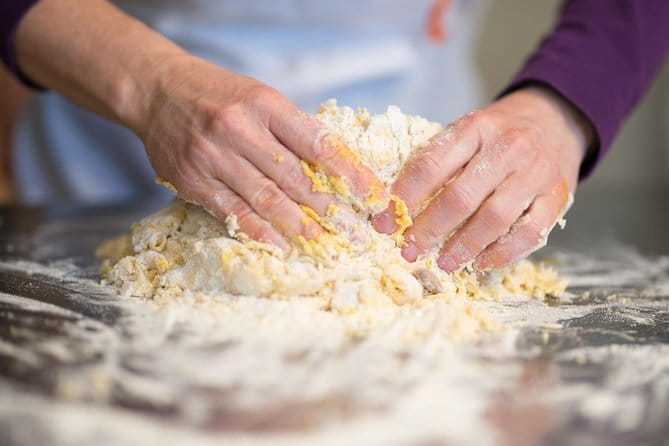
Let’s talk value without hype.
You’re paying for four things in one ticket:
- Chef-led hands-on instruction (with Michelin-level training)
- Three different pastas you make, not just one
- Sauces and typical local products that round out the flavors
- Unlimited wine and a meal after cooking
In Florence, cooking classes can range wildly in quality. What you want is a class that doesn’t feel crowded, where you actually touch the ingredients and tools. The small group cap (13) and the clean, well-run setup described in feedback are the signals that you’re getting time for real practice.
Also, recipes are provided after cooking (mentioned in feedback), which matters if your goal is to repeat at home. Otherwise, you’re left trying to reconstruct steps from memory, which is hard even if you enjoyed yourself.
So for your money, the best-case outcome is: you learn technique, you eat extremely well, and you leave with enough knowledge to cook again without starting from scratch.
Who Should Book This Class (And Who Might Skip It)
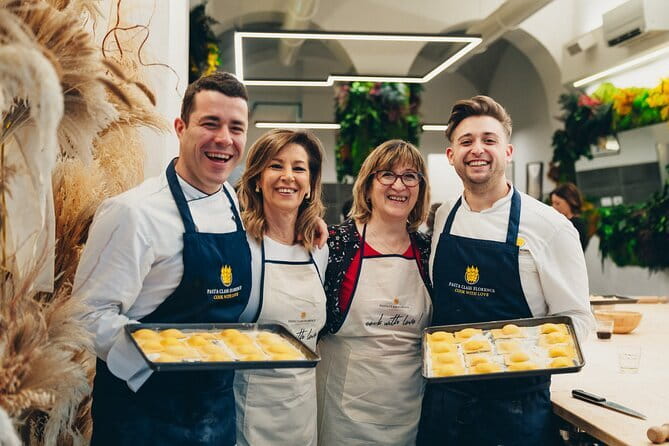
You’ll love this class if:
- You want an active food experience rather than a passive tasting
- You like learning skills you can use at home
- You’re happy with a social setting where people work together and share wine
- You want a Florence break from museum time, but still rooted in real local cooking
You might think twice if:
- You want a quiet, low-energy activity
- You’re sensitive to the pace of a cooking session where everything is coordinated around timing
- You prefer a class that’s focused on one pasta only, instead of making three types
Quick Tips for Getting the Most Out of Your 3 Hours
A few practical moves make a big difference:
- Watch for the exact moment the chef changes instructions. Pasta dough is timing-sensitive.
- Ask questions when you feel stuck, not after you finish a step.
- If you drink wine, pace it so you can focus during shaping and filling.
- Save the recipe info and any notes you get right away; it’s easier to recreate methods while the experience is still fresh.
Should You Book This Florence Pasta Class?
Book it if you want maximum payoff in a short time: three pastas, sauce training, and an actual meal with unlimited wine, taught by a Michelin-level chef in a small group. The experience is built for beginners and mixed skill levels, and it’s the kind of class where you leave feeling capable, not just entertained.
Skip it only if you’re chasing a quiet activity or you’re not into social cooking and wine. Otherwise, this is one of the most practical ways to bring Florence home—by learning how the pasta is made, not just how it tastes.
FAQ
How long is the pasta cooking class in Florence?
The class runs about 3 hours.
Where does the experience start?
It starts at V. Dell Agnolo, 77r, 50122 Firenze FI, Italy, and ends back at the same meeting point.
Is the class offered in English?
Yes, it’s offered in English.
How many people are in the group?
The experience has a maximum of 13 travelers.
What’s included in the ticket price?
It includes a hands-on pasta-making class with a Michelin-trained chef, cooking and eating typical local products, unlimited wine throughout the experience, and a full meal with three pasta dishes.
Are vegetarian options available?
Yes, vegetarian options are available.
Can I get a full refund if I cancel?
Yes. Free cancellation is available if you cancel up to 24 hours in advance of the experience’s start time.