REVIEW · FLORENCE
Walking Guided Tour of Florence landmarks
Book on Viator →Operated by My Green Tour · Bookable on Viator
Florence clicks into place fast on this 90-minute walk. You get a guided route that ties together the Medici power story and the city’s big-ticket sights, from Palazzo Medici Riccardi down to Ponte Vecchio.
Two things I really like: the tour supplies audio headsets so you can actually hear your guide over the noise, and the plan is built for comfort with luggage storage if you’re hauling bags. One watch-out: the pace can vary, and if the guide’s timing runs long or the audio system has trouble, you may not reach every scheduled stop.
In This Review
- Key things to know before you go
- Starting on Via de’ Martelli with headsets that actually help
- Palazzo Medici Riccardi: Renaissance clout in a compact stop
- Basilica di San Lorenzo: where Medici power becomes family legacy
- Duomo (Santa Maria del Fiore): the Florence skyline anchor
- Piazza della Repubblica: a city square with messy layers underneath
- Piazza della Signoria: politics in the open air
- Ponte Vecchio: the final stroll and why the shops matter
- How the tour’s short timing actually works for value
- The one thing to watch: pacing and headset reliability
- Who this walking tour is best for
- Practical tips to get the most out of your 90 minutes
- Should you book this guided Florence landmarks walk?
- FAQ
- How long is the walking guided tour of Florence landmarks?
- How much does the tour cost?
- Is the tour offered in English?
- What are the main stops on the route?
- Are admission tickets included for the churches and museums?
- Which parts are free?
- Where does the tour start and end?
- Does the tour provide audio headsets?
- Is luggage storage included?
- What’s the cancellation policy?
Key things to know before you go
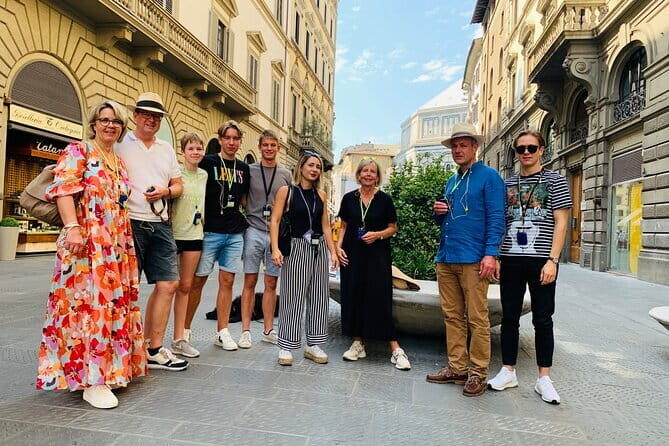
- Headsets are included so you’re not guessing what the guide is saying.
- A tight, landmark-heavy route focuses on the city’s must-see stops in about 90 minutes.
- Luggage storage is part of the deal (a lifesaver in Florence).
- Several stops are outside and free which helps you control costs.
- You end at Ponte Vecchio, so your tour naturally drops you into one of the best areas to keep exploring.
- Max group size of 20 keeps it from feeling like a human parade.
Starting on Via de’ Martelli with headsets that actually help
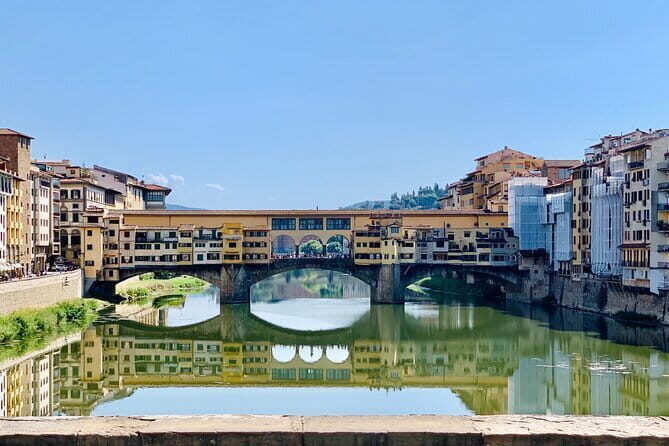
This tour begins at Via de’ Martelli, 33R, 50129 Firenze FI and finishes at Ponte Vecchio. Having it end at Ponte Vecchio is smart: after 90 minutes of history, you’re deposited in the middle of the action, with lots of places to wander next on foot.
The headsets are the big practical win here. Florence can be loud—traffic, crowds, church zones, vendors calling out—and without a headset, you end up reading lips instead of learning. With the headset, you can usually keep walking and listening at the same time, which is exactly how a “get bearings fast” tour should feel.
The group is capped at 20, and that matters. In a small group, the guide can keep everyone moving and still answer questions. I also like that you can choose departures in the morning, afternoon, or evening, so you’re not stuck scheduling your first-day Florence around one single time slot.
You can also read our reviews of more walking tours in Florence
Palazzo Medici Riccardi: Renaissance clout in a compact stop
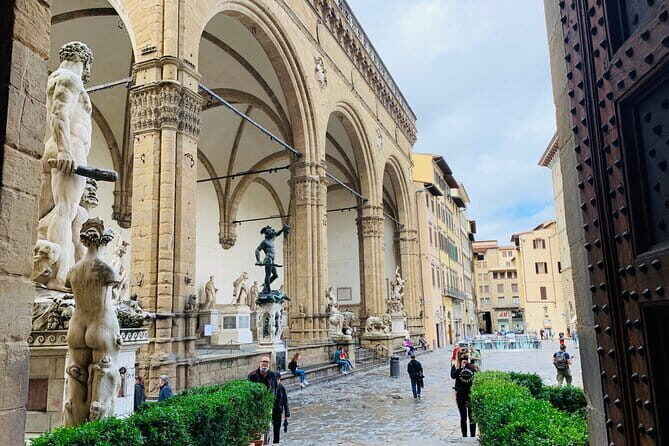
Your first stop is Palazzo Medici Riccardi, a Renaissance palace associated with the Medici family. It’s also linked to the present-day civic side of Florence—listed as the seat of the Metropolitan City of Florence—and it functions as a museum.
You’ll spend about 20 minutes here, and admission is not included. That’s not a deal-breaker; it often means you get the exterior and key context plus a sense of why this place mattered. If you want to see more inside, you’ll need to plan for separate admission.
Why this stop is worth including early: it sets up the rest of the walk. The Medici were not just patrons of art—they were builders of systems. Starting at Palazzo Medici Riccardi gives you the political and architectural backbone for what you’ll see next.
What to watch for: don’t expect a full museum visit in 20 minutes. This is an orientation-style stop. If you like interiors, you’ll want to circle back later on your own with extra time.
Basilica di San Lorenzo: where Medici power becomes family legacy
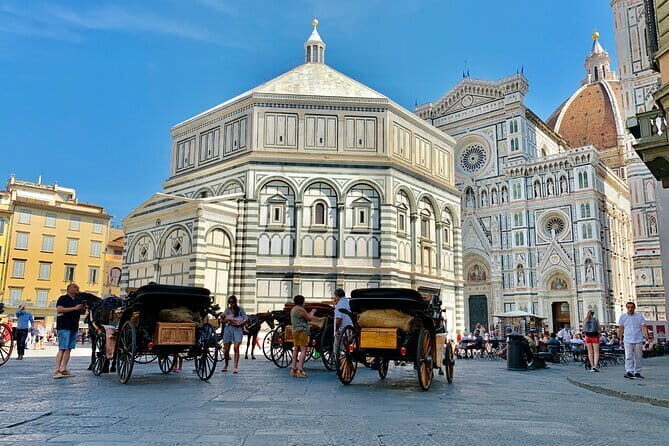
Next up is Basilica di San Lorenzo, one of Florence’s largest churches, positioned in the middle of the city’s main market district. It also serves as a burial site for principal Medici family members—from Cosimo il Vecchio to Cosimo III.
Again, it’s about 20 minutes, with no admission ticket included. You’re likely to focus on the exterior presence and the big story beats. If you came to Florence for the Medici angle (and most people do), this is a powerful stop because it connects leadership, faith, and family memory in one place.
Why I think it works on a walking tour: San Lorenzo anchors your understanding. Palazzo Medici Riccardi tells you how the Medici shaped the city’s structures. San Lorenzo shows how they shaped its personal and spiritual legacy.
The market district location is a double-edged sword. Yes, it’s lively and atmospheric. On the downside, it can be crowded and busy, which can make the stop feel more like a careful weave than a calm museum moment.
Duomo (Santa Maria del Fiore): the Florence skyline anchor
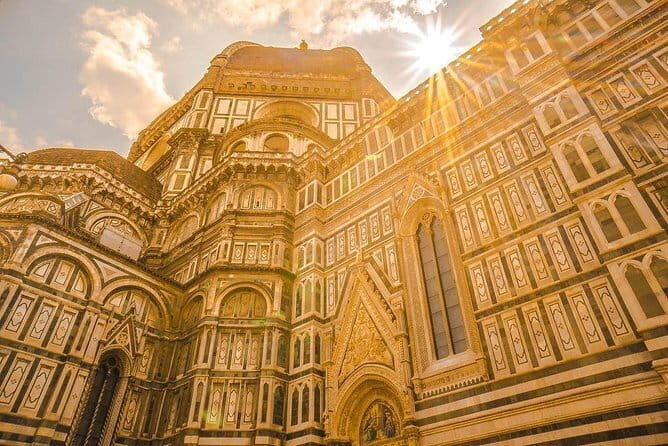
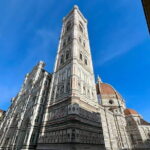
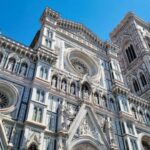
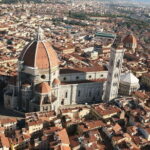
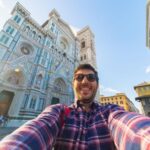
Your third landmark stop is Duomo – Cattedrale di Santa Maria del Fiore, Florence’s cathedral. You’ll have about 20 minutes here, and, like the previous two, admission is not included.
This time window is right for what a walking tour should do at the Duomo: help you understand what you’re looking at before you pay to go deeper. The cathedral area is huge, and without context you can end up just taking photos. With the guide, you get a roadmap for which parts of the complex are the main draws and how the Duomo fits into Florence’s overall story.
Practical tip: if you’re planning to visit inside later, use this stop to figure out the pacing. The cathedral zone is one of those places where line strategy matters, and knowing the layout ahead of time can save you stress.
Piazza della Repubblica: a city square with messy layers underneath
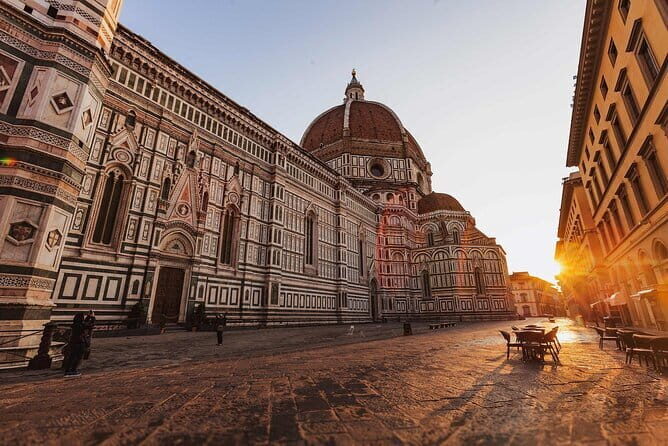
Then you shift from religious power to civic space at Piazza della Repubblica. This square has a long paper trail. It started as the site of the city’s forum, then later became an area tied to the old ghetto that was swept away during the risanamento (urban improvement) period connected with Florence’s brief time as the capital of a reunited Italy.
This is a 10-minute stop and it’s free. It’s short, but that’s the point. Piazzas work like Florence’s outdoor “reset button.” You pause, you look around, you catch your breath, and you absorb how the city keeps rewriting itself.
If you’re the type who loves seeing how places change over time, this stop delivers a useful lesson: Florence isn’t frozen. It’s been shaped by politics, city planning, and even forced removals.
You can also read our reviews of more guided tours in Florence
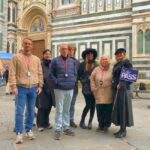
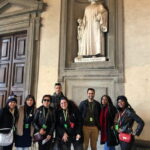
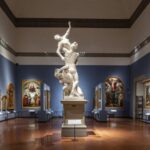
Piazza della Signoria: politics in the open air
Next comes Piazza della Signoria, the L-shaped square in front of Palazzo Vecchio. It’s described as the main point of origin and history of the Florentine Republic, still remembered as a political focus of the city. It’s also a meeting place for locals and tourists, and it connects you to major nearby sights (it’s near the Uffizi Gallery area).
You’ll get about 10 minutes here and it’s free.
What I like about ending up in Piazza della Signoria after the Duomo: it makes Florence feel like a whole system. You’ve covered elite power (Medici), sacred authority (the basilica and cathedral), and now civic authority—where decisions happened and symbols were displayed in public.
It’s also a great “photo with meaning” stop. A cathedral selfie is fun, but a piazza stop makes you feel like you’re standing inside the city’s operating room.
Ponte Vecchio: the final stroll and why the shops matter
Your last stop is Ponte Vecchio, the medieval stone bridge over the Arno River. The famous feature here is that shops have long been built along the bridge. Butchers originally occupied the shops. Over time, the businesses shifted, and today the tenants are typically jewelers, art dealers, and souvenir sellers.
You’ll spend about 10 minutes, and this stop is free. Ending here is a smart tour design choice because Ponte Vecchio is both iconic and active. You arrive with context and you can keep exploring at your own speed right after the guided portion ends.
A practical note: this bridge area gets crowded fast. If you want clear photos, keep an eye on timing. Even a few minutes can change everything.
How the tour’s short timing actually works for value
At $47.06 per person for roughly 1 hour 30 minutes, you’re paying for three things you don’t get as easily on your own:
- Narrative structure: the walk connects Medici influence, major institutions, and key public spaces.
- Audio support: headsets reduce the frustration factor in a noisy city.
- Time efficiency: you cover major sights without needing to plan a route on your first day.
Admission tickets are not included for Palazzo Medici Riccardi, Basilica di San Lorenzo, and the Duomo, so your total cost depends on what you choose to enter on other days. But that can be a positive. It lets you keep this first walk as a high-quality orientation, then decide later which interiors are worth paying for.
This tour also includes luggage storage, which can make a huge difference. In Florence, it’s not just your time that matters—it’s your ability to move freely. If you’ve got bags, finding space to stash them can turn a sightseeing plan into a puzzle. Having storage built in makes the experience smoother.
Group size stays small (up to 20). That doesn’t guarantee a flawless experience, but it generally supports better listening and more frequent question opportunities.
The one thing to watch: pacing and headset reliability
Most tours like this succeed because they manage time well. This one generally covers a tight route, but your experience can be affected by pacing. There have been reports of tours finishing without reaching the last scheduled stop on the itinerary. So, if you’re the type who hates feeling rushed—or if your schedule is strict—plan a little breathing room on either side.
Also, the value of headsets depends on them working smoothly. In cases where the audio system has trouble, you can lose the whole point of a guided walk. If that happens, ask promptly and be ready for the guide to adjust.
Bottom line: this tour is best when you treat it like orientation, not like a checklist you must complete to the minute.
Who this walking tour is best for
I’d point you to this tour if you want:
- A first-day orientation that links major Florence landmarks into one story
- A guided introduction you can build on with later visits
- Comfort features (like luggage storage and headsets) that reduce friction
- An English-led walk when you don’t want to juggle history research mid-trip
It can also work well for couples and solo travelers who like moving together but still want freedom afterward, since the tour ends at Ponte Vecchio where you can branch off easily.
Practical tips to get the most out of your 90 minutes
- Wear shoes that can handle uneven streets. You’ll be walking enough that comfort matters.
- Bring water, especially if you pick a warmer departure time. The tour is short, but Florence heat is real.
- Use the stops to decide what to revisit. If something sparks your interest, plan to pay admission later on your own.
- If you’re traveling with a bag, know that luggage storage is included, so you don’t have to burn time searching for storage options.
Should you book this guided Florence landmarks walk?
If you want a structured, easy first day in Florence, this is a good buy. The headsets help a lot, the route makes sense, and the end point at Ponte Vecchio is a strong payoff. The Medici-to-Duomo arc is exactly the kind of framing that helps Florence feel more meaningful than a set of separate monuments.
Only skip it if you know you’re very time-sensitive or you hate tours where the guide is heavy on talking. In that case, you might prefer a self-guided plan where you can control pace and linger exactly where you want.
FAQ
How long is the walking guided tour of Florence landmarks?
The tour lasts about 1 hour 30 minutes (approx.).
How much does the tour cost?
The price is $47.06 per person.
Is the tour offered in English?
Yes, it’s offered in English.
What are the main stops on the route?
The tour includes Palazzo Medici Riccardi, Basilica di San Lorenzo, Duomo – Cattedrale di Santa Maria del Fiore, Piazza della Repubblica, Piazza della Signoria, and Ponte Vecchio.
Are admission tickets included for the churches and museums?
No. Admission tickets are not included for Palazzo Medici Riccardi, Basilica di San Lorenzo, and the Duomo.
Which parts are free?
Piazza della Repubblica, Piazza della Signoria, and Ponte Vecchio are listed as free stops.
Where does the tour start and end?
It starts at Via de’ Martelli, 33R, 50129 Firenze FI, Italy and ends at Ponte Vecchio, 50125 Firenze FI, Italy.
Does the tour provide audio headsets?
Yes. Audio headsets are supplied so you can hear the guide clearly.
Is luggage storage included?
Yes. Luggage storage is included for those transporting bags.
What’s the cancellation policy?
You can cancel for free up to 24 hours in advance of the experience start time for a full refund. Cancellation within 24 hours isn’t refunded.


More Walking Tours in Florence

More Tours in Florence


More Tour Reviews in Florence
- Tuscany Day Trip from Florence: Siena, San Gimignano, Pisa and Lunch at a Winery
★ 5.0 · 21,634 reviews - The Best tour in Florence: Renaissance & Medici Tales – guided by a STORYTELLER
★ 5.0 · 12,316 reviews