REVIEW · FLORENCE
Florence: Renaissance and Medici Tales Guided Walking Tour
Book on GetYourGuide →Operated by Tour-Tale · Bookable on GetYourGuide
Florence starts to make sense on foot. This 2-hour Renaissance-and-Medici walking tour strings together power, art, and politics through the city’s best-known sights—then helps you read the place, not just look at it. I love the Medici power stories that make the Renaissance feel personal, and I love the symbol explanations that turn façades and marks into meaning. One thing to plan for: it runs rain or shine, so comfortable shoes and weather-proof clothing matter more than you’d like.
You meet near the Basilica of San Lorenzo in elegant Piazza di San Lorenzo, then move through a classic sweep of Florence highlights: Palazzo Medici Riccardi, the Duomo complex exterior, Giotto’s Bell Tower, Brunelleschi’s Dome views, Dante-related stops, and the political heart of the city at Palazzo Vecchio and Piazza della Signoria—finishing outside the Uffizi Gallery. Guides such as Chiara, Michele, Glenda, Antonio, and Angela are repeatedly praised for crisp pacing, memorable storytelling, and practical tips on where to eat, drink, and shop when you’re actually tired and hungry.
In This Review
- Key highlights you’ll actually feel on the walk
- Pricing: what $2.36 gets you and why tips are part of the culture
- Where you start in Piazza di San Lorenzo (and how to find the green umbrella)
- The guided route: from Renaissance origins to Medici power
- Basilica of San Lorenzo: where the Renaissance meets older forms
- Palazzo Medici Riccardi: the Medici story gets physical
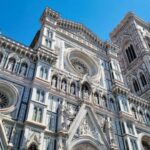
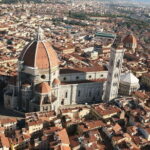
- The Duomo complex: seeing Brunelleschi’s Dome with new eyes
- Giotto’s Bell Tower and the exterior Duomo area
- Brunelleschi’s Dome: it’s more than a famous shape
- Dante and civic space: politics in stone at Palazzo Vecchio
- House of Dante: why a literary figure matters here
- Palazzo Vecchio and Piazza della Signoria: where Florence shows its power
- Loggia dei Lanzi: sculptures with a political setting
- Ponte Vecchio to the Uffizi area: finishing with local advice that helps
- Ponte Vecchio: the city’s postcard side, given context
- Uffizi finish: turn history into a smart next step
- What I’d watch for (so you get the best version of this tour)
- Who should book this Florence Renaissance and Medici walk
- Should you book this Florence Renaissance and Medici Tales guided walking tour?
- FAQ
- How long is the guided walking tour?
- Where do I meet the guide?
- What language is the tour offered in?
- Does the tour run in bad weather?
- What should I bring?
- Is it wheelchair accessible?
- What if I need to change plans before the tour?
Key highlights you’ll actually feel on the walk
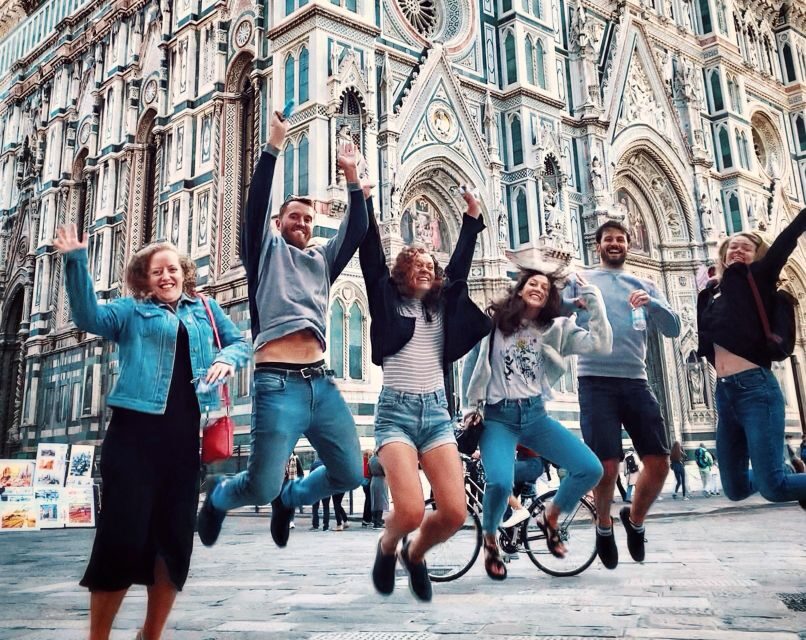
- Medici intrigue you can picture, not dry dates—power, patronage, and risk woven into real places
- Duomo complex and Brunelleschi’s Dome context, so the landmark has a story behind the silhouette
- Stop-by-stop orientation for first-timers, from San Lorenzo to Ponte Vecchio and the Uffizi area
- Meaning behind symbols, so you notice coats of arms and visual cues instead of skimming
- Hearing support can be included via microphone/ear pieces on busier days, depending on the guide
- Local recommendations at the end, focused on food, drink, and shopping rather than generic checklists
Pricing: what $2.36 gets you and why tips are part of the culture
The listed price is very low (shown as $2.36 per person). In this kind of free-walking-tour style, the real cost is that you’re paying with your time and trust, and the guide is the product. You should expect to tip based on what you felt you got—many people specifically call out bringing cash for this reason.
So how do you judge value here? Not by the headline price. Judge it by whether you want a first-day Florence framework: the tour helps you understand why buildings look the way they do, how Medici influence shaped major cultural choices, and how to connect the Duomo, civic squares, and art-world gravity into one story. If that’s what you want, the low entry price is a bonus; if you only want quiet sightseeing, you may feel the price doesn’t match the time spent listening.
You can also read our reviews of more walking tours in Florence

Where you start in Piazza di San Lorenzo (and how to find the green umbrella)
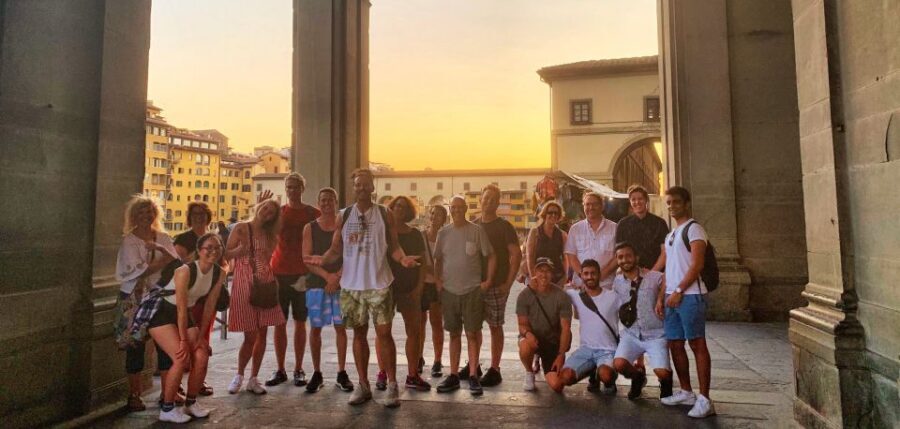
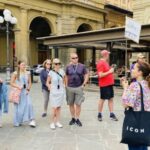
Your meeting point is Florence Free Tour-Tale, in front of the stairs leading to the main entrance of San Lorenzo Church. Look for the green umbrella.
This matters more than it sounds. The area around San Lorenzo is easy to get turned around in, especially if you arrive a few minutes late (narrow lanes, crowds, and people moving fast). Showing up early gives you time to locate the group without starting the tour stressed.
The tour is in Spanish and English with a live guide, and it’s listed as wheelchair accessible. Plan on walking, not shuffling: comfortable shoes are not optional in a city where pavements can be uneven and the streets keep turning.
The guided route: from Renaissance origins to Medici power
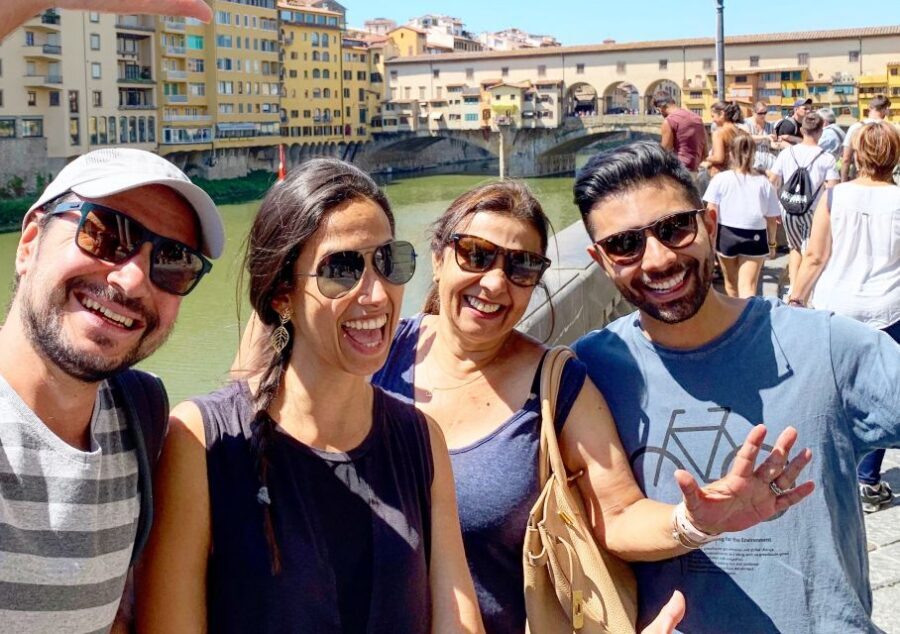
This walk is built like a story arc. You begin in the religious-and-architectural zone of San Lorenzo, then slide into Medici territory, then you widen out into civic Florence—where power isn’t only a family matter, but also a public performance.
A good sign of fit: guides are praised for story structure and a pace that never feels rushed. People also highlight how well the tour works for different ages, including teenagers, which tells you the content isn’t just for architecture nerds.
Basilica of San Lorenzo: where the Renaissance meets older forms
You start in the shadow of the Basilica of San Lorenzo and can see the distinct mix of Renaissance and Romanesque architecture. Even from the outside, that blend helps you understand a key point: Florence didn’t switch styles overnight. It adapted, reused, and built on existing forms while new ideas spread.
As you stand here, listen for how your guide frames the city’s shift into Renaissance thinking. The tour treats this as the groundwork for everything that follows—patronage, design choices, and the way civic identity connected to religious spaces.
Palazzo Medici Riccardi: the Medici story gets physical
Next comes Palazzo Medici Riccardi, a direct reminder that the Medici weren’t just patrons in theory. They were power brokers who left their fingerprints on Florence’s built environment.
This stop is where the tour’s “power and intrigue” theme becomes real. Your guide’s job is to explain what it meant to support artists and engineers in a world where influence could make or break careers. You’re not just learning family names—you’re seeing how authority worked through buildings and access.
If you care about how art and politics overlap, this is one of the most satisfying segments. You’ll also hear stories about the Medici as major players in what’s often called the Italian Renaissance.
You can also read our reviews of more guided tours in Florence
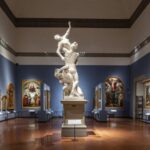


The Duomo complex: seeing Brunelleschi’s Dome with new eyes
The Duomo complex portion is designed for comprehension, not checklist fatigue. You’ll move around major landmarks tied to Florence’s most iconic architecture, including views connected to Giotto’s Bell Tower and Brunelleschi’s Dome.
A big value here is context. Without it, you might admire the Dome for its scale and skip the “why.” With a guide, you start noticing the visual logic: how the city’s ambitions are written into stone.
Giotto’s Bell Tower and the exterior Duomo area
Even if you don’t go inside during this tour, the exterior views still do the heavy lifting. Giotto’s Bell Tower gives you a vertical reference point that makes the rest of the skyline make sense.
Your guide also helps you read what you’re looking at: how Florence positioned itself, how design choices relate to status, and how symbols show up across the city.
Brunelleschi’s Dome: it’s more than a famous shape
Brunelleschi’s Dome is the kind of sight that can turn into background noise if you only snap photos. The tour helps you slow down and connect the landmark to the Renaissance story the guide is building.
You’ll likely hear explanations around the Dome’s role as a civic statement, not just an engineering feat. That shift in how you see it is worth the time—even if you’ve already seen photos online.
Dante and civic space: politics in stone at Palazzo Vecchio
The tour doesn’t keep you stuck in religious and family power. It expands to the city’s public stage, where decisions were made and reputations were performed.
House of Dante: why a literary figure matters here
You’ll stop at the House of Dante. This isn’t only a literary sightseeing break. It’s a reminder that Renaissance Florence wasn’t solely about patrons and architects—it was also about ideas and language, and how those ideas shaped public life.
If you like when a tour connects art forms to the city’s identity, this stop is a good pivot. It helps you see Florence as a place where culture and civic identity were tightly linked.
Palazzo Vecchio and Piazza della Signoria: where Florence shows its power
Then you hit Palazzo Vecchio and Piazza della Signoria. This is civic Florence at full volume—power expressed through public space and imposing architecture.
A walk here is especially useful early in your trip. Later, when you return on your own, you’ll recognize the layout: how squares open up, how sightlines work, and where the city’s authority is staged. Your guide’s storytelling makes these structures feel less like scenery and more like part of a living system.
Loggia dei Lanzi: sculptures with a political setting
You also visit the Loggia dei Lanzi. Even if you’re not studying art in depth, the tour helps you notice what’s going on visually and how the setting changes what you feel when you look at the works.
The tour’s focus on symbols is helpful here. You’re primed to interpret marks and meaning, not only admire craftsmanship.
Ponte Vecchio to the Uffizi area: finishing with local advice that helps
You end near the Uffizi Gallery, outside the famed museum. That finish location works well because it keeps you close to one of Florence’s biggest art destinations while still giving you actionable guidance.
Ponte Vecchio: the city’s postcard side, given context
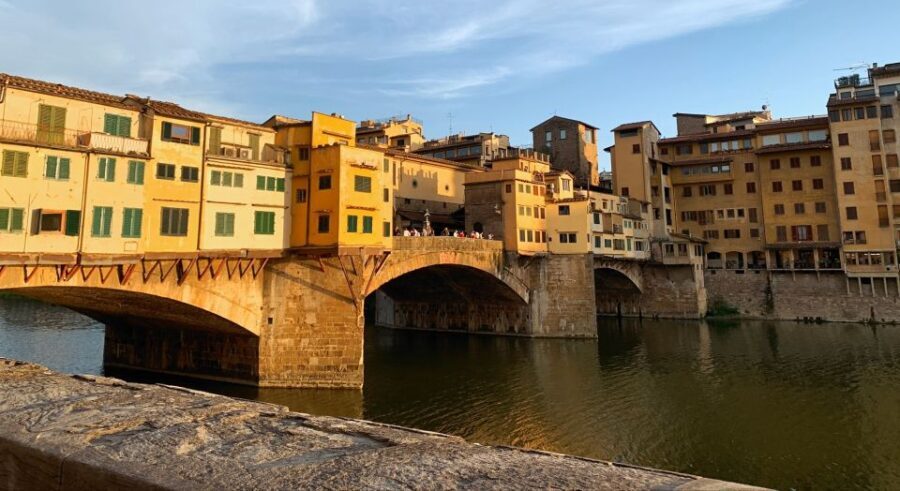
Ponte Vecchio is the kind of place you’ll see on postcards. But on this walk, it’s not just a photo stop. Your guide places it within the Renaissance-and-Medici context so it doesn’t feel like a disconnected tourist landmark.
You’ll also get a sense of how Florence’s river crossing anchors daily life and how the city’s “center of gravity” shifts across neighborhoods.
Uffizi finish: turn history into a smart next step
Ending outside the Uffizi means you can use what you’ve learned immediately. The tour gives you orientation, so when you head into the museum area on your own, you’re not starting from zero.
Most importantly, the guide finishes with practical advice on where to eat, drink, and shop like a local. That’s the kind of guidance that pays off the same day, especially if you’re planning your afternoon after walking 2 hours through busy streets.
What I’d watch for (so you get the best version of this tour)
This is a walking tour with a story-led format. If you want quiet time, you might find the narration a bit intense. If you want to actually understand how Florence became the Renaissance’s stage, this style is a strong match.
Here are a few practical considerations:
- It runs rain or shine, so plan footwear and outer layers accordingly.
- Comfortable shoes matter because the route includes lots of old-street walking.
- For the best experience, show up on time; the meeting spot is specific and easy to miss in a crowd.
- Bring water, and keep your camera ready, but don’t treat every stop like a race for the best angle.
If you’re visiting with kids or teenagers, this tour can be a smart first move. It’s repeatedly praised for keeping young people interested, which usually means the guide explains the “why” without getting lost in jargon.
Who should book this Florence Renaissance and Medici walk
This tour is ideal if you want:
- A first-day orientation through major Renaissance landmarks
- A Medici-focused storyline that connects buildings to power
- Architectural sights with meaning behind the visuals (not just photos)
- A guide who also gives you real-world food and shopping tips
It’s also a good fit if you’re short on time and want a tight loop through Florence’s center. And if you care about how art, politics, and public identity overlap, this is the kind of explanation that makes later museum visits feel more personal.
Should you book this Florence Renaissance and Medici Tales guided walking tour?
If you like your sightseeing with context, I’d book it—especially for a first visit. The biggest win is that you leave with a mental map of Florence: why the Dome matters, why Medici influence shaped the city’s choices, and how civic spaces like Piazza della Signoria connect to the Renaissance story.
Skip it only if you prefer silent wandering or if you’re not interested in history narratives at all. Otherwise, the mix of iconic exteriors, Medici intrigue, and practical recommendations at the end makes this a strong value use of an afternoon—or the best way to start building your Florence momentum.
FAQ
How long is the guided walking tour?
The tour is listed at about 2 hours (with an itinerary showing 2.25 hours), so plan for roughly that time on your feet.
Where do I meet the guide?
Meet at Florence Free Tour-Tale in front of the stairs leading to the main entrance of San Lorenzo Church. Look for the green umbrella.
What language is the tour offered in?
The live guide speaks Spanish and English.
Does the tour run in bad weather?
Yes. The tour takes place rain or shine.
What should I bring?
Bring comfortable shoes, a camera, water, and weather-appropriate clothing.
Is it wheelchair accessible?
Yes, it’s listed as wheelchair accessible.
What if I need to change plans before the tour?
There is free cancellation up to 24 hours in advance for a full refund.
More Walking Tours in Florence



More Tours in Florence




More Tour Reviews in Florence
- Tuscany Day Trip from Florence: Siena, San Gimignano, Pisa and Lunch at a Winery
★ 5.0 · 21,634 reviews - The Best tour in Florence: Renaissance & Medici Tales – guided by a STORYTELLER
★ 5.0 · 12,316 reviews