REVIEW · PISA
Pisa: 2-Hour Walking Tour
Book on GetYourGuide →Operated by Pisa Explorer · Bookable on GetYourGuide
Pisa is more than one tilted tower. This 2-hour walk turns Pisa Centrale into a story trail, threading from main streets to quiet lanes right up to the big-ticket sight.
I especially like the built-in photo moments. You’ll cross from one side of the city to the other along the Arno, then build toward the Leaning Tower reveal with better angles than a quick stop-and-shoot.
One thing to consider: it’s a 2-hour walk. That means you’ll get smart outside views and context, but you won’t have time for slow museum-level wandering inside.
In This Review
- Key highlights to look forward to
- Starting at Pisa Centrale Fountain: the best way to get your bearings fast
- Keith Haring mural and the first stop that breaks the script
- Corso Italia to the south bank: Sant’Antonio and San Martino
- Along the Arno and Ponte di Mezzo: where the photo angle game changes
- North bank districts: San Francesco, Santa Maria, and the walk through Borgo Stretto
- Piazza delle Vettovaglie: markets, trattorias, and street-life energy
- Piazza die Cavalieri: a power center with a Renaissance makeover
- External approach to the Cathedral and Leaning Tower: the big payoff moment
- Why this $30, 2-hour format feels like value (not just a box-check)
- Who this tour suits best (and who should skip it)
- Should you book the Pisa 2-Hour Walking Tour?
- FAQ
- How long is the Pisa 2-hour walking tour?
- Where does the tour start and where does it end?
- What’s included in the tour?
- Is the tour in English, and is it wheelchair accessible?
- Does the tour include entry into the Leaning Tower or Cathedral?
- What should I wear or bring?
Key highlights to look forward to
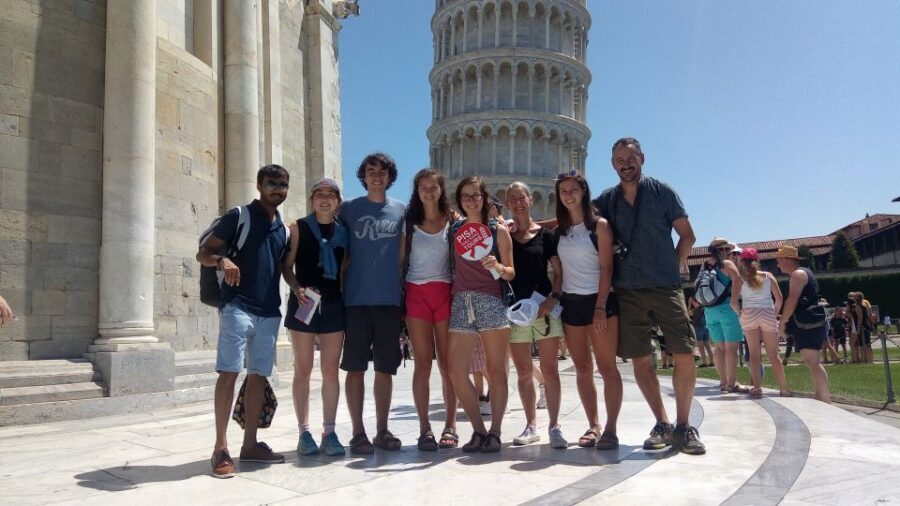
- Small-route tour that connects Pisa’s neighborhoods, not just the postcard stops
- Keith Haring mural as an early curveball that shows modern Pisa too
- Arno river walk and Ponte di Mezzo views that set up your Leaning Tower photos
- South-bank to north-bank route through Sant’Antonio, San Martino, San Francesco, and Santa Maria areas
- Market-and-street-life stops like Piazza delle Vettovaglie and Borgo Stretto lanes
- External approach to the Cathedral and Leaning Tower with a moment that feels like a payoff, not a checkbox
Starting at Pisa Centrale Fountain: the best way to get your bearings fast
This tour starts at the fountain in front of Pisa Centrale train station. It’s a practical meeting point if you’re arriving by train, and it keeps you from wasting time hunting for the first landmark. If you tend to travel with a tight schedule, this matters.
After a quick orientation, your guide sets the stage: Pisa as a compact, lived-in university city, not just a one-day photo stop. The walk is at a leisurely pace, so you can keep up without doing the tourist marathon thing. Headsets are included, which is a quiet win in a city where streets can get loud.
A lot of the tour’s value comes from how it begins. You start with orientation and then move outward, so each next stop feels connected instead of random. You’re not only seeing famous names; you’re learning where they sit in the flow of everyday Pisa.
You can also read our reviews of more walking tours in Pisa
Keith Haring mural and the first stop that breaks the script
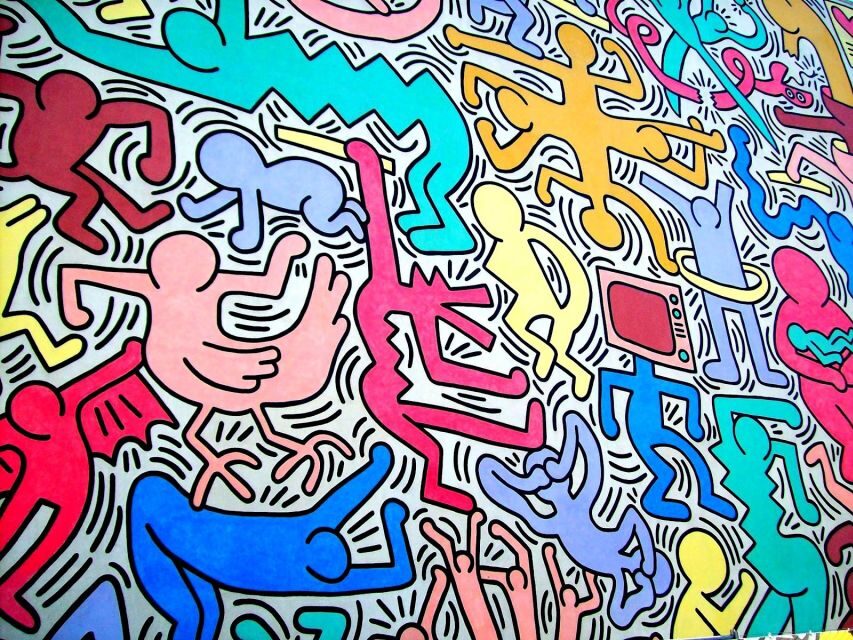
One of the tour’s early highlights is a visit to Keith Haring’s mural. It’s not what most first-time visitors expect to see in Pisa, and that’s exactly the point. The guide uses it to show how the city blends old stone with newer layers of culture.
Right after that, the tour keeps momentum by moving onto Corso Italia, the busy spine where you get a real sense of local movement. This is also where the tour stays grounded in practical travel rhythm. You’re hearing stories, but you’re also walking, watching storefronts, and picking up the layout.
In the hands of the guide (often described as David by groups who booked), the narration tends to be lively and interactive. People ask questions, and the pace still holds. If you like tours where the guide talks with the group—not just at it—this is a good fit.
Corso Italia to the south bank: Sant’Antonio and San Martino
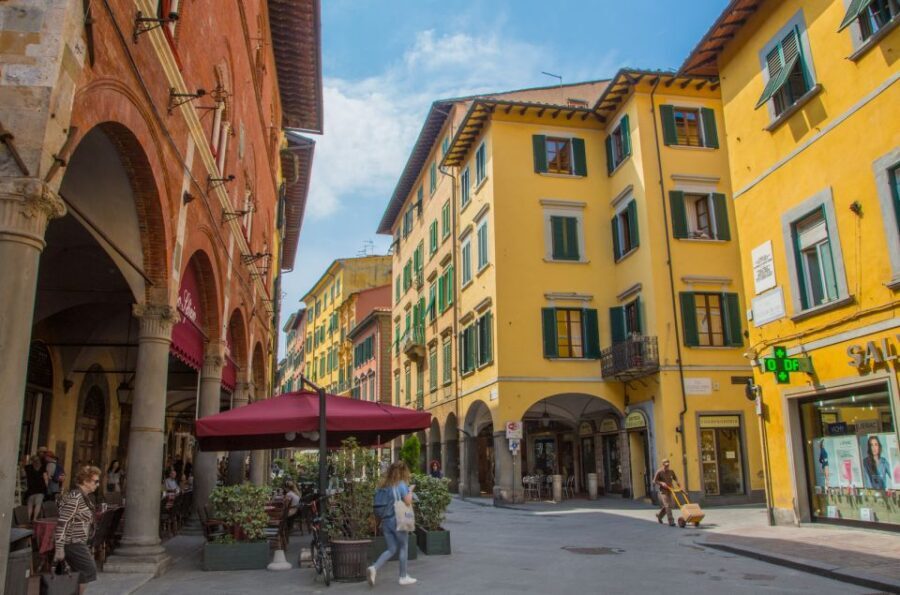
From Corso Italia, you’ll move into the south-bank areas of Sant’Antonio and San Martino. This is a smart choice because those neighborhoods help explain how Pisa works beyond its monument bubble. You see the city as a place people actually navigate, shop, and commute through.
What makes this part worthwhile is the framing. Your guide links architecture and street patterns to the city’s history and everyday life. Even if you’re not a “history dates” person, you’ll likely come away with a better mental map.
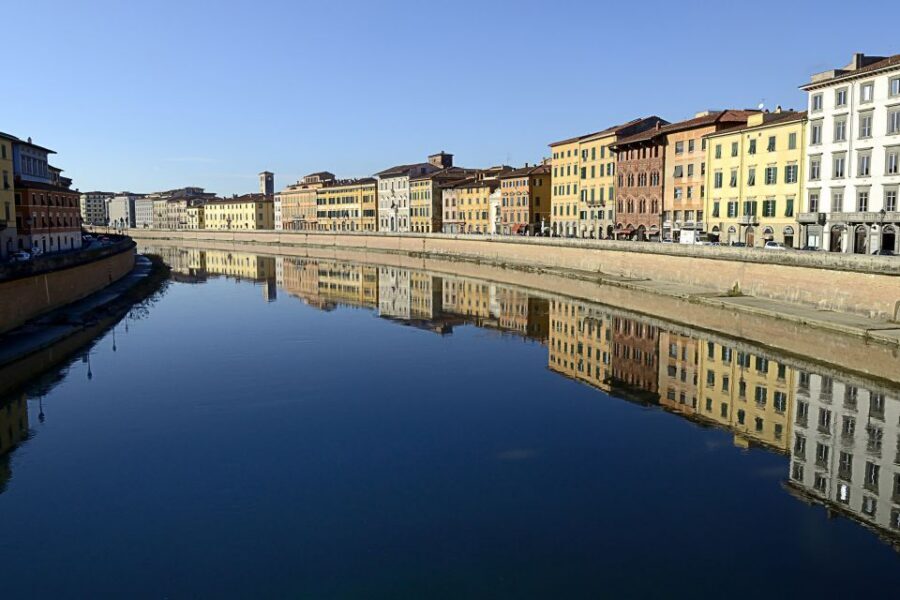
There’s also a built-in visual payoff. You’ll be heading toward the Arno river and setting up viewpoints from the riverbanks. That matters, because it turns your eventual Leaning Tower moment into something you’ve earned with context and sightlines—not just a sudden arrival at the obvious spot.
Along the Arno and Ponte di Mezzo: where the photo angle game changes
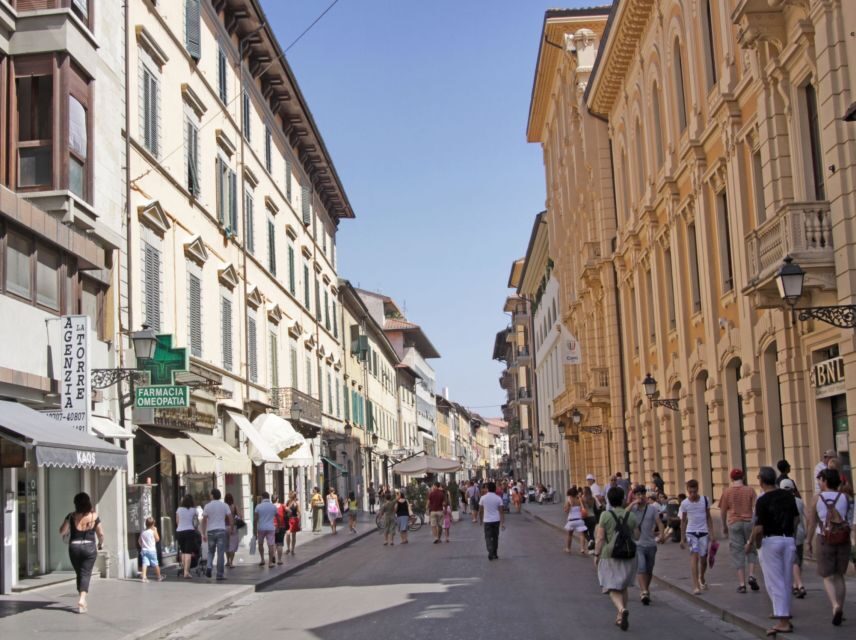
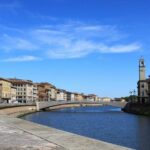
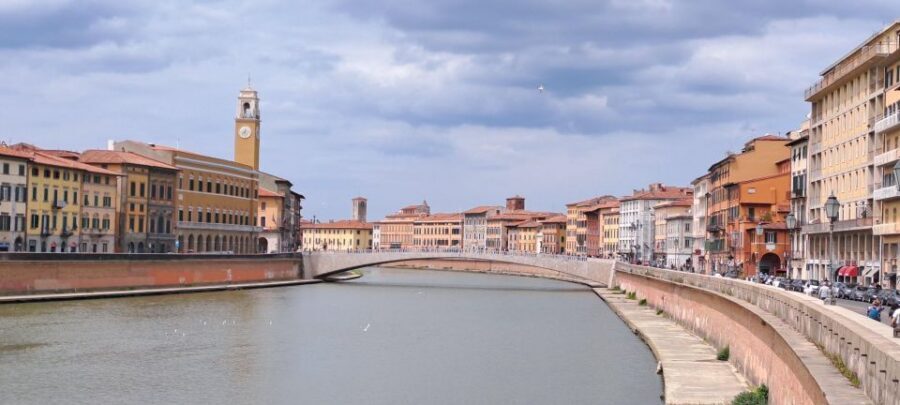
Walking along the river Arno is one of the tour’s best stretches. It gives you breathing room from dense streets and lets the city open up. You also start seeing how Pisa’s landmarks relate to the water, which is a major part of why the city’s story makes sense.
Then you’ll reach Ponte di Mezzo, a key bridge area where the views feel more layered. This is where you can reposition your camera for angles you wouldn’t naturally get while rushing around the Square of Miracles area.
A small practical note: if you love photos, wear comfortable shoes and keep your phone/camera accessible. Some groups describe the approach to the climax as a gradual build, and the best shots often happen during those in-between views, not only at the final tower close-up.
This segment also helps you understand why Pisa is more interesting than its most famous monument. Once you’ve got the river perspective, the city stops feeling like a single landmark and starts feeling like a whole place.
North bank districts: San Francesco, Santa Maria, and the walk through Borgo Stretto
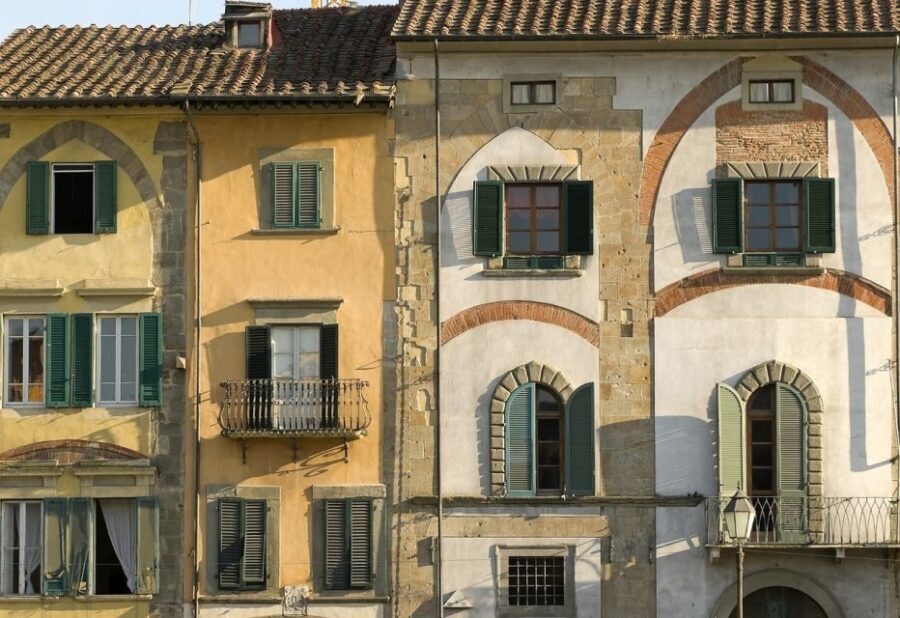
After the south-bank intro, the tour crosses into the north bank districts of San Francesco and Santa Maria. This switch isn’t just geographical; it changes the feel of what you’re seeing. Streets, facades, and the general rhythm of walking start to feel different as you move.
From there, the route shifts toward the heart of the city via Borgo Stretto. This is where the tour gets more “human-scale.” You’re walking tighter lanes, noticing building styles, and picking up the little cues that tell you where Pisa grew and how it adapted.
One reason I like tours that use Borgo Stretto as a mid-walk anchor: it gives you a break from the big named squares without losing momentum. You still get stories, but the street texture makes the history feel real instead of purely academic.
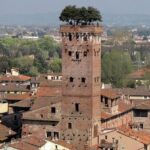
If you’re traveling with kids, this part can also be easier for them to tolerate—because the walking environment feels varied. One group even described rooftop-style city views from a higher vantage point during the tour; while that may not happen for every group, it’s the kind of “how is this possible?” moment that tends to land well.
You can also read our reviews of more tours and experiences in Pisa
Piazza delle Vettovaglie: markets, trattorias, and street-life energy
As you get deeper into the center, you’ll spend time around Piazza delle Vettovaglie. Expect the feel of a square that’s part market and part everyday gathering space, with market stalls and trattorias nearby.
This stop is more than a pretty square. It’s one of the tour’s best moments for learning how Pisa’s food culture fits into daily life. Your guide may point you toward places to eat, including local specialties. Some groups even reported being guided toward great spots for dishes like cecina, which is a classic Pisa move.
If you’re hungry by then, plan for it. This is a good moment to mentally tag lunch or an early snack plan for later. If you’re not hungry yet, you’ll still benefit because it helps you connect what you’re learning with how people actually spend their time.
Piazza die Cavalieri: a power center with a Renaissance makeover
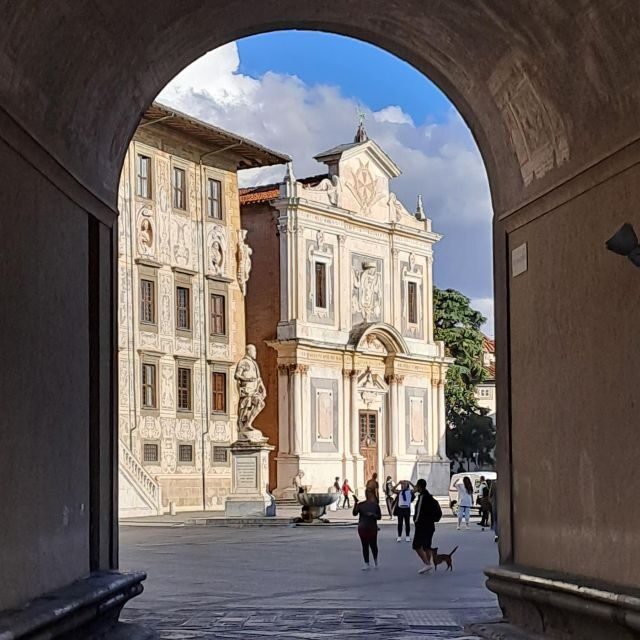
Next comes Piazza die Cavalieri, a major architectural and historical pause. The square was redesigned at the end of the sixteenth century by Florentine architects, so it has that unmistakable “Pisa adjusted its image” energy.
What I like about arriving here mid-tour is that it’s not a random stop—it’s a bridge between the everyday street feel and the monumental end of the route. You see how civic and cultural power shows up in the way plazas are planned and framed.
This is also where you start to feel the tour bending toward its climax. Even without going inside anything yet, the guide’s storytelling helps you understand why the next area matters so much.
External approach to the Cathedral and Leaning Tower: the big payoff moment
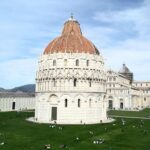
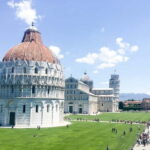
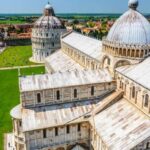
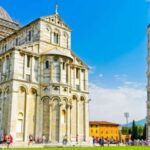
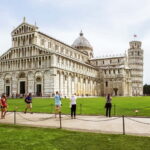
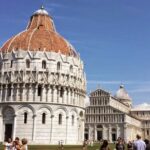
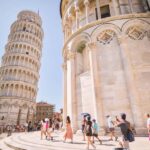
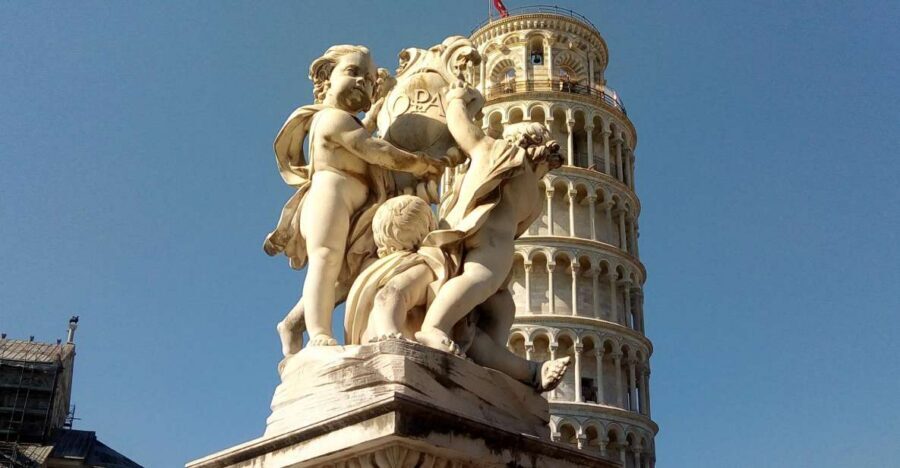
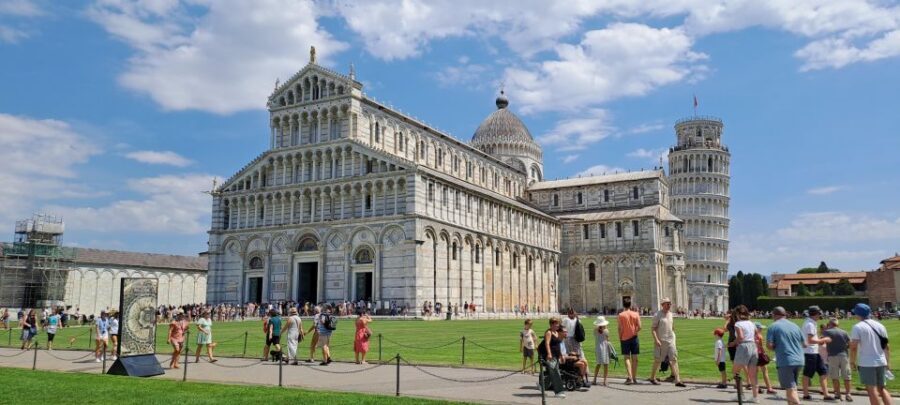
The tour rounds off with a general external visit to the UNESCO protected monumental complex of the Cathedral and the Leaning Tower. That’s key: you’ll get the iconic views, but the experience is designed as a walking orientation with context, not a long visit inside.
What makes this ending work is the guide’s emphasis on viewpoint. Many people come to Pisa expecting one moment, but the better experience is learning how the city and its monuments reveal themselves from different directions. Groups have specifically noted that the guide helps you approach the climax from a standout angle—one that makes the tower look dramatic without feeling like a forced photo pose.
Once you’re at the end point near Torre di Pisa, you’ll have a more complete understanding of what you’re looking at. The stories can include everything from Galileo and the city’s scientific connections to later events like Pisa’s role during World War II, plus the modern chapter of restoration work on the tower. You’ll also hear unexpected cultural name-drops—some groups even mention Vespa appearing in the conversation—used as a way to connect modern Italy to the city’s identity.
And then you get the simplest travel gift: permission to enjoy your own pacing. When your guide steps back, you can take extra photos, reread the details you now recognize, and decide if you want to spend more time in the monumental area on your own.
Why this $30, 2-hour format feels like value (not just a box-check)
At $30 per person for a 2-hour guided walking tour, the value depends on how you like to travel. If you enjoy understanding what you’re looking at while you walk, this is a strong deal. You’re not paying for transportation that you’d handle yourself, and you’re not paying for a half-day bus tour that dumps you back at the hotel.
The included items also help: a local professional guide plus headsets to hear clearly. Those sound like small details until you’re in a busy area and trying to follow a story while everyone else is moving.
The biggest value, though, is the shift in your mental picture of Pisa. Instead of seeing only the Leaning Tower, you learn how the city is arranged by neighborhoods, streets, and the river. That’s why people often come away feeling like Pisa is bigger and more textured than the initial impression.
One gentle caution: some tours can run information-heavy. A couple of groups have asked for a bit less detail or fewer long historical strings, especially when children were in the group. If you’re someone who prefers lighter narration, you may still enjoy the walk, but it helps to know what type of story style you’re signing up for.
Who this tour suits best (and who should skip it)
This Pisa walking tour is a great match if you:
- Have limited time and want a clear route that hits major highlights plus side streets
- Like guides who answer questions and keep the vibe friendly (David is frequently mentioned as an excellent host)
- Care about how monuments connect to the rest of the city—especially along the Arno
- Want a stroller/kid/pet-friendly, relaxed pace walk where comfortable shoes are the main requirement
It may not be ideal if you:
- Want a long, slow, inside-focused visit with lots of museum time
- Prefer tours with minimal talking and quick self-guided sightseeing
- Need more than two hours to feel satisfied with cathedral and tower exploration on your own
If your time in Pisa is tight, this tour is a smart way to get oriented and leave with direction. If you have an extra half day, you can add on more time around the monumental complex after the guide helps you frame it.
Should you book the Pisa 2-Hour Walking Tour?
Yes—book it if you want a well-paced introduction that turns the Leaning Tower from a single photo into a fuller city experience. The mix of neighborhoods, river views, and story stops like the Keith Haring mural makes it more useful than a rushed checklist.
Skip it only if you’re the type who wants to spend the whole day inside monuments or you dislike guided narration. For most first-timers, though, this is an efficient, friendly way to see the real Pisa layers in just two hours.
FAQ
How long is the Pisa 2-hour walking tour?
The tour lasts 2 hours.
Where does the tour start and where does it end?
The meeting point is at the fountain in front of Pisa Centrale train station, and the tour finishes at Torre di Pisa.
What’s included in the tour?
You get a 2-hour guided walking tour with a local professional guide and headsets to hear clearly.
Is the tour in English, and is it wheelchair accessible?
Yes, the live tour guide is English, and the tour is wheelchair accessible.
Does the tour include entry into the Leaning Tower or Cathedral?
The tour includes a general external visit to the UNESCO protected monumental complex of the Cathedral and the Leaning Tower, not an interior visit based on the tour description provided.
What should I wear or bring?
Wear comfortable shoes for walking, since it’s a city walk with frequent movement between areas.