REVIEW · PISA
Pisa Walking Tour with Audio and Written Guide by a Local
Book on Viator →Operated by Walking Cap · Bookable on Viator
Your phone becomes your Pisa guide.
At $7.81, this self-guided route pairs an audio-and-text guide with a phone map so you can learn what you’re seeing without being herded. I really like the multi-language audio (English, Spanish, Italian, German, French) and the practical tips for where to eat with local flavor. One thing to keep in mind: the experience relies on your smartphone and an internet connection, so plan for that if you’d rather not spend hours looking at a screen.
You walk for about 4 to 5 hours at an easy city pace, starting at Pisa Centrale and finishing near Piazza dei Miracoli (you can also start/end there if that’s easier). Most of the stops are free, so you can pay extra only when you want to step inside the big-ticket monuments. And yes, it’s designed for real independence: you can hear audio through your speaker or your headphones.
The main paid add-ons are simple to understand: the Botanical Garden and Museum is optional for 4€, and the Leaning Tower + Baptistery + Camposanto are bundled for 27€. If you want the classics up close without buying everything, this setup gives you control.
In This Review
- Key Highlights You’ll Actually Notice
- From Pisa Centrale to the Field of Miracles, in One Logical Walk
- How the Audio Guide Works (So You Don’t Get Stuck)
- Piazza Vittorio Emanuele II: Start Where Pisa Reorganized Itself
- Keith Haring’s Tuttomondo Mural: Street Art With a Pisa Link
- Santa Maria del Carmine: A Quick Church Stop That Actually Teaches
- Santa Maria della Spina: The Tiny Gothic Church With an Arno Backstory
- Borgo Stretto: The Busy Street Where Pisa Still Shops
- Piazza dei Cavalieri: Sette Vie, Eagles, and the Palazzo dell’Orologio
- Orto e Museo Botanico: Optional, But It’s a University Story Worth Paying For
- Piazza dei Miracoli: Where the Name Field of Miracles Makes Sense
- Leaning Tower of Pisa: Ticket Costs, Plus the Practical Stuff
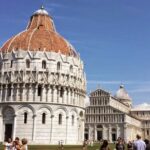
- Baptistery of San Giovanni: Big on Size, Big on Detail
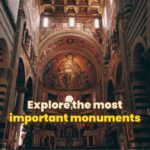
- Pisa Cathedral: Romanesque With Multiple Style Influences
- Camposanto: The Marble-Enclosed Cemetery With a Cloister Feel
- Price, Timing, and Value: Why $7.81 Works
- Who This Tour Is For (And Who Should Rethink It)
- Should You Book This Pisa Walking Tour?
- FAQ
- Where does the tour start and end?
- How long does the Pisa walking tour take?
- What is the price?
- What is included in the tour price?
- Do I need extra tickets for the main attractions?
- Do I need my own headphones?
- Do I need internet on my smartphone?
- What languages are available?
- How big is the group?
- Can I cancel for a full refund?
Key Highlights You’ll Actually Notice
- Audio + text in 5 languages so you can switch formats when it suits you
- A route that starts in everyday Pisa (not just a straight shot to the square)
- Keith Haring’s Tuttomondo mural tied to a real story of how art landed in Pisa
- Optional botanical stop at Pisa’s oldest university botanical garden concept
- Tower planning help that matters on site, since the tower visit has practical limits
From Pisa Centrale to the Field of Miracles, in One Logical Walk
This is the kind of Pisa tour that fits real travel days. You start at Pisa Centrale, then the route naturally shifts from city streets to the famous monument area. I like that feeling of progression, because it keeps you from arriving at Piazza dei Miracoli too “tour-bus tired.”
The total time usually lands around 4 to 5 hours. That’s enough to see the key sights without forcing you into frantic pacing. And since it’s self-guided, you can pause longer when something catches your eye—like a church facade detail or a street scene in Borgo Stretto.
You also get a mobile ticket and a digital guide you use on your phone. The upside is flexibility. The downside is that you truly have to treat your phone like a tool, not an accessory.
You can also read our reviews of more walking tours in Pisa
How the Audio Guide Works (So You Don’t Get Stuck)
This experience runs through a digital guide with audio-guide and text in multiple languages. You’ll need a smartphone with internet access to use it, so I strongly suggest you do two things before you start: connect to data/Wi‑Fi and fully charge your battery.
Audio can play through your phone’s speaker or through headphones (handy if you don’t want to broadcast your sightseeing narration to nearby families). You’ll get tips on monuments, history, and curiosities as you walk, which is a big help when the buildings are right in front of you but you don’t yet know what you’re looking at.
There’s also a map component that helps you follow the route. That matters because Pisa is easy to walk, but the streets can feel similar in stretches. Having clear directions keeps you focused on the sights instead of wandering.
Piazza Vittorio Emanuele II: Start Where Pisa Reorganized Itself
Your walk begins in Piazza Vittorio Emanuele II, a square shaped by 19th-century urban changes. This is where ancient medieval walls and the San Gilio gate were demolished, and where access to today’s Corso Italia was reshaped so it led toward the station.
What I like here is the “before and after” feeling. You’re not just looking at a random plaza—you’re standing in the middle of a city transformation. It helps you understand why Pisa’s modern streets connect where they do.
This stop is short, and that’s fine. It sets the stage and gets you walking toward the more distinctive surprises ahead.
Keith Haring’s Tuttomondo Mural: Street Art With a Pisa Link
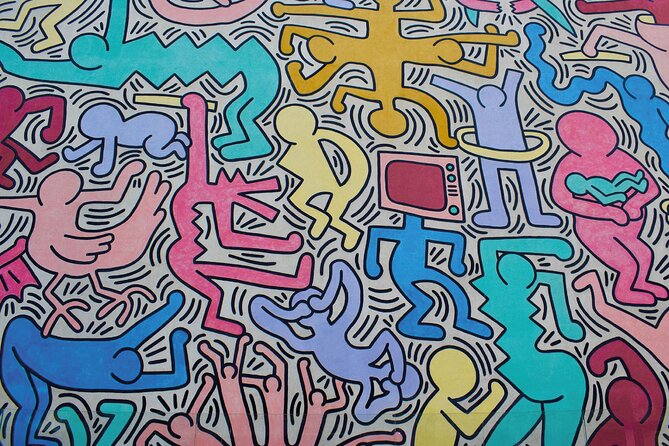
Then comes a fun jolt of modern color: Murale Tuttomondo di Keith Haring. Tuttomondo was created in 1989, and it wasn’t random. Keith Haring was invited to Pisa by Piergiorgio Castellani, a young Pisan who met him in New York and suggested he make a street art work in Tuscany.
This is one of those stops that works even if you only spend a minute. The story gives the mural context, and the date makes it feel like a living part of the city rather than a museum piece.
It’s also a good reminder that Pisa isn’t only Romanesque stone and leaning towers. You get contemporary art too.
Santa Maria del Carmine: A Quick Church Stop That Actually Teaches
Next is Chiesa di Santa Maria del Carmine, built between 1324 and 1326. It was among the first Carmelite churches in Europe, and the order was already present in Pisa at Sant’Apollinare in Barbaricina.
This is a quick stop, so don’t expect a long deep-reading experience. But the value is that the guide helps you notice what makes the church historically meaningful, not just architecturally pretty.
If you like religion-as-architecture—how orders, locations, and eras leave traces—this short pause is worth it.
You can also read our reviews of more guided tours in Pisa
Santa Maria della Spina: The Tiny Gothic Church With an Arno Backstory
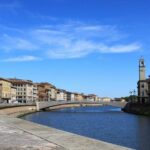
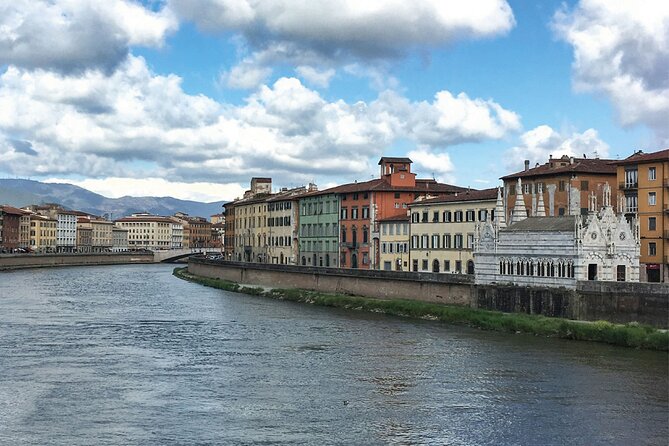
The small church of S. Maria della Spina is an “only-in-Pisa” kind of stop. It was built in 1230 on the banks of the Arno, at the site of an important bridge called Ponte Novo. That bridge joined Via Santa Maria and Via Sant’ Antonio, was destroyed in the 15th century, and was never rebuilt.
That bridge detail is the kind of clue the digital guide is meant for. It helps you see the church not as a random little stop, but as part of a geographic story—river life, crossings, and what changed when the bridge vanished.
Time here is brief, so if you want photos, arrive ready. Keep an eye on the facade and try to spot the Gothic character in the details rather than only the overall shape.
Borgo Stretto: The Busy Street Where Pisa Still Shops
After the river walk, you reach Borgo Stretto, often shortened to Borgo by locals. It’s one of Pisa’s busiest streets, with architecture, arcades, and shops that give you an everyday glimpse of how the city functions.
This segment is less about one landmark and more about atmosphere. It’s where the tour turns from monuments into street-level Pisa. If you want a break from big-ticket sights, this is where you get one.
I recommend using this time to reset your feet and decide if you want a snack before the long monument area near Piazza dei Miracoli.
Piazza dei Cavalieri: Sette Vie, Eagles, and the Palazzo dell’Orologio
Next is Piazza dei Cavalieri, a place with a Middle Ages identity that changes the way you read the square. In medieval times, it was known as Piazza delle Sette Vie because seven streets converged there.
The tour also points out the former power structures: the Palazzo degli Anziani, and the Torre della Muda, where eagles were kept during the moulting of their feathers. Today, those structures, plus the former Palazzotto di Giustizia (also linked with the Capitano del Popolo), form what you’ll recognize as the Palazzo dell’Orologio.
This is a great stop if you like weird historical details. An eagle-moulting tower is the kind of fact that makes a square feel alive instead of static.
Orto e Museo Botanico: Optional, But It’s a University Story Worth Paying For
If you want a breather from churches and monument-ticket lines, there’s an optional detour: Orto e Museo Botanico. It’s part of the University of Pisa’s University Museum System, and it’s considered the oldest university botanical garden in the world.
The ticket costs 4€, and the suggested time is about 45 minutes. Even if you’re not a “botany person,” I think this works because it gives your eyes a different visual rhythm—pathways, plants, and a calmer pace before the big square.
If you’re short on time, you can skip it. Just remember you’ll lose that university angle on Pisa, which is one of the tour’s smartest variations.
Piazza dei Miracoli: Where the Name Field of Miracles Makes Sense
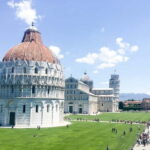
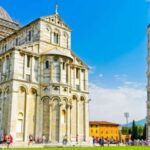
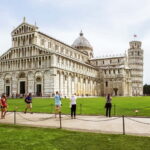
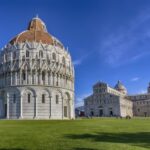
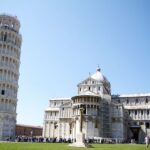
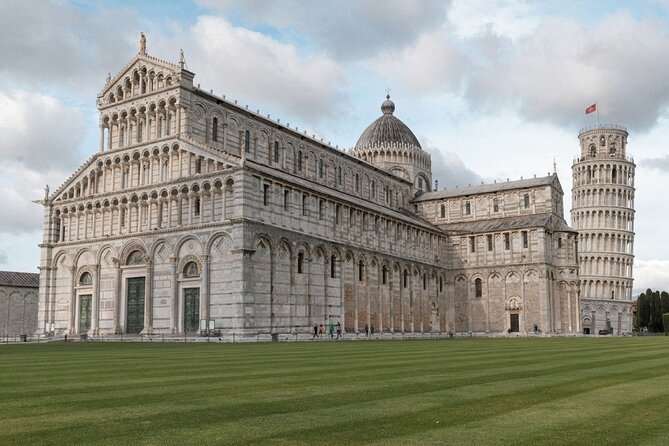
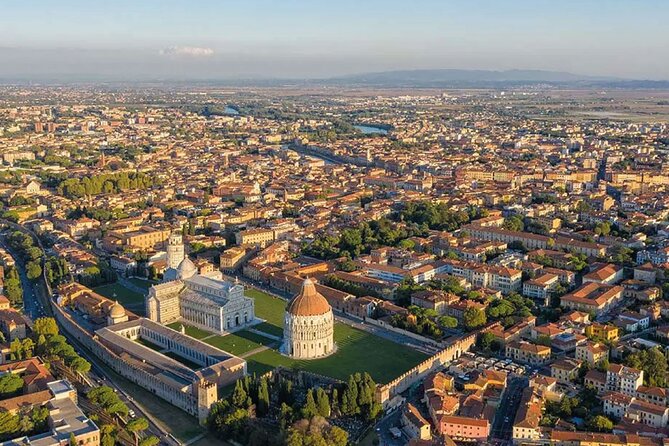
Now you arrive at the iconic UNESCO area: Piazza dei Miracoli. It’s been a UNESCO heritage site since 1987, and the poet Gabriele D’Annunzio is credited with calling it the Field of Miracles because of the imposing buildings gathered there.
This stop is also where the tour shifts into “pay attention” mode. The spaces are monumental, but the details still matter: Romanesque structure lines, material textures, and the way the buildings align across the square.
You’ll spend time here exploring on your own, with the guide helping you connect each building’s name to what’s special about it.
Leaning Tower of Pisa: Ticket Costs, Plus the Practical Stuff
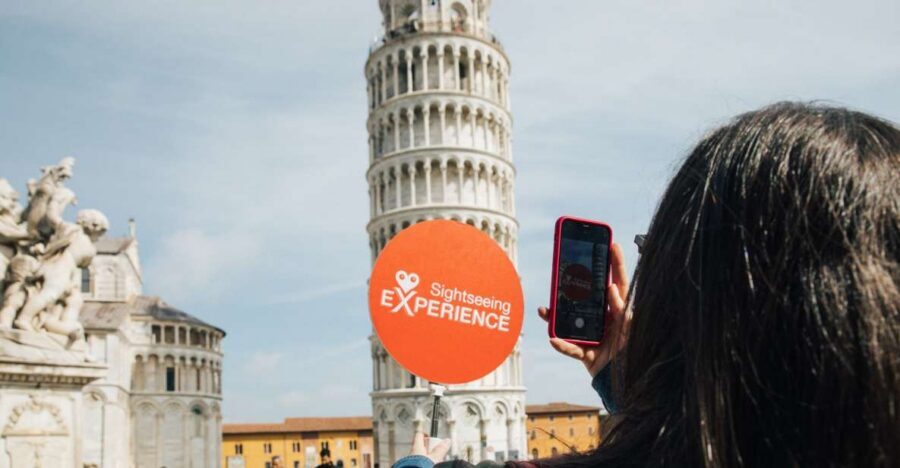
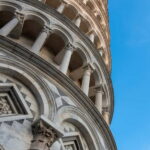
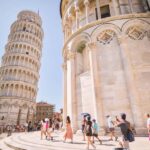
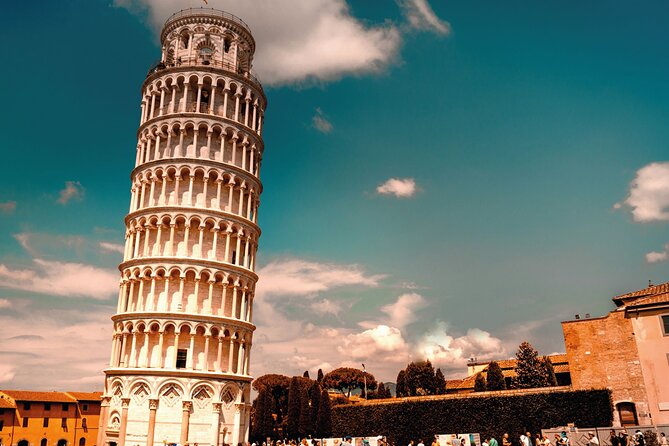
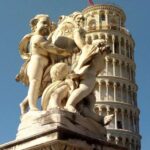
The Leaning Tower of Pisa is a bell tower designed for the nearby cathedral. Construction took 177 years, completed in three phases. That long timeline helps explain why the tower feels like a historical process, not a quick project.
The important part for planning: the Leaning Tower visit isn’t included. A ticket costs 27€, and that price covers the key monuments in the square together. Plan on staying a bit longer than you think, because you’ll need time to enter and then navigate inside.
One practical tip from a family day perspective: tower access involves narrow stairs, and you can use a locker for bags, since bags aren’t allowed in the tower. If you’re traveling with backpacks, this matters.
Baptistery of San Giovanni: Big on Size, Big on Detail
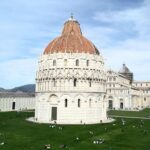
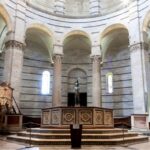
Next up is the Battistero di San Giovanni. Work began in 1152, guided by architect Diotislavi. It’s described as the largest baptistery in Italy, and the guide frames it as beautiful both outside and inside.
Like the tower, it uses the same 27€ ticket bundle for the monument complex. That’s convenient: you’re not juggling separate buys for each building if you want the full set.
I’d treat the baptistery as a “slow look” stop. Even if the interior requires extra time on site, it’s one of the places where the design rewards paying attention.
Pisa Cathedral: Romanesque With Multiple Style Influences
The Cattedrale di Pisa is the Romanesque anchor of the square. Construction is tied to architect Buscheto, with the cathedral design dated to 1064.
What I like about this stop is that it’s not only labeled Romanesque. The guide highlights that the cathedral reflects influence from different styles and cultures, which helps you spot variation rather than assuming everything is identical.
Admission here is listed as free in the context of this walking route. That makes it a smart “save your euros” choice compared with the ticketed monuments.
Camposanto: The Marble-Enclosed Cemetery With a Cloister Feel
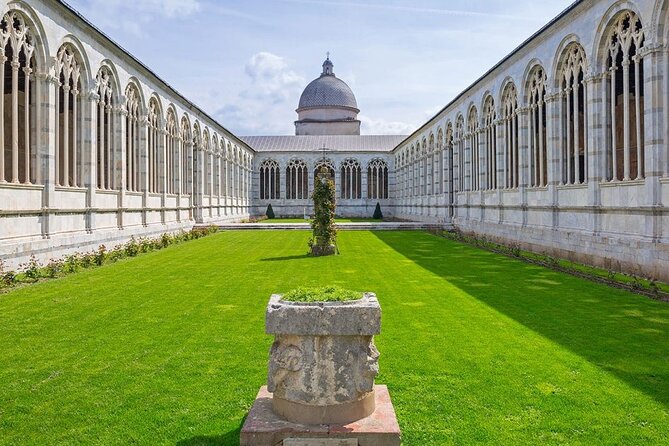
Finally, there’s Camposanto di Pisa, a monumental cemetery begun in 1277. It sits north of Piazza dei Miracoli and is surrounded by a marble enclosure. Inside, you get a cloister-like layout that feels quiet and structured rather than chaotic.
Camposanto is also part of the 27€ ticket bundle, not included by default. That’s worth it if you like architecture and atmosphere, because the space is designed to feel contemplative while still being visually impressive.
If you want a closing moment that isn’t just another facade photograph, this is the stop that often gives people that “okay, now I get Pisa” feeling.
Price, Timing, and Value: Why $7.81 Works
At $7.81 per person, you’re mostly paying for the guide system: audio/text content, language options, and the route support. The fact that many stops are free makes the overall cost feel light.
The main spending decisions are optional:
- 4€ if you add the Botanical Garden and Museum
- 27€ if you want the Leaning Tower + Baptistery + Camposanto together
That “pay as you go” structure is good value if you’re not sure how many interiors you want. And since the monument areas can be crowded, having a guided plan that helps you choose what to prioritize saves time—even though you’re not in a strict group schedule.
Timing-wise, plan for about 4 to 5 hours total. If you want extra time for the ticketed sites, add a buffer.
Who This Tour Is For (And Who Should Rethink It)
This works best if you:
- like self-paced walking in a historic city
- want multi-language audio and on-the-go context
- can handle smartphone directions and keep your phone charged
It may not be the best fit if you:
- dislike phone-based navigation or have trouble with internet-dependent apps
- need a low-screen experience for comfort and focus
The route is also likely family-friendly around the monument area, but remember that tower stairs are narrow and bag rules can affect what you carry.
Should You Book This Pisa Walking Tour?
I’d book it if you want a smart way to see Pisa without paying for a full guided day. For the price, the audio-and-text guide adds meaning to streets, churches, and squares that you might otherwise skim past. And because the key monuments are optional through separate tickets, you control your budget instead of being forced into an all-in program.
I’d hesitate only if you know you’ll struggle with smartphone use. If that’s you, consider a plan that doesn’t depend on internet and screen time. Otherwise, this is a practical way to turn a walk from “I saw it” into “I understood it.”
FAQ
Where does the tour start and end?
It starts at Pisa Centrale (Piazza della Stazione, 56125 Pisa PI, Italy) and ends at Piazza dei Miracoli, Pisa PI. Because it’s self-guided, you can also start and end at Piazza dei Miracoli.
How long does the Pisa walking tour take?
The duration is listed as 4 to 5 hours (approx.).
What is the price?
The price is $7.81 per person.
What is included in the tour price?
You get a digital guide with audio and text, tips for monuments and history, and best advice for local restaurants with authentic food. It’s available in multiple languages (English, Spanish, Italian, German, and French).
Do I need extra tickets for the main attractions?
Not all stops require tickets. The Botanical Garden and Museum costs 4€ (optional). The Leaning Tower + Baptistery + Camposanto are not included and cost 27€ total as a bundle.
Do I need my own headphones?
Headphones aren’t required. You can listen through your phone speaker or through your headphones.
Do I need internet on my smartphone?
Yes. You’ll need a smartphone with an internet connection to use the digital guide.
What languages are available?
The guide includes English, Spanish, Italian, German, and French.
How big is the group?
The tour lists a maximum of 104 travelers.
Can I cancel for a full refund?
Yes. You can cancel for free up to 24 hours in advance for a full refund. Canceling less than 24 hours before the experience start time is not refundable.