REVIEW · PISA
Pisa Guided Walking Tour in Miracoli Square
Book on Viator →Operated by CAF Tour and Travel · Bookable on Viator
Pisa’s big monuments are easier with a guide. This short, focused walk through Piazza dei Miracoli is built for first-timers who want the meaning behind the marble—then freedom to explore on your own.
I especially like the way the guide connects the highlights of the Cathedral Square into one story. And I like that you get an expert local guide pacing you around the main “miracles,” including time to see how the buildings relate to each other in the overall design.
The main thing to watch is audio and time. A few people found it hard to hear at moments (even with earphones), and the tour can feel tight if you’re expecting lots of long interior visits or extra stops beyond the core sights.
In This Review
- Key things to know before you go
- Piazza dei Miracoli: The Field of Miracles, timed for first-timers
- Walking route: How the time gets spent (and why it matters)
- Stop 1: Piazza dei Miracoli overview—Cathedral Square’s big picture
- Stop 2: Duomo di Pisa—where included access can change the payoff
- Stop 3: Leaning Tower of Pisa—tilt facts, not just photos
- What you’ll learn from the guide (and why the best ones make a difference)
- Duomo di Pisa and Campo Santo: Why the cemetery stop is more than a formality
- Practical value: What you get for about $20.84
- Meeting point and what to do when it feels confusing
- Who this tour suits best (and who might want a different plan)
- Should you book this Pisa Guided Walking Tour?
- FAQ
- What is the duration of the Pisa Guided Walking Tour in Miracoli Square?
- Where does the tour start and end?
- Is the Leaning Tower entry included?
- Is entry to the Duomo di Pisa included?
- Which monuments does the tour cover?
- How many people are in a group?
- Is the tour physically demanding?
- What language options are available?
Key things to know before you go
- Start in Piazza Daniele Manin and finish back there, so you’re not hunting for a new meeting spot.
- 1 hour, max 25 people makes it a good fit if you want the big hits without a half-day commitment.
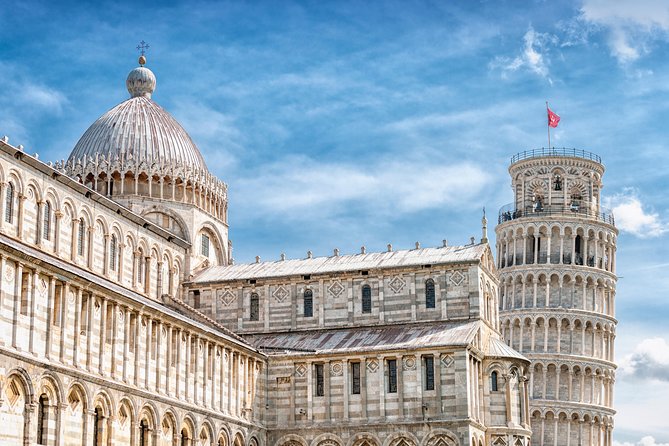
- Cathedral Square focus (Piazza dei Miracoli) means you’re seeing the UNESCO site in a logical order.
- Lean Tower context included, with little-known facts about the tilt—so it’s not just a photo stop.
- Entrance tickets are mixed: the cathedral entry is described as included, but other monument entry is not.
- Guides may work in two languages, which can help, but it can also affect how smooth the commentary feels.
Piazza dei Miracoli: The Field of Miracles, timed for first-timers
If you only have a day in Pisa, you don’t want to waste it “wandering and guessing.” This kind of guided walk is useful because Piazza dei Miracoli is visually striking but also easy to misunderstand if you don’t know what you’re looking at.
You’ll concentrate on the Cathedral Square monuments that people often call “miracles” for their beauty and uniqueness. The square is UNESCO World Heritage listed, and the tour keeps it simple: you get the names, what they were built for, and the key points that make each building matter.
I like that the whole experience is designed to be short and efficient. With an hour on the clock, you can walk the loop, learn the story, then decide what you want to linger on afterward. Pisa is compact, and the cathedral complex is basically the city’s main stage—so a guided route is a smart “orientation first” move.
You can also read our reviews of more walking tours in Pisa
Walking route: How the time gets spent (and why it matters)
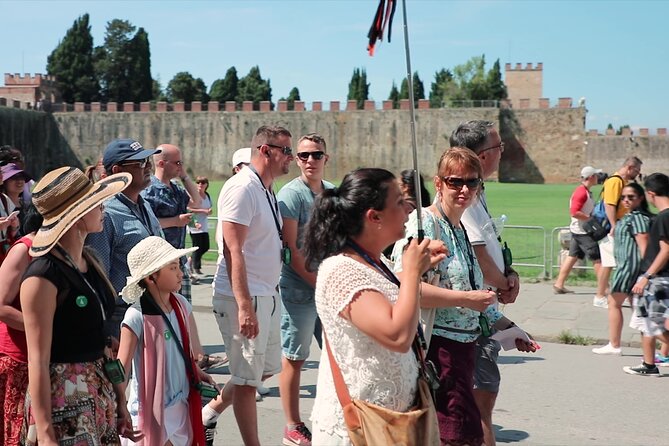
This is a 1-hour guided walking tour. That duration is a big deal, because your expectations have to match the format: you’re there for context and key sights, not a slow museum-style visit.
The pace tends to work best if you:
- want history explained at the right stops
- enjoy quick photo moments with a guide’s narration
- don’t need long lines-and-linger time for multiple interior areas
Where it can disappoint is when someone expects a deeper, longer visit schedule. A few people reported the tour feeling shorter than advertised or spending more time on logistics than commentary. So if you’re the type who likes to “soak” inside each monument, you’ll likely need to plan extra time on your own.
Stop 1: Piazza dei Miracoli overview—Cathedral Square’s big picture
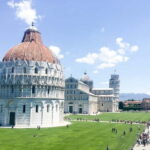
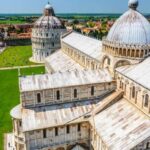
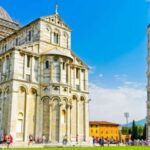
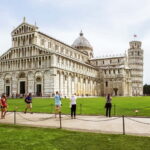
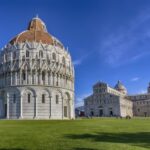
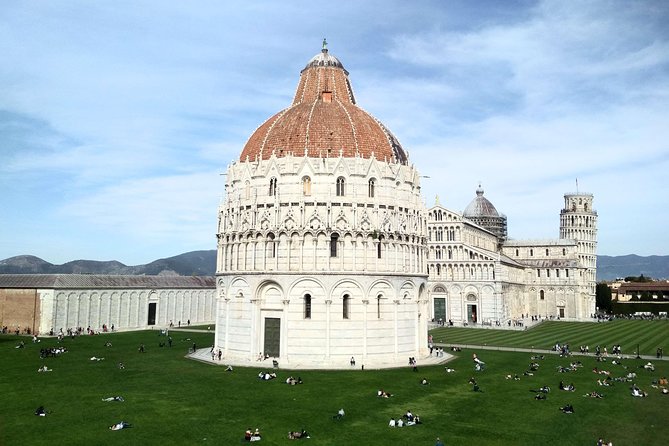
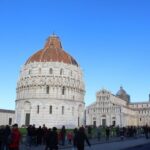
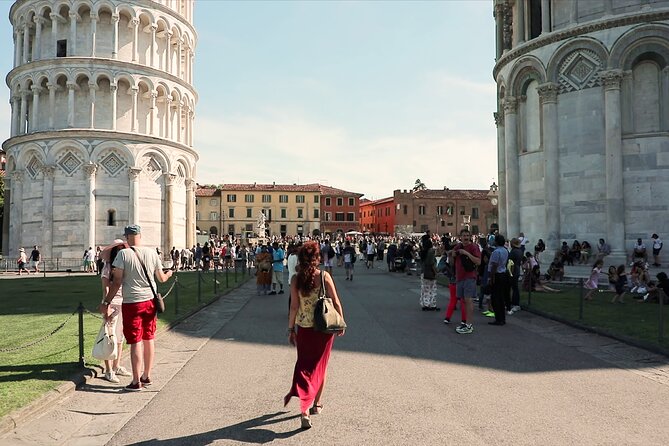
Your first stop is the heart of it all: Piazza dei Miracoli. This is where the guide sets the stage. Even if you’ve seen photos of the Leaning Tower, this square is more than a single landmark. It’s a carefully arranged group of religious and civic buildings that work together as one ensemble.
You’ll get guided context around:
- the Duomo area (cathedral complex)
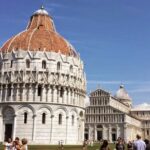
- the Pisa Baptistry
- the monumental Cemetery (Campo Santo)
- and the Leaning Tower of Pisa
Here’s the practical value: you stop at the right places to understand how the buildings are positioned and why they look the way they do. Without that kind of framing, it’s easy to treat each monument as a separate “stop for photos.” With the guide, you start seeing the square as a planned whole.
One timing note: the tour description says admission for this first stop is not included. That doesn’t necessarily mean you do nothing inside—because the overall schedule includes cathedral time later—but it does mean you should be ready for the fact that not every building visit will be covered in the same way.
Stop 2: Duomo di Pisa—where included access can change the payoff
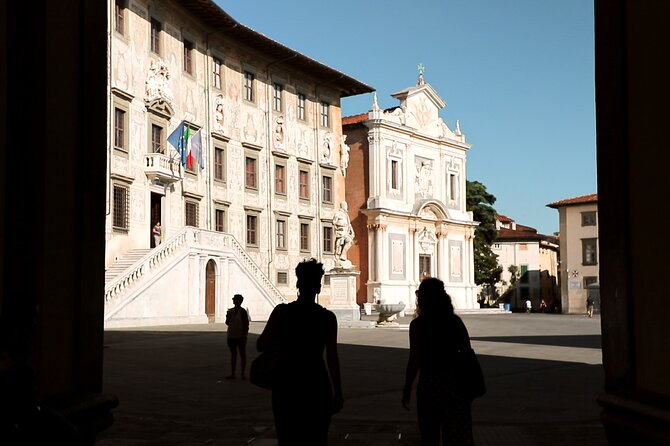
Next comes the Duomo di Pisa. This stop is listed with admission ticket included, and it’s one of the reasons I consider this tour better than a pure “look and point” walk.
The Duomo is a major reason people come to Pisa in the first place, and an included interior visit (or at least included entry time) can be the difference between a good overview and a memorable experience. In a short tour like this, any included entry time is valuable.
Also, places of worship require the right approach. The tour advises clothing that’s appropriate for visiting churches. So plan ahead: shoulders and knees often need to be covered, and comfortable layers beat last-minute scarf hunting in the gift shop line.
If your goal is to get both exterior and interior context in a time-efficient way, this stop is your strongest selling point.
Stop 3: Leaning Tower of Pisa—tilt facts, not just photos
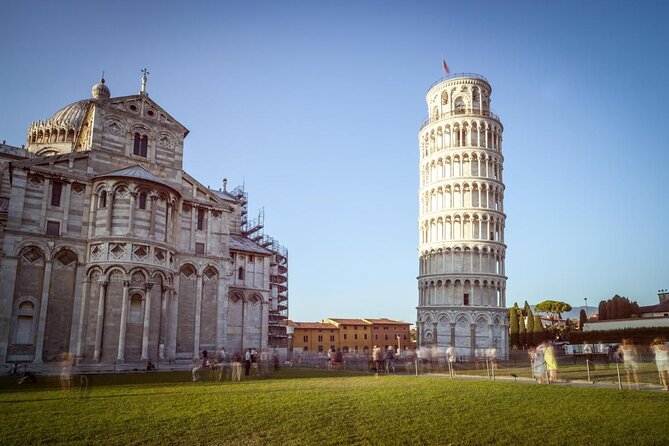
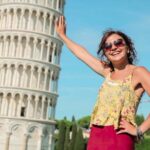
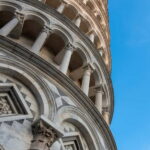
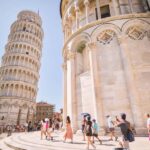
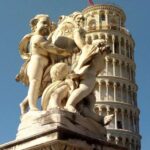
Then you move to the Leaning Tower of Pisa. This is the “wow” landmark, yes—but the real advantage here is the guidance on what makes the tower famous beyond the obvious tilt.
The tour highlights little-known facts about the tower’s tilt. That’s exactly what helps on a place like this. Everyone has a photo. Fewer people know the backstory and the why behind the engineering drama.
Important expectation-setting: the tour description indicates admission tickets are not included for the Leaning Tower stop. So you should treat this as guided viewing and explanation rather than a guaranteed tower access experience.
You’ll get about 20 minutes at the tower area. In that window, you’ll typically get enough time for:
- photos from the viewing spots
- a grounded explanation of the tilt story
- a sense of where the tower sits within the wider Cathedral Square plan
If you want to climb, plan to do that separately with your own ticket and timing.
You can also read our reviews of more guided tours in Pisa
What you’ll learn from the guide (and why the best ones make a difference)
This is where the tour can really shine—when the guide’s delivery clicks.
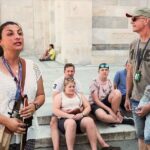
The experience includes a local professional guide, and the scale is capped at 25 travelers. Smaller groups usually mean you can hear better and get more natural pacing. And when commentary is clear, you get that rare effect: the square stops being “random medieval buildings” and starts becoming a place with purpose.
Guide quality shows up in the feedback. One name that came through clearly in the information you shared is Riccardo—described as prepared, available, and friendly, with a strong summary of the Duomo, Baptistry, and Tower. That matches what you want from a short tour: crisp facts, not a lecture.
One practical caution: hearing can be an issue. Some people reported it was hard to hear the guide, even when earphones were provided. So choose a spot where you’re not stuck behind taller people, and keep an eye on whether the audio system is working well for your group. If you’re hard of hearing or rely on audio, arrive ready to ask for adjustments.
Duomo di Pisa and Campo Santo: Why the cemetery stop is more than a formality
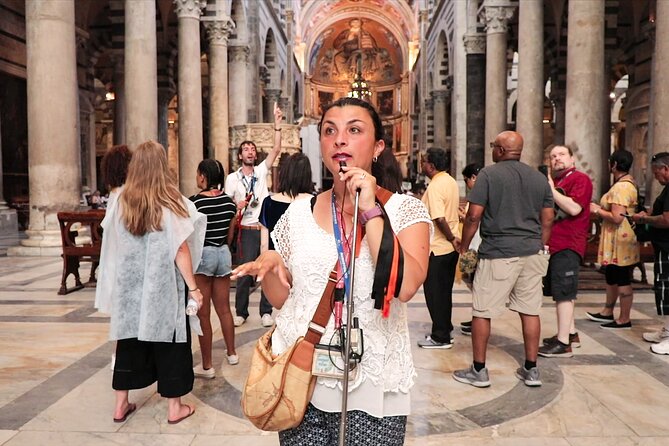
Campo Santo (monumental cemetery) is part of the standard Cathedral Square lineup, and it’s one of those stops that many quick tours handle too lightly. Here, it’s included as part of the guided overview, which helps you understand it as a historic religious site—not just an “odd stop” if you’re expecting only architecture.
And the Baptistery matters too. In Pisa, these buildings share stylistic DNA. When your guide points out details—materials, ornament, and how the complex reads as a unified statement—you’re more likely to notice the intricate exterior design instead of walking past it.
So even if you don’t spend ages inside, you can leave with a more complete picture of why the whole area gets labeled “miracles.”
Practical value: What you get for about $20.84
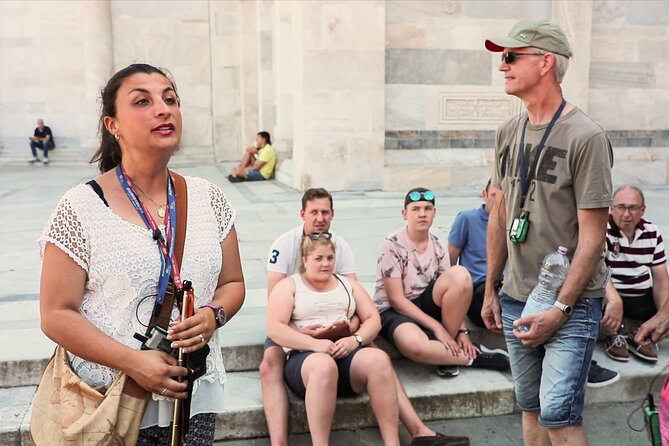
At $20.84 per person for roughly 1 hour, this is the kind of tour that’s priced for value through efficiency. You’re not paying for a private guide or a full-day deep dive. You’re paying for clarity: what to look at, what it’s called, and why it matters.
That’s a good deal if:
- you’re short on time (train day, day trip, quick city stop)
- you want the essentials without reading a guidebook first
- you like a route that keeps you from missing the main sights
It’s not the best deal if:
- you expected lots of inside time across multiple monuments
- you’re sensitive to weak audio or tight pacing
- you’re the type who needs long stops at each building, not just guided orientation
The fairest way to think about it: you’re buying a map made of explanations, not a ticket bundle.
Meeting point and what to do when it feels confusing
The meeting point is Piazza Daniele Manin, and the tour ends back at that same spot. That round-trip structure makes it easier to build your day plan around the walk.
One issue to plan for: people described the meeting area as confusing at first—especially when multiple guides or group arrivals overlap. So I’d recommend arriving a little early, identify your group promptly, and confirm you’re with the right guide before the tour begins.
There’s also a timing lesson from the feedback you shared: delays can happen, like waiting for a coach to arrive. Pisa is popular, and day-trip groups do mix together. If you have a tight reservation right afterward, build in a buffer.
Who this tour suits best (and who might want a different plan)
This tour is a strong match for:
- first-time visitors who want orientation around the Cathedral Square
- people who like history told in clear, quick pieces
- travelers who want to see Pisa’s main highlights without paying for a longer, more expensive day tour
It may be a weaker match for:
- anyone expecting lots of interior access at multiple monuments
- travelers who need perfect audio and don’t do well with group sound systems
- people who want the tour to feel more like a slow-paced museum visit
If you’re traveling in a rainstorm, don’t panic. Pisa’s main sights are in a compact area, so the guided walk can still work well—just bring footwear you trust on wet stone.
Should you book this Pisa Guided Walking Tour?
Book it if you want a quick, organized way to understand Piazza dei Miracoli. It’s a smart buy when you value a local guide’s explanation, especially at the Leaning Tower and around the Duomo complex. For the price, you’re getting more than a stroll—you’re getting context that helps you see the details you’d otherwise miss.
Skip or consider an alternative if you’re chasing deep interior time across multiple monuments or you’re worried about hearing the guide clearly. In that case, you’ll get more satisfaction by booking separate monument tickets and doing a self-guided approach with a guidebook—or choosing a tour format with more time and better audio reliability.
If your schedule is tight and you want Pisa’s main story in one hour, this is a practical way to start.
FAQ
What is the duration of the Pisa Guided Walking Tour in Miracoli Square?
The tour lasts about 1 hour.
Where does the tour start and end?
It starts at Piazza Daniele Manin and ends back at the same meeting point.
Is the Leaning Tower entry included?
No. Entrance to monuments is not included, and the Leaning Tower stop is listed as not included.
Is entry to the Duomo di Pisa included?
Yes. The Duomo di Pisa stop is listed as having an admission ticket included.
Which monuments does the tour cover?
You’ll visit and learn about the Cathedral Square monuments: the Duomo area, the Baptistery, Campo Santo (monumental cemetery), and the Leaning Tower.
How many people are in a group?
The tour has a maximum of 25 travelers.
Is the tour physically demanding?
It’s suggested for travelers with a moderate physical fitness level.
What language options are available?
The local guide service could be provided in two languages, and a guided visit is included.