REVIEW · PISA
Pisa: Beyond the Tower (1h round-trip tour)
Book on Viator →Operated by Eco Friendly City Tour · Bookable on Viator
Pisa has more angles than you expect. This 1-hour, small-group circuit (max 6) takes you past the usual photo line and into the stories behind Pisa’s science, Medici power, and street art. I like how it mixes formal sights like palaces and a national museum with quick looks at outdoor art you can spot on the go. I also like the tight timing: it’s short enough to fit even a busy day, yet long enough to feel like you truly see a chunk of the city.
One thing to consider: the stops are brief (about 5 minutes each), and if you’re on the move or near other people, you may need to lean in to catch every detail. If you want slow, linger-in-every-room sightseeing, you’ll likely want a longer second visit to any place that pulls you in.
In This Review
- Key highlights worth your time
- Setting Off from Piazza Arcivescovado (and why the route works)
- Domus Galilaeana: Pisa’s first public observatory in a quick stop
- Palazzo Reale and the Medici story: power you can spot in the walls
- Palazzo Blu and the art pause that keeps the tour fun
- Palazzo Agostini to the “other lean”: why Pisa leans for real
- Ponte di Mezzo: the old bridge that centers the city
- Palazzo Vecchio de’ Medici and Palazzo Chiesa ruins: Medici side, Shelley echoes
- Tuttomondo di Keith Haring: peace and harmony on a wall
- Galileo Galilei by Eduardo Kobra: a modern Tower-shaped telescope
- Santa Maria della Spina and Piazza dei Cavalieri: Gothic details and political drama
- Price and timing: what $36.30 buys in a 1-hour Pisa loop
- Who should book this Pisa Beyond the Tower tour
- Should you book this tour?
- FAQ
- How long is the Pisa Beyond the Tower tour?
- How much does the tour cost?
- Is the tour in English?
- What’s included in the price?
- Where do we meet for the tour?
- What is the group size?
- Do I need to bring paper tickets?
- Will the tour run in bad weather?
- Can I cancel, and will I get a refund?
- Are service animals allowed?
Key highlights worth your time
- Beyond the tower, on purpose: Pisa’s best-known landmark is there, but the focus is the city around it.
- Stops with smart variety: observatory, ducal residence, palaces, churches, bridges, and art.
- Outdoor art you can actually find: Keith Haring’s Tuttomondo mural and Eduardo Kobra’s Galileo piece.
- Short and efficient city circuit: about 1 hour round-trip, returning to the start point.
- Included admissions at multiple stops: several key sites have tickets included (others are free to enter).
- English live guide that makes it click: guide delivery is a big part of the value, including in-your-face photo moments.
Setting Off from Piazza Arcivescovado (and why the route works)
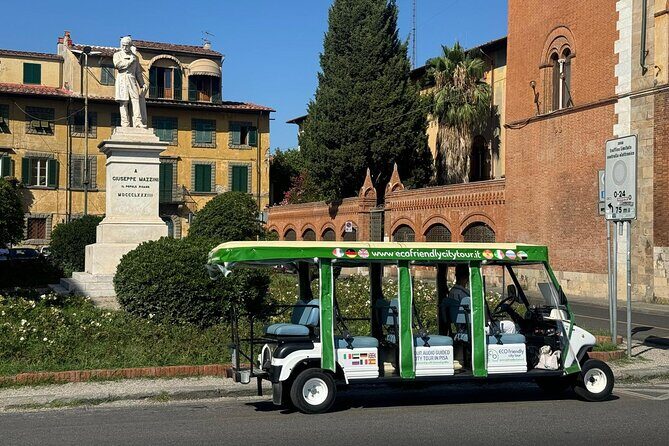
This tour starts in Piazza Arcivescovado, right in the historic heart of Pisa, and it ends back at the same meeting point. That matters more than you might think. You avoid the stress of re-routing yourself across town, and you get a clear loop that keeps you oriented in a short time.
Price is $36.30 per person, and for an hour it’s not trying to be a half-day bargain. The value is in two places: a live English guide and a route that connects sights you’d otherwise bounce between slowly. Since it’s booked around 20 days in advance on average, you should plan to reserve sooner rather than later if your schedule is tight.
The group size stays intimate (max 6), which helps in two ways. First, you’re more likely to hear the guide’s explanation. Second, you can get brief photo stops without the constant “everyone move along” feeling that larger groups often have.
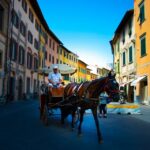
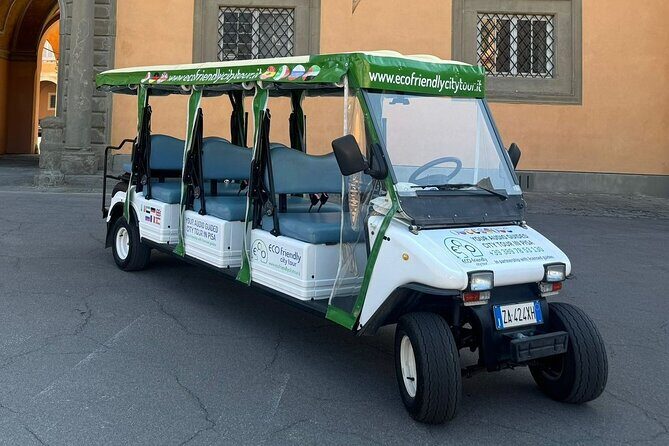
I’d also call out the comfort factor. A couple of guide notes mention a ride that keeps you sheltered from legs fatigue, and one person specifically thanked the guide for handling a wheelchair situation and a hard-of-hearing need. That gives you a real clue about how the tour is run: practical, not rigid.
You can also read our reviews of more tours and experiences in Pisa
Domus Galilaeana: Pisa’s first public observatory in a quick stop
The itinerary kicks off at Domus Galilaeana, described as Tuscany’s first public observatory. This is a great opener because it puts Galileo into the Pisa context immediately, not as a random name you hear once.
You get about 5 minutes here, and the admission ticket is included. In this short window, you’re not expected to do a deep museum day. Instead, you’re primed. The guide’s job is to connect the dots between Pisa as a place of learning and Pisa as a place that produced ideas, not just buildings.
The main benefit for you: you’ll stop thinking of Pisa as only a leaning monument. You start thinking of it as a city with an intellectual backbone—one that still shapes what you see as you walk.
The trade-off: with only a few minutes, you’ll likely want to return on another day if you truly love astronomy or science history. Treat this stop like an appetizer. You’ll get the “why it matters,” and then you decide if you want the full meal later.
Palazzo Reale and the Medici story: power you can spot in the walls
Next up is Museo Nazionale di Palazzo Reale, the former residence of Tuscany’s grand dukes. Admission is free here, and again you get a short visit. This kind of stop works well on a guided loop because the guide can explain what you’re looking at before you get lost in details.
Why it’s valuable: Pisa’s identity isn’t only artistic or academic. It was political. Palaces like this tell you who had the money, who set the rules, and how authority looked in real stone and real rooms.
This is also one of those moments where a good guide changes everything. When the guide speaks clearly and keeps the pace moving, you’ll come away with a mental map of what different parts of Pisa were for. If you don’t hear everything, don’t panic—you’re still getting the “this is important” signal, and you can always come back when you have more time.
Palazzo Blu and the art pause that keeps the tour fun
Then comes Palazzo Blu, an art museum in Pisa named for the color of its façade. Admission is included, and the time is tight. Expect a curated snapshot rather than a full gallery marathon.
I like this kind of stop because it balances the heavier historical sites. Your brain gets a break. Even if you only catch a portion of the exhibits, you’ll feel like the tour isn’t just a lecture. It’s also visual, and the guide can connect the art you’re seeing to the broader feel of Pisa.
A quick word on photos: several guide notes highlight photo opportunities, and this stop format is perfect for quick framing. You’re not stuck trying to find the one angle while a group waits behind you. The tour builds in those short “look, shoot, move” beats.
If you’re an art lover, you might end up wanting more time here. That’s a sign the tour did its job. If you’re not, you’ll still appreciate the pause.
Palazzo Agostini to the “other lean”: why Pisa leans for real
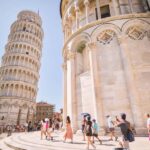
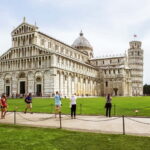
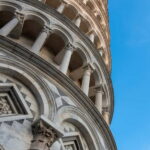
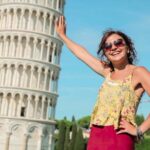
One of the more memorable turns is Palazzo Agostini, where you learn that the Tower isn’t the only leaning structure in the city. That idea is simple, but it changes how you see Pisa instantly.
This is where the guide story matters: the Tower’s lean becomes less of a random curiosity and more of a pattern tied to the city itself. You’ll walk through the area with a new awareness, spotting how different buildings react to their setting.
The downside is obvious: the stop is short. But even in a quick visit, the guide can give you the key idea so it doesn’t feel like a fact you immediately forget.
Ponte di Mezzo: the old bridge that centers the city
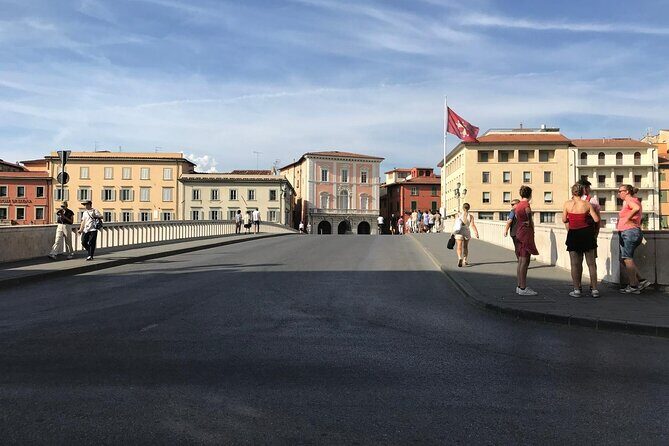
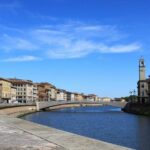
Now you get to Ponte di Mezzo, the old bridge over the Arno, nicknamed in the Middle. It also takes its name from being the geographical and historical center of the city.
This stop is included with admission, and it’s a smart one because it gives you a “spine” for the whole tour. Once you understand where the center is, the rest makes more sense—especially when you cross the river mentally.
If the weather is good, this is also where you can slow down your eyes. Even in a 5-minute stop, you’ll likely notice how the Arno acts like a divider and connector. Pisa is very much built around it.
Palazzo Vecchio de’ Medici and Palazzo Chiesa ruins: Medici side, Shelley echoes
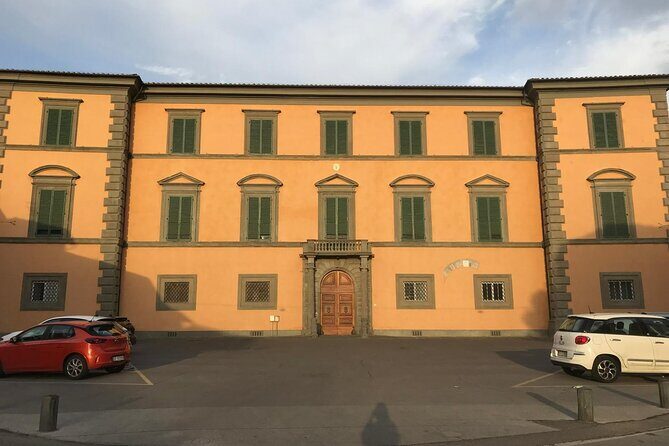
Crossing the Arno theme continues with Palazzo Vecchio de’ Medici on the Medici side. Admission is included. Today it’s used as the seat of the prefecture, so you’re seeing a living continuation of an old structure.
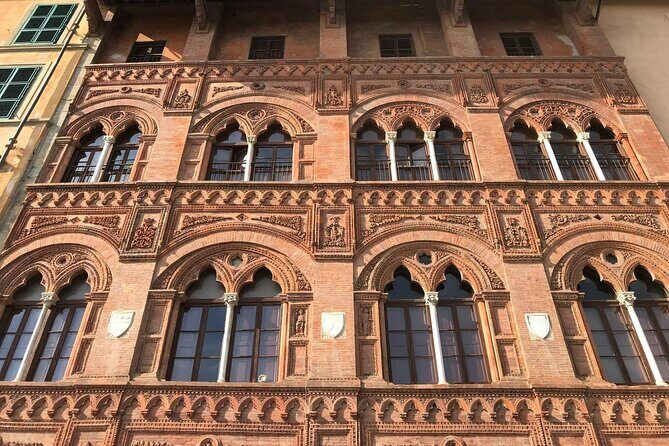
Then you hit Palazzo Chiesa (rovine), the ruins tied to Percy Shelley and his novelist wife, Mary Shelley. This former residence was destroyed in World War 2, and there’s a plaque remembering the English literary couple. Admission is free.
This pair of stops does something I really like for visitors: it links Pisa’s elite past to its literary connections. You go from political power to creative legacy without the tour feeling like it jumps randomly.
The ruins are also a reality check. Pisa isn’t stuck in postcard time. War and rebuilding shaped what you see now. Even if you only catch a few seconds of explanation, the visible remains carry weight.
Tuttomondo di Keith Haring: peace and harmony on a wall
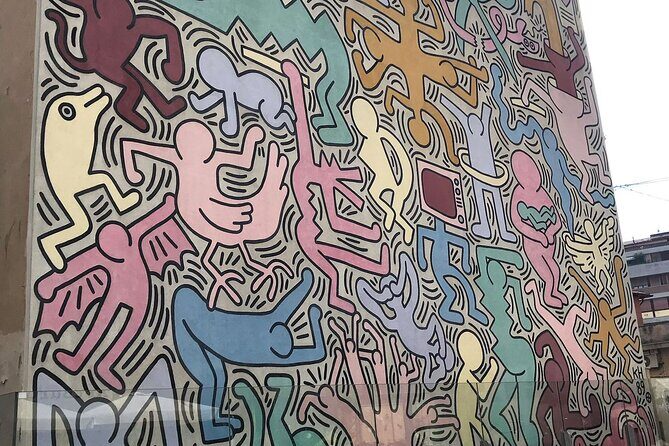
One of the easiest “wait, that’s here?” moments is Murale Tuttomondo di Keith Haring. It’s an outdoor piece, and admission is free. The mural is one of the few Keith Haring works made for permanent public display, and it represents peace and harmony.
This stop is a win if you like pop art or if you’re traveling with kids. It’s readable from far away, and it brings the tour into modern Pisa instead of keeping you trapped in older centuries.
It also works well as a photo break. You don’t need to hunt down a specific room number or book a separate ticket. The art is in public space, which means the tour can feel lighter and more playful.
The only caution: since it’s outdoor, you’re at the mercy of crowds and weather. Keep your timing flexible and be ready to take a photo when there’s a clear view.
Galileo Galilei by Eduardo Kobra: a modern Tower-shaped telescope
The tour then includes Galileo Galilei by Eduardo Kobra, recently inaugurated. Admission is free, and the mural depicts Galileo looking through a telescope shaped like the Leaning Tower.
This is one of those “perfect for this tour” additions. You’re seeing the Leaning Tower’s shape reinterpreted through art, which ties into the tour’s main promise: Pisa is more than the one landmark photo.
The best value here is context. Once you’ve heard about the observatory and Galileo connections earlier, this modern mural feels like a chapter in the same story, not a random detour.
Santa Maria della Spina and Piazza dei Cavalieri: Gothic details and political drama
You end with Chiesa di Santa Maria della Spina, a small Gothic church on the Arno river. Admission is free. Gothic can be a lot to take in if you don’t know what you’re looking at, but the stop is short enough that you can focus on atmosphere: stonework style, the river-side location, and the sense of place.
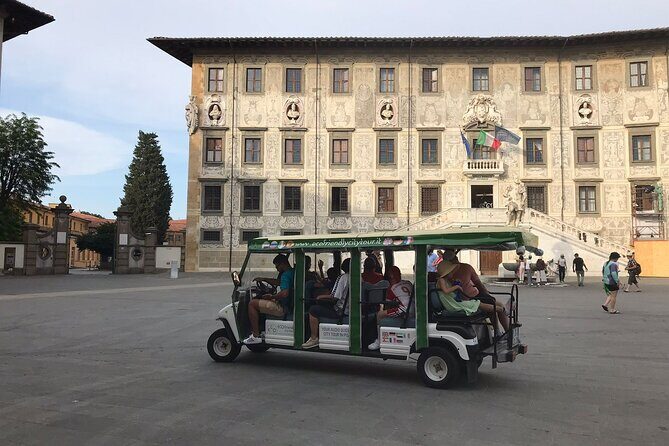
Then you wrap with Piazza dei Cavalieri, an area that was the heart of Pisa’s political life. It’s also home to the Scuola Normale Superiore di Pisa. The piazza is also linked to Dante’s Inferno Canto 33 through the story of Count Ugolino della Gherardesca.
This is a strong finish because it’s not just a building. It’s an open space with story momentum. By the time you reach Piazza dei Cavalieri, you’ve already seen observatory science, ducal power, river center points, ruins, and modern art. The guide can pull it all together into a Pisa that feels like one connected place.
If you like literary connections, this stop is especially rewarding. A quick mention of Ugolino’s fate gives you a hook to remember long after the tour ends.
Price and timing: what $36.30 buys in a 1-hour Pisa loop
Let’s talk value in plain terms.
For $36.30, you’re paying for:
- a live English guide
- a short, efficient route through multiple districts and types of sights
- several stops with admission included (including Domus Galilaeana, Palazzo Blu, Ponte di Mezzo, Palazzo Vecchio de’ Medici, and Piazza dei Cavalieri)
- plus other stops that are listed as free (like Palazzo Reale’s museum, Palazzo Agostini, Palazzo Chiesa ruins, the Keith Haring mural, the Eduardo Kobra mural, and Santa Maria della Spina)
That mix is why the price can feel fair. You’re not only seeing sights—you’re getting guided context on why they matter. You also aren’t burning money on every separate ticket for every stop. Even when admissions are free, the guide still saves you time by steering you to the right places in the right order.
The main trade-off is time. With about 5 minutes per stop, you’ll get the idea quickly but not full depth at every location. If your goal is one deep museum afternoon, pick one place to go back to after the tour.
Who should book this Pisa Beyond the Tower tour
This is ideal if you:
- want to see more than one famous photo spot in a short window
- prefer a guided walk-and-drive approach over self-navigation
- like mixed content: science, art, architecture, and public murals
- travel with limited stamina and want more sitting time between stops
It’s also a good fit for families, based on how the tour format is described by people who traveled with young children. Kids tend to respond well to outdoor public art and quick photo moments.
You might choose something else if you:
- want long museum hours and slow, quiet contemplation
- don’t care about the city context beyond the Leaning Tower itself
- struggle with hearing on moving tours and need lots of repetition (because some guide details may be harder to catch in a short stop format)
Should you book this tour?
Yes, if your priority is getting oriented and informed fast without spending your whole day in transit. The strong pattern here is clear: you get Pisa beyond the Tower, and you do it efficiently with an English guide, included admissions at multiple stops, and very short hops between sights.
I’d book it especially if it’s your first time in Pisa. It helps you choose what to revisit later. If you already know Pisa well and you want deep time in one museum, you might get less value.
FAQ
How long is the Pisa Beyond the Tower tour?
It’s about 1 hour in total, with short stops (around 5 minutes each) before returning to the meeting point.
How much does the tour cost?
The price is $36.30 per person.
Is the tour in English?
Yes. The live guide is offered in English.
What’s included in the price?
The price includes a live English guide and admission tickets for several stops. Some other stops are listed as free.
Where do we meet for the tour?
The meeting point is Piazza Arcivescovado, 56126 Pisa PI, Italy.
What is the group size?
The tour has a maximum of 6 travelers.
Do I need to bring paper tickets?
No. You’ll use a mobile ticket.
Will the tour run in bad weather?
The experience requires good weather. If it’s canceled due to poor weather, you’ll be offered a different date or a full refund.
Can I cancel, and will I get a refund?
Yes. You can cancel for a full refund up to 24 hours in advance of the experience’s start time.
Are service animals allowed?
Yes, service animals are allowed.