REVIEW · FLORENCE
Afternoon Access to Accademia Gallery: David & Stradivarius
Book on GetYourGuide →Operated by Keys of Italy · Bookable on GetYourGuide
This museum moment moves at your speed.
I like this Accademia tour because you get skip-the-line access and a small-group guide who steers you to the museum’s biggest wow-factor without wasting your time. You’ll see Michelangelo’s David, plus two oddball treasures most people miss: a Stradivarius violin from 1690 and the first modern piano, tied to Florence. The one drawback is the tour is only 70 minutes, so you’re getting a highlight path, not a slow, full wander of every room.
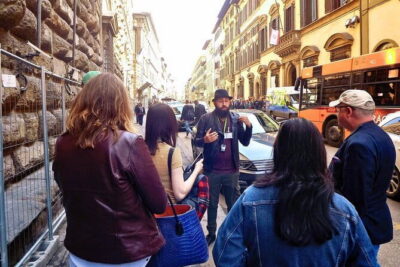
You meet at 3:00 PM at the main entrance of the Accademia Gallery (beside the ticket office, building number 47 in blue), and your guide holds a KEYS of ITALY sign. The tour starts at 3:15 PM sharp, so if you want to browse on your way in, arrive a few minutes early and take the pressure off.
In This Review
- Key Points You’ll Care About
- Why This 3:15 PM Accademia Tour Works So Well
- Finding the Meeting Point (and Avoiding the Usual Panic)
- Skip the Line, Then Get Oriented Without Losing the Magic
- Conservatorio Luigi Cherubini: The Stradivarius and the Piano Connection
- Michelangelo’s Room: How the Tour Builds to David
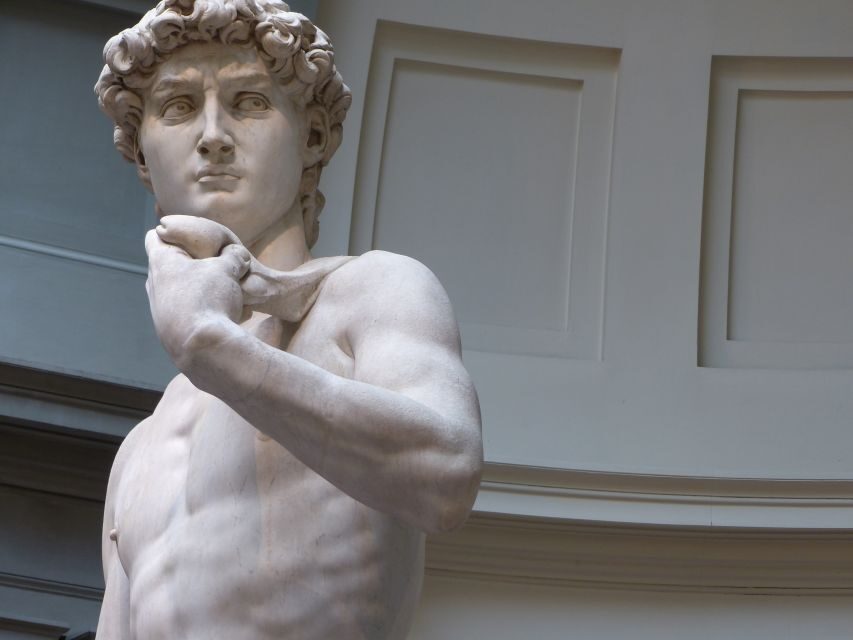
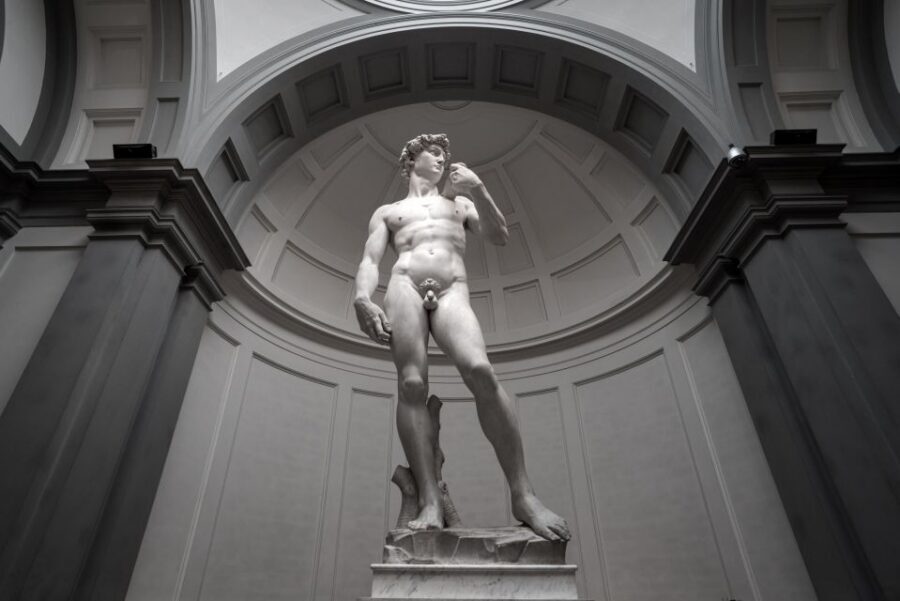
- Michelangelo’s David Up Close: What to Look For
- The Bigger Value: Florence History You Can Feel, Not Just Recite
- Price and Value: Is $80 Worth It for 70 Minutes?
- The Guides: Why Elisabetta and Leonardo Stand Out
- Who Should Book This Tour (and Who Might Not)
- Should You Book This David and Stradivarius Tour?
- FAQ
- FAQ
- How long is the tour?
- What time does the tour start?
- Where do I meet my guide?
- Is it a small group tour?
- What do I see on the tour?
- Does the tour include skip-the-line access?
- What language is the guide?
- How much does it cost?
- What should I know about the first Sunday of the month?
Key Points You’ll Care About
- Skip-the-line entry to Accademia Gallery so you start your visit sooner
- A musical instruments focus in the Conservatorio Luigi Cherubini collection
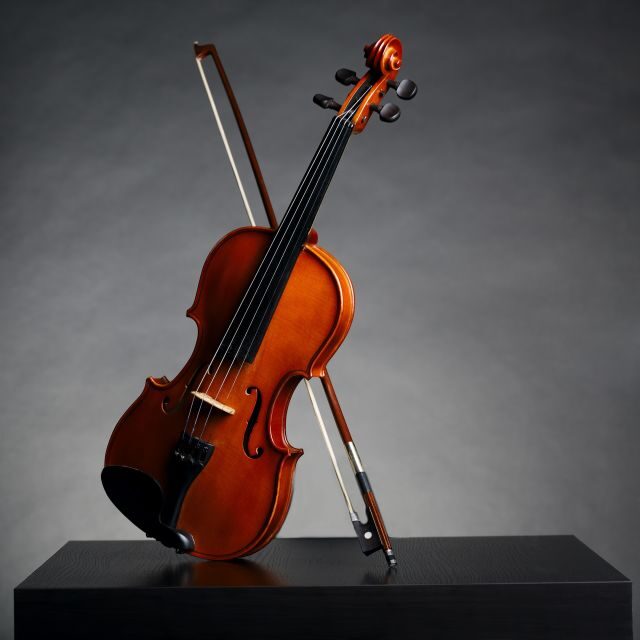
- A 1690 Stradivarius connected to Antonio Stradivari and the Great Prince
- Florence’s first modern piano shown alongside other standout instruments
- Michelangelo’s David plus a room of Michelangelo works that builds the story fast
- Small group (up to 9) means more questions and less crowd friction
Why This 3:15 PM Accademia Tour Works So Well
The Accademia can feel like a sprint even with a timed ticket. This one helps because it’s structured. You’re not trying to figure out what matters most while the room is crowded and your attention is splitting.
A late-afternoon slot also tends to feel more human. You get to enjoy Florence’s daylight rhythm, and then you shift indoors for art that demands close watching. And since the tour is only 70 minutes, you avoid the problem of starting a museum visit too late and then rushing through the best parts.
You can also read our reviews of more museum experiences in Florence

Finding the Meeting Point (and Avoiding the Usual Panic)
Your meeting point is specific: in front of the main entrance to the Accademia Gallery, beside the ticket office, building number 47 in blue. Your guide holds a KEYS of ITALY sign, and they start gathering the group before departure.
Here’s my practical advice: plan to arrive by 2:55–3:00 PM. Even if you think you know where you’re going, Florence streets can be deceptively tricky, and you’ll feel calmer if you can check in early instead of standing around wondering if you’re at the right entrance.
Once you’re in with the guide, the flow is clear: you’ll get a short, focused museum experience timed to what you want most.
Skip the Line, Then Get Oriented Without Losing the Magic
“Skip-the-line” matters most when a museum has queues that can swallow your morning. What you gain isn’t just convenience. It’s focus. You can spend your energy looking, not waiting.
From the way this tour is designed, you also get orientation quickly. Instead of walking into a huge building and picking a direction at random, your guide points you toward what makes the Accademia special: a mix of familiar headline art and surprising collections that many visitors never notice.
And the small group size (limited to 9) helps here. There’s enough space to pause at key spots, and you’re more likely to hear the explanation without straining.
Conservatorio Luigi Cherubini: The Stradivarius and the Piano Connection
The most distinctive part of this tour is the emphasis on musical instruments in the Conservatorio Luigi Cherubini section. This is exactly the kind of stop that changes your visit. Many people come only for Michelangelo, then leave without realizing the Accademia also houses treasures that connect art, craft, and Florentine culture in a different way.
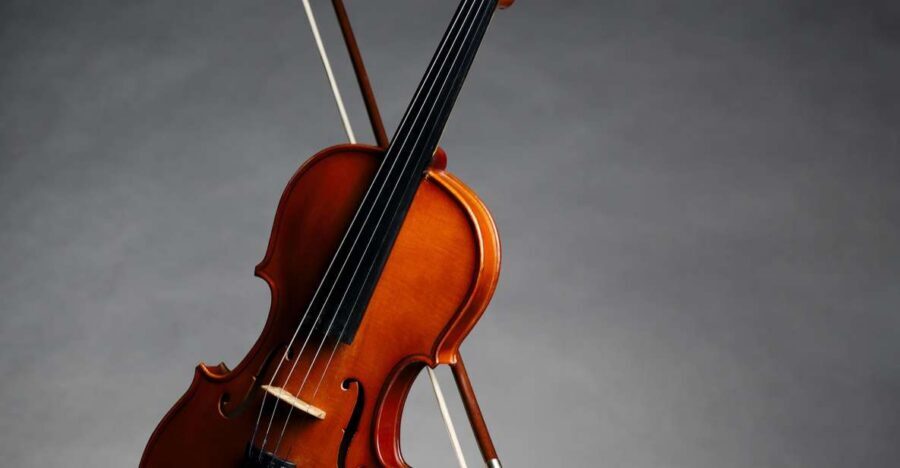
You’ll see an original Stradivarius violin from 1690, made by Antonio Stradivari for the Great Prince. That detail is worth lingering on. A Stradivarius isn’t just a pretty object behind glass; it’s a signal of status and skilled workmanship at a level most museums can’t replicate. Your guide’s job is to help you look at the instrument with the right frame of mind, so it doesn’t feel like an odd side display.
Then comes the other surprise: the first modern piano, said to have been invented in Florence. Even if you don’t care much about instruments, this is the kind of fact that gives you a new lens on the city. Florence isn’t only about sculptures and paintings. It’s also where ideas about sound and design took shape.
I especially like that this musical section is treated as a real highlight, not a quick detour. It’s the kind of stop that makes the Accademia feel bigger than the David-only version.
Michelangelo’s Room: How the Tour Builds to David
After the instrument highlights, the tour shifts to other Accademia treasures, including a room filled with Michaelangelo’s works. This order is smart. It helps you get context before you hit the museum’s best-known centerpiece.
Instead of treating David as a lone superstar, you’re able to see more of Michelangelo’s presence in the building. That matters because David feels more meaningful when you understand the artist’s broader output and the way the works in the room set up the scale of what you’re about to see.
This is also where your guide’s style starts to matter a lot. If you get a guide like Elisabetta, you’re likely to get constant engagement and storytelling that keeps your attention moving from one idea to the next. Another guide style described as strong and passionate in the Florence context can make a difference too, especially when you’re trying to understand why an artwork still holds power centuries later.
Your guide will share secrets and entertaining anecdotes. The key is that they’re not just random trivia. They’re aimed at helping you notice details you might otherwise miss.
- Tuscany Day Trip from Florence: Siena, San Gimignano, Pisa and Lunch at a Winery
★ 5.0 · 21,634 reviews - The Best tour in Florence: Renaissance & Medici Tales – guided by a STORYTELLER
★ 5.0 · 12,316 reviews


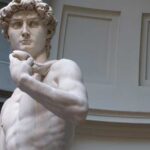
Michelangelo’s David Up Close: What to Look For
Yes, David is famous. But fame can trick you into thinking you already know what you’ll see. The best part of this kind of guided focus is that you walk in with a checklist in your head.
At David, I think about three things:
- Proportions and tension: This is a figure built from control. Look for how the stance feels poised rather than relaxed.
- A face that reads differently from every angle: The expression isn’t one-note. You’ll notice it shifting as you move.
- Craft choices that make stone feel alive: Michelangelo’s carving decisions create a sense of movement even though it’s rigid material.
A good guide helps you notice those things in a short time. With 70 minutes total, you don’t want to spend the David moment fumbling for what matters. You want to arrive ready.
And because your group is small, you have a better chance of taking in the view without fighting the crush. The tour’s “tight route” design is built for that.
The Bigger Value: Florence History You Can Feel, Not Just Recite
This is what I find valuable about a tour like this. It doesn’t treat Florence as one museum day. It treats Florence as a web of making: sculpture and design, yes, but also music, instruments, and invention tied to the city.
When you connect a 1690 Stradivarius to Michelangelo’s presence in the Accademia, you start to see Florence as a place where high craft shows up across different forms. Even the mention of the first modern piano being invented in Florence nudges you toward a smarter city mindset. You stop thinking of Florence as a theme park of art and start seeing it as a center where talent and innovation rubbed shoulders.
That’s also why the tour is developed with help from art-history specialists. You’re not just getting big names. You’re getting explanations aimed at how to look and what to pay attention to in each room.
Price and Value: Is $80 Worth It for 70 Minutes?
Let’s talk money. At $80 per person for about 70 minutes, you’re paying for three things: skip-the-line entry, a professional certified English-speaking guide, and a route that picks the most compelling highlights.
Is it “cheap”? No. But value in this case is about efficiency. If you show up without a plan, you might spend time figuring out where to go and what to prioritize. You might also miss that instrument section entirely, which is a big part of why this tour feels different from a standard David-only visit.
This tour also limits the group to 9 participants, which makes the experience feel less like a cattle line. In museums, that difference is real. Better sound, better pacing, more chances to ask questions, and less time standing in awkward gaps.
For me, it’s a strong fit if you want Florence’s headline art plus at least one unexpected reveal. If you’d rather roam freely and spend extra time lingering on every room at your own pace, you might feel constrained by the tight timing.
The Guides: Why Elisabetta and Leonardo Stand Out
Two names from guide experiences shared for this tour help explain why the quality stays high: Elisabetta and Leonardo.
Elisabetta is described as wonderful and fully engaged, with history brought to life throughout the visit. Leonardo is described as a fountain of knowledge with facts highlighted clearly, plus a passion for the city that shows up in the delivery.
Now, you can’t choose your guide here, but you can choose this: pick a tour when you care about interpretation, not just seeing objects. When the storytelling clicks, a 70-minute visit can feel like a full experience rather than a rushed checklist.
Who Should Book This Tour (and Who Might Not)
This works especially well for:
- First-time Florence visitors who want Michelangelo’s David and a second, distinctive highlight
- People who like explanations and small-group pacing
- Anyone interested in how art and craft overlap, not just paint-on-canvas sightseeing
- Travelers who don’t want to spend their limited time doing museum logistics
It may be less ideal for:
- Museum purists who want lots of time to wander without structure
- People who prefer to build their own route room by room
- Anyone expecting to see every exhibit in the Accademia, since this is a focused highlight tour
Should You Book This David and Stradivarius Tour?
If your goal is to make the Accademia count, I’d book it. You’re paying for a smart route, skip-the-line access, and a guide who brings attention to the parts of the museum that people often miss: the Conservatorio Luigi Cherubini musical collection with a Stradivarius violin from 1690 and the first modern piano invented in Florence, followed by Michelangelo’s David in a way that feels timed and thoughtful.
The only hesitation is time. If you want a long, wandering museum day, you’ll likely want a self-guided visit instead.
FAQ
FAQ
How long is the tour?
The tour lasts about 70 minutes.
What time does the tour start?
Meeting is at 3:00 PM, and the tour starts at 3:15 PM sharp.
Where do I meet my guide?
Meet in front of the main entrance to the Accademia Gallery, beside the ticket office (building number 47 blue). Your guide will be holding a KEYS of ITALY sign.
Is it a small group tour?
Yes. The group is limited to a maximum of 9 participants.
What do I see on the tour?
You’ll see Michelangelo’s David, an original Stradivarius violin from 1690, the first modern piano invented in Florence, and additional rooms with Michaelangelo’s works.
Does the tour include skip-the-line access?
Yes. The admission ticket includes skip-the-line entrance.
What language is the guide?
The guide speaks English.
How much does it cost?
The price is $80 per person.
What should I know about the first Sunday of the month?
On the first Sunday of each month, entrance is free of charge, but tickets can’t be reserved ahead of time, so entry is not guaranteed.

More Museum Experiences in Florence
More Tour Reviews in Florence
- Tuscany Day Trip from Florence: Siena, San Gimignano, Pisa and Lunch at a Winery
★ 5.0 · 21,634 reviews - The Best tour in Florence: Renaissance & Medici Tales – guided by a STORYTELLER
★ 5.0 · 12,316 reviews