REVIEW · AREZZO
Arezzo: Dining Experience at a Local’s Home
Book on GetYourGuide →Operated by Cesarine · Bookable on GetYourGuide
You eat at a real Tuscan family table.
This Arezzo experience is built around private home dining plus an exclusive cooking demonstration, where your host shares Italian family recipes that have been passed down through generations. Instead of watching from the sidelines, you get to see how the dishes come together, then sit down to a full 4-course seasonal menu in the same home setting.
I love the fact that this is scratch-made food in every sense, including the drinks. I also love the pasta technique focus, where the demo can be practical enough that you leave feeling like you can repeat the process back home.
One consideration: this isn’t a slick restaurant show. It’s a private home meal, so you should be comfortable with a more casual flow and the fact that you’ll go to a residential address (with the exact location shared after booking).
In This Review
- Key things that make this Arezzo meal special
- Arezzo home dining: why this feels more personal than a class
- The 3-hour flow: cooking demo first, then the full 4-course meal
- What you learn during the cooking demonstration (and why it sticks)
- The menu: starter, pasta, main with side, dessert
- Wine, coffee, and the family touch you can taste
- Price and value: what $123 per person is really buying
- Who this is best for (and who should consider another option)
- Dietary needs and making it work for your tastes
- Practical tips: how to have a smooth evening in someone’s home
- Should you book this Arezzo private dining experience?
- FAQ
- Where is the dinner or lunch held?
- How long does the experience last?
- Is it lunch or dinner?
- What courses are included?
- Are drinks included?
- Can dietary requirements be accommodated?
- What languages are used during the cooking demonstration?
Key things that make this Arezzo meal special
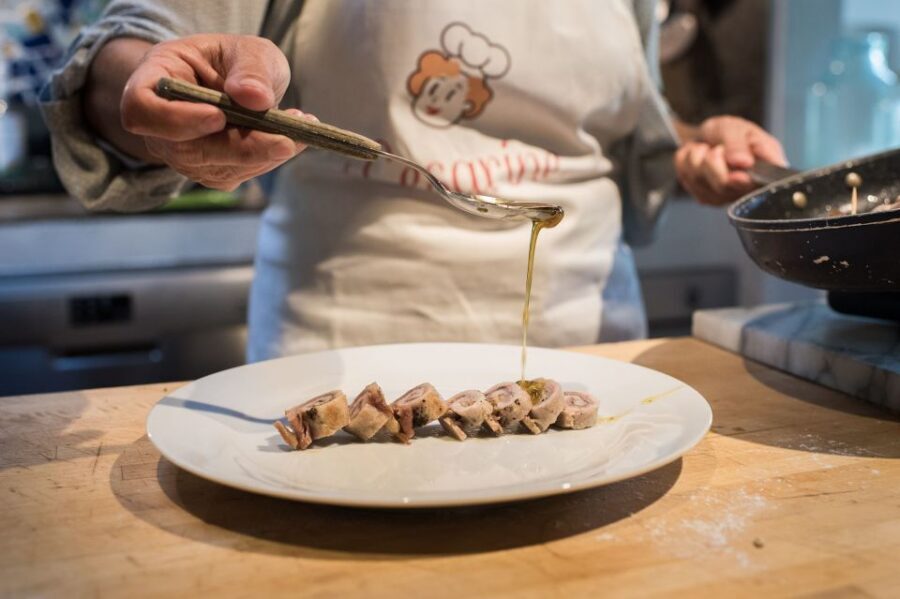
- Family cookbook recipes with real teaching behind them, not just a plated result
- Hands-on or front-row pasta learning, depending on the night and host
- A full 4-course seasonal menu served right at the dining table
- Wine, coffee, and water included, and sometimes made or flavored by the family
- A take-home apron, so you have a real souvenir beyond photos
- Private group pacing, so you can ask questions as you go
Arezzo home dining: why this feels more personal than a class
In a city like Arezzo, it’s easy to fall into the routine of eating out. This experience flips the script: you’re not just ordering Tuscan food, you’re meeting the people who cook it. The core idea is simple—your host prepares with you watching closely, then you eat together at an authentic Italian table.
What makes it work is the balance between instruction and hospitality. You’re taught techniques and family traditions, but you’re also treated like a person at the table, not a customer in a seat. The best part is that you learn why certain steps matter, like the difference between shaping and timing, or how a sauce becomes something you can taste.
This is also a good way to understand Tuscany without turning it into a museum visit. Cooking here is practical, seasonal, and built around what the family knows how to do well.
You can also read our reviews of more tours and experiences in Arezzo

The 3-hour flow: cooking demo first, then the full 4-course meal
The experience runs about 3 hours, typically starting at 12 PM or 7 PM, with flexibility when needed. That schedule matters because it usually lands you right in the rhythm of an Italian home day: either lunch time when the cooking energy is steady, or dinner time when the pace feels calm and social.
You’ll arrive at the home of your expert host. After a warm welcome, the cooking demonstration becomes the center of the evening. Your host cooks while explaining what she learned from family—often from mothers and grandmothers—and how those old recipes adapt over time.
Once the dishes are ready, you shift modes from watching and asking questions to sitting down and eating. The menu is designed as a 4-course seasonal lineup: a starter, pasta course, main with a side dish, and dessert. Then you end with a take-home souvenir: an official apron that you’ll actually want to use.
If you like experiences where the meal and the learning are tied together, this format is strong. You don’t just buy knowledge—you eat it.
What you learn during the cooking demonstration (and why it sticks)
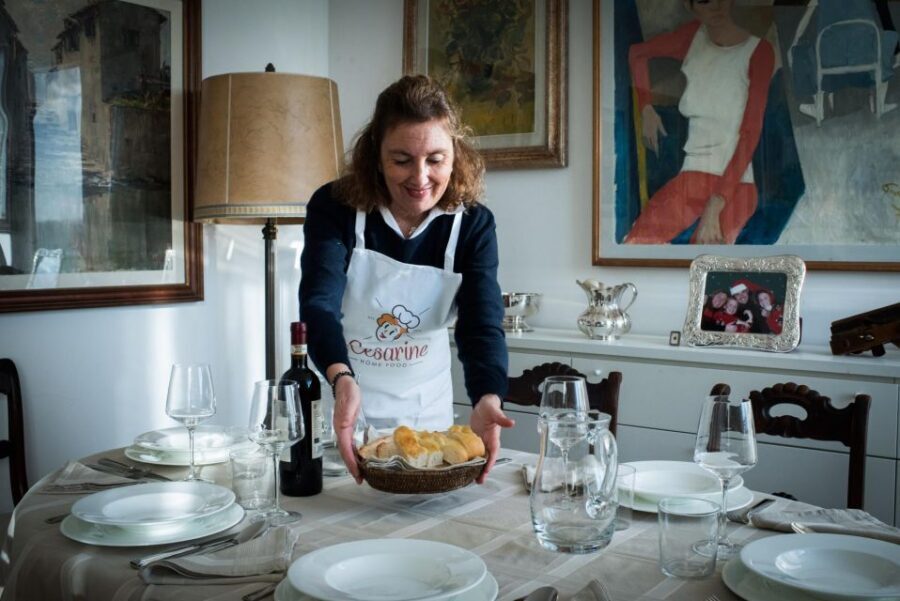
The cooking demo is where this experience earns its reputation. You’re not only shown what to do—you see it happen in real time. That’s especially helpful for pasta, because pasta has a texture “feel” that recipes on paper never fully explain.
Depending on your host, you might see classic Tuscan pasta being made from scratch. Some sessions focus on rolling and shaping, and you may even learn how different pasta shapes hold sauces differently. In one example from past hosts, guests learned multiple pasta types (not just one), which makes it easier to connect technique to the final bite.
You might also get a pasta format like pici—an especially useful one to learn because it’s distinct to Tuscany and not just another generic noodle. And on some evenings, the demo can include ravioli-style work with a hearty ragù, where the focus is on filling, sealing, and then pairing it with the right sauce.
You’ll typically hear instructions in both English and Italian, since the instructor works in those languages. That makes a real difference in a home setting: you can understand the “why,” not only the steps.
One subtle point: the demo can look easy from the outside, but pasta is patient work. Expect to see how the host handles consistency—when to adjust and how to know when it’s right. That’s the kind of practical knowledge you can bring home.
And yes, the atmosphere matters. Hosts like Francesco or Orlanda (with their families and co-hosts) have a way of blending seriousness about cooking with warmth and conversation, so the kitchen doesn’t feel tense.
The menu: starter, pasta, main with side, dessert
This is a seasonal menu, so you’re not guaranteed the exact same dishes every night. But the structure is consistent, which is what you want when you’re trying to decide if a home meal fits your tastes.
Here’s what you can count on:
- Starter: often something Tuscan and garden-forward, like bruschetta or seasonal salads
- Pasta course: handmade pasta, with a sauce that matches the dish and the season
- Main + side: a Tuscan-style main, sometimes slow-cooked meat, plus a side that rounds out the plate
- Dessert: homemade-style sweetness to close the meal
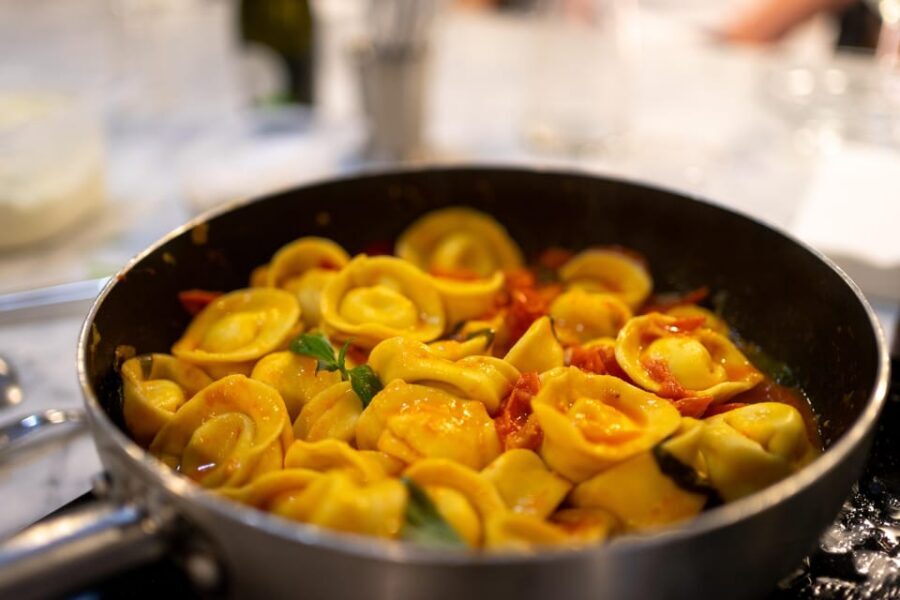
From past experiences in this format, you can end up with dishes like Tuscan farmers salad and potatoes, or slow-cooked beef with a comforting, hearty vibe. Some nights include ravioles filled with a rabbit ragù and finished with gorgonzola, which is the kind of flavor combination you rarely see on menus outside Italy.
The takeaway for you is this: you’re eating like the family eats, not like a restaurant has to serve everyone the same way. If you love seasonal variety and don’t need a predictable menu, you’ll probably enjoy the experience a lot.
Wine, coffee, and the family touch you can taste
Beverages are included: water, wine, and coffee. That’s already a good value signal because it means you’re not padding the bill with drink costs.
One of the most memorable details from this kind of dinner is how some hosts use what they make themselves. In past sessions, the wine and liquor have been described as homemade, and cooking ingredients have come from the family’s garden and farm. You might not get the same exact setup every time, but the pattern is clear: many hosts treat food and drink as part of the same lifestyle, not just add-ons.
You’ll also see that the meal timing feels comfortable. In a home, wine doesn’t have to arrive in a rush because the whole kitchen is working toward the table. If you like meals where the conversation keeps going and the pacing feels human, this format delivers.





Price and value: what $123 per person is really buying
At about $123 per person, this isn’t a budget meal. But it’s also not paying only for food.
You’re paying for:
- a private cooking demonstration with an expert host
- a private 4-course lunch or dinner
- included beverages (wine, coffee, water)
- local taxes
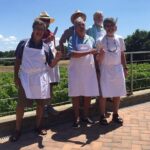
- and a take-home apron
When you compare that to a typical Tuscan dinner out plus a separate class or cooking experience, the math often starts looking fair. You’re getting one combined event with a full meal built in, plus instruction you can actually use.
There’s also value in the home setting itself. You’re not spending the entire time looking at plates behind glass or across a counter. You’re in a real household space where the cooking and the dining are connected.
If your goal is to get a strong taste of Tuscany for a set price without dealing with complicated logistics, this can be a smart use of your time.
Who this is best for (and who should consider another option)
This experience fits best if you:
- want authentic Italian family cooking rather than generic restaurant Tuscan food
- like learning while you eat, especially with pasta techniques
- enjoy talking with local hosts and hearing how recipes are handed down
- want a private setting where you can ask questions without a group rushing you
It might be less ideal if you prefer a fully formal restaurant environment, strict timing, or a menu that’s completely predictable. Because it’s in a home, the evening’s rhythm depends on the family’s pace. That’s part of the charm, but it’s also something you should expect.
Also, you’ll want to be comfortable with a hands-on or closely observational cooking setup. Even if you’re not doing all the work yourself, you’re in the kitchen learning through watching, and pasta prep takes attention.
Dietary needs and making it work for your tastes
If you have dietary requirements—like vegetarian, vegan, or gluten-free—you can request catering. That’s important because it means you’re not stuck with a take-it-or-leave-it menu, especially in a home setting.
That said, because the menu is seasonal and the course structure is fixed, the best approach is to mention your needs clearly when you book. The host can adapt within the style of the meal, and you’ll have a smoother experience once you’re there.
If you’re gluten-free, for example, you’ll want to confirm how pasta is handled. The format is built to be flexible, but details matter with flour and cross-contact.
Practical tips: how to have a smooth evening in someone’s home
A private home dining experience is usually simple, but it rewards good preparation.
Here are a few practical tips that can help:
- Be punctual, since the evening runs on the host’s schedule while cooking multiple courses
- Plan on getting directions after booking, since the full address is shared only after you reserve
- Tell your host about dietary needs upfront so changes are possible before ingredients are chosen
- Bring curiosity, not just appetite—you’ll get more out of it if you ask questions
Your host’s address is shared after booking for privacy reasons. So don’t plan your navigation based on guesswork. Once you book, you’ll receive exact meeting instructions from the local partner.
In terms of language, the instructor works in English and Italian, so you’re usually covered even if you don’t speak much Italian.
Should you book this Arezzo private dining experience?
If you want Tuscan food with a story attached, I think this is the kind of booking that pays off. You’re getting a real cooking demonstration, then a full 4-course seasonal meal in a private setting, with drinks included. And the best memories from this format usually aren’t about the plates alone—they’re about learning how the family cooks and then eating together at the table.
Book it if you:
- value hands-on learning and conversation
- want a more local, home-based meal instead of a standard restaurant night
- like pasta and Italian family recipes
Skip it if you:
- need a restaurant-style environment with predictable menus every time
- dislike kitchen experiences, even as an observer
- want only a quick, low-effort activity
Overall, this is a strong value for what it includes. You pay for an evening that combines teaching, dining, and hospitality in one place, and you leave with an apron and new skills you can actually try later.
FAQ
Where is the dinner or lunch held?
It’s held in a local family’s home in Arezzo. For privacy, you receive the full address only after you book.
How long does the experience last?
The duration is about 3 hours.
Is it lunch or dinner?
It usually starts around 12 PM or 7 PM, but it can be flexible based on your requirements.
What courses are included?
You’ll enjoy a 4-course seasonal menu: a starter, pasta, a main course with a side dish, and dessert.
Are drinks included?
Yes. Beverages including water, wine, and coffee are included.
Can dietary requirements be accommodated?
Yes. Vegetarian, vegan, and gluten-free needs can be catered to upon request.
What languages are used during the cooking demonstration?
The instructor works in English and Italian.