REVIEW · AREZZO
Cortona Private walking Tour under the Tuscan sun
Book on Viator →Operated by Florence Tours by Made of Tuscany · Bookable on Viator
Cortona feels like time travel. This private walking tour threads Etruscan roots into medieval streets and ends with commanding views from the Girifalco fortress. It’s a smart way to see the town’s key landmarks without turning your day into a scavenger hunt.
I especially like how the stops connect. You move from Piazza Signorelli’s Etruscan museum material to the religious centerpiece at Piazza del Duomo, then up to fortifications and a double-entry gate concept at Porta Bifora. Second, the guide matters a lot here: Laura is friendly, pays close attention to details, and explains Cortona like it’s her living room. That kind of local storytelling is exactly what makes a short tour feel worth it.
One thing to plan for: it’s a hilltop walk. Even if you’re used to walking, you’ll still feel the sun and the climbs around Cortona’s upper areas, so wear comfy shoes and bring water.
In This Review
- Key highlights you’ll actually notice
- Why this Cortona walk is such a good fit
- Piazza Garibaldi to get your bearings fast
- Piazza Signorelli and the Etruscan Academy Museum material
- Piazza del Duomo: Santa Maria Assunta’s layered centerpiece
- Fortezza di Girifalco: the highest point payoff
- Porta Bifora: an Etruscan-style gate idea, still visible
- The 2-hour structure: what you gain (and what you give up)
- Price and value: is $185.22 worth it?
- Mobile ticket, private group, and getting there
- Practical tips for walking Cortona in the Tuscan sun
- Should you book this Cortona Private Walking Tour under the Tuscan sun?
- FAQ
- How long is the Cortona private walking tour?
- Where does the tour start and end?
- What is the price per person?
- Is this a private tour?
- Do I need to buy separate tickets for the stops?
- Which places are included on the route?
- How much time is spent at each stop?
- What kind of sites will I see in Cortona?
- Is it easy to get to the meeting point by public transport?
- Can I cancel for a full refund?
Key highlights you’ll actually notice
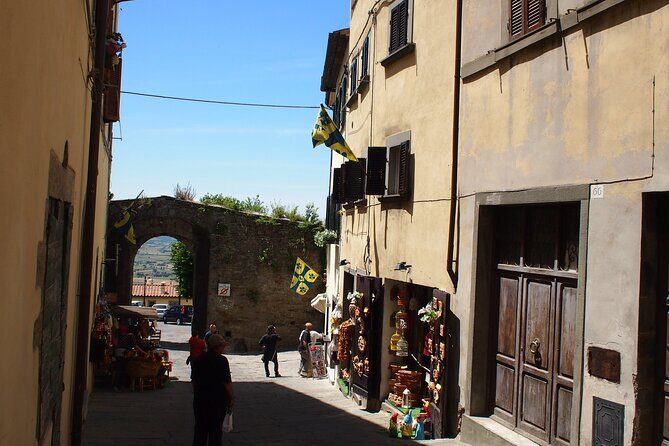
- Laura’s on-the-ground storytelling makes Cortona feel personal, not like a checklist.
- Free access at the main stops keeps the tour from ballooning in cost once you arrive.
- Four landmark hits in about two hours: Piazza Signorelli, Piazza del Duomo, Fortezza di Girifalco, Porta Bifora.
- Etruscan to Medici timeline in walking form, not in a lecture hall.
- Big viewpoint payoff when you reach the highest point overlooking the town.
Why this Cortona walk is such a good fit
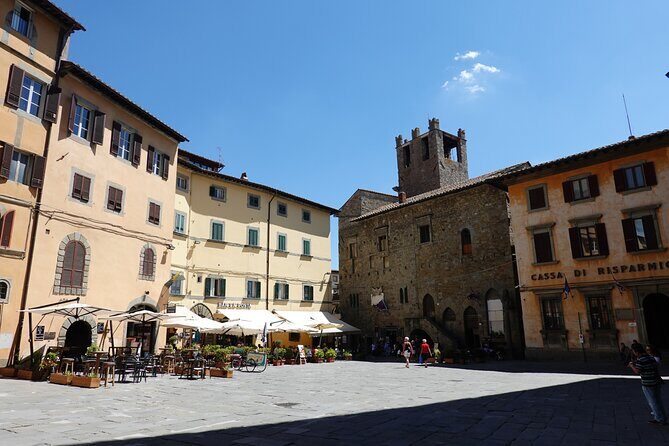
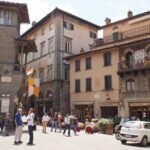
Cortona is one of those Tuscan towns that doesn’t need you to “arrive in the right mood.” The town shape does it for you: stone, slopes, cypress silhouettes, and sudden views that pop up when you turn a corner.
This is built for people who want the essentials fast. The tour is about 2 hours, private (only your group), and centered on the spots that define Cortona in a very direct way: Etruscan traces, medieval civic buildings and squares, Renaissance-era sacred architecture, and Medici-era fortification strategy.
The big win is pacing. You’re not trying to see every church and every alley. Instead, you’re getting a guided route that links together what you see, so the town starts to make sense as you go.
You can also read our reviews of more walking tours in Arezzo
Piazza Garibaldi to get your bearings fast
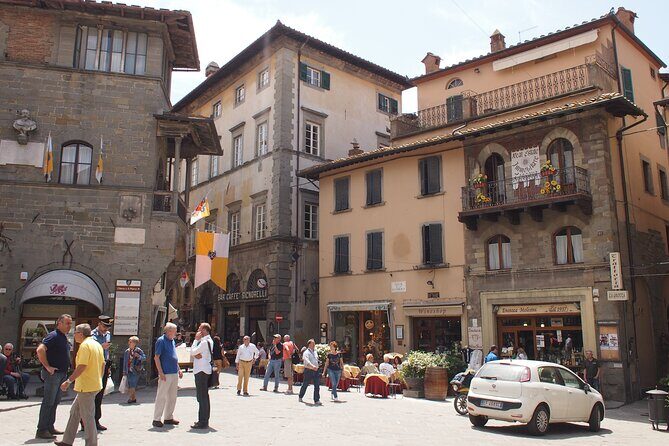
You meet at Piazza Garibaldi in Cortona, and the tour ends back there. That matters more than it sounds. A hill town can be disorienting, and starting/ending in one anchor square makes it easier to pick up the rest of your day—whether that means lunch, gelato, or hopping on public transport later.
Because the tour is private, the guide can set a comfortable rhythm. That’s useful in Cortona, where the walking isn’t just walking. Some stretches are steep, and the sun can be unforgiving. If your group has people who like photos, you’ll also get the time to pause without dragging everyone.
Practical tip: if you’re planning museum time later, keep in mind this walk already includes a stop connected to the Etruscan past. You’ll get a meaningful taste of it here.
Piazza Signorelli and the Etruscan Academy Museum material
Piazza Signorelli is where the story starts turning archaeological. This stop includes time at the Etruscan Academy Museum collection, with examples of bronze, ceramic, and funerary items that point to Cortona’s Etruscan origin.
Why I like this first: it prevents the classic hill-town problem where you only experience pretty streets and then leave with no “why.” When you understand that Cortona’s roots reach back into Etruscan times, the rest of the tour clicks into place.
What to look for during this stretch:
- Material clues: bronze and ceramics help you picture daily life and burial practices.
- Continuity of place: Cortona didn’t just become important in medieval times; it had earlier layers.
This stop is also free for admission and is timed at about 30 minutes. That’s a good length. Long enough to see the highlights without turning your entire morning into a museum visit.
A small consideration: if you’re traveling with kids or anyone who hates museums, lean into the visual side—objects and shapes often work better than explanations alone.
Piazza del Duomo: Santa Maria Assunta’s layered centerpiece
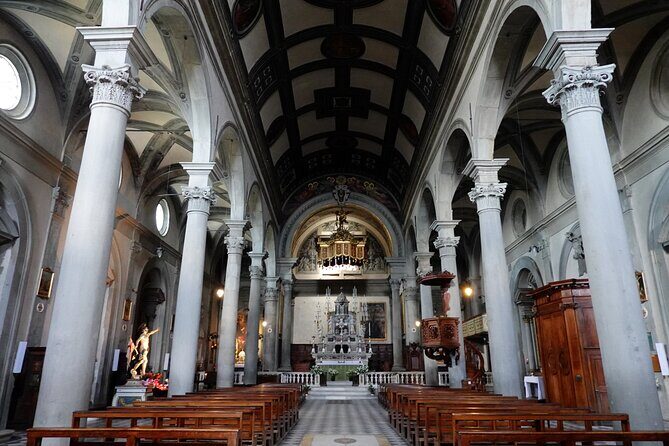
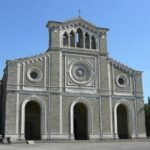
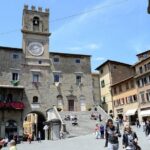
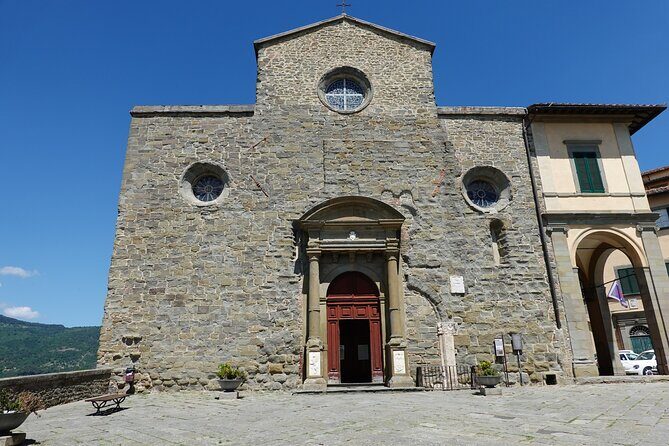
Next up is Piazza del Duomo, Cortona’s monumental square. The setting gives you instant perspective: you’re facing a church complex with the Cathedral of Santa Maria Assunta and surrounding structures that include the Bishop’s Palace area.
A key detail here is the architectural layering. The Cathedral of Santa Maria Assunta is Renaissance in style, and it was built by the followers of Giuliano da Sangallo above an older church of S. Maria—some remnants of that older structure can still be seen on the facade.
That creates a neat “walk-through time” effect. You’re not just looking at one era. You’re seeing how one sacred site kept getting rebuilt and reinterpreted. It’s one of the reasons Cortona feels so authentic: the town didn’t reset. It built on top of itself.
What you’ll get out of this stop:
- A sense of scale: the cathedral complex dominates the square.
- A story of continuity: Renaissance design sitting above older traces.
- Photo opportunities that aren’t only pretty—they make sense when you know what you’re seeing.
Like the first stop, this is about 30 minutes and admission is free for the tour portion. The drawback is simple: this is a square stop. If you want tons of interior time, a short guided visit may feel just enough rather than exhaustive. For most people, that’s exactly the point.
Fortezza di Girifalco: the highest point payoff
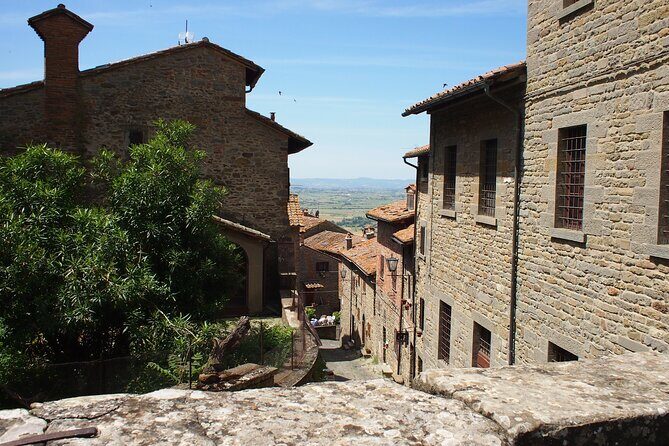
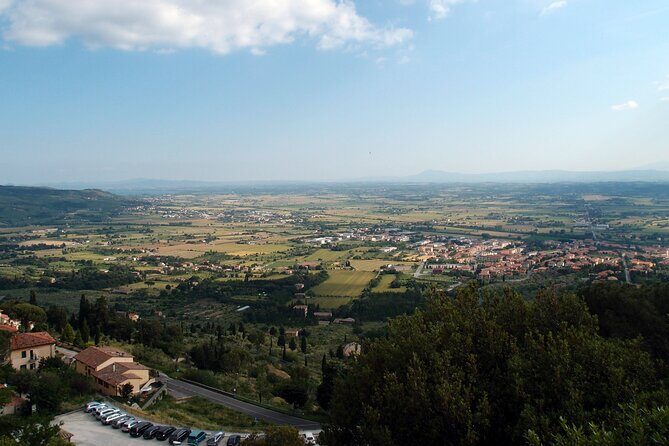
Then you reach Fortezza di Girifalco, Cortona’s highest point and one of the best “why am I in this town” moments. The fortress overlooks Cortona, so even if you’re not a history nerd, you’ll understand the strategic thinking in seconds. You don’t build up there unless you need control and visibility.
This fortification was built in 1561 on a project by Gabrio Serbelloni, ordered by Grand Duke Cosimo I de Medici. That’s a powerful name drop, but the real value is how it changes your view of the town below. You start seeing the landscape as a system: roads, houses, and sightlines.
What to expect during the visit:
- View time that makes the climb feel like it paid off.
- A clearer understanding of why fortresses belong on hilltops.
This part is also timed at about 30 minutes and the tour keeps the focus tight. The only consideration here is physical comfort. If your group is sensitive to steep ground, plan for slower walking between stops and take breaks. Cortona is worth it, but it’s not flat.
You can also read our reviews of more private tours in Arezzo

Porta Bifora: an Etruscan-style gate idea, still visible
The final stop is Porta Bifora, also known as Ghibellina. This gateway is named for its shape and history: in Etruscan times, it was described as having a double entrance.
That detail is more than trivia. It helps you read the town’s edges as something intentional, not just ornamental stonework. When you stand near a gate like this, you’re seeing a boundary—where movement was controlled, where people entered and exited, and where older layers of Cortona leave their fingerprints behind.
Porta Bifora also serves as a nice closing note after the fortress. You’ve gone from protection and control at the top to controlled movement at the town boundary. That makes the last stop feel like it wraps the theme neatly.
Expect around 30 minutes here, and admission is part of the tour’s free structure.
A practical note: gates and exterior monuments are often in bright light. If you love photos, bring a lens that can handle strong contrast, and plan for the sun angle.
The 2-hour structure: what you gain (and what you give up)
A short private tour can either feel rushed or it can feel efficient. In this case, the framework is simple: four key landmarks, roughly 30 minutes each for the main viewing/stop time, plus the walking between. It’s designed so you leave with a map in your head, not just photos on your phone.
Here’s what you gain:
- Clear mental connections between Etruscan, medieval, Renaissance, and Medici influences.
- Enough stop time to understand what you’re looking at.
- A route that avoids the feeling of wandering without purpose.
And here’s what you give up:
- You won’t cover every single alley church or every museum wing.
- If you want long interior visits everywhere, this is not that kind of tour. It’s a “best of Cortona landmarks with meaning” format.
Price and value: is $185.22 worth it?
At $185.22 per person, this is not a budget group stroll. You’re paying for a private experience and for a guided route that hits four major sites with free admission at the tour stops.
So when does it feel like good value?
- When your group wants the convenience of one dedicated route starting and ending at Piazza Garibaldi.
- When you appreciate interpretation, not just sightseeing. Laura’s style—friendly, detailed, and clearly connected to Cortona—adds value fast because she helps you understand what you’re seeing.
- When you’re short on time. Two hours in Cortona can be surprisingly productive if the guide keeps you focused.
If you’re traveling solo, you’ll want to judge whether you prefer paying for privacy and context. If you’re a couple or a small group who would rather spend time with a guide than “DIY map plus luck,” this price becomes more reasonable.
One small bonus: the tour mentions group discounts, which can help if your group situation fits.
Mobile ticket, private group, and getting there
The tour uses a mobile ticket, which is handy because you’re in and out of sights quickly. It’s also confirmed at the time of booking, so you don’t have to chase details later.
It’s also described as near public transportation, which is useful in Arezzo-area planning. Cortona is compact, but getting between towns and up into hill areas can take time, so anything that reduces friction matters.
And because this is private, you’re not negotiating with strangers about pacing. That’s a real perk in a town like Cortona where a pause for a viewpoint or an explanation can easily turn into a minute-or-two detour.
Practical tips for walking Cortona in the Tuscan sun
This tour happens outside, and Cortona’s charm is tied to that. Plan for comfort so you enjoy the history instead of thinking about your feet.
- Wear shoes with grip. Hill towns are made for slip-resistant soles.
- Bring water, especially if you’re walking midday. The sun can hit harder than you expect.
- If you’re sensitive to stairs or uneven pavement, tell the guide what pace you want. A private tour works best when it’s tuned to your group.
Also, aim to arrive a few minutes early. Piazza Garibaldi is your anchor point, and getting settled helps the tour start smoothly.
Should you book this Cortona Private Walking Tour under the Tuscan sun?
Book it if you want a guided, landmark-focused introduction to Cortona that connects Etruscan origins to later architecture and fortification logic. It’s a great match for first-timers who don’t want to spend their whole day sorting out what matters.
Skip it (or pair it with something longer) if you’re chasing a full museum day or you hate hill walking. This is about smart coverage in about two hours, not a slow meander with hours inside every building.
If your group likes good explanations and you value a guide who can make a town feel like it has a storyline, I think this one is a strong pick—especially with Laura’s detail-first approach and the way the free stops keep your day from getting expensive once you’re already there.
FAQ
How long is the Cortona private walking tour?
The tour lasts about 2 hours.
Where does the tour start and end?
It starts at Piazza Garibaldi, 52044 Cortona AR, Italy, and ends back at the same meeting point.
What is the price per person?
The price is $185.22 per person.
Is this a private tour?
Yes. Only your group participates.
Do I need to buy separate tickets for the stops?
Admission for the tour’s stop portions is listed as free, and the tour uses a mobile ticket.
Which places are included on the route?
The tour includes Piazza Signorelli, Piazza del Duomo, Fortezza di Girifalco, and Porta Bifora.
How much time is spent at each stop?
Each stop is listed as about 30 minutes.
What kind of sites will I see in Cortona?
You’ll see landmarks tied to the Etruscan past, a Renaissance cathedral complex, a Medici-era fortress, and the historic Porta Bifora gate.
Is it easy to get to the meeting point by public transport?
Yes, it’s described as near public transportation.
Can I cancel for a full refund?
Yes. You can cancel up to 24 hours in advance for a full refund.