REVIEW · FLORENCE
Renaissance Explained Tour in Florence
Book on Viator →Operated by La Bussola Tours · Bookable on Viator
Florence changes when you know the plot. This Renaissance Explained Tour strings together art, architecture, and ideas into a single timeline you can actually follow. I especially love the cohesive storytelling and the linear perspective experiment in Piazza Del Duomo, which turns abstract math into something you can see working in real space. The one thing to consider: most stops are short, so if you want long museum time, this format may feel like quick hits.
I also like that it’s designed as a practical walk with an easy rhythm. You start at Piazza degli Strozzi and finish in the Santissima Annunziata area, with a mix of exterior views and short interior moments, all in English with a guide who keeps the theme moving. For a group style, it’s private, so you’re not squeezed among a crowd.
That’s a great fit for “I want Florence, but I don’t want to research 12 things” days. You’ll get a clear sense of Renaissance influence on world culture, and you’ll end the walk thinking about how the city shifted from Renaissance ideas toward Baroque style.
In This Review
- Key things I’d watch for before you go
- Renaissance explained, without the museum fatigue
- Where the tour starts and ends: Piazza Strozzi to Santissima Annunziata
- Stop 1 at the Odeon Liberia e Cinema: Leonardo’s world inside a cinema
- Orsanmichele, plus a quick look at Florence’s leather past
- Santa Maria del Fiore: how the cathedral built the idea of Renaissance
- Piazza Del Duomo: the perspective experiment that makes you see differently
- Battistero di San Giovanni: the Paradise Gates overview from the outside
- Leonardo Da Vinci Museum moment: Vitruvian Man in plain language
- Piazza della Santissima Annunziata and the Innocenti: the Renaissance square idea
- Basilica della Santissima Annunziata: the Renaissance to Baroque transition inside
- The guide experience: why the story sticks
- Price and value: $93.62 for 2.5 hours that actually explain things
- Who should book this tour
- Should you book the Renaissance Explained Tour in Florence?
- FAQ
- How long is the Renaissance Explained Tour?
- What time does the tour start?
- Where do we meet and where does it end?
- Is this tour private?
- What language is the tour offered in?
- Are there admission tickets included for the stops?
- What is the cancellation policy?
- Is it suitable for most travelers?
Key things I’d watch for before you go
- A single timeline from early Renaissance ideas to a Baroque turn inside the final church stop
- Hands-on perspective work in Piazza Del Duomo (science meets art, right in the square)
- Da Vinci thread through the day, including a Vitruvian Man explanation
- Short, focused stops (great for orientation, less ideal for deep museum time)
- Free-entry stops called out across the itinerary, so you’re not juggling extra ticket costs mid-walk
- Private group experience with a top-rated guide in English
Renaissance explained, without the museum fatigue
This tour is built for people who want understanding, not just sightseeing. Instead of jumping randomly from landmark to landmark, you’re led through Florence as a story of how certain minds and methods changed art. Think: what Renaissance meant for how buildings were designed, how space was represented, and why these choices still matter.
You’ll also like the pacing. The day is about small chunks of time in meaningful places, which is perfect when you’re in Florence for a limited stay or you’re trying to get your bearings fast. Starting at Piazza degli Strozzi and ending near the Santissima Annunziata area also makes the route feel like a real afternoon walk, not a bus tour dumped into a few photo stops.
And yes, it’s fun. The tour includes entertaining explanations (like how the cathedral was built) and a little learning-by-doing in the Duomo square. That matters because Florence can be visually loud. A good guide helps you slow down and notice what you’re actually looking at.
You can also read our reviews of more tours and experiences in Florence.
- Tuscany Day Trip from Florence: Siena, San Gimignano, Pisa and Lunch at a Winery
★ 5.0 · 21,634 reviews

Where the tour starts and ends: Piazza Strozzi to Santissima Annunziata
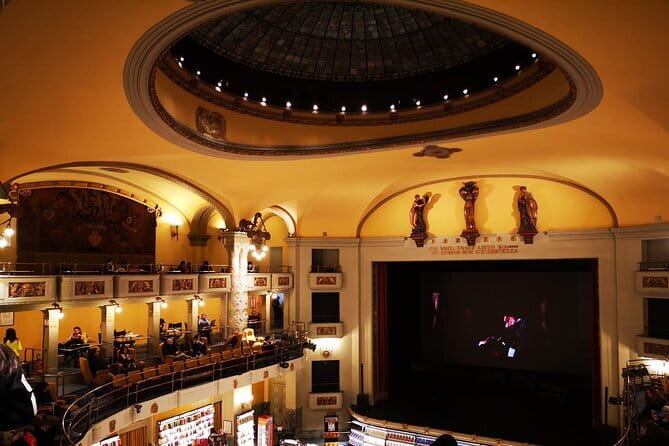
Your meeting point is Piazza degli Strozzi (Piazza degli Strozzi, 50123 Firenze FI). The tour starts at 2:30 pm. It also notes the meeting area is near public transportation, which is a big help in Florence, where getting around can be an event of its own.
The tour ends at The SS. Annunziata di Firenze (P.za della SS. Annunziata, 50122 Firenze FI). The end location is listed as about a 5-minute walk from the Cathedral, so even though you finish in the Santissima Annunziata zone, you’re still well positioned if you want to keep exploring afterward.
Duration is about 2 hours 30 minutes, which is long enough to feel like you learned something substantial but short enough to keep the afternoon from turning into a blur. Also, it’s private: only your group participates, so you can usually expect a calmer flow and more room for questions.
Stop 1 at the Odeon Liberia e Cinema: Leonardo’s world inside a cinema
The morning of Renaissance learning kicks off with an unexpected setting: an internal visit to Go Giunti Odeon Liberia e Cinema, specifically a cinema dedicated to Leonardo Da Vinci. The tour keeps this to about 20 minutes, and it’s listed as admission ticket free for this stop.
Why this works: it reframes Leonardo not as a distant genius in a school textbook, but as part of the cultural fabric of Florence. Starting with a Da Vinci focus also helps tie together later references to geometry, proportion, and how Renaissance thinkers used observation plus reasoning.
A practical tip here is to show up ready to pay attention. The explanation is likely the star of the show rather than the building itself. If you tend to tune out during indoor presentations, this is still worth it because it sets up the ideas you’ll see in stone and bronze later.
Orsanmichele, plus a quick look at Florence’s leather past
Next comes Church and Museum of Orsanmichele, with an exterior look at the first Renaissance statue. This stop is brief (about 15 minutes) and again marked as ticket free.
Orsanmichele can be one of those places you walk past without fully understanding why it mattered. Here, the tour uses it as a stepping stone: a quick visual anchor for Renaissance sculpture and the city’s shift in style and approach. Exterior viewing also keeps the momentum going, instead of turning into a long museum slog.
Then you’ll hit a stop described as one of the two main leather markets in Florence. This is a smart inclusion, even if it sounds less “art history.” Renaissance culture didn’t happen in isolation. It grew out of skilled labor, trade, and the wealth patterns that supported commissions and building projects. A leather market stop helps you remember the Renaissance wasn’t only marble and paint, it was also goods, crafts, and everyday power.
Santa Maria del Fiore: how the cathedral built the idea of Renaissance
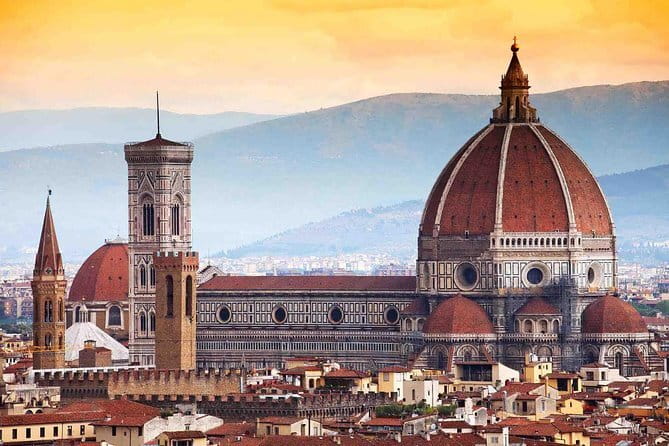
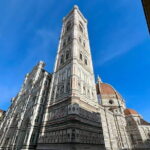
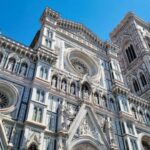
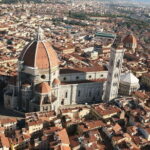
The tour moves to the Cathedral of Santa Maria del Fiore area for an outdoor visit with an entertaining story about how the cathedral was built (about 10 minutes, ticket free).
This is where you start connecting architecture to process. The Renaissance wasn’t just style, it was problem-solving: how do you design, build, and finish ambitious projects over time? Hearing the cathedral construction story gives you context for why this place became an identity marker for Florence.
Outdoor stops here are a weather reality. If you’re going in hot sun or after a rain, wear what you can stand in for short periods. The good news is the tour doesn’t linger too long at any single exposure point. You get the key ideas and keep moving.
- The Best tour in Florence: Renaissance & Medici Tales – guided by a STORYTELLER
★ 5.0 · 12,316 reviews



Piazza Del Duomo: the perspective experiment that makes you see differently
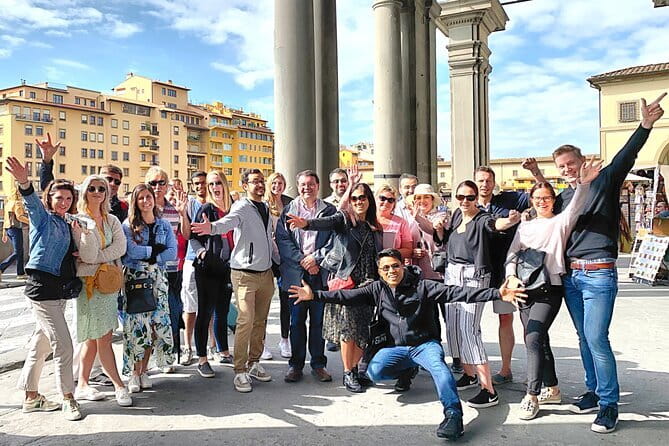
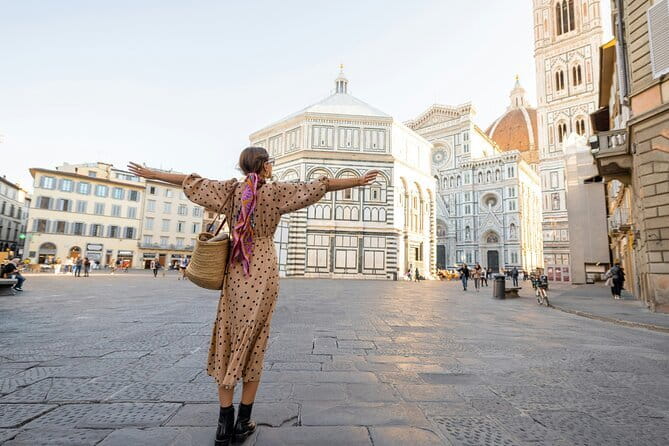
In Piazza Del Duomo, the tour gets playful and very visual. You’ll replicate an experiment that brought linear perspective to life, then you get an additional 20 minutes in the square (ticket free).
This is one of the most valuable parts of the day. Linear perspective can sound like a classroom concept, but the moment you see how it works with real buildings around you, it clicks. You stop thinking of Renaissance as an artistic style and start thinking of it as a method for organizing space.
If you’ve ever looked at a Renaissance painting and wondered how artists made rooms look believable, this is the bridge. Even if your drawing skills are average, the act of recreating the idea in the square trains your eye for what’s going on in the architecture around you.
The only consideration: you’ll want to stand where the guide can explain, so don’t plan to spend this time drifting for photos first. Let the guide set the viewing angle, then grab your pictures.
Battistero di San Giovanni: the Paradise Gates overview from the outside
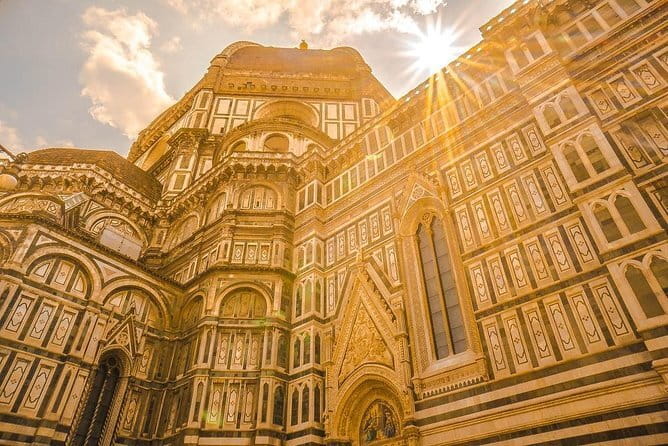
Next is Battistero di San Giovanni, with an exterior overview of the famous Paradise Gates. This is short (about 8 minutes) and ticket free.
You’re not going inside here. Instead, the guide uses exterior viewing to introduce what the gates represent and why they became such a landmark. This works well when your tour time is limited: you get orientation and meaning without paying for a longer entry slot.
If you want to see the gates in close-up, you might plan a separate visit later. But as part of this storyline, it gives you a reference point for Renaissance ambition in bronze and narrative art.
Leonardo Da Vinci Museum moment: Vitruvian Man in plain language
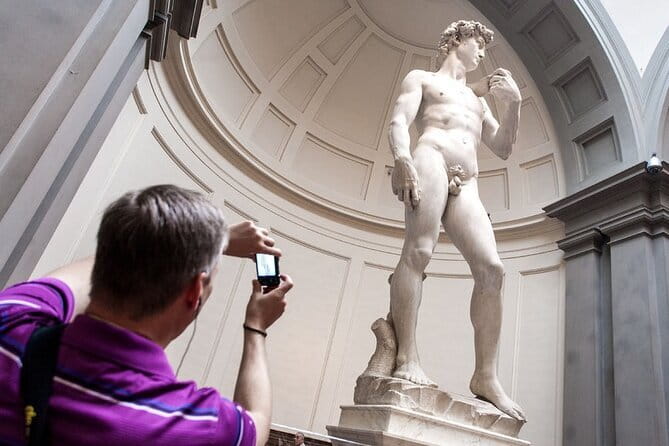
Then you head to Museo Leonardo Da Vinci for a Vitruvian Man explanation (about 5 minutes, ticket free). Short stops can feel rushed, but this one is the right length if your goal is understanding rather than reading every exhibit label.
The Vitruvian Man is a symbol of Renaissance thinking: proportions, human measurement, and the link between mathematics and art. Even with only a few minutes, you can leave with a clearer sense of what the image stands for, and why it shows up in conversations about Renaissance science and design.
If you’re the type who loves symbols, you’ll appreciate how this stop prepares you for the later architecture and style shifts. It’s not just another museum break. It’s the conceptual hinge.
Piazza della Santissima Annunziata and the Innocenti: the Renaissance square idea
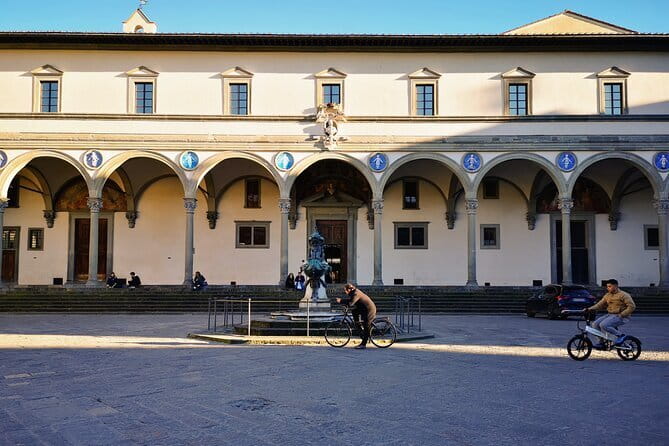
You’ll get a brief moment in Piazza Della Santissima Annunziata (about 2 minutes, ticket free). The tour frames it as the first Renaissance square, which matters because squares are public stages. They show how Renaissance principles changed how cities were planned and how people moved through space.
After that, you visit Museo degli Innocenti, focused on understanding Renaissance architecture next to the first Renaissance building (about 5 minutes, ticket free).
This pairing is clever because it teaches you to see architecture as a system. It’s not only about one façade or one monument. The guide helps you notice how design choices influence flow, sight lines, and the feel of public space.
These are quick stops, so you’ll get the key points and then move on. If you’re the kind of traveler who likes to linger over details, this is where you might want to return later on your own once the basics are in your head.
Basilica della Santissima Annunziata: the Renaissance to Baroque transition inside
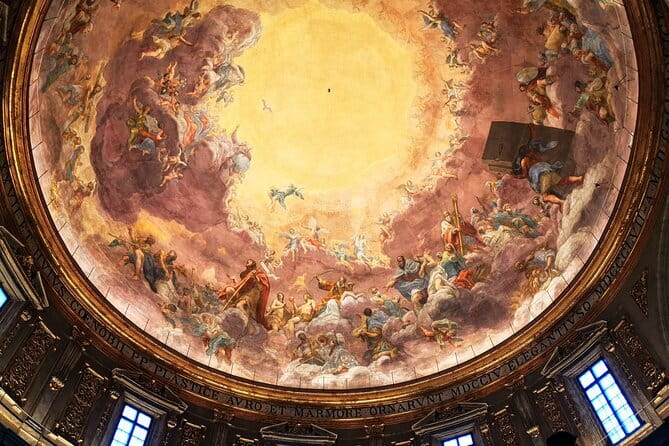
The final big stop is Basilica della Santissima Annunziata – Chiesa di Santa Maria della Scala. This is an interior visit with an explanation of the passage between Renaissance to Baroque style (about 20 minutes, ticket free). The description says it’s the most beautiful church in the city, and the overall tone from the experience is that people are genuinely impressed once they’re inside.
This is where the tour earns its title. Renaissance learning can sometimes stop at “what the Renaissance did.” Here, you’re guided toward the next chapter: how style evolved, how aesthetics changed, and how those shifts show up in religious spaces.
Why interior time matters: in churches, lighting, ornament, and spatial layout all do storytelling work. Even if you’re not a self-described art-history person, you can still feel the transition when someone frames what to look for.
If you’re sensitive to noise, try to pause and listen during the explanation rather than rushing to take photos. The guide’s job here is to help you read the space, not just look at it.
The guide experience: why the story sticks
The tour is led by an English-speaking guide, and the overall feedback is extremely positive, with a 5/5 rating from 19 reviews and 100% recommendation reported in the summary. The guide is a major part of the value here because the format depends on storytelling coherence.
One memorable review describes a guide named Aida, whose passion for the Renaissance was contagious and who linked Middle Ages ideas to the rebirth, finishing with a peek into Baroque. That kind of guide energy is exactly what helps the learning last after your feet hurt a little.
The point isn’t that you’ll memorize dates. It’s that you’ll understand relationships: how ideas moved, how methods changed art, and how Florence became a reference point for world culture.
Price and value: $93.62 for 2.5 hours that actually explain things
At $93.62 per person for about 2 hours 30 minutes, this isn’t the cheapest walk in Florence. But it can be good value because the experience is doing more than checking sites off a list.
First, it’s a private tour for your group, so you’re paying for personalized interpretation instead of hoping a big group guide can slow down for your questions. Second, many stops are explicitly listed as admission ticket free, which helps you avoid surprise add-ons mid-tour.
Third, the tour is structured around high-impact concepts: Leonardo connections, a linear perspective experiment, Renaissance square planning, and the shift into Baroque. Those are the kinds of insights you usually only get by spending extra time reading or arranging multiple visits.
If you’re traveling with a group that includes some people who love art and others who are less certain, this format tends to work because it builds meaning instead of throwing facts at you.
Who should book this tour
You’ll get the most out of this if you:
- Want a Renaissance-to-Baroque storyline rather than a random landmark shuffle
- Like architecture and art methods, not just big-ticket photos
- Prefer guided explanations that help you understand what you’re seeing in the moment
- Are short on time and want a smart afternoon plan
If your ideal day is five-hour museum marathons or you hate brief stops, you might feel rushed. This tour is about focus and clarity, not long self-guided wandering in one building.
Should you book the Renaissance Explained Tour in Florence?
I think it’s a strong choice if you want Florence to make sense fast. The combination of free-entry peeks, a clear storyline, and a hands-on perspective experiment gives you real understanding without requiring you to be an architecture scholar.
Book it if you enjoy learning while walking and you like the idea of ending with a Baroque-style shift after your Renaissance groundwork. Skip it if you’re hoping for lots of time inside major sites or you want a more independent pace.
If you’re on the fence, remember this: you’re not paying just for places. You’re paying for the thread that ties those places together.
FAQ
How long is the Renaissance Explained Tour?
It’s approximately 2 hours 30 minutes.
What time does the tour start?
The start time is 2:30 pm.
Where do we meet and where does it end?
You meet at Piazza degli Strozzi and the tour ends at The SS. Annunziata di Firenze (about a 5-minute walk from the Cathedral).
Is this tour private?
Yes. It’s a private tour/activity, and only your group participates.
What language is the tour offered in?
It’s offered in English.
Are there admission tickets included for the stops?
The itinerary lists admission ticket free for each stop.
What is the cancellation policy?
Free cancellation is available up to 24 hours in advance for a full refund. Cancellation within 24 hours of the start time is not refundable.
Is it suitable for most travelers?
The tour notes that most travelers can participate.
More Tours in Florence

More Tour Reviews in Florence
- Tuscany Day Trip from Florence: Siena, San Gimignano, Pisa and Lunch at a Winery
★ 5.0 · 21,634 reviews - The Best tour in Florence: Renaissance & Medici Tales – guided by a STORYTELLER
★ 5.0 · 12,316 reviews