REVIEW · FLORENCE
Private Florence Tour by Golf Cart ETukTuk with Audio Guide
Book on Viator →Operated by City tour Firenze · Bookable on Viator
Florence by golf cart is a smart shortcut. You glide past major landmarks, then get short pauses to look around while the on-board audio guides you through what you’re seeing. I like that it’s set up as a private experience, so you’re not squeezing with strangers, and you can move at your group’s pace. One thing to consider: this is a quick circuit with lots of stops, so it’s not ideal if your main goal is long photo breaks or deep, slow museum time.
Here’s the practical appeal: you cover a lot of ground without wearing your feet into dust. You’ll get a strong first overview of Florence’s core sights plus quieter corners along the Arno river. I did notice a common theme in feedback from the experience style: you’re relying heavily on the audio guide, so if you want lots of back-and-forth Q&A, you may be better with a fully guided walking tour.
In This Review
- What I’d Call the Best Parts (and One Watch-Out)
- Golf Cart Florence in 70 Minutes: A Quick Way to Get Oriented
- Meeting Point and the Private Ride Setup You’ll Actually Feel
- Audio Guide in English: What It Does Well, and Where It Can Fall Short
- Stop by Stop Through Florence: From Santa Croce to Medici Power
- Basilica of Santa Croce (2 minutes, admission not included)
- Medici Riccardi Palace (free; 2 minutes)
- Market Square and Mercato Centrale (free; short stops)
- Piazza di Santa Maria Nuova and San Lorenzo (free; short pauses)
- Chiesa di Santa Maria Maggiore and Via de’ Cerretani (free; quick look)
- Cappelle Medicee (free; quick stop)
- Duomo Area Connections: Santa Maria Novella, Bridges, and Main Streets
- Piazza di Santa Maria Novella (free; 2 minutes)
- Borgo Ognissanti and the Ognissanti church stop (free)
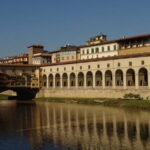
- Ponte Amerigo Vespucci and Ponte alla Carraia (free; river crossings)
- Officina Profumo–Farmaceutica di Santa Maria Novella and Museo Salvatore Ferragamo (free)
- Oltrarno and Basilica di Santo Spirito (free)
- Toward the Old Bridges and Gates: Ponte Santa Trinita, Galileo, and Porta San Niccolò
- Ponte Santa Trinita (free)
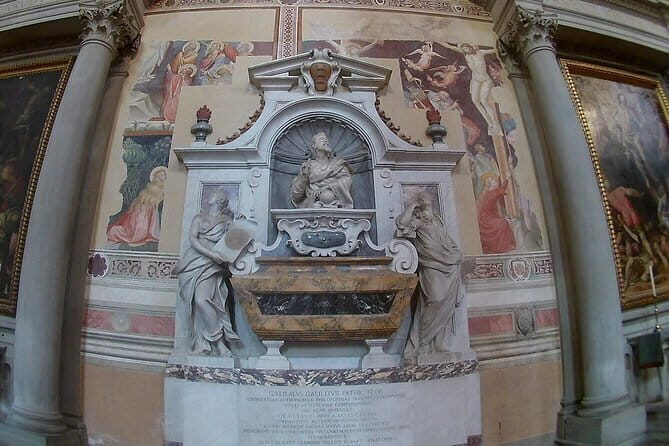
- Museo Galileo (free; 2 minutes)
- Piazza di Santa Maria Soprarno and Porta San Niccolò (free)
- Ponte alle Grazie and then Ponte Vecchio (free)
- Piazza San Firenze to Biblioteca Nazionale Centrale: Dante and the Bookish Side of Florence
- Piazza San Firenze and Complesso di San Firenze (free)
- Museo Casa di Dante (free)
- End stops: Ristorante la Cupola Steakhouse and Biblioteca Nazionale Centrale (free listed)
- Optional Upgrade: Piazzale Michelangelo and San Miniato for View-People
- Price and Value: When $50.46 Makes Sense (and When It Doesn’t)
- Photo and Timing Reality Check: How to Get the Shots You Want
- Should You Book This Golf Cart Tour in Florence?
- FAQ
- How long is the Private Florence Tour by Golf Cart ETukTuk with Audio Guide?
- Is the audio guide available in English?
- Is admission included for all stops?
- Can I add Piazzale Michelangelo and San Miniato Church?
- What if I need to cancel my booking?
- Is there a weight limit for riders?
What I’d Call the Best Parts (and One Watch-Out)
- Audio-first storytelling on a smooth route: headphones handle the narration while you look around.
- Stops are short but frequent: you get multiple “micro-pauses” rather than one long stop.
- Optional scenic upgrade: add Piazzale Michelangelo and San Miniato Church for big-view payoff.
- Designed for easier touring: great for groups who want to see a lot without constant walking.
- Possible friction points: audio can occasionally be glitchy, and photo time is mostly limited to designated stops.
Golf Cart Florence in 70 Minutes: A Quick Way to Get Oriented
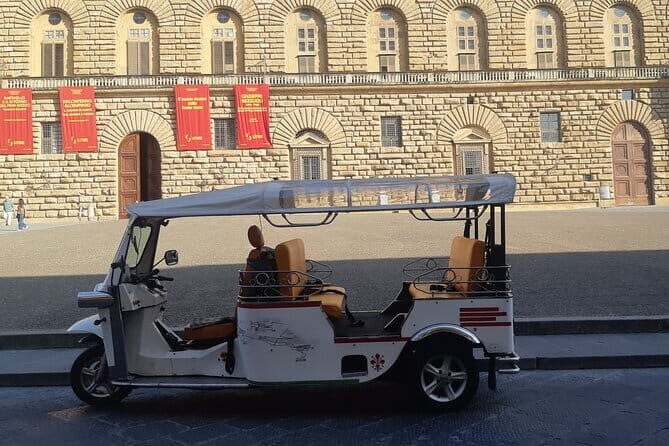
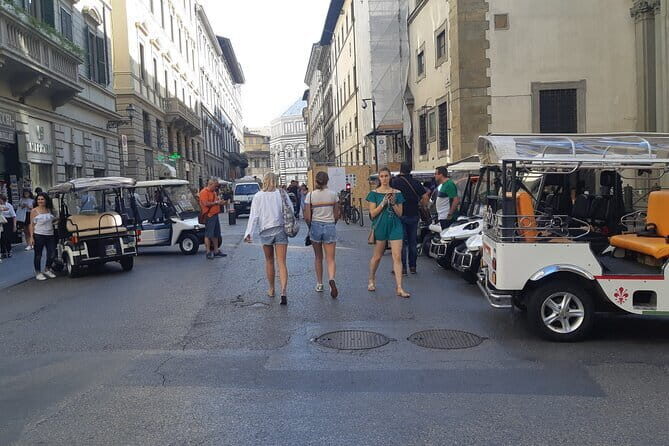
This tour is built for the classic Florence problem: you want to see a lot, but the city is packed, hilly in spots, and full of tight streets where walking can wear you out fast. Instead, you ride an e-tukTuk/golf-cart style vehicle and get a steady flow of sights—plus audio narration that keeps you oriented while you’re moving.
The timing matters. At each stop, you have a short window (about 2 minutes) to pause, take a few photos, and absorb what you can. That means you’re not waiting around for every location to “feel like the main event,” and you get a broad sense of where things are. Think of it as a mobile map plus a guided explanation, not as a substitute for full-length museum visits.
Value-wise, the price is most fair when you use it to do what it does best: big-picture orientation. If you’re the kind of traveler who hates missing highlights because you ran out of energy, this format is a strong fit.
You can also read our reviews of more guided tours in Florence
Meeting Point and the Private Ride Setup You’ll Actually Feel
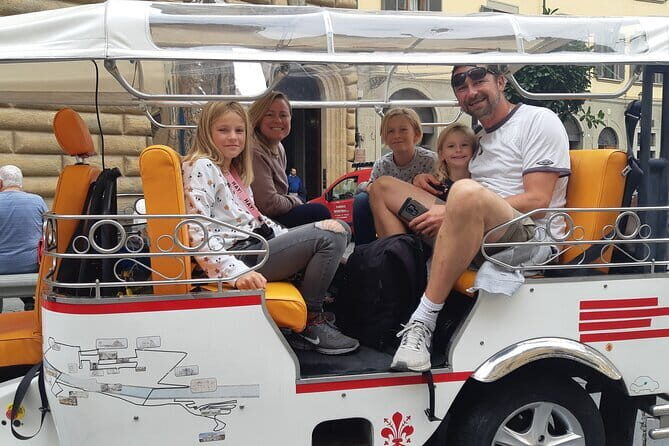
You meet at Via Vinegia, 28 R, 50122 Firenze FI, Italy, and the tour ends back near the same spot. You’ll receive a confirmation at booking time, and you’ll use a mobile ticket.
Because it’s private, your group sets the tone. That’s a real advantage in Florence, where a group tour can feel like a human cork in doorways and along curbs. Here, only your group participates, so you’re less likely to feel rushed by other people’s pace.
One more practical note: the company lists a maximum weight of 110kg. If someone exceeds that limit, there are extra charges mentioned for both classic and top tour options. If weight is a factor for anyone in your party, it’s worth checking before you go.
Audio Guide in English: What It Does Well, and Where It Can Fall Short
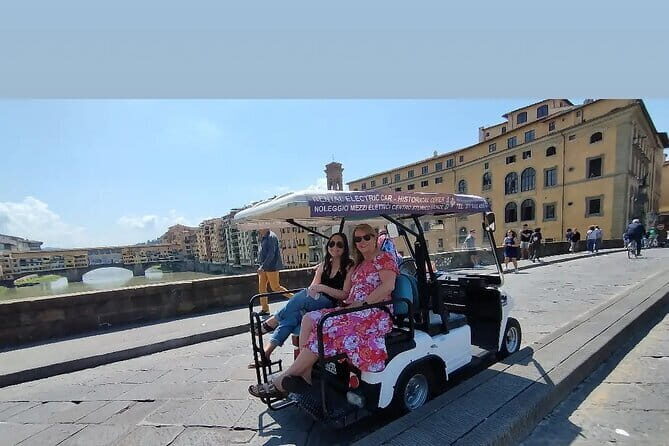
The heart of the experience is the audio. You’ll listen through headphones, and the narration runs along the route so you connect the dots between neighborhoods and landmarks. That’s the main reason this tour works for many people: you don’t have to mentally juggle directions while also trying to read plaques in two languages.
The good news is that feedback highlights clear city explanations and engaging drivers on some departures. Names like Alejandro and Osama show up in reviews as examples of guides who can be friendly and informative beyond the audio track. Even when the driver doesn’t do much talking, the audio helps you keep moving through the story.
The watch-out is expectation-setting. Several reviews mention that it’s an audio-driven experience, so you may hear a recorded track that doesn’t perfectly match what’s happening in that exact second. Others reported occasional audio issues at certain locations or occasional language mismatch. In hot weather, even the device can be a factor, so bring water and plan to treat audio quirks as minor rather than deal-breakers.
If English is important to you, the tour is offered in English, but audio quality can still vary by device and moment.
Stop by Stop Through Florence: From Santa Croce to Medici Power
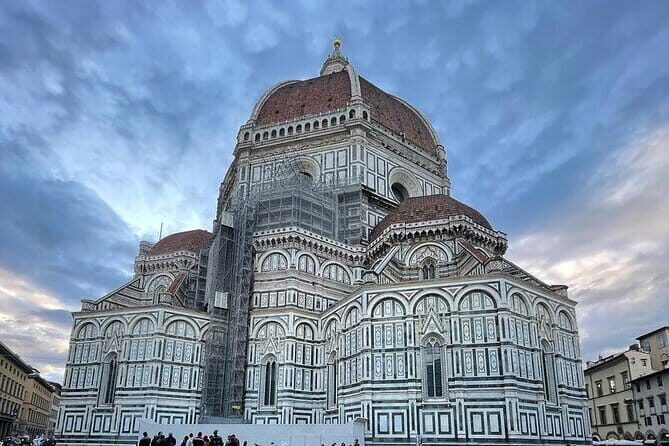
This route mixes religion, art, markets, old palaces, and river bridges—so you get Florence as a living chain of places, not just a list of famous names.
At each stop, you can explore at your own pace, take photos, and listen as the narration plays. The big tradeoff: the time at each point is brief. You’re not going to see everything inside every building in 70 minutes—this is about seeing enough to know what you want to return to later.
Basilica of Santa Croce (2 minutes, admission not included)
Santa Croce is one of the city’s big churches, and it’s a smart starting point because it anchors the tour in Florence’s cultural identity. You’ll have time to look around and take photos, but note the admission ticket isn’t included here, so build that cost into your day if you want to go inside.
You can also read our reviews of more private tours in Florence


Medici Riccardi Palace (free; 2 minutes)
This is where Florence’s “money with manners” story really shows. Medici power shaped art, architecture, and the politics of the city. Even from the outside, this stop helps you understand why Florence is so tightly linked to patron families rather than only to artists.
Market Square and Mercato Centrale (free; short stops)
These stops are valuable because they show a Florence that still works as a city, not only a museum. Market Square gives you the pulse of the center, while Mercato Centrale helps you connect the historic city to modern food culture. Even if you don’t stop for a meal right then, you’ll likely want to come back here later.
Piazza di Santa Maria Nuova and San Lorenzo (free; short pauses)
Piazza di Santa Maria Nuova is a calmer pause before you head toward San Lorenzo, another heavyweight church area. San Lorenzo is a good “architecture read” stop: you’ll see how Florence balances sacred spaces with dense urban life around them.
Chiesa di Santa Maria Maggiore and Via de’ Cerretani (free; quick look)
These are the kind of stops that make the tour feel more like a guided walk through real neighborhoods. Via de’ Cerretani, in particular, helps you understand the street grid and movement patterns that make Florence feel confusing at first.
Cappelle Medicee (free; quick stop)
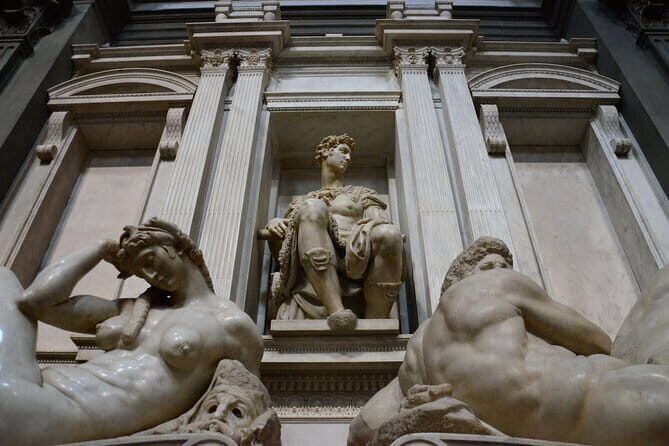
This stop is a big reason the audio guide matters. The Medici chapels are essential to understanding the city’s art and power. With limited time, you’re mostly using this stop to get oriented—and decide whether you want a longer visit later.
Duomo Area Connections: Santa Maria Novella, Bridges, and Main Streets
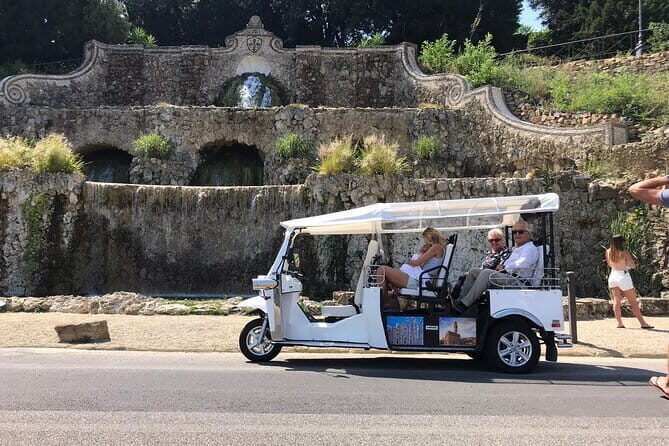
As you continue, the route links key center points that many first-time visitors try to piece together on their own. The benefit here is that the driving and narration remove a lot of the guesswork.
Piazza di Santa Maria Novella (free; 2 minutes)
This piazza area helps you calibrate your sense of direction and scale. If you’re planning future day trips, this is the kind of stop that makes the rest of your map click.
Borgo Ognissanti and the Ognissanti church stop (free)
These stops shift you slightly toward a more local feel. It’s a useful reminder that Florence isn’t only “center highlights”—it’s made of working districts and everyday streets.
Ponte Amerigo Vespucci and Ponte alla Carraia (free; river crossings)
Rivers change everything in Florence. The Arno creates natural “chapters” in the city. These bridges help you see how neighborhoods connect and why certain viewpoints feel so meaningful. You’ll also get a better sense of where you are compared to the major landmark clusters.
Officina Profumo–Farmaceutica di Santa Maria Novella and Museo Salvatore Ferragamo (free)
These stops are a fun curveball. Instead of only focusing on churches and palaces, the route includes Florence’s design and fragrance legacy. If you like craft and brand history, you’ll appreciate that the tour doesn’t treat Florence as one note.
Oltrarno and Basilica di Santo Spirito (free)
Oltrarno is a different mood—more “across the river” and often more relaxed. Santo Spirito keeps the tone grounded in Florence’s everyday church life rather than only the biggest-name attractions.
Toward the Old Bridges and Gates: Ponte Santa Trinita, Galileo, and Porta San Niccolò
The later part of the route leans into classic photo-and-photo-feel Florence—bridges, viewpoints, and sights near the river’s bend.
Ponte Santa Trinita (free)
This bridge is a natural “pause point” because it frames the city in a way that’s easy to understand from the cart. Even with limited time, you’ll likely feel the photo instinct kick in.
Museo Galileo (free; 2 minutes)
Museo Galileo is a strong “change of pace” stop. It adds the science thread to a city often told mainly through art and architecture. In a short window, you probably won’t cover everything inside, but the stop helps you broaden what Florence can be in your head.
Piazza di Santa Maria Soprarno and Porta San Niccolò (free)
These stops help you feel the city’s edge and transitions. Porta San Niccolò adds a sense of arrival and boundary, and it’s the kind of place that makes Florence feel like a city with depth beyond the main center.
Ponte alle Grazie and then Ponte Vecchio (free)
Ponte alle Grazie is a quieter bridge moment. Then comes Ponte Vecchio, and yes, it’s famous for a reason: it’s one of the best known symbol-bridges in Italy. You’ll get a quick look and plenty of chances for photos, but again, the key is that the cart route controls timing.
Piazza San Firenze to Biblioteca Nazionale Centrale: Dante and the Bookish Side of Florence
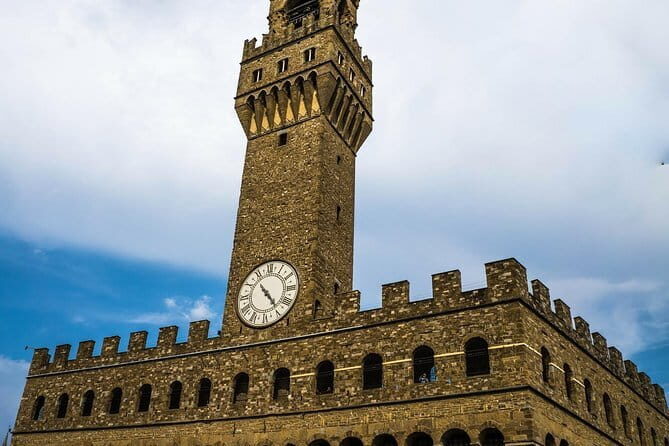
The final stretch of stops leans into culture and literary Florence, which I find is where many first-time itineraries feel too short.
Piazza San Firenze and Complesso di San Firenze (free)
These help stitch the story together. You start to notice patterns: Florence keeps layering the past onto the present, and this area fits that theme well.
Museo Casa di Dante (free)
Even if you’re not a hardcore Dante fan, Casa di Dante is a memorable “author spot.” It’s an easy add to the day because the tour format makes it possible to experience a meaningful place even when your schedule is tight.
End stops: Ristorante la Cupola Steakhouse and Biblioteca Nazionale Centrale (free listed)
The route includes a restaurant drop suggestion at the end and then another cultural stop listed as Biblioteca Nazionale Centrale. The restaurant stop is best treated as an optional landing—if it fits your timing, it’s a convenient way to end the ride without immediately searching for food.
One tip from the reviews: the final dining recommendation was a major win. If you’re hungry after the tour, this kind of planned ending can save you time and decision fatigue.
Optional Upgrade: Piazzale Michelangelo and San Miniato for View-People
If you care about one big viewpoint payoff, this is the part to think about. The tour highlights an upgrade that adds stops at Piazzale Michelangelo and San Miniato Church.
Why this matters: reviews frequently treat the Michelangelo area as a highlight, especially when timing hits golden hour. Even if you don’t plan a sunset, high points give you a mental model of how Florence is laid out—bridges, river bends, and rooflines all make more sense after a viewpoint.
If you do the upgrade, you’ll want to pace your expectations. You still won’t get hours up there, but the value is that you’re not trying to figure out how to reach the hill on your own while managing the rest of the city.
Price and Value: When $50.46 Makes Sense (and When It Doesn’t)
At about $50.46 per person for roughly 1 hour 10 minutes, the math depends on your goals.
This price is usually a good deal if you want:
- a fast orientation around key Florence neighborhoods
- a low-effort way to see highlights without long walks
- short time at many places so you can decide what to revisit later
It can feel less worth it if you want:
- long, stop-then-stroll photo sessions
- lots of time inside major sites
- a fully live conversation style guide
Some reviews criticize the experience when they felt it was too hurried or when the audio didn’t match perfectly with the moment. That’s not unusual for an audio-driven route, so I’d keep it in mind before you book. If your ideal day includes slow museum browsing, treat this as the opening act, not the finale.
Photo and Timing Reality Check: How to Get the Shots You Want
Here’s the practical truth: the cart experience is designed for moving through traffic and staying on schedule. That means you should plan your photos for the scheduled stops, not for random curb moments while the vehicle is rolling.
A couple of reviews also mention the vehicle isn’t perfect for every angle—if you end up seated in a spot that blocks your view (roof or covered sections), the photos can be less “classic postcard” and more “I got what I could.” If photos are your top goal, the upgrade to the big overlooks is usually where your camera gets the best return.
If it’s rainy, it’s often a plus. One review described a pouring rain experience where the cart helped keep everyone mostly dry, and the last half was covered. Florence weather can change fast, so having a sheltered ride option is practical.
Should You Book This Golf Cart Tour in Florence?
Book it if you want a smart first pass through Florence that saves your feet and gives you a solid sense of where everything is. It’s especially suitable if anyone in your group prefers fewer stairs and less walking, or if you only have one day and you’d rather see “many key sights” than “one deep one.”
Skip it (or plan to add more on your own) if you want a long, interactive guide who answers your questions for each stop. This is audio-forward, and that can feel bland to some people. Also, if you’re traveling purely for photography and you expect frequent picture-perfect stops, you might feel constrained by the short pause timing.
If you’re torn, here’s my simple decision rule: use this to build your Florence map in your head, then spend your next hours walking the places that hook you. That’s when the experience feels like more than just a ride.
FAQ
How long is the Private Florence Tour by Golf Cart ETukTuk with Audio Guide?
It runs for about 1 hour 10 minutes (approx.).
Is the audio guide available in English?
Yes. The tour is offered in English.
Is admission included for all stops?
Admission is not included for the Basilica of Santa Croce in Florence. Admission is listed as free for the other stops on the route.
Can I add Piazzale Michelangelo and San Miniato Church?
Yes. There is an upgrade option that adds stops at Piazzale Michelangelo and San Miniato Church.
What if I need to cancel my booking?
This experience is non-refundable and cannot be changed for any reason.
Is there a weight limit for riders?
The tour lists a maximum weight of 110kg. If someone exceeds that limit, extra payment is required (amounts are shown for classic and top tour options).
More Guided Tours in Florence
More Tours in Florence


More Tour Reviews in Florence
- Tuscany Day Trip from Florence: Siena, San Gimignano, Pisa and Lunch at a Winery
★ 5.0 · 21,634 reviews - The Best tour in Florence: Renaissance & Medici Tales – guided by a STORYTELLER
★ 5.0 · 12,316 reviews