REVIEW · AREZZO
Cortona Private Guided Tour
Book on Viator →Operated by Umbria con Me · Bookable on Viator
Cortona has a way of sticking with you. This private guided walk turns the town center into a living timeline, from ancient Etruscan roots to Roman-era squares and medieval palazzi. You also get the movie connection: stories tied to Under the Tuscan Sun, woven into what you’re seeing as you go.
Two things I especially like: first, the way the guide reads the town for you, so you understand why places matter, not just where they are. Second, the pacing stays flexible and human. This is built for a small private group (up to 15), so you can ask questions and linger on the corners that catch your eye.
One possible drawback: it’s a walking tour in a hillside town, so wear shoes you trust and plan for some uphill. And at $313.24 per group, it can feel pricey if you’re only two people sharing the cost.
In This Review
- Key highlights worth your attention
- Why Cortona starts at Piazza della Repubblica
- Etruscan roots and Roman-era clues you can actually spot
- Palazzo del Capitano del Popolo, Passerini, and the civic backbone
- Teatro Signorelli and the cathedral view you’ll remember
- Under the Tuscan Sun stories, placed where they belong
- How the 2-hour private pace works in real life
- Price and value: $313.24 per group for up to 15
- Meeting point at Piazza Garibaldi and planning your day
- Should you book this Cortona private guided tour?
- FAQ
- What is the duration of the Cortona private guided tour?
- How much does the tour cost?
- Where does the tour start?
- What language is the tour offered in?
- Is this tour a private experience?
- What should I wear?
- Are tickets included for attractions?
- Can I cancel for a full refund?
Key highlights worth your attention
- Etruscan-to-medieval storytelling that makes Cortona feel like one connected history lesson
- Piazza della Repubblica as the starting anchor, with Roman-age context
- Landmark sweep including Teatro Signorelli and key palazzi, plus views from the cathedral area
- Under the Tuscan Sun anecdotes placed right where they belong, not tacked on
- Private group format so your questions and pace matter
- Multiple guides bring local angles you might hear from locals like Laura, Pamela, Serina, and Valeria
Why Cortona starts at Piazza della Repubblica
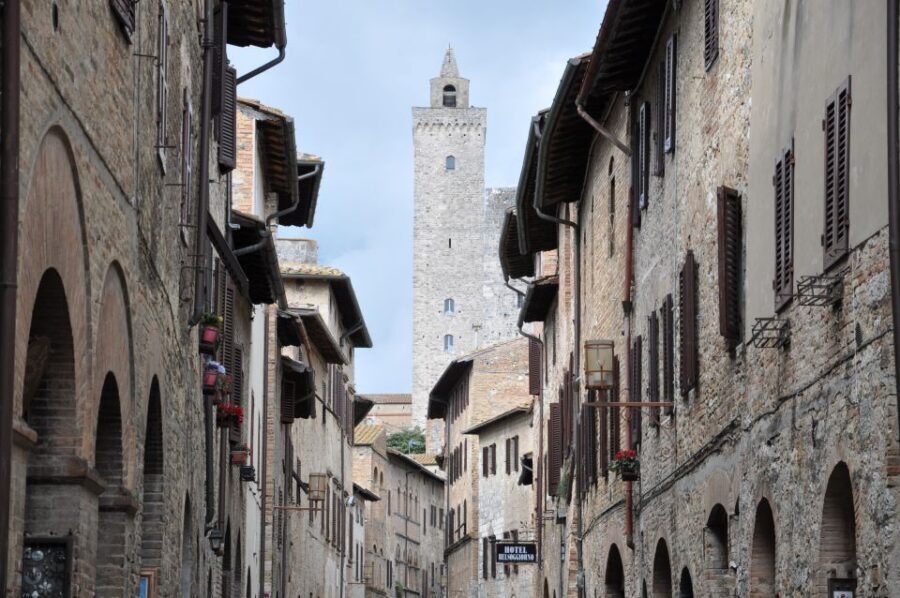
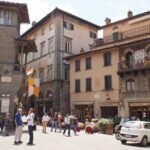
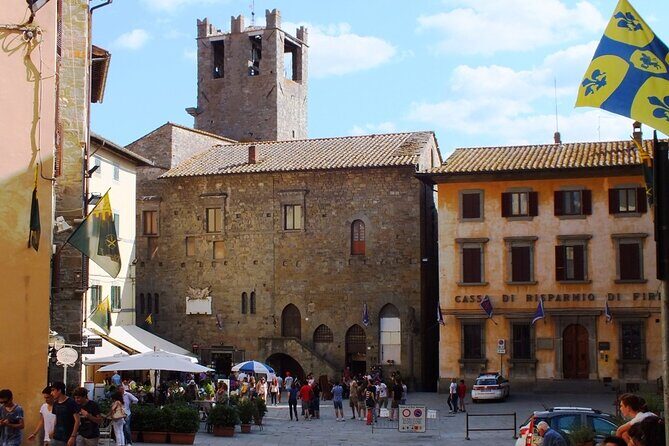
You start by getting your bearings in the heart of Cortona. Even if you think you know what a medieval hill town looks like, Piazza della Repubblica has a way of resetting your sense of scale. This main square dates back to the Roman age, and once you hear how it fits into the older layers of the town, you’ll spot clues everywhere.
From here, the guide helps you connect the dots between the “big” sights and the little details that usually pass people by. That’s the value of a private guide: you’re not just checking boxes. You’re learning how to see. And because the tour is designed around a compact historical center, you get more interpretation per minute than you would with a bus tour.
You’ll also get a feel for why Cortona is so easy to love: it’s not only the architecture. It’s the atmosphere, the viewpoints, and the slow cadence of a town that still functions like a real place, not a theme park.
You can also read our reviews of more guided tours in Arezzo

Etruscan roots and Roman-era clues you can actually spot
Cortona’s origin story begins long before the medieval center you’ll spend most of your time walking through. The tour frames the Etruscan past as a foundation, not a distant trivia fact. You’ll hear how the earlier culture set the stage for later settlements and how the town’s layout and stonework reflect that deep timeline.
Then you connect that to the Roman-era layer around the square. It’s an easy transition when your guide points out what to look for, like the types of structures that signal older periods and the way power and civic life shifted over time.
This is also where the town gets practical. When you understand the Etruscan and Roman foundations, you can interpret why certain buildings sit where they do and what the main public spaces were meant to do. It makes a second visit easier too, because you’ll already know what to hunt for on your own.
Palazzo del Capitano del Popolo, Passerini, and the civic backbone
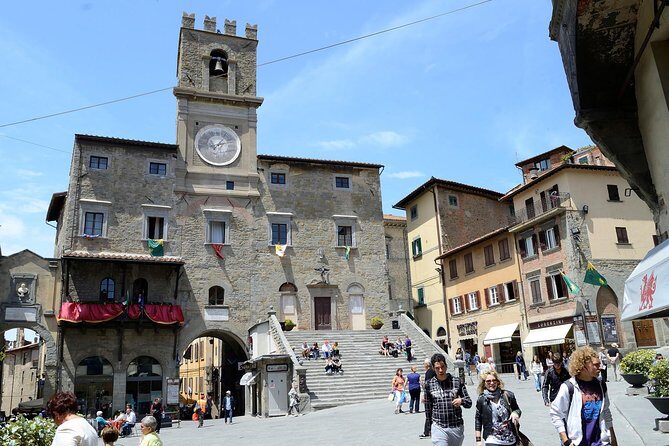
One of the strengths of this tour is that it doesn’t treat palazzi as mere backdrops. You’ll walk past major buildings that tell you who held power, who lived there, and how civic life worked.
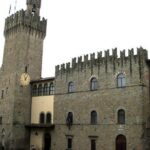
A key stop is the Palazzo del Capitano del Popolo, which includes a notable historical thread: Cardinal Passerini lived here during the 16th century. That detail matters because it gives you a human anchor. Instead of thinking of the Renaissance as a blur of dates, you connect the building to a specific person and role in that era.
You’ll also see the Palazzo Comunale, dating to the 12th century. This is the kind of sight that’s easy to skim if you’re traveling solo. On a guided walk, it becomes a clue to how the town organized itself—less about what’s pretty and more about what’s functional and political.
And the tour continues with additional palazzo stops like Palazzo Casali. The point isn’t to memorize every name. The point is to start recognizing patterns: family influence, civic authority, and how the town’s center evolved without losing its medieval identity.
Teatro Signorelli and the cathedral view you’ll remember
A walking tour can feel repetitive if every stop is just a photo spot. Here, you get a different kind of landmark: Teatro Signorelli. It’s a neoclassical theatre style that’s still in use for the local theatre season, so you’re not only looking at an old building. You’re seeing a working cultural space.
When your guide explains how the theatre fits the town’s identity, it changes the way you look at the façade and surrounding street angles. It’s one of those places where, once you know what it’s for, you can picture how people moved through the streets for performances and gatherings.
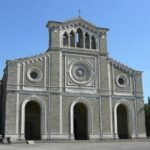
The tour also includes the cathedral area and a charming view from there. Cortona is famous for viewpoints, but this stop helps you understand why people chose to build where they did. When you’re standing in the right spot, the guide’s story makes the scenery feel earned instead of accidental.
If you like architecture, small details, or local culture that still has momentum, these stops are a big part of the tour’s appeal.
Under the Tuscan Sun stories, placed where they belong
The Under the Tuscan Sun reference could go two ways: a fun trivia stop, or a forced connection. This tour uses it as a storytelling thread inside the real town you’re walking through.
As you move through the historical center, you’ll hear anecdotes about the filming in relation to the streets and landmarks around you. That’s the key. The stories land better when they connect to the environment instead of living in a separate “movie world.”
I like this approach because it gives you a second layer of enjoyment. You’re learning the town’s timeline, and you’re also picking up cultural context—why Cortona became known beyond Tuscany, and why the town’s look and mood were so appealing on screen.
It also helps you avoid the common problem: seeing movie-famous places without understanding what made them interesting in the first place.
You can also read our reviews of more private tours in Arezzo


How the 2-hour private pace works in real life
The tour runs about 2 hours. That’s long enough to cover meaningful sights, yet short enough that you’re not stuck rushing to keep up with a group.
Because it’s private, the experience usually feels like a conversation with someone who knows the town well enough to give you direction, context, and options. One guide can focus on particular streets and lesser-known corners; another might emphasize the way people lived through major historical shifts. In the names you might encounter, you can see the range of local voices, like Laura, Pamela, Serina/Serena, and Valeria.
What you should expect physically: this is a hill town walk. Even when the route stays within the historical center, you’ll likely face uphill stretches. Plan smart:
- Wear comfortable walking shoes you can manage on uneven stone.
- Dress in smart casual (the tour’s stated dress code), but prioritize comfort for the slope.
Timing matters too. You can choose a departure time that fits your Cortona schedule, which is a genuine quality-of-life upgrade when you’re balancing lunch plans, day trips, and sunset.
Price and value: $313.24 per group for up to 15
Let’s talk money without hand-waving. The price is $313.24 per group, up to 15 people, for roughly 2 hours. That structure can be either a bargain or a splurge depending on your group size.
Here’s the practical math idea:
- If it’s just two of you, you’ll feel the cost more, since you can’t “spread” the price much.
- If you have a small group—four to eight people—the per-person cost usually becomes easier to justify.
- If you’re traveling with friends or family, the private format can turn into very good value.
What makes the price easier to swallow is that you’re paying for a certified professional guide for the full duration. You’re not buying an attraction ticket. You’re buying interpretation, pacing, and local insight—especially helpful in a compact town where good guidance can make or break your understanding.
Also note that admission is free for what’s included (so you’re not adding museum entry costs as you go). Just remember this is primarily a walking-and-looking experience, not a museum tour with heavy ticketing.
Meeting point at Piazza Garibaldi and planning your day
You meet at Cortona Piazza Garibaldi, 52044 Cortona. The tour ends back at the meeting point, which makes it easy to plan lunch or your next activity.
The area is described as near public transportation, which is helpful if you’re moving around Tuscany by bus or using local links. Still, Cortona is compact enough that many people end up walking, so leaving yourself buffer time is smart.
If you’re scheduling this early in your trip, you’ll likely get the most out of it. A guide helps you learn the town’s logic fast—where the center pulls you, how the viewpoints connect, and what’s worth revisiting later when you’re on your own.
Booking timing tip: on average, people book about 53 days in advance. If you’re traveling in peak season or you want a specific departure time, it’s worth reserving earlier rather than later.
One last thought: any private tour relies on real people showing up. In rare cases, guides can be delayed due to emergencies, and the operator has offered options like rescheduling. Keep your phone reachable and your email checked the day of your tour.
Should you book this Cortona private guided tour?
Book it if you want a town-first experience. This tour is ideal when your goal is to understand Cortona, not just photograph it. The Etruscan-to-Roman-to-medieval storytelling, plus the movie anecdotes, makes the walk feel intentional.
It’s also a great fit if you’re the type who likes questions. The private format makes space for your curiosity, whether you’re focused on palazzi, theatre life at Teatro Signorelli, or how Cortona’s cathedral views fit into the town’s story.
Skip or reconsider if you’re traveling with only one or two people and you’re strict about price per hour. At that group size, the per-person cost can feel steep for a 2-hour walk.
FAQ
What is the duration of the Cortona private guided tour?
The tour lasts about 2 hours.
How much does the tour cost?
It costs $313.24 per group, up to 15 people.
Where does the tour start?
The meeting point is Cortona Piazza Garibaldi, 52044 Cortona, Province of Arezzo, Italy. The tour ends back at the meeting point.
What language is the tour offered in?
The tour is offered in English.
Is this tour a private experience?
Yes. It’s a private tour/activity, meaning only your group participates.
What should I wear?
The dress code is smart casual.
Are tickets included for attractions?
Admission is listed as free for the experience included.
Can I cancel for a full refund?
Yes. You can cancel up to 24 hours in advance for a full refund.