REVIEW · AREZZO
Share your Pasta Love: Small group Pasta and Tiramisu class in Arezzo
Book on Viator →Operated by Cesarine: Cooking Class · Bookable on Viator
Cook pasta where Italians actually gather. This small-group class in Arezzo turns a meal into a lesson, with hands-on making, shared food, and a real home setup.
I especially love the aperitivo start and the way you eat family-style at the table. One thing to consider: you’re inside a local home, so expect a cozy, lived-in pace—not a scripted restaurant show.
The payoff is practical, too. You’ll learn classic pastas like ravioli and tagliatelle, then finish with tiramisù, guided by your host (names you might hear include Dina and Giorgio, Marzine, Francesco, and Annamaria).
In This Review
- Key things you’ll notice
- Why Arezzo Pasta and Tiramisu Works So Well
- The 3-Hour Timeline: From Garden Aperitivo to Family Dinner
- The Pasta Lesson You’ll Actually Remember at Home
- Tiramisu: The Dessert Half That Makes It Feel Like Italy
- Aperitivo Snacks and Wine: Why the Before-Dinner Part Counts
- Meeting Your Cesarine Host (And Why Names Matter)
- Small Group Size, English, and a Real Home Layout
- Food Safety and Distancing You’ll See in the Home
- The Le Cesarine Apron: A Practical Souvenir
- Price Check: Is $162.56 Good Value?
- Who This Class Suits Best (And Who Might Skip It)
- Should You Book the Pasta and Tiramisu Class in Arezzo?
- FAQ
- What is the duration of the Pasta and Tiramisu class in Arezzo?
- How many people are in the class?
- Is the class offered in English?
- Where do we meet for the experience?
- What food and drinks are included?
- Do I receive a souvenir?
- Are the homes close to public transportation?
- What health and safety rules should I expect?
- What is the cancellation policy?
Key things you’ll notice
- Aperitivo before you cook: a drink plus snacks sets the mood fast
- Small group size (max 12): more talking, less waiting
- Family-style shared eating: you cook and eat as a group at the same table
- Hands-on pasta skills: ravioli and tagliatelle are part of the teaching
- Finish with tiramisù you made: coffee flavor, cream, and a real dessert payoff
- Le Cesarine apron souvenir: a branded keepsake from the experience
Why Arezzo Pasta and Tiramisu Works So Well
This class is simple on paper: pasta and tiramisù, in a local home, for a small group. What makes it stand out in practice is the flow. You don’t just watch. You cook. Then you sit down together like you’ve been invited for dinner.
I like that it’s built around Italian hosting, not just food. In the reviews, hosts like Dina and Giorgio (with their family) are described as welcoming and conversational, and that changes the whole feel of the evening. You’re not standing in the back taking notes. You’re in the middle of the table story.
Another reason it feels worth it: the menu is focused. Pasta and dessert are your two missions, not a long parade of dishes you can’t remember. You get a clear result—two pasta types and a tiramisù—plus the confidence to recreate something similar at home.
One more plus for travelers: the class is offered in English. That matters in Tuscany, where food talk can move fast, and you want to understand what you’re doing with your hands.
You can also read our reviews of more tours and experiences in Arezzo


The 3-Hour Timeline: From Garden Aperitivo to Family Dinner
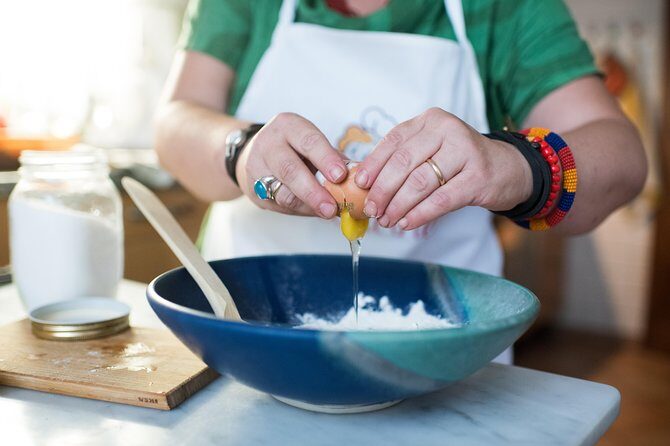
The experience runs about 3 hours, and it tends to follow a very human sequence: drinks first, then snacks and small plates, then cooking, then the meal you make.
Many evenings start outside with an aperitivo—a drink with snacks. In one account, it was enjoyed outdoors in a garden setting before anything got serious. That first hour is basically morale support. It gets you chatting, and it lowers the pressure of the kitchen part later.
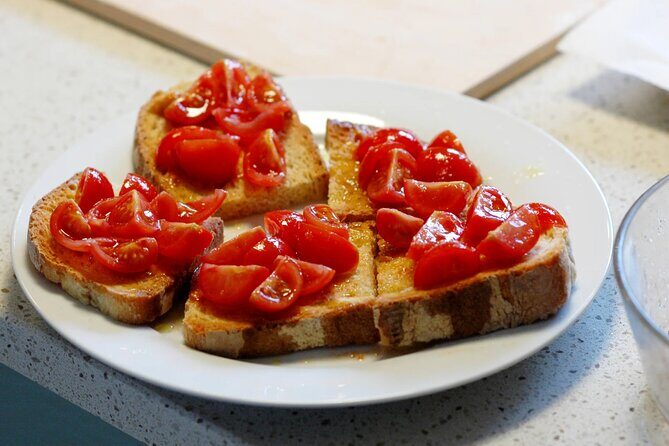
Then you move inside for an antipasti-style moment. In the examples you provided, that included things like crostini, homemade liver pâté, prosciutto, and fava beans with pecorino. It’s not just food filler. It’s a quick crash course in regional habits: Tuscan Italians eat in layers, and the meal rhythm is part of the lesson.
After the snacks, you’ll get to the heart of it: making pasta. One group learned two shapes—ravioli and tagliatelle—and that mix is a smart choice because it shows you two very different pasta experiences. Ravioli teaches shaping and filling discipline. Tagliatelle teaches rolling and cutting with a lighter touch.
Finally, you end with tiramisù. One review highlights the coffee and dessert details, with coffee-mocha style flavors showing up, and even additional Italian-style drinks like nocino and vin santo later in the evening. Not every home may serve the exact extras, but dessert is the constant.
You’ll finish back at the meeting point, so you’re not stuck figuring out what to do next in an unfamiliar neighborhood.
The Pasta Lesson You’ll Actually Remember at Home
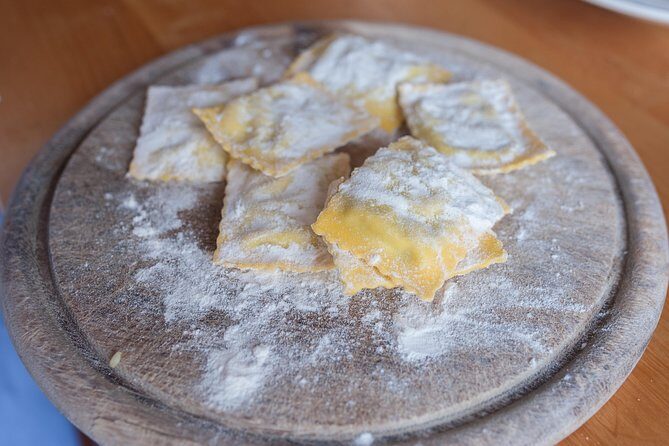
If your goal is skills you can repeat later, this is the right type of class. You’re not just learning a recipe. You’re learning the feel: dough texture, shaping, and the little timing checks that turn mistakes into comedy instead of disappointment.
The most praised pasta part in the information you shared is the chance to make more than one type. People specifically mention learning ravioli and tagliatelle. That combination is practical. At home, you can choose what matches your energy level:
- Ravioli is the hands-on project. It rewards patience and careful sealing.
- Tagliatelle is the confidence builder. Once you understand the thickness, it becomes a repeatable system.
And because you cook in a real kitchen in a real home, you get a better sense of how Italian home cooking works day-to-day. You learn how the host talks through the process, not just what the steps are. That difference is huge when you try it later.
Also, the meal is family-style. In the reviews, you sit down with your host and group to share what you make. That matters because it turns the pasta into a shared moment, not a one-off classroom task.
Tiramisu: The Dessert Half That Makes It Feel Like Italy
Tiramisu is famous, but it’s also easy to misunderstand. The point of doing it in a home class is that you see how it’s built and why it tastes the way it does.
In the accounts you shared, the tiramisù is described as a highlight—one person even calls it the best they’d had, with two helpings. That kind of reaction usually comes from more than sweetness. It often means the balance of coffee, cream, and structure feels right.
What you can expect: you’ll make the tiramisù with your host and then eat it at the end. The timing matters here. If you rush the dessert step or don’t let it set the way the home expects, the texture can suffer. In this format, the class structure supports the dessert part instead of treating it like an afterthought.
There’s also a social payoff. Cooking is active, then suddenly dessert slows everything down. People describe conversation around the table as lively and engaging. That’s when you’ll remember the flavors—because you’ll be talking while eating them, not just tasting quickly and leaving.
Aperitivo Snacks and Wine: Why the Before-Dinner Part Counts
Plenty of classes toss in a drink and call it hospitality. This one leans into the Italian habit of eating and drinking before a full meal starts.
The aperitivo isn’t just a perk. It’s a social bridge. You arrive as strangers, you get a drink and snacks, and then your host pulls you into the rhythm of the evening. That’s why reviews mention lively table conversation and a warm, family-like welcome.
In one detailed evening, the snack phase included crostini and homemade liver pâté, plus prosciutto and fava beans with pecorino. That’s a very Tuscan set of starters: savory, earthy, and built to pair with wine.
Wine shows up in the experience too. Reviews mention regional wine, and in at least one case, drinks like nocino and vin santo also appear. Again, not every home will do the exact same extras, but the pattern is consistent: your meal comes with pairing energy, not just plain water.
For you, that means the class feels like dinner, not a class you leave hungry. It also makes the cooking part easier to enjoy, because you’re already in the mood.





Meeting Your Cesarine Host (And Why Names Matter)
In this experience, your host is called a Cesarine, and the reviews make it clear that host personality matters a lot.
Some names that come up in the info you shared:
- Dina and Giorgio (with their family)
- Marzine
- Francesco
- Annamaria
That’s useful for your planning because it suggests you’re booking an evening centered on real people and real homes. If the option exists to request a host, one review specifically says to ask for Dina.
Even when names aren’t front and center in the booking flow, the bigger point holds: you’re not getting a distant lecture. You’re getting a teaching style that comes from daily cooking and family hosting.
And yes, you’ll probably ask questions. People mentioned silly American questions, and the tone described is patient and friendly. So come curious, not intimidated.
Small Group Size, English, and a Real Home Layout
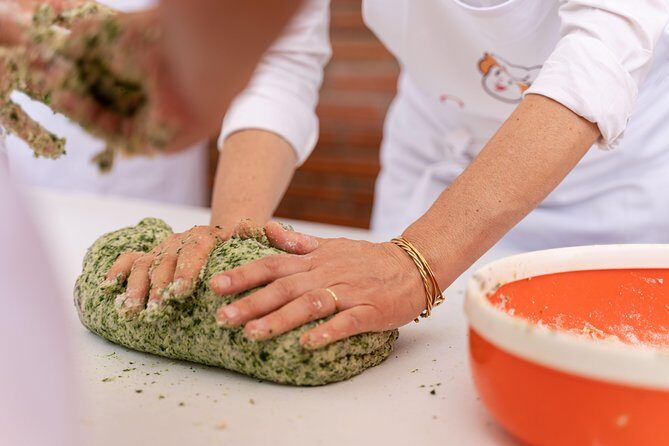
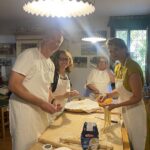
The class caps at 12 travelers, which is a big deal for something hands-on. In kitchens, one more person can quickly turn into clutter. A smaller group keeps things calmer, and it also gives you time to talk with your host.
Because it’s offered in English, you don’t need to translate every step in your head. That reduces the usual stress of cooking abroad, where the tricky part isn’t recipes—it’s communication.
One practical note: this is near public transportation and you meet at 52100 Arezzo, Province of Arezzo, Italy. And the end is back at the meeting point, which helps you keep your evening simple.
It’s also a good idea to treat this like dinner logistics, not like sightseeing. Wear comfortable shoes and plan to stay in your zone for the full 3 hours.
Food Safety and Distancing You’ll See in the Home
The experience includes specific guidance about sanitary rules. Hosts provide essential sanitary equipment such as paper towels and hand sanitizing gel, and guidance includes maintaining a 1 meter distance where needed. If distancing isn’t possible, masks and gloves may be used.
This tells you two things. First, the class is actually thinking about guest safety in a home setting. Second, you should arrive ready to follow simple rules without making a big fuss about it.
The good news: this kind of setup usually doesn’t ruin the vibe. It just makes the experience more comfortable for everyone.
The Le Cesarine Apron: A Practical Souvenir
Branded souvenirs can feel cheesy. This one doesn’t, because it ties directly to the event.
You’ll receive a branded Le Cesarine apron as a souvenir. It’s the kind of thing you can use at home, or at least keep as a reminder that you didn’t just eat in Tuscany—you learned how a family actually cooks.
That matters when you’re choosing between classes. You want something you’ll carry past the photo stage.
Price Check: Is $162.56 Good Value?
At $162.56 per person, this isn’t a bargain-basement activity. But look at what’s included and what that costs in real life.
You’re paying for:
- a small-group setting (max 12)
- hands-on instruction in a local home
- a pasta lesson with at least two pasta types
- a tiramisù dessert you make and eat
- an aperitivo drink and snacks
- shared food and dining time
- wine in the experience pattern
- a branded apron souvenir
- an English-speaking host for the lesson
If you’ve ever taken a cooking class in a larger venue, the price often feels similar or higher once you factor in ingredients, a guided meal, and time with a host. Here, you’re also getting the home-cooking angle, which is part of the value you can’t easily recreate on your own.
One more practical value point: bookings are often made about 50 days in advance. That suggests demand is steady. If you can plan early, you’re more likely to get the date you want.
So the honest take: it’s a splurge, but it reads like a fair splurge for a guided evening that ends with a meal you helped make.
Who This Class Suits Best (And Who Might Skip It)
This is a strong choice for you if:
- you want an authentic food experience in a real Tuscan home
- you like hands-on activities more than museum-style sightseeing
- you enjoy social meals with a host and a small group
- you specifically want pasta skills plus tiramisù, not just one dish
It might not be ideal if:
- you’re the type who hates cooking mess, noise, and shared kitchen space
- you want a more hands-off tasting-only format
- you’re short on time in Arezzo and need quick, low-structure activities
For most people, though, it’s the kind of evening that makes your trip feel personal. You’ll remember the table talk, the pasta shaping, and the tiramisù finish long after dinner ends.
Should You Book the Pasta and Tiramisu Class in Arezzo?
I’d book it if you’re looking for a guided, small-group Tuscan home cooking night with real results: ravioli, tagliatelle, and tiramisù, plus an aperitivo start and a shared meal.
Skip it if you only want a quick bite or you prefer big, hotel-style experiences with lots of space and predictability. This is intimate by design, because the setting is someone’s home.
If you do book, aim to go with curiosity and a relaxed attitude. You’re not there to be perfect. You’re there to learn how Italians feed people—and how that feeds back into your own memories of Arezzo.
FAQ
What is the duration of the Pasta and Tiramisu class in Arezzo?
It lasts about 3 hours.
How many people are in the class?
It’s limited to a maximum of 12 travelers.
Is the class offered in English?
Yes, the class is offered in English.
Where do we meet for the experience?
The meeting point is 52100 Arezzo, Province of Arezzo, Italy.
What food and drinks are included?
You’ll have an aperitivo of a drink and snacks, then you’ll make and eat pasta and tiramisù. Wine is mentioned as part of the experience.
Do I receive a souvenir?
Yes. You receive a branded Le Cesarine apron.
Are the homes close to public transportation?
The meeting area is near public transportation.
What health and safety rules should I expect?
Hosts provide sanitary equipment like paper towels and hand sanitizer. The guidance includes keeping 1 meter distance when possible, and wearing masks and gloves if you can’t.
What is the cancellation policy?
Free cancellation is available up to 24 hours before the experience starts for a full refund. If you cancel less than 24 hours before, you won’t get a refund.