REVIEW · FLORENCE
Artful Eight: 8 Wonders of Florence in Accademia, Center & Uffizi
Book on Viator →Operated by Floven Tours · Bookable on Viator
Florence’s top art comes fast. This compact tour strings together priority entry to the Accademia and Uffizi, so you spend your time looking, not waiting. I like the masterpiece-by-masterpiece plan, which helps you understand what you’re seeing without needing a crash course.
You also get a small-group format (maximum 9 people) and a mobile ticket, which makes the whole thing feel easy to manage in the real world. The main trade-off is the short 3-hour pace: you’ll hit the big names, but you won’t have hours for slow wandering.
In This Review
- Key Things to Know Before You Go
- A 3-Hour Florence Art Sprint: Why This Works
- Accademia Gallery Stop 1: Michelangelo, the Prisons, and Non-Finito
- What to watch for
- Accademia Stop 2: Seeing David with a Plan, Not a Map
- A practical tip
- Duomo and Baptistery on the Walk: Florence’s Cathedral Complex from the Outside
- Piazza della Signoria and Palazzo Vecchio: The Open-Air Stage
- Uffizi Gallery Highlights: From La Primavera to Tondo Doni
- Why this sequence is smart
- If you want to keep exploring
- How the Timing Feels: Pace, Breaks, and What You Might Miss
- Price and Value at $119.30: What You Pay For
- One “real world” consideration
- Who This Tour Fits Best (and Who Should Skip It)
- Book It or Pass: My Practical Recommendation
- FAQ
- FAQ
- How long is the Artful Eight tour?
- What time does the tour start?
- Where does the tour meet?
- Where does the tour end?
- What’s the price per person?
- Is there a mobile ticket?
- How big is the group?
- Which admissions are included?
- Is free cancellation available?
Key Things to Know Before You Go
- Priority access to two major galleries helps you bypass long waiting lines.
- Accademia is framed around Michelangelo before you meet him face-to-face.
- David gets a dedicated viewing slot, not just a quick pass.
- Duomo and Piazza della Signoria are explained from the outside, with walking context in between.
- The Uffizi route is built around landmark works: Botticelli, Leonardo, and Michelangelo.
A 3-Hour Florence Art Sprint: Why This Works
This is the kind of tour that makes sense if Florence is on your list and you also have other plans: gelato stops, a stroll to the river, maybe climbing a dome. You get a tight route that targets the most famous Renaissance art and uses guided explanation to give it meaning right away.
The design is practical. You’re not bouncing randomly from room to room. Instead, you move through a sequence that builds momentum: first Michelangelo’s world at the Accademia, then the cathedral-and-city context outside, then the Uffizi’s greatest hits. That order matters, because it keeps you from treating the masterpieces like isolated photos. You start to notice themes in technique and symbolism as you go.
I also like that the tour has a clear endpoint: it finishes inside the Uffizi Gallery, where you can optionally keep exploring on your own. That’s a good safety valve. If one room sparks your interest, you’re already in the right place to keep going.
You can also read our reviews of more tours and experiences in Florence.
- Tuscany Day Trip from Florence: Siena, San Gimignano, Pisa and Lunch at a Winery
★ 5.0 · 21,634 reviews

Accademia Gallery Stop 1: Michelangelo, the Prisons, and Non-Finito
The tour begins at the Galleria dell’Accademia, where the guide sets the stage with Michelangelo’s life and how his thinking shaped his sculptures. The spotlight here is the cluster of works known for the Prisons and Michelangelo’s non-finito (the unfinished-in-form idea). That’s not just trivia. It changes how you look.
When you understand non-finito, you stop seeing “unfinished” as a flaw and start seeing it as a process—like the artist is showing motion inside the stone. The explanation gives you permission to see the emotional intensity in those partially formed figures. Without that framing, you might walk past details thinking you missed something. With it, those rough edges start to make sense.
This first stop is scheduled for about 25 minutes, with admission included. That timing is realistic: enough time to get the concepts and still have the energy to focus on what’s in front of you next. If you’re the type who likes context before artwork, this opening works well.
What to watch for
If you’re prone to getting tired standing in crowds, take advantage of the fact that this tour front-loads the heavy hitters. You start strong, and you don’t save the most famous faces for the end of a long day.
Accademia Stop 2: Seeing David with a Plan, Not a Map
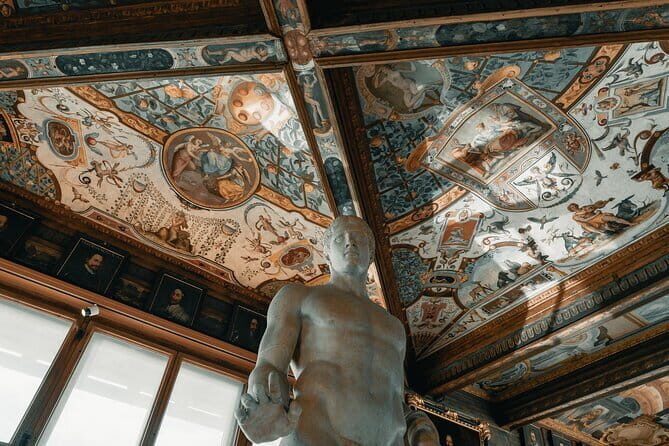
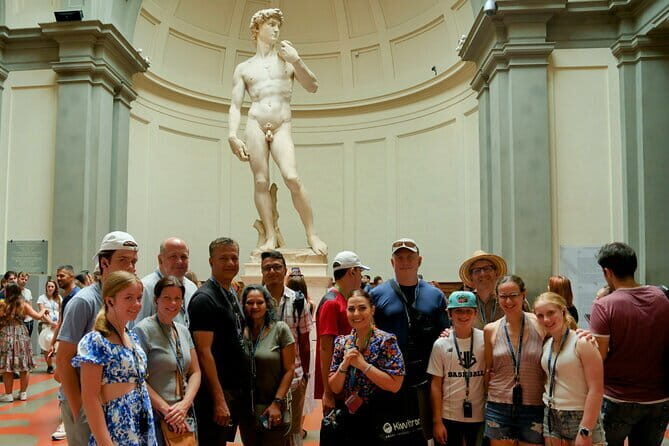
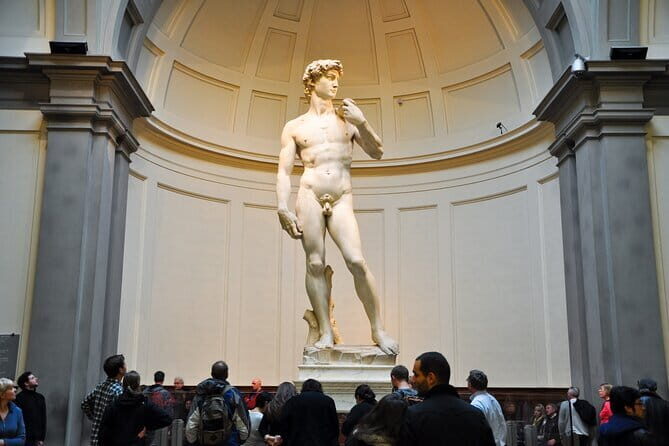
Then you go straight into the room dedicated to Michelangelo’s David. This stop is also about 25 minutes and includes admission. The important thing here is that David isn’t treated as a final stop where the guide rushes you through. The tour sets up the narrative first, so when you’re in front of David, you’re looking with a framework.
David is one of those works that can feel almost too famous—like you already know it. A guided visit helps you notice what’s actually happening: the force in the pose, the expression, the way the sculpture holds your gaze. Even if you’ve seen photos, standing close is a different experience, and the guide’s explanation helps you turn that closeness into understanding rather than just awe.
A practical tip
Wear comfortable shoes. The Accademia experience can involve standing and repositioning to see what the guide points out. This is a short tour, so you don’t want foot pain to cut your attention.
- Tuscany Day Trip from Florence: Siena, San Gimignano, Pisa and Lunch at a Winery
★ 5.0 · 21,634 reviews - The Best tour in Florence: Renaissance & Medici Tales – guided by a STORYTELLER
★ 5.0 · 12,316 reviews

Duomo and Baptistery on the Walk: Florence’s Cathedral Complex from the Outside
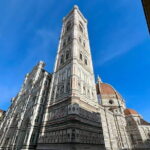
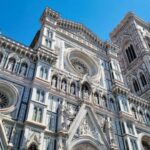
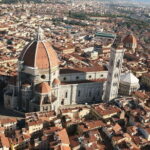
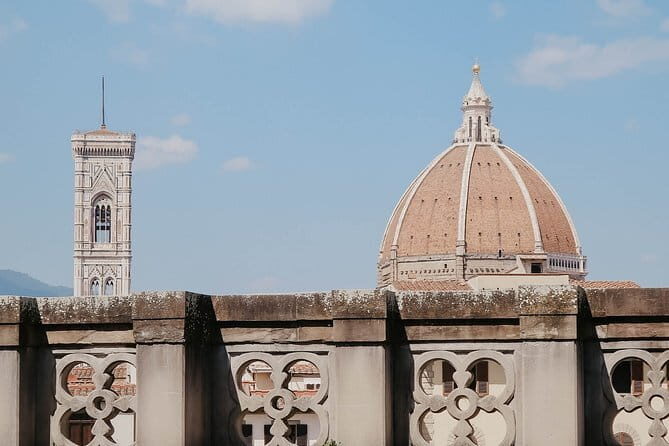
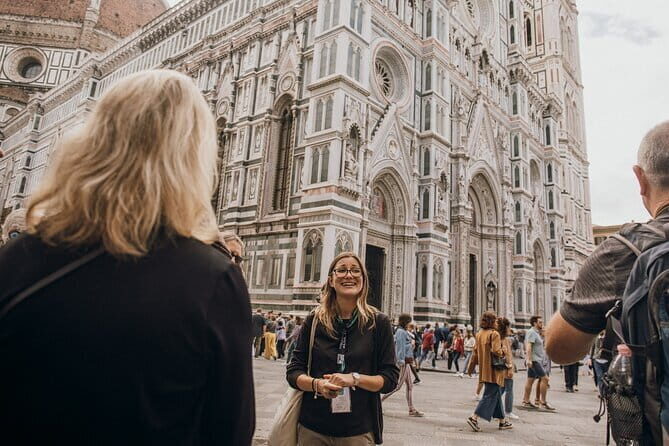
Between the Accademia and the Uffizi, you get a stop for an external explanation of the Duomo complex—including the Cathedral of Santa Maria del Fiore and the Baptistery. This part runs about 25 minutes, and admission is not included.
This matters because it gives you city orientation. Florence can feel like a maze of streets until you know what you’re looking at. Even without entering those buildings, you’ll leave with a clearer sense of what the Duomo area represents and why it’s such a focal point for the city.
The downside is also clear: this is an outside overview. If your dream is climbing, entering, or spending time inside specific Duomo spaces, you’ll need to plan that separately. Think of this as framing, not a full cathedral visit.
Piazza della Signoria and Palazzo Vecchio: The Open-Air Stage
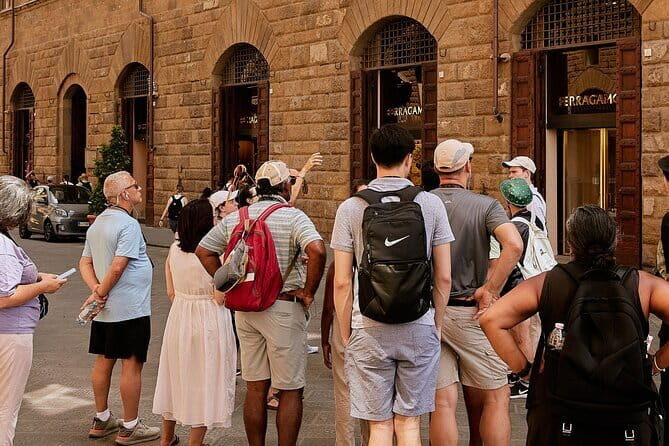
Another walk-in-context stop brings you to Piazza della Signoria, described as an open-air museum, and you also get context around Palazzo Vecchio. This is about 25 minutes, and again, admission is not included.
This is one of the best “light lift” parts of the itinerary. It helps you connect the artworks inside the museums to the public spaces where Renaissance power and identity were displayed. Piazza della Signoria isn’t only about monuments; it’s about how Florence presented itself—politically, artistically, and socially.
You also get a short break before entering the final museum. That pause helps because the Uffizi is a bigger undertaking than people expect. With a break here, you’re more likely to absorb what comes next instead of losing focus right at the moment the tour turns into artwork nonstop.
Uffizi Gallery Highlights: From La Primavera to Tondo Doni
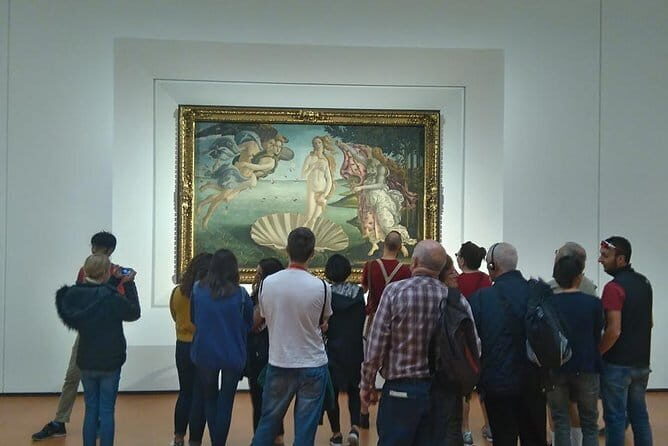
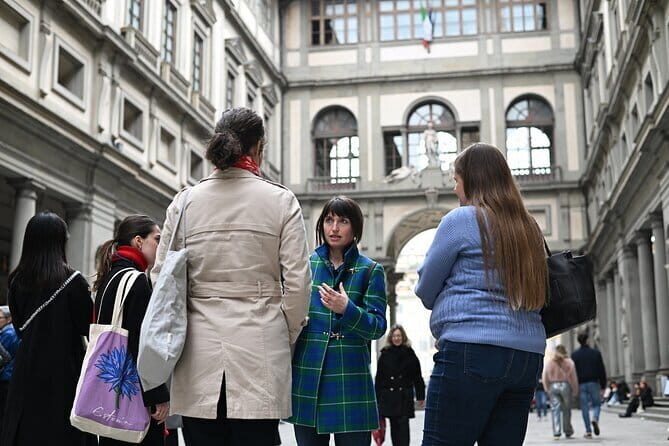
The Uffizi portion is the heart of the “8 wonders” promise, and the tour moves through it in a clean sequence. Each main artwork stop is about 20 minutes, and admission is included for the Uffizi rooms.
Here’s how the viewing path plays out:
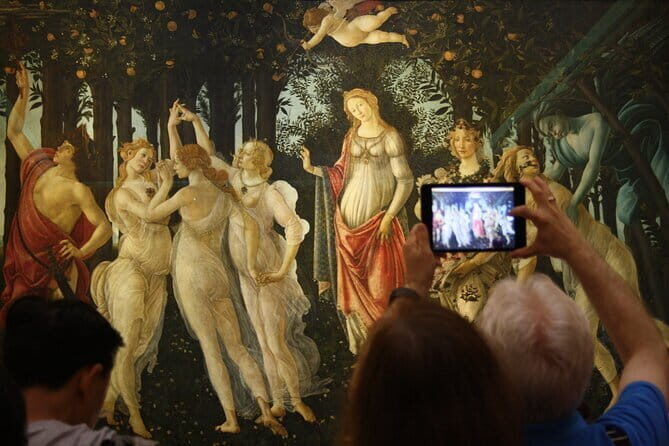
- Botticelli, La Primavera: You start with the famous image that’s basically shorthand for the visual language of the Renaissance—grace, elegance, and symbolic complexity. The guide’s explanations can help you see beyond the beauty and into the meaning people read in it.
- Botticelli, Venus: The tour continues with Botticelli’s Venus, another worldwide icon. If you’re trying to understand what makes Botticelli different—how he builds mood and form—this pairing with Primavera gives you a quick comparative education.
- Leonardo da Vinci, Annunciation: Then you shift from Botticelli to Leonardo with the Annunciation, focused on compositional balance and delicate detail. This is a great pivot because it highlights how Renaissance artists shared themes but pursued them in different ways.
- Michelangelo, Tondo Doni: The tour ends with Michelangelo’s Tondo Doni, the circular panel featuring the Holy Family. The guide’s framing of its intensity and dynamism helps you understand what the circular shape adds to the composition. By the time you reach this, you’ve moved from idealized beauty to emotional intensity—so the ending lands.
Why this sequence is smart
You’re not stuck with only one style. You get Botticelli’s lyrical approach, Leonardo’s harmonizing composition, and Michelangelo’s emotional energy. That variety is exactly what makes a short tour feel satisfying instead of exhausting.
If you want to keep exploring
Since the tour concludes inside the Uffizi, you can follow your curiosity afterward. If any artist or theme caught your attention during the guided stops, you’ll already know where to look next.
How the Timing Feels: Pace, Breaks, and What You Might Miss
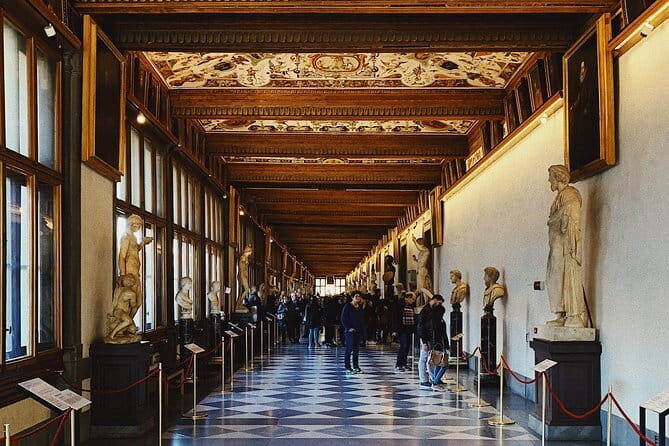
This is a 3-hour experience, so it’s best thought of as a highlights route. The schedule includes time for explanations, viewing, and movement between stops. That means you’ll see the big works, but you won’t have hours to linger with every detail.
You do get small advantages:
- Guided context at the Accademia helps you read the sculpture instead of just staring.
- The Duomo and Piazza stops give orientation and city meaning without adding ticket time.
- A short break before the Uffizi helps you stay sharp for the final museum sprint.
What you might miss is equally important. If you love museums the way some people love hiking—slow, repeated stops, long contemplation—this may feel like a fast walk through major stops rather than a full experience. If you know your personal style is “I want depth,” pair this tour with one museum visit on another day.
Price and Value at $119.30: What You Pay For
At $119.30 per person, the value is strongest when you factor in two things:
- Priority access to the Accademia and the Uffizi
- Admission included for the Accademia highlights and the Uffizi artworks in the itinerary
Meanwhile, the Duomo complex and Piazza della Signoria explanations are outside, so admission isn’t included for those parts. In other words, you’re paying mostly for time saved and for guided access to the museum heavyweights.
If your goal is Florence’s most famous art in one compact afternoon, this price can feel reasonable. If your goal is art history depth and lots of optional detours, you might do better using that money for extra un-guided time plus one separate focused tour.
One “real world” consideration
On at least one disrupted date, an unexpected Uffizi staff strike was mentioned as the reason for cancellation, and refund timing took longer than the ideal. That’s not something you can plan for, but it’s a reminder: museum operations can change. If your trip is tight, keep a close eye on updates.
Who This Tour Fits Best (and Who Should Skip It)
I think this tour is a strong match if you want:
- A guided Florence art hit list with priority entry
- A structured route that keeps you from getting lost in two major museums
- Explanations that connect artwork to meaning, not just a label on the wall
It also tends to suit families with young teens who need focus and momentum. The format is built for attention spans that don’t want to spend half a day in one gallery.
You should consider skipping or supplementing if:
- You want to spend long, quiet time inside the Duomo buildings (this is outside context)
- You prefer a slower museum rhythm with fewer stops
- You’re the type who gets annoyed by standing and repositioning around major crowd magnets (David and the Uffizi rooms are popular, even with priority access)
Book It or Pass: My Practical Recommendation
Book this if you want an efficient, high-impact Florence afternoon: Accademia first, David next, then city framing outside, then the Uffizi’s big names in a logical order. The priority access plus included admissions for the museum segments is what makes it feel like real value rather than just a walking lecture.
Pass if you’re chasing museum depth or you want to build your own custom day around the Duomo and the Piazza with additional ticketed visits and long pauses.
If you’re deciding between doing nothing or doing this, I’d lean toward this. It’s one of the more sensible ways to taste Florence’s Renaissance greatest hits without burning your day in lines.
FAQ
FAQ
How long is the Artful Eight tour?
It runs for about 3 hours.
What time does the tour start?
The start time listed is 2:00 pm.
Where does the tour meet?
The meeting point is Via Ricasoli, 113, 50121 Firenze FI, Italy.
Where does the tour end?
It ends inside the Uffizi Gallery at Piazzale degli Uffizi, 6, 50122 Firenze FI, Italy.
What’s the price per person?
The price is $119.30 per person.
Is there a mobile ticket?
Yes. The tour uses a mobile ticket.
How big is the group?
The maximum group size is 9 travelers.
Which admissions are included?
Admission tickets are included for the Accademia Gallery stops and the Uffizi Gallery stops. The Duomo complex and Piazza della Signoria portions are marked as not included for admission.
Is free cancellation available?
Yes. You can cancel up to 24 hours in advance for a full refund.


More Tour Reviews in Florence
- Tuscany Day Trip from Florence: Siena, San Gimignano, Pisa and Lunch at a Winery
★ 5.0 · 21,634 reviews - The Best tour in Florence: Renaissance & Medici Tales – guided by a STORYTELLER
★ 5.0 · 12,316 reviews