REVIEW · FLORENCE
Dan Brown’s INFERNO Walk with a Local
Book on Viator →Operated by LocalBini - The go-to platform for Experiences by Locals in Europe · Bookable on Viator
Florence gets a darker storyline.
This walking tour uses Dan Brown’s Inferno as your lens, turning familiar landmarks into scenes you can mentally map as you go. I like the fact it’s run as an intimate small-group experience (up to 8 people), which usually means you get real back-and-forth questions instead of shout-and-sprint sightseeing. I also like that the route hits heavyweight Florence sights tied to Medici power, Renaissance art, and the iconic river crossing you see in a thousand photos.
One thing to watch: the Inferno connection and how long you spend in certain spots can feel uneven, depending on timing and the guide’s style. A couple of people were disappointed about missing the Boboli Gardens portion they expected, so I’d set your expectations to learn through the story plus see key exteriors, then confirm what level of Boboli time you’ll actually get.
In This Review
- Key Points Worth Booking For
- Florence’s Inferno Storyline, Without the Big-Tour Chaos
- What I like for your experience
- What to consider before you go
- Starting at Fontana del Porcellino: The Boar-Snout Tradition
- Medici Tombs and Michelangelo’s New Sacristy Stop
- An Octagonal Marble Facade Moment You Won’t Skip
- A 13th-Century Palace Now an Art Museum
- Loggia dei Lanzi: Renaissance Sculptures in the Open Air
- Ponte Vecchio: Roman Origins and a Legendary Medieval Arched Bridge
- From Royal Palace History to Boboli’s Garden Finale
- My practical advice
- Price: Is $161.44 Worth It for This 1.5-Hour Walk?
- What the Best Guides Tend to Do (Rita, Mattia, and Your Role)
- How you can help the tour work better for you
- Getting the Timing Right: 90 Minutes Means You Must Pick Priorities
- Who Should Book This Inferno Walk (and Who Might Regret It)
- Should You Book This Dan Brown’s Inferno Walk With a Local?
- FAQ
- How long is the Dan Brown’s Inferno Walk with a Local?
- Where does the tour start?
- Where does the tour end?
- What’s the group size limit?
- Does the tour use a mobile ticket?
- Is there an option for morning or afternoon?
- What’s the price per person?
- Are snacks or drinks included?
- Is confirmation provided at booking?
- Can I bring a service animal?
Key Points Worth Booking For
- Inferno framing: you’ll connect the book’s mood to real Florence landmarks along the way
- Small group feel: up to 8 travelers, so the pace stays relaxed and questions are doable
- Classic Florence hits: Ponte Vecchio, Loggia dei Lanzi, and Boboli Gardens anchor the walk
- Great start point: Fontana del Porcellino in Piazza del Mercato Nuovo is an easy meet-up
- Rita and Mattia examples: guides in the mix can be highly knowledgeable and story-minded
Florence’s Inferno Storyline, Without the Big-Tour Chaos
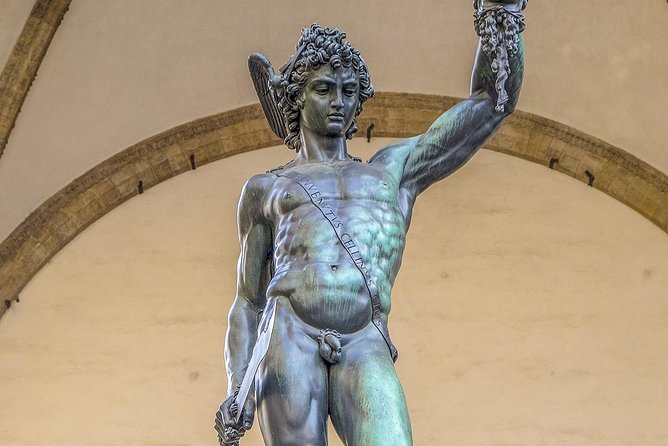
If you like the idea of walking through Florence with a specific storyline in your head, this tour fits the bill. The pitch is simple: you’ll follow in Robert Langdon’s footsteps and use the themes from Inferno to look closer at what Florence built—who paid for it, who commissioned it, and what those monuments were meant to project.
The value here isn’t just the stops. It’s the way you’re encouraged to watch. Instead of treating monuments like checkboxes, you’re meant to connect them to a darker, more conspiratorial mood. That changes the feel of even familiar places like the river crossing.
You can also read our reviews of more tours and experiences in Florence.
- Tuscany Day Trip from Florence: Siena, San Gimignano, Pisa and Lunch at a Winery
★ 5.0 · 21,634 reviews



What I like for your experience
I like that the group stays small (max 8), because Florence walking tours often get crowded in the wrong places. You’ll also start and end in iconic areas—Fontana del Porcellino to the Boboli side—so you’re not constantly fighting transit decisions.
What to consider before you go
For some people, the biggest letdown is mismatch between what they expect from the Inferno angle versus what they get in actual narration. One person said Dan Brown was barely mentioned, and another felt they had to keep asking how the sights related. So if your top priority is a heavy book-to-scene breakdown, go in ready to ask your guide direct questions.
Starting at Fontana del Porcellino: The Boar-Snout Tradition
You begin at the Fontana del Porcellino in Piazza del Mercato Nuovo. This is one of those Florence moments that’s easy to spot and easy to find, which matters on the first day of your trip when your brain is still trying to orient to street names.
The tour starts with a fun local ritual: rub the boar’s snout. The note about coming back to Florence is the kind of silly superstition that makes meeting points feel friendlier. Even if you don’t care about luck, it’s a quick, low-pressure way to kick off the story.
From here, you shift from street-level Florence to the bigger question the tour keeps asking: why did powerful families and patrons build these exact spaces? That’s the thread that (when the guide leans into it) makes a walking tour more memorable than a list of landmarks.
Medici Tombs and Michelangelo’s New Sacristy Stop
Next up is the domed landmark containing tombs of the Medici family, including Michelangelo’s New Sacristy. Even if you’re not a museum-method person, Medici sites tend to hit a useful balance: power, art, and symbolism in the same room (or the same complex).
This stop matters for Inferno fans because the Medici story sits at the intersection of religion, politics, and wealth—exactly the kind of overlap that fuels conspiracy-flavored thinking. You’ll get context that helps you recognize what you’re looking at beyond the surface design.
Practical note: the tour timing is short (about 1 hour 30 minutes), so don’t expect a deep museum day. Plan on learning through the guide’s explanation and absorbing what you can see from the route.
- Tuscany Day Trip from Florence: Siena, San Gimignano, Pisa and Lunch at a Winery
★ 5.0 · 21,634 reviews - The Best tour in Florence: Renaissance & Medici Tales – guided by a STORYTELLER
★ 5.0 · 12,316 reviews



An Octagonal Marble Facade Moment You Won’t Skip
Then you’ll learn the history behind an octagonal basilica with a striking marble facade. The key here isn’t just architecture trivia. It’s how Florence communicates meaning through stone—shape, surface, and layout working like a visual message.
An octagonal building is unusual enough that it naturally triggers the kind of mental questions this tour wants you to ask. Why this shape? Why here? Why does it look the way it does? When the guide connects these features back to the Inferno mood, it feels like the storyline is helping you read the city like a map.
If you’re the type who needs explicit story tie-ins at every stop, you might want to ask early: how is the guide connecting this building to the Inferno lens?
A 13th-Century Palace Now an Art Museum
After that, you’ll head to a 13th-century palace that’s now an art museum. Palaces in Florence aren’t only about grandeur. They’re about status and control—who had the power to commission art, and how architecture reinforced that message.
For your experience, this is one of the most useful stops for learning. Even without going deep into galleries, the exterior and layout help you understand why Florence became the stage for Renaissance ambitions. And since Inferno thrives on the idea of hidden systems and high-level influence, patronage stories fit the vibe well.
Just remember: art museum time isn’t guaranteed here. The tour is designed as a walk with explanations, not as a full admission-based museum circuit.
Loggia dei Lanzi: Renaissance Sculptures in the Open Air
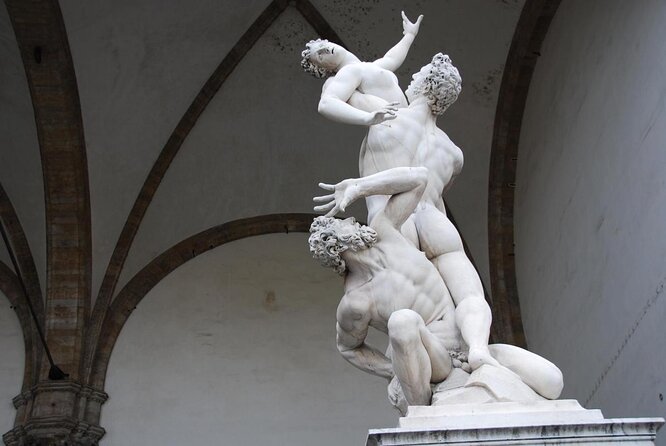
One stop that hits hard in the highlights is Loggia dei Lanzi, described as a 14th-century ceremonial building with an open-air gallery of Renaissance sculptures. This is one of the easiest places to understand why the tour uses art as a narrative tool.
Why? Because outdoor sculpture works like a stage. You can see pieces from multiple angles as you move, and the guide can point out symbolism and style in a way that feels grounded rather than rushed. You’ll get the chance to slow down in short bursts, which is exactly what you need when you’re walking for 90 minutes.
If you’re going during warmer hours, outdoor stops also come with the tradeoff of sun and wind. Bring water and a hat if you tend to overheat—nothing in the tour info mentions snacks or drinks.
Ponte Vecchio: Roman Origins and a Legendary Medieval Arched Bridge
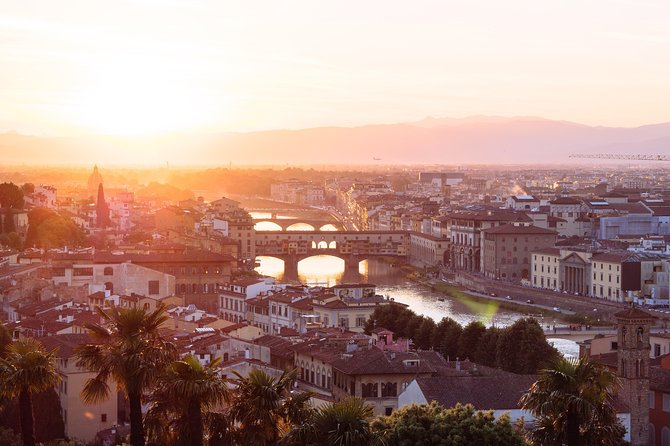
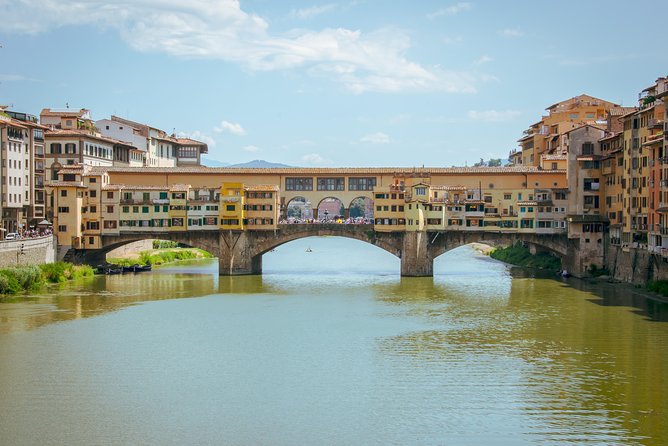
Next comes the legendary medieval arched river bridge with Roman origins—Ponte Vecchio. This is the kind of Florence landmark that’s famous for a reason, and the story framing helps you look at it differently than the usual postcard glance.
The bridge is a strong anchor because it’s both historic and lived-in. It’s where you naturally pause, take photos, and absorb the flow of the river area. And for a tour that’s built around a suspenseful literary lens, crossing something legendary feels like a scene change.
This is also a good moment to check in with yourself: do you want more narration tied to Inferno, or are you enjoying the history-for-history’s-sake approach? You can steer that by how you ask questions.
From Royal Palace History to Boboli’s Garden Finale
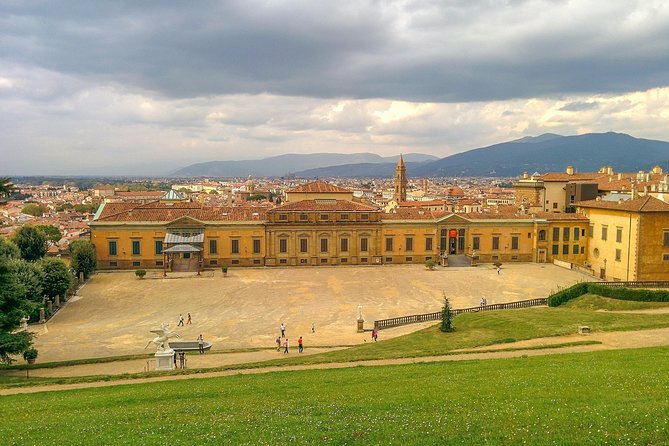
You’ll then focus on the history behind a magnificent Renaissance royal palace and land in the 15th–16th century gardens with Renaissance statues and ornate fountains—Boboli Gardens.
This is the part where you should be most careful about expectations. One disappointment centered on the gardens being missed compared to what someone expected, and the clarification that came with that feedback suggested gardens might be treated as a pass-by rather than a full included stop. With the tour ending at Boboli Gardens, it sounds like a garden finish is part of the plan—but the amount of time you get may vary.
My practical advice
If Boboli Gardens is your main reason for booking, I’d confirm what you’ll actually do there:
- Will you get a proper walkthrough view?
- Or is it more of a photo-and-exit finale?
That one detail can turn a great ending into a frustrating one if you’ve planned your day tightly.
Price: Is $161.44 Worth It for This 1.5-Hour Walk?
At $161.44 per person, you’re paying for three things: a guided story format, a small group cap, and a route built around top Florence landmarks. For a 90-minute experience, that can still be good value if you prefer guided context over self-guided wandering.
But the price also means you should be clear about what’s included—and what isn’t. Snacks or drinks are not included, and the tour description doesn’t suggest it’s a long, admissions-heavy day. That matters because Florence’s major sights often involve separate entry decisions and optional add-ons.
So the best way to judge value for yourself is this: do you want someone to point out the meanings and connect the Inferno lens, or would you rather spend that money on museum tickets and a self-paced day?
What the Best Guides Tend to Do (Rita, Mattia, and Your Role)
From the guide experiences described, the tour can land in different places depending on style. One guide, Rita, was appreciated for addressing all stops well. Another, Mattia, was praised for knowledge and for adding connections beyond Florence’s core history.
At the same time, at least a couple of people wanted stronger direct links between the sights and Inferno. That tells you something useful: your experience is influenced by how interactive you are.
How you can help the tour work better for you
- Ask early: can you point out how this stop connects to the Inferno storyline?
- If you care about the book angle, say so up front in a friendly way.
- Keep your patience if you’re in a tight group and the guide has to manage the flow.
In other words: this is a walking tour where your questions shape the payoff.
Getting the Timing Right: 90 Minutes Means You Must Pick Priorities
The whole experience runs about 1 hour 30 minutes, with a choice of morning or afternoon tour times. That duration is perfect for a first pass at Florence themes, but it’s not designed to be your only sightseeing plan.
If you end at Boboli Gardens, decide ahead of time whether you want:
- a quick garden look and then move on, or
- a longer garden block later with extra time.
Also, since it’s a walking tour, wear comfortable shoes. The tour is near public transportation, but walking is still the main activity.
Who Should Book This Inferno Walk (and Who Might Regret It)
This is a great fit if you:
- love Florence history but want it explained in a story-driven way
- enjoy small groups and dislike rushing
- want a structured route that covers key sights in a short time
You might want to think twice if you:
- need a constant, explicit Dan Brown narration at every stop
- planned your day expecting Boboli Gardens to be a long, full visit
- get frustrated when a guide moves ahead and you lose audio (this issue came up in one account)
If your expectations are set as Inferno-themed guidance with major landmarks—not as a full, scripted book reenactment—then you’ll likely feel more satisfied.
Should You Book This Dan Brown’s Inferno Walk With a Local?
I’d book it if you want a small-group Florence walk with a recognizable storyline and you’re happy to treat Boboli Gardens as the finish rather than a guaranteed long linger.
I’d hesitate if Boboli Gardens and a heavy, constant Inferno narration are your non-negotiables. In that case, confirm what “final stop” means in practice and ask how often Dan Brown connections happen during the walk.
Bottom line: this tour is at its best when you’re curious, you ask questions, and you enjoy seeing Florence through a slightly darker literary lens.
FAQ
How long is the Dan Brown’s Inferno Walk with a Local?
It lasts about 1 hour 30 minutes.
Where does the tour start?
The meeting point is Fontana del Porcellino, Piazza del Mercato Nuovo, 50123 Firenze FI, Italy.
Where does the tour end?
The tour ends at Boboli Gardens, 50125 Florence, Metropolitan City of Florence, Italy.
What’s the group size limit?
The experience has a maximum of 8 travelers.
Does the tour use a mobile ticket?
Yes, the tour offers a mobile ticket.
Is there an option for morning or afternoon?
Yes, you can choose from morning or afternoon tour times.
What’s the price per person?
The price is $161.44 per person.
Are snacks or drinks included?
No, snacks, food, and drinks are not included.
Is confirmation provided at booking?
Yes, confirmation is received at the time of booking.
Can I bring a service animal?
Yes, service animals are allowed.



More Tour Reviews in Florence
- Tuscany Day Trip from Florence: Siena, San Gimignano, Pisa and Lunch at a Winery
★ 5.0 · 21,634 reviews - The Best tour in Florence: Renaissance & Medici Tales – guided by a STORYTELLER
★ 5.0 · 12,316 reviews