REVIEW · FLORENCE
Discover the best of Florence: an accessible 2 hours walking tour
Book on Viator →Operated by WanderAbility · Bookable on Viator
Florence can feel huge fast. This short walk makes it manageable, with a small group (max 10) and a guide who adds real context as you move from one iconic square to the next. I especially like the intimate pace and how the route threads together Florence’s layers, from Roman foundations to Renaissance showpieces. One thing to plan for: tickets are not included for the Duomo-area stop, so you may need to budget extra if you want to go inside.
What makes this experience work well is the accessibility options baked in. You can request sign language interpretation and tactile support, and the route is designed for a wheelchair-friendly walk where cars can’t go. I also like that you get headsets when the group is bigger than four, so you do not have to strain your ears while standing in the middle of the action.
It is also a solid value for people who want highlights without turning it into a full day. For $126.03 per person, you get a licensed guide, a focused 2-hour route, and a clear start-to-finish plan ending at Ponte Vecchio. Just consider the timing: each main stop is about 30 minutes, so you get great orientation, not unlimited time at every monument.
In This Review
- Key things that make this Florence walk worth your time
- From Roman roots to Renaissance icons: the point of this 2-hour route
- Meeting Caffè Gilli and starting the walk without stress
- The ancient Forum start: where Florentia’s story begins
- Piazza del Duomo: Florence’s religious power, up close and practical
- Torre della Pagliazza: medieval stories in the city’s older fabric
- Piazza della Signoria: civic Florence as open-air sculpture
- Ponte Vecchio: the oldest bridge and the view that ends the tour well
- Accessibility that actually helps: routes, support, and group size
- Price and value: what $126.03 buys you in real terms
- Who this tour is best for
- Should you book this accessible Florence highlights walk?
- FAQ
- How long is the walking tour?
- What is the maximum group size?
- Where does the tour start and end?
- Is the tour offered in English?
- Are admission tickets included?
- Is this tour wheelchair-friendly?
- Can I request accessibility support like sign language or tactile help?
- What is the cancellation policy?
Key things that make this Florence walk worth your time
- Small-group feel with a maximum of 10 people, so it stays personal.
- Accessibility on request, including sign language interpretation and tactile support for blind people.
- Headsets for groups larger than four, which matters in crowded squares.
- A route you can actually follow, with a start at Caffè Gilli and an end at Ponte Vecchio.
- Highlights in the right order, from the ancient Forum area to the medieval heart of Florence and into Renaissance squares.
- Entry costs are clear, so you know what is included vs. what you’ll pay separately.
From Roman roots to Renaissance icons: the point of this 2-hour route
If this is your first time in Florence, you need two things: orientation and momentum. This walk gives you both. You start near the ancient Forum, the center of the Roman city of Florentia, then you gradually shift into Florence’s later identity—church power, medieval streets, civic Renaissance art, and the postcard-famous bridge.
The magic is the flow. Instead of seeing monuments as random photo stops, you get a “why this place looks like this” explanation as you walk. That helps you recognize patterns: Florence kept rebuilding the same city around itself, so the stories overlap. In just two hours, you get a sense of how the power moved—from empire to church to city government to everyday commerce along the Arno.
This format is also practical. Squares are compact but busy. A short guided walk helps you avoid the common trap of wandering for hours, then realizing you never got the key points connected in your head.
You can also read our reviews of more tours and experiences in Florence.
- Tuscany Day Trip from Florence: Siena, San Gimignano, Pisa and Lunch at a Winery
★ 5.0 · 21,634 reviews

Meeting Caffè Gilli and starting the walk without stress
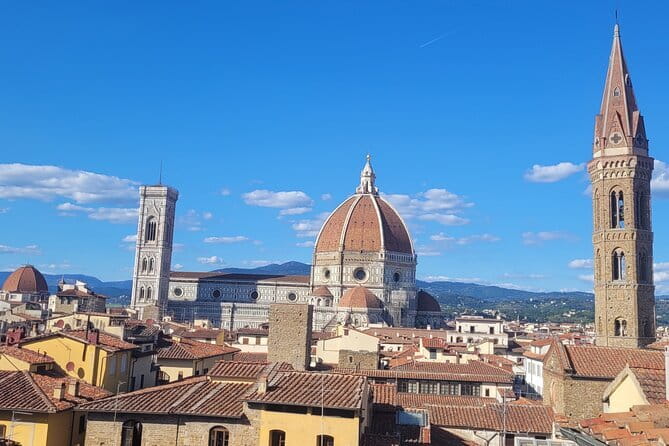
Your tour starts at Caffè Gilli, Via Roma 1r, 50123 Firenze. It is a straightforward landmark-style meeting point, which matters because Florence crowds can make “Meet me near the street” into a scavenger hunt.
From there, you are headed toward the heart of the old city and major sights, with the tour ending at Ponte Vecchio. That end point is a smart choice: it anchors your walk with one of the most recognizable views in town, and you can naturally continue exploring afterward without needing to backtrack.
Because it is near public transportation, you can also fit it easily into a day plan. If your schedule is tight, you can do this early to get bearings, then return later to linger on the areas you liked most.
And if you need accessibility support, the tour is set up for it. Service animals are allowed, and you can request assistance such as tactile support and sign language interpretation.
The ancient Forum start: where Florentia’s story begins
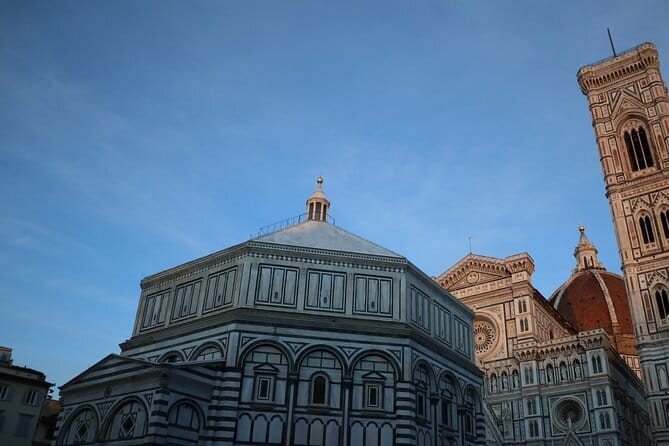
You begin at the ancient Forum area—Florentia’s Roman city center. Even if you do not see a full ruin set like you might in other Roman cities, the idea here is to reset your mental map. Florence did not start as a Renaissance postcard. It started as a functioning city, with public space at its core.
This opening also helps the rest of the tour click. When you walk into later areas—religious Florence, civic Florence, and the bridge-world of trade—the Roman foundation is like the underlayer of the whole painting. You start learning to read the city with more than your camera.
In other words: it is a great warm-up stop. You are not yet overwhelmed by the biggest sights. You get context first, then the monuments hit harder.
Piazza del Duomo: Florence’s religious power, up close and practical

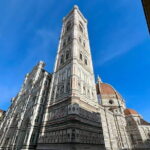
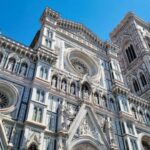
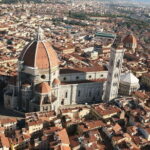
Next you reach Piazza del Duomo, the religious center of Florence. This is where the skyline does its thing: the Cathedral complex, the Baptistery, the Bell Tower, and Brunelleschi’s Dome dominate your field of view.
What I like about this stop is how it frames Florence as a place where faith, engineering, and civic pride all shared the same stage. You can see how the city treated the church not as a background, but as a statement.
Here is the practical consideration: admission is not included at this stop. So you will want to decide ahead of time whether you want to go inside specific areas and spend time coordinating entry. Since your time with the guide is about 30 minutes here, I’d treat this stop as a choose-your-own-depth moment:
- If you want exterior viewpoints and big-picture orientation, you can do that easily inside the tour window.
- If you want interior access, plan for extra time outside this 2-hour slot.
Also, this is one of the busiest zones in Florence. If you prefer calmer sightseeing, go with the mindset that this is an orientation stop first. You’ll come back later with a better sense of what you want to see in more detail.
Torre della Pagliazza: medieval stories in the city’s older fabric
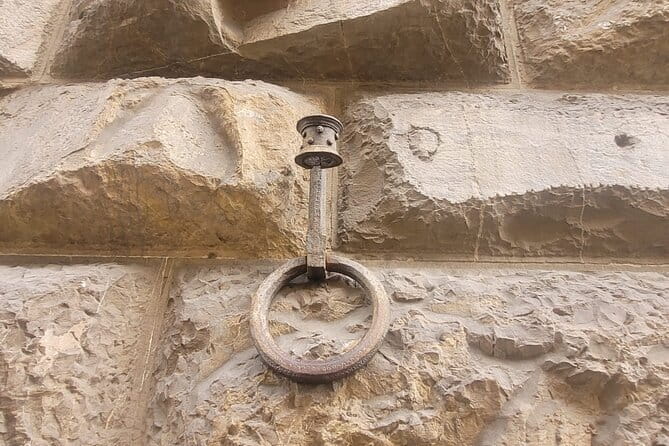
Then you move to Torre della Pagliazza, set in the medieval heart of Florence. This stop is less about one single famous building and more about atmosphere—stories and legends tied to the way the city lived, not just how it was represented.
A medieval tower stop works well on a short walk because it gives you a different kind of understanding. Instead of focusing only on art and monuments, you get reminders that Florence was also a lived-in place with local memory, folklore, and everyday concerns.
The other benefit: it breaks the crowd intensity a bit compared to the absolute epicenters. Even when you are still in central Florence, the shift from the Duomo complex to a medieval corner keeps your attention fresh.
- Tuscany Day Trip from Florence: Siena, San Gimignano, Pisa and Lunch at a Winery
★ 5.0 · 21,634 reviews - The Best tour in Florence: Renaissance & Medici Tales – guided by a STORYTELLER
★ 5.0 · 12,316 reviews

Piazza della Signoria: civic Florence as open-air sculpture

Next up is Piazza della Signoria, dominated by Palazzo Vecchio and filled with Renaissance sculptures. This square feels like an open-air museum, and that is exactly why it fits this short format. You get civic power in architecture, plus art in the public realm.
This is one of those places where guided context matters. If you only glance, you might miss how the sculptures and the building speak to government and identity. With a good guide, you start noticing themes—what the city wanted to project and how it used art to communicate authority.
You also get a human pacing advantage. In this part of Florence, people tend to pile up for photos and drift away. Having a guide helps you keep moving in a meaningful order, so you do not end up with a random collection of images and no connections.
Plan on enjoying the square’s energy without trying to do everything. Your guided window is about 30 minutes, which is enough to orient you and point you to what’s worth returning to.
Ponte Vecchio: the oldest bridge and the view that ends the tour well
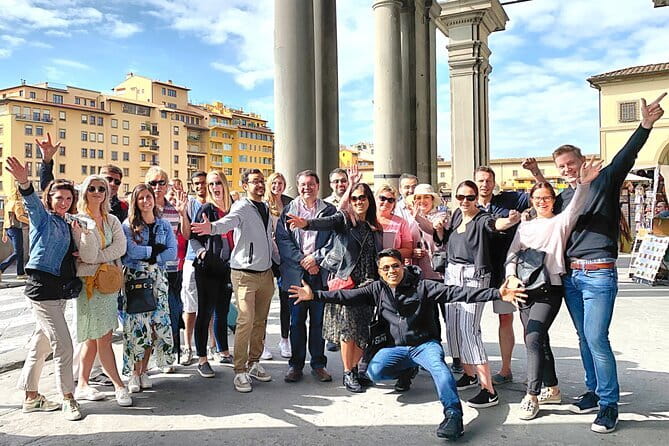
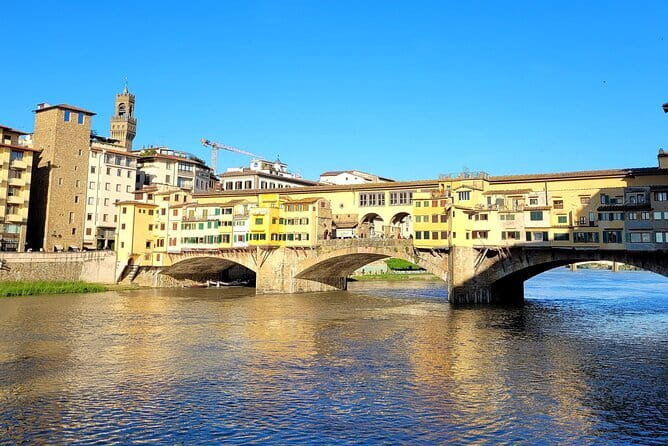
Finally, you reach Ponte Vecchio, Florence’s oldest and most iconic bridge spanning the Arno River. This is the grand finish you can feel in your bones. The bridge’s medieval design is part of the charm, but the real payoff is the sense of place: you’re still in the city’s core, not on the edge of it.
Ponte Vecchio is also famously tied to jewelry shops, and the combination of commerce and old-world structure makes it more than a postcard. It’s a living street, even if it performs for visitors.
And because the tour ends here, it is easy to extend your day. You can keep walking along the river, grab a drink nearby, or simply linger to take in the views with less pressure.
This is also a nice accessibility choice. The route is described as wheelchair-friendly and designed to go where cars can’t go, which is the exact kind of planning you want around a place that can be packed shoulder-to-shoulder.
Accessibility that actually helps: routes, support, and group size
Florence can be hard on mobility and sensory needs, because crowds and uneven streets are the rule, not the exception. This tour is designed with accessibility in mind in several ways.
First, you can request sign language interpreters and tactile support. That is not just a vague promise; it is specifically mentioned as available on request. Second, the tour is wheelchair-friendly and aims to take you along a walking route where cars can’t go, which usually means fewer barriers and a more predictable pedestrian experience.
Group size matters, too. With a maximum of 10 travelers, your guide can manage pace and space more realistically than on giant tours. And if your group is larger than four, you get headsets, which helps hearing clarity when you are standing near busy areas.
Service animals are allowed, and the tour is near public transportation, which often makes the biggest difference for planning a day in Florence. Less friction means more time enjoying the sights rather than dealing with logistics.
Price and value: what $126.03 buys you in real terms
At $126.03 per person, this is not the cheapest way to see Florence highlights. But it is priced like a focused guided experience: a licensed guide, small group size, and support systems (headsets for larger groups, accessibility options on request).
The value gets clearer when you compare it to DIY touring. Florence is famous for busy squares and confusing sight lines. Without a guide, you might spend time figuring out where to stand, what to prioritize, or how to connect the Roman-to-medieval-to-Renaissance timeline. Here, the guide’s job is to connect it fast.
One cost consideration is admissions. For Piazza del Duomo, admission tickets are not included. That does not make the tour bad—it makes it transparent. It means you can decide how much depth you want inside the complex instead of feeling pressured into paying everything upfront.
If you want a short, structured introduction that also respects accessibility needs, the price can be very reasonable.
Who this tour is best for
This tour is a great match if:
- You want a high-impact Florence overview in about two hours.
- You prefer small-group attention rather than big-bus chaos.
- You need accessibility accommodations such as sign language interpretation or tactile support.
- You want to end at Ponte Vecchio so you can keep exploring afterward.
- You are traveling with mixed ages or different mobility needs and want a route that accounts for that.
It is also a good choice for first-timers who feel overwhelmed by how many sights are packed into the historic center.
If you are the type who loves to linger for long periods inside each monument, you may feel the 30-minute stop rhythm is short. In that case, use this tour to pick favorites, then go back on your own for deeper time.
Should you book this accessible Florence highlights walk?
I think you should book it if you want a guided, structured Florence day with a small-group feel and serious accessibility options. Starting at a recognizable landmark like Caffè Gilli and ending at Ponte Vecchio makes the route easy to plug into real schedules. The itinerary also covers the right mix: Roman foundations, major church architecture, medieval stories, civic Renaissance sculpture, and the bridge that ties it all together.
Skip it only if you are looking for a long, ticket-heavy day with lots of time inside multiple paid attractions. This walk is about orientation and connection, not unlimited entry time.
If you’re the practical type—want to see a lot, understand a little more, and keep the logistics under control—this is a smart way to begin Florence.
FAQ
How long is the walking tour?
The tour is approximately 2 hours.
What is the maximum group size?
The experience has a maximum of 10 travelers.
Where does the tour start and end?
It starts at Caffè Gilli, Via Roma 1r, 50123 Firenze, and ends at Ponte Vecchio, 50125 Firenze.
Is the tour offered in English?
Yes, it is offered in English.
Are admission tickets included?
Admission tickets are not included for Piazza del Duomo, while the other listed stops are described as free.
Is this tour wheelchair-friendly?
Yes. It is described as wheelchair-friendly and includes routes where cars can’t go.
Can I request accessibility support like sign language or tactile help?
Yes. Sign language interpreters and tactile support are available on request, including tactile support for blind people.
What is the cancellation policy?
Free cancellation is available. You can cancel up to 24 hours in advance for a full refund.

More Tour Reviews in Florence
- Tuscany Day Trip from Florence: Siena, San Gimignano, Pisa and Lunch at a Winery
★ 5.0 · 21,634 reviews - The Best tour in Florence: Renaissance & Medici Tales – guided by a STORYTELLER
★ 5.0 · 12,316 reviews