REVIEW · FLORENCE
Florence: Accademia and David Skip-the-Line Entry Ticket
Book on GetYourGuide →Operated by FLORENCE & GLOBAL SMALL GROUP TOURS S.R.L.S · Bookable on GetYourGuide
Skip the line; save your patience.
This Accademia skip-the-line ticket is built for fast entry, so you spend more time looking and less time standing in the crush. I like the simple flow from the Via Guelfa meeting point to the right entrance queue, and I like that you get more than just Michelangelo’s David. One catch to keep in mind: you’ll still go through security and bag checks, and those can be strict about items like water bottles.
Inside, the museum gives you a lot to work with in a short visit window. You’ll hit the famous David in its carefully designed hall, plus other Michelangelo sculptures, and then you can keep going through the art timeline and the museum’s extra exhibits. If you go when crowds are high, this kind of setup can feel like a cheat code—without feeling like a tour bus experience.
If you only want the one statue and nothing else, the Accademia can feel like too much space for too little payoff. If you’re curious about how Renaissance art was taught and made—stone, paint, plaster models, even Medici-era instruments—this ticket is a very practical way to get there.
In This Review
- Key things to know before you go
- Entering Accademia fast: why this ticket matters in Florence
- Meeting point at Via Guelfa: how to avoid the usual Italy-mess
- Once inside: where to go first for a smart David viewing plan
- Michelangelo’s David: why one statue can dominate a whole museum
- Beyond David: Michelangelo’s other works that change your perspective
- The art timeline rooms: 13th- to 16th-century Florence
- The Medici instrument exhibit: a smart included extra
- Plaster casts gallery: what they teach (and why you’ll notice them more than you expect)
- Timing, queues, and security: the reality check for a smooth visit
- Price and value: is $36 worth it for Accademia?
- Who this Accademia ticket suits best
- Should you book this skip-the-line Accademia ticket?
- FAQ
- FAQ
- Does this ticket let me skip the line at the Accademia Gallery?
- How long is the visit time?
- Is there a guided tour included?
- Where do I meet to get my ticket code?
- Is the museum entry wheelchair accessible?
- What languages are available with the host or greeter?
- What’s included in the ticket?
- Is there a cancellation option?
Key things to know before you go
- Skip-the-line entrance setup: You get an entry code and join a faster queue through a separate entrance.
- Michelangelo’s David is the anchor: Plan your route so you see him early, not after wandering.
- More than one museum star: Don’t miss the Michelangelo rooms beyond David.
- You’ll see Florentine art from the 13th to 16th centuries: Great if you like seeing art evolve, not just one “wow” moment.
- The instrument and plaster cast exhibits add extra value: They’re included, and they’re not what most people expect.
Entering Accademia fast: why this ticket matters in Florence
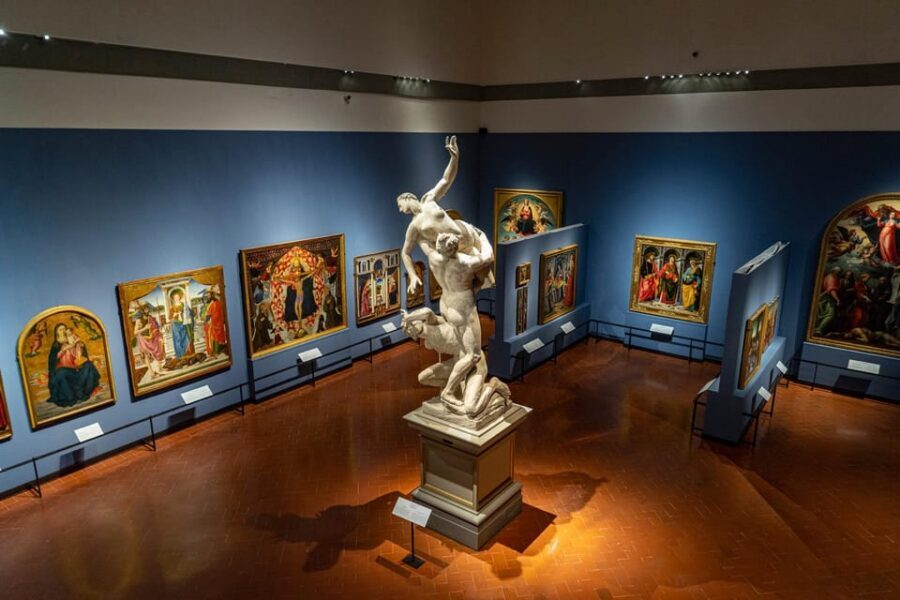
Florence’s big-name sights have one predictable problem: lines that eat your morning. The Accademia is no exception, especially around peak hours. What you’re buying here is not a guided talk. You’re buying time—a smoother path into one of Italy’s most famous sculpture collections.
The value shows up in small details. You start at a local office, collect your ticket, and then you’re directed to the correct entry queue. That matters because the museum entrance area gets chaotic, and knowing where you belong is half the battle. Once you’re through, you can explore at your own pace, which is ideal if your brain works like mine: you want to linger where the carvings grab you and skim what doesn’t.
The ticket also covers access to all sections of the museum, not just the David area. That’s a big deal. A lot of “see the statue and leave” experiences end up feeling overpriced because you paid for one moment. Here, you’re set up to get several moments.
You can also read our reviews of more tours and experiences in Florence
Meeting point at Via Guelfa: how to avoid the usual Italy-mess
This starts at VIA GUELFA 12RED at the Florence and Global Tours Company office, in front of the Via Guelfa McDonald’s Restaurant, next to Via Guelfa 2. It ends back at that same meeting point.
I like this meeting setup because it uses a loud, easy landmark (McDonald’s) and gives you clear street references. That’s helpful when you’re already juggling bridges, street names, and the general “Florence is a maze” effect.
That said, this isn’t one of those tickets where you just scan your phone and walk in immediately. You’ll pick up your entry details from the provider office first. Think of it as a quick handoff: meet, get your code, go. If you’re the type who hates any extra step, that might annoy you. If you’re fine with a short stop to protect your time inside, it’s worth it.
Once inside: where to go first for a smart David viewing plan
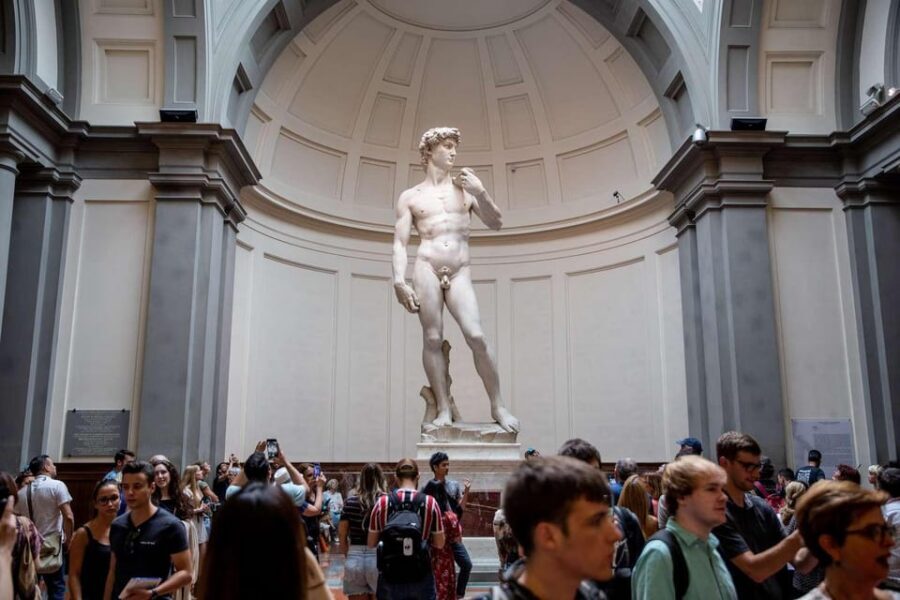
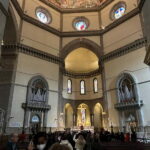
Your goal in the Accademia is simple: David first, then build outward from there. The statue is in a specially designed hall called the Tribune. It’s set up to amplify how colossal the figure feels. If you start elsewhere, you risk spending too long circling galleries before you finally get to the main event. When crowds are thick, that can also mean you’re rushing later just to make the most of your time.
Here’s a practical way to manage it once you walk in:
- Head straight for David in the Tribune.
- After you’ve seen the whole statue, circle back for the other Michelangelo sculptures.
- Then move into the painting rooms and later the museum extras (instruments and plaster casts).
Also, plan for security checks once you’re inside the “fast” entry flow. It’s not just the line outside you’re dodging. Bag checks are part of the reality, and the museum can be firm about what they allow in.
Michelangelo’s David: why one statue can dominate a whole museum
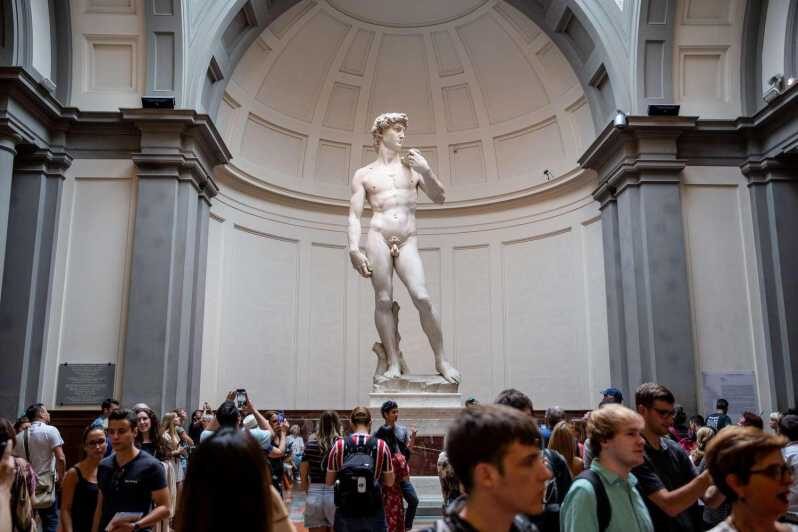
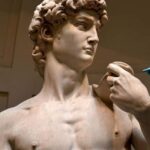
Michelangelo’s David is one of those artworks that doesn’t need a lot of explanation—it hits you in the body first. This version was carved from a single block of marble between 1501 and 1504, and it stands over 5 meters tall in the Tribune. That size changes how you look at the details. You end up switching between wide views and tight glances without realizing you’re doing it.
If you like sculpture, don’t treat David like a photo-op and move on. The longer you look, the more you notice how the statue holds tension. The pose is famous, but the craft is what keeps pulling your eye: the way the body balances, the surface of the stone, the feeling that everything is carved with purpose, not decoration.
And because this is a museum ticket (not a short “David-only sprint”), you’re positioned to understand the rest of Michelangelo’s contribution, too. That’s the part many quick visits miss.
Beyond David: Michelangelo’s other works that change your perspective
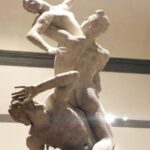
One of the best surprises about an Accademia visit is that Michelangelo doesn’t stop at David. Your ticket gets you access to other key works, including The Prisoners, the St. Matthew, and the Pietà of Palestrina.
This is where the museum can really reward patience. David is the big, confident statement. The other sculptures help you see a different side of the artist’s problem-solving: figure forms emerging from marble, poses shaped for drama, and religious scenes treated with intense physical realism.
If you only came for one statue, these pieces can feel less famous. But if you give them a fair amount of time, they help you connect the dots between Michelangelo’s reputation and what he actually did with stone.
You can also read our reviews of more tours and experiences in Florence

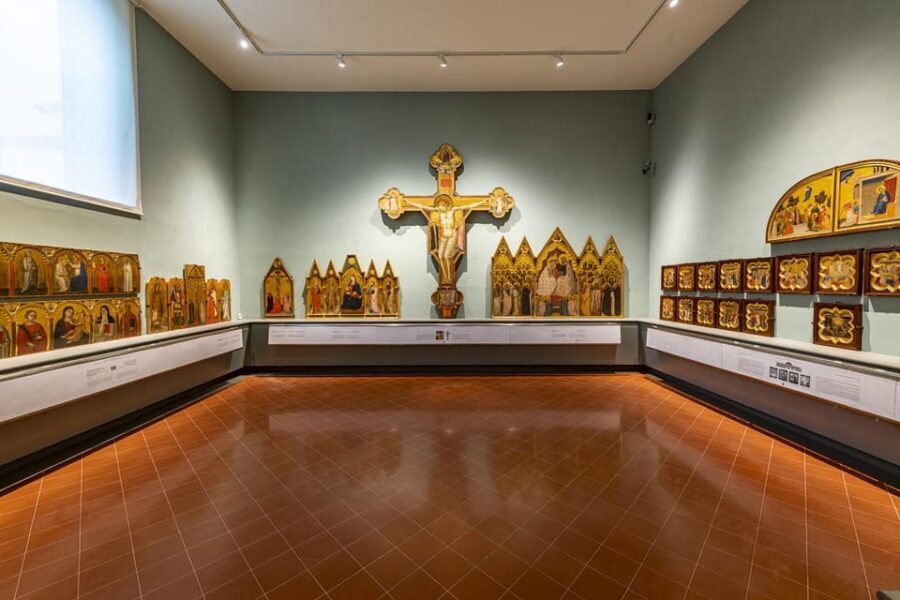
The art timeline rooms: 13th- to 16th-century Florence
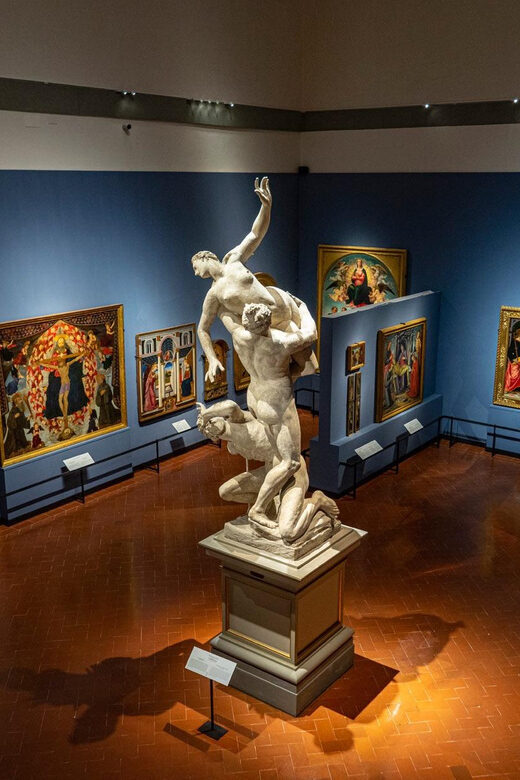
After sculpture, the Accademia gives you a visual story across centuries. You can see the evolution of Florentine art through paintings by names like Cimabue, Giotto, Fra Angelico, and Lorenzo Monaco, plus artists such as Botticelli and others in the collection.
If you’re the type who loves context—how style changes, how realism grows, how religious themes get treated differently—this is where the ticket earns its keep. A lot of people come for the headline sculpture and forget that museums are also about learning what came before and what came next.
In these rooms, look for the shift in technique and expression. The paintings can feel simpler at first, then suddenly more human. That progression helps you understand why the Renaissance happened in the first place: artists kept pushing form, light, and emotion forward.
The Medici instrument exhibit: a smart included extra
Here’s the part that makes the ticket feel more “deal” than “one-statue purchase”: the musical instrument exhibit.
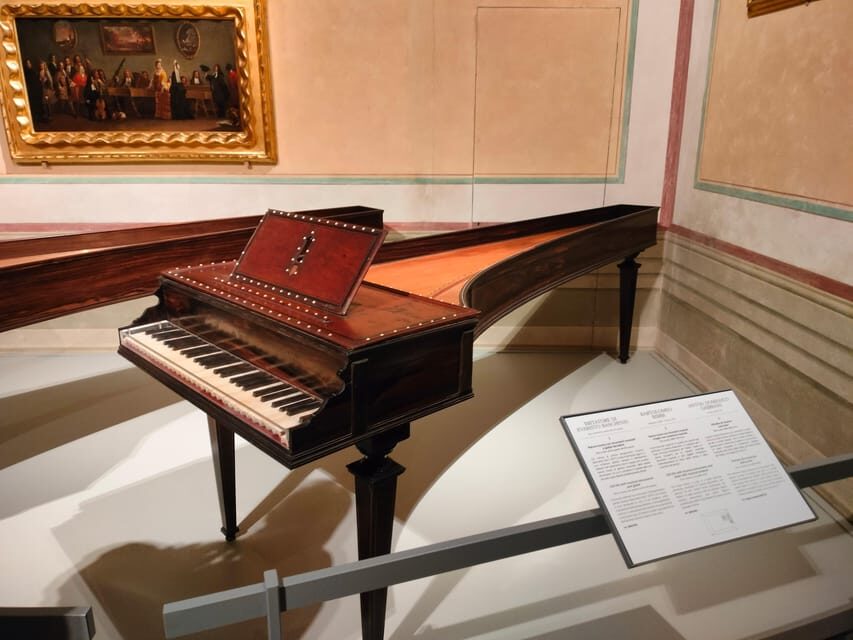
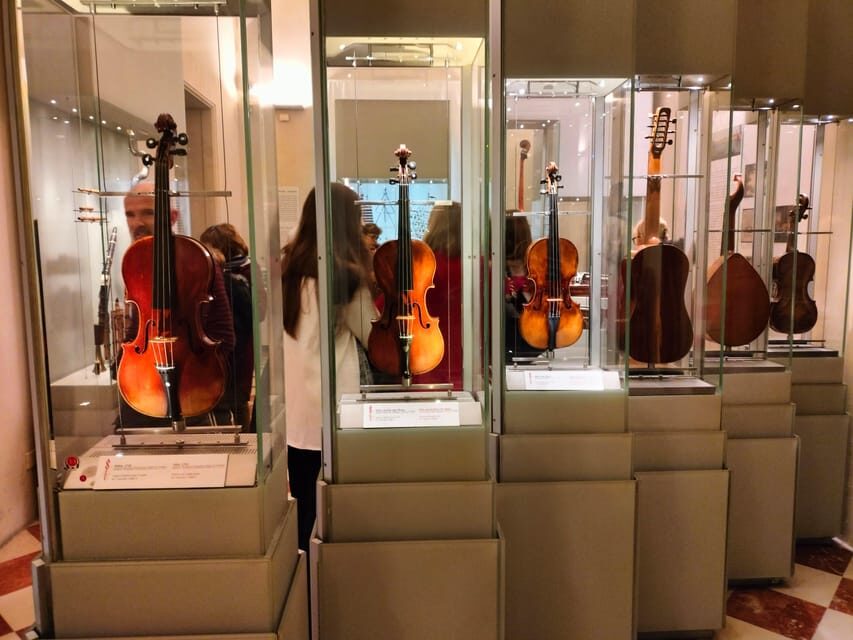
You’ll find rare instruments tied to the Medici family, spanning the 17th to 19th centuries—including examples like violins, harpsichords, and pianos. It’s not the usual thing you hear on Florence itineraries, but it fits the city’s big picture: Florence wasn’t just painting and sculpture. It was court culture, music, and craftsmanship.
If you like odd-but-meaningful museum stops, you’ll probably enjoy this. It also gives your brain a break after stone and painting, so the visit feels less like a marathon and more like a collection of different ways to appreciate human skill.
Plaster casts gallery: what they teach (and why you’ll notice them more than you expect)
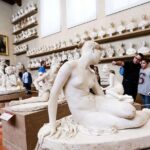
The last “included extra” that can be surprisingly interesting is the plaster cast gallery. These are copies of sculptures from antiquity through modern times, and they were once used as a teaching tool for art students.
This is a big deal for understanding art education. It’s one thing to admire a finished masterpiece. It’s another to see how artists studied forms by training their eye and hand, using replicas. When you look at casts, you start noticing proportions and how certain details guide the viewer’s eye—especially in how a pose reads from different angles.
Even if you’re not an art student (same), you’ll probably find that the casts make the real sculptures feel more “process-driven,” less like magic that fell from the sky.
Timing, queues, and security: the reality check for a smooth visit
This activity uses a timed entry concept: duration is listed as 1 hour, and you should check availability to see starting times. Even though the description mentions exploring at your own pace with all-day access, you still get slotted into an entry system.
In practice, what you care about is how fast you move once your ticket code is accepted. The happiest experiences are the ones where the entry queue stays short and you’re able to get through security quickly. One theme that shows up again and again is that the “skip” is real, not marketing fluff.
Late arriving isn’t always catastrophic. People have been allowed into later times when they were behind schedule, and the fast entry structure helped keep waits down. Still, don’t treat that as a plan—arrive early enough to keep stress low.
Also, expect a bag check. One downside that can sour the mood is that water bottles can be confiscated during security. If it’s hot (it often is), that’s not fun. Plan accordingly: follow the museum rules, and if you need hydration, figure out a workaround that fits what security allows.
Price and value: is $36 worth it for Accademia?
At $36 per person, this ticket sits in the “worth it” zone if you’re traveling at a popular time. The key question isn’t just price—it’s what you buy with that money: saved waiting time and a smoother entry process.
A strong value signal here is that people have felt the skip-the-line was worth it compared to buying other options directly. Even better, this ticket isn’t just a line-saver for David. It includes access to all sections, plus you get the instrument exhibit and plaster casts without needing a separate add-on.
If you arrive at a time when the lines are manageable and you’re relaxed about waiting, you might decide you don’t need a skip-the-line ticket. But if you’re trying to protect your schedule—especially in Florence—this is one of the purchases that can genuinely make the day feel calmer.
Who this Accademia ticket suits best
This is a great fit if:
- You care most about David but also want the rest of the museum to be part of the experience.
- You like self-paced wandering with help getting through the crowd-control mess.
- You’re curious about Florence’s art development across centuries, not just one superstar artwork.
- You’ll enjoy museum extras like instruments and plaster casts.
It may not be the best fit if:
- You’re only interested in seeing David and you’re impatient with the idea of more rooms afterward.
- Security and bag checks frustrate you, and you don’t like any extra stops before entry.
Should you book this skip-the-line Accademia ticket?
Yes—if you’re prioritizing smart time use and want access to the full museum rather than just a fast photo. This setup is especially good when you’re arriving during busy hours, and it’s designed to keep your wait short once you’re on the right path.
I’d book it if your ideal Florence day is: show up, get in, see David properly, then let the museum surprise you with the less-famous included exhibits. If you’re the type who needs zero logistics and hates any handoff step, you might want to compare alternatives. But for most people, paying for less waiting and more museum time is a very practical move.
FAQ
FAQ
Does this ticket let me skip the line at the Accademia Gallery?
Yes. It includes skip-the-line entry through a separate entrance.
How long is the visit time?
The activity duration is listed as 1 hour. Starting times depend on availability.
Is there a guided tour included?
No. A guided tour is not included, and the ticket is for independent entry. Audio guides are available to purchase from the museum.
Where do I meet to get my ticket code?
Meet at VIA GUELFA 12RED, Florence and Global Tours Company office, in front of the Via Guelfa McDonald’s Restaurant, next to Via Guelfa 2.
Is the museum entry wheelchair accessible?
Yes. The activity is listed as wheelchair accessible.
What languages are available with the host or greeter?
Arabic, English, German, Italian, and Spanish.
What’s included in the ticket?
The ticket includes Accademia Gallery skip-the-line entry and access to all sections of the museum.
Is there a cancellation option?
Yes. Free cancellation is available up to 24 hours in advance for a full refund.



More Skip the Line in Florence
More Tickets in Florence

More Tour Reviews in Florence
- Tuscany Day Trip from Florence: Siena, San Gimignano, Pisa and Lunch at a Winery
★ 5.0 · 21,634 reviews - The Best tour in Florence: Renaissance & Medici Tales – guided by a STORYTELLER
★ 5.0 · 12,316 reviews